

Burnishing Leather Edges with Tokonole for a Glossy Finish
Tokonole can be used on both vegetable-tanned and chrome-tanned leather. The application process is the same, though the finished edge may look different. For burnishing leather with Tokonole, apply a thin coat and gently buff the edge as the product begins to dry.
A smooth, polished edge is often associated with vegetable-tanned leather, but Tokonole can also be used on chrome-tanned leather. Apply it sparingly and work the edge with care.
This guide explains how to prepare the edge, apply and buff Tokonole for a polished finish, and adjust your expectations for different leather types. You’ll also learn which tools can make application easier and when to stain, dye, or antique the leather.
Key Takeaways
- Apply a thin, even coat to the edge; a fingertip or suitable applicator helps control the amount.
- Start buffing when the Tokonole is partially dry, using a slicker or canvas for a smooth, glossy finish.
- You can use the same basic process on vegetable-tanned and chrome-tanned leather, though the finished appearance can differ.
- Keep burnishing gum away from areas you still plan to stain, dye, or antique, as it may resist their penetration.
- Choose your finishing tools and leather with the edge and overall project in mind.
Application and buffing technique
Tokonole is a burnishing gum. Your applicator and rubbing tool determine how precisely you can work. Prepare your materials first, then apply and buff the edge in controlled sections.
What You Will Need
- Tokonole: Select a burnishing gum for coating the leather edge. The Tokonole bundles collection connects the material with related project supplies.
- An applicator: Use a fingertip for a small edge or a leather paint roller craft applicator for a consistent pass.
- A burnisher: Keep a slicker or canvas nearby to rub the coating and polish the edge. Browse leatherworking tools for equipment suited to hands-on edge work.
- An offcut: Use scrap from the project to practise application and buffing before finishing a visible edge.
How does Tokonole compare with gum tragacanth, water, and beeswax for burnishing? Tokonole and gum tragacanth are burnishing gums, while water dampens fibers for rubbing. Beeswax leaves a waxy coating, so each material handles differently and produces a distinct surface finish.
For controlled application, start with a small drop and spread it along the edge. A fingertip makes it easy to feel where the product goes on a short piece. On a longer strap, a roller applicator can help you maintain a steady line. Keep the coat thin and cover the cut edge evenly.
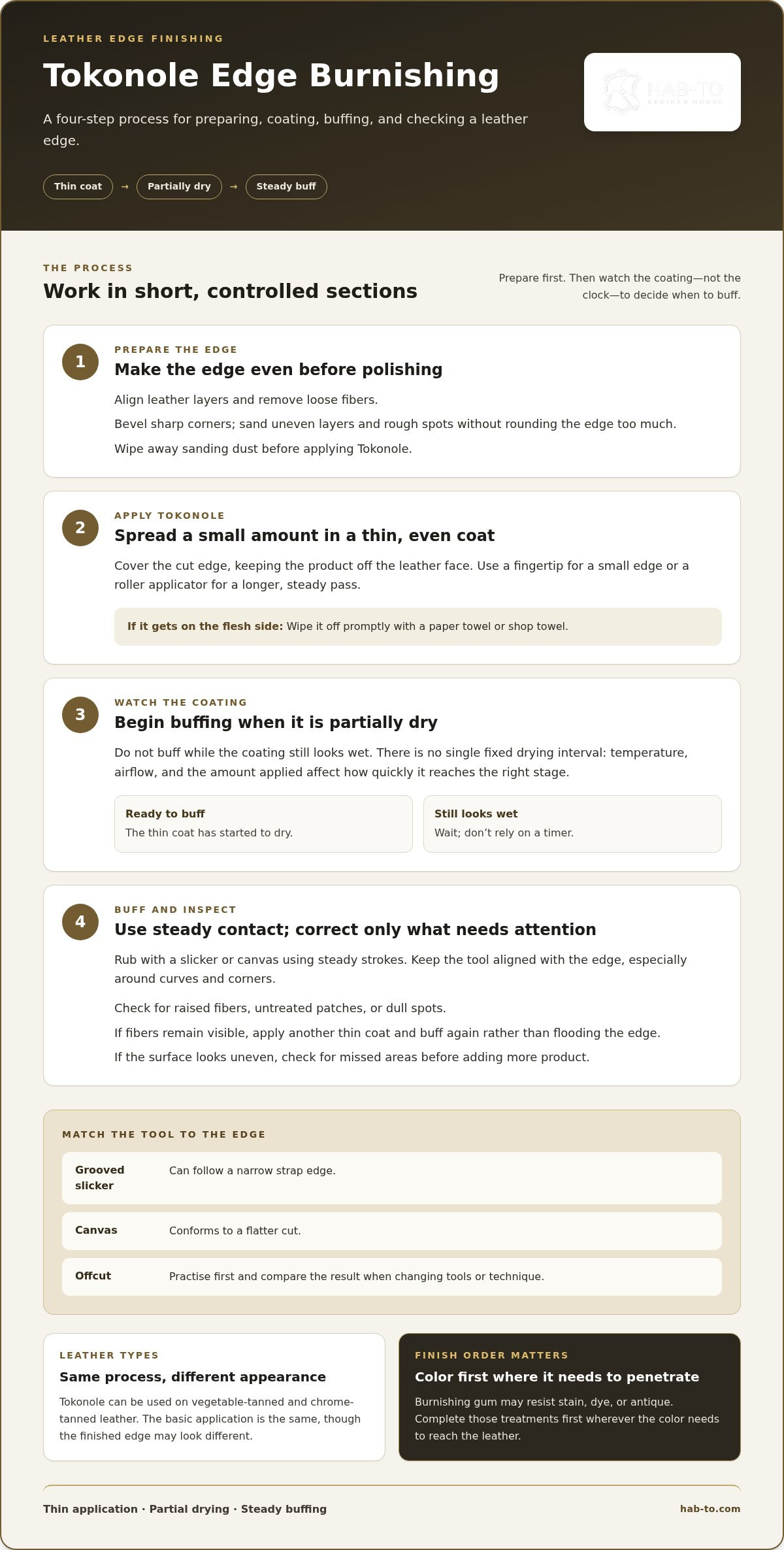
- Prepare the edge. Align the leather layers and remove loose fibers before applying product.
- Apply Tokonole. Spread a small amount along the edge, keeping it off the leather face.
- Start buffing. When the coating is partially dry, rub with a slicker or canvas.
- Inspect the surface. Look for raised fibers or untreated patches, then address only those areas.
Match the tool to the shape. A grooved slicker can follow a narrow strap edge, while canvas conforms to a flatter cut. On a curved tab, turn the piece gradually to keep the rubbing tool in contact with the edge. Use steady strokes instead of pressing harder in one spot.
Too much product can smear onto the leather face or collect at the corners. If Tokonole gets on the flesh side, wipe it off promptly with a paper towel or shop towel. If the edge looks uneven, check for missed areas before adding more. A careful pass with the applicator can improve thin coverage without flooding the edge.
Keep an offcut from the project nearby as a reference. Compare its coated edge with the finished piece, especially if you switch applicators or burnishers midway through. Using consistent tools and strokes makes it easier to spot where the process needs adjusting.
Edge burnishing and leather finishing
Tokonole works best when the edge is even before polishing. Should you sand or bevel leather edges before applying Tokonole? Yes. Beveling removes sharp corners, while sanding smooths uneven layers and loose fibers. Both prepare the edge, but neither replaces burnishing.
On a layered strap, align the leather edges and inspect them from end to end. Use an edge beveler to soften the corners, then sand any areas where one layer sits proud. Choose an abrasive that removes roughness without rounding the edge too much. Wipe away dust before applying a finish, as trapped particles can leave bumps under the polished surface.
Is Tokonole safe for leather, skin, and indoor use? Tokonole is described as water-based and non-toxic, and it is used to finish leather indoors. That description does not establish guidance for skin contact, so apply it with a tool and avoid unnecessary contact.
Once the edge is prepared, spread a thin coat of Tokonole over the exposed fibers. Work along a short section, then rub it with a slicker or canvas. Friction compresses the fibers and helps create a smoother surface. Keep the tool aligned with the edge; tilting it can leave a shiny streak on the leather face.
- Check the edge profile: A straight strap should look even from its front and back faces.
- Remove sanding residue: Dust on a watch strap or bag handle can interrupt the finish.
- Buff with steady contact: Match pressure to the leather, especially around curves and corners.
- Inspect under angled light: A reflection can reveal dull spots or raised fibers.
Build the finish gradually. If fibers remain visible after the first buff, apply another thin coat and work it again rather than flooding the edge. Test on a small offcut to see how the leather responds before finishing a visible handle or strap. The final sheen depends on edge preparation, leather type, product amount, and friction from the burnisher.
Plan the order of steps if the project also needs color. Burnishing gum may resist or block stain, antique, or dye from penetrating. Complete those treatments first wherever the color needs to reach the leather. For example, don’t coat a belt edge with Tokonole before dyeing it, as the gum can interfere with color uptake.
For a cohesive project, choose leather, tools, and finishing materials together. A leathercraft bundle can help bring compatible project supplies into one selection, while your edge preparation and buffing technique determine the finish.
Applying Tokonole
Apply Tokonole in a controlled layer, then decide when to buff by watching the coating rather than the clock. The steps below explain how to judge drying, control application, and address common edge problems.
Drying Before Burnishing
How long should Tokonole dry before burnishing? There is no single fixed interval. Begin buffing when the thin coat is partially dry. Temperature, airflow, and the amount applied affect how quickly it reaches that stage. Watch the coating instead of relying on a timer, and don’t buff while it still looks wet.
On a strap edge, apply Tokonole along a short section and check the surface before rubbing. Once it starts to dry, use a slicker or canvas with steady strokes. If the coating dries completely before you begin, apply a thin layer rather than scrubbing a stiff surface.
Resolving Common Application Problems
Common problems include excess product, patchy coverage, and Tokonole transferring to the leather’s flesh side. Use less on the next pass, spread it along the edge, and promptly wipe away accidental transfer with a paper towel or shop towel. If the polish looks patchy, check for raised fibers and uneven application before adding another thin coat.
Three layers are one leatherworker’s usual approach, not a required number for every project. Let each coat become partly dry before buffing, and assess the edge between passes. Add another layer only if exposed fibers or dull areas remain.
- Prepare the applicator. Use a fingertip for a small edge, or a foam-tipped cleaning swab for controlled placement.
- Apply sparingly. Spread a thin coat along the edge. A fine bead is easier to manage than a heavy line.
- Check the surface. Look for wet patches or product pooling at corners before starting to burnish.
- Buff the section. Work with canvas or a slicker as the coat becomes partially dry. Keep the tool aligned with the edge.
- Review the result. Inspect for missed spots, smears, and raised fibers. Correct only the area that needs another pass.
A heavy coat can smear instead of polishing cleanly. Quickly remove excess from the flesh side, then apply less to the edge on the next pass. If a swab leaves streaks, use shorter strokes and spread the product evenly before buffing.
On a long strap, work in manageable sections so one area doesn’t dry completely while another is still wet. Keep the applicator close to the edge, especially around corners. A foam swab can help prevent spillover on a narrow watch strap; on a broad handle, a fingertip can spread a small drop across the exposed edge.
Build the finish by watching the edge, not by repeating a set number of passes. A smooth, even edge needs consistent coverage and buffing. Adding product over a wet or smeared area can make the surface less uniform.
Glossy finish
A glossy Tokonole edge comes from an even coat, suitable timing, and consistent friction. The shine develops as the burnisher works the surface, not from piling on product. Look for a smooth reflection along the edge, then compare it with the surrounding leather. The polished edge may still show natural texture, especially where the cut crosses layered or uneven fibers.
Use a narrow light source to inspect the finish. Tilt a strap beneath a lamp and watch how the highlight moves along its edge. A broken reflection can reveal a dull patch, raised fiber, or missed spot. Correct that area locally instead of coating the entire strap again.
- Spread a thin coat. Use a fingertip or applicator to cover the exposed edge without flooding corners or the leather face.
- Watch the surface. Begin buffing as Tokonole becomes partially dry. A wet-looking streak needs more time before polishing.
- Choose the contact tool. A grooved slicker follows a strap edge, while canvas works across a flatter profile.
- Keep the motion steady. Move along the edge with even pressure. On a curved tab, rotate the piece gradually so the tool stays in contact.
- Inspect the reflection. Check the full edge under angled light. Add product only where fibers or dull areas remain.
Pressure matters as much as direction. Uneven pressure with a slicker can leave alternating glossy and matte sections, especially along a long belt edge. Keep your grip relaxed and maintain contact from one end of the section to the other. If the leather shifts, reposition it before continuing rather than forcing the tool across the edge.
Follow a rounded corner with short, controlled strokes. A straight, forceful pass can flatten one side while leaving the other less polished. At a strap tip, turn the workpiece gradually and inspect both faces. This helps keep the shine on the cut edge instead of transferring Tokonole onto the visible grain.
More product doesn’t automatically create more gloss. A thick coat can smear, obscure the edge profile, or leave residue beside the cut. If the surface looks cloudy, stop adding Tokonole. Let the current coat settle, then buff gently with clean canvas and inspect it again.
Judge the finished edge by touch as well as appearance. It should feel even as you run a fingertip along it, and angled light can show whether the polish is consistent. On a layered handle, check the joins as well as the long sides. Finish when the edge looks uniform from end to end.
Use on vegetable-tanned and chrome-tanned leather
Tokonole can be used on both vegetable-tanned and chrome-tanned leather. The process is the same, but the finished edge can look different because leather type affects the result. Chrome-tanned edges are generally more challenging to burnish, so assess the surface rather than expecting the same shine.
Vegetable-tanned leather is the more familiar choice for traditional burnishing. Seiwa Tokonole is described for natural or colored vegetable-tanned leather, and its gum helps smooth the exposed edge. A natural vegetable-tanned strap makes the result easy to see, while a colored piece shows how the finish sits alongside its existing tone.
Assess chrome-tanned leather more carefully. Its edge may resist forming the same compact, polished surface, even when you follow the same basic steps. Start with a small test area or an offcut from the project. Apply a thin coat, let it become partly dry, then buff and inspect it before treating the full edge.
Compare the leathers by appearance and feel without changing several steps at once. Prepare each edge similarly, apply a consistent amount of Tokonole, and use the same burnisher. This makes leather type the main variable. Check whether the fibers lie flat, the surface feels smooth, and the sheen looks even along each sample.
- Vegetable-tanned leather: Natural and colored versions are suitable for Tokonole burnishing.
- Chrome-tanned leather: Tokonole can be used, though the edge may prove more difficult to polish.
- Both leather types: Use the same thin-coat approach and buff when the product is partially dry.
- Before a visible edge: Test a matching offcut and assess its finish before continuing.
Don’t compensate for a stubborn chrome-tanned edge by flooding it with product or pressing harder. Excess gum can smear, while forceful rubbing may leave an inconsistent surface. Instead, prepare the edge carefully, buff with control, and inspect between passes. If the leather remains less glossy than vegetable-tanned leather, that reflects the material’s response to burnishing.
For projects with different leather components, such as a bag, test each type separately. A successful finish on a vegetable-tanned handle doesn’t predict the exact appearance of a chrome-tanned panel edge. Note which applicator and burnishing tool you used, then repeat that method only where the sample gives a suitable result.
The practical takeaway is simple: Tokonole works on both types of leather, but the finish may differ. Choose the leather for your project first, then test an offcut and set your expectations based on how its edge responds.
Hab-To Leather House: Vegetable Tanned Leather
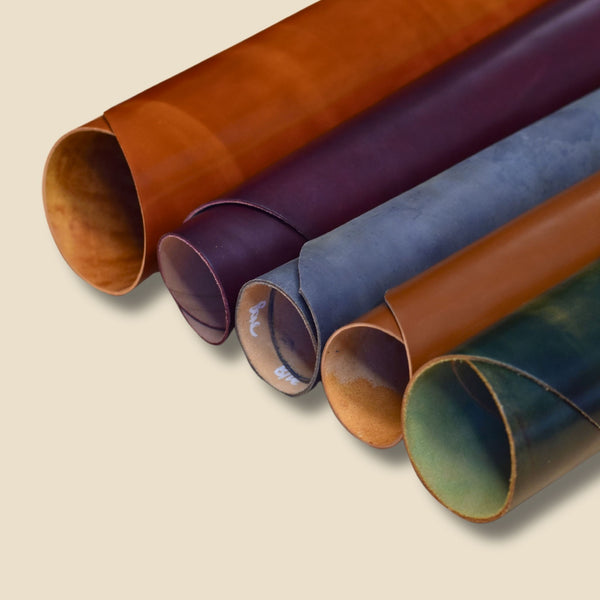
Hab-To Leather House supplies materials and tools for leatherworkers finishing their projects. If you’re practising burnishing or planning a new strap, choosing suitable leather is a practical next step. Explore vegetable-tanned Pueblo leather and consider how its color and character will suit your design.
Leatherworking tools and hardware support the work beyond the edge, while crafting bundles bring related project materials together. Choose what suits your project, whether you’re making a small accessory or a larger leathercraft piece.
Visit hab-to.com to explore leather and supplies for your next project, or contact Hab-To Leather House with a question about what you’re making.
Put Your Edge-Finishing Skills to Work
Your next project is a chance to refine your approach to burnishing leather with Tokonole. Try the method on a strap, handle, or small leather accessory, and notice how the material responds. A sample piece lets you test the finish before applying it to a visible edge.
As you plan, consider how the leather, hardware, and tools will work together in the finished piece. Hab-To Leather House offers vegetable-tanned leather, leather hardware, and leatherworking tools for hands-on projects. Choose materials with your design in mind, then let careful preparation and patient finishing shape the details.
Keep experimenting, trust your eye and touch, and enjoy the craft of creating a clean edge.
Frequently Asked Questions
Did you know you could do this with Tokonole?
Yes. Tokonole is used to burnish leather edges, including chrome-tanned leather. This can help when a project combines different leather types, such as a vegetable-tanned strap attached to a chrome-tanned body. Before working on the finished piece, compare an offcut from each leather. You’ll see how each edge responds and whether their appearances work together.
What is Tokonole and what does it do when burnishing leather?
Tokonole is a water-based burnishing gum that helps smooth and polish leather edges. It can affect later finishing steps, as burnishing gum may resist or block stain, antique, or dye penetration. Plan those treatments first if color needs to reach the edge or flesh side. For example, dye a belt edge before applying Tokonole, not afterward.
Which types and thicknesses of leather can be burnished with Tokonole?
Tokonole is used on vegetable-tanned and chrome-tanned leather, but there is no single thickness that suits every project. Consider the cut edge, its construction, and whether you can work the surface evenly. A thin watch strap and a thicker layered belt have different edge profiles. Test a matching scrap from each project instead of assuming thickness alone predicts the result.
How do you burnish a leather edge with Tokonole step by step?
First, complete any edge dyeing or staining that needs to penetrate the leather. Then align the layers, remove loose fibers, apply Tokonole, and rub the edge with a burnisher. Work in sections along a long belt to keep the treatment even. Inspect the finished piece from both faces, especially where a handle or strap joins another component.
How much Tokonole should you apply to a leather edge?
Use just enough Tokonole to cover the exposed edge without leaving pools at the corners or transferring it to the leather face. A small drop is a practical starting point for a short strap; spread it across the edge before deciding whether another pass is needed. On layered leather, inspect the seam between layers. This narrow join can make missed coverage easier to spot than the broad edge.
What tools work best for burnishing leather with Tokonole?
Apply Tokonole with a fingertip, foam-tipped swab, or leather paint roller, depending on the edge and the control you need. For rubbing, choose a slicker or canvas that maintains contact with the edge profile. A grooved slicker suits a narrow strap, while canvas can follow a flatter edge. Keep a separate clean cloth nearby to wipe away accidental transfer.
Related Reading
- Choosing leather for straps and small accessories
- Preparing layered leather edges for finishing
- Selecting tools for leathercraft projects
Explore Hab-To’s Tokonole bundles, leather, and tools to find supplies for your edge-finishing project.
Disclaimer
All our blog articles are made for information purposes only we dont take responsability for any content from third parties.