


Creating a Signature Look for Leather Goods That Feels Yours
A signature look doesn’t have to be loud or meticulously planned. Creating a signature look for your leather goods can begin with details you’re naturally drawn to, repeated thoughtfully across a bag, wallet, or another project. The result feels distinct because it reflects your choices, not because it follows a formula.
You may already know which colors, textures, or shapes you gravitate toward, even if you haven’t thought of them as personal style. These preferences are useful clues. A consistent look might come from a restrained palette, a familiar silhouette, a particular finish, or one personal detail that makes a piece feel like yours.
This guide explores how to spot those recurring elements and bring them together without making every project identical. You’ll learn to balance lasting design choices with trend-led touches, personalize leather goods with details such as initials, and gather inspiration into a moodboard that helps turn ideas into a cohesive style.
Key Takeaways
- Start with the leather goods you use and the details you’re naturally drawn to, then let those preferences guide your style.
- Repeat a small set of visual elements, such as a color palette, silhouette, or accessory, to create cohesion without making every piece identical.
- Use timeless design choices as a foundation, and bring in trend-led accents when you want a fresh variation.
- Consider initials as a personal detail, choosing an application method that suits the look you want to create.
- Collect images and note recurring colors, textures, and shapes to turn inspiration into a useful moodboard.
1. What is a signature look?
A signature look is a recognizable combination of choices that reflects your taste and daily life. For leather goods, that might mean a compact shape, earthy colors, and a carefully chosen hardware finish. You don’t need a complete fashion identity to begin; start with details you genuinely use and enjoy.
Start with a practical example: a crossbody bag for your commute needs a different shape and closure from a small evening pouch. Consider what you carry, how often you use the item, and whether you prefer a quiet or expressive look. Your answers help make sure the design suits real life.
Personal style becomes clearer through observation. Notice which bags, wallets, or watchstraps you reach for most, then look for shared details. Perhaps they have clean lines, visible stitching, or warm brown tones. Repeating one or two of these details can make new projects feel connected without making them identical.
Personal details can strengthen that connection. A small initial, a meaningful color, or a lining chosen for its pattern can give a familiar form individual character. Choose details that matter to you, rather than adding decoration just because a trend or tutorial recommends it.
Treat self-discovery as a simple design step. Gather photos of pieces you like, then compare their shapes, textures, colors, and hardware. A moodboard with a dark leather wallet, a softly grained bag, and brushed metal fittings might reveal a preference for understated contrast.
Your style can evolve as your routine or preferences change. You might once have favored a structured work tote and later prefer a lighter crossbody for weekends. Keep the elements that still feel right, and adjust the silhouette, color, or finishing details around them.
How much does it cost to customize leather goods with distinctive details? There’s no single cost for customization; it depends on the leather, the detail, the tools, and the work involved. A painted motif, added hardware, or custom lining each requires different materials and steps.
Which leather types, textures, and hardware work well together? Begin with the look and use you want, then coordinate the leather’s color and surface with hardware suited to its scale and finish. Smooth vegetable-tanned leather paired with understated hardware, for example, can create a clean look, while a more pronounced texture can support a bolder design.
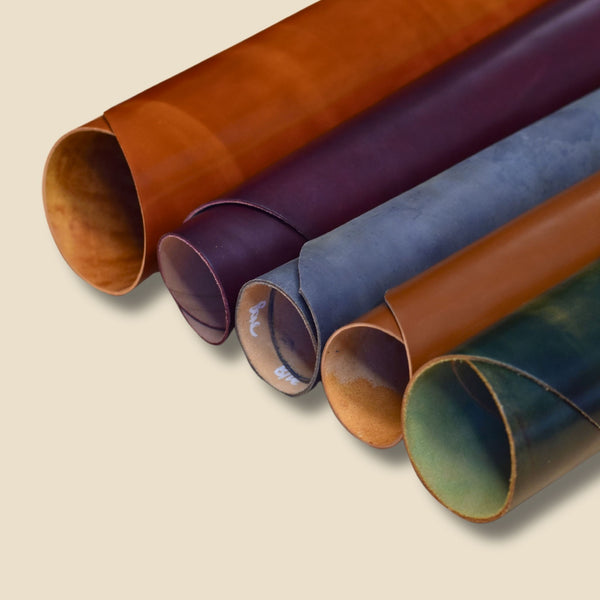
To explore material differences, compare leather options for crafting by color and surface. Choose combinations that support the same visual direction, such as a supple-looking surface with simple lines or a more textured leather with minimal added decoration.
How can you test whether a leather goods style stands out to customers? Make a sample or clear design mockup, then show it to people who might use that kind of item. Ask what they notice first and whether the details seem distinctive and practical. Specific reactions are more useful than a general question about whether they like it.
How do you protect a signature leather goods design from imitation? Keep dated sketches, design notes, and photographs that document how the piece developed. Use a recognizable combination of details, and think carefully before sharing unfinished designs publicly. These steps document your work, but they can’t guarantee that others won’t imitate it.
What are the risks of using unusual materials or finishes on leather goods? An unfamiliar finish or material may behave differently during making or regular use, affecting the piece’s feel, care, or appearance. Test it on a leather offcut first, especially if you’re combining finishes or adding paint, studs, or beads.
2. Building consistency through recurring style elements
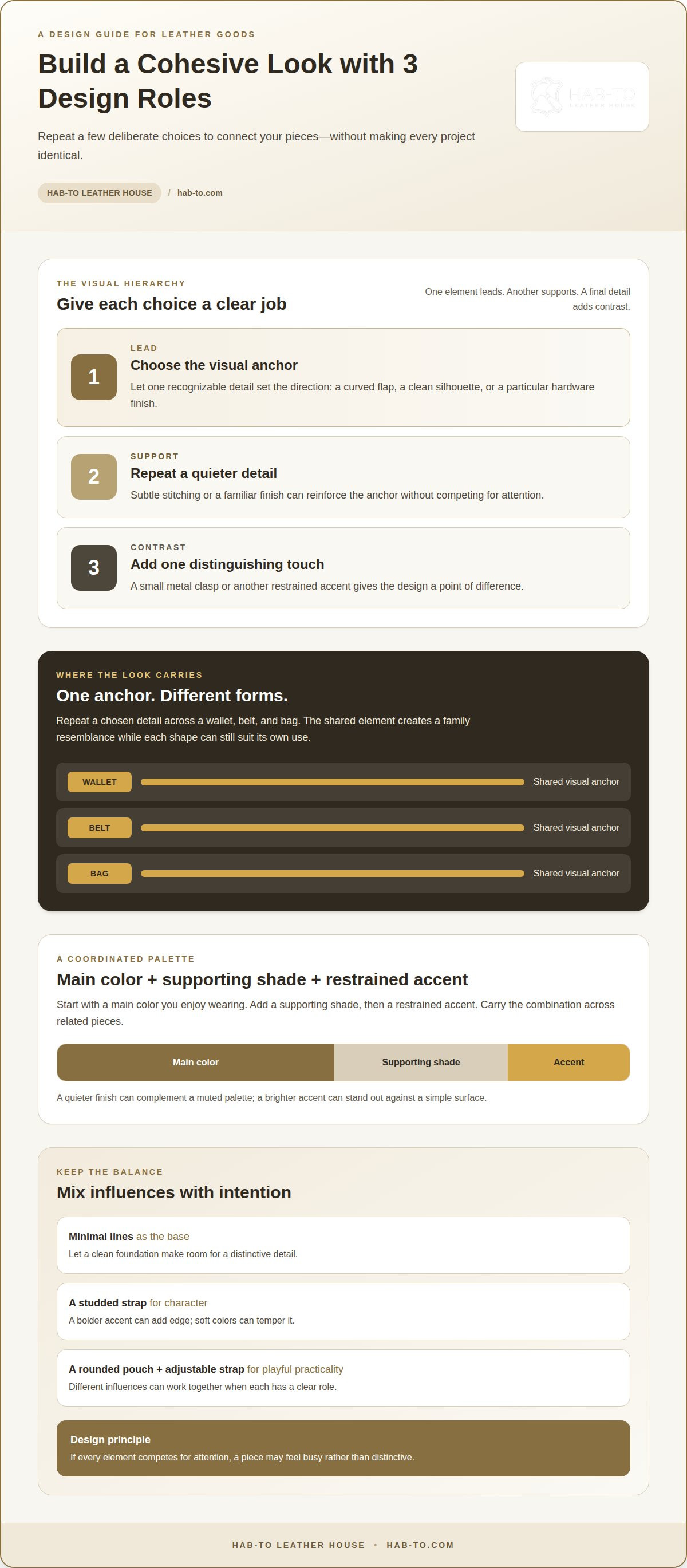
Consistency comes from repeating a few deliberate choices, not copying one design exactly. Choose a visual anchor, such as a curved flap, contrast stitching, or a particular hardware finish. Carry that detail across a wallet, belt, and bag, then vary their shapes to suit different uses. The repeated anchor creates a family resemblance.
Proportion matters. Pick one element to lead, one to support it, and one to provide contrast. In a minimal design, a clean silhouette can lead, subtle stitching can support it, and a small metal clasp can add contrast. If every element competes for attention, the piece may feel busy rather than distinctive.
Different style influences can coexist when their roles are clear. Minimal lines can form the base, while an edgy detail, such as a studded strap, adds character. Soft colors can temper that edge. A rounded pouch can feel playful, while a sporty adjustable strap makes it practical for everyday wear.
How do you choose a distinctive color palette and leather finish? Start with a main color you enjoy wearing, then choose a supporting shade and a restrained accent. Pair a muted palette with a quieter finish, or set a brighter accent against a simple surface. Keep the combination consistent across related pieces.
Classic style has variations, too. A structured tote with polished hardware reads differently from a classic crossbody with softer edges, even if both use neutral leather. Compare the pieces in your wardrobe that feel most like you. Their shared shape, finish, or level of decoration can help distinguish essential preferences from distracting details.
How do luxury leather brands create consistent visual identities? They repeat recognizable choices across product shapes, materials, hardware, and presentation. A recurring clasp shape or restrained color family can connect distinct designs while leaving room for variation.
Use that principle to refine your own style: keep the details that make several projects feel related, and remove ones that don’t support the same direction. A sketch of three items, such as a cardholder, belt, and bag, can reveal whether one feature ties them together. If you’re exploring coordinated materials and tools, browse the leathercraft bundles for ideas that suit your next project.
A signature look can be understated, minimalist, and casual rather than bold. The guide recommends recurring elements such as a color palette, go-to silhouette, or signature accessory to create consistency.
3. Balancing timeless and trendy elements
A lasting design starts with a form that suits its purpose, leaving room for accents to change. A simple cardholder, structured tote, or classic belt can anchor a style across seasons. Choose a shape and finish that reflect your taste and work with clothes you wear often. Creating a signature look for your leather goods can start with that lasting foundation, then add a trend-led feature that feels right for you.
Build around durable visual choices, such as a clean silhouette, restrained stitching, or a familiar neutral shade. Then add an accent that can be changed or removed. A colorful fabric scarf tied to a tote handle brings seasonal color without changing the leather. A patterned bandana can do the same while giving the look a more relaxed feel.
You can adapt color trends rather than copy them directly. If animal print appeals to you, use it as a small accent beside a neutral leather body. If your taste leans bold, choose a brighter color detail and keep the shape uncomplicated. The contrast lets a current influence show while the main design stays cohesive when the trend shifts.
Think about where a trend appears on the finished piece. A removable charm or scarf is easy to change; decorative stitching or painted motifs become part of the design. For example, a classic shoulder bag can take a bright handle wrap while its outline, closure, and main color remain understated. This lets a trend enhance the piece instead of overpowering it.
Material choices can bring together timeless and contemporary character. A smooth surface and simple hardware create a quiet base, while a contrasting lining adds a surprise each time the bag opens. A textured panel can also update a familiar shape. Limit competing accents so each one has room to stand out.
Before committing to a trend, sketch the item in its simplest form and add the new detail separately. Compare both versions with an outfit you wear regularly. If the accent works with that outfit and still feels like your taste, it may earn a place in the design. If it distracts from the shape or makes the piece difficult to style, scale it back.
There’s no fixed formula for balance. A black wallet with a classic profile may need no seasonal detail, while a plain tote can carry a vivid fabric accent. When creating a signature look for your leather goods, let the base reflect how you use the item, then choose trends for the mood or contrast they bring.
4. Embossing, engraving, or painting initials
Initials can personalize leather without changing a piece’s shape. Their placement, scale, and finish all affect its appearance. A small monogram near a wallet’s lower corner feels discreet, while larger initials centered on a notebook cover become a focal point. Choose a treatment that suits the item and expresses your identity.
Embossing presses a design into the leather, making the mark part of its surface. It can suit a restrained cardholder or belt, especially with simple lettering. Before marking a finished piece, test the stamp and placement on an offcut with a similar surface. This lets you judge the impression and spacing first.
Engraving offers another way to add initials, with the result shaped by the tool and leather surface. A fine mark can feel subtle on a flat panel, while elaborate lettering may compete with visible grain or stitching. Sketch the letters at the intended size, then position them where seams won’t interrupt the design.
Hand-painted initials add color and a more expressive touch. A contrasting shade on a luggage tag creates a clear accent; paint close to the leather’s color gives a quieter effect. Test the paint on scrap material and let it dry before assessing its appearance. Keep the lettering clear at your chosen scale.
What you will need
- A leather offcut similar to the finished piece for testing placement and appearance.
- Your chosen marking method, such as a letter stamp, engraving tool, or leather paint.
- A sketch or paper template to plan the initials’ size, spacing, and position.
- Leatherworking tools suited to the steps in your project.
How can stitching, edge paint, embossing, and lining create a recognizable style? Repeat a deliberate combination, such as contrast stitching, a consistent edge color, and initials in the same position. A distinctive lining adds an interior detail, while repeated exterior finishes help connect different pieces.
Placement helps tie related designs together. Initials near a wallet’s opening edge might echo a mark inside a bag. Keep the lettering style and orientation consistent, even when the item’s shape changes. A paper template makes it easier to compare positions before stamping, engraving, or painting.
Work with the construction. Initials too close to a seam can look crowded, and dense lettering may compete with decorative stitching. On a simple passport cover, one small monogram may be enough. On a panel with prominent seams, choose a quieter mark away from the stitch line.
Consider how the item will be handled. Initials on a frequently used cardholder may show wear over time, while a mark inside a bag stays less visible. Choose a location and technique that suit the item, then repeat the choice thoughtfully in future projects.
5. Gathering inspiration and creating a moodboard
A useful moodboard turns scattered references into a working design guide. Save images of bags, wallets, outfits, architecture, and objects that catch your eye. Keep them on your phone or arrange them on a physical board. Include leather goods you admire, but also notice details elsewhere, such as a curved chair back or a painted doorway. A moodboard helps you see the visual details you’re drawn to and shape them into a distinctive style.
Gather references, then look for repeated features. Note the colors, cuts, fabrics, textures, and brands that appear in pieces you wear often. Several saved outfits might share warm neutrals, rounded shapes, and woven accents, for example. Those patterns can suggest a direction for a leather bag without copying any one image. Creating a signature look for your leather goods becomes more intentional when these preferences guide your choices.
Make the board useful by adding short labels beside each image. Write “soft shape,” “dark stitching,” or “brass-tone detail” rather than relying on memory. A photograph of a structured coat might inspire a bag’s clean outline, while patterned fabric could suggest a lining or small accent. Labels connect inspiration to specific design decisions and clarify why each reference belongs.
Sort the images into groups that help you compare ideas. Organize them by color, silhouette, surface, or mood, then identify which details belong together. A board with black leather, sharp shapes, and polished metal suggests a different direction from one featuring tan tones, curved forms, and visible texture.
Use these steps to move from references to a clear concept:
- Save images that express a strong reaction, even if they come from different subjects.
- Write down the shared colors, shapes, materials, or finishes you notice.
- Choose details that suit the item’s purpose, such as a compact profile for a cardholder.
- Sketch a design beside the references and remove details that compete with its main idea.
Keep the board flexible as the design develops. If a sketch suggests a slim wallet, compare it with images of slim cases, folded paper, and tailored pockets. These references can help refine proportions without dictating the finished pattern. Save the revised sketch beside the original images to see how the idea evolves.
Before making the piece, review the board as a whole. Check that the main color, shape, and surface support one another. If a vivid reference feels disconnected from quieter materials, use it as a small accent instead. When creating a signature look for your leather goods, the board can serve as a practical guide while leaving room for your own choices. As you develop the project, leathercraft bundles can help you explore materials and tools for bringing that direction to life.
Hab-To Leather House: Leatherworking Tools
Hab-To Leather House is a natural next step when you’re ready to turn a visual direction into a leathercraft project. Choose materials and tools that support your design, whether you’re refining a finish, adding hardware, or working with vegetable-tanned leather. The right leatherworking tools help you shape details with care, while thoughtful leather and hardware choices bring the look together.
For a coordinated project, consider how the leather, fittings, and construction details work together. Vegetable-tanned leather can provide a considered foundation, while equestrian-related leather and hardware suit projects where those materials are relevant. Let your intended form and finish guide the design decisions.
If you’d like to discuss leathercraft materials or tools, contact Hab-To Leather House.
Make Your Next Design Your Own
Your next project doesn’t need to define your style forever. Treat it as a chance to refine one choice: a shape that works better for your routine, a finish that feels more personal, or a detail that brings the piece together. Note what you enjoyed making and using. Those observations can guide future designs without turning your process into a rigid formula.
Creating a signature look for your leather goods is an ongoing craft practice. As you plan your next piece, explore leathercraft bundles for materials and tools to support the direction you’ve chosen.
Keep exploring:
- How to choose leather for a bag or wallet
- Ways to create clean, consistent leather edges
- Choosing hardware that complements a leather design
Start with the detail you’re most excited to make, then let your own hands shape what comes next.
Frequently Asked Questions
What is a signature look?
A signature look is a set of visual choices that makes your style recognizable and personal. In leathercraft, it can guide decisions across different projects without requiring every item to look alike. A maker might favor compact proportions and clean, precise construction, for example. The defining choices can change as tastes develop, but they should remain connected to the maker’s preferences and the way each item will be used.
What defines a signature look for leather goods?
A signature look for leather goods comes from a deliberate combination of design and construction choices. Consider whether a finished piece feels cohesive from a distance and whether its details make sense up close. Try photographing several completed projects together, then notice which features connect them. If the visual thread is clear without making the shapes identical, those recurring choices can guide future designs.
Disclaimer
All our blog articles are made for information purposes only we dont take responsability for any content from third parties.