



How to Buy Wholesale Leather From Suppliers and Tanneries
The closest tannery isn’t automatically the best source for your craft business. Knowing how to buy wholesale leather starts with matching the leather’s type, weight, color, cut, and usable area to the work you make, then comparing suppliers and tannery locations alongside price and shipping considerations.
It’s easy to focus on the cost per hide or bundle, but the right purchase also depends on consistency, usable area, and whether the leather suits your products. A clear buying process helps you weigh these factors before committing to stock.
This guide explains how to compare vegetable-tanned and other leather types, assess colors and cuts, understand wholesale pricing, and weigh suppliers against tannery locations. You’ll have a clearer framework for choosing leather that fits your craft business and the pieces you plan to make.
Key Takeaways
- Match leather type, weight, color, and finish to the products you make, then compare the usable area offered in each hide or bundle.
- Choose between a full hide, side, shoulder, or belly based on your pattern shapes, project size, and how you plan to cut the material.
- Compare prices by the amount and type of leather included, while accounting for grade, thickness, and bundle contents.
- Weigh a supplier’s product range and ordering terms against its location, shipping needs, and access to tannery-specific materials.
- Clarify minimum order quantities by checking whether the supplier sells by hide, cut, bundle, or another order unit; pair suitable leather with the tools needed for your work.
Leather types, colors, and product options
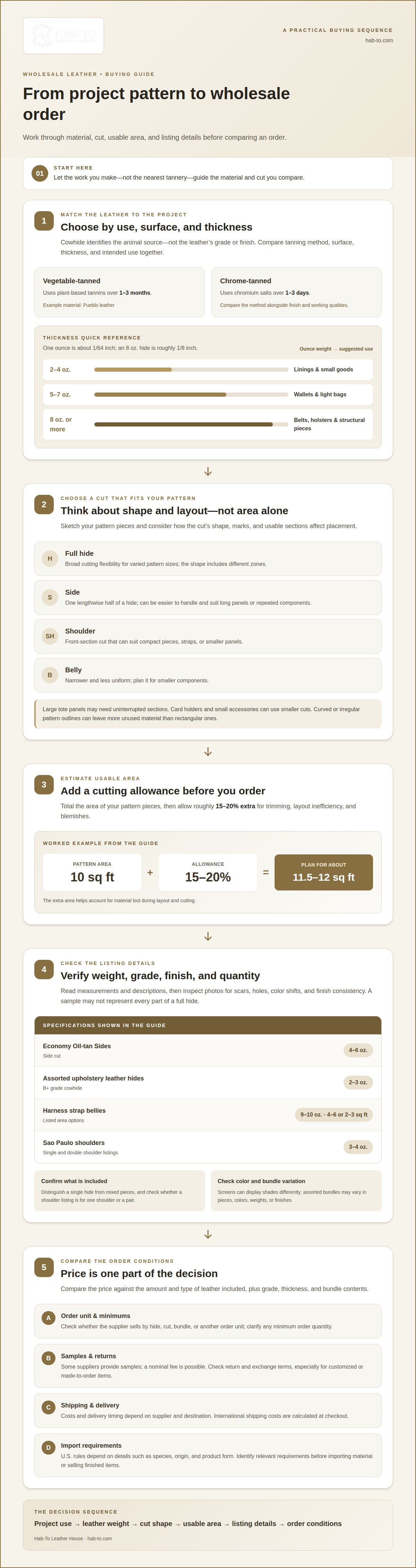
Cowhide identifies the animal source, not the leather’s grade or finish. When deciding how to buy wholesale leather, match the tanning method, surface, thickness, and intended use to your project. Smooth leather suits different work than textured leather or hides with natural marks.
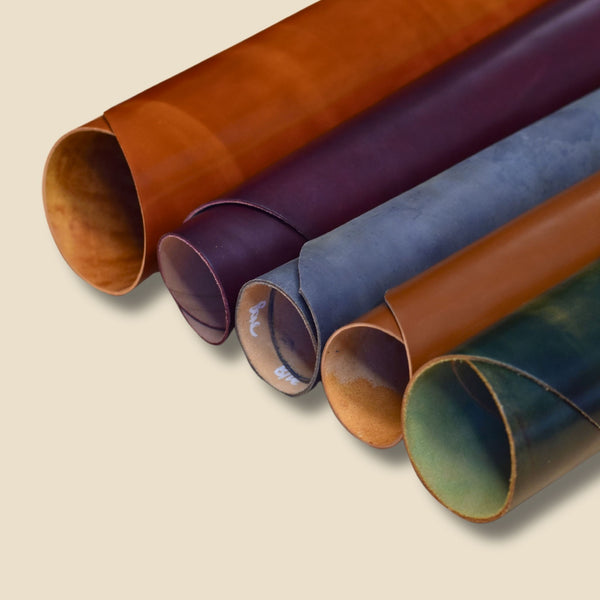
Vegetable-tanned leather uses plant-based tannins over one to three months. For example, vegetable-tanned Pueblo leather gives makers a specific material to compare when choosing a surface and construction approach. Chrome-tanned leather uses chromium salts over one to three days. Compare tanning method alongside finish and working qualities, rather than treating it as a complete quality measure.
Leather weight gives a useful starting point for thickness. One ounce is about 1/64 inch, while an 8 oz. hide is roughly 1/8 inch thick. Choose 2-4 oz. leather for linings and small goods; 5-7 oz. can suit wallets and light bags. Leather weighing 8 oz. or more suits belts, holsters, and structural pieces.
Color affects both a product’s appearance and consistency across repeat batches. Compare the listed shade with product photos, keeping in mind that screens can display color differently. Before choosing wholesale leather for a collection, check whether the offering includes assorted colors or finishes. This matters when you need coordinated panels, straps, or sets.
U.S. rules for importing and selling leather depend on details such as species, origin, and product form. Identify those features and the relevant requirements before importing material or selling finished items.
Some suppliers provide samples before a larger purchase. Leather samples can be requested, with a nominal fee possible. A swatch helps assess color and surface, but may not represent every part of a full hide.
Shipping costs, delivery timing, and returns depend on the supplier and destination. International shipping costs are calculated at checkout. Check the supplier’s return and exchange terms before ordering, especially for customized or made-to-order items.
Online purchases can involve color differences, uneven thickness, marks, and variation within assorted bundles. Read the listing carefully: distinguish a single hide from mixed pieces, and compare product photos with the description before selecting material for repeat work.
To estimate project quantity, add the pattern pieces’ total area, then allow roughly 15-20% extra for trimming, layout inefficiency, and blemishes. A pattern needing 10 square feet calls for about 11.5-12 square feet before cutting. That allowance helps account for material lost during layout.
Choosing hides, sides, shoulders, and bellies
A full hide offers broad cutting options, but its shape includes varied zones. A side is one lengthwise half, which is easier to handle than a complete hide. Shoulders come from the front section and can suit compact pieces, straps, or smaller panels. Bellies are narrower and less uniform, so plan to use them for smaller components. Choose a cut that fits your pattern layout, not just its listed area.
Map your pattern pieces before choosing a cut. A tote with large panels may need uninterrupted sections from a hide or side. Card holders and small accessories can make efficient use of shoulders or bellies. For repeat production, consider whether the same cut can provide matching components for several pieces. Curved edges and irregular outlines can leave more unused material than rectangular patterns.
Thickness should match construction and use, while consistency matters across paired parts. For example, Sao Paulo single and double shoulders are listed in 3-4 oz. thickness. Compare that specification with your pattern and stitching method. A material such as Badalassi Pueblo leather can also help you assess how a particular leather suits the project. Check whether a listing describes a single shoulder or a pair, since the cut quantity affects production planning.
How can you evaluate quality, thickness, finish, and defects before buying? Read the grade and measurement details, then inspect photos for scars, holes, color variation, and finish consistency. Compare thickness specifications with your pattern and tools. If the images show only a sample piece, remember that natural marks can vary across a hide.
- Hide: Select it when broad layouts or varied pattern sizes need more cutting flexibility.
- Side: Consider it for long panels or repeated components that benefit from a lengthwise cut.
- Shoulder or belly: Match these smaller cuts to compact patterns and components.
Before purchasing, sketch your pattern pieces on paper and arrange them within the cut’s shape. Mark areas you can’t use because of holes, scars, or strong color shifts. This simple layout test helps you compare a full hide with a shoulder or belly. It also shows whether one cut can serve multiple projects without forcing poor placement.
Listed weights can help you judge whether a cut fits the job before you plan the layout. The Economy Oil-tan Sides are listed as 4-6 oz leather, while assorted upholstery leather hides are described as B+ grade and 2-3 oz cowhide. Compare those specifications with the thickness your pattern and construction call for. Harness strap bellies are listed in 9-10 oz and 4-6 sq ft or 2-3 sq ft options. Their stated weight and area can guide your choice when a project depends on strap stock or a defined amount of material.
Leather bundles may contain assorted hides, pieces, colors, weights, or finishes, depending on the offering. Compare the description with the components you need, especially if you’re matching parts. Keep the listed price alongside the cut and material specifications as you compare options. Your pattern determines which offering is suitable, so consider the listed area, weight, and grade when assessing how each option fits your project.
Leather product prices
Compare prices only after matching leather type, grade, thickness, finish, and cut. A lower total may cover less material or a different product. Read the specifications alongside the price instead of judging by the headline figure alone. Don’t compare leather intended for small accessories directly with material selected for larger panels.
If a listing gives both a total price and an area, divide the price by the stated area. This offers a useful comparison for similar products, but it doesn’t account for every difference. Assorted pieces may suit one pattern layout and provide less useful shapes for another. Review the listed contents before comparing totals.
Check how each seller defines the product unit. A listing may describe a hide, panel, shoulder, or collection of assorted pieces. These formats affect cutting plans and material selection. Compare equivalent units and specifications before drawing conclusions. If a listing omits the area, its total price alone won’t support a direct per-area comparison.
Quality and consistency also shape value. Compare grade descriptions, surface condition, and finish. A varied bundle may work well for small components, while a project with broad visible panels may call for more consistent material. For instance, the leather bundle selection gives makers a way to assess bundle formats alongside their project requirements.
- Product match: Compare the same leather type, cut, finish, and thickness.
- Price unit: Record whether the price covers a hide, bundle, panel, or stated area.
- Usable material: Consider whether the shapes and surface suit your pattern pieces.
- Order terms: Include delivery charges and return conditions in your comparison.
For a small studio, balance planned production against the stock you buy. Estimate the material needed for your next run, then compare it with each seller’s unit. Excess stock takes up storage space, while too little can interrupt production or leave products with inconsistent materials. The right fit depends on how often you make each item.
Keep a comparison sheet with the listing name, area, grade, finish, and price unit. Add notes about the intended product and any differences in the listing. When sourcing again, these records help show whether a price change reflects a new specification, a different cut, or a different amount of usable leather.
Leather suppliers and tannery locations
A tannery processes hides, while a supplier may sell leather from one or several tanneries. That distinction matters when your business needs consistent material across repeat batches. Identify who sells the leather and, where stated, which tannery produced it. “Italian leather” describes an origin category, but doesn’t identify a specific tannery or batch.
Location can help you understand the supply route, but proximity alone doesn’t determine suitability. Compare a distributor with a tannery-direct source using the same details: leather type, finish, thickness, cut, and available quantity. A distributor may offer mixed bundles, while a tannery may focus on its own production. Choose the format that suits your projects.
Check how each supplier describes consistency across repeat orders. Useful details include whether color names remain consistent, whether thickness is stated, and whether listings distinguish hides from assorted pieces. Keep this information with your product records. If a later batch looks different, you can compare its description with the earlier order instead of relying on memory.
- Source: Record the supplier and any named tannery, such as Hab-To Leather House partners.
- Material: Note the leather type, finish, color description, and stated thickness.
- Format: Separate listings for full hides, sides, shoulders, and assorted bundles.
- Route: Compare shipping origin and destination when estimating delivery logistics.
For a first purchase, compare two supplier listings for the same intended use. Check whether each describes a specific hide or a variable assortment, then compare the stated origin, product details, and order format. A clear description makes it easier to plan cutting and reorder material that suits your work.
Tannery location can shape how you manage communication and replenishment. A source across an ocean may involve a different shipping route from a domestic distributor. Factor the route into production planning without assuming distance alone predicts delivery time. Supplier handling, stock status, transport, and order size all affect the journey from source to workshop.
Keep a simple sourcing record for each leather: supplier, tannery when named, origin description, product specification, and purchase date. Record “Italian leather” separately from a named tannery, for example. This preserves the distinction between a broad origin label and a traceable source when you compare future orders.
What are the minimum order quantities for wholesale leather suppliers?
Minimum order requirements vary between leather suppliers. One listing may sell a single hide, while another requires a bundle or minimum spend. The order unit matters: a minimum measured in hides differs from one measured by area, weight, or product value. Identify the unit before comparing suppliers.
Product format often determines the minimum purchase. A full-hide seller may set a minimum number of hides per order, while a bundle listing may make the bundle the smallest purchasable unit. Mixed bundles can combine different colors, sizes, or finishes, so the minimum quantity may not mean every piece suits your production needs.
Distinguish a minimum order quantity from a wholesale account threshold. The first sets how much leather you must purchase. The second may determine which customers receive wholesale terms. For example, a supplier might sell one hide to any buyer but require a qualifying order value for account pricing. Read the purchasing terms for both conditions.
For a small craft business, translate each minimum into usable production stock. If one hide could provide material for several planned wallets, estimate how many pieces its usable areas can supply. Then compare that output with the supplier’s minimum unit. Even a low hide count can leave excess stock if the size or finish doesn’t match your products.
- Minimum unit: Record whether the order is counted by hide, side, bundle, area, weight, or value.
- Product mix: Note whether the minimum allows mixed colors or requires one specification.
- Repeat orders: Distinguish initial purchase terms from any ongoing account threshold.
- Useful yield: Estimate how much material fits your patterns, not just the listed quantity.
Build a simple comparison using the same product specifications. Compare two offers for similar leather, finish, and thickness, for example. Record each minimum, its unit, and how much material your patterns can use. This shows whether a larger bundle reduces purchasing flexibility or provides practical stock for planned production.
If the minimum exceeds your immediate needs, consider how you’ll store and use the remaining leather. Matching offcuts may work for smaller accessories, but mismatched colors or finishes can limit their use. Balance the order against your production schedule, storage space, and confidence that the material suits your work.
Hab-To Leather House: Leatherworking Tools
Once you’ve selected your leather, Hab-To Leather House can supply tools for your craft work. Its Leatherworking Tools and Leathercraft Tools Hardware and leather offerings support makers setting up or refining a workshop. Choose tools according to the techniques your products require, such as cutting, punching, or setting hardware.
Start with the operations in your workflow. A wallet may require clean cuts, holes, and hardware setting, while a belt calls for different handling. Match each tool to a specific task, then consider how often you’ll use it. A focused setup helps a small business avoid buying equipment that doesn’t serve its projects.
Leather and tools work together. If you’re developing a project with vegetable-tanned leather, plan for the cutting and assembly methods your pattern requires. Hab-To Leather House also offers equestrian leathers and hardware for makers working on equestrian projects. These material categories help you align sourcing with the work you plan to make.
- For workshop tasks: Explore Leatherworking Tools for tools related to leathercraft.
- For material selection: Consider Vegetable Tanned Leather when it suits your project’s construction.
- For equestrian work: Explore Equestrian Related leathers and hardware for relevant craft applications.
- For planning: List each project’s cutting, punching, and hardware needs before choosing tools.
Start with one product you plan to make repeatedly. Break its construction into steps, then identify the tools each operation needs. A project involving punched holes and attached hardware, for example, calls for tools suited to those tasks. This keeps purchases connected to real production needs rather than an expanding collection of equipment.
As your range grows, review your process before adding another tool. A new product may call for different leather, hardware, or workshop equipment. Hab-To Leather House’s tools and materials can help you bring those choices together. Keep the pattern, intended material, and required operations in view as you plan.
Whether you’re setting up a workshop or refining production, focus on the craft tasks ahead. Select leather and tools that suit those tasks, and build your setup around the products you make.
Get in touch with Hab-To Leather House to discuss your leathercraft needs.
Frequently Asked Questions
Where can I buy wholesale leather in the United States?
U.S. buyers can source leather from domestic wholesalers, tannery-direct sellers, and international suppliers that ship to the country. Hab-To Leather House supplies leather and craft materials, with worldwide shipping available for U.S.-based makers. Match the supplier’s order format to your needs: individual cuts, hides, and bundles suit different production plans. Review shipping terms alongside product descriptions, especially when replenishing materials for repeat work.
What types and grades of leather are available wholesale?
Wholesale leather options include cowhide, sheep, goat, and horse leather, with different tanning methods, finishes, and grades. Hab-To Leather House offers vegetable-tanned leather, including Pueblo and Shell Cordovan. Grade descriptions can vary between suppliers, so compare the stated condition and expected surface appearance rather than assuming labels match. Choose specifications that suit the product’s function and the finish you want customers to see.
What is the typical wholesale price per square foot for leather?
There’s no single wholesale price per area that applies across leather types. A per-area figure can mislead if one listing describes Shell Cordovan and another assorted cowhide. Compare similar leather and cuts, then account for usable area and shipping charges. For your business budget, use the current listing for the exact leather and format you plan to purchase, not a broad average.
How do I compare leather suppliers, tanneries, and distributors?
Compare how clearly each source identifies the leather, its origin, and its order format. For repeat production, keep product names, origin details, and purchase records together. These records help distinguish a change in source from natural variation between hides. Also consider how the seller communicates material details and supports replenishment planning. Clear information makes it easier to maintain consistent specifications across your product range.
Disclaimer
All our blog articles are made for information purposes only we dont take responsability for any content from third parties.