

Leather Craft Trends for 2026: Materials, Meaning, and Making
What if the best leather craft trends for 2026 aren’t about making something look new, but making its character impossible to mistake? Durable materials, visible craftsmanship, and personal details offer useful directions to explore, though forecasts are inspiration, not rules.
If you’ve ever saved a trend list only to wonder whether a bold colour or textured finish will suit an object you’ll use for years, start with the project. How it will be handled, what it needs to carry, and how you want it to age all matter as much as appearance.
This guide explores ideas influencing leathercraft in 2026, from material provenance and patina to warm neutrals, rich accent colours, and statement hardware. You’ll find practical ways to weigh each against function and longevity, and to test a new direction with a small cut or curated bundle before committing. The aim isn’t to follow every forecast. It’s to choose well, then make something worth keeping.
Key Takeaways
- Read leather craft trends for 2026 as creative signals, not guarantees about what will sell or suit every project.
- Consider a leather’s type and tanning method alongside how the finished piece will be used.
- Explore texture, patina, colour, and hardware as design choices, then decide how expressive or restrained your project should feel.
- Test each idea: define the use, choose materials and details, make a sample, and refine before cutting your final material.
- Use small cuts or a curated craft bundle to explore a new direction without committing to a whole hide.
Why leather craft trends for 2026 are shifting toward lasting, personal work
A trend forecast can offer a fresh idea, a colour to try, or a reason to revisit a technique. It shouldn’t decide what every maker ought to create. Leathercraft is personal and practical: a detail that works beautifully on a cardholder may feel out of place on a frequently used bag. Treat forecasts as prompts for considered choices, not as instructions or promises of what will sell.
A creative signal is a recurring design or making idea worth exploring; a proven market trend is a pattern supported by reliable evidence about what people are buying. The distinction matters. A mood board can show what designers are experimenting with, but it can’t establish customer demand on its own.
A useful direction to explore is work that lets material character and the maker’s decisions show. That might mean choosing leather for how it will wear, making construction visible, or adding a personal detail that serves the object. These are design priorities, not a claim that every buyer wants the same thing.
How to read a 2026 craft trend without treating it as a rule
Separate what you can observe from what someone predicts. Finished pieces may show makers using contrast stitching or sculptural hardware. Saying those details will dominate the market is a forecast, and it needs stronger evidence than a collection of images.
A recurring image online can be useful inspiration, but repetition on a feed isn’t proof of widespread demand. Ask what you actually like about the idea: its shape, colour, texture, or construction. Then consider whether it suits your skills and the object’s purpose. You might borrow one detail rather than reproduce the whole look. That’s how a trend becomes a starting point for your own work.
Why longevity and individuality matter in handmade leatherwork
Designing for repeated use starts with practical needs. A wallet needs to fit its contents; a strap needs to feel comfortable in the hand. Once those needs are clear, decide whether a restrained finish will let the form speak or whether a stronger surface and visible stitching better express your intention. Neither approach is automatically more durable. Fit the details to the job.
Leather changes through handling. On a piece intended for regular use, developing patina can become part of its character, while signs of handwork make its construction visible. These qualities may appeal to makers who value objects with a sense of use and individuality, but they don’t prove a universal shift in consumer demand.
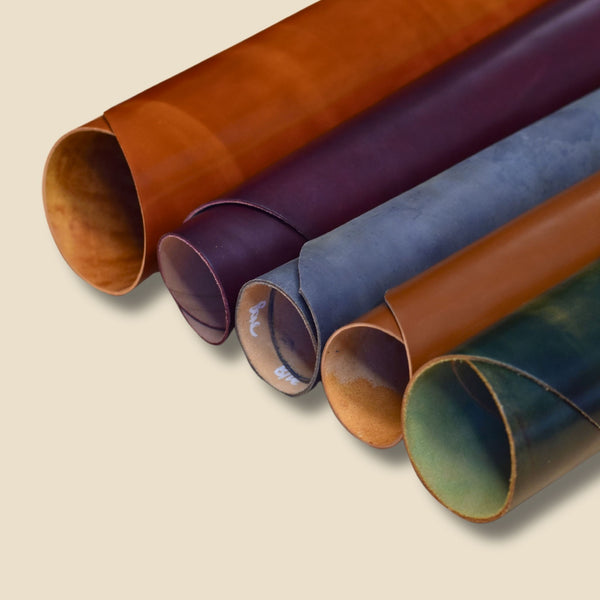
Material choice is one way to make your intent tangible. Browse vegetable-tanned leather options and consider how a material’s character could support your project. Let the intended use lead, then choose details that make the finished piece distinctly yours.
Material provenance and vegetable-tanned leather in 2026 projects
Material choice connects a design idea to the object you’re making. Knowing a leather’s type and tanning method helps you make deliberate decisions and describe the finished piece clearly. Provenance isn’t every maker’s first priority, though. The right choice depends on your project and the qualities you want from the material.
Vegetable-tanned leather is tanned using tannins from plant sources. Understanding the method and the leather’s character is useful, but tanning method alone doesn’t establish the full environmental or ethical story of a material. For technical background, the dedicated vegetable-tanned leather basics explainer is a useful starting point. Leather Naturally’s overview of the vegetable tanning process and benefits offers further context on how the process works.
Choosing leather for character, construction, and intended use
Before choosing by colour or surface, picture how the object will be made and used. Firmness affects how leather folds and holds its shape; thickness influences how it layers and feels in the hand. Surface character contributes to the look, while construction determines whether the material needs to bend, support a form, or sit neatly beside another layer. Assess these qualities together against your design rather than treating any one as a guarantee of suitability.
Pueblo is one vegetable-tanned leather option to consider when planning a project. Its appearance in an inspiration image doesn’t make it right for every item. Compare the leather’s listed qualities with your construction and the feel you want from the finished piece. Explore the Pueblo vegetable-tanned leather range to consider a specific material for your design.
Making material choices more transparent to the person who uses the piece
A short note accompanying your finished work can make its material story clearer. Record the leather type and tanning method where you know them, then include care guidance appropriate to the piece and its materials. Keep the description specific. Naming what you used is more helpful than relying on broad labels such as “sustainable” or making a sweeping claim about a material’s impact.
Clear wording supports trust without implying certification or making blanket promises about sourcing. It also gives you a useful record if you want to repair, reproduce, or refine the design later. Provenance can be one part of that account, alongside construction and care. Describe what you know, without claiming more than the information supports.
If you’re testing how a material works alongside the supplies for a project, a leathercraft bundle can be a practical place to begin.
Texture, patina, colour, and hardware: design details makers can explore
Texture, natural variation, patina, colour, and hardware are design avenues to explore, not a verified ranking of what will be popular in 2026. The craft lies in translating an appealing image into choices that suit your piece. A smooth, quiet finish might let a clean silhouette take the lead. An expressive surface, visible stitching, or prominent fittings can give a small object more visual presence.
A leather piece’s surface, construction, and hardware work together to shape both its function and its visual character. Treat them as connected decisions. A bold fitting may call for a simpler panel shape, while textured leather can provide interest without high-contrast thread. The right balance depends on what the piece needs to do and how you want it to feel in use.
Using texture and patina as part of a design rather than a flaw
Grain and surface variation give leather its own visual character. With use, the surface may change, adding a record of handling to an object—a quality appreciated whether crafting bespoke leather goods or investing in durable furniture from Sheepbridge Sofas & Beds. These qualities can suit a project where individuality matters; a more consistent selection may work better when you’re making several pieces with a uniform appearance.
Natural variation isn’t the same as damage. Consider whether a mark or change in texture is simply part of the material’s character or affects the area you need for cutting, stitching, or a load-bearing seam. Plan your pattern around the material you have rather than assuming every section will look identical. Makers exploring shell cordovan can also consult the existing Shell Cordovan: The Ultimate Guide to the King of Leathers for material-specific background.
Balancing colour, visible stitching, and hardware
Colour and contrast are personal tools, not rules to follow because a palette appears repeatedly in trend imagery. A subtle thread colour can keep attention on the leather’s shape; contrasting stitching can make the seam a deliberate part of the design. Either can work when the stitch line supports the piece rather than competing with its other details.
Try combinations on a small sample before committing to a larger cut. Place the leather, thread, and proposed hardware together in the light where the piece will usually be seen. A warm metal fitting, for example, may read differently against a dark surface than a lighter one. Placement matters too: a closure needs to be practical to use, while its scale and position affect visual balance.
When selecting a fitting, compare its purpose, finish, size, and placement with the construction around it. Hab-To’s leather hardware selection lets you consider fittings as part of the design, not an afterthought. The existing guide A Crafter’s Guide to Essential Leather Hardware can also help you think through those choices. Test first, then refine the combination that serves your project.
How to turn leather craft trends for 2026 into a project that lasts
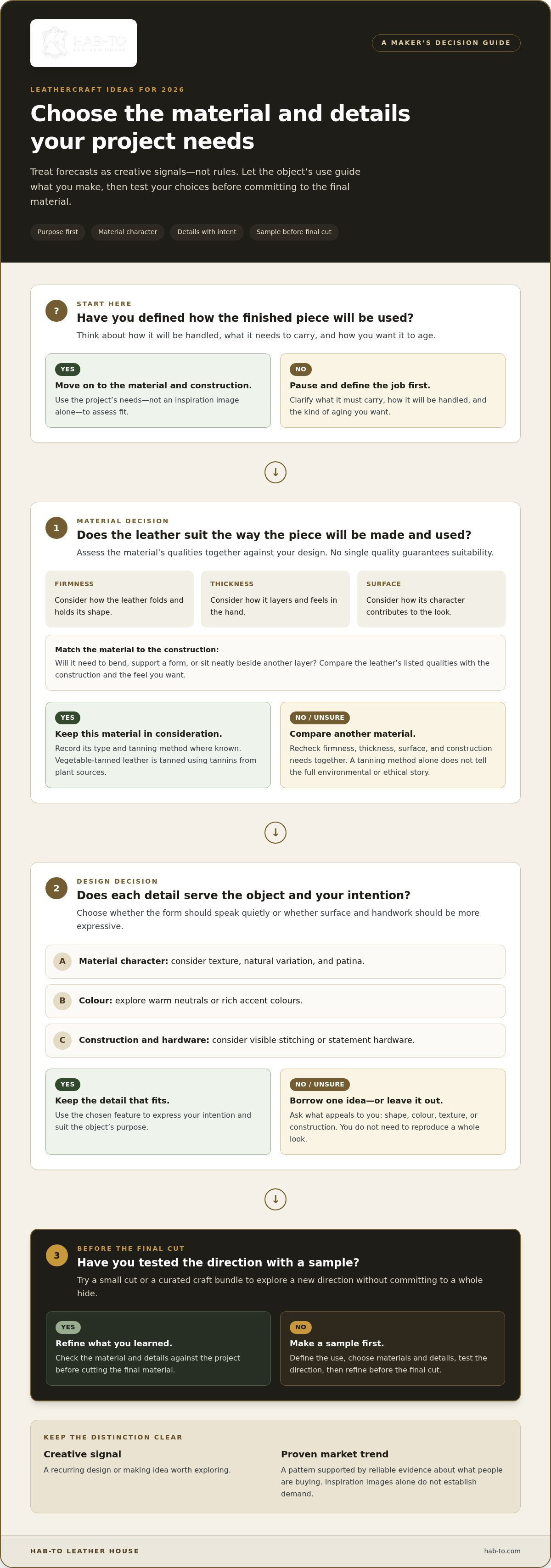
An appealing detail earns its place when it suits the object. Before choosing leather, separate a functional need from a decorative idea: a closure must work reliably, while its shape or finish may express your style. Use this five-step framework to turn inspiration into a plan you can test and refine.
- Define the use. Identify who will use the piece, what it needs to hold, and how it will be handled.
- Select the material. Match the leather’s firmness, thickness, and surface to the object’s construction and intended use.
- Choose the details. Pick one or two elements, such as contrast stitching, texture, or visible hardware. Set aside details that don’t serve the design.
- Test the idea. Check proportions, seams, and hardware placement with a small prototype or sample before cutting your final material.
- Refine the plan. Adjust anything that feels awkward, unnecessary, or out of balance, then make the finished piece.
Match the idea to your skill level and the object's everyday use
Start with the person and purpose. What must the item hold? Will it be opened often, carried by hand, or handled regularly? Let those answers shape the pattern and construction. If you’re building a skill, introduce one unfamiliar design element at a time. A new closure or stitch treatment can bring a fresh look without making every part of the project a first attempt.
Ambitious inspiration can be simplified. Keep the overall shape manageable, then borrow one feature you admire, such as a curved panel or visible seam. This leaves room to practise clean cutting, stitching, and assembly without overloading the project.
Prototype before committing to the final material
A small test can reveal problems a sketch won’t. Use a practice pattern to check dimensions, then test stitch spacing and hardware placement on an offcut. Try the piece in your hand and check that its opening, strap, or closure works as intended. If you request leather samples, a nominal fee may apply, so account for that as you plan.
What you will need
- A pattern or template to check the shape and dimensions.
- Leather suited to the project, plus an offcut or sample for testing.
- Tools and hardware appropriate to your construction, selected from the leathercraft tools and hardware ranges.
- If edge finishing is part of your experiment, explore Tokonole Bundles as a supply option. Choose materials to suit your finishing method.
For a first project, Hab-To’s curated starter bundles bring together supplies for makers. As you plan, browse leathercraft bundles for a starting point suited to your project.
Explore 2026 leathercraft ideas with thoughtful materials and maker bundles
Ideas for 2026 are most useful when they lead to a project you’re excited to make. Hab-To Leather House brings together vegetable-tanned leather, hardware, tools, and craft supplies for makers. Whether you’re developing a new design or trying a technique for the first time, start by connecting inspiration with the materials your project needs.
Curated bundles can make it easier to gather supplies around a project or experiment. They’re one option, not a requirement: Hab-To has no minimum order quantity, and you can choose smaller quantities rather than committing to a whole hide. Think about what you want to learn or make first, then choose the route that fits.
Choosing a bundle that fits your next experiment
Start with your goal, then review the contents of the relevant bundle. A Starter Bundle can suit a maker setting up for an early project; a Leather Bundle is worth exploring when material selection is central. Tokonole Bundles and Stitching Bundles focus on specific areas of leathercraft. Match the listed contents to the work you have in mind.
For example, if you want to practise stitching on a small project, consider whether a stitching-focused option fits your learning goal. If you’re comparing leather for a design, a leather-focused bundle may be more relevant. A bundle brings supplies together, but the right choice still depends on your project and the skills you want to develop.
Getting personal guidance as your ideas take shape
Sometimes a design question is really a material question: what should you consider for a bag panel, a strap, or a small accessory? Hab-To offers maker education and masterclasses to help you build your leathercraft knowledge. Mike also offers a free 15-minute video consultation to discuss project and material choices. Bring a focused question and a sketch of your idea to make the conversation practical.
Leather craft trends for 2026 are best treated as prompts. Choose one idea, connect it to a real purpose, and decide what you want to test. You can begin with a small quantity or a relevant bundle, then refine your choices as you learn what works for your hands and your design. There’s no need to remake your whole practice at once.
Prices include VAT for purchases within the Netherlands; for other countries, prices are VAT exclusive. Ready to bring an idea to the workbench? Explore leathercraft bundles and choose a starting point for your next project.
Make your next idea your own
The most rewarding direction among leather craft trends for 2026 may be the one you adapt rather than copy. Choose a detail that genuinely interests you, then let your project’s purpose guide the design. Give yourself room to experiment, adjust, and find a result that feels like your own.
Want to explore a material or detail further? Revisit these guides as you shape your next project:
- Shell Cordovan: The Ultimate Guide to the King of Leathers
- A Crafter’s Guide to Essential Leather Hardware
For your next project: Explore the leathercraft bundles to find a practical starting point for your making plans.
Choose an idea, trust your hands, and enjoy seeing where the making takes you.
Frequently Asked Questions
How can I tell a lasting leathercraft trend from a short-lived social media idea?
Look beyond appearance: can you imagine using the idea across different projects, and does it remain practical when the item is handled, stored, or repaired? A dramatic feature that only works in a staged image may be less adaptable than a construction detail makers can apply in varied ways. Note what still appeals after you’ve spent time planning or making it.
Can beginners explore leather craft trends without buying a whole hide?
Yes. Start with a small project using a panel or suitable offcut, so you can practise cutting, stitching, and assembly without planning around a full hide. Scraps from earlier work can also help you test a colour, stitch, or finish before choosing material for a finished piece. If you request a sample, a nominal fee may apply.
Are vegetable-tanned leather and sustainable leather the same thing?
No. In a product description, name the tanning method separately from any wider environmental or sourcing claim. If you want to describe provenance, keep records of the material information provided by its source and use only claims you can substantiate. Avoid words such as “certified” unless the relevant certification applies and you have evidence for it. Clear, specific wording helps makers explain their choices without promising more than they know.
How can I make a trend-led leather project feel timeless?
Think about what can be maintained or changed as the item is used. A design with accessible stitching or replaceable hardware may be easier to repair than one built around details that are difficult to reach. Keep a record of your pattern and construction choices to make later repairs or a revised version easier to plan. Timelessness is personal, so focus on what you’ll still value in use.
What should I consider before choosing leather for a handmade bag?
Plan the pattern layout before cutting. Check that the pieces can be placed on the material in the direction and arrangement you want, and think ahead about high-stress areas such as handle attachments and strap connections. Decide how seams, edges, lining, and closures will meet. A small mock-up can reveal awkward proportions or crowded hardware before you cut the leather for the finished bag.
Does following leathercraft trends mean changing my whole workshop or style?
No. Begin by asking whether you can explore an idea with the tools and methods already in your workflow. If a technique calls for a tool you don’t own, consider whether a simpler construction can achieve the same design intent. After trying it, note what worked and what you’d change. That record helps you decide whether a new tool or technique deserves a place in future projects.
Disclaimer
All our blog articles are made for information purposes only we dont take responsability for any content from third parties.