



Waxed Thread for Leather Stitching: Weight and Price
A balanced stitch starts with matching thread thickness to the leather and the seam. A common round waxed thread for leather is 0.55 mm thick, while the typical market price for waxed leather thread is between $6.9 and $8.2 USD. These are useful reference points, but thread size and spool length shape what you’ll need for a particular project.
Choosing waxed thread for leather may seem like a small decision, but it affects the look and handling of a hand-stitched seam. Pre-waxed thread is ready to use, and choosing a suitable size, color, and length can make stitching more comfortable and consistent.
Here, you’ll learn how waxed thread is used for hand-stitching leather, what its wax contributes, and how to compare colors, sizes, spool lengths, weight and price. We’ll also look at where the thread comes from and what to consider when selecting it for your next project.
Key Takeaways
- Match thread thickness to the leather and the look you want from the finished seam.
- Pre-waxed thread is ready for hand-stitching; its coating can affect how it handles as you sew.
- Compare spool length as well as thickness so you can choose an amount that suits your project.
- Color assortments make it easier to coordinate thread with leather or create contrast.
- Market prices vary, so consider the thread’s size and quantity when comparing options.
Pre-waxed thread for hand-stitching leather
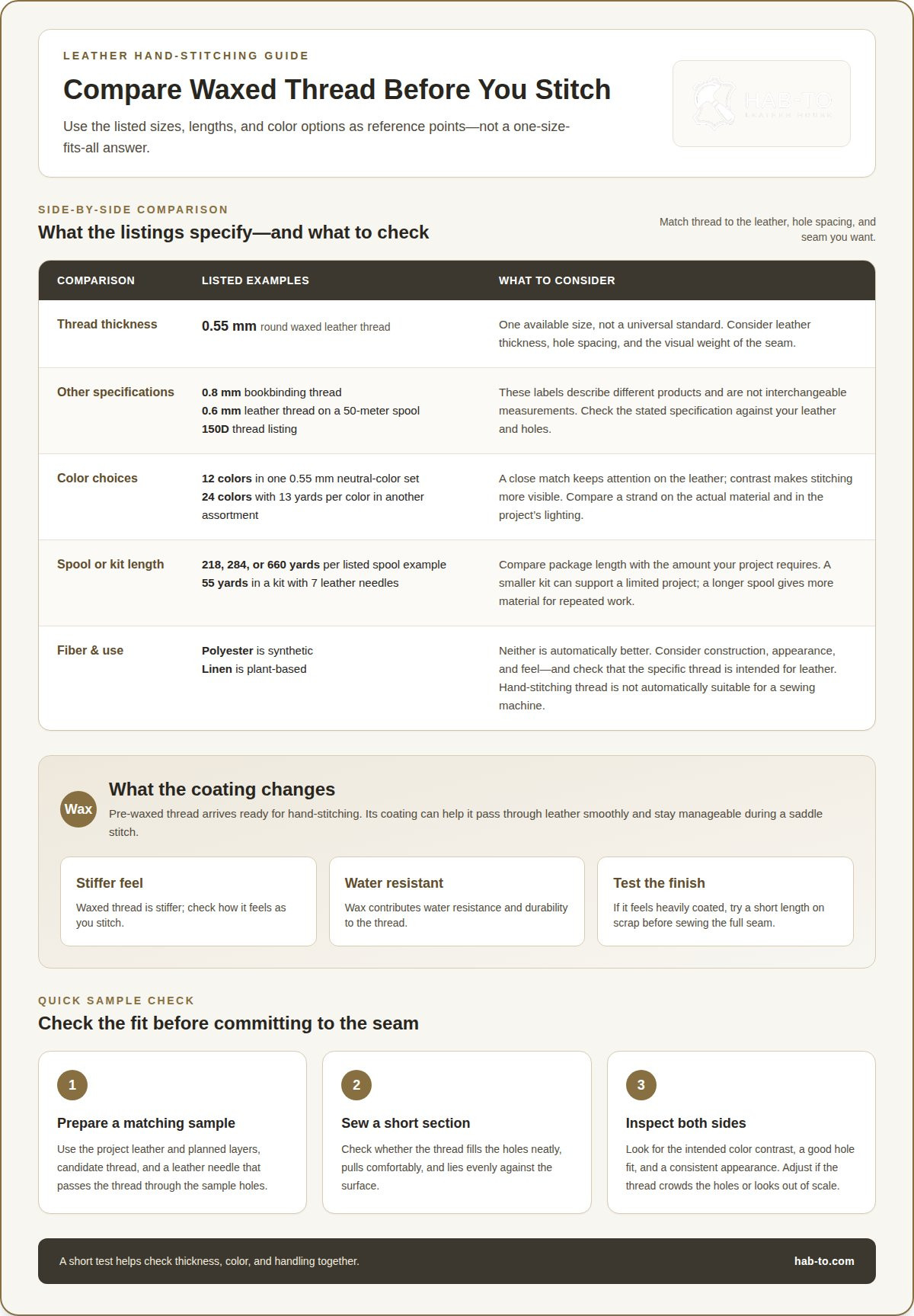
Pre-waxed thread arrives coated and ready for hand-stitching leather. That coating helps the thread pass through leather smoothly and stay manageable during a saddle stitch. A listed round waxed thread for leather stitching measures 0.55 mm thick. Treat that as one available size, not a universal standard. The right thickness depends on the leather, hole spacing, and visual weight you want.
What types of waxed thread are best for leather sewing? For hand sewing, choose thread made for leather, with a construction and thickness suited to your seam. Round thread is one option; a listed example measures 0.55 mm. Consider how it sits in the holes and whether its appearance suits the project.
Thread length matters alongside thickness. Listed spool examples include 218 yards, 284 yards, and 660 yards. A hand-sewing kit example contains 55 yards of thread and 7 leather needles. These different quantities suit different needs: a small kit can support a limited project, while a longer spool provides more material for repeated work. Compare the package length before estimating how much thread a project requires.
Is polyester or linen waxed thread better for leather? Neither is automatically better: choose according to the project and your priorities. Polyester is a synthetic fiber, while linen is plant-based. Consider the thread’s construction, appearance, and feel as you stitch, and check that the particular thread is intended for leather rather than relying on the fiber name alone.
Is waxed thread suitable for leather sewing machines? Pre-waxed thread for hand-stitching is generally intended for manual sewing, not automatically for machine use. Wax can affect how thread moves through a machine’s tension system and guides. Use thread specified for both the machine and the project instead of assuming hand-sewing thread will work.
For hand-stitching, match the thread to the needle or awl holes before sewing the full seam. If it feels heavily coated, test a short length first. Hab-To Leather House advises pressing the thread between scrap fabric for a few seconds to remove excess wax. Try this on a small piece, then check that it still passes cleanly through the leather.
Keep the seam consistent by cutting a manageable working length, threading the needles, and making a short test stitch in matching scrap leather. Check how the thread fills each hole and lies against the surface. This practical test helps you judge whether its thickness and waxed finish suit your hand-stitching method.
Compare that option with the leather and seam you are working on, since a thicker thread may create a more prominent line and may not suit every hole size. A small test also lets you check whether the thread pulls comfortably and sits evenly before committing to the full seam. Adjust your choice if it crowds the holes or looks out of scale with the leather.
Thread colors and sizes
Color shapes the seam’s appearance, while thickness affects how the thread sits in each hole. Compare both with the leather and planned stitch spacing before you begin.
Thread Color Selection
Choose a close match for a quiet seam, or contrast for visible hand-stitching. One neutral-color set contains 12 colors using 0.55 mm thread. Another leather-sewing assortment includes 24 colors, with 13 yards per color. Those examples show how assortments offer choice while dividing the thread among shades.
For a two-tone project, compare the thread with both the exterior and lining. A darker shade can emphasize a saddle stitch, while a close match keeps attention on the leather. Lay a short strand on the actual material before deciding. This lets you judge the color in the project’s lighting rather than relying on a product image.
Thickness, Leather Weight, and Stitch Spacing
Leather thickness and stitch spacing help determine thread thickness. Thicker leather and wider-spaced holes can suit a more substantial thread, while fine leather and close stitches call for a finer look. There is no single size for every project. Sew a sample seam to check that the thread fills the holes without crowding them.
Listings show varied specifications: waxed bookbinding thread at 0.8 mm, leather thread at 0.6 mm on a 50-meter spool, and a product made with 150D thread. These labels describe different products, not interchangeable measurements. Compare stated thickness with the hole size and leather layers in your project.
To choose a thickness, sew a sample using the same leather layers and planned hole spacing as your project. The thread should sit neatly without distorting the holes or leaving them visibly empty. Its length depends on the seam’s path and stitching method, so prepare enough for the seam. Pair it with a leather needle whose eye the thread passes through without force.
What You Will Need
Gather the materials for a small test before settling on a color and size:
- A piece of the project leather, including its planned layers.
- Thread in the candidate color and thickness.
- A leather needle that passes the thread through the sample holes.
Stitch a short section, then inspect both sides for color contrast, hole fit, and a consistent appearance. If you’re bringing project supplies together, a leather stitching bundle is one option to consider.
Benefits of waxing thread
Wax changes how thread behaves during a leather seam. Waxed thread is stiffer, water resistant, and more durable. Those qualities can help it pass through leather and settle into stitches. For example, a hand-sewn wallet seam benefits from thread that holds its twist while passing repeatedly through punched holes. The coating also affects feel, so test a short length before committing to a full project.
During hand-stitching, a waxed surface can help the strands stay together. This makes the thread easier to guide through a saddle stitch, where both needles pass through each hole. Firm, orderly thread is also easier to pull snug without loose fibers catching on the leather. Wax does not replace careful tension: pull each stitch evenly and avoid yanking against the edges of the holes.
Wax can improve resistance to moisture, but it does not make a leather item waterproof. Think of a stitched cardholder exposed to occasional damp hands, not an item designed to be soaked. Durability also depends on the thread’s construction, the leather, hole placement, and how the seam is used. Wax is one useful part of the stitch, not a substitute for sound material choices.
How can you prevent waxed thread from fraying, tangling, or breaking? Cut a clean working length, keep it untwisted, and guide it through the needle eye without scraping the fibers. Pull steadily rather than sharply, and stop if the thread catches in a hole. Before threading, gently roll a freshly cut end between your fingers.
- Reduce tangles: Let the working thread hang freely and unwind its twists before sewing.
- Limit fraying: Keep the needle eye smooth and avoid dragging thread across rough edges.
- Avoid breaks: Pull with even tension, especially where two needles cross in one hole.
- Manage excess wax: Press a working length between scrap fabric for a few seconds.
That last step follows Bias Bespoke’s advice for removing excess wax. Try it on a short piece first, then check how the thread moves through a sample seam. Too much coating can feel tacky or leave residue; removing some may make the thread easier to handle. Keep the scrap fabric clean so wax or color does not transfer back onto the leather.
Use a small leather offcut to compare the thread’s original feel with its feel after preparation. Sew several stitches, inspect both sides, and note whether it stays aligned or snags. This test shows how the waxed finish works with your needle, holes, and stitching rhythm before you begin the final seam.
Product origin and weight
Origin and weight describe different things about a spool of stitching thread. Origin refers to where production or processing took place. Weight may describe the thread itself or the spool’s contents. For example, a label can name a manufacturing country, while a separate specification gives the thread’s thickness. Read each detail separately: one does not establish the other.
Thread production can involve several stages, including fiber preparation, spinning, dyeing, and waxing, which may take place in different locations. A “made in” label refers to the stated manufacturing origin, not necessarily where the raw fiber grew. For a clear comparison, look for separate details about the fiber and finished thread instead of treating one country label as the whole story.
A spool listing both a manufacturing country and a fiber type gives you more information than a country name alone. If a maker tracks materials through several stages, the details may distinguish where the fiber originated from where the thread was spun or finished. For leatherwork, origin can matter when documenting materials or tracing a supply chain. Do not assume a familiar brand name identifies every stage of production.
“Weight” can also be an imprecise product term. It may refer to thread thickness, a standardized linear-density label, or the spool’s total contents. These are different measurements: a heavy spool can hold more thread without containing a thicker strand. Compare like with like, such as thickness with thickness or spool quantity with spool quantity.
Thread thickness affects its appearance and how it sits in a stitched seam. Weight labels may use a different system from millimeter measurements, so do not treat unlike units as direct equivalents. If a product listing gives both a thickness measurement and a thread-weight designation, treat them as separate clues. Use the stated thickness to assess stitch fit, then compare weight labels only when they use the same system.
For a careful purchase comparison, use these steps:
- Identify whether the listed weight means strand size or package quantity.
- Compare products only when their measurement systems match.
- Read manufacturing origin separately from fiber origin.
- Match the stated thread thickness to the seam sample.
- Keep the spool label or product description with your project notes.
For example, a maker documenting a leather notebook can record the thread’s fiber, manufacturing origin, and stated size separately. This creates a more useful material record than noting only a country or brand. It can also help when replacing a spool: matching the thickness and construction matters more than assuming two products share the same origin label.
Product price
Waxed thread prices vary with spool length, thickness, fiber, and packaging. As a market reference, waxed leather thread typically ranges between $6.9 and $8.2 USD, with a median about $7.5. This range reflects four price samples from two sources, collected November 6, 2026, and valid until December 6, 2026. It describes the market, not every thread option.
Compare like with like before judging a spool’s value. A short spool and a long spool can have different prices, even when their thread thickness matches. Check the length beside the price, then compare similar lengths. Listed thread lengths include 218 yards, 284 yards, and 660 yards. Those quantities are not interchangeable for cost comparisons.
Package contents also matter. A hand-sewing kit example includes 55 yards of thread and 7 leather needles. Its price reflects more than thread alone, so compare kits with kits, and spools with spools. If you’re planning a broader project, leathercraft bundles can bring related supplies together, while a thread kit comparison should account for its listed contents.
Thickness can affect price because products aren’t always made to the same specification. For example, a listing may describe 0.55 mm thread, while another uses a different thickness or a weight designation. Compare the size you need first. A cheaper spool offers little value if it doesn’t suit the seam or produce the stitch you want.
Use this practical comparison before buying:
- Match the listed thread thickness to your project.
- Compare spool lengths in the same unit.
- Separate single spools from kits with needles.
- Check whether color assortments divide length across shades.
- Calculate cost per yard only when both price and length apply to that exact option.
That last comparison prevents a misleading estimate. A 24-color assortment with 13 yards per color distributes its thread across shades, unlike one spool with a single color. Think about how much of each shade your project uses. A single-color spool may suit repeated work, while an assortment can reduce the need to buy several colors separately.
Consider the cost of a mismatch, too. If the thread is too thick for the punched holes or the spool runs short, a low price may not serve the project. Choose the specification and quantity first, then compare prices among similar options. Market prices are a snapshot, not a fixed price for every construction, color, or package.
Hab-To Leather House: Leatherworking Tools
Hab-To Leather House offers materials and tools for hand-stitched projects, including leatherworking tools and vegetable-tanned leather to plan alongside your thread choice. For equestrian projects, its related leathers and hardware can help bring your material selection together.
Think about the full build, not just the seam. A wallet, belt, or tack project may call for different leather and hardware choices. Explore the leatherworking tools for equipment relevant to your craft, and consider how the leather’s thickness and intended use pair with your stitching plan.
Contact Hab-To Leather House to discuss your leatherworking project.
Put your next leather project into motion
Let your next seam be more than a finishing detail. Treat it as part of the design: decide whether the stitching should blend into the leather or draw the eye, then carry that choice through the piece. A small sample can turn your plan for waxed thread for leather into a confident first step.
Use the sample to settle into a rhythm before starting the final item. Notice how the thread looks beside the leather, how each stitch sits, and whether the process feels comfortable. Those observations can guide your next choices of materials and tools without locking you into one approach for every project.
Every finished seam teaches you something. Keep what you learn in mind, and build on it in your next piece.
Take your time, trust your eye, and enjoy the craft ahead.
Frequently Asked Questions
What is waxed thread used for in leatherworking?
Waxed thread is commonly used to hand-stitch leather seams on items such as cardholders, journal covers, and belts. Its coating helps the strands stay together as they pass through punched holes and can help the thread withstand repeated pulls during stitching. Choose thread intended for leather and test it on an offcut first, especially for a highly visible seam.
What thread size and thickness should I use for leather?
Choose a thickness that fits the leather layers and punched holes without crowding them. Sew a short sample using the same needle, hole size, and stitch pattern planned for the project. Check both sides: the thread should sit neatly without distorting the holes. On delicate leather, a visually heavy thread may overwhelm the seam.
How much does waxed thread for leather cost?
As a market reference, waxed leather thread typically costs between $6.9 and $8.2 USD, with a median of about $7.5. This is a general market range, not Hab-To Leather House pricing. Compare products with similar thread lengths and thicknesses, and separate single spools from kits containing needles. For assortments, consider how much thread each color provides before comparing overall value.
What thread length and needle size should I use for leather stitching?
Choose enough thread for the seam; listed spool lengths include 218, 284, and 660 yards. Use a leather needle whose eye passes the thread without force.
Disclaimer
All our blog articles are made for information purposes only we dont take responsability for any content from third parties.