What is Pueblo Leather? An Artisan's Guide to Badalassi Carlo's Masterpiece
Why would a world-renowned tannery in Tuscany spend decades perfecting a leather that feels like fine-grit sandpaper the moment you unroll it? At Hab-To Leather House, I've seen many artisans hesitate when they first encounter this material. If you've ever held a hide and wondered what is pueblo leather exactly, you aren't alone. It seems counterintuitive to choose a "rough" surface when we're taught that high quality usually means buttery smoothness.
I understand that uncertainty. You want materials that reflect your dedication to the craft, and a scratchy, matte finish can feel like a gamble. Discover the unique texture, aging process, and crafting potential of Italian Pueblo leather in this comprehensive guide for leatherworkers. We'll explore the mechanical buffing process, the secrets to achieving perfect burnished edges, and how you can source small panels from Hab-To Leather House to test these vibrant colors in your own workshop without the burden of high minimum orders.
Key Takeaways
- Understand the heritage of the Badalassi Carlo tannery and how their traditional Vacchetta method ensures every hide is struck through with deep, consistent color.
- Learn exactly what is pueblo leather by exploring its unique scuffed surface and the remarkable way it transforms from a matte texture into a smooth, glass-like patina.
- Master practical crafting tips, including why the firm temper of this Italian leather makes it an artisan favorite for effortless cutting and skiving.
- Identify the perfect weight for your next project, such as choosing 1.2mm to 1.5mm thicknesses for high-end small goods and watch straps.
- Discover how to source small panels to test new colors for your workshop without the burden of high minimum order requirements.
Defining Pueblo Leather: The Rugged Choice for Modern Artisans
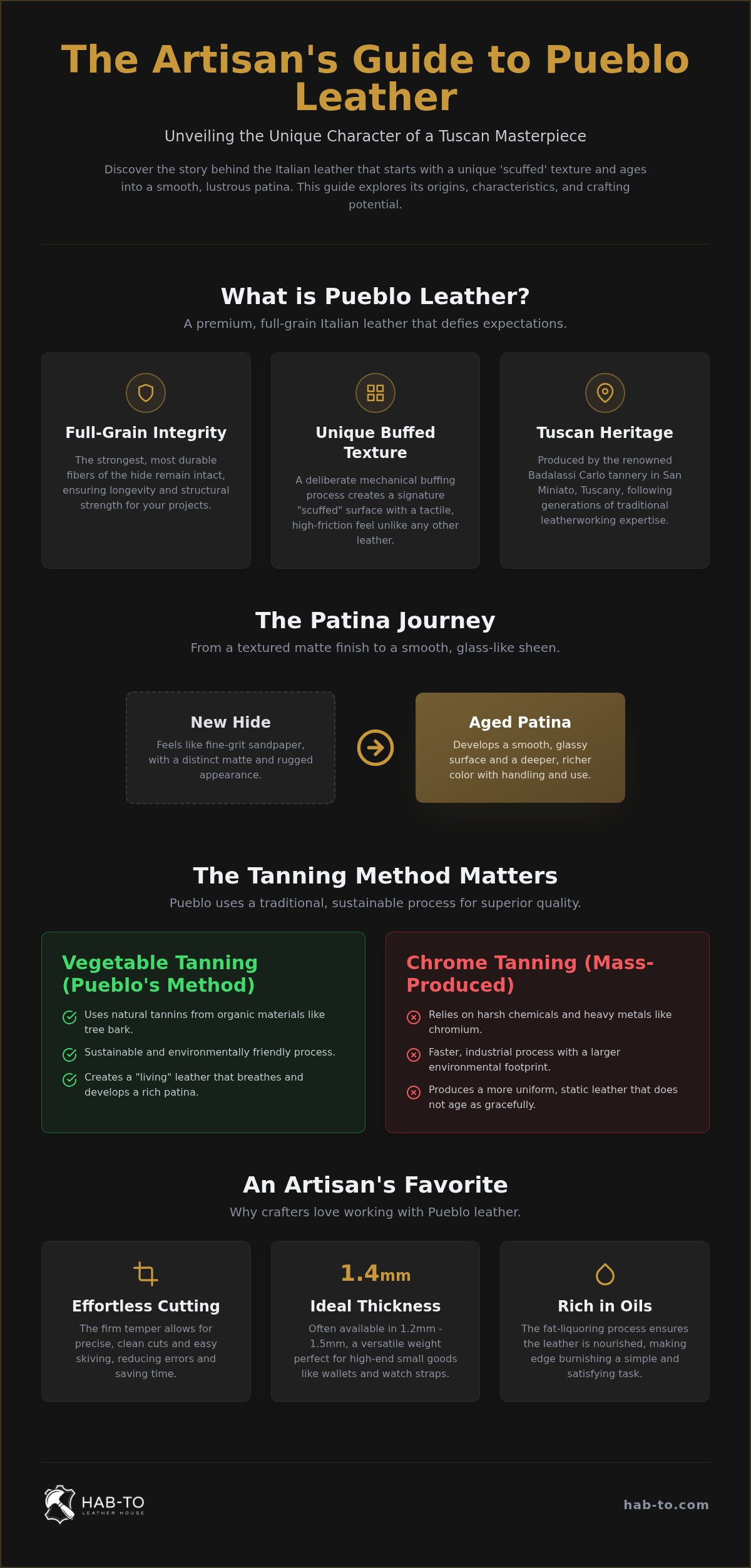
If you're asking what is pueblo leather, you're looking for a material that defies expectations. This isn't your standard, factory-smooth hide. It is a premium Italian vegetable-tanned leather, famously produced by the Badalassi Carlo tannery in the heart of Tuscany. While most high-end leathers aim for a uniform, glossy sheen, Pueblo takes a different path. It embraces a rugged, "scuffed" appearance that feels more like textured paper than animal hide when you first touch it. This unique finish is achieved through the traditional Vacchetta method, a slow and deliberate process that has been refined over generations in the San Miniato district.
Despite its rustic visual appeal, this is a full-grain leather. The strongest, most durable fibers of the hide remain entirely intact. The surface treatment doesn't compromise the structural integrity; it simply adds a layer of character that you won't find anywhere else. For the modern artisan, choosing Badalassi Pueblo leather means working with a material that is both incredibly tough and visually arresting from the moment it hits your cutting mat.
The Science of the Buffed Surface
The signature texture of Pueblo isn't an accident of nature. It is the result of a precise mechanical treatment known as buffing. During this stage, the tannery uses specialized tools to create a circular, scratchy pattern across the grain. This deliberate mechanical abrasion of the grain gives the leather its matte finish and high-friction feel. Unlike standard smooth leathers that can feel slippery, Pueblo offers a tactile grip that makes it a joy to handle during the crafting process. It is this specific buffing technique that sets the stage for the dramatic patina Pueblo is known for, as the raised fibers eventually flatten and polish with use.
Vegetable Tanning vs. Chrome Tanning
At Hab-To, my commitment to quality means I exclusively stock vegetable tanned leather. Unlike chrome tanning, which relies on harsh chemicals and heavy metals, the vegetable tanning process uses natural tannins found in organic materials like quebracho and chestnut bark. This method is far more sustainable and results in a leather that "lives" and breathes. Every hide of Pueblo carries the prestigious "Pelle Vegetale" consortium mark. This guarantee ensures the leather was produced following strict environmental standards in Tuscany. When you understand what is pueblo leather, you realize it is as much about ethical tradition as it is about aesthetic beauty.
The Origin Story: Conceria Carlo Badalassi and the Tuscan Tradition
Deep in the rolling hills of Tuscany lies the leather district of San Miniato. This is the home of Conceria Carlo Badalassi. They aren't just a factory; they are guardians of a centuries-old heritage. As one of the 18 respected members of the Genuine Italian Vegetable-Tanned Leather Consortium, this tannery follows rules that prioritize the earth as much as the hide. When you ask what is pueblo leather, you are really asking about the culmination of this specific Tuscan expertise. It is a material born from a culture that refuses to rush.
The secret to their success lies in the Vacchetta method. It is a slow, rhythmic process where hides tumble in massive wooden drums for weeks. This isn't about industrial speed. It's about letting the tannins penetrate every fiber naturally. Pueblo is their most iconic creation. It blends a rustic, almost prehistoric charm with the high-end luxury required by modern fashion houses. Understanding the history of Badalassi Carlo is the only way to truly appreciate what is pueblo leather and why it behaves so differently from mass-produced alternatives.
What is Vacchetta Leather?
At its core, Vacchetta is defined by the fat-liquoring process. Unlike modern industrial methods that use synthetic oils, Badalassi Carlo uses high concentrations of animal fats to nourish the hide. This results in a material that is remarkably supple and rich to the touch. It creates an internal reservoir of oils that migrate to the surface over time. This is why Vacchetta is the ultimate foundation for a superior patina. While Pueblo has that famous scuffed top, you can see the pure Vacchetta influence in something like Maryam Vacchetta, which shares that same oily, luxurious soul.
The Tuscan Consortium Guarantee
Every hide I source from Badalassi Carlo comes with a specific pedigree. The "hand" logo on the certification tag isn't just marketing. It represents a strict set of environmental and quality standards that every member must uphold. Tanneries in the consortium must use closed-loop water systems and ensure no animal is killed specifically for its skin. These are food industry byproducts, treated with the respect they deserve. At Hab-To, I personally ensure every hide meets these historical standards before it reaches your workshop. If you want to experience this quality across a variety of shades, exploring our curated leather bundles is an excellent starting point for your next project.
Visual and Tactile Characteristics: From Matte Texture to Deep Patina
Pueblo is a leather of two lives. When you first unroll a hide from Conceria Carlo Badalassi, you're met with a matte, high-friction surface that feels almost like heavy cardstock or fine-grit sandpaper. It's rugged. It's honest. But if you're wondering what is pueblo leather really about, you have to look beyond that first day on the workbench. This material is famous for its evolution. It doesn't just age; it transforms. It is one of the few leathers where the final state looks almost nothing like the starting point.
The transformation is driven by the oils from your hands, friction, and exposure to sunlight. As you handle a Pueblo wallet or bag, those initial "scratched" fibers are smoothed down by daily use. The internal oils we discussed in the Vacchetta process begin to migrate to the surface, creating a natural polish. This creates a deep, lustrous sheen that eventually rivals the finest polished leathers. It's a tactile journey from a rustic, paper-like start to a sophisticated, glass-like finish that feels incredibly smooth to the touch.
The Magic of the Pueblo Patina
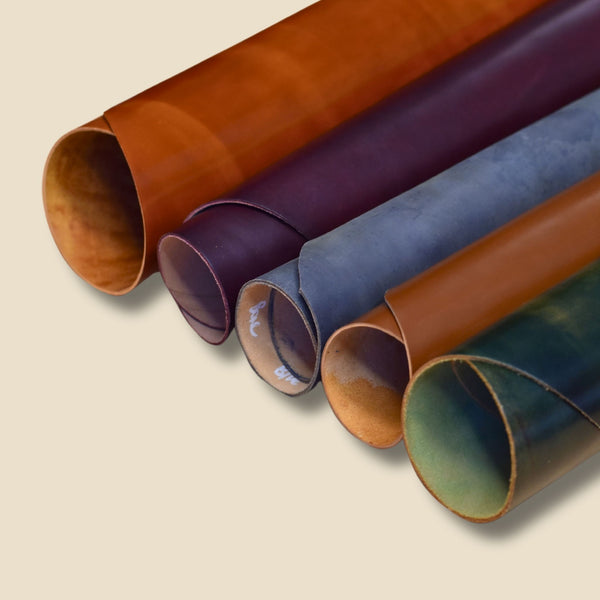
The way this leather takes on color is nothing short of incredible. Lighter shades like 'Olmo' or 'Bone' show the most dramatic changes. They don't just get darker; they deepen into rich, honeyed ambers and dark chocolates. This transition from a rugged look to a sophisticated vintage aesthetic happens relatively quickly compared to other vegetable-tanned hides. I've found that the patina on a Pueblo piece acts as a living record of the owner's journey. Every scratch that heals and every spot that darkens tells a story of daily use and careful craftsmanship.
Edge Finishing and Burnishing
For the leatherworker, Pueblo is a dream to finish. Because of that high oil content from the Vacchetta tanning process, the edges respond beautifully to friction. You don't need a dozen different chemicals or complex waxes to get a professional look. Often, a simple bevel followed by a small amount of Tokonole is all you need to achieve a professional result.
The result is a glass-like edge that feels solid and permanent. Because the leather is struck through with dye, your burnished edges will perfectly match the surface color without the need for edge paint. I prefer this method because it highlights the natural beauty of the grain.
- High oil content makes burnishing effortless even for beginners.
- Achieve a "glass" finish with minimal friction and heat.
- Edges stay smooth and won't "fuzz" up even with heavy pocket wear.
This ease of finishing is why I recommend Pueblo to artisans who want a high-end look without the frustration of stubborn edges. It's a forgiving material that rewards your effort with a brilliant shine.
Practical Tips for Working with Pueblo Leather
Pueblo is a joy to have on your workbench. Unlike some vegetable-tanned hides that can feel spongy or unpredictable, this leather has a remarkably firm temper. This stiffness is a massive advantage when you're aiming for precision. It doesn't stretch or deform while you're trying to make a critical cut. If you've been wondering what is pueblo leather like to skive, you'll find it behaves beautifully. It allows for paper-thin edges without the fibers bunching up under your blade. It is a predictable material that lets you focus on your craft rather than fighting the hide.
One of the most practical benefits for makers is that the hide is completely struck through with dye. When you cut into the material, the color you see on the surface is the same color you'll find in the middle and on the flesh side. This consistency means you don't have to worry about white or "natural" edges peeking through your seams. It also makes edge finishing much faster. Since the color is already there, you can move straight to burnishing. It holds its shape exceptionally well; it is the perfect choice for structured items like cardholders or small clutch bags that need to stand on their own.
What You Will Need: The Pueblo Toolkit
To get the best results, you need tools that respect the unique grain. I recommend using the following items from Hab-To Leather House to ensure a professional finish:
- Ecostick 1804: This water-based glue is essential for Pueblo. It provides a clean, permanent bond without staining the absorbent matte surface.
- Sharp knives and scissors: The buffed surface can catch on dull blades. A fresh, polished edge ensures your lines stay crisp.
- Professional edge bevelers: Essential for removing the corner of the grain before burnishing. A clean bevel is the foundation of a glass-like edge.
- The Stitching Bundle: This curated set helps you achieve the tight, consistent hand-sewn seams that this premium Italian leather deserves.
- Tokonole: Use this for your edges to lock in the fibers and create that signature glass-like shine.
Handling and Storage
Because this leather is so absorbent, you have to be mindful of your environment. Oils from your skin or grease from a dirty workbench will leave permanent marks on the matte surface before the patina process even begins. I always suggest working with clean hands and a freshly wiped cutting mat. When storing your hides, keep them flat and away from direct sunlight to maintain color consistency across the entire panel. Don't be tempted to use heavy conditioners or neatsfoot oil right away. Applying these too early will instantly kill that beautiful matte texture you worked so hard to source. Let the leather age naturally through use instead.
Choosing the Right Pueblo for Your Next Craft Project
Pueblo is one of the most versatile materials in my shop. It doesn't matter if you're a seasoned professional or a hobbyist starting your first project; this leather adapts to your needs. Because it has such a distinct personality, the most important decision you'll make is choosing the right weight. I've seen many makers hesitate when they first learn what is pueblo leather because they aren't sure how it scales. Whether you're making a delicate watch strap or a heavy-duty tote, there is a specific thickness that will make your work shine.
For small leather goods like wallets, cardholders, and passport covers, I recommend a thickness between 1.2mm and 1.5mm. My 1.4mm Virgilio Pueblo is often the sweet spot for these items. It provides enough structure to feel premium but remains thin enough to layer without creating excessive bulk. If you're moving into larger projects like messenger bags, journals, or even desk mats, you should opt for 2.0mm or higher. The 2.2 to 2.4mm Badalassi Pueblo offers incredible durability and a satisfying heft that feels indestructible.
Recommended Project Ideas
The beauty of this leather is how it interacts with the user. I suggest focusing on "high-touch" items where the patina can develop quickly. Here are a few ways to use your next panel:
- Minimalist Wallets: The friction from being pulled in and out of a pocket accelerates the smoothing of the grain. You'll see a dramatic transformation in just a few months.
- Luxury Watch Straps: Use a thinner skived piece for a rugged yet sophisticated look. You can find specialized watchstrap tools in our collection to help with these precise builds.
- Journal Covers: The tactile feel of the buffed surface makes picking up a journal a sensory experience. It's a project that only gets better as the edges soften and the color deepens.
Sourcing Premium Pueblo in Europe
I know how frustrating it is to deal with high minimum orders or long customs delays when ordering from outside the EU. That's why I've built Hab-To to be a different kind of partner for your workshop. My no MOQ policy means you don't have to buy a full hide just to try a new color. You can pick up small panels from the Badalassi Pueblo Collection to mix and match for your specific project needs. It's about giving you the freedom to experiment without the financial burden.
If you're still unsure about which weight or color is right for your design, I'm here to help. I offer a free video consultation where we can look at the hides together and discuss your project. I've spent years working with these materials, and I love sharing that expertise to help you create something truly remarkable. When you understand what is pueblo leather and how it behaves, your crafting potential is limitless.
Bring the Tuscan Tradition to Your Workbench
Pueblo is more than just a material; it is a testament to the slow, deliberate art of Italian tanning. By choosing this leather, you're embracing a hide that transforms alongside your craft, evolving from a rugged matte finish into a polished masterpiece. You now know how the Vacchetta process creates that rich oil content and why these hides are so forgiving on the workbench. Now that you understand what is pueblo leather and why it holds such a prestigious place in the artisan world, you're ready to start your own evolution.
At Hab-To, I bring 160 years of family expertise to help you source the very best. Every hide is sourced directly from the Tuscan Consortium, ensuring you receive the authentic Badalassi Carlo quality your work deserves. If you have questions about a specific project or color, I'm always available for a free 1-on-1 consultation to guide you through the selection. I love helping fellow makers find the perfect piece for their vision.
I can't wait to see the stories you'll tell through your next creation. Happy crafting.
Frequently Asked Questions
Is Pueblo leather real leather?
Yes, Pueblo is 100% genuine full-grain cowhide. It is a premium vegetable-tanned leather produced by the Badalassi Carlo tannery in Italy. The "Pelle Vegetale" consortium mark guarantees its authenticity and traditional Tuscan production. It isn't a synthetic or corrected grain; the unique surface texture is a deliberate mechanical choice that preserves the strongest part of the hide.
How do you care for Pueblo leather?
Minimal intervention is the best approach for this specific hide. You should avoid heavy oils or conditioners in the early stages, as they can ruin the unique matte texture. Let the natural oils from your hands do the work during daily use. Only consider using specialized leather balms after the patina has fully developed and the surface has become naturally smooth and polished.
Does Pueblo leather scratch easily?
Yes, it shows marks easily at first, but these are part of the leather's character. Because of the buffed, open-grain surface, it will pick up scuffs during daily use. Most minor surface scratches can simply be rubbed out with your thumb. The high oil content helps these marks blend into the developing patina, eventually creating a rich finish that hides minor wear beautifully.
What is the difference between Badalassi Pueblo and Virgilio Pueblo?
The primary differences lie in the specific tannery and the available weights. Badalassi Carlo is the original creator and a member of the Tuscan Consortium. Virgilio Pueblo is a high-quality alternative that I often stock in 1.4mm thickness, which is perfect for small goods. Both use the Vacchetta method and offer the same signature scuffed look, though their color palettes and temper may vary slightly.
Can I use Tokonole on Pueblo leather edges?
Yes, Tokonole is the preferred agent for finishing Pueblo edges. Because this leather has a high internal oil content, it reacts incredibly well to friction. A small amount of Tokonole combined with a wooden slicker will produce a glass-like edge very quickly. Since the leather is struck through with dye, you won't need edge paint to achieve a professional, uniform look across your project.
Why does Pueblo leather change color so quickly?
The rapid color change is due to the open fibers and high oil content. When people ask what is pueblo leather, its fast patina is usually the most famous trait mentioned. The buffed surface is highly absorbent, allowing it to take in sunlight and skin oils rapidly. This process flattens the raised fibers and polishes the grain, resulting in a dramatic darkening that happens much faster than smooth leathers.
Is Pueblo leather waterproof?
No, Pueblo leather is highly absorbent and will soak up water. Because it is a vegetable-tanned leather with an open grain, water spots can occur if the hide gets wet. If you spill liquid on it, you should blot it away immediately with a clean, dry cloth. While the developing patina adds some natural resistance over time, it is not a waterproof material and needs protection from heavy rain.
What thickness should I choose for a Pueblo wallet?
A thickness of 1.2mm to 1.5mm is ideal for most wallet projects. This weight provides enough structure to hold cards securely without making the finished piece feel too bulky in a pocket. If you're building a minimalist cardholder with only two layers, 1.4mm is a perfect choice. For internal pockets that require multiple layers, I recommend skiving the edges down to 0.5mm to maintain a slim, professional profile.
Disclaimer
All our blog articles are made for information purposes only we dont take responsability for any content from third parties.