Why Maryam Leather is the Gold Standard for Professional Artisans
What if the secret to elevating your leathercraft from good to world-class wasn't a new tool, but a change in your material? For many artisans, maryam leather represents the pinnacle of Italian tanning, yet the barrier to entry often feels impossibly high. You probably agree that buying a whole horsehide just to test a new wallet pattern is a massive financial risk. It's frustrating to feel stuck between choosing expensive bulk hides or settling for inferior materials that don't have the structural integrity your designs deserve.
At Hab-To Leather House, I want to bridge that gap between ancient Tuscan tradition and your workbench. In this guide, you'll discover why Conceria Maryam’s traditional pit-tanning makes their Shell Cordovan and Vacchetta the ultimate choice for luxury leathercraft. We'll break down the technical differences between these hides so you can select the right weight with confidence. I'll also show you how to source these premium panels with no minimum order requirements, giving you the freedom to experiment without the waste.
Key Takeaways
- Understand why traditional Tuscan pit-tanning creates a superior grain structure compared to modern industrial processes.
- Identify the specific properties of maryam leather Shell Cordovan that prevent creasing and maintain a deep luster over time.
- Learn how to handle the unique temper and oil content of Vacchetta for cleaner cutting, skiving, and assembly.
- Gain confidence in selecting the right material weight for wallets and watch straps through our no-MOQ panel options.
- Master the essential steps for finishing edges on high-oil hides to ensure your luxury projects have a lasting, professional shine.
The Tuscan Legacy: Why Conceria Maryam Matters
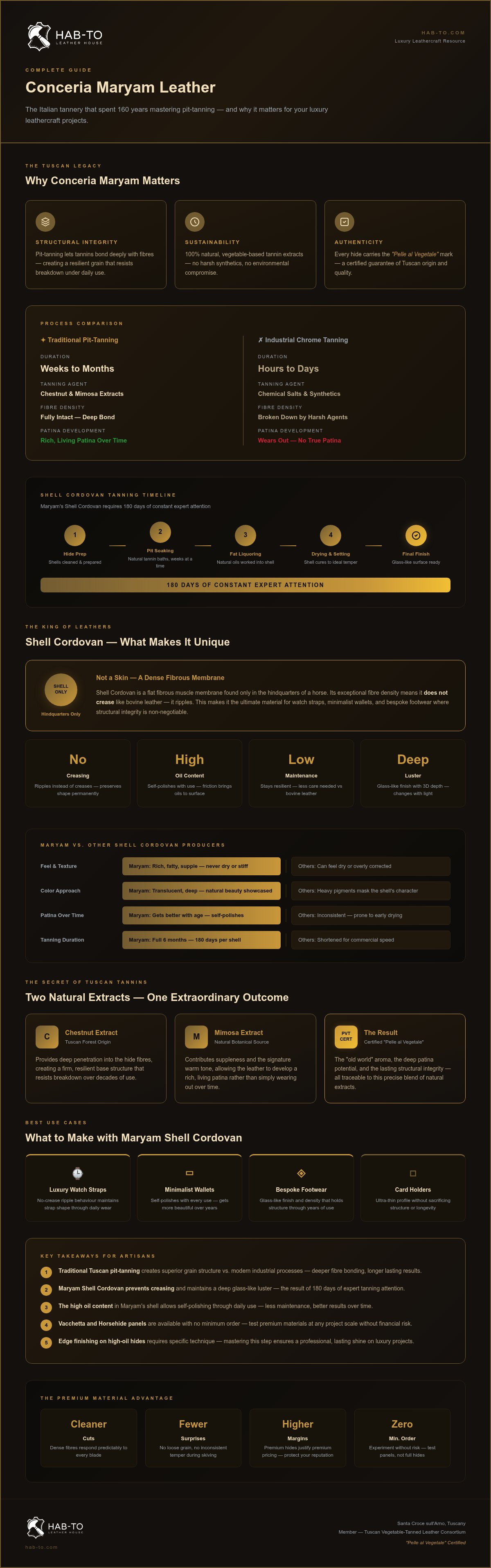
Santa Croce sull’Arno isn't just a dot on a map; it's the crown jewel of the global leather hierarchy. Since the Renaissance, this specific Tuscan district has perfected the art of vegetable tanning. Conceria Maryam stands as a guardian of this ancient history. While modern industrial methods prioritize chemical speed, Maryam remains committed to traditional pit-tanning. This slow, patient process involves soaking hides in natural extracts for weeks, ensuring the fiber density remains intact rather than being broken down by harsh synthetics.
- Structural Integrity: Pit-tanning allows tannins to bond deeply with the fibers, creating a resilient grain.
- Sustainability: The process relies on 100% natural, vegetable-based extracts that are safe for the environment.
- Authenticity: Every hide carries the "Pelle al Vegetale" mark, a guarantee of Tuscan origin and quality.
At Hab-To Leather House, I choose maryam leather because it mirrors our commitment to zero concessions. We only stock materials that represent the pinnacle of the craft. Maryam is a key member of the Tuscan Vegetable-Tanned Leather Consortium. Currently led by Leonardo Volpi, the consortium protects the traditional recipes that define Italian excellence. For you, the artisan, this means the material you buy isn't just a hide; it's a piece of certified heritage that supports ethical production standards.
The Secret of Tuscan Tannins
The unique character of Maryam hides comes from a specific blend of chestnut and mimosa extracts. These natural tannins don't just change the color; they transform the material's soul. That signature "old world" scent you notice when you open a package from our showroom? That’s the aroma of tradition. Unlike chemical tanning, these natural extracts penetrate the hide gradually. This relationship between slow tanning and long-term durability is what allows the leather to develop a rich patina rather than simply wearing out.
Crafting with 160 Years of Expertise
When I handle a hide, I can immediately feel the difference between a family-run tannery and a corporate factory. Family tanneries like Maryam pass down knowledge through generations, ensuring a level of consistency that industrial plants can't match. My 25 years of experience have taught me that heritage sourcing eliminates "surprises" like loose grain or inconsistent temper. When you work with these materials, they respond predictably to your tools, allowing you to focus on the artistry of your project rather than fighting the material.
The King of Leathers: Understanding Maryam Shell Cordovan
Shell Cordovan is often called the king of leathers, and for good reason. It isn't technically skin. It's a fibrous flat muscle, known as the "shell," found only in the hindquarters of a horse. Because this muscle membrane is incredibly dense, it doesn't crease like bovine leather. Instead, it ripples. This unique property makes maryam leather Shell Cordovan the ultimate choice for luxury watch straps, minimalist wallets, and bespoke footwear where structural integrity is paramount.
The tanning process at Conceria Maryam is a grueling test of patience. It takes six months of constant care. Natural tannins and fats are slowly worked into the shell over half a year. This timeframe justifies the premium price point. You aren't just buying material; you're buying 180 days of expert attention. The result is a glass-like finish that feels remarkably substantial yet flexible under your tools.
Maryam vs. Other Shell Cordovan Producers
While several tanneries produce Shell Cordovan, Maryam has a distinct signature. Some shells can feel dry or overly corrected, but Maryam’s version retains a "fatty" and rich feel. It's supple. They achieve deep, translucent colors that showcase the natural beauty of the shell rather than masking it with heavy pigments. When you work with Maryam Cordovan Shell Leather, you'll notice a three-dimensional depth that changes as the leather catches the light. It's a sensory experience that cheaper alternatives simply cannot match.
The Patina Potential of the Shell
The high oil content in Maryam’s shell is a major advantage for the modern artisan. It allows the leather to self-polish through daily use. Every time a wallet is pulled from a pocket, friction brings those deep-seated oils to the surface. It gets better with age. Cordovan requires significantly less maintenance than standard bovine leathers. It doesn't dry out easily. It stays resilient against the elements.
Choose quality first. Better leather means cleaner cuts. Fewer surprises during skiving. Higher margins for your business. Premium hides are an investment in your reputation. If you're looking to test these world-class materials without a massive upfront cost, our leather bundles offer a smart way to experience multiple finishes in smaller, manageable panels.
Beyond Cordovan: Exploring Maryam Vacchetta and Horsehide
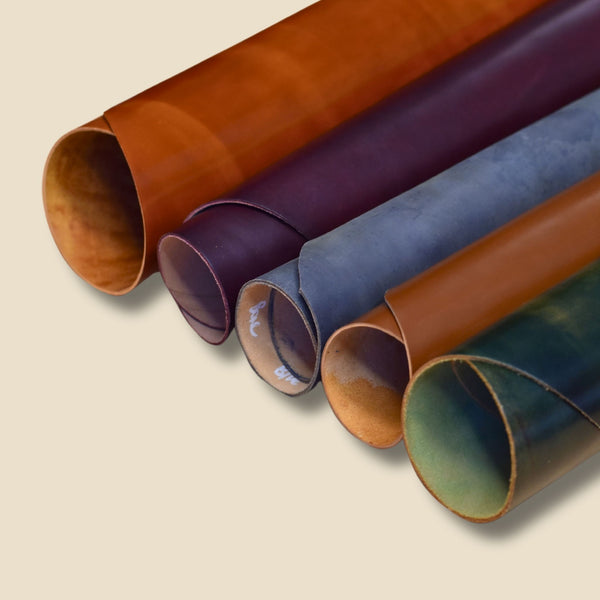
While Shell Cordovan often takes the spotlight, the true depth of Conceria Maryam’s catalog lies in their Vacchetta and horsehide articles. Vacchetta represents the unadulterated, raw beauty of traditional vegetable-tanned leather. It isn't masked by heavy pigments or synthetic finishes. Instead, it relies on the natural tannins discussed earlier to provide its structure and soul. For the professional artisan, this means a material that is honest, responsive, and ready to evolve with use.
The primary difference between Maryam’s bovine and horsehide articles is the fiber density. Bovine hides offer a predictable, smooth grain that is ideal for classic luxury goods. Horsehide, however, features a much tighter fiber structure. It's tougher and more resistant to abrasion. This makes it a favorite for makers who want to create pieces that feel indestructible. Whether you're building a structured tote or a rugged field notes cover, choosing the right maryam leather hide determines how the piece will hold its shape over years of hard wear.
Maryam Vacchetta: The Artisan’s Utility Player
The Maryam Vacchetta Leather we stock typically comes in a 1.3-1.5mm thickness. I consider this the "utility player" of the leather world. It’s thick enough to provide a satisfying "hand" for unlined wallets, yet it remains slim enough for complex bag constructions. Many of these horsehide articles also exhibit a rich "pull-up" effect. When the leather is bent or pulled, the internal oils migrate to create beautiful, temporary highlights in the color. It’s a visual indicator of the high oil content that makes these hides so supple and easy to work with.
Choosing Between Bovine and Horsehide
When should you reach for horsehide over bovine? If your project involves high-stress points, such as straps for professional bags or belts, horsehide’s structural integrity is hard to beat. It resists stretching far better than bovine leather of the same weight. However, for items where a flawless, uniform surface is the primary goal, bovine vacchetta remains the gold standard. It provides a level of sophistication that is perfect for high-end commissions where every millimeter of grain must be perfect.
Selecting the right material is a personal process that shouldn't be done in the dark. If you're struggling to decide between a specific horsehide article or a bovine panel, I’m here to help. You can book a Free Video Consultation to speak with me directly. We can discuss your project’s requirements and I can show you the exact temper and grain of the hides I have ready in the Amsterdam showroom. It’s the best way to ensure you’re investing in the right maryam leather for your specific craft.
The Master’s Bench: Working and Finishing Maryam Leather
Maryam leather possesses a unique temper that sets it apart on the workbench. It's firm yet responsive. Because it’s packed with natural oils and fats, it doesn't behave like dry, mass-produced hides. When you cut into a panel of Maryam horsehide, you'll feel a slight resistance that speaks to its fiber density. This density is a blessing for structural integrity, but it demands respect from your tools. Dull blades will drag. Sharp, well-maintained knives will glide, leaving a clean edge that requires minimal cleanup.
Edge finishing on high-oil vegetable-tanned hides requires a specific touch. If you sand too aggressively, you risk clogging the grain with heat-melted oils. This creates a muddy finish that refuses to shine. Instead, use a light hand. Gradual sanding with high-grit paper is the secret. When it's time to burnish, remember that heat management is everything. High-speed power burnishers can easily overheat these natural fats. Stick to manual slicking or low-speed settings to achieve that deep, glass-like glow that defines luxury craft.
What You Will Need for Finishing
Professional results depend on the synergy between your material and your chemicals. I’ve curated these essentials based on what actually works with Maryam’s specific tannage:
- Tokonole: The gold standard for edge slicking. It penetrates the fibers without stripping the natural oils.
- Ecostick 1804: A high-strength, water-based adhesive that bonds perfectly with vegetable-tanned surfaces.
- Stitching Bundles: Precision hand-sewing requires thread that can stand up to the density of horsehide.
- Edge Bevelers and Glass Burnishers: These are essential for shaping the edge profile before you begin the slicking process.
Skiving and Gluing Maryam Shell
Working with Shell Cordovan is the ultimate test of an artisan’s patience. The fibers are incredibly tight. Always skive Maryam Shell with a freshly stropped blade to prevent tearing the dense fiber structure. If your blade isn't hair-shaving sharp, the shell will bunch up or tear rather than thinning out. It’s a delicate balance that requires a steady hand and a keen eye for detail.
When it's time to assemble, I always recommend water-based glues like Ecostick. Solvent-based glues can sometimes react poorly with the high concentrations of natural fats in maryam leather hides. Water-based options are the ethical choice for premium materials. They provide a permanent bond without the harsh fumes. Just remember to lightly rough the surface of the shell before applying the glue to ensure maximum penetration and a bond that lasts a lifetime.
Sourcing Premium Maryam Leather Without Minimum Orders
Buying premium hides shouldn't feel like a gamble. Many tanneries require you to purchase an entire hide, which can be a massive financial burden for a small project or a solo artisan. At Hab-To, I’ve built my business on a different philosophy: no minimum order quantity (MOQ). Whether you need a single small panel for a watch strap or a full hide for a bespoke briefcase, you get the same world-class quality. Sourcing maryam leather in panels or by the square decimeter (dm²) is the smartest way to test these luxury materials without overextending your budget.
Sourcing directly from our Amsterdam-based warehouse eliminates the hidden costs and risks of EU customs. There are no surprise import duties or weeks of delay at the border. I handle the logistics so you can focus on your bench. I’m also always available to help you match a specific hide to your pattern. I’ve spent over 25 years working with these materials; I know which horsehide temper will hold a gusset and which shell will provide the best luster for a cardholder. It's about providing the expertise you need to succeed.
The Value of the Small Cut
Micro-brands and hobbyists are the heartbeat of the modern leathercraft community. You deserve access to the same materials as the big fashion houses. By offering smaller cuts, I make it possible for you to experiment and mix textures. You can pair the rugged, waxy feel of Pueblo with the glass-like finish of Maryam Shell Cordovan in a single project. This flexibility allows for truly unique designs. While our online store is detailed, the "touch and feel" of our Amsterdam showroom is what I strive to replicate through my personalized service. I want you to feel as confident clicking "buy" as you would holding the hide in your hands.
Next Steps for Your Craft
Great material is only half the battle. If you want to refine your skills and learn the nuances of working with high-end Italian hides, I invite you to join a Masterclass. We dive deep into the techniques required to master these specific fibers. Once you’ve selected your materials, you won't be waiting long. We offer a 24-48 hour delivery promise for national shipping, ensuring your momentum stays high. Your next masterpiece is waiting in a single piece of maryam leather. It’s time to stop compromising on your materials and start building your legacy.
Elevate Your Craft with Tuscan Tradition
Choosing maryam leather means investing in a legacy that respects both the environment and the artisan. We've explored how the dense fiber structure of Shell Cordovan and the raw, versatile beauty of Vacchetta can transform your bench work. These materials are the result of 160 years of family expertise; they offer a level of structural integrity that mass-produced hides simply can't match. By understanding the unique temper and oil content of these Tuscan hides, you can create pieces that don't just last; they improve with every year of use.
At Hab-To, I’ve removed the traditional barriers to these world-class materials. You don't need to worry about massive upfront costs or complex import duties. Our direct Tuscan sourcing and strict no minimum order quantity policy mean you can test premium panels on your own terms. Whether you're a seasoned professional or a dedicated hobbyist, you have access to the same quality found in the world's most exclusive luxury houses. It's time to let your work reflect the passion you put into it.
Your journey toward mastering these exceptional leathers starts with a single cut. I can't wait to see the heirlooms you'll create.
Frequently Asked Questions
Is Maryam leather only for experienced crafters?
No, it's a fantastic material for artisans at any skill level. While the quality is professional grade, the firm temper and predictable response to tools make it very forgiving for those still perfecting their technique. I often tell my students that starting with better materials like maryam leather prevents the frustration of fighting with low-quality hides. It lets you focus entirely on your stitching and edge work without worrying about inconsistent grain.
What makes Maryam Shell Cordovan different from other global producers?
Maryam Shell Cordovan is defined by its specific fatty and rich feel, which is a signature of traditional Tuscan pit-tanning. Unlike some global producers that focus on a very dry or heavily corrected finish, Maryam achieves deep, translucent colors that showcase the natural beauty of the shell. The result is a material with a glass-like finish that feels remarkably substantial under your tools. Many artisans prefer this supple nature because it ripples rather than creasing.
Does Maryam leather require special tools for edge finishing?
You don't need exotic equipment, but you must use sharp tools to respect the tight fiber structure. A standard edge beveler and a wooden slicker are sufficient for finishing a maryam leather project. The essential partner for these hides is Tokonole. Because these materials are packed with natural oils, this cream helps you achieve a professional shine without the risk of over-sanding or creating excessive heat on the edge.
Can I buy Maryam leather in small panels instead of whole hides?
Yes, you can buy these premium hides in small panels or by the square decimeter at Hab-To Leather House. I founded this business on a strict no minimum order quantity policy to support micro-brands and hobbyists. You shouldn't be forced to purchase a whole hide just to test a new color or complete a small commission. This flexibility allows you to access world-class Italian leather without the burden of a massive upfront investment.
How does Maryam leather patina compared to other veg-tan leathers?
Maryam hides develop a rich patina faster than many other vegetable-tanned leathers due to their high oil content. The slow pit-tanning process saturates the fibers with natural fats that migrate to the surface with daily use. Friction and heat from handling create a self-polishing effect that deepens the color and adds a lustrous glow over time. This evolution is what makes traditional Tuscan leather so prized; it truly gets better as it ages.
Is Conceria Maryam leather sustainable?
Yes, Conceria Maryam is deeply committed to sustainable practices. They use 100% natural, plant-based products like chestnut and mimosa extracts throughout the tanning process. As a member of the Tuscan Vegetable-Tanned Leather Consortium, they adhere to strict environmental standards that prohibit the use of heavy metals or toxic chemicals. We exclusively stock these ethical materials to ensure your craft supports traditional methods that are safe for both you and the planet.
What thickness is best for a Maryam leather watch strap?
For a durable and comfortable watch strap, a thickness of 1.3 to 1.5mm is usually the best choice. This weight provides enough structure to hold its shape while remaining flexible enough to wrap around the wrist. If you are using Maryam Vacchetta, this standard thickness is incredibly versatile for both unlined and lined designs. You can always skive the ends down for a cleaner fit around the buckle or the watch lugs if needed.
Do I need to apply oil or wax to Maryam leather immediately?
You don't need to apply oil or wax to your leather immediately after purchase. The tannery spends months ensuring the fibers are thoroughly nourished with natural fats. Adding extra conditioners too soon can actually dull the finish or oversaturate the grain. It's much better to finish your project and let the leather settle. I only recommend conditioning after several months of heavy use, or if the material begins to feel dry to the touch.
Disclaimer
All our blog articles are made for information purposes only we dont take responsability for any content from third parties.