The 'Ano' Suffix in Italian Leather: Why Toscano and Artigiano Define Quality
Have you ever looked at a leather stamp and wondered if those elegant Italian words are just marketing fluff? When you see the ano suffix on terms like Toscano or Artigiano, you aren't just looking at grammar. You're looking at a centuries-old promise of quality. I know how frustrating it is to stare at a beautiful hide and worry if it's the real deal or just another piece of "genuine leather" that will fail your craft. You want the heritage of the Tuscan Vegetable-Tanning Consortium, but you don't always need a full hide to finish a project.
It's a common struggle for makers who value authenticity but can't justify massive minimum orders. I've spent years working with these materials. I've seen how the right certification from the 20 tanneries in the Consortium changes everything. In this article, you'll discover why these specific terms represent the gold standard of Italian vegetable-tanned leather. We'll explore the history of world-class tanneries like Badalassi Carlo and Maryam. I'll also show you how to source premium Pueblo leather or Shell Cordovan in small panels. This way, you can bring 160 years of family expertise to your workbench without the overhead.
Key Takeaways
- Understand that the ano suffix in terms like Toscano and Artigiano is a linguistic seal of authenticity, signifying specific regional heritage and artisanal methods.
- Learn how to identify the "Hand" logo from the Tuscan Vegetable-Tanning Consortium to ensure your hides meet strict environmental and quality standards.
- Discover the specialized mastery of world-renowned tanneries like Conceria Maryam and Badalassi Carlo, known for their superior Shell Cordovan and Pueblo leathers.
- Master the techniques for cutting and edge finishing premium Italian hides to achieve a professional, artisan-level result on every project.
- Find out how to access these high-end materials through panels and shoulders with no minimum order requirements, making professional-grade leather accessible for any scale.
Decoding the 'Ano': Toscano, Artigiano, and the Italian Tradition
Italian leather stamps carry a weight of history that goes far beyond simple branding. When you see the ano suffix on a hide, you're looking at a linguistic map of quality. In the Italian language, this suffix often transforms a noun into an adjective describing origin, character, or a specific way of being. It's the difference between a generic material and one with a distinct soul. For us at Hab-To Leather House, these terms aren't just marketing labels. They represent a commitment to traditional vegetable-tanned leather that our family has respected for generations. Understanding these suffixes helps you cut through the confusion of "genuine leather" marketing and find hides that actually age with grace.
Toscano: The Heart of Vegetable Tanning
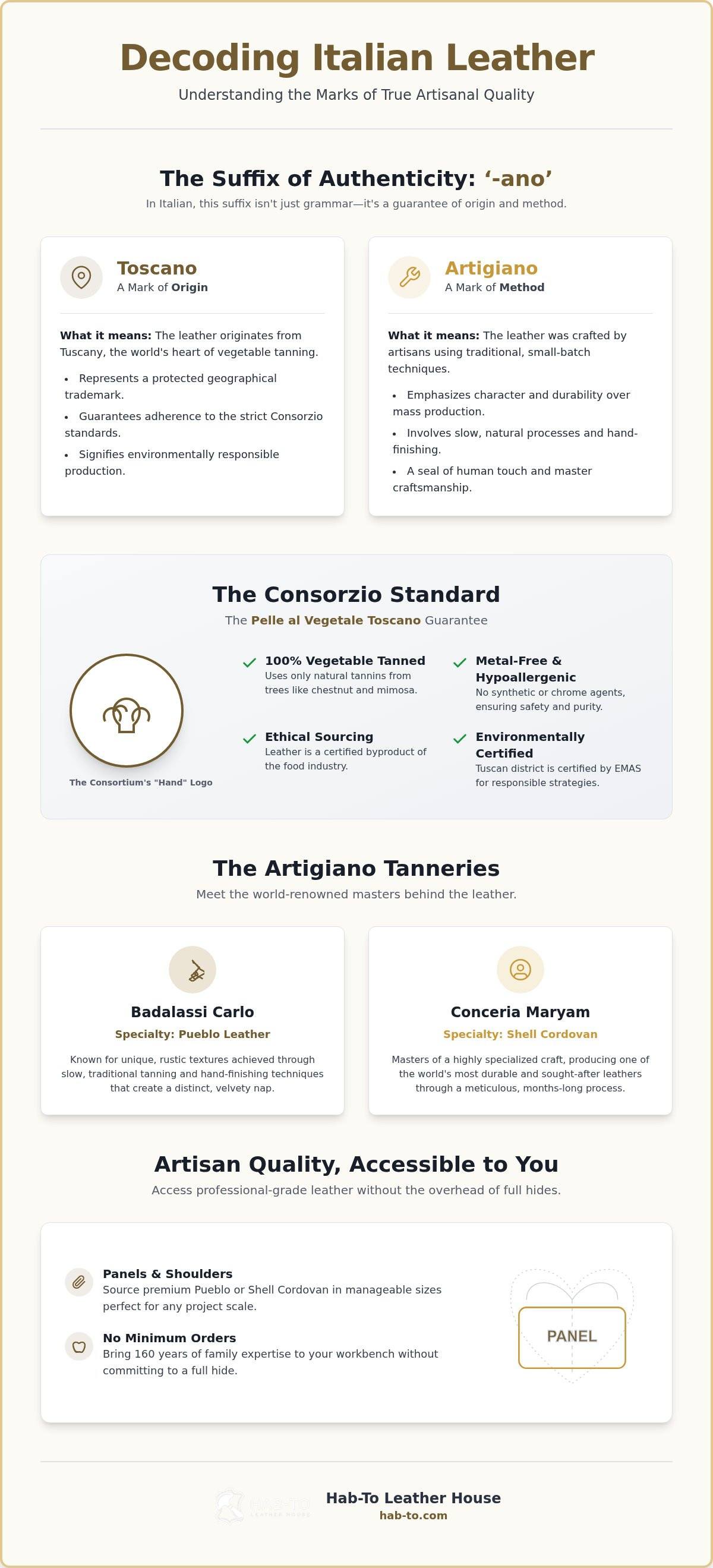
Toscano refers specifically to the Tuscany region, the undisputed epicenter of the world's finest leather. This isn't just a geographical marker; it's a protected trademark. The Consorzio Vera Pelle Italiana Conciata al Vegetale ensures that any hide labeled "Pelle al Vegetale Toscano" follows strict procedural guidelines. These standards, updated as recently as March 21, 2022, cover everything from the origin of raw hides to metal-free tanning techniques. The Tuscan tanning district is currently the only one in Italy certified by EMAS for responsible environmental strategies. When you choose a Toscano hide, you're investing in a district where the water, the natural tannins, and the history are legally guarded to maintain a specific, world-class standard.
Artigiano: The Mark of the Master Craftsman
While Toscano tells you where the leather was born, Artigiano tells you how it was raised. It translates to "Artisan." This suffix denotes a small-batch approach that favors character and durability over mass production. Unlike industrial chrome tanning, an Artigiano tannery focuses on slow, natural processes. This often involves hand-finishing techniques that create the unique, rustic textures found in Badalassi Pueblo leather. These master craftsmen use specific fats and waxes to ensure the leather develops a deep patina over time. The ano suffix acts as a seal of human touch. It confirms that the tannery prioritized the craft over the machine, resulting in a hand-finished quality that you can feel the moment you pick up a panel for your next project.
The Consorzio Standard: What 'Pelle al Vegetale Toscano' Means
When you run your fingers over a premium hide, you might notice a distinct stamp featuring a stylized hand. This isn't just a decoration. It's the trademark of the Consorzio Vera Pelle Italiana Conciata al Vegetale, an organization representing 20 tanneries in the Tuscan district. The ano suffix in "Toscano" serves as more than a regional marker; it's a legal boundary. To use this designation, tanneries must adhere to strict procedural guidelines that were updated as recently as March 21, 2022. These rules ensure that every square inch of leather is produced using traditional methods that respect both the environment and the craft.
This ano designation ensures the hide is metal-free and follows the highest safety standards. The Consorzio acts as a guardian of the "Made in Tuscany" brand. They certify that the leather is a byproduct of the food industry, ensuring no animal is killed specifically for its skin. For a maker, this stamp is the ultimate peace of mind. It means you aren't just buying material; you're buying a transparent supply chain that respects ISO 26000 guidelines for social responsibility. It's a mark of trust that separates master-grade hides from mass-market alternatives.
The 100% Vegetable Tanned Guarantee
The "Toscano" label is a strict exclusion of synthetic and chrome tanning agents. Instead, tanneries use natural tannins derived from mimosa, chestnut, and quebracho trees. These plant-based extracts give the leather its characteristic woody scent and incredible ability to patina. Because the process is metal-free, the leather is hypoallergenic and biodegradable. You can verify the authenticity of your hide by checking the numbered certificate that accompanies every genuine Consorzio hide. This certificate features an anti-counterfeiting system, allowing you to trace the leather back to the specific tannery that produced it.
Authenticity in the Digital Age
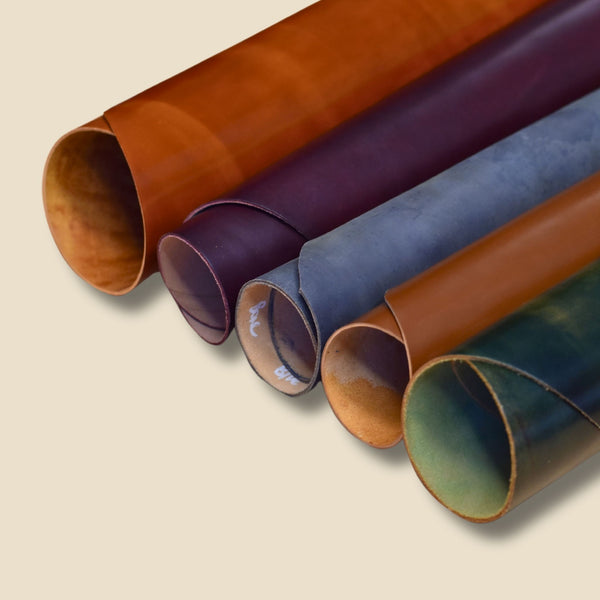
The term "Italian Leather" is often thrown around loosely online. Many sellers use it to describe low-quality "genuine leather" that was simply finished in Italy but tanned elsewhere using harsh chemicals. True Toscano leather is different. It's defined by its origin and its artisanal process. If a hide is labeled as "Toscano-style" but lacks the Consortium's hand logo, it likely hasn't met these rigorous standards. Sourcing directly from a trusted wholesaler ensures you're getting the real deal. If you're new to these materials, a great way to experience the difference is to experiment with these textures using our leather bundles. This allows you to feel the quality of authentic Tuscan hides without committing to a full shoulder or hide immediately.
Maryam and Badalassi: The 'Artigiano' Tanneries Behind the Leather
If you want to see the 'Artigiano' philosophy in action, you look at the tanneries that define the Tuscan district. While many producers aim for speed, Conceria Maryam and Badalassi Carlo lean into the slow, deliberate methods that make the ano suffix meaningful. These tanneries are pillars of the Consorzio Vera Pelle Italiana Conciata al Vegetale. They represent the peak of the 'Toscano' tradition by refusing to automate what should be done by hand. When you choose between their offerings, it helps to understand the distinct personalities of their leather. Shell Cordovan is dense and glossy. Vacchetta is oily and traditional. Pueblo is textured and rustic. Each serves a different purpose, but all share the same artisanal DNA.
Conceria Maryam: The King of Vacchetta and Cordovan
Conceria Maryam is legendary for its mastery of horsehide and specialty skins. Their Maryam Shell Cordovan is produced through a rigorous pit-tanning process. This isn't a quick soak. The hides spend months in bark-liquor pits, absorbing natural tannins at their own pace. This 'Artigiano' approach creates a leather that's incredibly durable and resistant to creasing. It's why Maryam is the first choice for makers creating high-end watchstraps or bespoke footwear. The leather doesn't just sit on the surface. The oils are driven deep into the fibers, ensuring the material stays supple for decades. It's a testament to how the ano suffix guarantees a material that performs as well as it looks.
Badalassi Carlo: The Texture of Pueblo
Badalassi Carlo takes a different but equally artisanal path with their signature articles. Their most famous creation is Badalassi Pueblo Leather. What makes it unique is the 'Artigiano' buffing technique. Craftsmen use a specialized tool to lightly abrade the surface in circular motions. This creates a unique feel and a matte appearance that looks almost like stone. Over time, the oils from your hands interact with the surface. The matte texture smooths out, and the leather develops a deep, rich patina that's characteristic of the finest 'Toscano' hides. It's a leather that tells a story the more you use it. Sourcing from these tanneries means you're getting the best of the Italian tradition. Whether you need the refined gloss of Maryam or the rugged character of Badalassi, you're working with materials that have been refined over generations.
Working with Premium Hides: A Guide to 'Italiano' Craftsmanship
Stepping up to premium Italian hides changes how you approach your workbench. When you handle a piece of authentic Toscano leather, you'll immediately notice the density and the way it responds to your blade. This isn't just about a fancy name. It's about the physical properties of a material that has been tanned over months rather than days. The ano suffix found on these stamps isn't just about origin; it's a technical indicator of how the fibers will respond to your tools. Achieving a true 'Italiano' look requires a shift in mindset. You need to respect the grain and understand how the natural oils will react to heat and pressure. Precision is the baseline here. Because these hides represent a significant investment, every cut needs to be intentional and every edge must be considered.
What You Will Need: The Artisan's Toolkit
To do justice to these materials, you need tools that match their quality. Standard utility knives often drag through the dense fibers of vegetable-tanned leather, leading to frayed edges. I always recommend using high-quality Leathercraft Tools like Japanese skiving knives or sharp pricking irons for clean, consistent stitches. For bonding, avoid harsh solvents that can discolor the natural tannins. Instead, use a pH-neutral adhesive like Ecostick 1804 Leather Glue. It provides a professional bond without compromising the leather's integrity. If you're just starting your journey into high-end craft, the Leathercraft Master Bundle is a perfect entry point, providing the essentials needed to handle these hides with care.
Burnishing 'Toscano' Edges for a Professional Finish
The hallmark of an 'Artigiano' piece is the edge. High-density vegetable-tanned leather contains enough natural tannins to achieve a glass-like finish without heavy paint. Start by sanding your edges with progressive grits, usually from 400 up to 800. Once the edge is smooth and square, apply a small amount of Tokonole. This water-based burnishing cream penetrates the fibers and binds them together. Use a wood slicker with brisk, light strokes. The friction generates just enough heat to seal the edge. Unlike chrome-tanned leather, which can feel spongy, these Italian hides compress beautifully. This results in a durable, polished look that defines luxury goods. Understanding your leather weight is also key. Use thinner 0.5mm to 1.0mm panels for linings and watch straps, while 1.5mm to 2.0mm shoulders are ideal for wallets and small bags that need to hold their shape.
Start Your Journey: Premium Leather Bundles at Hab-To
I'm Mike, and I've seen firsthand how the right material can transform a maker's confidence. We know that the ano suffix on an Italian stamp represents a massive legacy of quality and tradition. However, for many crafters, that legacy has traditionally been locked behind a minimum order of twenty or thirty hides. At Hab-To, we've decided to strip away those corporate barriers. Whether you need a small panel of Maryam horsebutt for a watch strap or a single shoulder of Badalassi for a briefcase, we provide it without the MOQ headache. This philosophy is rooted in our 160 years of family expertise. We treat every order with the same care, ensuring that professional-grade materials are accessible to every maker.
Sourcing Italian Excellence in Small Quantities
One of the biggest hurdles in leathercraft is the "full hide fear." It's the hesitation to cut into a massive piece of expensive leather for a new design. We solve this through our Leather Bundles and Crafting Bundles. These selections are curated to give you a variety of textures and colors, allowing you to experiment with authentic Toscano quality without the financial burden of excess stock. Because we operate as an Amsterdam-based wholesaler, we handle all the logistical heavy lifting. This eliminates the customs risks, hidden taxes, and unpredictable shipping fees often associated with importing directly from Italy. You receive the same world-class material used by luxury fashion houses, but with the personal service of a local shop. If you're staring at your screen wondering which thickness or tannery is right for your specific project, you can book a free video consultation with me. We can look at the hides together and find exactly what you need.
Mastering the Craft through Education
Having the best leather on your bench is only half the journey. You also need the technical skills to treat that material with the respect it deserves. Our Hab-To Masterclasses are designed to bridge that gap. We want to teach you the 'Artigiano' way of working, focusing on the nuances that separate a good project from a masterpiece. We dive deep into advanced techniques that respect the unique properties of the ano marked leathers we sell. From understanding how natural oils migrate during folding to achieving that perfect, mirror-like burnish, our goal is to be your mentor as much as your supplier. It's about building a community where the heritage of Italian tanning is matched by the skill of the modern maker.
Bring the Spirit of Tuscany to Your Workbench
Understanding the Italian tradition means looking past the surface of the hide. The ano suffix is a seal of authenticity that connects your work to centuries of refined vegetable tanning. You've seen how terms like Toscano and Artigiano represent a strict commitment to metal-free processes and artisanal hand-finishing. By choosing hides that meet the rigorous standards of the Tuscan Consortium, you ensure your projects possess a character that only improves with time. These materials don't just age; they develop a story through their unique patina.
You don't need to be a large-scale manufacturer to access this level of quality. Our 160 years of family heritage is built on supporting makers of all sizes. We've removed the barriers of high minimum orders, giving you direct access to world-class shoulders and panels from legendary tanneries like Maryam and Badalassi. I'm here to help you navigate these choices and find the perfect material for your next masterpiece. It's time to stop settling for generic leather and start building your legacy with materials that reflect your dedication to the craft. I can't wait to see the incredible work you produce with these exceptional hides.
Frequently Asked Questions
What does the 'ano' suffix mean in Italian leather terms?
The ano suffix in Italian indicates origin or a specific quality of a material. For example, "Toscano" means from Tuscany, while "Artigiano" means artisanal. This linguistic marker helps crafters identify hides that follow centuries of tradition rather than mass-produced industrial methods. It serves as a seal of heritage on every hide stamp.
Is 'Toscano' leather the same as 'Genuine Leather'?
Toscano leather is vastly superior to the "Genuine Leather" label. While "genuine" is often a vague term for low-quality split hides, Toscano is a legally protected designation. It guarantees the leather is 100% vegetable-tanned in the Tuscan district. These hides are durable, hypoallergenic, and develop a rich patina that generic leather simply cannot achieve.
Why is vegetable-tanned leather from Tuscany so expensive?
The cost reflects the time and natural materials involved in the process. Unlike chrome tanning which takes 24 hours, Tuscan vegetable tanning takes up to 60 days in bark-liquor pits. The use of natural tannins like chestnut and mimosa, along with strict environmental regulations from the Consorzio, ensures a premium, sustainable product that justifies its price through longevity and beauty.
Can I buy Maryam Shell Cordovan in small panels?
Yes, you can source Maryam Shell Cordovan in small panels directly from Hab-To. We understand that hobbyists and small businesses don't always need a full hide. By offering premium horsehide and Cordovan in smaller sizes with no minimum order quantity, we make professional-grade materials accessible for projects like watch straps or wallets.
What tools do I need to work with Italian vegetable-tanned leather?
Working with dense Italian hides requires precision tools. You should use a very sharp Japanese skiving knife or a specialized leather knife to prevent dragging through the fibers. High-quality pricking irons are essential for clean stitching. For finishing, you'll need Tokonole burnishing cream and a wood slicker to seal the edges of your ano marked leather professionally.
How can I tell if a leather hide is authentically 'Artigiano'?
Authenticity is guaranteed by the Consorzio Vera Pelle Italiana Conciata al Vegetale. Look for the "Hand" logo stamp on the hide and the accompanying numbered certificate. These certificates feature an anti-counterfeiting system. Additionally, Artigiano hides have a distinct woody scent and a natural surface that shows the unique grain of the animal.
Does Hab-To ship premium Italian leather internationally?
Hab-To ships all our premium Italian leather internationally from our warehouse in Amsterdam. We serve makers worldwide, providing fast shipping and handling all the logistical details. This allows crafters outside of Italy to access tanneries like Maryam and Badalassi without the stress of managing complex import regulations or high minimum orders themselves.
What is the best way to finish the edges of 'Toscano' leather?
The best finish comes from a multi-step burnishing process. Start by sanding the edges with progressive grits, usually from 400 up to 800. Apply a thin layer of Tokonole and use a wood slicker with light, fast strokes. The high fiber density of Toscano leather allows it to compress and shine, creating a professional, glass-like edge.
Disclaimer
All our blog articles are made for information purposes only we dont take responsability for any content from third parties.