
The Professional Guide to Watchstrap Making Tools and Materials
A watchstrap is the most unforgiving project in leatherwork. Have you ever felt the frustration of a bulky beveler ruining a delicate 18mm edge or a beautiful piece of leather wasted because of a clumsy skive? It's a craft measured in millimeters; standard leatherworking gear often feels like using a hammer to set a diamond. Finding specialized watchstrap making tools that respect the scale of your work is the first step toward professional results.
I understand these challenges because I've spent 25 years working with the finest materials. At Hab-To, we want to help you master this art of precision. We'll show you how to pair high-precision tools with premium vegetable-tanned leathers to create straps that last a lifetime. You'll gain the confidence to handle exquisite materials like Shell Cordovan and Pueblo leather without the fear of wasting small, precious panels.
This guide offers a curated list of essential equipment, from precision knives to specialized leather glue from Ecostick Intercom. We'll explore why specific tannages from Conceria Maryam work best for wristwear and provide the expert advice you need to start your next project with total clarity.
Key Takeaways
- Learn why standard gear is often too bulky and how to select high-precision watchstrap making tools for professional results.
- Discover why vegetable-tanned leathers like Shell Cordovan and Pueblo are the superior choice for durability and skin-contact comfort.
- Master the techniques and materials like Tokonole needed to achieve a "glass-like" edge finish on thin, delicate layers.
- Understand how to balance leather temper and thickness so your straps are both flexible and resilient from day one.
- Gain the confidence to work with premium Italian hides in small quantities without the frustration of wasting expensive materials.
The Precision Challenge: Why Watchstrap Making Requires Specific Tools
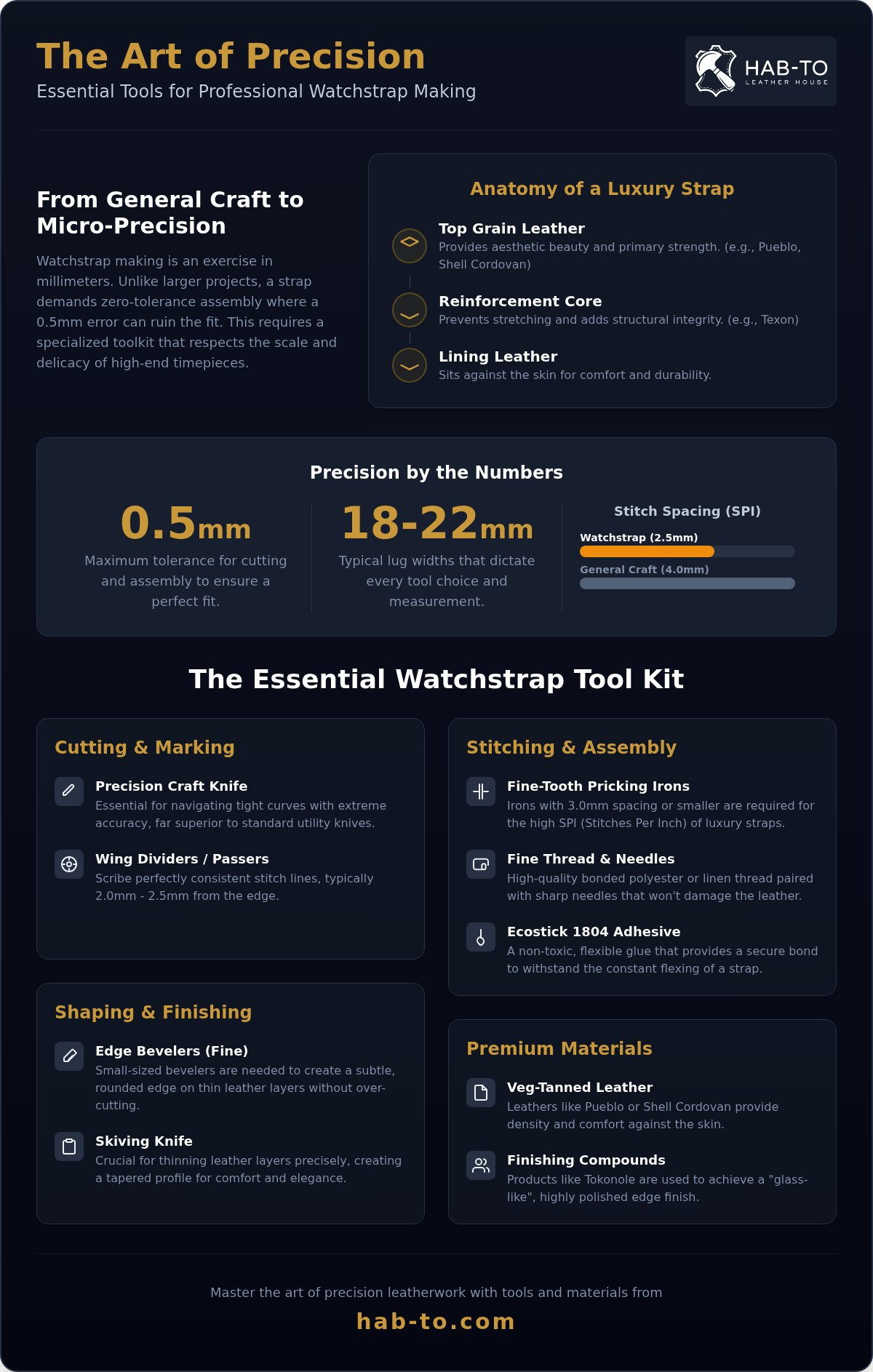
Watchstrap making is an exercise in micro-precision. While crafting a bag allows for slight variances, a watch strap demands zero-tolerance assembly. If your cut is off by even 0.5mm, the strap will either rattle against the lugs or simply won't fit the watch. This is why general leatherworking tools often fail the craft. They are designed for larger radiuses and thicker materials. For a strap, you need specialized watchstrap making tools that handle the delicate nature of high-end timepieces with surgical accuracy.
Using high-quality Watch strap materials is non-negotiable for professional results. Vegetable-tanned leather, such as Pueblo leather, provides the necessary density for micro-stitching. It doesn't stretch or distort under the tension of fine thread, ensuring your stitch lines remain perfectly straight even at high densities. This structural integrity is what separates a hobbyist project from a luxury boutique product.
The Anatomy of a Professional Watchstrap
A luxury strap is rarely a single piece of leather. It's a sandwich of precision layers. You have the top grain, which provides the aesthetic and primary strength. Beneath that, we often use Texon reinforcement to prevent the leather from stretching over time. Finally, a dedicated lining leather sits against the skin for comfort. These layers must be tapered perfectly. A strap that is 4mm thick at the lugs but stays that thick at the buckle feels bulky and unrefined. Professional tools allow you to skive these layers down to a fraction of a millimeter. This creates a comfortable, refined profile that flows with the wrist. The lug width, often 18mm to 22mm, dictates every tool choice from the width of your punches to the size of your spring bar tools.
Micro-Precision vs. General Leathercraft
Standard pricking irons usually offer 3.0mm to 4.0mm spacing. While great for wallets, this looks chunky on a watch. A professional strap requires a higher SPI (stitches per inch), typically using 2.25mm or 2.5mm spacing. Skiving also changes at this scale. You aren't just thinning an edge; you're creating a precise "feathered" fold to wrap around a spring bar. If this fold is too thick, the strap won't rotate on the watch. If it's too thin, it will tear. Even your choice of hammer matters. A heavy framing hammer will mar delicate buckles or crush the grain. You need a lightweight, balanced mallet from our leatherworking tools collection that offers total control over force.
What You Will Need: The Essential Watchstrap Tool Kit
Transitioning from general leathercraft to watchstrap making requires a shift in mindset. You are moving from inches to millimeters. To succeed, your equipment must match this scale. Starting with professional-grade leatherworking tools isn't about vanity; it's about removing the technical barriers that lead to frustration. High-quality tools grow with your skill level, whereas cheap, bulky alternatives often limit what you can achieve. For many beginners, choosing a curated starter bundle is the most efficient way to ensure every item in your kit is fit for purpose without the guesswork.
Cutting and Marking Tools
Symmetry is the hallmark of a luxury strap. A precision craft knife with a thin, replaceable blade is far superior to a standard utility knife for navigating tight curves. For the strap ends, using dedicated templates for English Point or Tapered styles ensures both ends of your strap match perfectly. Before you even pick up a knife, you'll need to mark your stitch lines. Professional passers or wing dividers allow you to scribe a consistent line exactly 2.0mm or 2.5mm from the edge. This small detail provides the guide needed for the high-SPI stitching discussed in the previous section.
Stitching and Assembly
The stitching on a watchstrap is highly visible and must be flawless. You'll need fine-tooth pricking irons, ideally with a spacing of 3.0mm or smaller, to create the refined look expected on high-end timepieces. Pair these with bonded polyester or linen thread and high-quality needles that won't burr the leather. Assembly also requires a reliable adhesive. We recommend Ecostick 1804 because it provides a secure, flexible bond that is completely non-toxic. Since a watchstrap is constantly flexing on the wrist, a glue that stays supple is vital to prevent the layers from delaminating over time.
Specialized Hardware Tools
Installing the strap is as important as making it. A dedicated spring bar tool is essential for handling watch lugs without leaving unsightly scratches. For the buckle, you'll need small-diameter hole punches, typically ranging from 1.0mm to 2.0mm. Standard leather punches are often too large for delicate buckle tongues. If your design includes rivets or eyelets, using a manual hand press ensures perfectly vertical pressure. This prevents the hardware from setting at an angle, which is a common issue when using hand setters and hammers on such a small scale.
Ready to build your professional workspace? You can find everything you need to begin your journey in our collection of expertly curated bundles.
Specialized Watchstrap Tools for Professional Results
To move beyond the hobbyist stage, you must bridge the gap between "handmade" and "luxury boutique" quality. This transition relies on specialized watchstrap making tools that eliminate the small inconsistencies inherent in manual cutting. While a steady hand is vital, advanced cutters provide a level of repeatability that is essential for small-batch production. Mike often shares this core philosophy during our free video consultations: "Invest in the tools that touch the leather most frequently." This means prioritizing your cutting edges and finishing equipment over secondary accessories.
Precision gauges are another professional secret. Before you even begin a cut, verifying the exact lug and buckle width with a digital caliper or a dedicated watchmaker's gauge is mandatory. A strap labeled as 20mm might actually need to be 19.8mm to fit perfectly without binding. These tools allow for the "zero-tolerance" assembly mentioned earlier, ensuring your work matches the high standards of the timepieces they accompany.
Notch Cutters and Spring Bar Cutters
Integrated strap designs require perfect 90-degree notches where the leather meets the watch case. Attempting this with a standard knife often leads to over-cutting or ragged corners. Dedicated notch cutters provide a crisp, uniform punch every time. Similarly, spring bar cutters are indispensable for modern straps. If you're installing quick-release bars, these tools create a clean slot that prevents the leather from tearing under the pressure of the hardware. For anyone moving into small-batch production, these specialized leatherworking tools reduce the margin of error and significantly speed up the assembly process.
Electric Creasers and Edge Finishing
The visual appeal of a luxury strap often comes down to the "crease line." This decorative line, run parallel to the stitching, adds a layer of sophistication found in high-end Parisian ateliers. Using an electric creaser allows you to set a permanent, heat-fixed mark that won't fade with wear. This level of detail must be matched by your edge work. When working with thin layers of Maryam Vacchetta, standard bevelers are too aggressive. You need micro-bevelers designed specifically for 1.0mm to 1.5mm leather.
Finally, micro-burnishers allow you to reach the tight radiuses around the lugs where a standard wood slicker cannot fit. When used with Tokonole, these small tools produce a glass-like finish on even the most delicate edges. This attention to the final 10% of the project is what defines the value of your finished work.
Choosing the Best Leather for Watchstraps
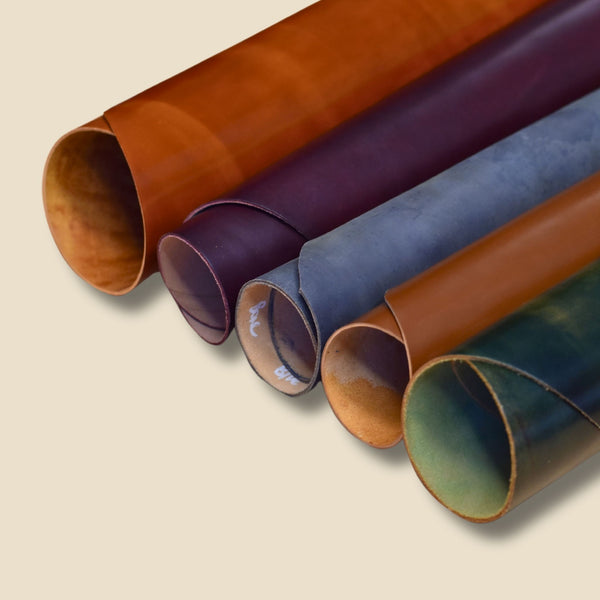
Selecting the right hide is just as critical as choosing your watchstrap making tools. A watch strap lives against your skin for sixteen hours a day. This constant contact means vegetable-tanned leather is the only responsible choice. Unlike chrome-tanned alternatives that use heavy metals, our vegetable-tanned hides are hypoallergenic and breathable. They handle moisture and sweat without deteriorating, ensuring the strap remains comfortable and safe for years of wear. At Hab-To, we focus exclusively on sustainable, chrome-free hides from the world's most prestigious tanneries.
You must also consider "temper," which describes the leather's firmness. A strap needs a balance between flexibility for comfort and strength to hold the watch's weight. If the leather is too soft, it will stretch and the buckle holes will deform. If it's too firm, it won't wrap around the wrist properly. Sourcing premium Italian leather in small panels allows you to experiment with different tempers without the high cost of purchasing full hides. This "No-MOQ" approach is perfect for hobbyists who want professional results on a smaller scale.
The King of Straps: Maryam Shell Cordovan
For many enthusiasts, Maryam Shell Cordovan is the ultimate material. It's famous for its incredible density and unique property of rippling rather than creasing. Because it's a membrane rather than a traditional grain, its fiber structure is exceptionally tight. This allows you to perform incredibly thin skiving without the leather losing its integrity. When you use high-end watchstrap making tools on Cordovan, the material responds with surgical precision. Over time, it develops a deep, glass-like patina that only gets better with every year of wear.
Texture and Character: Badalassi Pueblo
If you prefer a rugged, matte aesthetic, Badalassi Pueblo is a fantastic choice. It has a unique scuffed surface that smooths out and darkens beautifully as it ages. For a more classic, smooth finish, Virgilio Vaccheta offers a traditional look that suits both vintage and modern timepieces. Don't forget the interior of the strap. Selecting a dedicated lining leather, such as Zermatt or sheepskin, provides extra sweat resistance and a soft feel against the wrist. This multi-layer approach ensures your strap is as durable as it is beautiful.
Browse our premium leather panels for your next project
Mastering the Professional Finish: Edges and Assembly
The final 10% of the build is where the value of a strap is truly defined. You've used specialized watchstrap making tools to cut and stitch with precision; now you must ensure the edges match that quality. A "glass-like" edge isn't just about aesthetics. It's a sign that the fibers of the vegetable-tanned leather have been perfectly sealed against moisture and friction. While some makers prefer edge paint, a burnished edge is more durable and can be easily repaired by the owner over time. This approach honors the 160 years of family heritage we represent at Hab-To, where we prioritize traditional methods that stand the test of time.
What you will need for finishing
- Tokonole burnishing gum
- High-grit sandpaper (400 to 1500 grit)
- Edge bevelers for thin leather
- Hardwood or glass edge slicker
- Fiebing’s products for conditioning and color
- Texon reinforcement tape
- Curated finishing bundles
The Burnishing Process for Straps
Achieving a professional finish starts with meticulous sanding. You must work through high-grit papers, often reaching up to 1000 or even 1500 grit, to create a seamless profile across the leather layers. Once the edge is perfectly smooth, apply a small amount of Tokonole. This water-based burnishing gum is the gold standard in the industry. Use a wood or glass slicker to generate heat through friction. This process compresses the fibers and creates a high-gloss, translucent finish that celebrates the natural character of the hide. Unlike paint, which can crack or peel, a burnished edge ages with the strap and develops its own unique patina.
Reinforcement and Longevity
A watchstrap is under constant tension from the wrist and the weight of the timepiece. To prevent the leather from stretching around the spring bars or buckle holes, applying Texon reinforcement between the layers is vital. This non-stretch material ensures the strap maintains its original dimensions for years. For the final touch, use Fiebing’s products to add depth to the color or provide a protective top coat against the elements.
Mike’s final tip for assembly is simple: "Always test your buckle fit before the final stitch." Nothing is more frustrating than completing a masterpiece only to find the buckle tongue is too wide for your holes. Conduct a final inspection of every stitch and hardware connection. Your work will likely be holding a high-value watch, so security is as important as style. With the right watchstrap making tools and these finishing techniques, you'll produce work that rivals any luxury boutique.
Start Your Precision Journey Today
Watchstrap making is a journey of micro-precision. Every millimeter defines the final character of your work. By combining high-precision watchstrap making tools with the world's finest vegetable-tanned leathers, you've taken the first step toward creating boutique-quality accessories. You don't need a massive industrial setup. You just need the right mentorship and premium materials. The leather is waiting. Your tools are ready. Trust the process.
At Hab-To, we bring 160 years of family heritage to your workbench. We believe every maker deserves access to premium hides like Shell Cordovan without the burden of large minimum orders. Whether you're a hobbyist or a professional, our small-panel options and expert-led free 1-on-1 video consultations with Mike are here to support your growth. We're not just suppliers; we're your partners in the craft.
Continue Your Learning
- Mastering the Art of Leather Skiving for Beginners
- A Guide to Traditional Hand-Stitching Techniques
- How to Choose the Right Lining Leather for Wrist Comfort
Featured Watchstrap Bundle
Leathercraft Master Bundle
This curated set includes the essentials mentioned in this guide: Ecostick 1804, Tokonole, and the high-precision tools required to achieve a professional finish on your next strap project.
View the Master Bundle Details
Frequently Asked Questions
What is the best leather thickness for a watchstrap?
The ideal thickness for a professional watchstrap usually ranges between 2.5mm and 3.0mm for the finished product. This is typically achieved by using a top layer of 1.2mm to 1.4mm leather and a lining layer of around 1.0mm to 1.2mm. If you're adding reinforcement like Texon, you'll need to skive the edges thinner to ensure the strap remains flexible and comfortable on the wrist without looking bulky or unrefined.
Do I really need a specialized notch cutter for straps?
A specialized notch cutter isn't strictly mandatory for beginners, but it's one of those watchstrap making tools that separates amateur work from luxury quality. These cutters allow you to create perfect 90-degree notches where the strap meets the watch lugs. While a sharp craft knife can do the job, a dedicated cutter reduces the risk of over-cutting or creating ragged corners, which can ruin a piece of premium leather in seconds.
Can I make a watchstrap with a standard pricking iron?
You can certainly use standard pricking irons, but the results might look slightly out of scale for a small project. Most general leathercraft irons have a spacing of 3.38mm or 3.85mm. For a refined watchstrap, makers usually prefer a higher stitch density, such as 2.25mm or 2.5mm. This tighter spacing provides the elegant, high-end aesthetic found on luxury timepieces and ensures the stitching doesn't overwhelm the delicate proportions of the strap.
Is vegetable-tanned leather safe for people with metal allergies?
Vegetable-tanned leather is the safest choice for anyone with metal allergies because it's processed using natural tannins from tree bark and roots. Traditional mass-produced leathers use chromium salts, which can cause skin irritation or allergic reactions during prolonged contact. Since a watchstrap sits directly against your skin for hours, choosing a chrome-free, natural material ensures comfort and prevents the rashes often associated with synthetic or chemically treated leathers.
How do I prevent my watchstrap from stretching over time?
To prevent your strap from stretching, you should always include a non-stretch reinforcement layer like Texon between the top grain and the lining. Leather is a natural fiber that will inevitably give under the tension of a buckle and the weight of a watch. By gluing a thin layer of reinforcement in high-stress areas, especially around the lug holes and buckle, you ensure the strap maintains its shape and length for years of daily wear.
Which glue is best for leather-to-leather bonding in straps?
Water-based adhesives like Ecostick 1804 are the superior choice for bonding leather layers in watchstraps. These glues provide a strong, flexible bond that moves with the leather as it wraps around your wrist. Solvent-based cements can sometimes become brittle over time, leading to delamination in high-flex areas. Ecostick is also non-toxic and odorless, making it much more pleasant to use in a small home workshop environment while delivering professional results.
Do I need a special tool to install the buckle?
You don't necessarily need a single buckle tool, but you do need a set of small-diameter hole punches, typically between 1.0mm and 2.0mm. Most standard leather punches are designed for belts and are far too large for delicate watch buckles. You'll also need a high-quality spring bar tool to safely install and remove the buckle without scratching the hardware. Having these specific watchstrap making tools ensures your assembly is clean and damage-free.
How can I get expert advice on my specific watchstrap project?
Getting personalized advice for your project is easy through our website. Mike offers a free 1-on-1 video consultation to help you choose the right materials or troubleshoot a specific technical challenge. Whether you're struggling with skiving Shell Cordovan or selecting the right pricking irons, this direct access to 25 years of craft expertise ensures you have the confidence to finish your project with professional results. It's our way of supporting the maker community.
Disclaimer
All our blog articles are made for information purposes only we dont take responsability for any content from third parties.