


Understanding Different Leather Finishes and What They Mean
A convincing surface can hide important differences in the material beneath. Understanding different leather finishes means separating the surface treatment from the leather’s grade and construction: the finish affects appearance and feel, while the hide determines what that treatment is applied to.
It’s easy to assume a smooth, even coating signals a particular level of quality. In practice, corrected-grain and pigmented leather describe ways leather may be altered or protected. Bonded leather, by contrast, is made from leather-fibre scraps mixed with binding materials and embossed with a leather-like texture. The distinction matters: bonded leather can crack and peel within a few years of use.
This guide explains what leather finishing means and how corrected-grain, pigmented, and bonded leather relate to grade and durability. You’ll learn what a finish can change, what it can’t tell you about the hide, and why two similar-looking surfaces may behave differently over time.
Key Takeaways
- Learn how aniline, semi-aniline, and aniline-plus finishes differ in appearance, care, and surface protection.
- Distinguish full-grain, top-grain, and corrected-grain leather by how the hide’s surface is treated.
- See how pigment creates a more consistent look and influences the feel and wear of leather.
- Understand why leather grade and surface finish describe different things, and how each affects your choice.
- Explore how the right leatherworking tools and materials, including Tokonole and edge bevelers, support a considered project.
What is Leather Finishing?
Leather finishing is the surface treatment applied after tanning to shape appearance, feel, protection, and aging. Understanding different leather finishes means distinguishing the treatment from the hide’s grade. Aniline, semi-aniline, and pigmented finishes show how treatment changes leather without changing its underlying hide layer.
Aniline and Semi-Aniline Treatments
Aniline uses transparent dye, while semi-aniline adds a protective top coat over dyed leather. Aniline-plus generally describes an aniline-style appearance with extra surface protection, though the term can vary by maker. These distinctions matter when choosing leather goods: the coating affects visible grain, feel, and resistance to wear. Natural, matte, satin, glossy, and patent are other common finish appearances.
Appearance, Care, and Protection
Aniline leather shows natural marks and often feels soft because it receives minimal surface treatment. Without a protective top coat, it is more vulnerable to damage and needs careful handling. Semi-aniline keeps the natural grain visible, but its color is usually more even and its top coat adds protection. For a frequently handled wallet, this balance may suit someone who wants visible grain with added surface protection.
Finish Differences Across Leather Types
Nubuck, suede, and split leather describe different surfaces or hide layers. Suede is made by buffing the underside of a hide, creating a fuzzy surface that is vulnerable to stains and damage. Nubuck is buffed on the grain side and is slightly more durable than suede. Split leather comes from lower hide layers after the top layer is separated; its final finish depends on later treatment.
Finishes, Price, and Aging
Finishes can affect the price of furniture, clothing, and accessories, but they don’t determine it alone. Hide selection, surface treatment, and construction also contribute. Aniline leather can develop a patina through use, while a protective coating helps maintain a more even appearance. Understanding different leather finishes helps you consider how color and character may change over time, and which qualities matter most for your item.
Corrected Grain Leather - Good as full grain?
Full-grain, top-grain, and corrected-grain leather describe different surface treatments or conditions. Full-grain leather is generally described as retaining the hide’s natural grain because its outer layer is kept. That visible character can suit a premium bag or belt where the hide’s surface is part of the design. A finish may change its look, but it doesn’t make corrected grain equivalent to full grain.
Top-grain leather is made by sanding or buffing away the hide’s outermost layer. Corrected-grain leather also comes from the outer layer, but it is sanded to remove inconsistencies before dye or paint is applied. A heavy pigment coat can conceal roughness and create a more uniform appearance. These treatments can make the surface look consistent while reducing the visibility of natural grain.
Texture can also come from processing rather than the hide’s original grain. Dry milling rotates leather in a drum with heat, creating a pebbled surface and softening the material. Tumbled leather describes leather worked to create a relaxed, textured appearance. These terms refer to texture, not a separate leather grade, so a milled hide may still be full-grain or corrected-grain.
Shrunken grain has a pronounced, irregular texture across the surface. Embossing creates texture with heat and pressure; patterns can resemble basket weave, Saffiano crosshatch, or exotic skins. The pattern may look highly regular, unlike natural grain variation. That difference helps show whether the texture comes from the hide itself or an applied treatment.
So, is corrected grain as good as full grain? They serve different purposes. Full-grain prioritizes the intact natural surface, while correction can create a smoother, more even finish. Neither texture nor a protective coating alone tells you the leather’s full performance. For projects where material and tools come together, explore leathercraft bundles suited to hands-on work.
Pigmented leather consistency and durability
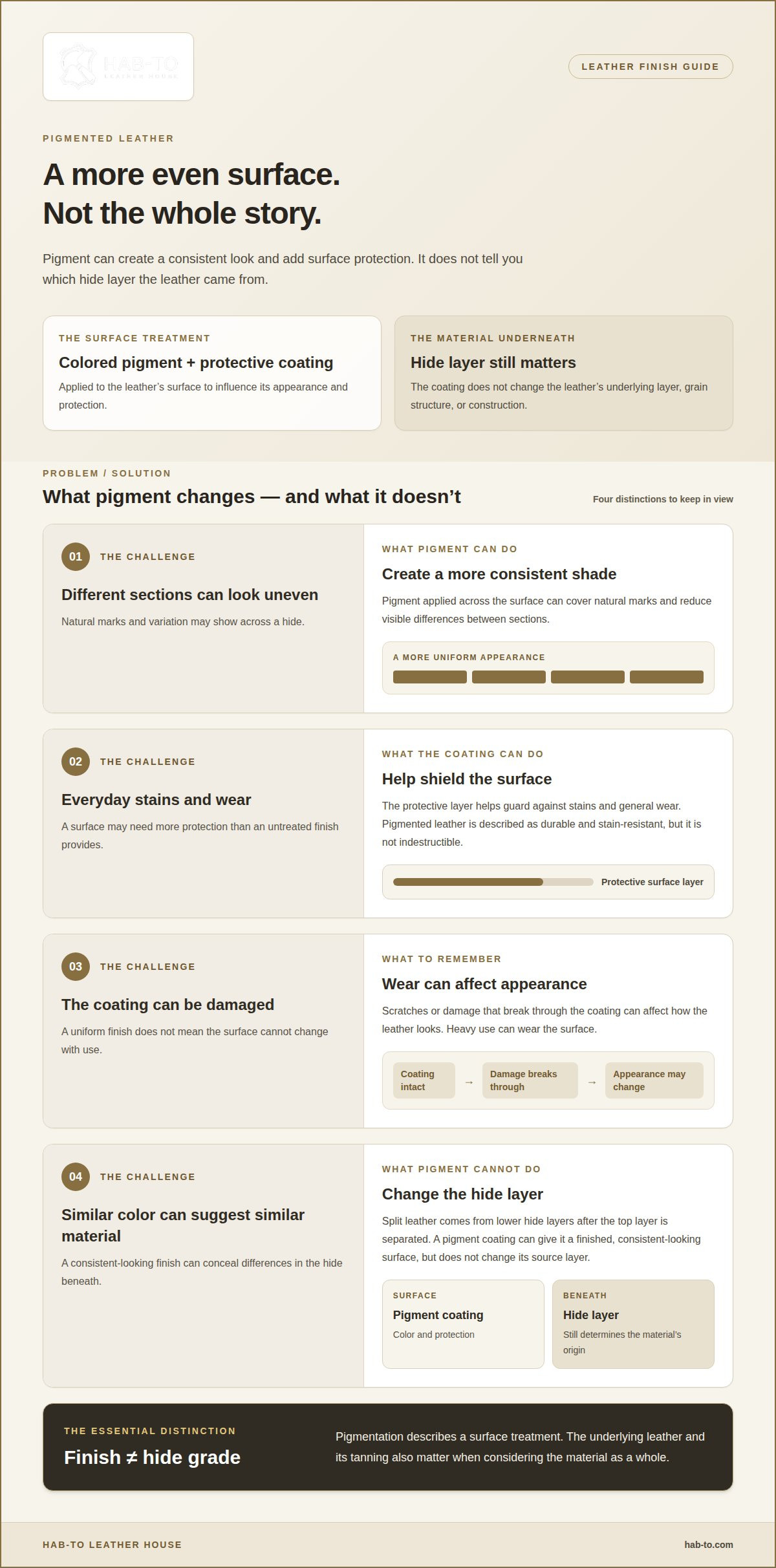
A pigmented finish uses colored pigment and a protective coating on the leather’s surface. The coating can give a hide a more even shade and help shield it from stains and general wear. This makes pigmentation a practical choice when a consistent appearance matters, such as across matching furniture panels or leather goods.
Pigment-painted leather is colored with pigment applied across its surface. The layer can cover natural marks and reduce visible differences between sections of a hide. A heavy pigment coat is often used on corrected-grain leather, where sanding has already removed surface inconsistencies. The resulting finish looks more uniform, but may feel more structured than a less-coated surface.
Durability comes partly from that protective layer. Pigmented leather is described as durable and stain-resistant because its coating helps guard against everyday wear. It isn’t indestructible: scratches or damage that break through the coating can affect its appearance, and heavy use can wear the surface. The underlying leather and its tanning also matter, so pigmentation alone doesn’t describe the entire material.
Split leather illustrates why this distinction matters. It comes from lower hide layers left after the top layer is separated. A pigment coating can create a finished, consistent-looking surface on split leather, but it doesn’t change which hide layer the material came from. Two pieces may therefore share a similar color while differing in grain structure and construction.
When choosing a pigmented finish, weigh the desired look against the feel. A smooth, even surface can suit a project where color consistency and resistance to everyday marks are priorities. A thinner coating may leave more texture visible, while heavier pigmentation can conceal more of the natural grain. These choices affect the finish, not the animal the hide came from or the tanning method used. Pigment provides protection and consistency, but it can’t establish leather grade or guarantee how a finished item will wear.
Leather finish versus leather grade
Leather grade describes which part of the hide is used and how much natural grain remains. Finish describes the surface treatment applied after tanning. Separating these terms helps you assess the material beneath its appearance, whether you’re choosing leather for a bag, furniture, or smaller accessories.
Full-grain leather retains the hide’s outer layer and natural grain. Top-grain leather has its outermost surface sanded or buffed, while split leather comes from the lower layers left after the top layer is separated. Bonded leather is different again: it is made from leather fibres and binding materials, then given an embossed surface. These names describe construction, not simply color or shine.
Grade can inform expectations, but it doesn’t give a complete verdict on durability. Full-grain leather retains its natural surface and can develop a patina with use. A coating may make another leather more resistant to stains or everyday wear, but the protection depends on the finish itself. The hide layer, its treatment, and the demands of the finished item all contribute.
Consider two wallet materials. Full-grain leather with an aniline finish shows natural grain and markings, while a pigmented surface can look more even and offer added surface protection. Neither finish changes the hide’s grade. Likewise, a smooth appearance doesn’t prove leather is full-grain, and an embossed pattern doesn’t reveal which hide layer lies beneath.
A useful way to assess a leather description is to separate three details: hide layer, surface preparation, and finish. “Split leather” identifies the lower hide layer. “Corrected” indicates that the surface has been sanded to remove inconsistencies. “Pigmented” describes a color and protective coating. Each term answers a different question, so none is a complete measure of quality on its own.
For a durable choice, match those details to the item’s use. A frequently handled accessory may benefit from a protective finish, while natural grain and a developing patina may matter more for a piece intended to show character over time.
Bonded leather composition and finishes
Bonded leather is made by combining leather-fibre scraps with binding materials, then forming the mixture into a sheet. The binder may include rubber or polyurethane; some descriptions also identify PVC, fibres, and leather in the composition. Unlike a continuous piece of hide, its leather content consists of recovered fibres rather than an intact grain surface.
The proportion of hide material can be low. Bonded leather may use as little as 10-20% of an actual hide, and some countries produce it with as little as 20% actual leather fibres. These figures describe different measures, hide content and fibre content, so they shouldn’t be treated as interchangeable. The key point is that “leather” in the name doesn’t mean the sheet is made entirely from hide.
Manufacturing gives bonded leather its consistent appearance. Once the fibres and binder are formed into a sheet, a leather-like texture is embossed onto the surface. A coating may then be applied to create color and finish. The pattern can look uniform across a panel, unlike natural grain, which varies across an animal hide. Embossing creates the appearance of texture, not the hide’s original grain structure.
Terms such as genuine, corrected, and bonded answer different questions. “Genuine” alone doesn’t explain whether a material is a continuous hide or a fibre-based sheet. “Corrected” describes a hide surface sanded to remove inconsistencies before dyeing or painting. “Bonded” describes a material made from leather fibres and binders. Reading these terms together gives a clearer picture than relying on a leather-like appearance.
That construction affects expectations for use. Bonded leather can crack and peel within a few years of use, so a uniform embossed finish shouldn’t be mistaken for the wear characteristics of full-grain or top-grain leather. The key takeaway is to identify what the material is made from first, then consider its surface finish. A coating can change appearance, but it can’t turn bonded fibres into an intact hide.
What You Will Need to Work with Leather
The tools you need depend on the task. Cutting and assembling leather call for different equipment than finishing an exposed edge. For edge work, aim for a clean cut, a consistent bevel, and controlled burnishing. Tokonole and an edge beveler have separate roles: the beveler rounds the sharp corner, while Tokonole helps prepare the edge for burnishing.
Set out your materials before you begin. A small piece of matching scrap lets you test your approach first. This is useful because leather surfaces respond differently: a raw cut edge can be burnished, while a coated face may be marked if treated like an unfinished edge.
- Edge beveler: Use it to remove the sharp corner from a cut edge before burnishing.
- Tokonole: Apply it to the exposed edge as a burnishing aid, then work the edge with a suitable tool. Tokonole bundles can help you select materials for this part of the process.
- Burnishing tool: Rub the treated edge with even pressure to smooth it. A steady motion helps keep the result consistent.
- Leather scrap: Test your bevel and burnishing approach on a matching offcut before working on the finished piece.
- Cutting and assembly tools: Choose equipment suited to your project’s cuts and construction. Leatherworking tools provide options for building a setup around the work at hand.
Keep edge-finishing tasks in sequence: cut cleanly, bevel, apply Tokonole, then burnish. This process treats the exposed edge, not the leather’s face. If you’re working with pigmented or heavily coated leather, keep edge treatments away from the finished face unless the project calls for it.
Curated bundles can bring leatherworking materials together, while individual tools let you shape a setup around a particular project. Consider the techniques and materials you’ll use, then explore leatherworking bundles as one way to gather supplies for hands-on work.
Hab-To Leather House: Leatherworking Tools
Hab-To Leather House is a practical next step when your finish choice leads to selecting leather and tools for a project. Understanding whether you need a particular hide layer, surface character, or level of protection can help narrow your material options. The right equipment then helps you cut, assemble, and finish the leather with care.
For leathercraft, the relevant offerings include:
- Leatherworking Tools for the cutting, shaping, and assembly tasks involved in making leather projects.
- Leathercraft Tools Hardware and leather for projects where material, fittings, and tools need to be considered together.
- Vegetable Tanned Leather for makers choosing leather tanned with vegetable extracts. Its suitability depends on the project and the qualities you want from the hide.
- Equestrian Related leathers and hardware for work involving horse-related leather projects and their fittings. Explore horse-related leather as part of that material choice.
These offerings support different stages of planning. If your project depends on a particular surface, start by identifying the material you want to work with. Then consider which tools and hardware suit its construction. For example, a leathercraft project that needs fittings calls for a different setup than one focused on shaping and stitching leather alone. Connecting these choices helps you select materials and equipment for the work rather than choosing by appearance alone.
Hab-To Leather House brings leather, hardware, and leatherworking tools together for makers. Turn to these offerings when you’re ready to move from learning about leather surfaces to planning a hands-on project. Your material and tool choices still depend on the design, construction, and finish you have in mind.
Make Your Next Leather Project More Intentional
Use what you’ve learned to set a clear direction for your next piece. Consider its intended use, the surface character you want, and how much time you’re prepared to spend on care. These choices can guide your material and tool selection before you begin.
As you plan the construction, explore leatherworking bundles to consider which supplies may suit your project. Choose tools and materials for the techniques you expect to use, rather than assembling a kit without a specific purpose.
Related topics to explore:
- Aniline and semi-aniline leather: appearance, care, and protection
- Full-grain, top-grain, and corrected-grain leather
- Bonded leather composition and surface finishes
Let your design guide your choices. With a clear purpose and thoughtful preparation, you’re ready to take the next step in your leathercraft.
Frequently Asked Questions
What are the different types of leather?
Leather types can be grouped by animal, hide layer, grade, or finish, and these labels describe different things. Cow, sheep, goat, and horse identify the animal source; full-grain, top-grain, and split identify hide layer or processing; aniline and pigmented describe surface treatment. For example, one material can be cowhide, full-grain, and aniline-finished at once. Read labels as separate descriptors, not competing type names.
What is bonded leather?
Bonded leather is a manufactured sheet made from leather-fibre scraps and binding materials, rather than a continuous piece of hide. A leather-like grain can be embossed onto its surface, creating a consistent appearance. For a low-contact decorative panel, appearance may be the main consideration; for an item that flexes often, its tendency to crack and peel within a few years is relevant.
What is split leather?
Split leather comes from lower hide layers left after the top layer is separated. Its exposed side and any later coating determine its finished look, so “split” alone doesn’t tell you whether the surface is fuzzy, smooth, or pigmented. For a project, consider which side will face outward and whether its finish suits that surface. The term identifies the hide layer, not the final appearance.
What is aniline leather, and what are its pros and cons?
Aniline leather is genuine leather dyed transparently, leaving natural grain variation and markings visible. Its strengths include a soft, natural feel and the character of an unmasked hide. The trade-off is limited surface protection and greater care needs. An aniline wallet, for example, may show everyday changes more readily than coated leather. Choose it when visible hide character matters more than an even, protected surface.
What is semi-aniline leather, and how does it compare with aniline leather?
Semi-aniline leather combines transparent dye with an added protective top coat. Natural grain remains visible, but its color is generally more even than aniline leather. This middle ground can suit a project where you want hide character without a fully exposed surface. The coating affects both feel and protection, so consider how the finished item will be handled and cared for during regular use.
What is pigmented or protected leather?
Pigmented, or protected, leather has color pigments and a protective coating on its surface. That layer can conceal natural marks, create more consistent color, and help resist stains and routine wear. For a chair or bag used often, this may be a practical finish. The coating can make leather feel firmer, and scratches that break through it may disrupt the surface’s even appearance.
How can you identify a leather finish by appearance and touch?
Look at natural grain and marks, color consistency, sheen, and hand feel. Aniline usually shows more variation and feels softer; semi-aniline keeps the grain visible with more even color; pigmented leather tends to look more uniform and structured. Matte surfaces have no shine, while satin has a slight sheen. These visual and tactile clues help, but they don’t prove a material’s grade or composition.
Which leather finishes are most durable and stain-resistant?
Pigmented leather is generally the most stain-resistant of these finishes because its coating helps protect the surface. Semi-aniline offers added protection while retaining visible grain. Aniline has no protective top coat, so it is more vulnerable and usually needs greater care. Durability also depends on the hide layer, finish application, and how the item is used. No surface treatment makes leather immune to damage.
Disclaimer
All our blog articles are made for information purposes only we dont take responsability for any content from third parties.