Avoiding the Frustration of Bad Materials: A Leathercrafter’s Guide to Quality Sourcing
You've spent six hours meticulously stitching a bespoke wallet, but when you finally reach the burnishing stage, the leather refuses to cooperate. Instead of a smooth, glass-like finish, the edges become fuzzy and distorted. It's a soul-crushing moment that many crafters know all too well. Wasted hours and expensive hardware often end up in the scrap bin because the hide simply wasn't up to the task. Most of the time, the struggle isn't a lack of skill; it's the hidden cost of inferior supplies.
I understand that disappointment deeply. You want to build goods that grow more beautiful with age, not items that peel or crack within a month. This guide is dedicated to avoiding the frustration of bad materials by showing you exactly how to source premium vegetable-tanned leather and professional-grade tools. You don't need to buy a full hide to get the best quality. We'll look at how to select authentic Italian leathers from tanneries like Conceria Maryam and the right hardware to ensure your work stands the test of time. By the end, you'll know how to choose materials that reward your hard work rather than fighting against it.
Key Takeaways
- Understand why chrome-tanned leathers resist burnishing and how switching to vegetable-tanned hides ensures professional, glass-like edges every time.
- Discover the "Grand Cru" tanneries like Conceria Maryam that help you in avoiding the frustration of bad materials by providing consistent, high-density fibers.
- Learn the "buy once, cry once" philosophy of choosing solid brass hardware to prevent tarnishing and premature breakage in your finished goods.
- Master a sourcing strategy that allows you to access premium Italian leather in small quantities, eliminating the risk of buying hides that are too soft or plastic-like.
- Leverage 160 years of family expertise and personalized consultations to ensure your material selection perfectly aligns with your specific project goals.
The Silent Sabotage: Why Low-Quality Materials Cause Crafter’s Frustration
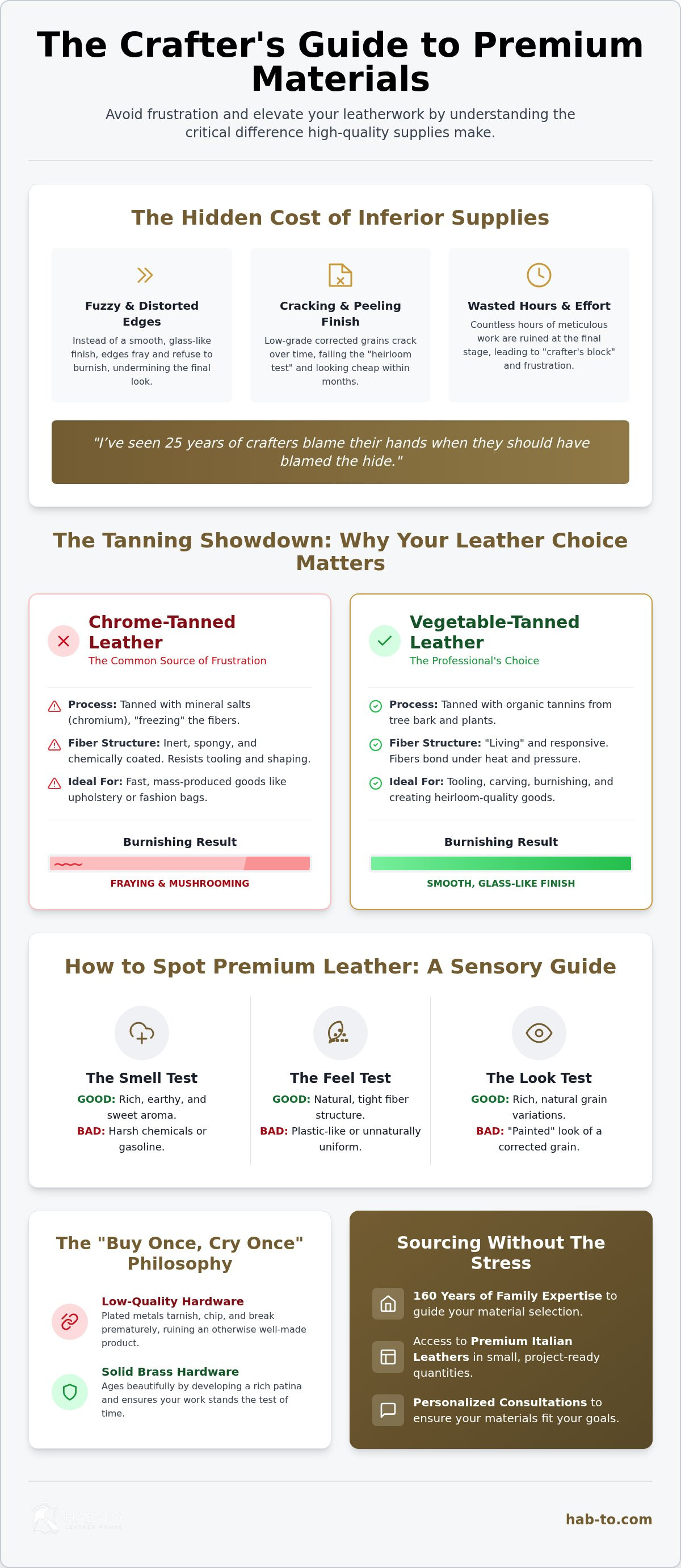
Material frustration is the invisible wall between your creative vision and your finished product. It happens when you have a clear idea for a sleek, professional cardholder, but the leather refuses to hold a crease or maintain its shape. This gap between expectation and reality isn't a failure of your talent. Most of the time, it's a technical failure of the hide itself. Mike often reflects on this during his consultations: "I’ve seen 25 years of crafters blame their hands when they should have blamed the hide." Avoiding the frustration of bad materials starts with accepting that you cannot out-skill a poor-quality surface.
The technical resistance of low-grade leather is most obvious during edge work. Many beginners start with chrome-tanned scraps because they are affordable. However, the chemistry of Chrome-Tanned vs. Vegetable-Tanned Leather is vastly different. Chrome tanning uses mineral salts to "freeze" the fibers, making them inert and spongy. This is why the edges won't burnish no matter how much effort you apply. Instead of becoming smooth and glossy, the fibers just fray and mushroom. This leads to a psychological toll. When projects fail at the final stage, it creates "crafter’s block." You stop wanting to pick up your tools because you anticipate failure.
The High Cost of Cheap Leather
Cheap leather is a trap. It looks fine on the shelf, but the real cost reveals itself during the build. You waste hours on stitching only to realize the leather is stretching out of shape. You might even ruin premium leather hardware by installing it on a hide that's too soft to support the weight. Bargain hides often have corrected grains, which means they require expensive acrylic finishes and heavy chemicals just to look presentable. In the end, you spend more on "fixer" products than you would've spent on a high-quality shoulder. These materials also fail the "heirloom test." A wallet made from inferior stock won't develop a patina; it'll just crack and peel within a few months.
Recognizing the Signs of Poor Sourcing
Identifying high-quality vegetable-tanned leather is a sensory experience. If a hide feels like plastic or has an unnaturally uniform, painted look, it’s likely a low-grade corrected grain. These finishes often peel away when you try to skive or fold the leather. Use the smell test. Authentic leather should have a rich, earthy, and sweet aroma from natural tannins. If it smells like harsh chemicals or gasoline, it’s been processed with heavy solvents that can irritate your skin and lungs. Be wary of "belly" cuts sold as premium panels. These sections are naturally loose and will stretch inconsistently, which is why learning to spot tight fiber structures is the first step toward avoiding the frustration of bad materials.
Identifying the Culprits: Chrome-Tanned vs. Vegetable-Tanned Leather
To truly master the craft, you must understand the chemistry beneath your needles. Most commercial leather is chrome-tanned. This process uses heavy mineral salts, specifically chromium, to rapidly stabilize the hide. While efficient for mass production, it essentially "freezes" the protein fibers. They become inert and lose their natural ability to bond or react to heat. This is the primary culprit when you find yourself struggling with edges that won't smooth out. Avoiding the frustration of bad materials starts with recognizing that not all leather is created for the artisan's bench. According to the official guidelines for leather products, transparency in labeling is key, yet many "genuine leather" tags hide these technical limitations.
Vegetable tanning is a different world entirely. It uses organic tannins from tree bark and plants. This creates a material that "lives" and breathes. It remains responsive to your tools, making it the only viable choice for carving, tooling, and traditional construction. Choosing the right method is the foundation of avoiding the frustration of bad materials and ensuring your work survives for decades.
The Burnishing Barrier
Chrome-tanned leather is often too spongy for high-end finishing. Because the fibers are chemically coated, they won't fuse together under friction. You can rub a chrome-tanned edge for hours and it will only ever look fuzzy or mushroomed. To get a clean look, you are forced to use heavy plastic paints. Vegetable-tanned leather has an open-fiber structure. When you apply friction, the natural lignins and tannins react to heat, sealing the fibers into a solid, glass-like surface. If you are unsure which hide fits your project, check our guide on Buying Leather Online to avoid expensive mistakes.
The Patina Promise
The beauty of a material like Pueblo from Carlo Badalassi is its evolution. It starts with a unique, slightly roughened texture and transforms into a deep, lustrous sheen over time. Chrome-tanned leather is static. It looks its best the day you buy it and only degrades from there. There is an ethical frustration here too. Mass-produced, chemically-heavy leathers contribute to significant environmental runoff. By choosing artisan veg-tan, you are investing in a tradition that respects both the environment and the longevity of the final piece. If you want to test these differences yourself without committing to a full hide, consider starting with one of our curated leather bundles to see the quality firsthand.
Sourcing Strategy: How Premium Tanneries Eliminate Technical Friction
Success in leathercraft is often decided before the first cut. When you source from "Grand Cru" tanneries, you aren't just paying for a prestigious name. You're paying for a lack of technical friction. Names like Conceria Maryam and Carlo Badalassi represent centuries of refined chemistry and hide selection. These tanneries are members of the Tuscan Vegetable-Tanned Leather Consortium (Pelle Vegetale al Vegetale). This organization enforces strict natural tanning standards that ensure every hide is free from the "dead zones" found in mass-produced leather. Avoiding the frustration of bad materials is much easier when your supplier guarantees the density and usability of the entire surface area.
Specialized projects require specialized solutions. If you're building high-end watchstraps or slim wallets, you need a material that won't stretch or tear under tension. This is where Maryam Shell Cordovan becomes essential. Its unique circular fiber structure provides a level of durability and luster that standard bovine hides simply cannot match. By choosing a tannery that specializes in these specific outputs, you eliminate the guesswork and the risk of project failure.
Consistency in Every Cut
Professional artisans rely on repeatable results. If you buy a shoulder today, you need the one you buy next month to behave exactly the same way. Premium tanneries provide this consistency. They also pay close attention to the "flesh side" or the back of the leather. A clean, pasted flesh side saves you hours of work because you don't always need to add a lining. For structural items like tote bags, the density of Vaccheta leather ensures the handles won't sag or stretch out of shape after a few weeks of use. High-quality leather works with you, not against you.
The No-MOQ Solution
The biggest hurdle for many hobbyists and small studios is the traditional wholesale model. Many distributors require you to buy ten hides just to get the one specific color you need. This leads to wasted capital and a shop full of leather you'll never use. At Hab-To, we believe in a different approach. We offer a no-MOQ (Minimum Order Quantity) solution. You can buy single panels or shoulders to test a project’s viability without a massive investment. Because we are an EU-based wholesaler, we handle the complex customs and import logistics for you. This is a key part of avoiding the frustration of bad materials: making the right stuff accessible without the logistical headache.
The Frustration-Free Setup: What You Will Need for Your Next Project
Adopting a "buy once, cry once" philosophy is the most effective way of avoiding the frustration of bad materials. Many beginners fall into the trap of purchasing massive, low-quality starter kits from global marketplaces. These kits often contain tools that are dull out of the box and hardware made from "mystery metal" that snaps or tarnishes within weeks. To build professional-grade goods, you need a curated setup that supports your skill rather than hindering it. High-quality supplies provide the predictability you need to focus on your craft.
Your choice of adhesive is a prime example of where quality matters. Traditional contact cements are often toxic and difficult to manage in a small home studio. Transitioning to a high-performance, water-based glue like Ecostick 1804 provides a strong bond without the harsh fumes. Similarly, finishing your edges shouldn't be a struggle. Using a specialized agent like Tokonole offers instant gratification, turning a raw edge into a polished masterpiece with minimal effort. This level of consistency is impossible to achieve with substandard supplies.
What You Will Need: The Material List
- Premium Veg-Tan Leather: Start with a reliable hide like Pueblo or a dense Vaccheta to ensure structural integrity and a beautiful patina.
- Professional Grade Glue: Use Ecostick 1804 for a cleaner, safer, and more precise workflow that won't damage your leather.
- Finishing Agent: Achieve a professional, glass-like edge with Tokonole, the gold standard for burnishing vegetable-tanned hides.
- Reliable Hardware: Stick to Solid Brass Hardware from our Hardware Collection to avoid the heartbreak of broken buckles and peeling finishes.
The "What You Will Need" Tool Kit
A sharp Japanese-style skiving knife is a non-negotiable requirement for professional work. Avoid dull utility blades that tear the grain and leave uneven edges. You also need high-quality pricking irons to ensure your stitch spacing is perfectly consistent every time. Finally, invest in proper needles and stitching bundles that won’t fray your thread mid-project. Avoiding the frustration of bad materials is about creating a workspace where your tools work as hard as you do.
Sourcing Without the Stress: The Hab-To Philosophy of Quality and Access
Quality sourcing shouldn't be a privilege reserved for large factories. At Hab-To, our mission is built on 160 years of family expertise. We've seen the industry shift toward speed and synthetic shortcuts, but we refuse to follow. Our warehouse only stocks exclusively vegetable-tanned hides. We don't sell chrome-tanned leather, and we never will. This commitment is the cornerstone of avoiding the frustration of bad materials. When you buy from us, you're accessing a curated selection that has already passed the strictest quality tests in the world. Mike, with his 25 years of personal experience, hand-selects these materials to ensure they meet the standards of a professional artisan.
Our Amsterdam showroom serves as a physical testament to this philosophy. It's a space where you can touch the grain, smell the natural tannins, and understand the weight of a shoulder before you buy. We bridge the gap between digital sourcing and the tactile reality of the craft. Most importantly, we've eliminated the "Minimum Order Quantity" barrier that stalls so many creative projects. Whether you need a single panel for a watchstrap or ten hides for a luggage collection, you receive the same level of respect and expert attention. We believe that access to premium materials is the first step toward mastery.
Expert Guidance on Demand
We know that choosing between different tannages can be overwhelming. To help you in avoiding the frustration of bad materials, we offer a free video consultation directly with Mike. During these sessions, you can show us your project sketches, and we'll help you pick the exact leather weight and temper required. If you want to dive deeper into the technical side, our Masterclasses provide a structured way to learn about leather types and traditional construction. We treat every hobbyist like a professional because we know that today's beginner is tomorrow's master craftsman.
Join the Community
Your journey is part of a much larger story. You can explore the Hab-To Heritage to see how five generations of leather expertise inform the tools and hides we provide today. For daily inspiration and a look behind the scenes at the tanneries we visit, follow us on Instagram and TikTok. Our community is built on a shared love for authentic materials and honest work. Stop fighting your materials. Start crafting with the confidence that only comes from sourcing the best vegetable-tanned leather in the world.
Elevate Your Craft with Intentional Sourcing
Your journey from a frustrated hobbyist to a professional artisan begins with the material on your bench. We've explored how identifying the technical differences between chrome and vegetable tanning is vital for achieving that glass-like edge. By selecting hides from world-renowned tanneries and pairing them with professional-grade hardware, you ensure every hour spent stitching is an investment in a lifelong heirloom. Quality materials respond to your tools, allowing your skills to shine rather than creating unnecessary obstacles.
By focusing on these quality standards, you are effectively avoiding the frustration of bad materials and reclaiming your creative joy. At Hab-To, we support this transition with 160 years of family expertise and a strict policy of no minimum order requirements. You don't have to navigate these choices alone. Mike is available for free video consultations to help you select the perfect hide for your specific project. It's time to stop fighting your supplies and start building with confidence.
The right materials don't just change the finished product; they change how you feel about the craft. We can't wait to see what you create next.
Frequently Asked Questions
Why is my leather edge not burnishing even with Tokonole?
It's likely because the leather is chrome-tanned or a low-grade split. Chrome tanning uses mineral salts that make fibers inert, preventing them from fusing under friction. Even with Tokonole, these fibers stay fuzzy. Avoiding the frustration of bad materials starts with choosing high-density vegetable-tanned leather. The natural tannins in veg-tan react to heat, allowing for a smooth, glass-like finish that synthetic or mineral-tanned hides simply cannot achieve.
What is the best leather for a beginner to avoid frustration?
Pueblo leather from Conceria Carlo Badalassi is an excellent choice for beginners. It has a unique texture that hides minor mistakes while offering enough stiffness for easy cutting and stitching. Unlike soft, oily leathers that stretch out of shape, Pueblo provides immediate feedback and burnishes beautifully. Starting with a high-quality shoulder ensures you spend your time learning techniques rather than fighting against a low-grade, spongy hide that refuses to cooperate.
Can I really buy just one small piece of Italian leather?
Yes, you can buy single panels or shoulders without meeting any minimum order requirements. Most wholesalers force you to buy full hides or bulk quantities, which is a major hurdle for hobbyists and small studios. At Hab-To, we believe in accessibility. We offer premium Italian leather in various sizes so you can test a specific tannage for a single project. This approach is key to avoiding the frustration of bad materials and wasted capital.
Is vegetable-tanned leather better for the environment than chrome-tanned?
Vegetable tanning is significantly better for the environment because it uses organic tannins from tree bark and plants. Chrome tanning relies on heavy metals like chromium, which can lead to hazardous effluent if not managed strictly. In 2026, sustainable methods have seen a 43% increase in adoption as more crafters prioritize ethical sourcing. Choosing veg-tan supports tanneries that comply with EU environmental directives and produce biodegradable materials that last a lifetime.
How do I know if my leather is actually from a reputable Italian tannery?
Look for the certificate from the Tuscan Vegetable-Tanned Leather Consortium. This small paper tag is a guarantee that the leather was produced in Tuscany using traditional, natural methods. We provide these certificates with our hides from tanneries like Conceria Maryam and Badalassi. Authentic Italian leather should also have a distinct, sweet, and earthy aroma. If it smells like gasoline or harsh chemicals, it likely didn't come from a premium Tuscan tannery.
What tools do I absolutely need to start leathercraft without wasting money?
You only need a few high-quality essentials: a sharp Japanese skiving knife, a set of pricking irons, a bone folder, and quality needles. Avoid cheap, all-in-one starter kits found on major marketplaces. These tools are often made from soft steel and go dull instantly, leading to jagged cuts and uneven stitches. Investing in a curated stitching bundle and a single premium edge beveler will save you more money and frustration in the long run.
Why does my leather glue keep peeling off?
Glue often peels because the leather surface is too oily or has a plastic-like finish. If you're using a water-based adhesive like Ecostick 1804, you must rough up the grain side of the leather before applying the glue. This scuffing creates more surface area for the bond to take hold. Apply a thin, even coat to both surfaces and wait for the glue to become tacky before pressing them together for a permanent bond.
How do I choose the right thickness for my project?
Match the weight to the function of the item. For slim wallets and watchstraps, 1.0mm to 1.5mm is ideal. For belts or structural bags, look for 2.5mm to 4.0mm. If the leather is too thin, the item will lose its shape; if it's too thick, it'll be impossible to fold or turn. Mike offers free video consultations to help you determine the exact thickness needed for your project, ensuring your material choice matches your design.
Disclaimer
All our blog articles are made for information purposes only we dont take responsability for any content from third parties.