

Fiebing's Dye & Care: Flawless Leather Finishes
Choosing leathercare and dyeing products like Fiebing’s starts with the result you want. Do you want to change the leather’s colour, add colour to its surface, or care for leather that is already finished? These are different tasks, and choosing the wrong product can change the look of a carefully made piece. Start with your project goal, then check that the product suits your leather and its existing finish.
We work with Fiebing’s, and choosing supplies is about more than picking a colour. It means understanding the difference between dye and paint, preparing the leather thoughtfully, and choosing care products for the task at hand. Hab-To Leather House focuses on vegetable-tanned leather, and Mike brings more than 25 years of leather experience to helping makers choose with care.
This guide explains how to compare product categories, test cautiously, and put together a practical finishing kit without buying supplies you may not need. We’ll also point you toward Fiebing’s products and bundles to explore. Check each product’s current details and instructions before use.
Key Takeaways
- Choose dye, paint or care products according to the job you want done. They are not interchangeable.
- Identify whether the leather is unfinished, treated or coated, then check the product’s current instructions.
- Compare products by their intended task and suitability for your leather, not by assuming one category is always better.
- Keep testing, preparation, application, drying and any compatible finishing step distinct.
- Build a practical leathercare and dyeing kit around your project, with a suitable product, applicator and test material.
Leather dye, paint and care: what does each product do?
First, decide whether you want to change the leather’s colour, add colour to its surface, or care for leather that is already finished. These are different tasks, and the right product depends on the leather, its existing finish and the result you have in mind. Dye is used to colour leather, while paint is used to add colour as a surface layer. The result varies with the product and material, so check current product information before choosing.
This distinction helps narrow your options, but it does not guarantee how a product will behave on a particular piece. The broader leather production process includes finishing stages that affect a hide’s surface. Leather that has already been coated or treated may respond differently from unfinished leather.
For a closer look at a Fiebing’s product introduction, watch this video:
How is leather dye different from leather paint?
Start by picturing the finish you want. You may want to change the overall colour, add a distinct colour at the surface, or create a particular visual effect. Dye and paint describe different intended functions, not guaranteed results. The leather’s surface and any prior treatment matter, and product formulations and directions can differ.
Before choosing a Fiebing’s product, read its current listing and label for the intended leather types, preparation, application and finishing guidance. Hab-To Leather House offers Fiebing’s among its leathercraft supply brands. Browse the Fiebing’s collection and check the details for each item. Let the result you want guide your choice, then confirm that the product is suitable for the leather you plan to use.
What counts as leather care, and when is it relevant?
Leather care can involve different tasks, so identify the need first. Cleaning addresses surface dirt; conditioning is a separate maintenance task; and colour finishing changes or contributes to appearance. Don’t assume one product does all three. Check what the item is intended to do and whether its instructions suit your leather and its current finish.
Hab-To focuses on vegetable-tanned leather and similar premium hide types. These are leather categories, not proof that a particular care product is suitable for them. Follow the relevant product guidance and test cautiously before treating the whole piece. A considered choice helps protect the work you’ve put into the leather.
How to match a Fiebing’s product to your leather project
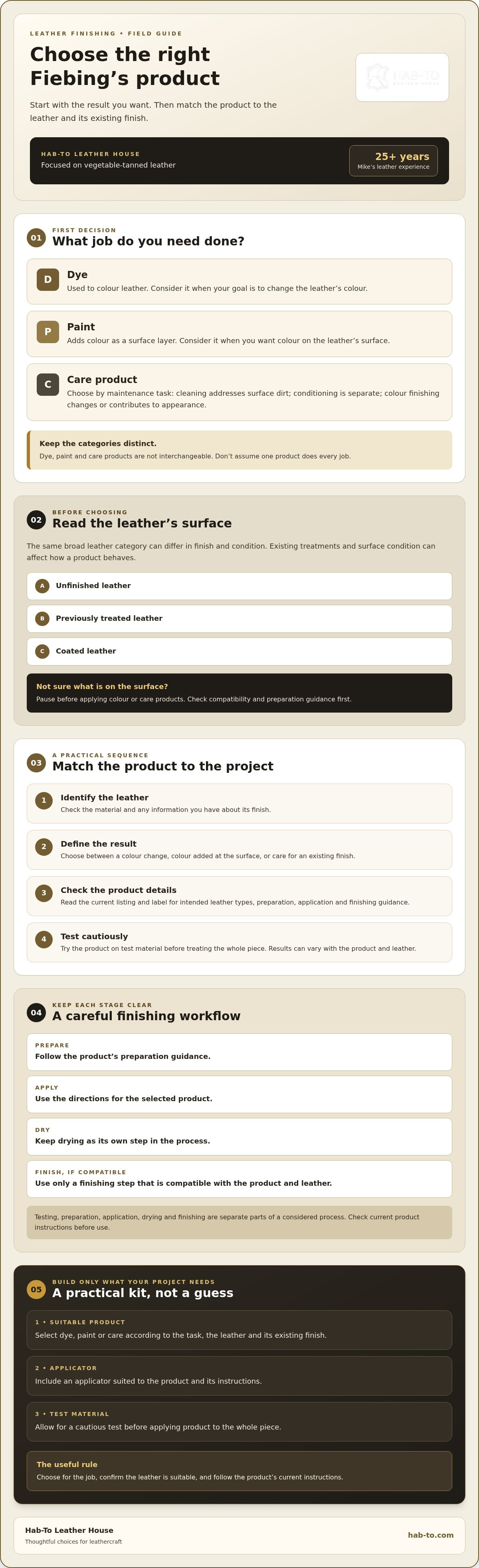
Choose based on the leather in front of you, not just the colour shown on the container. Identify the leather type and inspect its surface. Is it unfinished, previously treated or coated? Don’t guess. Existing treatments and surface condition can affect how a product behaves, so check the manufacturer’s current guidance for compatibility and preparation before starting.
Start with the leather and its existing surface
Hab-To focuses on vegetable-tanned leather, but that does not mean every product is automatically suitable for every piece. Leather can differ in finish and condition, even within the same broad category. If you don’t know what has been applied to the surface, pause before using colour or care products. The Canadian Conservation Institute offers preventive conservation strategies for leather and skin objects, including guidance on careful handling and protection.
Choose the finish goal before choosing the product
Be specific about the job you want the product to do. Are you aiming to change the leather’s colour, add colour at the surface, or maintain an existing finish? Each goal points to a different product category. Compare the product’s current instructions with your project, including its stated leather suitability, preparation steps and finishing guidance. Matching the task to the product is the useful first step.
Use this short sequence before committing:
- Identify the leather. Check the material and any information you have about its finish.
- Define the result. Decide whether you want a colour change, surface colour or care.
- Read the current instructions. Confirm suitability, preparation and application details for that product.
- Test first. Choose a discreet area and follow the product’s directions for testing.
- Proceed only if the result suits your project. Follow the manufacturer’s instructions throughout.
A small, inconspicuous test is a prudent step when the product instructions allow it. It gives you a chance to assess the result on your leather before treating a visible area. If the test changes the surface in a way you don’t want, stop and review the product guidance. Don’t assume another coat or finishing step will correct it.
Once you know the leather and your finish goal, browse the Fiebing’s product collection and check each listing for current details. Choose for the task and material, not the label alone.
Dye, paint or care product: how to compare your options
Compare products by the job you need done, rather than assuming one category is always best. Dye is a category to investigate when you want to change leather colour; paint is a separate category for adding colour at the surface; and care products address maintenance. The right fit still depends on the particular leather and the product’s instructions.
| Category | Intended task | Suitability check | What to verify on the label |
|---|---|---|---|
| Dye | Explore when your goal is a leather colour change. | Is this product intended for your leather and its existing surface? | Preparation, application and any finishing directions. |
| Paint | Explore when you want to add colour as a surface finish. | Does the product’s guidance cover your material and intended use? | Suitability, preparation, application and finishing steps. |
| Care product | Address a maintenance task rather than use it as a colourant. | Is the product meant for the leather’s type and current finish? | Its specific purpose and directions for use. |
When might dye be the category to investigate?
Start by investigating dye if changing the leather’s colour is your aim. The category alone won’t tell you how a particular product will affect a specific piece. Check the current instructions for the intended leather, preparation, application and any finishing guidance. If a detail is unclear, pause before applying the product to your project.
When might paint or a care product fit better?
Consider paint as a distinct colour-finishing category, but confirm the suitability of each product individually. A care product has a different role. Choose it for the maintenance task described by its maker, not as a substitute for dye or paint. For background on colour-specific paint methods, consult a guide dedicated to that paint brand and check its recommendations against the product you plan to use.
If the label doesn’t address your leather, its existing finish or your intended use, don’t guess. Ask an experienced leatherworker or contact the product maker for guidance. Narrow your options by purpose, then confirm the details for the individual item.
Hab-To offers Fiebing’s among its leathercraft supply brands. Browse the Fiebing’s collection and check each current listing before choosing. Verify the product range and guidance item by item.
A careful workflow for testing and finishing leather
A sound finishing process is deliberate, not rushed. Product-specific directions matter, so use the steps below as a planning framework and follow the current label for exact preparation, application, drying and safety instructions. Follow the exact product label before applying it to a finished project.
What should you prepare before applying a product?
Gather the leather project, chosen product, an applicator suited to that product, and a test piece if the instructions allow testing. Ideally, the test material should represent the leather and surface you plan to treat. Don’t improvise a preparation method or assume the same applicator is right for every product.
Before opening the container, read the label all the way through. Check its directions for:
- Leather suitability and any required preparation.
- Application method and the recommended applicator.
- Ventilation, protective equipment and cleanup.
- Drying or curing guidance, and whether a further finishing step is appropriate.
Use only the precautions and cleanup methods specified by the manufacturer. If directions are missing or unclear, pause and seek product-specific advice rather than guessing.
What should you check after a test application?
Apply the product to the inconspicuous test area according to its instructions. Once it has reached the stage the manufacturer specifies for assessment, compare the result with your intended colour and finish. Look for changes that matter to your project, such as an unexpected appearance or an effect you don’t want. A test can inform your decision, but it doesn’t guarantee an identical result across every part of the piece.
If the result is uncertain, stop there. Review the product guidance or ask an experienced craftsperson before treating visible areas. Don’t layer another product over the test or combine products unless their current instructions confirm that the combination is suitable. Follow the stated drying or curing guidance. Don’t rely on a guessed wait time.
The careful approach is straightforward: prepare according to the label, test when permitted, assess the result, then proceed only if it suits the project and the instructions support the next step.
Browse Fiebing’s bundles and check their current contents.
Build your leather dye and care kit with Hab-To
A useful finishing kit starts with the project, not a pile of supplies. Choose a product category that matches your goal, then check its current instructions to confirm what else you need. Dye, paint and care products may call for different preparation and application. Don’t assume the same applicator or test material will suit every item.
What you will need for a considered finish
Use this as a planning list, then let the product’s current label guide your final selection:
- The leather project: Identify the leather and note whether its surface is unfinished, treated or coated.
- The selected product: Choose dye for a colour-change goal, paint for a surface-colour goal, or a care product for its intended maintenance task. Check the current Fiebing’s collection and confirm the product suits your leather.
- A compatible applicator: If the instructions call for one, look through the leatherworking tools and verify that a particular tool suits the product’s application method.
- Test material: If testing is allowed, use a discreet area or a suitable offcut of the same leather, following the product instructions.
Hab-To Leather House focuses on vegetable-tanned leather and offers supplies for makers, with no minimum order requirements. That focus doesn’t mean every Fiebing’s product suits every leather or finish. Check each product’s current information before adding it to your kit, and review bundle contents before deciding whether one fits your project.
Where can makers get product guidance?
Mike has over 25 years of personal leather experience, and Hab-To provides personalised guidance to makers. If the product instructions don’t answer questions about suitability, preparation or compatibility, pause and seek product-specific advice. Make your project goal the starting point, then confirm the details for each item.
Browse Fiebing’s bundles and check their current contents before deciding whether one suits your project.
Related reading
- Explore a separate brand’s approach in the Angelus leather paint guide.
- Revisit the earlier sections of this guide for product comparisons and a cautious testing workflow.
Choose your finish with confidence
Choose dye, paint or a care product according to the task, then verify that it suits your leather and its existing finish. Read the product instructions, test discreetly when permitted, and don’t combine products unless their directions confirm compatibility. A thoughtful choice gives your project a sound starting point.
Hab-To Leather House has over 160 years of family leather expertise, dating back to its founding in 1857. Mike brings more than 25 years of personal leather experience, and there are no minimum order requirements. Choose supplies that fit your work instead of buying items you may not need.
Related reading: “Dye, paint or care product: how to compare your options” and “A careful workflow for testing and finishing leather” revisit the key decisions and steps in this guide.
Browse Fiebing’s bundles and check their current contents to see whether one suits your project.
Work carefully, follow the product guidance, and enjoy bringing your next leather project to life.
Frequently Asked Questions
What is the difference between leather dye and leather paint?
Dye is a category to consider when you want to change leather’s colour; paint is a separate category for adding colour as a surface finish. That distinction describes their intended roles, not a guaranteed result. The outcome depends on the particular product and leather. Before choosing, check the current instructions for suitable materials, preparation, application and any finishing steps. Test discreetly if the instructions allow it.
Can I use Fiebing’s dye on any type of leather?
No. Don’t assume a Fiebing’s dye suits every leather. Hab-To focuses on vegetable-tanned leather, but suitability still depends on the specific product and the leather’s existing finish or treatment. Check the current product label or listing for intended materials and preparation guidance. If the leather has been coated or treated, or you’re unsure what it is, pause and seek product-specific advice before applying dye.
Can leather dye and leather paint be used together?
Only combine dye and paint if the current instructions for both products confirm that they are compatible and explain how to use them together. Don’t infer compatibility from the fact that each product is intended for leather. Application order, preparation needs and finishing directions may differ. If the labels don’t address using them together, contact the product maker or ask an experienced leatherworker before layering products on your project.
How do I prepare leather before applying dye or paint?
Follow the preparation directions for the specific product rather than using a generic method. First identify the leather and check whether it is unfinished, treated or coated. Then read the label for any required preparation, application guidance, ventilation, protective equipment and cleanup instructions. If testing is permitted, try the product on an inconspicuous area or suitable test piece first. Don’t apply it to the finished project if the directions are unclear.
What should I use to care for vegetable-tanned leather?
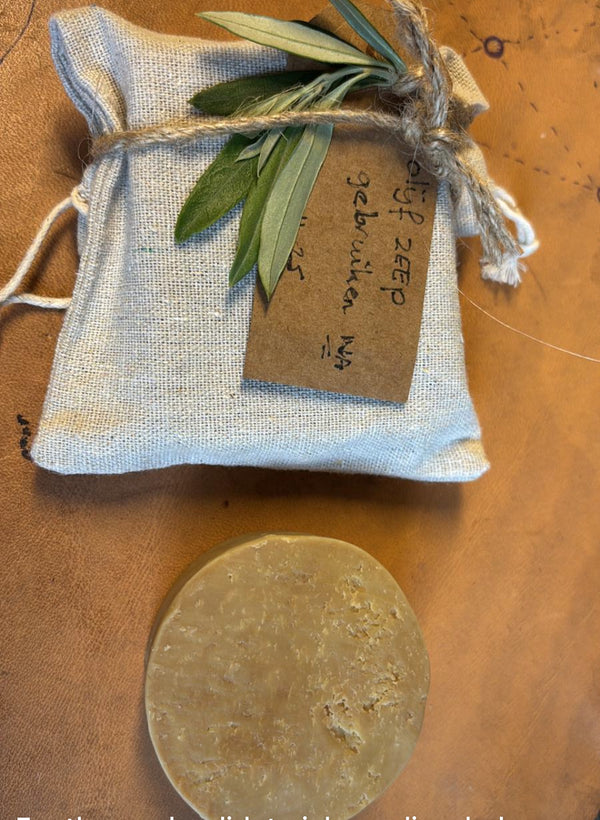
Choose a care product only after checking its stated purpose and suitability for your leather and its existing finish. Cleaning, conditioning and colour finishing are different tasks, so don’t treat one product as a substitute for another. Hab-To also offers an Olivenleder care range, which is distinct from Fiebing’s products. Check the relevant product guidance before use, and test discreetly when the instructions allow it.
Are Fiebing’s leather care products available from Hab-To?
Hab-To offers Fiebing’s among its leathercraft supply brands, but check the current collection to confirm which care items are listed. The collection can change, so don’t assume a particular product or bundle is available or that its contents are unchanged. Confirm each item’s current details before choosing.
Disclaimer
All our blog articles are made for information purposes only we dont take responsability for any content from third parties.