

Leather Belt Hardware Guide: Quality Sourcing for 2026
Why would you spend forty hours hand-stitching a premium vegetable-tanned leather strap only to finish it with a buckle that starts peeling before the year is out? It is a common frustration for makers who value true quality. You have likely encountered buckles that feel light, "tinny," or look like cheap plastic after just a few months of wear. Even worse, many wholesalers force you into massive orders of fifty units or more just to access professional-grade materials.
We believe your craftsmanship deserves better. You want a belt that lasts a lifetime; one where the hardware develops a rich patina alongside the leather. This guide shows you how to select, source, and install high-end leather belt hardware that matches the longevity of the world’s best vegetable-tanned hides. We will explore the mechanical superiority of solid brass, the importance of 2026 EU nickel-safe standards, and how to source premium components from an Amsterdam-based house with no minimum order quantities. It is time to stop compromising on the details that hold your work together.
Key Takeaways
- Learn the functional differences between heel bar, center bar, and roller buckles to choose the right style for your specific belt design.
- Understand why solid brass is the industry benchmark for professional leather belt hardware and how to identify high-quality finishes like Gun Metal and Old Gold.
- Discover how to match hardware weight to leather thickness, ensuring your 3.5mm+ vegetable-tanned straps have the structural support they need.
- Master professional installation techniques using the right tools and Chicago screws to create a durable product that lets you swap buckles easily.
- Find out how to source premium, EU-compliant hardware with no minimum order quantities, so you can scale your craft without heavy upfront costs.
Understanding the Anatomy of Professional Leather Belt Hardware
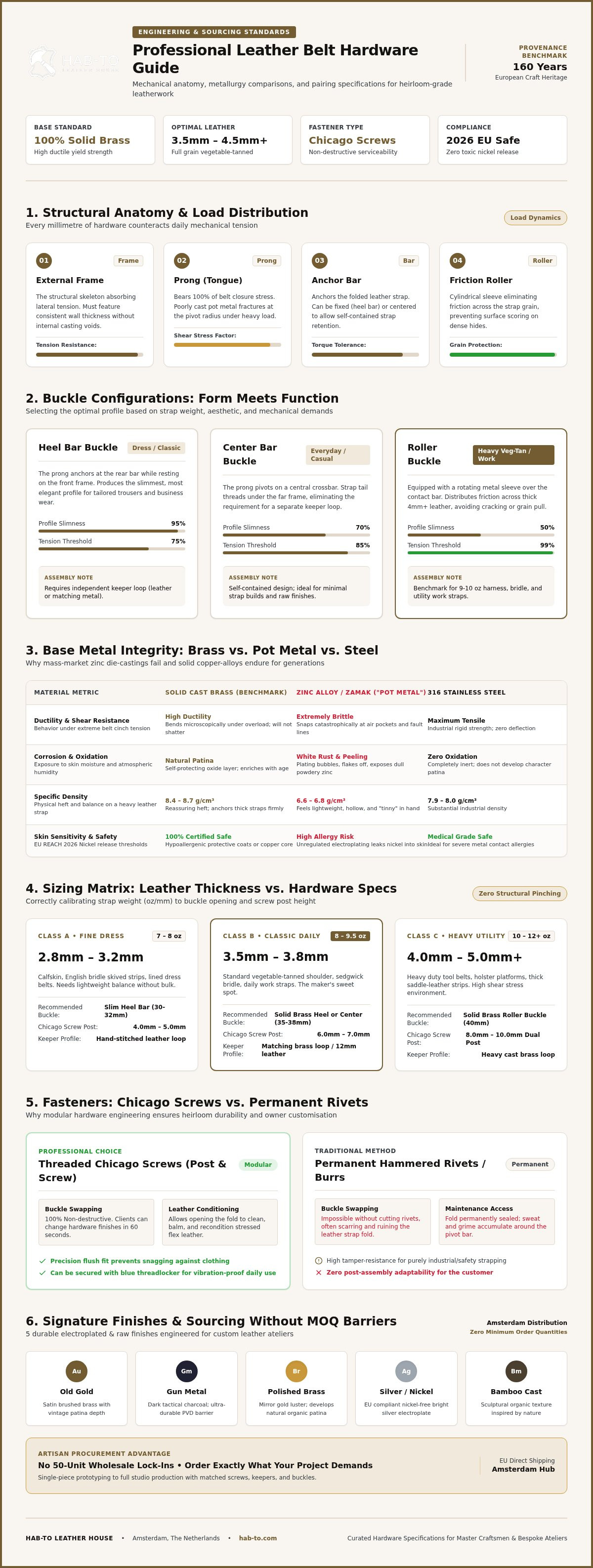
Hardware acts as the skeletal system of every belt you make. It isn't just about the aesthetic; it's about structural integrity. When you select high-quality leather belt hardware, you're deciding how that strap will behave under tension for decades. Professional-grade hardware is usually cast from solid brass or stainless steel. Mass-market "pot metal" alternatives are brittle and often snap when stressed. At Hab-To, we draw on 160 years of family expertise to source only the best components. A deep dive into belt buckle anatomy and components shows that the frame, prong, and bar must work in perfect unison to ensure a secure fit.
To better understand how these mechanical parts interact with your leather, watch this helpful video:
The Role of the Buckle: Form Meets Function
The buckle style dictates both the belt's personality and its mechanical lifespan. Heel bar buckles are the classic standard for dress belts. In this design, the prong rests on the back of the frame, which provides a slim and elegant profile. Roller buckles are a favorite for rugged work belts or heavy vegetable-tanned leather. The integrated roller reduces friction on the grain side of the leather. This prevents the unsightly "cracking" or scuffing often seen on cheaper products. Center bar buckles are another excellent choice because they eliminate the need for a separate keeper; the strap simply tucks through the frame itself. Specialty designs like quick-release hooks or equestrian-inspired hardware offer a distinct aesthetic for makers who want to stand out from the crowd.
Fasteners and Keepers: The Unsung Heroes
A buckle is only as good as the system that holds it in place. Choosing the right leather belt hardware fasteners like Chicago screws is the professional's choice because they offer repairability. If your customer wants to swap their buckle or if the leather needs deep conditioning near the fold, you can simply unscrew them. Rivets offer a permanent bond, but they can't be undone without risking damage to the leather strap. Keepers also play a vital functional role by managing the "tail" of the belt. While leather keepers are traditional, matching metal loops provide a cohesive, modern look. It's best to match your fasteners to your buckle finish, whether you're using Gold, Silver, or Gun Metal, to ensure the final piece looks like a single, intentional unit rather than something pulled from a spare parts bin.
Material Matters: Why Solid Brass is the Gold Standard
Solid brass isn't just a color choice; it's an investment in the structural integrity of your craft. When you hold a piece of high-quality leather belt hardware, the first thing you notice is the weight. This density signals a lack of air pockets and impurities commonly found in cheaper die-cast alternatives. Looking back at the history of buckle design and metalwork, it's clear that the most enduring artifacts were those cast from copper-based alloys. Brass is naturally corrosion-resistant, meaning it won't rust when exposed to sweat or humidity.
Comparing Base Metals: Brass vs. Zinc vs. Steel
Solid brass is ductile. It can withstand high levels of tension without snapping. This is critical when you're using heavy 8-10 oz leathers that put significant pressure on the prong and frame. In contrast, zinc alloy, often called Zamak, is brittle. It's essentially "pot metal" made from a mix of low-melting-point elements. While it's easy to mass-produce, it's prone to shattering under stress. Stainless steel remains the industrial alternative. It offers extreme strength and hypoallergenic properties, making it ideal for those with sensitive skin who need to avoid nickel entirely.
Understanding Hardware Finishes and Coatings
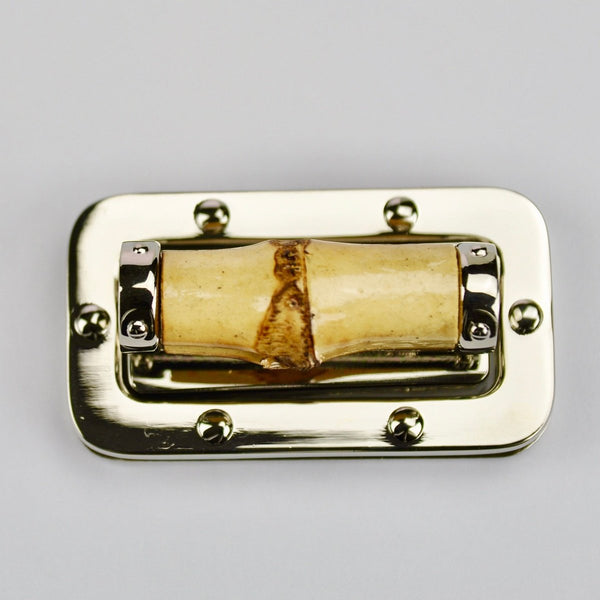
The finish on your leather belt hardware should be as durable as the metal underneath. We provide five primary finishes: Gold, Silver, Nickel, Gun Metal, and Old Gold. For a unique, organic texture, our Bamboo collection provides a sophisticated alternative to traditional smooth frames. High-quality finishes are applied through electroplating. This process creates a molecular bond between the finish and the base metal. It ensures the color won't simply flake off like a cheap paint job after a few months of use.
One of the greatest joys of using solid brass is the patina factor. Like your vegetable-tanned leather, brass hardware ages gracefully. It dulls and darkens over time, developing a unique character that reflects how the belt is worn. You can choose to polish it back to a high shine or let it tell its own story. If you're ready to upgrade your materials, exploring our full hardware range is a great place to start. For those beginning their journey, our curated starter bundles help you get professional results without the guesswork of matching individual components.
Matching Hardware to Your Leather Choice
Selecting the right leather belt hardware is only half the battle. You must ensure the leather physically supports the metal's weight and tension. A common mistake is mounting a heavy, solid brass buckle onto a thin, flimsy strap. If your leather is under 3.5mm thick, a substantial buckle will cause the belt to sag and pull unevenly over time. For high-tension applications like work belts or equestrian-inspired gear, harness leather is the industry standard because it has the density required to hold heavy-duty prongs without the holes stretching.
Precision in sizing is equally vital. When matching the internal buckle width to your strap width, aim for a 1mm difference to ensure a professional fit. A 40mm buckle generally requires a 38mm or 39mm strap once the edges are burnished. If the strap is too narrow, the buckle will shift and feel unstable. If it's too wide, it will rub against the frame, eventually ruining your carefully finished edge work. It's also worth considering the chemical compatibility between leather tannages and metals. Vegetable-tanned leathers contain natural tannins that can react with certain low-quality metals. Using high-quality plated brass ensures your hardware won't corrode or leave unsightly dark stains on your premium hides.
Proportions and Aesthetics: A Master’s Eye
Matching your leather belt hardware to the specific character of the hide creates a cohesive aesthetic. Pair rugged, textured leathers like Badalassi Pueblo with matte or brushed finishes to complement its unique napped surface. In contrast, the mirror-like finish of Shell Cordovan demands high-polish gold or silver for a sophisticated look. For those seeking something truly distinctive, the Hab-To Bamboo collection offers organic, textured designs that bridge the gap between traditional craft and modern style.
Technical Pairing: Leather Thickness and Screw Length
Measurement is your best friend when installing fasteners. You need to calculate your "stack" height—the combined thickness of the leather layers at the fold—to choose the correct Chicago screw length. If you're working with thinner hides like Virgilio Vaccheta (typically 1.4mm), the leather alone won't have the tensile strength needed for a belt. In these cases, you should use Texon reinforcement between the leather layers. This provides the necessary stiffness to prevent the belt from stretching out of shape while maintaining the beautiful grain of the Italian leather.
Professional Installation: Tools and Techniques
Professional installation is the bridge between a collection of high-quality parts and a finished heirloom. While we've already discussed the mechanical benefits of solid brass, the way you seat that leather belt hardware into the hide determines the final comfort and durability. Precision during assembly prevents the strap from stretching prematurely or the buckle from rattling. It's about ensuring every component works in harmony with the leather's natural properties.
What you will need
- Round drive punches for sizing and adjustment holes
- An oblong bag punch for the buckle tongue slot
- Professional edge bevelers
- A sharp skiving knife for tapering the leather fold
- Ecostick 1804 thread locker
- Curated product bundles for finishing
Punching clean holes is the first step toward a high-end look. An oblong punch is non-negotiable for the buckle tongue because it allows the metal to pivot without stressing the leather fibers. When you prepare your strap, ensure your measurements account for the "take-up" of the leather as it wraps around the buckle bar. This ensures your center hole remains the true fit for the wearer. Avoiding marring is simple; always place a scrap piece of leather between your tools and the hardware finish.
The Essential Tool Kit for Hardware
Precision is everything in belt making. While rotary punches are convenient for thin materials, drive punches are far superior for the thick, 4mm hides used in professional belting. They leave a perpendicular wall in the hole that won't distort under the pressure of a prong. For those installing snaps or eyelets, a manual hand press ensures a consistent, flat set every time. It eliminates the risk of a hammer strike slipping and denting your polished hardware.
Mike’s Tips for a Flawless Finish
Skiving the fold is the secret to professional results. I recommend tapering the leather where it wraps around the buckle to about half its original thickness. This prevents a bulky bump at the waist and allows the buckle to sit flush. Use Tokonole to burnish the inside of the buckle slot and the flesh side of the fold before assembly. It stops the leather from "fuzzing" against the metal. Finally, always add a drop of glue to your screw threads to keep your leather belt hardware from backing out during daily use.
Get everything you need with our professional starter bundles
Sourcing Premium Hardware with Hab-To Leather House
I've spent over 25 years at the workbench. I know the frustration of finding the perfect buckle only to face a minimum order of fifty units. That's why Hab-To is different. Our family has been rooted in the leather trade since 1857. We bring 160 years of expertise to your workbench. We treat every customer with the same respect, whether you're a professional or a hobbyist. Every maker should have access to professional-grade leather belt hardware without the hurdle of high volume requirements. This commitment to accessibility is why we offer our entire range of leather belt hardware with no minimums.
Our "No Minimum Order Quantity" (MOQ) policy empowers you to experiment. It means you can buy exactly what you need for a single project or a small collection. We fulfill orders from our Amsterdam warehouse within 24 to 48 hours. Your workflow won't be stalled by long lead times. If you're unsure which buckle finish or strap width to pair, you can book Free video consultations with Mike. I'll help you navigate our catalog to find the exact match for your vision and leather choice.
Wholesale Quality for Every Maker
You don't need to be a major fashion house to use the best materials. We source the same high-end components used by Europe’s leading luxury brands. This includes our signature Bamboo collection and classic solid brass frames in Gold, Silver, Nickel, Gun Metal, and Old Gold finishes. For those just starting, our Starter Bundles provide an excellent entry point. They take the guesswork out of matching your leather weight to your hardware. Everything we sell is built to last. We focus on sustainability through durability. A belt made with our materials isn't a temporary accessory. It's a lifetime companion that ages with grace.
Continuing Your Education
Crafting is a journey that never truly ends. We want to be your partner in that growth. You can join a Hab-To Masterclass to learn the nuances of the craft in a hands-on environment. If you prefer to learn from home, I regularly post hardware installation demos on . These videos show you the mechanics behind every technique we've discussed today. To understand the values that drive us, I invite you to read our Hab-To Heritage story. It's more than just history. It's our promise to you and your craft.
Elevate Your Craft with Hardware Built for Generations
Every belt you create is a testament to your patience and skill. Choosing the right leather belt hardware ensures that your hard work isn't undermined by components that peel or snap under tension. By moving away from brittle alloys and embracing the longevity of solid brass, you align your hardware with the natural endurance of premium vegetable-tanned leather. It is about crafting an accessory that looks better with age, developing a unique character alongside the person wearing it.
At Hab-To Leather House, we support your journey with 160 years of family expertise and a deep respect for the craft. We ship worldwide from our Amsterdam warehouse with a fulfillment speed of 24 to 48 hours. Our No Minimum Order Quantity policy ensures that professional quality is accessible to every maker, whether you're building a single custom strap or a small collection. You deserve materials that match your dedication to the art of leatherworking.
I am always available to help you find the perfect match for your next project through a personal consultation. Your craft is a legacy, and we are honored to be a part of it. Keep creating with heart and precision.
Frequently Asked Questions
What is the best material for belt buckles?
Solid brass is the industry benchmark for high-end belts. It offers the weight and mechanical durability needed to support heavy vegetable-tanned straps without snapping. Unlike brittle zinc alloys, solid brass is ductile and will withstand years of high-tension use. Stainless steel is another excellent alternative for those who need hypoallergenic properties. Both materials ensure your leather belt hardware ages as gracefully as the leather it secures.
How do I choose the right size buckle for my belt strap?
You should match the internal width of the buckle frame to the width of your leather strap, leaving a 1mm clearance for smooth movement. If you are working with a 38mm strap, a 40mm buckle is the professional choice. This prevents the leather from rubbing against the metal frame, which would eventually damage your carefully burnished edges and cause the strap to bind during daily wear.
Can I use Chicago screws instead of stitching for a belt?
Yes, Chicago screws are highly recommended for makers who want to offer repairability or buckle-swapping options. They provide a clean, mechanical aesthetic that complements rugged heritage designs. I always suggest applying a small drop of Ecostick 1804 to the screw threads during final assembly. This ensures the hardware stays secure under tension while still allowing you to disassemble the belt for maintenance if needed.
Will brass belt hardware turn my leather green?
High-quality solid brass rarely causes discoloration. The "green" stain is typically a reaction between low-grade copper alloys and the natural tannins in the leather, often triggered by moisture. Our hardware features professional electroplated finishes in Gold, Silver, and Gun Metal. These coatings act as a protective barrier, preventing the chemical reaction that can stain premium hides, ensuring your projects remain pristine even in humid conditions.
What is the difference between solid brass and brass-plated hardware?
Solid brass is the same consistent metal throughout the entire piece. If it gets scratched, you simply see more brass underneath. Plated hardware is usually a thin coating over a brittle zinc or "pot metal" base. Once that coating wears off, the weaker metal is exposed and the piece may eventually snap. For any belt intended to last a lifetime, investing in solid leather belt hardware is the only professional choice.
Do I need special tools to install belt hardware?
You need a few specific tools to achieve a professional result. An oblong bag punch is essential for the tongue slot to prevent the leather from tearing under stress. Drive punches are far superior to rotary tools for thick 4mm straps as they provide a cleaner, vertical cut. A manual hand press is also a valuable addition for setting snaps and eyelets with perfect, consistent pressure.
Where can I buy leather belt hardware without a minimum order?
You can source everything you need at Hab-To Leather House. We understand that small-scale artisans and hobbyists don't always need fifty units of a single style. That is why we have a strict "No Minimum Order Quantity" policy. Whether you need one buckle for a personal project or a dozen for a custom order, we ship directly from our warehouse with 24 to 48 hour delivery to keep your workbench moving.
How do I prevent my belt buckle from scratching over time?
While some wear is part of the story, you can minimize scuffs by choosing antiqued finishes like Old Gold or Gun Metal. These matte textures are much more forgiving than high-polish surfaces. If you use solid brass, you can easily buff out surface marks with a soft cloth and a bit of polish. Most makers find that a few scratches actually enhance the character of a well-loved vegetable-tanned leather belt.
Disclaimer
All our blog articles are made for information purposes only we dont take responsability for any content from third parties.