

Artisan’s Guide to Rings & Eyes for Leathercraft (2026)
A single bent D-ring or a flaking eyelet can turn a hand-stitched masterpiece into a liability in seconds. You spend dozens of hours selecting the finest Italian vegetable-tanned leather, so why settle for hardware that fails before the first patina even develops? Choosing the right rings & eyes isn't just about the shine. It's a structural decision that determines if your work lasts for decades or ends up in a repair bin.
I understand the frustration of seeing a beautiful gun metal finish rub off or watching an eyelet rip through a strap because the gauge was too thin. You want your hardware to be as honest and durable as the hides you cut. It's about more than just aesthetics. It's about technical integrity and meeting the strict 2026 REACH standards for nickel and lead safety. We don't make concessions on quality here. You shouldn't either.
In this guide, I'll show you how to navigate the technical specifications and aesthetic choices of professional hardware. You'll learn to match finishes across different components and select metals that age beautifully alongside your leather. We'll cover everything from load-bearing limits to the latest trends in matte and earthy tones, giving you the tools to create cohesive, professional leather goods that stand the test of time.
Key Takeaways
- Learn why matching the exact width of your strap to your hardware is critical for preventing leather wear and ensuring structural stability.
- Discover how to select the perfect rings & eyes for your project by balancing load-bearing requirements with high-end aesthetic finishes.
- Understand the difference between hand-setting and press-setting eyelets to achieve a clean, professional look that won't rip out of your leather.
- Master the art of color coordination by pairing premium hardware finishes like Old Gold or Gun Metal with character-rich vegetable-tanned leathers.
- Take advantage of specialized sourcing with no minimum order requirements, allowing you to prototype luxury designs without excess inventory.
Understanding Rings & Eyes: The Backbone of Leather Construction
Hardware isn't just a finishing touch. It is the structural skeleton of your project. When you work with premium materials like Badalassi Pueblo Leather, you're building something meant to last for decades. Your choice of rings & eyes must match that lifespan. Hardware failure often happens because a maker chose a ring with a weak weld or an eyelet made of thin, brittle mystery metal. These components bear the weight of the bag and the tension of the strap. If they fail, the entire piece is compromised.
To better understand how these essential components are installed for a professional finish, watch this helpful video:
Preventing failure starts with understanding the mechanical limits of your leather hardware. A shoulder bag carrying a laptop exerts constant leverage on a D-ring. Without a solid brass core or high-quality plating, that ring will eventually stretch or the finish will flake away. I've spent years sourcing hardware that respects the craft, ensuring every component we offer can withstand the daily rigors of life.
Rings: More Than Just Connectors
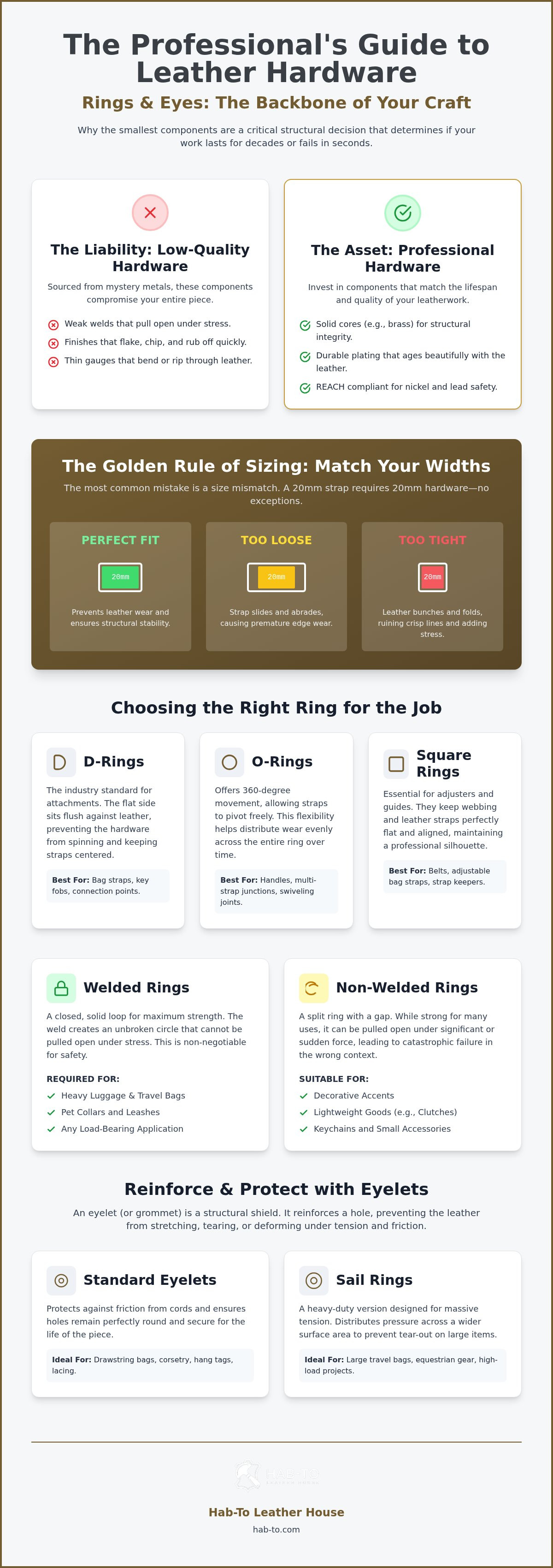
Rings dictate how a bag moves and hangs. Choosing the wrong shape can lead to "strap bunching," where the leather folds over itself and creates premature wear. Each shape serves a specific mechanical purpose:
- D-rings: These are the industry standard for attachment points. The flat side sits flush against the leather tab, keeping the hardware centered and preventing it from spinning.
- O-rings: These offer 360-degree movement. They're perfect for handles or as a central focal point where multiple straps meet. Because they rotate freely, they distribute wear evenly across the entire ring.
- Square and Rectangle rings: Essential for adjusters and belts. They keep the strap perfectly aligned and flat, which is vital for maintaining a professional, crisp silhouette.
Eyelets and Sail Rings: Structural Holes
An eyelet, often referred to as a Grommet, does more than just look good. It reinforces a hole so the leather doesn't stretch or tear under tension. In drawstring bags or corsetry, the constant friction of a cord would eventually saw through raw leather. The eyelet acts as a protective shield.
For heavy-duty projects, I often recommend Sail Rings. These are beefier versions of standard eyelets designed to handle massive amounts of tension. They're common in equestrian gear and large travel bags. By distributing the pressure across a wider surface area of the leather, they ensure that even under a heavy load, your project remains intact. Whether you're making a simple hang tag or a complex bucket bag, the right eyelet ensures the hole stays perfectly round and secure for the life of the piece.
Comparing Hardware Types: D-Rings, O-Rings, and Square Rings
Hardware selection is where the math of leathercraft meets the art of design. When you're picking out rings & eyes, you aren't just choosing a finish. You're choosing how the weight of your project is distributed. The most common mistake I see is a mismatch in sizing. If your strap is 20mm wide, your ring must be 20mm wide. It's a simple rule, but ignoring it leads to uneven wear. A loose strap slides back and forth, eventually abrading the leather edges. A tight strap bunches, ruining the crisp lines of your work.
You also need to consider the load. Welded rings are non-negotiable for safety-critical items like pet gear or heavy luggage. A non-welded ring can pull open under stress, leading to a catastrophic failure. For smaller goods or decorative accents, non-welded options are fine, but for anything that needs to stay secure, go with the weld. My family has been in this business for over 160 years, and we've seen how quality hardware distinguishes a hobbyist from a master. Even organizations like the Metal Museum recognize the importance of structural integrity in metalwork. Your leather projects deserve that same level of respect.
The Versatile D-Ring
The D-ring is the industry standard for a reason. Its flat side acts as an anchor. It keeps your strap tab perfectly flush against the body of a bag, preventing the hardware from spinning or flipping. For those chasing a high-end, luxury look, I recommend the Hermès-Style Black Black D-Ring (20mm). It provides a clean, architectural silhouette that complements modern designs. If your project has more volume, a Gold D-Ring 25mm offers the strength and visual weight needed for messenger bags or larger totes.
O-Rings for Creative Freedom
O-rings are for makers who want movement. Because they're circular, they allow a strap to swivel and find its own natural angle. This makes them ideal for multi-directional attachments or avant-garde designs. Using something like a Silver O Ring 20mm can give a bag a minimalist, jewelry-like feel. Just watch the strap thickness. Round rings can cause the leather to pinch if the strap is too wide for the ring's inner curve. If you want to experiment with different styles without over-committing, check out our leathercraft bundles to find the perfect match for your next prototype.
The Science of Professional Eyelet Installation
Setting hardware isn't just about applying force. It's about physics and respect for the material. When you're installing rings & eyes, the goal is a permanent bond that looks as if it grew out of the leather. Cheap punch kits from big-box retailers often have dull edges and soft metal setters that mushroom after just a few uses. These tools don't just fail; they mar your expensive hides and leave you with lopsided results. For a professional finish, you need tools that provide repeatable, vertical pressure.
Hand-setting with a mallet is a classic skill, but it introduces variables. One slightly angled strike can crimp an eyelet unevenly, leading to a sharp edge that eventually cuts into your drawstring or strap. For high-volume work or heavy-duty projects, I always recommend a Manual reinforced Grommet Hand Press. This tool mounts directly to your bench and ensures every eyelet is set with the exact same amount of force, providing a level of consistency that hand tools simply can't match.
What You Will Need
To achieve a clean, industrial-strength result, you need a specific kit. Don't try to "make do" with a standard hammer or a generic hole punch. You will need:
- Professional-grade Sail Rings 10/19/5MM for maximum reinforcement.
- A Stainless Steel Eyelet Punch Tool that matches your barrel diameter exactly.
- The Silicone Hammer XL to provide significant force without marring the metal finish.
- A sturdy bench-mount or a heavy anvil to provide a solid, non-vibrating base for your work.
Common Mistakes to Avoid
One common error is under-punching the hole. You might think a tight fit is better, but forcing a barrel through a hole that's too small stretches the leather fibers to their breaking point. This creates "stress halos" around the hardware that eventually turn into tears. You want the barrel to slide in with minimal resistance.
Another pitfall is over-compressing the eyelet. If you hit the setter too hard, the metal edge acts like a cookie cutter, slicing through the leather rather than gripping it. You're looking for a "snug" fit where the hardware doesn't spin. Finally, pay attention to your washer orientation. The "teeth" of the washer must be facing the leather. These teeth are designed to bite into the flesh side of the hide, preventing the hardware from rotating and loosening as the bag is used. Getting these small details right is what ensures your rings & eyes stay secure for the entire life of the leather.
Choosing the Right Finish: From Gun Metal to Old Gold
The color of your hardware is the visual punctuation of your leatherwork. It sets the mood before a customer even touches the hide. When selecting rings & eyes, you have to consider how the metal will interact with the leather's natural evolution. For example, the rugged, scuffed surface of Badalassi Pueblo Leather creates a beautiful contrast with polished metals, but it truly shines when paired with finishes that share its organic character. The hardware should feel like a part of the design, not an afterthought.
Durability is a major concern for many artisans. You don't want your hardware to tarnish or rust after a few months of use. Most professional-grade hardware uses electroplating to achieve its color. Nickel and Silver finishes are incredibly hard-wearing and resist scratches well. Gun Metal, with its dark, moody luster, is achieved through a specific plating process that is equally durable but offers a more industrial aesthetic. If you're worried about longevity, always look for hardware with a solid brass base. This ensures that even as the piece ages and the plating develops its own story, the core remains structurally sound and rust-proof. Choosing high-quality rings & eyes means your hardware will age just as gracefully as your vegetable-tanned leather.
Classic Finishes: Gold and Silver
Gold hardware is the universal symbol of luxury in the leather world. A small Gold D-Ring from our hardware collection can elevate a simple key fob or card holder into a high-end accessory. It provides a warmth that complements tan and brown leathers perfectly. On the other hand, Silver and Nickel offer a cooler, more contemporary feel. These are often the preferred choices for equestrian gear and modern tech accessories where a clean, high-contrast look is desired. They're timeless, dependable, and match almost any color palette.
Specialty Patinas and Vintage Styles
For projects that need to feel like they've already lived a life, specialty patinas are the answer. A Brown Patina ring is the perfect choice for a field bag or a rugged outdoor tote. It lacks the "new" shine of standard plating, blending seamlessly with oil-tanned or heavily waxed leathers. If you're aiming for a heritage look that honors the 160-year tradition of our family business, Old Gold is your best ally. It provides a muted, sophisticated glow that looks right at home on vegetable-tanned leather. By mixing or matching these finishes across a collection, you can create a signature look that becomes a hallmark of your brand.
Sourcing Quality Hardware: Why Hab-To is the Maker’s Choice
Finding high-end hardware in small quantities is one of the biggest hurdles for independent makers. Most wholesalers require massive minimum orders, forcing you to buy fifty buckles when you only need two for a prototype. At Hab-To, we believe every project deserves professional-grade rings & eyes, regardless of the scale. Our "No MOQ" policy means you can buy exactly what you need. This allows you to experiment with luxury finishes without the burden of excess inventory. It's about supporting the craft, not just moving stock.
Expertise shouldn't be a gatekept secret. Mike brings 25 years of hands-on experience to every interaction. If you're unsure which gauge of wire or which eyelet size will work best with your specific hide, you don't have to guess. We offer Free Video Consultations to help you spec your project accurately. We test every piece of hardware for professional artisan use. We ensure it stands up to the rigors of daily wear alongside the finest vegetable-tanned leathers. Our central hub allows for fast worldwide shipping, so your production schedule never has to wait on a missing component.
Beyond the Basics
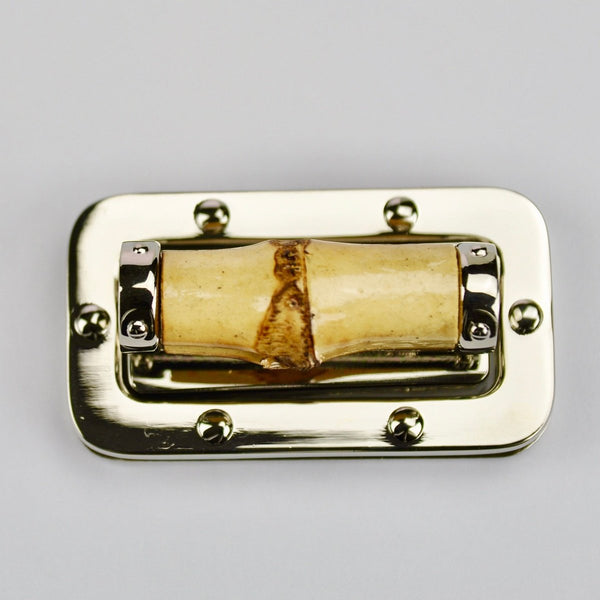
As your skills grow, your hardware needs will evolve. You might move from static attachments to more dynamic solutions. The Musketon Hook Oval-Ring 8mm is an excellent choice for detachable straps, offering a secure yet elegant quick-release mechanism. If you want to add a unique texture to your designs, the Bamboo Collection provides an architectural flair that sets your work apart from mass-produced goods. For those just starting a new project or looking to refresh their workbench, our Starter Bundles combine essential tools and hardware to get you moving quickly.
Start Your Project Today
Your work is only as strong as its weakest connection. Don't let inferior hardware undermine the hours you spend at the stitching pony. I invite you to browse the full Hab-To Rings & Eyes collection to find the perfect match for your next creation. Remember, we offer free shipping to the Netherlands and Belgium on orders over 125 Euro, making it easier to stock up on the essentials you need. Once you've finished your piece, share it with us on Instagram. We love seeing how our hardware brings your vision to life. Let's build something that lasts.
Elevate Your Craft with Intentional Hardware
Your choice of hardware is a statement of quality. It's the difference between a project that wears out and one that wears in. By mastering the technical nuances of rings & eyes, you ensure that every attachment point is as resilient as the vegetable-tanned leather you use. From structural D-rings to perfectly set sail rings, these small details define the integrity of the artisan.
We provide the components to make your vision a reality without the barriers of minimum order quantities. With over 160 years of family expertise guiding our selection, we stand behind every piece we ship. Most orders reach your workbench within 24 to 48 hours, so your creative momentum never has to stop. Whether you're prototyping a new design or finishing a custom commission, we're here to support your journey.
There is a deep satisfaction in creating something that will outlive its maker. Choose hardware that honors your effort and the traditions of this beautiful craft. Keep building with pride and precision.
Frequently Asked Questions
What is the difference between a D-ring and a square ring for straps?
The primary difference lies in how they control strap movement. D-rings feature a flat side that anchors against the leather tab, making them the standard for shoulder strap attachments. Square rings are designed to keep wide straps perfectly flat and aligned. This makes square hardware essential for belt adjusters and sliders. While a D-ring allows for a slight pivot, a square ring ensures the leather remains crisp and centered throughout the life of the piece.
How do I know what size eyelet I need for my leather project?
You need to match the internal diameter of the eyelet to the thickness of your drawstring or cord. Additionally, the barrel height of your rings & eyes must be slightly longer than the total thickness of your leather layers. If the barrel is too short, it won't roll over the washer securely. If it's too long, the hardware will remain loose and spin, eventually causing the leather to wear down prematurely.
Will the gold finish on my hardware rub off over time?
High quality electroplating is designed for years of use, but all finishes eventually develop a story through friction. Our hardware uses a solid brass core, ensuring that even if the finish develops a vintage patina, the metal underneath won't rust or weaken. Unlike cheap mystery metals, professional finishes like our Gold or Old Gold are tested to withstand the daily abrasion that comes with being part of a functional handbag or belt.
Do I really need a hand press to install sail rings?
While you can set sail rings with a manual punch and mallet, a hand press is highly recommended for professional results. Sail rings are made of thicker metal than standard eyelets and require significant, even pressure to roll the barrel correctly. A manual grommet hand press ensures the force is perfectly vertical every time. This prevents the hardware from crimping lopsidedly, which is a common issue when using hand tools on heavy duty projects.
Can I buy just two D-rings, or do I have to buy a whole bag?
You can absolutely buy just two D-rings or even a single eyelet. We don't believe in forcing artisans to buy bulk quantities they don't need. Our "No Minimum Order Quantity" policy is designed to support makers who are prototyping new designs or working on small custom commissions. You get access to the same professional grade hardware used by luxury brands without the burden of storing a whole bag of unused components.
What finish looks best with vegetable-tanned Pueblo leather?
Old Gold and Gun Metal are the most popular choices for vegetable tanned Pueblo leather. The scuffed, organic texture of Pueblo pairs beautifully with the muted, heritage feel of an Old Gold finish. For a more industrial or modern look, Gun Metal provides a sharp contrast that highlights the deep color shifts in the leather. These finishes age gracefully alongside the natural patina that defines high quality Italian vegetable tanned hides.
Are these rings strong enough for equestrian gear or heavy bags?
Our hardware is specifically selected for professional artisan use, including equestrian gear and heavy luggage. For safety critical applications like horse tack or heavy travel bags, you should always choose our welded rings & eyes. These components are tested for high load bearing capacity and won't pull open under stress. With over 160 years of family expertise in the industry, we only stock hardware that meets these rigorous structural standards.
How do I prevent my hardware from scratching during installation?
Using a silicone hammer is the best way to apply force without marring the metal finish. For extra protection, you can place a small piece of masking tape or a scrap of thin lining leather over the hardware before striking. This creates a soft buffer between the tool and the finish. Also, ensure your work surface is clean and free of metal filings, as even small debris can cause scratches when pressure is applied.
Disclaimer
All our blog articles are made for information purposes only we dont take responsability for any content from third parties.