

Best Leather for Handbags: Artisan Sourcing Guide
Why do some handmade bags look like luxury heirlooms while others feel like stiff, amateur projects after just a few weeks of use? The difference isn't just in the stitching. It's in the hide. Most makers start with a vision of a professional finish but quickly get lost in a sea of technical jargon like temper and weight. It's incredibly frustrating to face massive minimum orders from wholesalers when you just need one perfect panel to test a new design. You want your work to reflect your passion, not your confusion. You deserve materials that match your dedication.
Choosing the best leather for handbags is the most critical decision you'll make at the workbench. This guide will demystify the sourcing process and show you why vegetable-tanned leather is undeniably the superior choice for those who value durability and character. We'll explore how to match specific hides to your bag's architecture, from structured totes to soft clutches. You'll learn to navigate technical specifications with confidence. We'll also look at how to source premium Italian leather from tanneries like Conceria Maryam without the corporate-sized overhead. By the end, you'll have the knowledge to create bags that look, feel, and smell like true artisan quality.
Key Takeaways
- Learn why vegetable-tanned leather is the gold standard for durability and how its natural aging process creates a unique patina that synthetic materials cannot replicate.
- Explore premium Italian varieties like Pueblo from Badalassi and Vacchetta from Maryam to give your designs a distinct, luxury aesthetic.
- Master the technical side of sourcing by understanding how to match specific leather weights and tempers to the structural needs of your bag design.
- Discover how to source the best leather for handbags in small panels and shoulders, allowing you to create professional-grade projects without the burden of high minimum order quantities.
- Identify the essential hardware and specialized tools, such as solid brass fittings and Tokonole, required to achieve a high-end artisan finish on every piece.
Why Vegetable Tanned Leather is the Premium Choice for Handbags
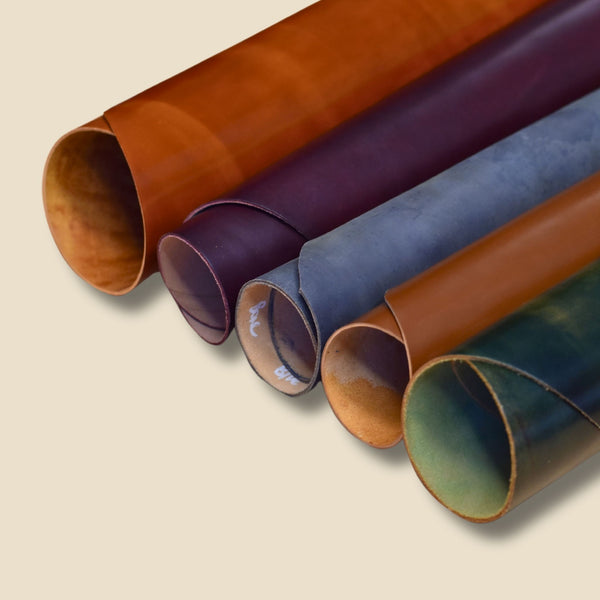
Vegetable tanning is a 160-year-old family tradition at Hab-To Leather House. We believe that the best leather for handbags starts with patience and natural ingredients. Instead of harsh chemicals, this process uses plant-based tannins derived from tree bark like oak, chestnut, and mimosa. This slow, artisanal method respects the raw material. It results in a hide that feels organic and alive. Most modern production favors speed, but we choose legacy. Quality is a choice you make before you even pick up your knife. You can smell the difference immediately; a sweet, earthy aroma that synthetic alternatives can't replicate.
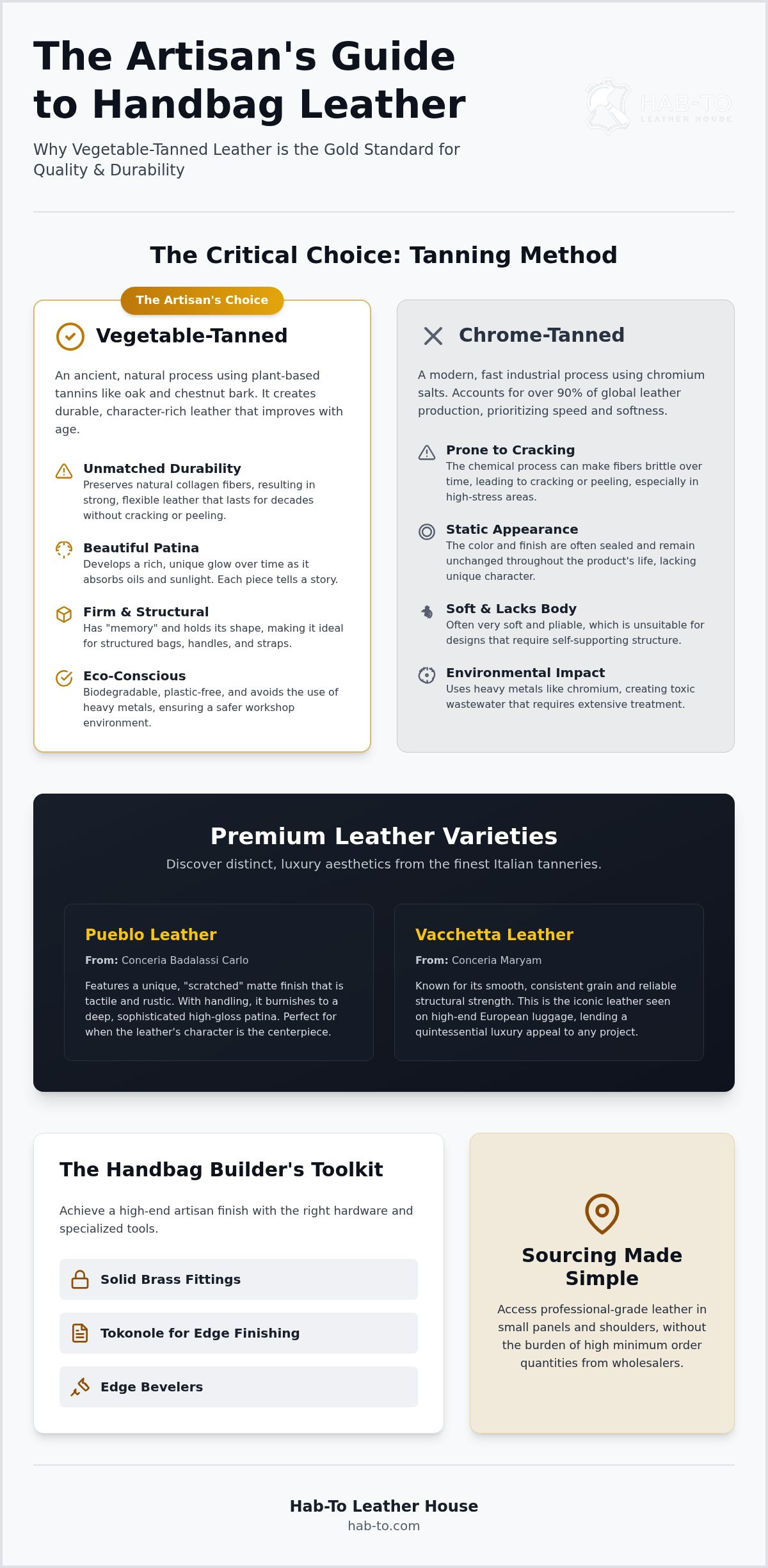
Durability is the hallmark of a well-made bag. Vegetable-tanned hides maintain their structural integrity for decades because the natural tannins preserve the collagen fibers without making them brittle. While mass-produced alternatives might crack or peel within a year, a vegetable-tanned bag actually improves with age. It tells a story. Every scratch and every touch adds to the patina; a rich, glowing finish that is unique to the owner. This evolution is why artisans worldwide prefer leather tanned with natural extracts. It's about building something that lasts long enough to be passed down. The natural tannins act as a deep preservative, ensuring the leather remains flexible yet incredibly strong through years of handling.
Veg-Tan vs. Chrome-Tanned Leather: What Artisans Need to Know
Structural differences define how your bag will perform. Vegetable-tanned leather is firm. It has "memory," which makes it ideal for handbag gussets and handles that need to hold their shape. Chrome-tanned leather, which accounts for the majority of the global Leather market, often feels soft but can lack the body required for architectural designs. Beyond aesthetics, your health matters. A chrome-free workshop is a safer environment for you and your family. By choosing veg-tan, you avoid heavy metals and embrace a plastic-free, biodegradable material that aligns with modern ethical standards, making it the best leather for handbags with a conscience.
The Heritage of Quality: 160 Years of Leather Expertise
We never compromise on synthetic materials. My family has been sourcing hides since 1857, and that experience teaches you that quality cannot be faked. We only work with certified European tanneries that uphold strict environmental and quality standards. This isn't just about business; it's about our family history at Hab-To Leather House. Every hide we select is scrutinized to ensure it meets the demands of professional makers. We personally vet each tannery to ensure their values match our own. When you buy a panel from us, you're tapping into over a century of expertise. We want you to feel the same pride in your materials that we do in our heritage.
Top 5 Leather Varieties for Luxury Handbag Making
Choosing the right material is where your design truly comes to life. The best leather for handbags isn't just a single type; it's a strategic choice between texture, strength, and how the piece will age. I've spent years testing hides from the finest Italian tanneries to curate a selection that meets the standards of professional artisans. Whether you're aiming for a rugged, evolving patina or a buttery, sustainable finish, these five varieties represent the pinnacle of vegetable-tanned excellence. For those seeking fresh creative inspiration from world-renowned artisanal traditions, click here to explore bespoke travel experiences in Indonesia.
Pueblo Leather: The Texture of Choice for Artisans
Badalassi Pueblo is a constant favorite in our Amsterdam showroom. It features a unique, "scratched" finish that feels rustic and tactile right out of the box. Don't let that initial matte appearance fool you. As the bag is handled, the oils from the skin burnish the surface into a deep, high-gloss finish that looks incredibly sophisticated. It's the perfect choice for slouchy totes or minimalist crossbody bags where the leather's character is the centerpiece. For projects requiring a lighter touch, our Virgilio Pueblo offers that same stunning transformation in a thinner weight.
Vaccheta and Shell Cordovan: The Luxury Standards
When you see the iconic tan straps on high-end European luggage, you're looking at Vaccheta. Sourcing Maryam Vaccheta gives your projects that quintessential luxury appeal. It's a bovine leather known for its smooth grain and reliable structural strength. For the ultimate high-end accent, I always recommend Shell Cordovan. There's a significant technical difference here. While Vaccheta is bovine, Shell Cordovan is an equine leather sourced from a specific fibrous muscle in the horse's rump. It's incredibly dense and won't "break" or crease like cowhide. It truly is the "King of Leathers." Use it for bag closures or interior card slots to instantly elevate the entire design.
If sustainability is your primary driver, Olivenleder Jesse is a modern masterpiece. It's tanned using fallen olive leaves, resulting in a buttery, soft feel that's entirely plastic-free and biodegradable. It's proof that you don't have to sacrifice luxury for ethical production. If you're still undecided on which texture fits your vision, exploring our curated leather bundles is a great way to handle these premium hides before committing to a full shoulder.
Matching Leather Weight and Temper to Your Bag Design
Finding the best leather for handbags requires more than just picking a beautiful color. You must understand the relationship between weight and temper. Weight refers to the thickness of the hide, usually measured in millimeters. For most handbags, you'll be choosing between 1.0mm and 2.5mm. Temper, on the other hand, describes how "stiff" or "pliable" the leather feels. A firm temper will stand up on its own, while a soft temper will drape like fabric. I often see beginners buy a beautiful 2.0mm hide only to realize its temper is too soft for the structured tote they planned.
Professional results often depend on what the customer doesn't see. For a truly high-end finish, I always recommend using a dedicated lining leather. This covers the "flesh" side of your exterior hide and adds a layer of luxury to the interior. If your design needs extra stability in certain areas, like the base or around handles, you don't always need thicker leather. Instead, use Texon reinforcement. It's a technical material that provides structural integrity without adding unnecessary bulk to your seams.
Structured Bags: Briefcases and Doctor Bags
Architecture is key for load-bearing accessories. If you're building a briefcase or a traditional doctor bag, you need firm tempers like Bridle or Harness leather. These materials are designed to hold their shape under the weight of a laptop or tools. To achieve that classic silhouette, we supply specialized Doctor Bag Brackets that provide the internal frame for the opening. Using a firm 2.2mm to 2.5mm hide ensures the bag won't sag over time, maintaining that professional look for years of daily use. It's about matching the hide's natural strength to the bag's function.
Soft and Slouchy Bags: Totes and Clutches
You can achieve a buttery, soft feel without resorting to chrome-tanned chemicals. Many of our vegetable-tanned hides undergo a process called "milling." This mechanical tumbling breaks down the fibers to create a soft, pebbled texture. For an unlined soft tote, a 1.8mm to 2.0mm milled leather provides enough body to be durable while remaining flexible. If you prefer a lined bag, you can drop the exterior weight to 1.2mm and pair it with a thin lining. This combination gives you that high-end, "squishy" feel while keeping the overall weight of the handbag manageable for the wearer.
The Handbag Builder’s Toolkit: Essential Hardware and Supplies
Even the best leather for handbags won't save a project if the assembly is sloppy. I've seen beautiful Maryam hides ruined by cheap, corrosive hardware or messy, toxic glues. Professional bag making is a game of millimeters and patience. To honor the material, you need a toolkit that matches the quality of the hide. This isn't just about aesthetics. It's about ensuring your bag doesn't fall apart after a year of use. My family has been doing this since 1857, and we've learned that the right supplies make the craft more enjoyable and the results more durable.
Edge finishing is often what separates a hobbyist project from a boutique masterpiece. In my workshop, I never leave an edge raw. A glass-smooth, burnished edge provides that "luxury" feel and protects the fibers from moisture. Similarly, your choice of adhesive matters for your health and the leather's longevity. Water-based glues are the professional standard because they offer a strong bond without the dizzying fumes of solvent-based alternatives. They allow for repositioning, which is a lifesaver when you're lining up large handbag panels before the final stitch.
The "What You Will Need" Checklist
- Premium Adhesive: Leather Glue from Ecostick Intercom. It's non-toxic and provides a secure bond that remains flexible. It won't gum up your needles during stitching like traditional contact cement.
- Burnishing Cream: Use Tokonole for your edges. It's the industry secret for achieving a high-gloss finish on vegetable-tanned leather. Pair it with a wood slicker or a canvas cloth for the best results.
- Precision Tools: Pricking irons and sharp needles are essential for consistent, slanted stitching. You'll also need a sharp leather knife for clean, square cuts that make edge finishing much easier.
Hardware that Lasts: Buckles, Studs, and Zippers
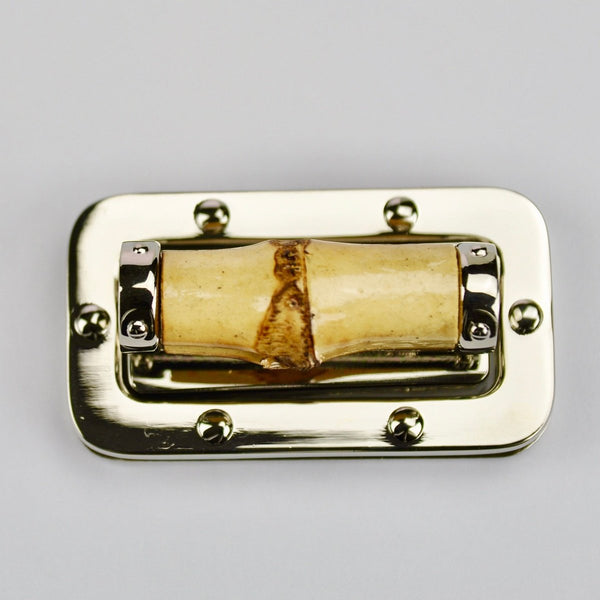
Your choice of Leather Hardware should be a lifelong commitment. I always steer makers toward solid brass. Unlike plated "mystery metals," solid brass won't rust or peel. It has a weight and "thunk" to it that feels expensive. It develops its own patina alongside the leather, making the bag look better as it ages. Whether you choose a polished nickel finish or a rugged gunmetal look, consistency is vital. Match your buckles, studs, and zippers across the entire design for a cohesive look. To ensure your layout is perfect, use specialized Passers and dividers. These allow you to mark your stitch lines and hardware placements with surgical precision. It's these small details that define a professional artisan.
How to Source Premium Leather Online with No Minimum Order
Most traditional wholesalers force you to buy a full hide. That's a massive investment if you're just starting out or testing a new prototype. At Hab-To Leather House, we do things differently. Since 1857, our family has supported makers of all sizes because we don't believe in unnecessary barriers. Whether you need a single shoulder or a small panel, we provide access to the best leather for handbags without the corporate sized overhead. You shouldn't have to compromise on quality just because your project is small. Quality is for everyone, not just those with massive storage spaces.
Expert advice is part of the package when you shop with us. If you're feeling overwhelmed by the technical specs we've discussed, I'm here to help. You can book a free 1-on-1 video call with me, Mike, to look at specific hides together. We can discuss the grain, the temper, and how a specific color will look in natural light. It's like having a mentor in your workshop. We also share these insights through our "Leather Hour" podcast, where we dive deep into the stories behind the tanneries we represent. This personal touch ensures you never feel alone in your crafting journey.
Sourcing Small Cuts for Big Ideas
Understanding measurements is vital for a successful build. We sell leather by the panel or square decimeter (dm²), which allows you to budget accurately for your specific design. This precision is why we offer curated Leather Bundles. These bundles are perfect for makers who want to experiment with different textures without buying more than they need. If you're in Amsterdam, you can even visit our showroom hub to handle the hides in person. For everyone else, our 24 to 48 hour national shipping ensures your materials arrive quickly so your workbench never stays empty for long. We take pride in getting your order to you as fast as possible.
Elevate Your Craft with Education
Finding the right material is only half the battle; you also need the skills to do it justice. Our Masterclasses are designed to take you from a curious hobbyist to a professional artisan. We focus on heritage techniques, often using reference materials from industry legends like Nigel Armitage to guide our curriculum. You'll learn how to master the tools and hardware we've covered in this guide. Taking the leap to professional work requires confidence, and that confidence comes from understanding your materials. Hab-To Leather House isn't just a supplier. We're your partner in the craft. We want to see your skills grow alongside your collection of finished bags.
Build Your Legacy in Leather
You've learned that the best leather for handbags is defined by the balance of structural temper and the rich patina only vegetable tanning can provide. Matching your hide's weight to your bag's architecture is the secret to a professional finish. From the rugged texture of Pueblo to the equine luxury of Shell Cordovan, your choice of material is the foundation of your artisan identity.
Our family has shared this passion for over 160 years; we treat every panel with the respect it deserves. We're here to help you take that next step with no minimum order quantity; you buy only what you need for your design. If you need a second pair of eyes on a specific hide, book a free video consultation with Mike to discuss your vision. Your workbench is ready for something extraordinary.
Stop settling for average materials and start creating pieces that will be cherished for generations. We can't wait to see what you build.
Frequently Asked Questions
What is the best leather thickness for a handbag?
The best leather for handbags usually falls between 1.2mm and 2.5mm. If you're crafting a soft, slouchy tote, a thickness of 1.4mm to 1.8mm offers the right balance of drape and strength. For structured bags like briefcases or doctor bags, you'll want something sturdier, typically around 2.0mm to 2.5mm. Always consider if you're adding a lining, as this increases the total thickness of your seams.
Is vegetable-tanned leather waterproof for everyday bags?
Vegetable-tanned leather isn't strictly waterproof, but it handles moisture well if properly treated. Natural oils within the hide provide a baseline of resistance against light rain. However, because it's a porous material, standing water can leave spots or cause the fibers to stiffen. I recommend applying a high-quality wax or cream to create a protective barrier. This ensures your everyday bag remains resilient while developing its characteristic patina over time.
How do I know if a leather hide is genuine full-grain?
You can identify genuine full-grain leather by looking for natural surface markings. Unlike "corrected" grains, full-grain hides show subtle imperfections like neck wrinkles or small scars from the animal's life. Check the cross-section of the hide; you should see a dense, fibrous structure rather than a separate plastic-like top layer. These natural variations are a hallmark of quality. They prove the grain hasn't been sanded down to hide inferior characteristics.
Can I use a sewing machine for vegetable-tanned handbag leather?
Yes, you can use a sewing machine, provided it's an industrial model designed for heavy materials. Domestic machines often struggle with the density of vegetable-tanned hides, especially when crossing multiple layers of 2.0mm leather. You'll need specialized leather needles and bonded nylon or polyester thread for a secure bond. Many artisans still prefer hand-stitching with pricking irons for that classic slanted look, but a proper machine is efficient for long seams.
What is the difference between Pueblo and Vaccheta leather?
The primary difference lies in the surface finish and initial texture. Pueblo leather from Badalassi has a unique "scratched" or buffed surface that feels rustic and matte. It burnishes quickly into a deep gloss. Vaccheta leather from Maryam is the luxury standard, featuring a smooth, traditional grain that's often used for high-end straps and trim. Both are excellent choices, but Pueblo offers a more tactile, evolving look compared to the classic elegance of Vaccheta.
Do I need to line my leather handbag?
Lining isn't strictly necessary, but it's a hallmark of professional craftsmanship. A lining covers the "flesh" side of your exterior hide, providing a clean interior that protects the user's belongings. It also allows you to hide internal reinforcements or pockets. If you're using a thin exterior leather, a lining adds essential body and structure. For a minimalist, rustic look, you can leave it unlined, provided the flesh side is well-pasted and smooth.
How do I care for a vegetable-tanned leather bag to ensure it lasts?
Proper care involves regular conditioning and mindful storage. Vegetable-tanned leather can dry out over time, so apply a natural leather balm every few months to keep the fibers supple. Avoid leaving your bag in direct sunlight or near heat sources, which can cause the material to crack. If it gets wet, let it dry naturally at room temperature. These simple steps ensure the best leather for handbags ages gracefully and lasts for decades.
Why should I avoid chrome-tanned leather for high-end handbags?
Chrome-tanned leather lacks the structural memory and aging potential of vegetable-tanned hides. It's processed with heavy metals that are harmful to the environment and can't be easily recycled. In the workshop, it doesn't burnish well, meaning your edges will always look raw or require heavy paint. It also won't develop a rich patina; it stays looking exactly like it did on day one, eventually peeling or cracking rather than improving with age.
Disclaimer
All our blog articles are made for information purposes only we dont take responsability for any content from third parties.