

Buckles & Passers: How to Choose the Right Leathercraft Hardware
Could the wrong buckle make an otherwise well-made strap feel unfinished? With buckles & passers, fit matters: hardware that doesn’t suit your strap width or the job it needs to do can affect both function and appearance.
It’s easy to mix up buckles, passers, and adjusters, or to wonder whether gold, silver, nickel, or a darker finish will work with the rest of your hardware. Start by identifying the component’s job and measuring the strap. Once fit and function are clear, it’s easier to bring the look together.
In this guide, you’ll learn how to match hardware width to your strap, distinguish the main hardware types, and choose suitable options for belts, bags, and equestrian projects. We’ll also compare finishes, including old gold, gun metal, copper, and black gun metal. Whether you’re making one piece or crafting regularly, you’ll have a practical process for choosing hardware, from measuring your strap to reviewing product details.
Key Takeaways
- Start with what the hardware needs to do, then narrow your options by project type.
- Learn how buckles & passers differ, and which styles may suit belts, bags, or adjustable straps.
- Compare strap width with the hardware’s usable opening, not just its overall dimensions.
- Coordinate finishes for a cohesive look, or use contrast as a deliberate design choice.
- Use narrow-width examples such as the Gold Metal Buckle 10mm and Silver Rectangular Buckle 10mm to guide your comparison.
Buckles & Passers: Start With Your Project and Strap Fit
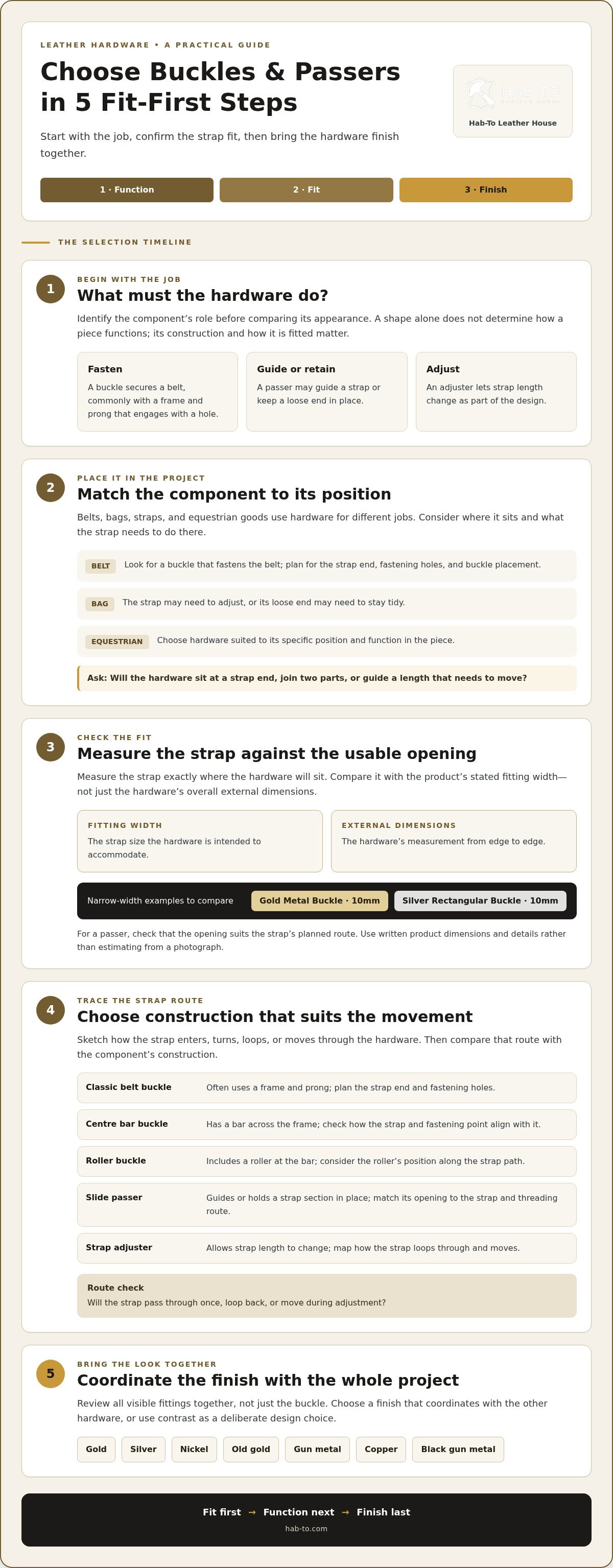
Attractive hardware won’t help if it doesn’t fit the strap or perform the right job. Before browsing buckles & passers, decide what the component needs to do. Measure the strap where the hardware will sit, identify the component’s role, then choose a finish that suits the rest of your project. Fit first, function next, finish last.
What is the difference between a buckle and a passer?
A buckle is fastening hardware. On a belt, it secures the strap around the wearer, commonly using a frame and a prong that engages with a hole. The history of the buckle also offers a closer look at its components and changing forms.
A passer has a different role. Depending on its design, it guides or helps adjust a strap. On a bag strap, for instance, a passer may keep a loose end in place or form part of an adjustment arrangement. A rectangular shape alone doesn’t tell you how a piece functions. Its construction and how it’s fitted determine whether it guides, adjusts, or serves another purpose.
Which projects use buckles and passers?
Belts, bags, straps, and equestrian goods all use leather hardware, but the intended job determines what to look for. A belt buckle needs to fasten the belt. A bag strap may need hardware that lets it adjust or keeps its end tidy. Equestrian projects also rely on hardware suited to its specific position and function in the piece.
Think about placement as well as purpose. Will the component sit at the end of a strap, join two parts, or guide a length that needs to move? These details help you identify the right category before comparing appearance. If you’re choosing a strap-guiding component, browse the passer collection for options suited to leathercraft projects.
Use the same fit-first approach whether you’re making one item or producing pieces regularly. Start with the strap that’s part of your project, rather than choosing a component simply because its shape or finish looks appealing.
- Identify the function: fastening, guiding, or adjusting.
- Measure the strap: note its width where it meets the hardware.
- Choose the finish: coordinate it with the other hardware in your design.
Compare Buckle and Passer Styles by Function
The shape of a piece of hardware affects how the strap travels through it and how the finished project fastens or adjusts. Buckles have served decorative as well as practical roles across different periods, as this historical overview of buckles describes. For your project, focus on the construction: how the strap enters, where it turns, and what holds it in position.
| Style | Typical role | Project considerations |
|---|---|---|
| Classic belt buckle | Fastens a belt, often with a frame and prong | Plan for the strap end, fastening holes, and buckle placement. |
| Centre bar buckle | Uses a bar across the frame as part of the buckle layout | Check how the strap and fastening point align with the bar. |
| Roller buckle | Uses a roller at the frame’s bar | Consider the roller’s position in relation to the strap’s path. |
| Slide passer | Guides or holds a strap section in place | Match its opening to the strap and planned threading route. |
| Strap adjuster | Allows strap length to be changed within a design | Map how the strap will loop through the hardware and move. |
When should you choose a belt buckle, centre bar, or roller buckle?
Start with the fastening your design needs. A classic belt buckle is a familiar choice when a strap must fasten with a prong and holes. A centre bar buckle has a bar across its frame, while a roller buckle includes a roller at the bar. Those construction details affect the strap’s route. Sketch the belt or strap path, then compare it with the buckle’s shape before committing.
When does a slide passer or strap adjuster make more sense?
Choose a slide passer when the design needs a component to guide or retain a strap section. Choose an adjuster when the strap needs to change length as part of the construction. In either case, width alone isn’t enough: consider the opening and the threading path together. Will the strap pass through once, loop back, or move during adjustment? Browse the passer collection to compare passer options for your project.
The right choice fits both the strap and its planned movement. Before selecting buckles & passers, check the design’s fastening needs, trace the strap route, and make sure the hardware’s form suits that route.
Choose the Right Width, Finish, and Hardware Details
A suitable style still needs to fit. Compare the strap’s width with the hardware’s usable opening, meaning the space the strap must pass through or sit within. Don’t rely on a similar-looking piece or an estimate from a photograph. Even a small mismatch can make assembly awkward or leave the strap sitting incorrectly.
How do you measure a strap for buckle or passer width?
Measure the strap at the exact point where the buckle or passer will sit. Then compare that measurement with the product’s stated fitting width. If a listing gives both a stated width and overall external dimensions, treat them as separate measurements: the external size describes the hardware from edge to edge, while the fitting width indicates the strap size it’s intended to accommodate. Check the written dimensions and product details rather than estimating from an image.
For a passer, consider the route as well as the width. The strap may need to pass through, fold back, or move within the component. Check that the opening suits the strap’s path in your design.
How do you coordinate hardware finishes across a project?
Look at all the visible fittings together, not just the buckle. Matching finishes can give a belt, bag, or strap a cohesive feel. Gold, old gold, and copper tend toward a warmer look; silver, nickel, gun metal, and black gun metal offer cooler or darker alternatives. These names are useful guides, but don’t assume two finishes will look identical across different pieces of hardware.
Consider the leather colour and the project’s overall character, too. A consistent finish keeps the hardware visually quiet, while a deliberate contrast can make a fitting stand out. Buckles have long served as both functional and decorative objects; the Cleveland Museum of Art’s example of Migration Period belt buckles illustrates that combination in an earlier historical context.
- Measure: Record the strap width where the hardware will sit.
- Compare: Match it to the stated fitting width and check the usable opening.
- Coordinate: Review the finish alongside other visible hardware and the leather.
For added context on material choices, explore our guide to solid brass hardware.
A Practical Checklist for Choosing Buckles & Passers
A short planning routine can prevent a mismatch between your design and its hardware. Work through these steps before you order, whether you’re making one piece or preparing for a larger project.
- Define the function. Decide whether the component must fasten the strap, guide it, or allow adjustment.
- Measure the strap. Record its width where the hardware will sit, and note any folds or layers that affect how it will pass through.
- Choose a style. Match the buckle, passer, or adjuster to the strap’s planned route and the way the finished piece should work.
- Coordinate the finish. Compare the hardware with other visible fittings and the leather so the overall design feels intentional.
- Check the listing. Read the stated fitting dimension and product details. If the listing also gives external dimensions, don’t mistake those for the usable opening.
What should you check before placing an order?
Compare your measured strap width with the product’s stated fitting dimension. Then picture the strap threaded through the component: does it pass straight through, loop back, or need to move for adjustment? Finally, compare the finish with the buckle, closures, or other hardware you’ve chosen. These checks are more reliable than judging size or colour from a product image alone.
What you will need:
- A project sketch showing where the hardware will sit.
- The strap measurement at the fitting point.
- Notes on the strap route and any matching hardware finishes.
What common mistakes can you avoid?
Don’t confuse a passer, which guides or holds a strap, with a buckle that performs the fastening. Avoid assuming that a product’s overall dimensions equal the opening available for your strap. And don’t select hardware before planning the strap route and construction. Similar-looking pieces may fit differently, so rely on listing dimensions rather than appearance alone.
For a belt project, you can also explore leather for belts as a complementary material category. Keep your sketch and measurements beside you while comparing hardware. A few notes make it easier to choose confidently and keep the finished design consistent.
Standout Buckles & Passers: Match These Examples to Your Design
Specific examples make it easier to compare listed widths and finishes, but they’re a starting point, not a universal fit guide. The right choice still depends on your strap measurement, the hardware’s stated fitting dimension, and how the component will sit in your construction.
Which examples help you compare widths?
These examples show how listed width and finish can help narrow your choices. Use each product listing to check the full dimensions and details before choosing.
| Example | Listed width | What to compare |
|---|---|---|
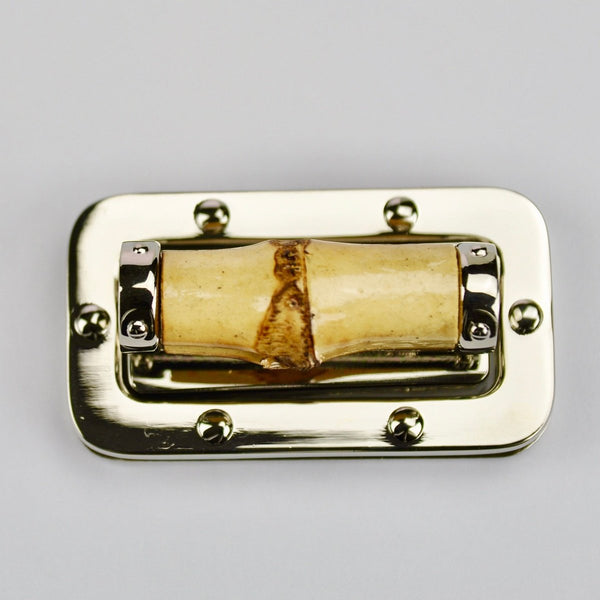
| Gold Metal Buckle 10mm | 10mm | A narrow-width example in a gold finish. |
| Silver Rectangular Buckle 10mm | 10mm | Compare the same listed width in silver and a rectangular form. |
| Rectangular metal buckle, black finish | 15mm | Compare its finish and listing details with the brass-finish option. |
| Rectangular metal buckle, brass finish | 15mm | A separate finish example at the same listed width. |
| 18mm listing example | 18mm | Use the product listing for its specific name, shape, and dimensions. |
| Black Rectangular Buckle 20mm | 20mm | A wider listed-width example with a rectangular shape. |
The 10mm, 15mm, 18mm, and 20mm figures help you compare the range of listed widths. They don’t establish that a particular piece will fit your project. Check the listing’s stated fitting width and distinguish it from external dimensions wherever both are provided. Don’t infer compatibility from a product name, finish, or photograph.
How can you browse the collection with confidence?
Keep your selection process simple: define the hardware’s job, measure the strap where the component will sit, choose a style that suits the strap route, coordinate the finish with other visible fittings, then read the listing details. This fit-first check helps you compare buckles & passers on practical details as well as appearance.
Hab-To welcomes makers buying for a single project as well as working artisans, with no minimum order requirements. Use your measurements and finish notes to compare buckles and passers for your design.
Make Your Next Hardware Choice With Confidence
The right buckles & passers start with the job they need to do and the strap they need to fit. Measure the strap, compare it with the hardware’s stated fitting width, and think through how the strap will pass through or fasten. Then choose a finish that works with the other visible fittings in your design.
Whether you’re making a single piece or crafting regularly, Hab-To serves makers of all sizes with no minimum order requirements. Our family’s leather expertise spans more than 160 years, and we offer leathercraft hardware and supplies to support thoughtful making.
Take your measurements, trust your design, and choose the details that bring your leatherwork together.
Frequently Asked Questions
How do I choose the right buckle size for a leather strap?
Measure the strap where the buckle will sit, then compare that measurement with the product’s stated fitting width. Don’t assume the buckle’s outside dimensions show the usable opening. Check the listing and consider how the strap will pass through the component, including any fold or return in your design. If your project uses several fittings, compare their dimensions together before ordering so the parts suit the same strap and construction.
What is the difference between a buckle and a passer?
A buckle generally fastens or secures a strap, while a passer guides or helps adjust one within a design. Their precise roles depend on their construction and how the strap travels through the hardware. For a belt, bag, or other leathercraft project, identify what each component needs to do first. Then choose the appropriate category and compare its fitting dimensions with your strap rather than relying on shape alone.
Can I use a passer instead of a buckle on a belt?
A passer and a buckle do different jobs, so a passer isn’t automatically a substitute for a buckle. A passer can guide or manage a strap, while the belt may still need a separate component to fasten it. Sketch the strap path and mark where it must be secured or adjusted. Then compare hardware by function and fitting width to make sure each piece suits the belt’s construction.
How do I match a buckle finish to other leather hardware?
Start with the visible hardware already selected for your project. Choose a consistent finish for a coordinated look, or use a deliberate contrast as a design detail. Options include gold, silver, nickel, old gold, copper, gun metal, and black gun metal. Product photographs can help you compare finishes broadly, but don’t assume they show exact colour. Read each listing’s finish description as you make your choice.
Which buckle styles are suitable for bags and straps?
The collection includes buckle and passer options for belts, bags, straps, and equestrian goods. The right choice depends on the strap’s function, route, and width, not just the project label. Compare classic, centre bar, and roller buckle styles with slide passers or strap adjusters. Consider how the strap will be fastened, guided, or adjusted, then check the individual listing dimensions and details against your design.
Can I buy a single buckle or passer for a small project?
Yes. Hab-To has no minimum order requirements, serving makers who need small quantities as well as professional artisans. You can source hardware for a single project without committing to a bulk order. Browse by style and dimensions, then review the product details before choosing. Measure your strap and check the fitting width so the piece you select suits your project’s construction.
Disclaimer
All our blog articles are made for information purposes only we dont take responsability for any content from third parties.