


Leather Terminology: A Reference to Grain, Tanning and Finishes
A leather label can describe the hide’s surface, how it was tanned, its finish, or a stage in production. These terms aren’t interchangeable. This leather terminology guide helps you read them clearly, so you can compare materials by what they are and how they’re made, not by name alone.
If terms such as full-grain, nubuck, vegetable-tanned, and crust leather seem confusing, that’s understandable. Some describe the hide’s grain or texture; others identify its treatment or its stage between raw hide and finished leather.
This guide explains grain and surface finishes, tanning methods, aniline and pigmented finishes, and nubuck. It also follows leather through production, from splitting and tanning to dyeing and finishing, with intermediate terms such as crust and bonded leather explained along the way. Use it to understand what each term tells you when comparing materials.
Key Takeaways
- Separate terms for grain, texture, tanning, and finish to understand what each one actually describes.
- Use the difference between vegetable and chrome tanning to assess how a leather’s treatment relates to its intended use.
- Distinguish aniline, semi-aniline, and pigmented finishes by how they show natural markings and protect the surface.
- Recognize nubuck by its fine, buffed nap, and don’t confuse it with suede’s typically longer, hairier fibers.
- Follow the production terms from hide to finished leather, then choose leather and tools that suit your project.
Leather grain and surface finishes
Grain describes the hide’s outer surface, while a finish describes how that surface is treated later. This leather terminology guide separates visible characteristics from the hide’s structure, making material descriptions easier to compare.
Full-Grain and Top-Grain Leather
Full-grain leather retains the hide’s original outer grain, while top-grain leather has an altered surface. Both come from the top layer, but full-grain can retain natural marks such as scars, bug bites, or branding. These are features of the hide’s original surface, not a separate finish. Top-grain leather may be corrected or sanded, even minimally, so it isn’t the same as full-grain.
Neither label alone tells you everything about a leather, including its thickness or softness. Read grain terminology alongside tanning, finish, and intended use. “Genuine leather” means real leather, but doesn’t identify a particular grain layer or grade. It is not a synonym for full-grain. A leather terminology guide is most useful when it clarifies what each label describes.
Grain, Flesh Side, and Splits
The grain is the hide’s outer side, the flesh side is its underside, and a split is a layer created by separating the hide. On finished leather, the grain side may show a natural pattern, while the flesh side usually looks fibrous. The two sides differ because they come from distinct parts of the hide’s structure.
Splitting divides leather into layers, and the outer layer is called a grain split. A split may be finished to create a particular look, but it isn’t full-grain, which retains the original outer surface. Suede can be made from split leather, with its corium surface abraded to create a soft nap.
Real versus synthetic: Real leather comes from animal hide; synthetic leather is manufactured to imitate it. Check the product description and, where visible, the cut edge and backing. A surface coating can make visual identification difficult.
US cost: Leather prices vary with the animal, hide layer, usable area, thickness, tanning, finish, and grading. Compare those details and the quantity sold. A grain label alone doesn’t establish a typical price.
Thickness and weight: US leather weight is measured in ounces per square foot. One ounce of thickness equals 1/64 inch, or .016 decimal inch. Compare the stated weight and thickness when choosing material, because the same grain term can describe leather prepared for different uses.
Surface finishes change a leather’s appearance but don’t change what grain terms mean. Embossed leather has a pattern pressed into its surface; natural grain retains the original pattern. Pull-up leather lightens where its finish stretches, while patent leather has a glossy surface. Pearlized, or pearlescent, leather has a pearl-like sheen. Bycast leather is split leather with a polyurethane coating.
Leather tanning methods
Tanning stabilizes animal skin by chemically changing its protein structure, making it more durable and less likely to decompose. The tanning method helps explain a leather’s body, feel, and suitability for different kinds of work.
Vegetable Tanning
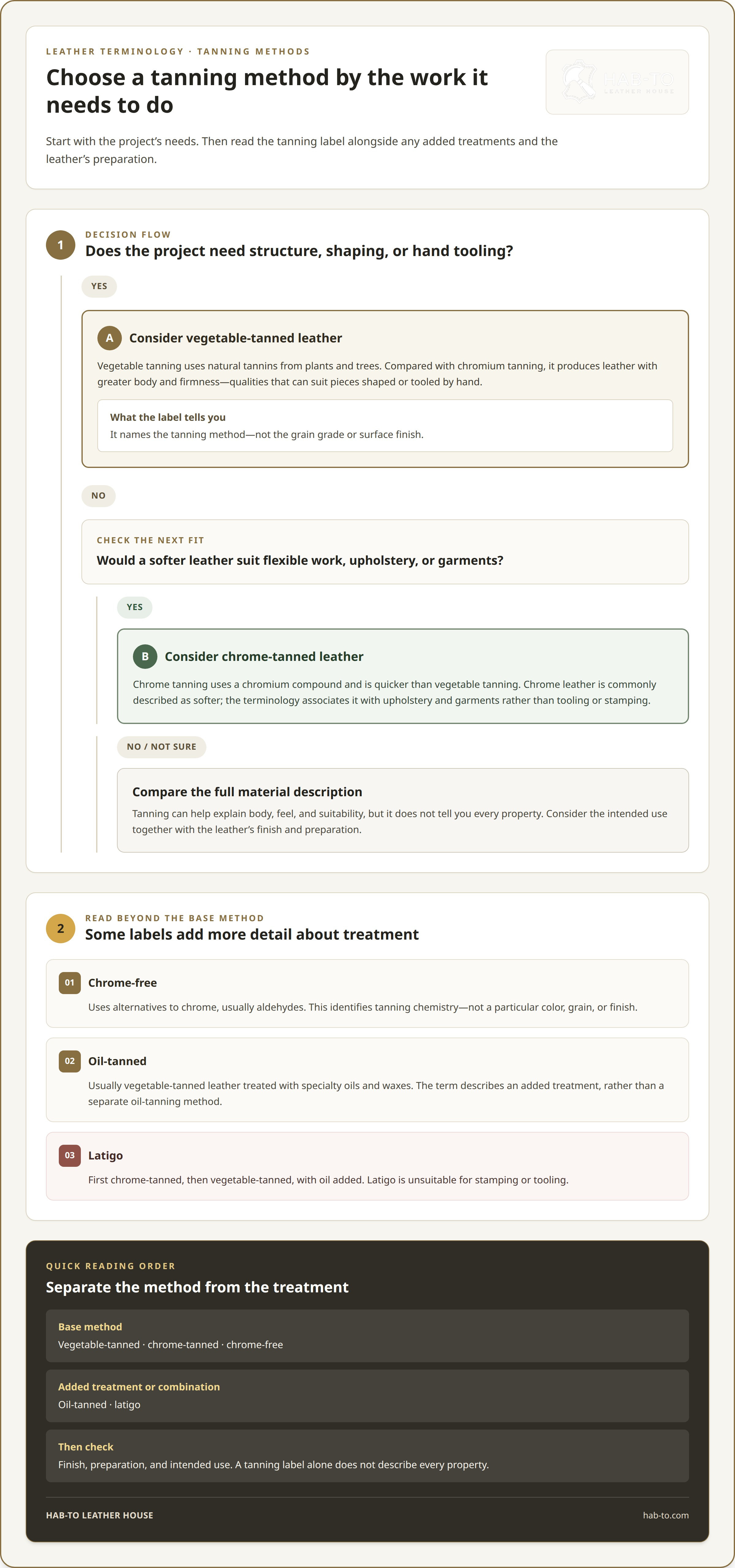
Vegetable tanning uses natural tannins from plants and trees to alter the proteins in animal skin. Compared with chromium tanning, it produces leather with greater body and firmness. That character can suit projects that need structure, such as pieces shaped or tooled by hand. “Vegetable-tanned” describes the tanning method, not a surface finish or grain grade. The final characteristics also depend on how the leather is finished and prepared.
Chrome and Chrome-Free Tanning
Chrome tanning uses a chromium compound instead of plant tannins and is quicker than vegetable tanning. Chrome-free leather uses alternatives to chrome, usually aldehydes. These terms identify different tanning chemistries, not a particular color, grain, or finish. When comparing materials, consider the stated tanning method alongside intended use and other product details.
Chrome leather is leather tanned using chrome. It is commonly described as softer than vegetable-tanned leather, and the terminology here associates it with upholstery and garments rather than tooling or stamping. That distinction can help when choosing leather for a project: a supple hide may suit a flexible application, while a firmer one may better support shaping or surface work. Tanning alone doesn’t tell you every property, so consider the full material description.
Oil-tanned leather is usually vegetable-tanned leather treated with specialty oils and waxes, rather than leather made through a separate oil-tanning method. The label may describe an additional treatment, not a distinct tanning chemistry. Read it alongside the base method: a description that pairs vegetable tanning with oils and waxes tells you more than “oil-tanned” alone. This distinction separates how the hide was tanned from what was applied later.
Latigo leather is first chrome-tanned and then vegetable-tanned, with oil added. This combination gives the term a specific meaning beyond either “chrome” or “vegetable” alone. The added oil makes latigo unsuitable for stamping or tooling, so the name can help rule it out for projects that require those techniques. It may suit other uses where its treatment and feel fit the design.
For a practical comparison, begin with the base method, then note any added treatment. Vegetable tanning points to plant tannins and a firmer body; chrome tanning identifies chromium use; chrome-free identifies alternatives, usually aldehydes. Oil-tanned and latigo describe further details. If you’re planning a leathercraft project, leathercraft bundles can bring material and making tools into the same project plan.
Aniline, semi-aniline and pigmented finishes
Aniline, semi-aniline, and pigmented describe how leather is colored and protected. The finish affects its appearance, the visibility of natural markings, and its resistance to soiling.
Aniline leather is dyed with aniline dyes that preserve the hide’s natural markings and characteristics. The dye penetrates the leather instead of forming a pigmented coating on its surface. On full-grain leather, marks and variations remain visible, giving each hide a distinct appearance. Pure aniline leather is less protected from soiling than semi-aniline or pigmented leather. It can suit projects where visible natural character matters more than a uniform surface.
Semi-aniline leather is dyed with aniline and then given light pigmentation. The added pigment helps create more consistent color and improves resistance to stains and spills compared with pure aniline leather. This finish balances visible hide characteristics with extra surface protection. It doesn’t conceal natural grain as completely as a protective pigmented coating, so some variation remains visible.
Pigmented leather has a protective coating that covers the surface and hides its natural grain structure. The coating creates a more uniform appearance, unlike aniline dyeing, which preserves visible markings. This distinction matters when comparing descriptions: “pigmented” describes the finish, not the tanning method or hide layer. Likewise, “full-grain leather” identifies the grain, not whether the surface is pigmented.
Aniline dyeing colors leather by immersing the hide in dye rather than applying a pigmented coating. The color penetrates the leather, while a surface coating sits on top. This explains why two hides with similar colors can show different grain and markings. A natural-looking surface may reveal visible characteristics, but the finish description gives a clearer account of how the leather was treated.
Colorfastness describes how well color resists fading or transfer under exposure. No leather is considered 100% colorfast, because results depend on the elements it encounters. Sunlight, moisture, and rubbing can affect color over time. Aniline leather’s limited surface protection makes its dye more exposed to soiling than semi-aniline or pigmented leather. Consider the material’s intended setting and handling, not just its color name.
Crocking is color rubbing off leather that has been poorly dyed. It differs from fading, which is a change in color after exposure. For example, color that transfers to a cloth when rubbed is crocking. The term describes dye performance, while “aniline,” “semi-aniline,” and “pigmented” describe coloring or finishing approaches. Read each label separately to understand the hide’s appearance and protection.
Buffed leather and nubuck
Buffed leather has a surface that has been abraded to change its texture. Nubuck is top-grain leather abraded to create a soft, short nap. These terms describe surface treatment, not tanning method: a label might separately identify chrome-tanned leather with a buffed finish. Reading each descriptor independently helps distinguish how the hide was treated from how its surface looks and feels.
Buffing is the abrasion used to alter a leather surface. The result depends on which side is worked and how the material is described. To make nubuck, the grain surface of top-grain leather is abraded, creating a fine, soft nap instead of a smooth face. “Buffed” alone doesn’t identify the hide layer or tanning chemistry. Look for the specific term that names the resulting material.
Nap is the raised, soft texture created when abrasion exposes leather fibers. Nubuck’s nap is shorter than suede’s, which helps distinguish the terms in product descriptions. Nubuck is associated with the abraded grain side of top-grain leather, while suede typically refers to the flesh side or split leather. Suede fibers tend to look longer and hairier.
Nubuck is top-grain leather abraded to create a soft, short nap. Because it comes from the grain layer, it shouldn’t be confused with suede just because both have a napped surface. The name tells you more than “soft leather,” but not everything about the material. It doesn’t specify whether the hide was vegetable-tanned or chrome-tanned, or define its color or thickness.
Grain surface means the hide’s outer surface, which carries its natural grain. In nubuck, abrasion changes the surface’s feel and appearance. That differs from embossing, which presses a pattern into leather, and from a smooth coating that covers it. When a description lists several characteristics, remember that grain identifies the hide area, while buffed or embossed describes surface treatment.
Use a simple sequence to compare listings: identify whether the description says nubuck or suede, note the named side or layer, then read any separate tanning or finish terms. For example, “nubuck” identifies abraded top-grain leather, while “chrome-tanned” identifies a tanning method. If a description says only “buffed,” don’t assume it means nubuck. The word describes abrasion, but the precise leather type needs its own name.
Buffing doesn’t mean leather is synthetic or that its grain layer has become a split. Those describe different material characteristics. When comparing a smooth surface with nubuck, focus on the stated surface treatment and leather layer rather than assuming appearance reveals the tanning method or construction. Each term answers a different question about the material.
Leather production stages and intermediate materials
Leather terms can describe a hide’s source, its progress through the tanning process, or a material between processing stages. A leather terminology guide can help you read those labels as part of a production sequence, rather than as interchangeable claims about quality.
Hide means the skin of a larger animal, mainly cattle or buffalo, and is a by-product of food production. A tannery is a factory where raw hides are processed into tanned leather. Together, these terms describe the journey from animal skin to a stable material. Cleaning and preparation come before tanning; for example, a full-grain hide is cleaned and then sent directly for tanning.
Leather splitting is the process of cutting leather into multiple layers or into side leather before tanning. It changes the thickness and separates the hide into layers with different surfaces and structures. The outer layer is called a grain split; lower layers are splits. Knowing whether a description names a split helps distinguish an intermediate material from a hide that retains its original outer grain.
Drum dyeing immerses leather in dye inside a tumbling drum, allowing color to penetrate the fibers. This is a coloring stage in production, not a tanning method or final surface finish. A listing that mentions drum-dyed leather tells you how the color was applied. It doesn’t identify the hide layer, tanning chemistry, or final finish.
Crust leather has been retanned and dyed but hasn’t received its final finish. It is an intermediate material, not necessarily finished leather ready to use. The next finishing stage can shape its eventual appearance and feel. When a description says “crust,” read it as a production-stage term: the leather has been processed but still lacks its final surface treatment.
Finished leather has received its final characteristics and is ready to be made into a product. The contrast with crust leather marks a clear production stage: crust leather still awaits finishing, while finished leather is prepared for conversion into goods. A furniture maker, for example, needs to know whether a listed material is finished for its intended application or remains at an earlier stage.
Bonded leather is made by shredding leather scraps, reforming them into sheets, and embossing a pattern to resemble other types of leather. The term describes a reconstituted material, not a whole hide. Its embossed pattern may imitate the look of grain, but the production description tells you it was assembled from scraps. This differs from leather cut and finished as a hide layer.
Read production labels as a timeline: hide, preparation and splitting, tanning, dyeing, then final finishing. Terms such as “crust,” “drum-dyed,” and “bonded” answer different questions about stage, color application, and material construction. A leather terminology guide is most useful when it helps you identify which part of that process a label describes. Once you’ve identified the material stage your project calls for, leathercraft bundles can be a practical next step for planning the work.
Hab-To Leather House: Leatherworking Tools
Hab-To Leather House brings leatherworking materials and tools together for makers turning terminology into practical choices. If your project calls for vegetable-tanned leather, suitable tools, or equestrian-related leather and hardware, these supplies can help you move from selecting materials to making your piece.
Choose materials for the work they need to do, then match your tools to the techniques involved. Hab-To’s leather, hardware, and leathercraft tools support projects where both the hide and its components matter. For equestrian work, related leathers and hardware offer a focused starting point.
Have a question about choosing leatherworking tools or materials for your project? Contact Hab-To Leather House.
Choose Materials With Intention
Let your next project guide your material choice. Decide what the piece needs to do, then use product details to narrow your options. A leather terminology guide can help you interpret descriptions and choose with purpose, whether you’re planning a structured bag, a belt, or another handmade project.
For your next step, browse Hab-To’s leathercraft bundles to bring project materials and making supplies together. Pair your choice with further reading on related skills and materials:
- Choosing leather for bags and belts
- Understanding leather finishes and care
- Building confidence with hand-stitching techniques
Keep learning, trust your hands, and let each carefully chosen material shape what you make next.
Frequently Asked Questions
What are the main types and grades of leather?
Leather categories describe different attributes, so compare the full description rather than relying on a single grade label. A practical shortlist might record the hide layer, tanning method, surface treatment, and intended application. Grading terminology can vary between sellers and tanneries. Before choosing between listings, look for the grading basis and check whether the description covers usable area, visible marks, or surface consistency.
What do full-grain, top-grain, genuine leather, and bonded leather mean?
These labels describe different aspects of a material, not four equivalent steps on one universal quality scale. Use them to identify what a listing says about the hide layer, surface alteration, authenticity, or construction, then consider whether that information is enough for your project. For example, a pattern-heavy design may depend more on surface consistency, while a maker seeking natural character may value visible variation.
What are common leather tanning methods, such as vegetable tanning and chrome tanning?
Vegetable and chrome tanning describe distinct ways of stabilizing hides, while chrome-free indicates alternatives to chrome. For a useful comparison, note the method alongside the intended application and any later treatment. A method name alone doesn’t describe every working quality. If a listing describes more than one tanning stage, read the sequence as part of the material’s identity instead of reducing it to a single label.
What do leather terms like aniline, semi-aniline, and pigmented mean?
These terms help you anticipate how much of the hide’s natural character will show and how its surface is treated. If a consistent appearance matters for your project, consider how much variation suits the design. For a piece that will be handled often, weigh appearance against the level of surface protection described. A representative sample can help you judge color and texture before planning a larger project.
What are common leather finishes, textures, and surface treatments?
Finish and texture terms describe different aspects of a material’s appearance, so read them as separate clues. First identify whether a listing names a texture, pressed pattern, sheen, or coating; then note the hide layer and tanning information separately. This keeps visual descriptors from being mistaken for construction details and makes product descriptions easier to compare.
Disclaimer
All our blog articles are made for information purposes only we dont take responsability for any content from third parties.