
Leather Wholesaler for Small Batches: How to Choose the Right Supplier
Do you really need to commit to a whole hide to make one bag, a few watch straps, or your first leather project? Finding a leather wholesaler for small batches can feel harder than it should be. Wholesale often sounds like large orders, and online descriptions don’t always make it easy to tell which leather or cut will suit your work.
The right supplier makes small-scale sourcing practical. At Hab-To Leather House, there’s no minimum order requirement, and vegetable-tanned leather is available by dm², panel, or shoulder. That gives you options for buying a workable quantity without taking on a whole hide.
In this guide, you’ll learn how to compare suppliers by order flexibility, material fit, range, and the guidance they offer. We’ll look at how leather type and cut relate to your project and experience, and why having hardware, tools, and crafting bundles in one place can simplify sourcing. If you’re unsure where to begin, Mike’s free 15-minute video consultations offer personal support as you choose. For purchases within the Netherlands, VAT is included; purchases for other countries are VAT exclusive.
Key Takeaways
- Before browsing, list your pattern pieces, visible surfaces, and project requirements to narrow down suitable leather.
- Compare thickness, temper, surface, and pattern needs so the material and cut fit the item you plan to make.
- Use a checklist to assess a leather wholesaler for small batches, including order flexibility, cut formats, product descriptions, related supplies, and guidance.
- Choose a supplier whose material focus and support suit your experience, so you can make a more informed sourcing decision.
- Plan your order around the project rather than assuming one cut or material will suit every piece.
Why choose a leather wholesaler for small batches instead of buying a whole hide?
A project rarely begins with a need for as much leather as possible. A beginner testing a first pattern, a hobbyist making a repair, or a micro-brand producing a limited run may need only a practical amount for the work at hand. Small-batch sourcing means choosing a cut that fits the project instead of assuming a whole hide is necessary.
A small-batch leather wholesaler lets makers buy project-appropriate leather in manageable quantities, rather than requiring a whole-hide commitment. The useful quantity depends on your pattern pieces, layout, and expected material use. Plan around those details first; a smaller cut does not automatically mean lower cost or less waste.
To see how leather is made and why material characteristics vary, explore this overview of Leather production.
Here’s a short example of small-batch leather bag production:
When does buying leather by the panel or shoulder make sense?
A panel or shoulder can be a practical option when you’re making a sample, testing a prototype, completing a repair, or preparing a limited production run. A panel is a cut offered as a usable piece of leather; a shoulder comes from the shoulder area of the hide. A whole hide provides a larger continuous area, which may suit bigger layouts or several projects, but also means planning around a larger quantity.
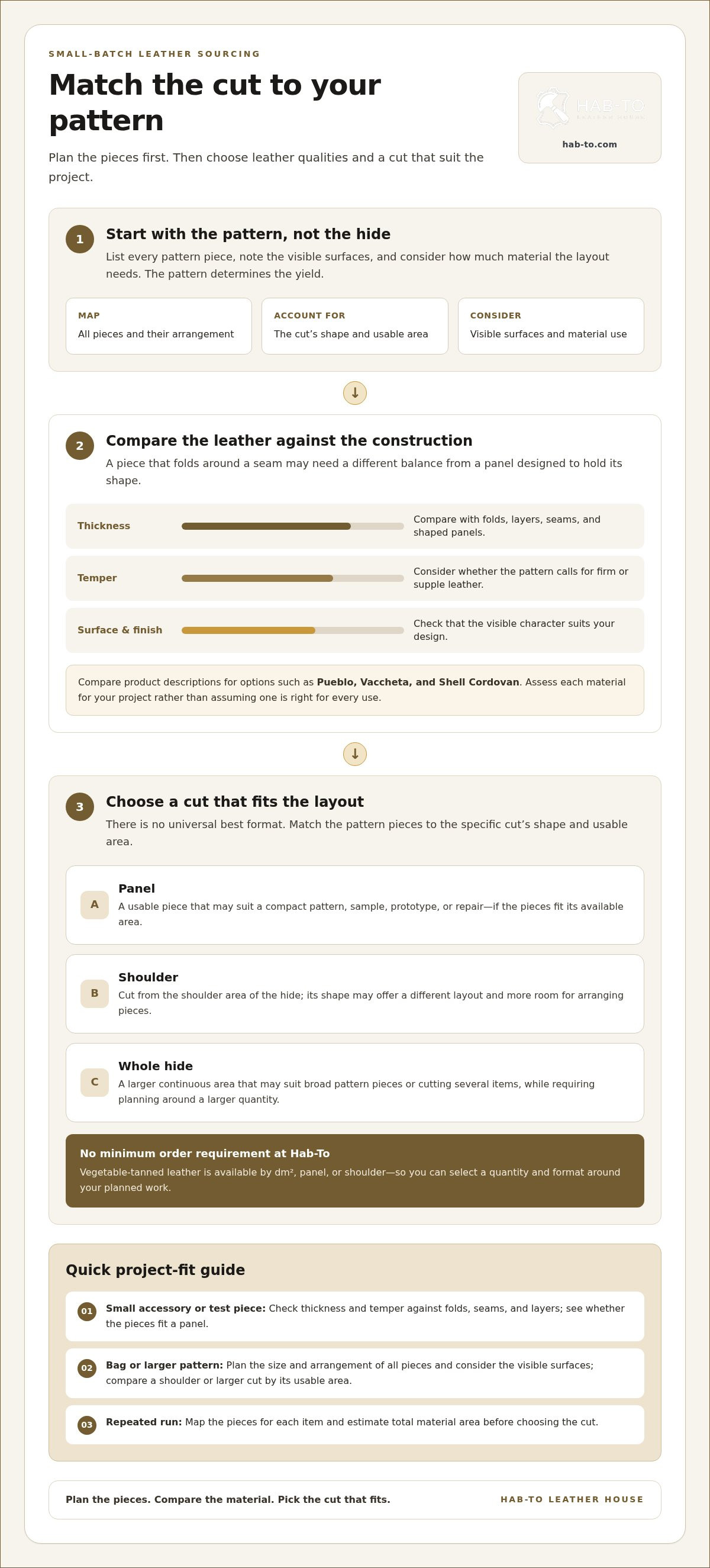
There are no fixed dimensions to assume from these cut names. Check how your pattern pieces can be arranged and account for the shape and usable area of the specific cut. A small accessory may fit comfortably on a panel, while a larger item or repeated batch may call for more room. Your pattern determines the yield.
What does no minimum order quantity mean for a maker?
At Hab-To, there’s no minimum order requirement. You can select a suitable quantity for your project instead of increasing the order simply to meet a minimum. Leather is available by dm², panel, or shoulder, giving you different ways to match the amount to your planned work.
This flexibility is useful when you’re still learning how a material handles or producing only a small run. Before ordering, list each pattern piece and consider whether you need matching leather for multiple items. Then choose a cut with enough usable area for your layout. Bulk discounts are available on product pages, so you can review those details alongside the quantity that makes sense for your work.
That’s the practical difference: buy for the pattern, not for an assumed whole-hide requirement. A considered cut helps you start with a quantity suited to the project, whether you’re making one prototype or preparing a limited run.
Match leather type and cut to the project before placing a small order
Once you know what your pattern needs, compare the leather itself. A wallet panel, bag gusset, or watch strap can call for different thicknesses, flexibility, and surface character. Don’t choose by name alone: consider how the material will be cut, assembled, and seen in the finished piece.
Leather choice depends on both how an item is constructed and how it will be used. A piece that must fold around a seam has different requirements from a panel designed to hold its shape. The right match starts with your pattern, then narrows by leather qualities and cut format.
Which leather qualities should you compare for a small project?
Start with thickness and temper, or how firm or supple the leather feels. Compare them with your pattern and construction: a fold, layered seam, or shaped panel may call for a different balance. Also consider surface and finish. The visible face will influence the look of the finished item, so decide whether its character suits your design before choosing.
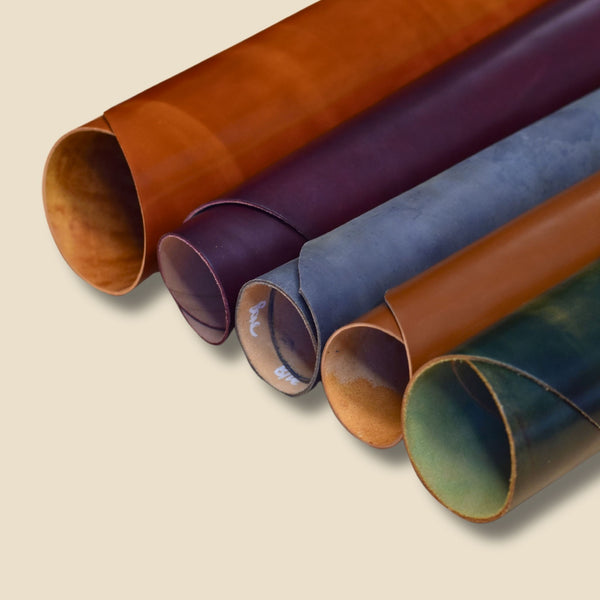
Use product descriptions to compare options such as Pueblo, Vaccheta, and Shell Cordovan, rather than assuming one leather is right for every project. Hab-To’s focus is vegetable-tanned leather; the vegetable-tanned leather range offers a starting point for comparing materials. Assess each option against your project, not an assumed durability ranking.
- Small accessories or a test piece: Compare thickness and temper with the folds, seams, and layers in your pattern. A panel may provide a practical format if the pieces fit its usable area.
- A bag or larger pattern: Consider the size and arrangement of all pieces, along with the visible surfaces. A shoulder or larger cut may give more layout flexibility, depending on its shape and usable area.
- A repeated run: Map the pieces for each item and estimate the total material area before choosing a cut. Matching pieces to the available area helps you decide whether a panel, shoulder, or whole hide is the best fit.
How should you choose between a panel, shoulder, and whole hide?
Match the cut to the layout, not just the project label. A panel can suit a compact pattern; a shoulder may offer a different shape and more room for arranging pieces. A whole hide provides a larger area, which may help when a pattern needs broad pieces or you’re cutting several items. But there’s no universal best format: the pattern and usable area decide.
Before ordering, place each pattern piece on a sketch of the cut’s approximate usable area, allowing for its shape and the leather’s visible surfaces. For more ways to bring materials and supplies together, browse the leathercraft bundles alongside your project plan.
How to compare leather wholesalers for small-batch orders
A supplier’s catalogue is only part of the picture. For a maker ordering a modest quantity, the useful questions are whether the available cuts suit the project, descriptions help you compare materials, and relevant supplies or guidance are easy to find. A leather wholesaler for small batches should make those details clear, so you can judge fit before placing an order rather than relying on assumptions.
Compare what each supplier actually publishes. Cut formats and material options vary, so don’t assume two catalogues offer the same choices just because both sell leather. A clear comparison can help you avoid ordering a cut that doesn’t match your layout or selecting a material based on a name alone.
What supplier details matter beyond the catalogue?
Look for practical information that helps you connect a product to your work. Check whether the description names the leather type and cut, and whether the details help you assess it against your pattern. Then consider what else you’ll need to complete the project. Having related tools and hardware available alongside leather can make project-based sourcing more straightforward.
- Order flexibility: See whether the supplier lets you choose a quantity suited to your project, rather than imposing an order size that doesn’t fit your needs.
- Cut formats: Check which options are offered, such as leather by area, panels, or shoulders, and consider how each could fit your planned layout.
- Material descriptions: Look for clear naming and useful information about the leather, not just broad product labels.
- Related supplies: Check whether relevant hardware and leatherworking tools are available to support the same project.
- Practical guidance: Consider whether you can get help comparing materials if product descriptions leave you unsure.
These points matter whether you’re making a one-off piece or developing a small product range. If wholesale usually brings to mind large commitments, focus on the supplier’s actual order terms and cut options instead. At Hab-To, there’s no minimum order requirement, so makers can choose a suitable quantity for their work. The range also includes leather, hardware, and tools, with curated leathercraft bundles that bring relevant supplies together.
How can you assess material before committing to a larger order?
Photos and descriptions can help you narrow down options, but seeing and handling a sample may offer another useful point of comparison. Hab-To accepts leather sample requests, and a nominal fee may apply. Compare a sample’s appearance and feel with your design needs, including the surface you want visible and how the material relates to the project’s construction.
A sample is a reference, not a promise that every area of a hide will look or feel identical. Natural material can vary across its usable area, so use the sample alongside the product description and your pattern requirements. For a deeper framework on assessing online listings, see Buying Leather Online: The Professional Artisan’s Guide to Sourcing Hides.
A simple checklist for ordering leather in small quantities
Before browsing, gather your pattern and write down the pieces you need, the surfaces that will show, and the requirements for construction. This gives you a clear reference as you compare leather and order details.
What you will need
- Your pattern and layout: Keep the pattern pieces together so you can check how they might fit on a cut.
- Material notes: Record the thickness, temper, and appearance your project calls for.
- Leather and project supplies: Compare suitable leather with the vegetable-tanned leather selection, then consider which tools or grouped supplies your build requires in the leatherworking tools range and leathercraft bundles.
- Review the pattern. List each piece, its dimensions, and how many copies you need. Note long straps or broad panels that may affect the layout.
- Identify construction needs. Use the project instructions to note the required thickness and temper. Consider how the leather must fold, hold shape, or join with other layers.
- Define the appearance. Decide which surfaces will be visible and what look suits the design. This helps you compare material descriptions against a specific goal.
- Estimate the layout. Arrange the pieces on paper or digitally to understand the area and shape needed. Leave room for layout choices and natural material variation rather than relying on a fixed allowance.
- Select the material and cut. Compare options with your pattern, construction, and intended use. Let the project determine whether a panel, shoulder, or another format is suitable.
- Check the order. Read the product description and make sure the material, cut, and quantity match your notes. Include any tools or hardware needed to complete the project.
Quick checklist: Review the pattern, note visible surfaces and construction needs, plan the layout, select a suitable cut, and check the product details before ordering.
How can a maker get help choosing materials?
If you’re unsure how a material description relates to your pattern, Hab-To offers free 15-minute video consultations with Mike. Bring your pattern or project details and questions about thickness, temper, or appearance. A focused conversation can help you think through the options before ordering. Book a free leather project consultation.
Once you’ve identified the supplies your project needs, explore the leathercraft bundles to see grouped options.
Why Hab-To works as a leather wholesaler for small batches
Choosing a supplier comes down to fit: the order should suit your project, the leather should match your material requirements, and useful support should be within reach. Hab-To Leather House has no minimum order requirement, so you can select a quantity that works for your project rather than ordering more simply to meet a threshold. Leather is available by dm², panel, or shoulder.
Hab-To Leather House focuses exclusively on vegetable-tanned leather. The wider store also includes hardware, tools, and other craft supplies, so not every item is leather. That focused material offering and broad range of related supplies give makers a practical place to source for a project.
The business was founded in 1857 and represents over 160 years of family leather expertise. That history is part of the approach: respect the material, understand the craft, and help makers make thoughtful choices.
What can makers source alongside small-batch leather?
A leather project may call for more than the main material. Depending on the design, you may also need hardware for fastening, leatherworking tools for construction, or other craft supplies. Sourcing related items together can make it easier to plan around the full project rather than treating each component as a separate search.
Curated bundles offer a grouped option for makers who want project supplies brought together. Browse the leather crafting bundles as part of planning your materials and tools. Match the contents to the work you intend to do, and use your pattern and construction steps to guide what belongs in your order.
When is personal material guidance useful?
Material descriptions can leave you weighing more than one suitable option. Is the leather a good match for the pattern’s construction? Will its appearance fit the design? If you’re new to leathercraft, those questions can feel difficult to answer from a screen alone. Mike brings over 25 years of personal leather expertise to material decisions, and Hab-To Leather House offers free 15-minute video consultations with him.
Bring your project details and specific questions to the conversation, such as the pattern pieces, intended use, or qualities you’re comparing. This gives you a practical way to talk through the choice before ordering. For more about the people and history behind the business, explore Hab-To Leather House’s family leather heritage.
For a project that needs several coordinated supplies, you can compare grouped options in the leathercraft bundles and choose what fits your next piece.
Put your next leather project into motion
Treat your next project as a chance to build a record you can use again. Note which material you chose, how it behaved during cutting and assembly, and what you might adjust in the pattern or order for another version. Those observations turn each prototype or small run into practical knowledge, making future sourcing decisions more deliberate.
A good leather wholesaler for small batches should support the way your work develops, from an early test piece to a design you’re ready to repeat. Start with the project in front of you. Choose materials and supporting supplies for its real requirements, then keep your notes close as you plan what comes next. Small, considered steps give your craft room to grow without asking you to have every answer at the outset.
Your next piece doesn’t need a perfect plan. Start with a thoughtful choice, trust your hands, and let the making teach you what to do next.
Frequently Asked Questions
Can I buy leather without purchasing a whole hide?
Yes. Hab-To offers leather by panel or shoulder, and there’s no minimum order requirement. Choose a cut by considering the pieces your pattern needs, rather than assuming you must buy a whole hide. For example, if you’re making a single pouch, map its panels and gusset against the available cut, then select an amount that suits that layout and your project.
What does no minimum order quantity mean when buying leather wholesale?
It means Hab-To doesn’t require you to reach a minimum quantity before ordering leather. You can plan a purchase around a sample project, a repair, or a small production run. This is separate from volume discounts, which are available on product pages. Review the product details for the listed discount information, then choose an order quantity based on the leather your project actually calls for.
How do I choose the right leather cut for a small project?
Start by arranging your pattern pieces and noting how many you need. Compare the layout with the cut’s usable area, then consider the required thickness and temper in relation to folds, seams, and layers. A compact pattern might fit a panel, while a different layout may benefit from a shoulder. Before ordering, read the product details to ensure the material and cut suit your requirements.
Can I request a leather sample before placing an order?
Yes, you can request a leather sample from Hab-To, and a nominal fee may apply. Use it to consider the material’s appearance and feel alongside your project needs, such as the visible surface or the look you want for a small accessory. A sample is a useful reference, but it may not represent every part of a hide, so also review the product description.
Does Hab-To offer discounts on larger leather orders?
Yes, volume discounts are available on product pages. Their presence doesn’t mean you need to order a larger quantity to buy leather; plan your purchase around the project, then review the relevant listing for its discount information. No discount rate or order threshold is assumed here. If you’re comparing materials, check each product page directly, since the details shown may differ between listings.
What types of leather can I buy in small quantities?
Hab-To’s leather focus is exclusively vegetable-tanned. Examples include Vaccheta, Pueblo, and Shell Cordovan, with product listings showing the current options and details. If you’re comparing them for a specific design, use the descriptions to narrow your choices by the requirements of your pattern. You can browse the leather listings to see the available materials.
Can I get help choosing leather for my project?
Yes. Hab-To offers free 15-minute video consultations with Mike. Before the call, gather your pattern or a short description of the item, its intended use, and the material qualities you’re weighing. For example, note whether a design needs to fold, hold a particular shape, or show a distinct surface. These details give the conversation a practical starting point.
Disclaimer
All our blog articles are made for information purposes only we dont take responsability for any content from third parties.