



The Pride of Using Sustainable Materials in Product Design
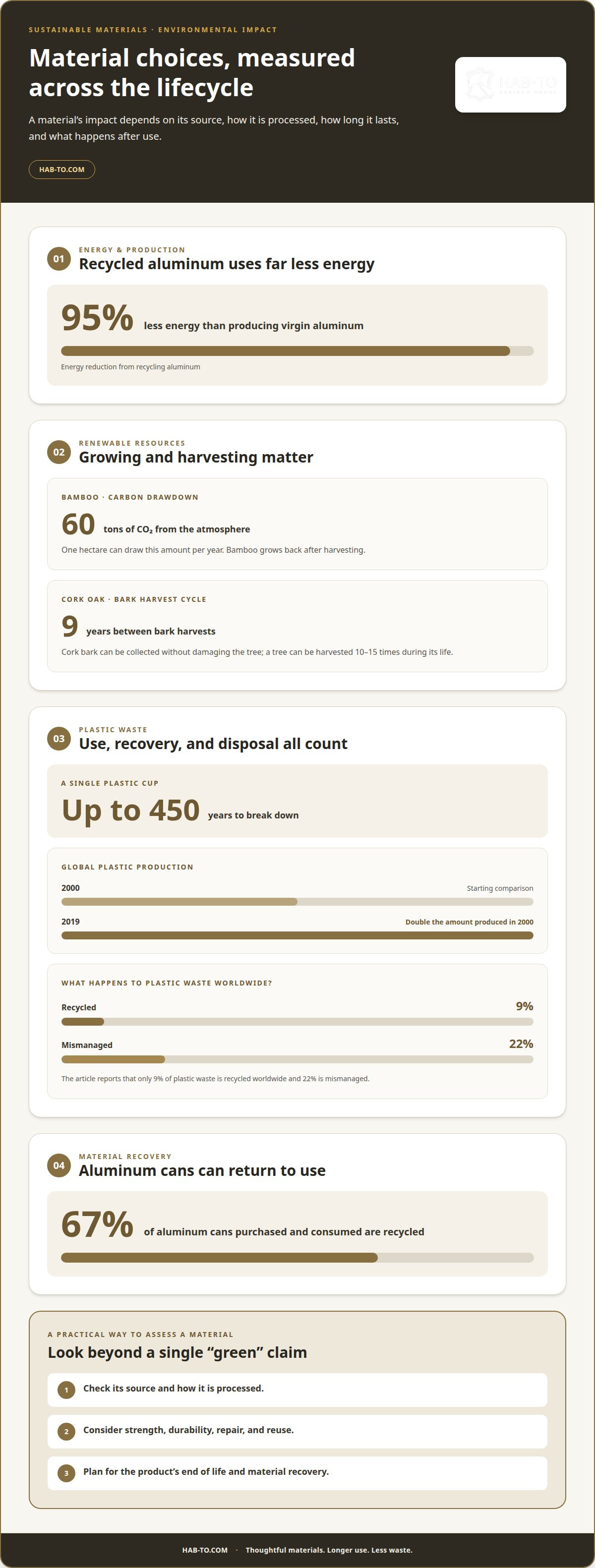
Recycling aluminum uses 95% less energy than producing virgin aluminum, showing how material choices can reduce a product’s environmental footprint. The pride of using sustainable materials comes from making that choice with care, while designing for durability and less waste.
It’s natural to want a product to work well and reflect your values. The pride of using sustainable materials comes from making a thoughtful choice, not simply choosing a material with a “green” label. Source, processing, lifespan, and end-of-life options all matter.
This guide explores how materials such as recycled metals, renewable fibres, and sustainably sourced wood may benefit the environment, and what to consider when sourcing materials and packaging. It also offers practical ways to assess performance, including strength, durability, repair, and reuse, so you can make informed design decisions.
Key Takeaways
- Compare materials by their sourcing, processing, lifespan, and end-of-life options, not by one sustainability claim alone.
- Choose packaging that fits the product and can be reused, recycled, or composted where it will be disposed of.
- Match material performance to the product’s needs, including strength, durability, and opportunities for repair or reuse.
- Weigh material costs alongside product lifespan, replacement needs, and the resources required to make and use the product.
- Use relevant certification labels and clear sourcing information to assess sustainability claims more carefully.
1. Environmental benefits of sustainable materials
The environmental benefits begin with the resources a material needs and the waste it leaves behind. Bamboo, hemp, and sustainably sourced wood can be renewable alternatives to materials requiring energy-intensive production. Bamboo grows back after harvesting, and one hectare can draw 60 tons of CO2 from the atmosphere per year. The pride of using sustainable materials comes from considering that whole journey, not just the finished product.
Production choices matter, too. Making traditional materials such as steel and aluminium requires considerable energy and emits greenhouse gases. Recycling aluminium uses 95% less energy than producing virgin aluminium, making recycled content a practical way to reduce demand for new raw materials. Recycled metals, bioplastics, and sustainably sourced wood can have lower environmental footprints than conventional alternatives, though the benefit depends on how each material is sourced and processed. For timber, specialized fabrication studios like bourbonbigfoot.com demonstrate how custom sawmilling and precision vacuum kiln drying can prepare wood efficiently while minimizing waste.
Plant-based materials can offer distinct advantages. Biobased materials may sequester carbon as they grow, while hemp grows quickly and requires little water. Linen comes from flax, which requires little to no fertiliser, pesticides, or water. Organic cotton is grown without synthetic pesticides and chemicals. These examples show why growing and processing practices matter: a natural origin alone doesn’t tell the full environmental story.
Plastic waste shows the importance of designing for reuse and recovery. A single plastic cup can take up to 450 years to break down. Global plastic production in 2019 was double the amount produced in 2000, while only 9% of plastic waste is recycled worldwide and 22% is mismanaged. Choosing reusable bottles, reducing unnecessary packaging, and designing products for disassembly can help limit pollution and keep materials in use longer.
Product design can extend a material’s benefits beyond its first owner. Materials that retain their integrity over multiple life cycles can reduce landfill waste and demand for new resources. In electronics and construction, modular components can make replacement and recycling easier. Repairable designs can keep useful parts in service instead of sending an entire product for disposal. These choices make sustainability part of a practical design process, not just a material label.
Fashion and celebrations can apply the same thinking. During Pride Month in June, you can create a rainbow outfit from clothes you already own, reused garments, or recycled fabric. Reusing decorations and choosing durable items over single-use plastic can also reduce event waste. Select materials carefully, design for repeated use, and consider what happens when a product reaches the end of its life.
Glitter choices matter after use. Biodegradable eco-glitter is a more environmentally friendly choice than glitter that releases microplastics. Microplastics from glitter washed down drains are hazardous to millions of organisms, including humans. Considering what happens when decorative materials are rinsed away adds another dimension to choosing materials with lower environmental impacts.
Approximately 67% of aluminum cans purchased and consumed are recycled. This provides a concrete example of material recovery after use, alongside efforts to choose renewable or recycled inputs and reduce waste during production. Together, these choices can help keep materials in use and limit the need for new resources.
2. Sourcing materials and sustainable packaging
Trace a material from its origin to the finished product. Ask what resource it uses, how it is processed, and what happens after use. Bamboo, hemp, and agricultural residues can be replenished when harvested responsibly. Cork offers another sourcing model: cork oak bark is collected without damaging the tree. The bark is harvested every nine years, and a tree can be harvested 10-15 times during its life. These details help individuals compare materials by their actual sourcing practices, not appearance alone.
Follow the chain of custody where possible. Tencel Lyocell is made from wood pulp, with a process described as using sustainably sourced wood in a closed system. Piñatex uses fibres from pineapple leaves, while Bananatex® uses fibres from the Abaca banana plant. These materials make use of plant sources, but overall impact also depends on processing, durability, transport, and disposal. A more sustainable choice fits the product and reduces waste across its full life.
In the United States, distinguish standards from product-specific requirements instead of treating one label as universal. LEED sets standards for sustainable building practices, while ISO standards provide guidelines for assessing environmental performance. GOTS and OCS are common labels for organic cotton. Look for a label relevant to the material and the specific claim, then consider whether the product’s intended use supports its climate and carbon goals.
Packaging deserves the same scrutiny as the product. Start by asking whether the package protects the item without unnecessary layers. Then identify what local disposal systems can accept. A package described as compostable is useful only where suitable composting is available. The 2024 Sacramento Pride Festival planned clearer signage for compostable and recyclable items, and worked with Republic Services on compostable palm leaf food containers. Clear instructions help parade attendees sort packaging correctly.
Choose packaging for its next use, not just its first impression. A sturdy box may be reused for storage, while a simple paper wrap can avoid mixed materials that complicate sorting. For clothing, right-sized packaging can reduce excess material and make shipments easier to handle. Palm leaf containers are one plant-based alternative for food at an event. Match each option to product protection, local collection, and end-of-life handling.
Use a short sourcing review before approving a material or package: record its source, processing method, relevant label, expected lifespan, and disposal route. Compare alternatives using the same criteria. This step makes environmentally friendly claims easier to assess and helps teams explain decisions plainly. For a leathercraft project, a crafting bundle can help bring project materials and tools together as you put those sourcing choices into practice.
3. Sustainable materials and performance
A sustainable material still needs to do its job. Start with the product’s main demands: load, flexibility, moisture exposure, wear, and repair. Then compare candidate materials against those demands using a sample or prototype. Natural-fibre composites, for example, can have high strength-to-weight ratios, making them a potential fit where both strength and low weight matter. The right choice meets the design brief and lasts in its intended use.
Cork shows how one material can offer several practical qualities. It is impermeable, buoyant, durable, fire resistant, and reusable. Those properties may suit products that need resilience without a single-use component. Still, assess the finished product rather than assuming every cork item performs identically. Thickness, construction, joins, and daily use all affect how well a design holds up.
Fibres also bring different performance profiles. The manufacturer of Tencel Lyocell says the fibre can absorb 50 times more moisture than cotton. That claim may matter for a product where moisture management is central, but the full design still needs to account for construction and care. Ramie, a fibre from the stinging nettle family, offers another plant-based option to assess against the product’s texture, strength, and intended function.
What are the risks or drawbacks of sustainable materials? Some require different processing, have variable properties, or may not suit a product’s performance demands. A biodegradable label alone also doesn’t show whether an item will break down in the disposal conditions available to its users.
Use a simple prototype process to reduce costly redesign and material waste. Make a sample, test it under realistic conditions, and record where it bends, wears, absorbs moisture, or needs reinforcement. Compare the results with the product’s essential requirements. A material that performs well in a display sample may behave differently after repeated handling, so test the actual construction.
Durability links performance with environmental impact. A long-lasting product can stay out of landfills longer, while a repairable design keeps useful components in service. ECONYL® is made from recycled nylon waste, including old fishing nets, and produced in a closed system. Its recycled source is relevant, but designers still need to assess whether it suits the product’s specific use. For technical installations, specifying high-performance components like keder cord for fabric structures ensures that industrial textiles can withstand tension and environmental stress over years of service.
For Pride events, biodegradable glitter made from plant cellulose can support personal expression while avoiding conventional plastic glitter. Event organizers can assess how it performs during wear and how to dispose of it. Ethical material choices are strongest when materials are responsibly sourced, serve a clear function, and have realistic end-of-life handling. That balance helps organizations promote sustainability without sacrificing a product’s purpose.
5. Are sustainable materials more expensive than conventional materials?
Sometimes, but there’s no universal price difference. The comparison depends on the material, processing, order size, manufacturing setup, and product lifespan. Recycled plastic, for example, should be assessed alongside its sorting and preparation, not just its purchase price. Compare costs at each production stage instead of treating “sustainable” as a fixed price category.
Production fit can change the total cost. A new material may need different cutting settings, adhesives, or finishing steps than a familiar conventional option. For hemp textile, test how the fabric cuts, joins, and performs in the finished product. If it leads to slower work, more offcuts, or extra quality checks, include those factors in the cost comparison.
Yield matters, too. Compare how much usable material remains after cutting and shaping, rather than comparing raw sheets or rolls alone. A pattern that fits a material efficiently can reduce offcuts without changing the design’s purpose. With recycled materials, batch consistency may also affect production planning. Record usable output and waste during a sample run before committing to a larger design.
Look beyond the first purchase. A durable component may reduce replacements, while a difficult-to-repair construction can shorten a product’s useful life. These effects vary with the product and its use, so a lifecycle cost review should include maintenance, replacement parts, and disposal. A reusable package, for example, is valuable only if it suits repeated handling and users can return or reuse it.
Packaging creates another cost decision. A lighter package may use less material, but it still needs to protect the product through handling and delivery. Compare a recycled paper mailer with a rigid box by considering product fragility, protective inserts, storage, and disposal. Right-sizing can reduce excess material, while clear material choices can make sorting easier for customers and staff.
Use a consistent worksheet before choosing between alternatives. Include these factors for both the sustainable and conventional option:
- Purchase and processing requirements, including equipment changes.
- Usable yield after cutting, assembly, and finishing.
- Quality checks, rejected pieces, and production waste.
- Expected maintenance, repair, and replacement needs.
- Packaging, transport, and end-of-life handling.
Then test a small production sample and compare the actual results with the design plan. This reveals where a material adds work and where efficient design offsets it. It also helps teams explain their choices clearly, based on real manufacturing needs rather than assumptions about sustainable materials.
5. How can consumers identify genuinely sustainable materials and certifications?
Start with the specific claim, not a broad word such as “green.” A material may be described as recycled, organic, or responsibly sourced, but each phrase refers to a different attribute. Check whether the claim identifies the material, product, or manufacturing process. For example, a recycled-content claim should clearly refer to the component or packaging it describes, not suggest every part has the same attribute.
Next, match the label to the product category. GOTS and OCS are common labels for organic cotton. For recycled polyester, check what any label actually certifies and which part of the product it covers. These names help narrow the evidence to relevant material claims. A label on a garment, for instance, doesn’t automatically show that its buttons, thread, packaging, and other components share the same attributes.
Read the label’s scope and accompanying description. Identify which product or component it covers, what claim it supports, and whether the statement names a source or process. A recycled-polyester label concerns a different claim from an organic-cotton label. Keeping claims distinct helps consumers avoid treating one certification as proof of every environmental benefit.
For building materials, LEED establishes standards for sustainable building practices. ISO standards provide guidelines for assessing materials’ environmental performance. These frameworks serve a different role from a consumer textile label. When comparing a building product with clothing, use criteria suited to each product rather than assuming one framework answers both questions.
A practical review can follow a few clear steps:
- Write down the exact sustainability claim made about the material.
- Identify the relevant material, such as organic cotton or recycled polyester.
- Look for a label that corresponds to that material and claim.
- Read the label description to understand what part of the product it covers.
- Consider durability, repair, and end-of-life options alongside certification.
For example, a cotton shirt carrying a GOTS or OCS label may provide a relevant indicator of organic cotton. Still, separate that claim from questions about the garment’s construction, expected use, and disposal. Likewise, a recycled-polyester label can inform a material decision without showing whether the product is durable or easy to recycle after use.
Clear language matters. A seller’s statement should identify the material and explain the claimed attribute, rather than relying on vague imagery or a green-colored symbol. Compare products using the same questions, and note the material, label, and claim. This disciplined approach helps consumers assess evidence consistently and choose materials that align with their priorities.
Hab-To Leather House: Vegetable Tanned Leather
Hab-To Leather House offers vegetable tanned leather for makers choosing materials for considered, durable designs. If you’re comparing materials for a leathercraft project, explore the leather collection and select leather suited to your intended use and construction.
Good material choices suit the product’s purpose. Pair leather with appropriate leather hardware and leatherworking tools, then plan how the finished piece can be maintained and used over time. Crafting bundles can bring together project materials and tools, helping you prepare before cutting and assembly.
Explore the materials and tools at Hab-To Leather House, or get in touch to discuss your project.
Make your next material choice with intention
Choose one practical improvement for your next design, then build it into your process. A project worksheet can help you compare material requirements, production steps, and end-of-life plans before making a final choice. For leathercraft, pair your material selection with suitable hardware and tools, and explore crafting bundles for your next project.
Related topics to explore
- Sustainable packaging choices for product design
- How material labels and certifications guide purchasing
- Designing products for repair, reuse, and longer service
Product pick: Explore crafting bundles for project materials and tools that support your making process.
Thoughtful design is built one decision at a time. Carry your values into your next project, and let careful material choices shape work you’re proud to make.
Frequently Asked Questions
What are the environmental benefits of using sustainable materials?
Sustainable materials can reduce pressure on virgin resources and keep useful materials in circulation. Steel, for example, is described as 100% recyclable, and approximately 93% is recycled by consumers. For a product designer, this makes material recovery relevant from the beginning: consider whether components can be separated and collected through available recycling systems. A recyclable material brings the greatest benefit when the product’s construction and disposal route make recovery practical.
How can sustainable materials reduce carbon emissions and waste?
Businesses can reduce emissions and waste by measuring impacts across a product’s lifecycle, then targeting the largest material and energy demands. Start with a baseline for material inputs, manufacturing energy, transport, and disposal. For example, compare two versions of the same item using the same accounting boundaries. This makes it easier to see whether a material change lowers overall impact or shifts waste and emissions to another production stage.
How do sustainable materials compare in durability and performance?
Sustainable materials can perform well, but suitability depends on a product’s job and construction. Recycled PET, HDPE, and PP are among the plastics commonly recycled, yet each should be selected for the package or component’s required function. Compare finished samples under the conditions they’ll face, such as repeated opening or pressure during storage. A good material choice meets performance needs while supporting repair, reuse, or recovery.
How can businesses choose and source sustainable materials?
Businesses can make sourcing clearer by turning sustainability goals into purchasing criteria. Define the product’s function first, then specify the material attributes that matter, such as recycled content or a relevant organic label. Keep supplier information with purchasing records so teams can trace which material went into each product run. Review components together, since a responsible choice for one part doesn’t automatically describe the entire product.
Disclaimer
All our blog articles are made for information purposes only we dont take responsability for any content from third parties.