

Choosing Premium Leather Hardware: An Artisan’s Buying Guide (2026)
Why would you spend forty hours hand-stitching the finest Italian shell cordovan only to secure it with a buckle that will peel and flake before the year is out? It's a heartbreaking reality for many artisans. You pour your soul into the hide, but the leather hardware fails the test of time. I've seen it happen too often. Cheap plating ruins beautiful work. It's a compromise that no craftsman should have to make. Quality is non-negotiable. Tradition matters.
I agree that finding the right balance between weight, durability, and aesthetics is one of the hardest parts of the leathercraft process. You want materials that develop a rich patina alongside your veg-tan projects. This guide will show you exactly how to select and install professional-grade components that reflect your standards. We'll explore how to match hardware weight to leather thickness, handle the latest 2026 EU REACH safety regulations for metal coatings, and source premium EU-based materials with no minimum order quantity. By the end, you'll have the confidence to choose hardware that lasts a lifetime. Let's build something that stays beautiful for decades.
Key Takeaways
- Learn the structural differences between solid brass and zinc alloy to ensure your projects have the correct weight, feel, and long-term durability.
- Master the art of matching specific leather hardware finishes, like Old Gold or Gun Metal, to the unique character and aging process of vegetable-tanned hides.
- Discover the essential setting tools and professional techniques needed to install hardware securely without scratching the plating or deforming the metal.
- Identify the specialized hardware requirements for different project types, ranging from heavy-duty harness leather belts to complex bespoke handbags.
- Understand how to source premium, EU-compliant materials with no minimum order quantity, allowing you to scale your artisan business at your own pace.
Why High-Quality Leather Hardware Defines Your Craft
Think of your project like a house. The leather provides the walls and the texture, but the hardware serves as both the foundation and the finishing touch. In the world of high-end craft, leather hardware is the structural and aesthetic backbone of everything you create. It isn't just a fastener. It's the difference between a simple functional utility and a piece of artisanal "jewellery" for a bespoke bag. You spend hours selecting the perfect hide, so why compromise on the metal that holds it together?
Cheap hardware is the fastest way to ruin the reputation of high-end vegetable-tanned leather. When plating begins to peel or a buckle snaps under pressure, the entire project loses its value. It doesn't matter how straight your stitching is if the components fail. Mike always reminds us that hardware should age as gracefully as a Pueblo leather patina. If the leather matures into a rich, deep character while the metal becomes dull and pitted, the harmony of the piece is lost. True quality means every element of the object evolves together over decades of use.
The Synergy of Veg-Tan Leather and Solid Metals
Vegetable-tanned leather is uniquely dense and firm. It requires leather hardware that can handle its structural integrity without bending or breaking. Solid metals like brass are the standard for a reason. There’s also a specific chemical interaction to keep in mind. The natural tannins found in veg-tan leather can react poorly with cheap plated metals, often leading to unsightly corrosion or "verdigris." Using high-quality solid metals prevents these reactions. This material synergy is what creates heirloom-quality goods that can be passed down through generations. You aren't just making a bag; you're building a legacy.
Common Hardware Mistakes for Beginners
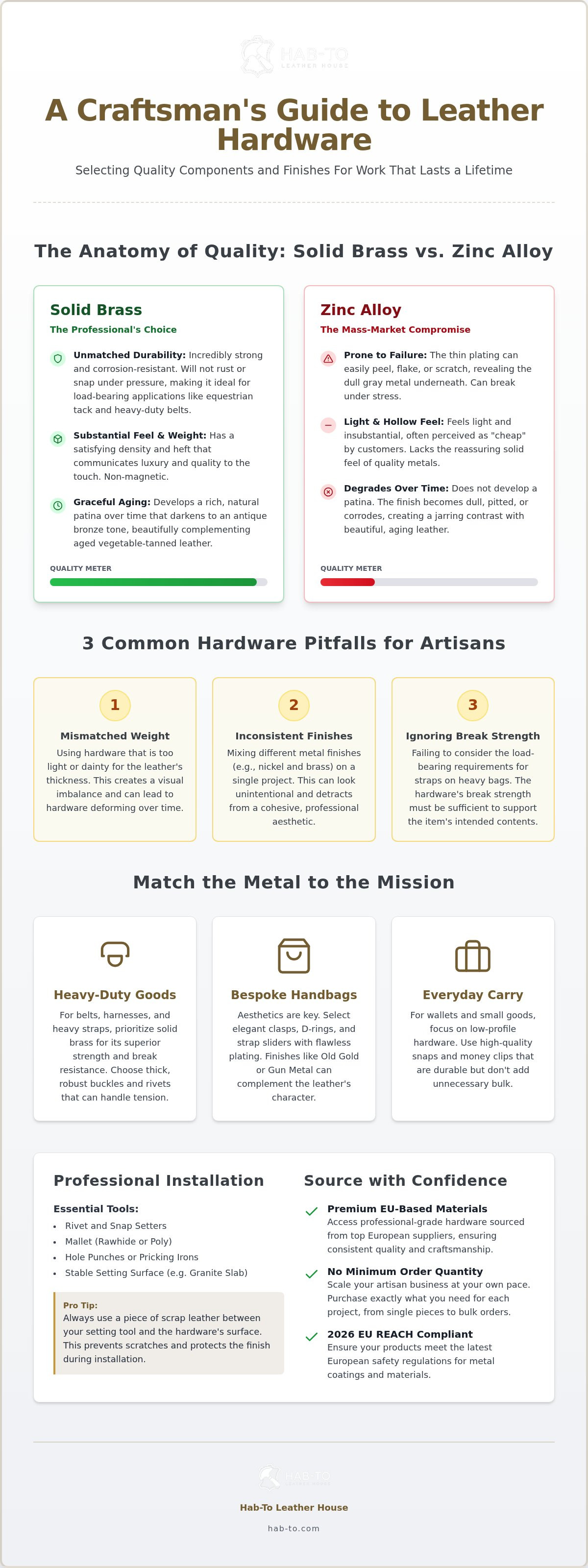
Avoid the traps that often catch new makers off guard. The most frequent mistake is choosing hardware that is too light for the leather weight. A thin, dainty buckle will look out of place on a heavy belt and will likely deform over time. Consistency is another key. Don't mix finishes across a single project. A nickel snap hook paired with a brass D-ring looks unintentional and messy. Finally, always consider the "break strength" for load-bearing straps. If you're building a heavy tote or a camera bag, the hardware must be strong enough to support the weight of the contents. Don't guess. Match the metal to the mission.
Materials and Finishes: Selecting for Longevity and Style
Choosing the right leather hardware requires an eye for detail and a hand for weight. Most mass-produced items use zinc alloy because it's cheap to cast and easy to plate. While it looks fine initially, zinc feels light and lacks the "soul" of professional materials. Solid brass, by contrast, has a substantial density that communicates quality the moment a customer touches your work. It's the difference between a hollow click and a solid, reassuring snap. Your choice of material dictates whether a piece feels like a luxury item or a temporary accessory.
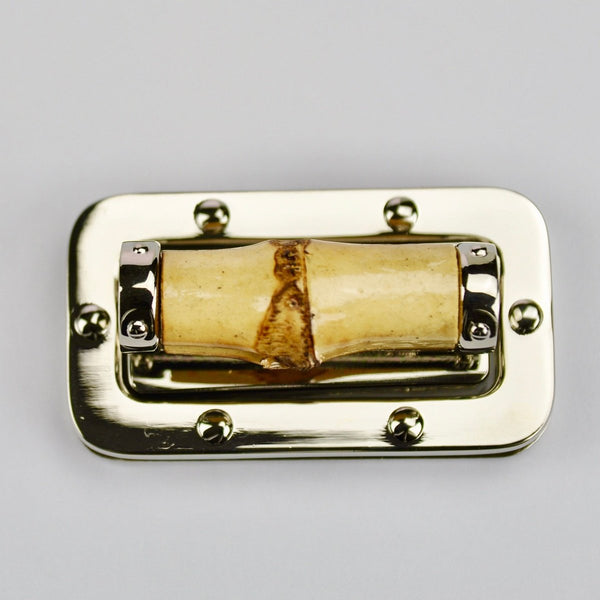
The Hab-To palette offers a range of finishes designed to elevate your Italian leather choice. While standard gold and silver are staples, we specialize in nuanced tones like Gun Metal and Old Gold. For those seeking something truly distinct, our Bamboo collection provides a nature-inspired aesthetic that breaks away from traditional industrial shapes. These organic textures pair beautifully with the rugged grain of vacchetta leather, creating a look that feels both ancient and contemporary. It's about finding a visual balance that respects the raw beauty of the hide.
The Solid Brass Standard
Solid brass remains the undisputed benchmark for Equestrian hardware because of its incredible strength and corrosion resistance. Unlike plated steel, solid brass won't rust if the surface is scratched. Instead, it undergoes a natural patina process, darkening into a rich, antique bronze tone that complements the aging of vegetable-tanned hides. You can identify solid brass by its weight and non-magnetic properties. If you're ever unsure, a quick scratch on an inconspicuous area will reveal a consistent yellow metal all the way through, rather than a silver-colored steel core.
Modern Finishes for Contemporary Designs
Not every project calls for a traditional look. When you're designing for a tactical or minimalist audience, Gun Metal or Black Gun Metal finishes provide a sleek, understated vibe. These darker tones recede, allowing the color of the leather to take center stage. For vintage-inspired handbags, Old Gold is the perfect middle ground. It offers the warmth of gold without the "new money" flash, mimicking the look of leather hardware that has already lived a full life. When choosing between cool tones like Silver and Nickel, consider the undertones of your leather. Nickel has a slight yellow warmth, while Silver is a crisp, true blue-white. Getting these subtle pairings right is what separates a hobbyist from a master. If you're just starting your journey, exploring our curated hardware bundles is an excellent way to test different finishes on your bench.
Project-Specific Hardware: From Belts to Bespoke Handbags
Selecting the right leather hardware isn't just about the finish; it's about the physics of the project. A minimalist wallet needs slim, unobtrusive snaps, while a weekender bag requires heavy-duty D-rings that won't deform under ten kilograms of luggage. You have to visualize how the piece will be used daily. Is it being pulled, twisted, or opened fifty times a day? The hardware is the only part of your project that moves. It must be up to the task.
For small goods like wallets or watch straps, precision is everything. You want snap buttons and rivets that provide a crisp "click" without adding unnecessary bulk. When you move into larger items, weight-bearing considerations become your primary focus. Handles and shoulder straps are the most common points of failure. If the hardware isn't rated for the load, the leather will eventually tear or the metal will fatigue. Always over-engineer your attachment points. It's better to have a D-ring that is too strong than one that fails in the middle of a busy street.
The Anatomy of a Professional Belt
When you are crafting with heavy Harness leather, the hardware must match the hide’s rugged character. Follow the 1mm rule: the internal width of your buckle should be exactly 1mm wider than your leather strap. This prevents the edges from scuffing while ensuring the strap doesn't slide around. Choosing between solid buckles and adjusters depends on the intended use, but I always recommend Chicago screws for high-end belts. They offer more versatility than permanent rivets, allowing your customers to swap buckles or make repairs easily. It's a small detail that shows you've thought about the long-term life of the product.
Structural Hardware for Bags
Bags are essentially wearable architecture. To achieve classic silhouettes, you might use specialized components like doctor bag brackets to create that iconic, structured hinge opening. Beyond the aesthetic, focus on the anchors. D-rings and snap hooks are the most stressed components in any bag design. Ensure your snap hooks have a smooth, fluid spring operation. A "gritty" or stiff hook feels cheap to the touch, regardless of how beautiful the plating looks. For heavy totes, always reinforce your attachment points with internal stays to distribute the weight across the leather surface rather than just the stitch line. If you're unsure about the right scale for your design, Mike is always available for a free 1-on-1 video consultation to help you spec your project correctly.
Professional Installation: Tools, Techniques, and Avoiding Mistakes
Ruining a project at the final stage is a maker's nightmare. You've spent hours on the leather, but one slip of the hammer can destroy the leather hardware and the hide beneath it. Professional installation requires more than just force. It requires precision. The right setting tool ensures that the pressure is distributed evenly across the metal surface. Without it, you risk deforming the curve of a snap or scratching the plating. It's about respecting the physics of the material as much as the aesthetics.
The relationship between your hole punch size and the hardware post is critical. A hole that's too large allows the hardware to migrate, which eventually weakens the leather through friction. If the hole is too small, you'll struggle to seat the post, potentially bruising the grain or causing the leather to pucker. Aim for a snug fit where the post can be pushed through with slight resistance. This ensures the hardware stays centered during the setting process.
What You Will Need: The Hardware Toolkit
To achieve a factory-level finish, your bench needs equipment that mirrors the shape of the components you're installing. Generic tools lead to generic results. High-quality setting kits are designed to cradle the hardware, preserving its profile during impact.
- 11pcs Leather Craft Tool Die Punch Snap Kit: This is the essential starter set for most rivets and snaps.
- Manual Grommet Hand Press: If you're moving into high-volume work, a press offers much higher consistency and vertical alignment than hand-setting.
- A quality leather hammer: Never use a metal hammer directly on your setting tools. A poly or rawhide mallet prevents metal-on-metal marring.
- Ecostick 1804: Use this for temporary positioning. It keeps your leather layers perfectly aligned before you commit to the permanent fix.
Troubleshooting Common Installation Issues
One frequent problem is a rivet post that's too long for your leather thickness. If the post protrudes more than 3mm beyond the leather, it will likely bend sideways rather than mushrooming flat. You can solve this by adding a small leather washer as a spacer on the inside of the project. If you find a snap button is misaligned, don't try to force it. It's usually better to carefully drill out the rivet and start over than to risk tearing the hide. To protect your leather hardware finishes during the hammering process, place a thin scrap of leather between the setting tool and the metal. This simple buffer prevents the tool from leaving a permanent ring on the polished surface.
Sourcing with Hab-To: Premium Hardware for Crafters of All Sizes
Finding a reliable partner in the supply chain is often the hardest part of growing an artisanal brand. You need components that match your skill, but most wholesalers only talk to you if you're buying thousands of units. Hab-To changes that. We believe every maker deserves access to the same professional-grade leather hardware used by the world's leading luxury houses. Whether you're making your first belt or your fiftieth handbag, we provide the materials you need without the burden of minimum order quantities. It's about empowering your creativity, not restricting it with logistics.
Our roots in Amsterdam go back to 1857. This 160-year family legacy isn't just a number; it's a deep well of product knowledge that we share with our community every day. We don't just sell metal. We sell the confidence that your work will stand the test of time. By focusing exclusively on high-end vegetable-tanned leather and premium hardware, we ensure that every item in our inventory meets a singular standard of excellence. We've done the sourcing work so you can focus on the bench.
Browse the Full Hardware Collection
Our digital shelves are stocked with exactly 547 individual items, ensuring you can find the perfect match for any project. From the rugged buckles needed for heavy harness leather to the specialized closures used in fine Italian handbags, the Hardware & Fournituren collection is curated for the discerning eye. Sourcing within Europe is a strategic choice for modern artisans. It eliminates the unpredictability of international customs delays and the sting of unexpected import fees. Perhaps more importantly, our hardware is compliant with the latest 2026 EU REACH safety regulations, giving you peace of mind regarding the chemical standards of your surface treatments and coatings.
Get Expert Advice from Mike
We know that choosing the right weight or finish through a screen can be difficult. That's why we offer a level of personal service you won't find at a generic warehouse. You can book a free video consultation to discuss your specific project needs directly with Mike. He can help you match a buckle to a specific hide or explain the best setting technique for a complex closure. If you're in the area, we invite you to visit our Amsterdam showroom to experience the quality firsthand. For those looking to master the technical side of the craft, our Masterclasses offer hands-on training in everything from leather selection to professional installation. We're here to support your journey from the first cut to the final rivet.
Elevate Your Craft with Timeless Metalwork
Your work deserves components that match the integrity of the hides you stitch. Mastering the selection of professional leather hardware is about more than just aesthetics; it's about structural synergy. By choosing solid metals and professional installation techniques, you ensure that every buckle and rivet patinas as beautifully as the leather itself. These small but critical choices define the longevity and reputation of your artisanal brand.
We are here to help you scale your business at your own pace. Our Amsterdam-based warehouse offers no minimum order quantities and fast 24-48 hour delivery to keep your bench moving. With 160 years of family expertise, we provide the reliable European sourcing you need to stay productive. It's time to stop compromising on cheap plating and start building heirloom-quality goods that your customers will cherish for generations.
The path to mastery is built one project at a time. Trust your hands, respect your materials, and let your hardware tell a story of quality that lasts. We can't wait to see what you create next.
Frequently Asked Questions
How do I choose the right size buckle for my leather strap?
You should match the internal width of the buckle exactly to the width of your leather strap. If you are using a 30mm strap, you need a 30mm buckle. I often recommend the 1mm rule for heavier leathers to ensure the strap slides through without scuffing the edges. A proper fit prevents the strap from shifting side to side, which preserves the structural integrity of your belt or bag closure.
What is the difference between solid brass and brass-plated hardware?
Solid brass is a consistent alloy throughout the entire piece, while brass-plated hardware is usually a zinc or steel core with a thin surface coating. Solid brass is superior because it won't rust and develops a beautiful, deep patina as it ages. Plated items eventually flake or peel, exposing the silver colored base metal. For heirloom quality leather hardware, always choose solid metals that age gracefully alongside your vegetable tanned leather projects.
Do I need a special press to install snap buttons and rivets?
You don't strictly need a manual press to get started, as hand setting tools and a mallet work perfectly for individual projects. However, a press provides much higher consistency and vertical alignment, which is vital if you are producing items for sale. If you're just beginning, a high quality die punch kit is a great investment. As your volume grows, upgrading to a bench mounted press will save your wrists and ensure every snap is seated perfectly.
Can I buy just one or two buckles from Hab-To without a minimum order?
Yes, you can buy exactly what you need, whether that is a single buckle or a hundred rivets. At Hab-To Leather House, we have a strict no minimum order quantity policy to support artisans of all sizes. I founded this business to help makers access premium materials without the burden of bulk buying. You can order a single piece of leather hardware to test a design before committing to a larger production run.
Which hardware finish works best with dark brown vegetable-tanned leather?
Old Gold and Solid Brass finishes are the most traditional choices for dark brown vegetable tanned leather because their warm undertones complement the earthy hues. If you want a more contemporary or tactical look, Gun Metal provides a sophisticated contrast that doesn't distract from the leather's grain. I generally suggest avoiding bright Nickel with dark browns, as the cool blue white tone can sometimes feel too industrial against the natural warmth of the hide.
What tools are essential for a beginner starting with leather hardware?
A beginner needs four core items: a quality hole punch, a setting kit, a non-marring mallet, and a solid base. I recommend starting with an 11-piece setter kit because it covers the most common sizes for snaps and rivets. Use a poly or rawhide hammer instead of a metal one to avoid damaging your tools. Having a heavy steel anvil or a specialized setting base ensures you have a firm surface for a clean, secure fit.
How do I prevent my leather hardware from tarnishing over time?
Natural tarnishing is a sign of authenticity in solid metals, but you can slow the process by keeping the hardware dry and clean. Avoid using harsh household cleaners, which can strip the protective finishes. If you prefer a bright look, a light coat of Renaissance wax can provide a barrier against moisture and oils. Most of my customers actually prefer the natural patina that develops, as it tells the story of the leather's journey.
Does Hab-To ship leather hardware internationally from Amsterdam?
We ship our entire collection worldwide from our central warehouse in the Netherlands. Most orders are processed and dispatched quickly, with an advertised delivery time of 24 to 48 hours for local shipments and slightly longer for international destinations. Because we source within Europe, our EU customers don't have to worry about the customs delays or hidden import fees that often come with ordering materials from overseas suppliers. It's a faster, more reliable way to source.
Disclaimer
All our blog articles are made for information purposes only we dont take responsability for any content from third parties.