
Equestrian Leathers and Hardware: A Masterclass in Sourcing for Horse Tack
Would you trust your safety to a strap that was tanned with harsh chemicals and finished with shortcuts? In the world of horse tack, the materials you choose are about the security of both horse and rider. It's a heavy responsibility that every maker feels. You want to create gear that lasts for decades, but finding professional-grade Equestrian Related leathers and hardware in small quantities often feels like an uphill battle. You might worry about whether a hide is safe for animal skin or feel confused by the technical differences between Latigo, Harness, and Bridal leathers.
I've spent over 25 years working with these materials, and I'm here to help you master the selection process. You'll learn how to identify the highest-grade vegetable-tanned leathers and durable hardware to ensure your projects are professional, safe, and long-lasting. We'll break down the essential "Big Three" equestrian leathers, look at how to spot corrosion-resistant hardware, and show you how to source premium materials with no minimum order requirements. Let's build gear that stands the test of time.
Key Takeaways
- Learn why vegetable-tanned leather is the only safe choice for horse skin to prevent chemical burns and ensure long-term gear integrity.
- Master the functional differences between Harness, Bridal, and Latigo leathers to choose the perfect material for every piece of tack.
- Discover why solid brass and stainless steel are the non-negotiable standards for safe, corrosion-resistant hardware in high-stress situations.
- Understand how to source premium Equestrian Related leathers and hardware in small quantities, allowing you to build professional gear without large upfront investments.
- Identify the precise leather weights and specialized tools needed to work with thick equestrian hides for a truly artisanal finish.
The Essentials of Equestrian Leather: Why Vegetable Tanned is Non-Negotiable
Equestrian leather is a life-safety component. It isn't just about aesthetics; it's about the security of the rider and the well-being of the horse. When you're sourcing Equestrian Related leathers and hardware, you're building a system that must handle incredible tensile strength. A single strap might need to withstand the sudden, massive force of a spooking horse without snapping. We define these hides by their dense fiber structure and their ability to remain stable under the harsh conditions of wind, rain, and sun.
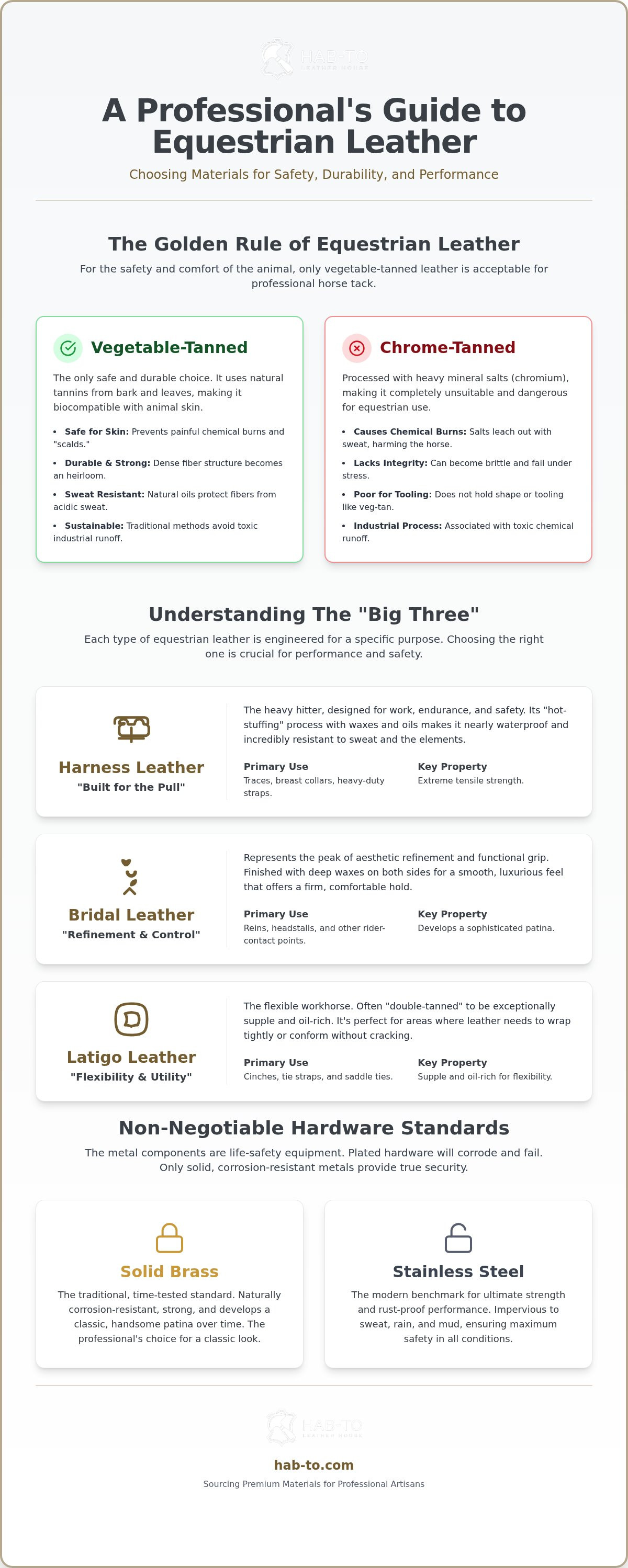
There's a strict "Veg-Tan Only" rule in professional saddlery for a vital reason. Chrome-tanned leathers are processed with heavy mineral salts. When a horse sweats, those chemicals can leach out of the leather. This often results in painful chemical burns or "scalds" on the animal's sensitive skin. Vegetable-tanned leather uses natural tannins from bark and leaves. It's biocompatible and shares a similar pH balance with the animal. This prevents irritation even during long, demanding rides where sweat and friction are constant.
The secret to leather that survives the stable lies in its "stuffing." During the tanning process, the hides are saturated with natural fats and oils. This isn't just for a soft feel. These oils protect the fibers from the acidic nature of horse sweat, which can rot untreated leather from the inside out. It keeps the gear flexible, ensuring it doesn't become brittle and dangerous after a few seasons of use.
Strength vs. Comfort: The Dual Requirement
Tack must be uncompromisingly strong, yet gentle enough for the horse's face. You don't want a material that stretches like a rubber band, as this leads to a loss of control. High-quality Equestrian Related leathers and hardware offer a specific kind of "give" that allows for a break-in period without compromising the structural integrity of the piece. Because it is biocompatible and gains strength through its dense fiber structure, vegetable-tanned leather is the only safe choice for professional horse tack.
Sustainability in the Stable
Choosing plant-based tanning is an ethical decision that impacts the longevity of your work. Premium hides from Conceria Virgilio set the world standard for this craft. These tanneries avoid the toxic runoff associated with industrial tanning, focusing instead on traditional, slow-processed methods. A bridle made from this caliber of leather doesn't just look better with age; it becomes an heirloom. While synthetic or chrome options might fail within years, a well-cared-for veg-tan piece can easily last decades in the stable.
Understanding the 'Big Three': Harness, Bridal, and Latigo Leathers
Choosing the right hide is a sensory experience that requires more than just a quick glance. You have to understand how the leather was fed during the tanning process. When you're sourcing Equestrian Related leathers and hardware, you'll find that the "Big Three" categories define almost every piece of tack in the stable. Each one has a specific job. One is built for massive weight, one for refined control, and one for extreme flexibility. Mastering the differences ensures your gear doesn't just look professional; it performs under pressure.
Harness Leather: Built for the Pull
Harness leather is the heavy hitter of the equestrian world. It's designed for work, endurance, and safety. What makes it unique is the "hot-stuffing" process. Tanners literally force heavy waxes and oils into the hide while it's hot, saturating the fibers to the core. This creates a material that's nearly waterproof and incredibly resistant to the acidic nature of horse sweat. It's the only choice for traces, breast collars, and heavy-duty straps that must endure constant tension. If you're building gear for pulling or long-distance riding, sourcing high-durability Harness leather is the only way to guarantee a safe result.
Bridal and Latigo: Refinement and Utility
Bridal leather represents the peak of aesthetic refinement. It's finished with deep waxes on both the grain and flesh sides, resulting in a smooth, glassy surface that feels luxurious in the hand. It's the standard for reins and headstalls because it offers a firm but comfortable grip. Latigo, on the other hand, is the flexible workhorse. It's often alum-tanned or chrome-tanned before being re-tanned with vegetable tannins. This "double tan" makes it exceptionally supple and oil-rich. It's perfect for cinches and saddle ties where the leather needs to wrap tightly without cracking. While Bridal leather develops a sophisticated, hard-earned patina, Latigo remains oily and dark, thriving in the sweat-heavy areas of the saddle.
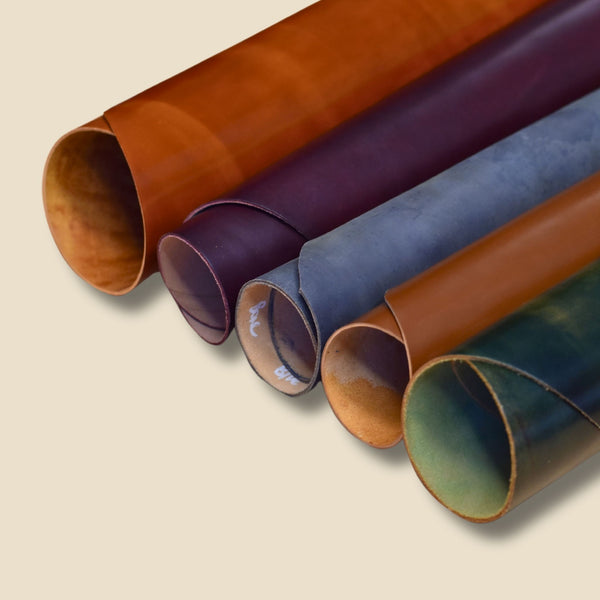
You can identify quality in these materials by their weight and aroma. High-grade harness leather should feel dense and slightly waxy, never dry or papery. It should have a rich, clean scent of bark and tallow. If a leather feels "dead" or lacks that deep, oily spring-back when folded, it won't survive the rigors of the stable. If you're just starting out and want to test these materials, exploring our curated leather bundles is a great way to feel the difference between these professional-grade hides before committing to a full side.
Equestrian Hardware: Sourcing for Durability and Safety
Hardware acts as the skeleton of your tack. While the leather provides the surface and strength, the hardware manages the stress points. When you're sourcing Equestrian Related leathers and hardware, you must prioritize mechanical integrity over price. Solid brass and stainless steel aren't just premium options; they're the only professional choices for gear that faces the elements. These materials offer the high breaking strength required to keep a horse under control in unpredictable moments.
Zinc die-cast hardware is common in fashion but has no place in the stable. It's brittle. Under the sudden snap of a lead rope or the tension of a girth, zinc can shatter without warning. Stainless steel and brass, however, are forged or cast to bend rather than break. This provides a vital margin of safety that every maker should demand. High-quality hardware also features smooth, rounded edges to prevent the metal from cutting into the leather fibers over years of use.
The Superiority of Solid Brass
Brass is the traditionalist's choice for a reason. It naturally resists corrosion from salt, sweat, and rain, making it nearly indestructible in a stable environment. Over time, it develops a soft patina that perfectly complements the deepening tones of vegetable-tanned hides. For a deep dive into why this material is a staple for artisans, check out our Solid Brass Hardware: The Artisan’s Guide.
Specialized Tack Fasteners
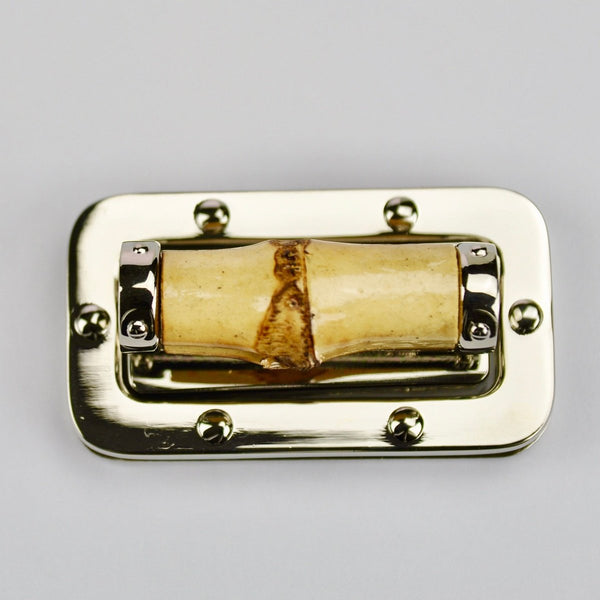
Specific projects require specialized fasteners. Chicago screws are essential for headstalls where you need to swap bits frequently. They provide a secure, mechanical hold but remain removable with a simple screwdriver. For adjustable straps like reins or martingales, the Conway buckle offers a low-profile, reliable solution without the bulk of a traditional tongue buckle. You can find these specialized components and more in our curated hardware collection.
Think about the visual harmony of your finished piece. A dark, oil-rich Latigo leather looks striking against the cool, modern tone of stainless steel. Conversely, the warm, earthy reds of a traditional harness leather are elevated by the golden glow of solid brass. Matching your hardware finishes to your leather choice isn't just about style. It's about creating a piece of gear that feels intentional, professional, and built to last a lifetime.
What You Will Need: A Project Sourcing Guide
Sourcing the right materials is a technical exercise in matching weight to function. If you choose a hide that's too thin, you risk structural failure under tension. If it's too thick, the gear becomes cumbersome and uncomfortable for the horse. When you're gathering Equestrian Related leathers and hardware, your first decision is the weight. For reins, a thickness of 3.0mm to 3.5mm provides the necessary strength while remaining supple in the hand. For headstalls and heavier straps, you'll want to move up to 4.0mm or even 4.5mm to ensure the piece doesn't stretch out of shape over time.
Working with these heavy weights requires specialized gear. Standard hobbyist tools often fail when faced with 4mm of dense harness leather. You need heavy-duty pricking irons and a diamond awl that can pierce through multiple layers without bending or snapping. For the assembly phase, traditional contact cements often lack the shear strength required for high-stress equestrian bonds. This is why Ecostick 1804 has become the industry standard. It offers a permanent, water-based bond that won't peel under tension or extreme weather, keeping your layers perfectly aligned during stitching.
Material Checklist for a Standard Bridle
- Leather: 3.5mm - 4.0mm Bridal or Harness leather for the main straps.
- Hardware: 2x Bit buckles, 1x Browband buckle, 1x Throat latch buckle (Solid Brass or Stainless Steel).
- Thread: High-tensile waxed polyester (0.8mm or 1.0mm) to handle the thick hides.
- Finishing: Tokonole for a professional, glass-like edge that resists moisture.
Edge Burnishing for Equestrian Use
A rough edge is more than just an eyesore; it's a safety hazard. In the world of horse tack, unfinished edges lead to 'tack sores', which are painful chafing marks caused by the leather rubbing against the horse's sensitive skin. When working with high-quality Equestrian Related leathers and hardware, the finishing process is what separates an amateur piece from a professional one. You must bevel the edges deeply to create a rounded profile before applying a burnishing agent. Our tools collection includes the specialized edge bevelers and wood slickers needed to handle these thick, oil-rich hides effectively. A smooth, sealed edge also prevents moisture from entering the core of the leather, which significantly extends the life of the gear in the stable environment.
The Hab-To Advantage: Sourcing Like a Professional Artisan
Accessing professional materials shouldn't require a warehouse and a corporate budget. Many suppliers demand massive minimum orders, leaving individual makers stuck with lower-grade "craft" hides that won't survive a season in the stable. We've changed that. Our "No MOQ" promise means you can buy a single panel of premium Italian Leather without the financial risk. It's about giving you the same Equestrian Related leathers and hardware used by world-class saddleries, regardless of your project's scale.
You aren't just buying material here; you're gaining an expert partner. Mike brings over 25 years of hands-on leathercraft knowledge to every interaction. Whether you're unsure about the tensile strength needed for a specific bridle or need help matching hardware finishes, that expertise is yours to use. We even offer a free video consultation to help you plan your projects with confidence. It's like having a master artisan right in your workshop to guide your selection.
From Hobbyist to Master Craftsman
Hab-To supports the rise of micro-brands by providing access to world-renowned tanneries like Maryam, Badalassi, and Virgilio. These sources were once unreachable for small makers. You can continue your education through our specialized Masterclasses, which bridge the gap between hobbyist experiments and professional execution. This commitment to quality is rooted in a 160-year family legacy. Heritage matters because it ensures we never compromise on the standards of the materials we source for your craft.
Join the Maker Community
Crafting is better when it's shared. You can follow our journey, see new hides as they arrive, and watch process videos on Instagram and TikTok. We love seeing what our community builds with our Equestrian Related leathers and hardware. If you're looking for more technical guidance, explore our related resources below.
Continue Your Journey:
- Best Hardware for Pet Accessories: A Professional Maker’s Guide
- Hab-To Heritage: What 160 Years of Experience Means for Your Craft
Professional Sourcing for Your Next Project
Ready to start your equestrian build? We've curated the finest materials to ensure your gear is safe, durable, and beautiful. No minimums, just pure quality.
- Premium Harness and Bridal Leathers
- Solid Brass and Stainless Steel Hardware
- Curated Leather and Tool Bundles
Master the Craft of Professional Tack Making
Creating gear for a horse is a unique responsibility that blends artistry with safety. You now understand that vegetable-tanned leather isn't just a choice; it's a requirement for the health of the animal and the longevity of the piece. By choosing the right weights and mastering the "Big Three" hides, you ensure every strap and buckle performs exactly when it's needed most. You don't have to navigate these technical choices alone.
We've built our legacy on 160 years of family expertise and a refusal to compromise on materials. Whether you're a hobbyist or a professional maker, our "No MOQ" policy gives you access to the same Equestrian Related leathers and hardware used by the world's finest saddleries. We exclusively provide vegetable-tanned hides because your craft deserves a foundation that's both ethical and enduring. It's time to stop settling for craft-grade materials and start building with the best.
Your workshop is the starting point for gear that will tell a story for decades. We can't wait to see what you create with these premium materials. Keep honing your skills and trust your hands; you're building something truly remarkable.
Frequently Asked Questions
What is the best leather weight for horse bridles?
The standard weight for a professional bridle is between 3.5mm and 4.0mm (9 to 10 oz) for the main structural straps. This thickness provides the necessary tensile strength to ensure safety without being too bulky for the horse. For reins, many makers prefer a slightly thinner 3.0mm cut to allow for a more sensitive feel and better communication between the rider's hand and the bit.
Can I use chrome-tanned leather for horse tack?
You should never use chrome-tanned leather for any part of the tack that touches the horse's skin. The mineral salts used in the chrome tanning process can leach out when the horse sweats, leading to painful chemical burns or irritation. Stick exclusively to vegetable-tanned hides, which are biocompatible and share a similar pH level with the animal's skin.
What is the difference between Harness and Bridal leather?
Harness leather is hot-stuffed with extra waxes and oils during tanning to make it virtually waterproof and extremely durable for heavy work. Bridal leather receives a more refined finish with waxes applied to both the grain and flesh sides, resulting in a smooth, glassy look. While harness leather is built for the pull, bridal leather is the peak choice for refined aesthetic gear like headstalls and show reins.
Why is solid brass preferred for equestrian hardware?
Solid brass is the professional standard because it's naturally corrosion-resistant and won't rust when exposed to horse sweat or humid stable environments. It also offers a vital safety advantage: under extreme, sudden stress, brass will typically bend rather than shatter. This "bend-don't-break" quality provides a margin of safety that cheaper zinc die-cast hardware simply can't match.
How do I maintain equestrian leather gear to prevent dry rot?
Regularly clean your gear with a damp cloth and apply a high-quality leather conditioner to replenish the natural fats lost through use. Dry rot happens when the internal fibers lose their lubrication and become brittle, often due to salt from sweat or extreme heat. A consistent conditioning routine keeps the leather supple and ensures your tack remains safe for years of riding.
What is Latigo leather best used for in horse equipment?
Latigo's high oil content and exceptional flexibility make it the perfect material for cinches, latigo ties, and saddle strings. Because it's double-tanned, it remains supple even after being repeatedly soaked in sweat and dried out. It's designed to wrap tightly and stay flexible, making it the workhorse material for the high-friction areas of a saddle.
Do I need to buy a whole hide to get professional-quality leather?
You don't need to invest in a full side to start building professional-grade gear. At Hab-To, we offer premium panels and shoulders with no minimum order quantity, allowing you to source the exact Equestrian Related leathers and hardware you need for a single project. This accessibility makes it possible for hobbyists and small makers to work with world-class Italian hides without a massive upfront investment.
How do I choose between Chicago screws and rivets for my tack project?
Choose Chicago screws for any part of the tack that might need hardware replacement or bit changes, such as the bit ends of a headstall. They provide a mechanical hold that's secure but removable with a screwdriver. Use permanent rivets for structural bonds that will never need to be disassembled, ensuring a slim profile and a bond that won't vibrate loose over time.
Disclaimer
All our blog articles are made for information purposes only we dont take responsability for any content from third parties.