Finding a Leather Supplier That Understands Small Makers: A 2026 Sourcing Guide
What if the only thing standing between your workshop and a luxury-tier product line wasn't your skill, but a rigid spreadsheet at a warehouse? For many artisans, the dream of using world-class materials dies at the "Minimum Order Quantity" line. It's exhausting to deal with suppliers who demand you buy ten hides when you only need one beautiful shoulder of Italian leather. Finding a leather supplier that understands small makers is about more than just buying skins; it's about finding a partner who respects the slow, deliberate pace of the handmade movement. We believe every maker deserves access to the same quality as the big fashion houses, without the "MOQ tax" on your creativity.
We understand the frustration of inconsistent quality and the hidden sting of customs fees when ordering from outside the EU. You want to focus on your craft, not on logistics or settling for subpar materials. In this 2026 sourcing guide, you'll discover how to source premium vegetable-tanned leather without high minimum orders to scale your handmade brand with professional materials. We'll walk through selecting the right vegetable tanned leather for your project, navigating the latest industry regulations, and building a supply chain that supports your growth rather than hindering it.
Key Takeaways
- Discover how a leather supplier that understands small makers can help you bypass the "MOQ tax" by offering high-end materials in accessible cuts like panels and shoulders.
- Learn why premium vegetable tanned leather from world-renowned tanneries like Conceria Maryam is the key to elevating your brand's perceived value in a competitive market.
- Master the professional finishing techniques using Tokonole and specialized leatherworking tools that transform handmade goods into luxury-tier products.
- Identify the most cost-effective sourcing strategies for 2026 to avoid high customs fees and ensure consistent material quality for every order you place.
- Find out how to leverage expert 1-on-1 consultations and educational resources to solve technical crafting hurdles and strategically scale your workshop.
What Is a Leather Supplier That Understands Small Makers?
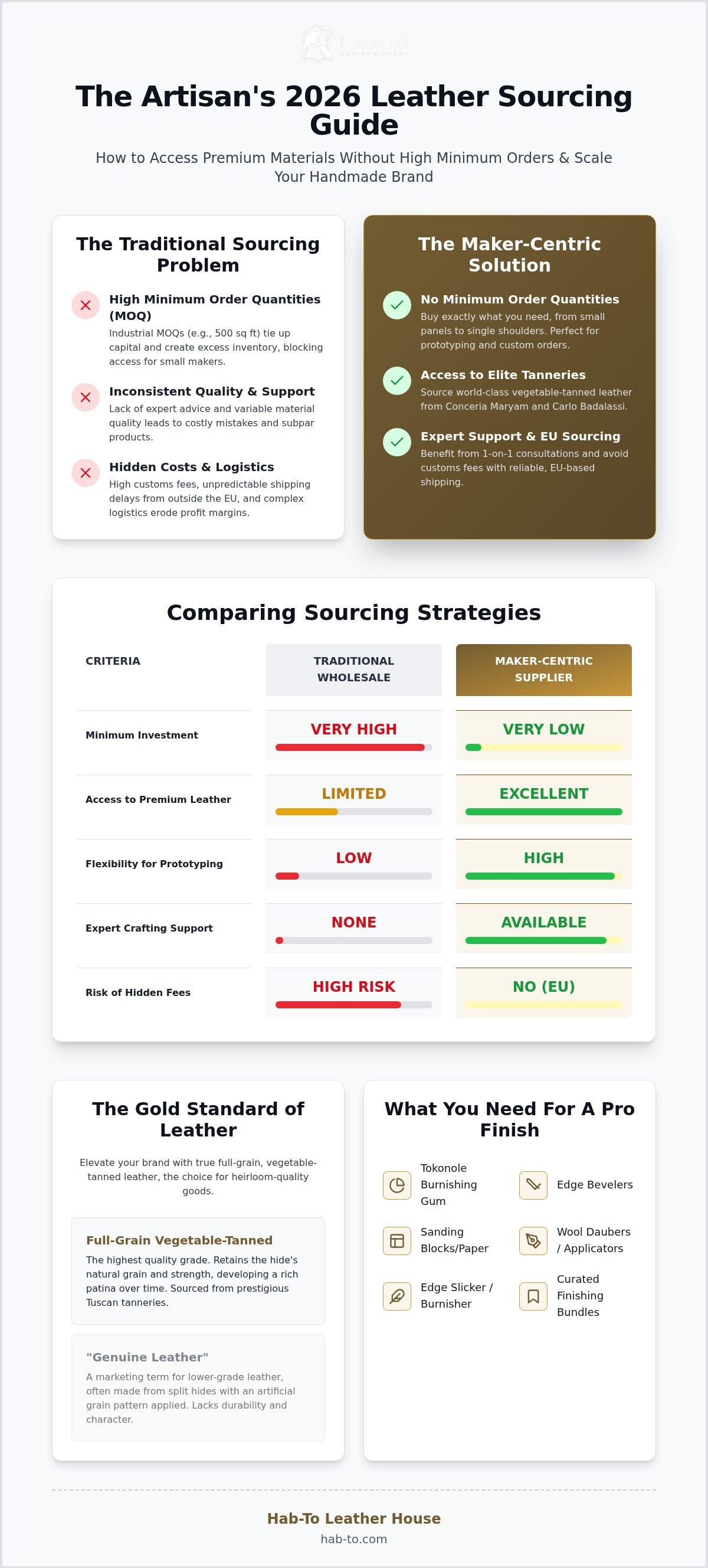
A maker-friendly supplier prioritizes accessibility over industrial volume. They don't see you as a "small account"; they see you as a fellow craftsman. The traditional "wholesale-only" model often fails the modern artisan because it's built for factories, not independent studios. A true leather supplier that understands small makers shares your deep philosophy on sustainability and quality. They know that a single, perfectly finished watch strap deserves the same material integrity as a thousand-piece run of handbags. Key traits of this partnership include a total lack of Minimum Order Quantities (MOQ), a wide variety in cuts like panels or shoulders, and direct expert support.
The Problem with Traditional Leather Wholesalers
Industrial MOQs remain the single biggest hurdle for growing brands. Buying 500 square feet of material is simply impossible for a micro-brand or hobbyist. It ties up all your liquid capital and leaves you with piles of inventory you might not use for years. Beyond the numbers, traditional wholesalers often offer cold, transactional communication. If you're a beginner with technical questions about the vegetable tanning process, you're often met with silence or redirected to a generic FAQ page. Then there's the hidden sting of international logistics. Sourcing outside the EU frequently involves high customs fees and unpredictable shipping delays. These hidden costs can easily destroy the profit margins of a small handmade brand.
The Evolution of the Maker-Centric Model
The "No MOQ" sourcing model has completely changed how artisans build their businesses. It allows for rapid prototyping without the massive financial risk of bulk buying. You can buy exactly what you need for a specific commission or a new collection. This means you can finally access world-class materials like Badalassi Pueblo leather or Maryam Vacchetta leather in small panels rather than being forced to buy full hides. It's about precision and respect for the material. When you work with a leather supplier that understands small makers, you're tapping into 160 years of family heritage. This history creates a better advisory experience. You're gaining a mentor who can guide your material choices based on decades of experience. This support helps you avoid costly mistakes and ensures every piece you create meets a professional standard. It's a shift from being an anonymous customer to becoming part of a community that values the craft as much as you do.
Quality Standards: Why Vegetable Tanned Leather Is the Maker’s Choice
Choosing the right material isn't just about utility. It's about the soul of the finished product. For artisans, vegetable-tanned leather represents the pinnacle of ethical and aesthetic superiority. Unlike mass-produced alternatives, these hides are tanned using natural tannins from barks and leaves. This process results in a material that breathes, smells of tradition, and develops a rich patina over time. Your customers don't just want a bag; they want an heirloom that tells a story as it ages. This focus on material durability and high-performance craftsmanship is mirrored in other specialized fields; for instance, you can discover Fairtex to see how premium materials are utilized in professional combat sports equipment. Working with a leather supplier that understands small makers ensures you get access to these premium hides without needing a factory-sized budget. This partnership allows you to source from world-renowned tanneries like Conceria Maryam and Carlo Badalassi, bringing prestigious quality to your workbench.
Identifying Authentic Italian Craftsmanship
The label "Made in Italy" carries weight, but for a maker, the real gold standard is the Tuscan Vegetable-Tanning Consortium. This group ensures that tanneries adhere to strict industry quality standards. It's vital to know the difference between "genuine leather" and premium full-grain veg-tan. "Genuine" is often a marketing term for low-grade splits, whereas full-grain retains the natural character and strength of the hide. For those crafting high-end watch straps or wallets, Maryam Shell Cordovan is the absolute gold standard for small-scale luxury. Its dense structure and mirror-like finish provide a level of sophistication that generic retailers simply can't match. Every square inch of these hides reflects centuries of refined technique.
Sustainability as a Selling Point for Your Brand
Modern consumers are increasingly eco-conscious. The "chrome-free" movement isn't just a trend; it's a fundamental shift in how we view luxury. With leather formally excluded from the scope of the EU's Deforestation Regulation (EUDR) as of July 2026, the case for vegetable-tanned hides as a sustainable byproduct has never been stronger. By sourcing from a leather supplier that understands small makers, you can honestly tell your customers that your materials are biodegradable and responsibly produced. One of the most exciting innovations in this space is Olivenleder, which uses olive leaf extract for tanning. This creates a leather that is safe for the skin and the planet. You can leverage your supplier's 160-year heritage to build trust. When you explain that your leather comes from a family-owned wholesaler with deep roots in the craft, you aren't just selling a product. You're selling a connection to history. If you're ready to experiment with these premium textures, consider starting with one of our curated leather bundles to see the quality firsthand.
Comparing Sourcing Strategies: Retail vs. Bulk vs. No-MOQ Wholesale
Sourcing is the backbone of your profit margin. Retail shops offer convenience for one-off projects, but the markup is often significantly higher than wholesale. On the other end, traditional industrial wholesalers offer the best rates but demand you buy thousands of euros worth of stock upfront. For an independent brand, that's capital you can't afford to lock away. The "No-MOQ Wholesale" model is the modern hybrid. It gives you professional-tier pricing with the flexibility of a hobbyist shop. This is the hallmark of a leather supplier that understands small makers. To find your real cost, look beyond the sticker price. Factor in the cutting waste, shipping fees, and the time spent hunting for specific colors. It isn't just about the hide. It's about the efficiency of your studio.
When to Buy a Full Hide vs. a Shoulder or Panel
Choosing the right cut is a strategic decision that affects your bottom line. If you're building large tote bags, you need the surface area of a full hide or a large shoulder to avoid seams. However, if you specialize in small goods like wallets or watch straps, buying a full hide is often inefficient. Using Pueblo leather panels allows you to test new designs or offer a wider color palette without cluttering your studio. Managing inventory becomes simpler when you aren't forced to play warehouse manager for hundreds of square feet of leather you don't yet have orders for. This flexibility is exactly what a leather supplier that understands small makers provides to help you stay lean.
European Sourcing: Eliminating Customs and Delays
Location matters for your lead times and your sanity. Sourcing within Europe offers a massive advantage for national makers, often resulting in 24-48 hour delivery for national orders. This speed allows you to stay responsive to customer demands without carrying heavy stock. You avoid the "Customs Surprise" that comes with importing from the US or Asia, where duties can turn a "cheap" hide into a liability. Organizations like the Leather and Hide Council of America provide great industry context, but for an EU-based maker, local sourcing is the path to stability. To maximize your budget, look for free shipping thresholds. You can easily reach these by bundling your leather and hardware orders into a single shipment. With the European handicrafts market estimated to be worth $243.83 billion in 2026, the competition is growing; your logistics need to be flawless.
The Maker’s Atelier: What You Will Need for Professional Finishing
Your workshop is where raw material transforms into a brand legacy. While selecting the right hide is the essential first step, your workshop setup determines the final tactile quality of your goods. For artisans looking to elevate their physical workspace to a professional standard, you can learn more about H.V. Maatwerken - Aanemersbedrijf uit Harderwijk for high-quality renovations and custom interiors. A leather supplier that understands small makers knows that the difference between an amateur project and a professional-tier luxury item is often found in the edge work. You don't need a factory floor to achieve a mirror finish; you need the right chemistry and consistent friction. Curating your tool kit is about choosing quality over quantity, focusing on professional-grade materials that respect the integrity of the premium vegetable-tanned leather we’ve discussed in previous sections.
What You Will Need: The Edge Finishing Kit
A glassy, durable edge is the #1 differentiator in the handmade market. It signals to your customer that you didn't rush the process. To achieve this, you need a specific combination of tools designed to work with the dense fibers of high-end Italian hides:
- Tokonole Burnishing Gum: The undisputed industry standard for burnishing. This water-based gum penetrates deep into the leather fibers, flattening them to create a smooth, sealed finish that won't fray over time.
- Professional Edge Bevelers: These tools are essential for rounding off sharp corners after cutting. A clean bevel allows the burnishing gum to wrap around the edge evenly, preventing a "mushroomed" look.
- Hardwood Slickers: Friction is your best friend. A high-quality wood slicker generates the heat necessary to seal the Tokonole into the fibers, resulting in that sought-after glass-like profile.
Getting these components right from the start saves hours of frustration. If you're looking for a complete system, our Tokonole Bundles provide the perfect entry point for mastering this critical skill.
What You Will Need: Professional Assembly Tools
Assembly is where your design becomes a physical object. A leather supplier that understands small makers will always point you toward non-toxic, high-performance adhesives that protect both the artisan and the material. Traditional contact cements are often loaded with harsh solvents, but modern alternatives offer superior bonds without the fumes.
- EcoStick 1804 Leather Glue: This water-based, solvent-free adhesive is a favorite among small makers. It provides a permanent, flexible bond that is safe to use in small, home-based studios.
- Pricking Irons: Consistent stitch spacing is vital for a high-end aesthetic. Premium irons ensure your thread lays at a consistent angle, mimicking the traditional look of fine saddlery.
- Saddle Stitching Needles: Use blunt-tipped needles to ensure you don't pierce the thread as you pull it through the holes, maintaining the structural integrity of your seam.
If you're just starting, don't feel overwhelmed by the vast array of options. We've simplified the process by assembling first starter kits that include only the essential, professional-grade tools needed to produce high-end work.
Scaling Your Handmade Brand with Expert Support
Scaling an independent workshop into a recognized brand is a journey that shouldn't be walked alone. While we've discussed the technical aspects of hides and tools, the human element of sourcing is often the true catalyst for growth. A leather supplier that understands small makers acts as an extension of your team, providing the technical insights that prevent expensive production errors. This partnership is built on more than just invoices; it's built on a shared commitment to the 160-year tradition of excellence we uphold at Hab-To Leather House. When you have a question about how a specific hide will react to a certain finish, you need an expert friend, not an automated chatbot.
Personalised Guidance for Complex Projects
Complexity often arises when moving from hobbyist projects to professional collections. You might struggle with choosing the right leather weight for a structured bag or finding the perfect temper for a slim wallet. Booking a free video consultation allows you to bridge the gap between digital browsing and tactile understanding. You can leverage Mike’s expertise, backed by over 25 years in the industry, to solve specific production hurdles. Whether you need to customize your order with specific shoulders or panels or require advice on tannery selections, this 1-on-1 support ensures your materials perfectly align with your vision. We believe that every small maker deserves the same level of technical advisory as the world's largest fashion houses.
Mastering the Craft: Beyond the Material
Education is the most powerful tool for scaling your brand's perceived value. As the European handicrafts market continues to grow, your technical skill must evolve alongside your material choices. Enrolling in Leathercraft Masterclasses provides the structured learning needed to refine your technique, from advanced stitching to complex pattern making. For daily inspiration while you're at the workbench, our podcast offers a window into the global maker community, sharing stories and tips from fellow artisans. Our physical showroom serves as a creative hub where you can see the grain and feel the temper of our full collection in person. Choosing the right leather supplier that understands small makers is the first step in building your brand’s legacy. It's about finding a partner who respects your craft as much as you do and provides the ecosystem you need to thrive.
Elevate Your Craft with a Professional Partnership
Your journey from a hobbyist to a professional brand depends on the foundation you build today. Sourcing world-class materials shouldn't feel like a constant battle against industrial minimum order requirements. By choosing a leather supplier that understands small makers, you gain more than just hides; you gain a mentor with over 160 years of family expertise. We remain committed to providing exclusively sustainable vegetable-tanned hides because your brand's legacy deserves materials that age with grace and integrity.
Mastering professional finishing and scaling your production becomes effortless when you have access to the same tanneries as global luxury houses. You don't need to stock a massive warehouse to create high-end goods. You just need the right cuts, the right tools, and a partner who respects the slow, deliberate pace of the handmade movement. Every shoulder of Maryam leather and every drop of EcoStick glue brings you closer to that professional finish you've been chasing. Your workshop is ready for its next chapter.
Let's build something that lasts together.
Frequently Asked Questions
Do I need a business license to buy from a leather wholesaler like Hab-To Leather House?
No, you don't need a formal business license to access our materials. Hab-To Leather House serves both registered professionals and passionate hobbyists. We act as a leather supplier that understands small makers by removing the barrier of commercial registration requirements. You can access world-class hides without a VAT number. Check our FAQ page for more details on our open-door policy for independent artisans.
Can I buy premium Italian leather in small quantities without a minimum order?
Absolutely. We specialize in "No MOQ" wholesale, allowing you to purchase exactly what your project requires. You can source a single shoulder of Maryam Vacchetta leather or a small panel of Pueblo leather. This model allows you to scale your brand without the financial burden of buying hundreds of square feet upfront, giving you the flexibility to prototype new designs responsibly.
How do I choose between Pueblo, Vaccheta, and Shell Cordovan for my project?
Your choice depends on the desired finish and structural requirements of your design. Badalassi Pueblo offers a unique, textured nap, while Virgilio Vacchetta is ideal for smooth, durable bags. For luxury watch straps or high-end small goods, Shell Cordovan provides an unmatched mirror-like luster. Each choice impacts the final patina, so consider how your customers will handle the piece over time.
Why is vegetable-tanned leather better for small makers than chrome-tanned?
Vegetable-tanned leather is the only material that responds to traditional burnishing techniques. By using Tokonole and friction, you can create the glassy, sealed edges that define high-end craftsmanship. It's also safer for your workshop and the environment. This material allows you to leverage your brand's "handmade" story by highlighting a natural tanning process that respects the material's organic character.
What is the benefit of sourcing leather from within the EU for my small business?
Sourcing from Hab-To Leather House within the EU eliminates customs surprises and high import fees that destroy profit margins. You get predictable costs and fast delivery, with national orders often arriving in 24-48 hours. This proximity is vital for a leather supplier that understands small makers, as it allows you to stay responsive to custom commissions without the need to carry excessive, expensive inventory in your studio.
Does Hab-To Leather House offer tools and hardware along with leather hides?
Yes, we provide everything needed for a professional finish. You can source professional leather hardware alongside specialized leatherworking tools. We even stock non-toxic, water-based adhesives like EcoStick 1804. Bundling these items helps you reach shipping thresholds while ensuring every component of your build meets the same high-quality standard as your Italian leather.
How can a video consultation help me choose the right leather weight?
A free video consultation allows Mike to show you the drape and temper of the hide in real-time. Choosing the wrong weight can ruin a project's structure, making it too stiff or too floppy. During the call, we can compare different shoulders or panels to ensure your material choice matches your technical requirements, saving you time and preventing costly ordering mistakes.
What should I look for in a leather supplier to ensure they understand small makers?
Look for a partner who offers educational resources and accessible quantities. A true partner will provide Leathercraft Masterclasses and personal advice rather than just a checkout cart. They should respect your craft, offer transparent sourcing, and provide the professional-grade materials usually reserved for large factories, all without demanding high minimum orders or complex business accounts.
Disclaimer
All our blog articles are made for information purposes only we dont take responsability for any content from third parties.