

Leather Belt Hardware Guide: Quality Sourcing for 2026
A masterpiece of hand-stitched vegetable-tanned leather becomes worthless the moment the buckle starts to flake or snap. You've likely felt that frustration when a piece of leather belt hardware looks beautiful on the bench but feels "tinny" and light in the hand. It's a common struggle for makers who want professional quality but don't want to be forced into buying fifty units just to get a decent price. I've spent over 25 years working with these materials, and I know that your hard work deserves a finish that lasts as long as the hide itself.
We're entering a year where quality is more than a buzzword; it's a requirement. With the global brass market projected to reach $10.64 billion in 2026, choosing solid, reliable metals is a serious investment in your craft's longevity. I'll show you how to select hardware that develops a rich patina alongside your leather and how to source premium components like solid brass or Old Gold buckles from a trusted EU supplier with no minimum order quantity. We will explore the best ways to install these pieces and ensure your work stands up to the latest 2026 EU standards for durability and transparency.
Key Takeaways
- Learn how to distinguish between heel bar, center bar, and roller buckles to choose the perfect functional fit for your specific belt design.
- Discover why solid brass is the industry standard for high-end leather belt hardware and how premium finishes like Old Gold and Gun Metal age gracefully.
- Master the art of pairing buckle weight with leather thickness, ensuring your straps provide the necessary support for professional-grade hardware.
- Get a practical checklist for professional assembly, including the specific tools needed to punch clean holes and install hardware with precision.
- Find out how to source professional-grade components from an EU-based wholesaler with 160 years of heritage and no minimum order requirements.
Understanding the Anatomy of Professional Leather Belt Hardware
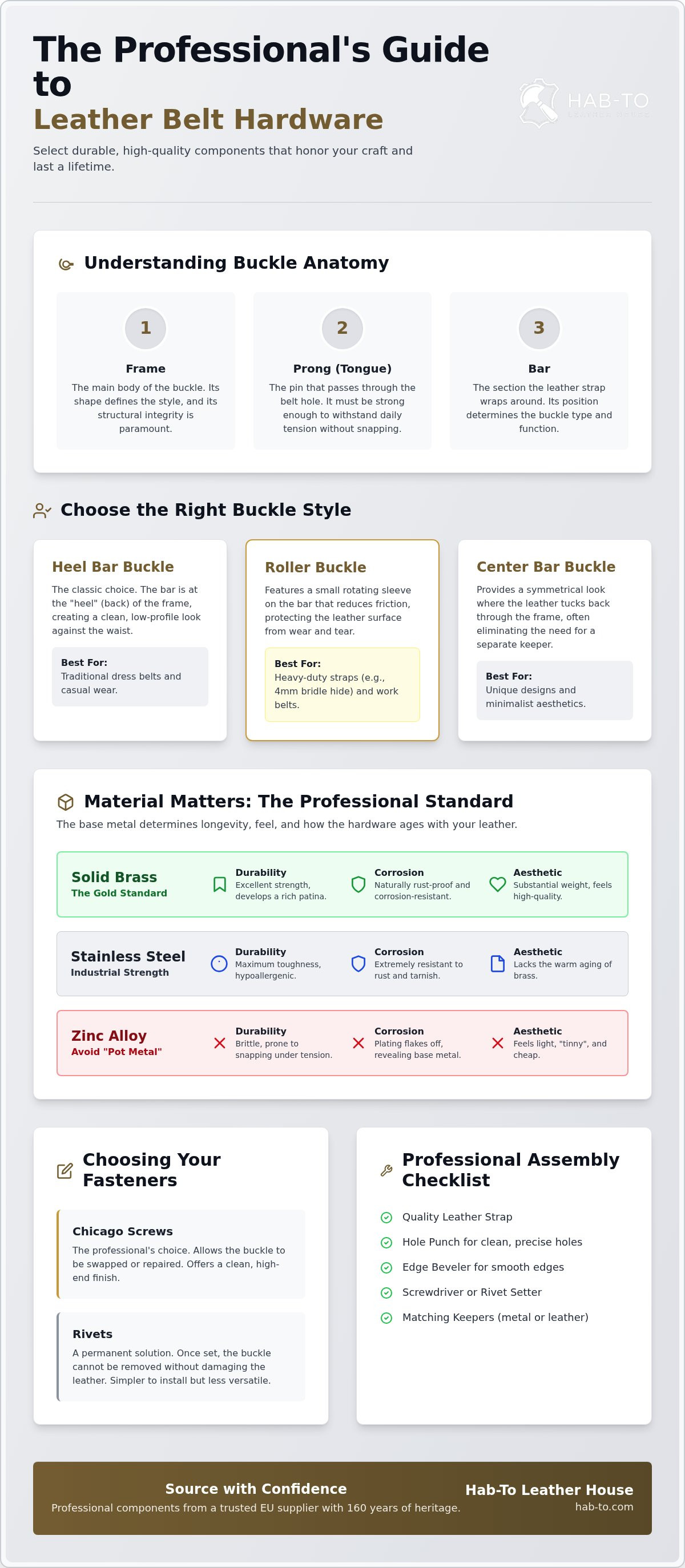
A belt isn't just a strip of leather; it's a mechanical system. If you choose the wrong leather belt hardware, the whole assembly fails. Professional hardware is built from solid materials, unlike the "pot metal" or zinc alloys found in fast fashion. These cheap alternatives are often die-cast from brittle scrap, leading to buckles that snap under tension or finishes that flake off within months. When you look at the Anatomy of a Belt Buckle, you see three critical parts: the frame, the prong (or tongue), and the bar. Each must be engineered to withstand daily stress.
I've seen too many makers spend hours on a beautiful piece of Badalassi Pueblo leather only to ruin it with a buckle that feels like a toy. At Hab-To, we focus on components that match the 160-year tradition of our house. This means sourcing hardware that has weight, clarity in its finish, and structural integrity. Whether you are building a rugged work belt or a refined dress piece, the "anatomy" remains the same, but the functional choices you make will define the lifespan of the finished product.
The Role of the Buckle: Form Meets Function
Heel bar buckles are the classic choice for traditional dress and casual belts. The bar is at the very back of the frame, allowing the leather to wrap around it cleanly. This creates a low profile against the waist. If you're working with heavy leather for belts, like a 4mm bridle hide, I recommend a roller buckle. The small rotating sleeve on the frame reduces friction as the strap is pulled through. This prevents the "chewing" effect on the leather surface over time. For those looking for something unique, center bar buckles provide a symmetrical look and don't require a separate keeper, as the leather tucks back through the frame itself.
Fasteners and Keepers: The Unsung Heroes
Keepers and fasteners are the parts people forget until they fail. A keeper holds the "tail" of the belt in place. You can use a matching metal loop from our hardware collection or craft one from the same leather as the strap. For the connection, I always suggest Chicago screws for high-end work. They're reliable. They're professional. Most importantly, they allow the wearer to swap buckles or make repairs. Rivets are permanent; if you use them, you're committing to that buckle forever. Always match your fastener finish to your buckle. If you've chosen an Old Gold buckle, don't settle for standard brass screws. The tones won't align, and the lack of cohesion will be obvious to any connoisseur.
Material Matters: Why Solid Brass is the Gold Standard
Your choice of base metal determines if a belt lasts for years or just months. While mass-market brands often use zinc alloy, professional leather belt hardware relies on solid brass for a reason. Solid brass provides a weight and density that zinc simply cannot match. It's a material that feels substantial in the hand. As we move through 2026, the demand for authentic materials is rising, with the global brass market projected to grow at a CAGR of 10.26% through 2034. This growth reflects a shift back to quality over disposable components.
Comparing Base Metals: Brass vs. Zinc vs. Steel
- Solid Brass: This is the gold standard. It's naturally corrosion-resistant and won't rust. Because it's a non-ferrous metal, it's perfect for items that might get damp.
- Stainless Steel: If you need maximum industrial strength, stainless steel is the choice. It's hypoallergenic and incredibly tough, though it lacks the warm aging properties of brass.
- Zinc Alloy: Often called "pot metal", this is what you want to avoid. It's brittle. Under the tension of a thick 4mm strap, a zinc buckle prong can snap without warning.
I always tell my students in our masterclasses that you can't fake the "feel" of quality. Zinc is light and "tinny". Brass has a resonant ring when tapped. If you are using premium Pueblo leather, you need a metal that shares its soul.
Understanding Hardware Finishes and Coatings
High-quality leather belt hardware isn't just about the base metal; it's about how the finish is applied. While cheap plating wears off to reveal a greyish metal underneath, professional finishes like Nickel, Gun Metal, and Old Gold are designed for longevity. For the most durable colors, we look for Physical Vapor Deposition (PVD) coatings. This process bonds the finish to the metal at a molecular level. It won't flake or peel after a few months of use.
The "Old Gold" finish is a favorite for heritage projects. It uses specific antiquing techniques to give the buckle a lived-in look from day one. Over time, as you wear the belt, the high points of the hardware will polish naturally while the recessed areas stay dark. This creates a unique patina that mirrors the way Maryam Vaccheta leather deepens in color. You don't need to over-polish it. Let the environment do the work. If you're looking to experiment with different finishes, checking out our leather bundles can help you find the right pairing for your next project.
Matching Hardware to Your Leather Choice
Sizing is your next priority. The internal width of your buckle must match your strap width exactly. If your buckle is 40mm, your strap should be 39mm or 40mm. A gap of even 2mm makes the belt feel flimsy and poorly constructed. When you're sourcing leather belt hardware, check the specifications carefully to avoid that amateur look. I've seen many makers struggle because they didn't account for the slight thickness of the leather wrapping around the bar. Always test your turnback to ensure the buckle moves freely but stays centered.
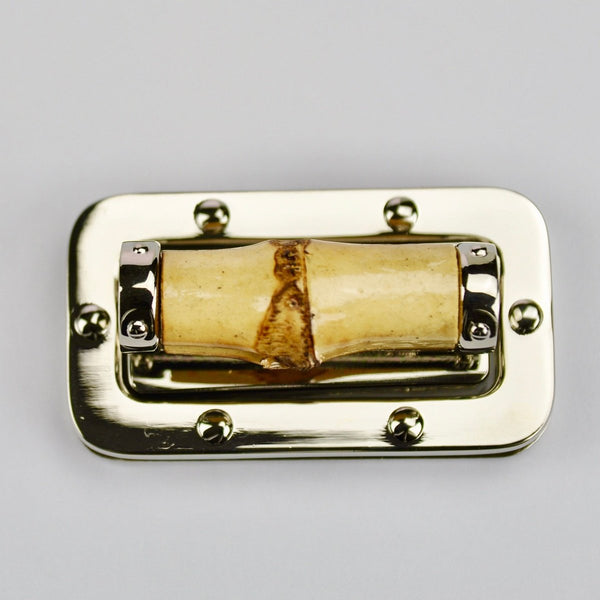
Rugged, stone-ground surfaces like Badalassi Pueblo leather pair perfectly with matte or brushed finishes. This maintains a rustic, artisanal feel that matches the leather's character. Conversely, the glass-like finish of Shell Cordovan requires high-polish silver or gold to match its elegance. If you want to break away from tradition, the Hab-To Bamboo collection offers organic, unique designs that turn the buckle into a focal point. These pieces work exceptionally well with smooth leathers like Maryam Vaccheta, where the hardware can truly shine against a clean surface.
Technical Pairing: Leather Thickness and Screw Length
Measuring your stack height is critical when choosing Chicago screws. This is the total thickness of the leather layers where the buckle attaches. If your leather is too thin, the screw will bottom out and leave the buckle rattling. For thinner hides like Virgilio Vaccheta leather (1.4mm), you'll need to use a filler or Texon reinforcement. This adds the necessary bulk and prevents the holes from elongating under tension. It's these small technical details that separate a hobbyist project from a professional-grade accessory. Matching your screw length to your leather stack ensures a flush, secure fit that won't loosen over time.
Professional Installation: Tools and Techniques
Installing your leather belt hardware is the final bridge between a raw strap and a finished heirloom. Precision matters here. A hole punched slightly off-center will make the entire belt look crooked when worn. I always start with a clear layout. Mark your centers. Measure twice. Use a scratch awl to leave a tiny point before you ever touch a punch to the hide. This ensures your buckle sits perfectly flush against the leather turnback. If you rush this stage, you risk marring the finish of a premium buckle or, worse, ruining a piece of expensive Italian leather.
What you will need
- Professional Drive Punches for clean, circular holes
- Edge Bevelers to round off the strap edges before burnishing
- A manual hand press for setting eyelets or snaps with consistent pressure
- Ecostick 1804 leather glue to secure screw threads
- Tokonole for burnishing the internal fold edges
- A high-quality flat-head screwdriver that fits your Chicago screws perfectly
- Stitching Bundles if you prefer a traditional sewn-in buckle
The Essential Tool Kit for Hardware
I prefer drive punches over rotary punches for belt work. Drive punches allow you to strike with a mallet, providing a cleaner cut through thick 4mm leather without the "pinching" effect of pliers. For the slot where the buckle tongue sits, use an oval punch or two circular holes joined by a straight cut. If you are doing production runs or want the most professional finish for eyelets, a manual hand press is a game changer. It applies vertical pressure, so you don't accidentally slip and scratch your leather belt hardware with a hammer. Finally, invest in a screwdriver that actually fits. A loose tip will slip and burr the edge of your Chicago screws, ruining the aesthetic of your hardware.
Mike’s Tips for a Flawless Finish
One of the biggest mistakes I see is "buckle bulge." This happens when the leather is too thick to fold cleanly around the buckle bar. My advice is simple: skive the flesh side of the leather where it folds. Aim to reduce the thickness by about 50% in that specific area. This allows the buckle to sit lower and look integrated rather than tacked on. Before you close the fold, apply Tokonole to the internal edges. These "hidden" edges are often neglected, but a true craftsman finishes every surface. Finally, apply a tiny drop of Ecostick 1804 to the threads of your Chicago screws. It acts like a thread-locker. It prevents the screws from backing out over time but still allows for future repairs if needed.
Sourcing Premium Hardware with Hab-To Leather House
Hab-To Leather House isn't just another supplier. We carry 160 years of family heritage in every buckle and rivet we ship. When you source your leather belt hardware from us, you're tapping into a legacy that began in 1857. This isn't mass-produced "mystery metal." It's the same caliber of hardware used by the most prestigious European fashion houses. I've spent over 25 years in this trade. I've seen how the right component can elevate a simple strap into a luxury item that lasts for generations.
The biggest barrier for small-scale artisans is often the "Minimum Order Quantity" or MOQ. Most wholesalers won't talk to you unless you're buying fifty or a hundred units. We don't believe in that. Our "No MOQ" policy empowers the independent maker to access professional-grade materials for a single custom project. Whether you need one Old Gold buckle or a full set of Nickel fasteners, we treat your order with the same respect as a large-scale production run. It's about supporting the craft at every level.
Our Amsterdam warehouse serves as a global hub. We understand that your customers don't want to wait. That's why we offer 24 to 48-hour delivery on most orders. You get the speed of a local shop with the inventory of a world-class wholesaler. If you're unsure about which finish matches your leather, you can book Free video consultations with Mike. I'll personally help you navigate our collections to find the perfect technical and aesthetic match for your specific hide.
Wholesale Quality for Every Maker
Quality should be accessible. We've curated Starter Bundles that take the guesswork out of sourcing. These kits include premium vegetable-tanned leather and matching leather belt hardware, ensuring your first belt is built to a professional standard. Our commitment to sustainability is simple. We only sell hardware that doesn't need to be replaced. By choosing solid brass and high-end finishes, you're creating a product that resists the "throwaway" culture of modern fashion.
Continuing Your Education
We want you to succeed. If you want to refine your techniques, join a Hab-To Masterclass to learn the nuances of professional assembly. I also share regular hardware installation demos on . Seeing the process in action helps prevent common mistakes like stripping screws or marring finishes. To understand the deep roots behind our mission, I invite you to read our Hab-To Heritage story. It's a testament to our dedication to the craft and the community we serve.
Build Belts That Outlast the Trends
Choosing the right leather belt hardware is about more than aesthetics; it's about engineering a product that resists the 2026 culture of disposability. By combining solid brass components with the technical skiving and reinforcement techniques we've discussed, you create an accessory that evolves with the wearer. This commitment to quality ensures that your craftsmanship remains functional and beautiful for decades to come.
Your dedication to these details is what separates a simple strap from a lifelong companion. I'm excited to see how you use these premium materials to bring your vision to life. Every buckle you set and every edge you burnish is a testament to the enduring art of leathercraft. Stay true to the materials, and the results will speak for themselves.
Featured Materials for Your Next Belt
Frequently Asked Questions
What is the best material for belt buckles?
Solid brass is the gold standard for weight and durability. It won't snap like the zinc alloys found in mass-produced items. When you're selecting from our hardware collection, you'll feel the difference immediately. Brass handles the high tension of a daily-worn belt while developing a rich, unique patina. It’s the only choice for makers who want their leather belt hardware to stand up to the rigorous 2026 quality standards.
How do I choose the right size buckle for my belt strap?
You must match the internal width of the buckle to the width of your strap. If you're using a 40mm strap from our leather for belts selection, you need a 40mm buckle. A loose fit looks amateur and causes the leather to wear unevenly. Measuring the "inside" of the buckle frame is the only way to ensure a professional, secure fit that doesn't rattle or sag during wear.
Can I use Chicago screws instead of stitching for a belt?
Yes, Chicago screws are an excellent alternative to stitching. They provide a mechanical bond that is both secure and repairable. Many artisans use them so customers can swap buckles later. I always suggest using Ecostick 1804 on the threads to keep them from backing out. Whether you choose screws or a stitching bundle, the goal is a connection that won't fail under daily pressure.
Will brass belt hardware turn my leather green?
Solid brass can react with the tannins in hides like Maryam Vaccheta leather, creating a green residue called verdigris. This usually happens in humid environments. To prevent this, ensure your leather is well-conditioned and choose hardware with high-quality PVD coatings. These modern finishes act as a barrier. They protect both the metal and the leather from reacting, keeping your leather belt hardware looking clean and professional for years.
What is the difference between solid brass and brass-plated hardware?
Solid brass is consistent throughout the entire piece, while plated hardware uses a cheaper core metal like zinc. If you scratch a plated buckle, the silver-grey core will show through. Solid brass simply shows more brass. For eco-conscious projects using Olivenleder, solid metals are always preferred. They don't flake or peel, ensuring the hardware’s lifespan matches the incredible durability of the vegetable-tanned hides you've chosen.
Do I need special tools to install belt hardware?
You'll need a few precision items from our leatherworking tools range. A drive punch is necessary for clean holes, and a skiving knife is vital for thinning the leather fold. Without these, the buckle will sit awkwardly and add unnecessary bulk to the waistline. Using a proper screwdriver also prevents you from burring the heads of your fasteners, which is a common mistake that ruins the look of high-end projects.
Where can I buy leather belt hardware without a minimum order?
You can find professional-grade components with no minimum order quantity right here at Hab-To Leather House. We want to support independent makers, so we offer everything from single buckles to complete starter bundles. You don't have to buy fifty units just to get European quality. This "No MOQ" approach lets you experiment with different finishes like Old Gold or Gun Metal without a massive upfront investment in inventory.
How do I prevent my belt buckle from scratching over time?
While all metals eventually show wear, choosing finishes from our premium hardware range helps. PVD coatings are much harder than traditional plating and resist surface scratches during daily use. I actually think a few light marks add character. They tell the story of the belt’s journey. If you prefer a pristine look, avoid rough contact and store your belts hanging rather than coiled tightly against other metal objects.
Disclaimer
All our blog articles are made for information purposes only we dont take responsability for any content from third parties.