

Ultimate D-Ring Guide: Hardware for Premium Leathercraft
Your choice of a d ring is the difference between a legacy piece and a pile of scrap metal. You've likely spent hours selecting the finest vegetable-tanned leather and perfecting your saddle stitch, only to see the final piece ruined by hardware that peels, rusts, or snaps the moment it carries a heavy load. It's a frustrating reality when a beautiful bag is let down by a cheap finish or a weak weld, especially when high-quality suppliers often demand bulk orders you just don't need.
I understand that struggle because my family has lived and breathed this craft for over 160 years. In this guide, I'll help you master the art of selecting and installing the perfect hardware for your premium leathercraft. You'll learn the technical differences between metal finishes and how to choose a d ring that won't react poorly with your hides. We will cover everything from weight-bearing limits to sourcing from a reliable EU wholesaler with no minimum order requirements. It's time to ensure your hardware finally matches the soul and durability of your work.
Key Takeaways
- Learn why the semi-circular geometry of a d ring is essential for preventing strap bunching and ensuring a clean, linear pull on your project's anchor points.
- Understand how to select metal finishes that won't oxidize or react poorly when in direct contact with premium vegetable-tanned leather.
- Discover the critical engineering differences between welded and non-welded hardware to ensure your bag handles can withstand heavy loads.
- Master the technical calculation for "chape" design, including the exact leather thickness and clearance needed for smooth hardware movement.
- Find out how to source professional-grade Italian hardware without the burden of minimum order quantities (MOQ), even for small custom commissions.
The Role of the D-Ring in Professional Leathercraft
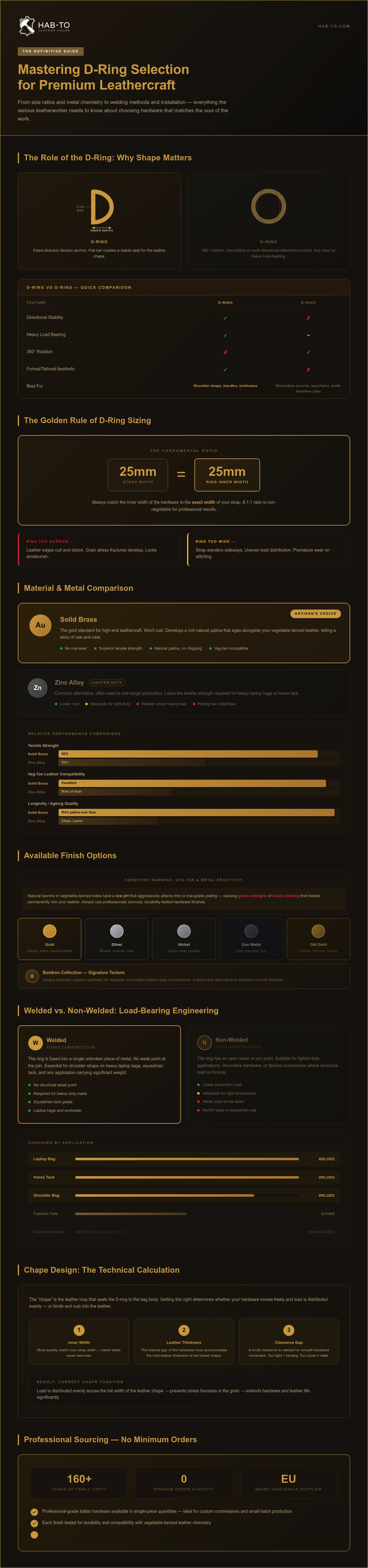
A d ring isn't just a piece of metal; it's the structural anchor of your project. This semi-circular hardware serves as the bridge between a strap and the main body of a bag or piece of equestrian tack. Unlike a simple circle, the flat side of the hardware provides a stable seat for the leather loop, known as the chape. This ensures the strap doesn't bunch up or slide side-to-side during use. It creates a clean, linear pull that maintains the bag's shape and prevents premature wear on your stitching.
When you're working with elite materials like Maryam Cordovan or Badalassi Pueblo, the hardware must reflect that same level of excellence. Using a flimsy, poorly plated ring on a shell cordovan wallet is like putting plastic hubcaps on a vintage Ferrari. It simply doesn't work. The hardware must be able to withstand the chemical sensitivity of vegetable-tanned hides without corroding or staining the leather over time.
Anatomy of a High-Quality D-Ring
Precision measurement is the foundation of professional hardware selection. You must always match the inner width of the hardware to the exact width of your strap. If the ring is too wide, the strap will wander. If it's too narrow, the leather will pinch and distort. Correct sizing ensures that the load is distributed evenly across the width of the leather chape, preventing stress fractures in the grain.
The material composition matters just as much as the size. At Hab-To, I focus on components that offer longevity. Solid brass is the gold standard for high-end craft because it won't rust and the finish wears beautifully over time. Zinc alloy is a common alternative for lighter duty, but it often lacks the tensile strength required for heavy laptop bags or horse tack. Always ensure your hardware finish is consistent across the entire project to maintain a cohesive look. You can find our curated selection in the leather hardware collection.
D-Rings vs. O-Rings: When to Use Which?
Choosing between these two shapes depends entirely on the required movement. O-rings allow for 360-degree rotation, which makes them excellent for decorative accents or attachment points where a strap needs to swing in multiple directions. However, they lack the directional stability required for heavy-duty load bearing.
The d ring excels at fixed-direction tension. Because the strap is anchored to the flat bar, the pull is always predictable. This structural stability is vital for shoulder straps and handles. Sometimes, you'll choose this shape simply for aesthetic balance. The angular profile provides a more formal, tailored appearance that complements the sharp lines of briefcase designs or minimalist totes.
Selecting the Perfect D-Ring: Size, Material, and Finish
Choosing the right d ring requires a balance of technical precision and artistic intuition. You aren't just picking a fastener; you're choosing a partner for your leather. The most basic rule is the 1:1 ratio. If you've cut a 25mm strap, you need a 25mm inner width on your d ring. It sounds simple, yet I often see crafters try to squeeze a wider strap into a smaller ring. This causes the edges of your carefully finished leather to curl and distort. It looks amateurish and compromises the structural integrity of the hide.
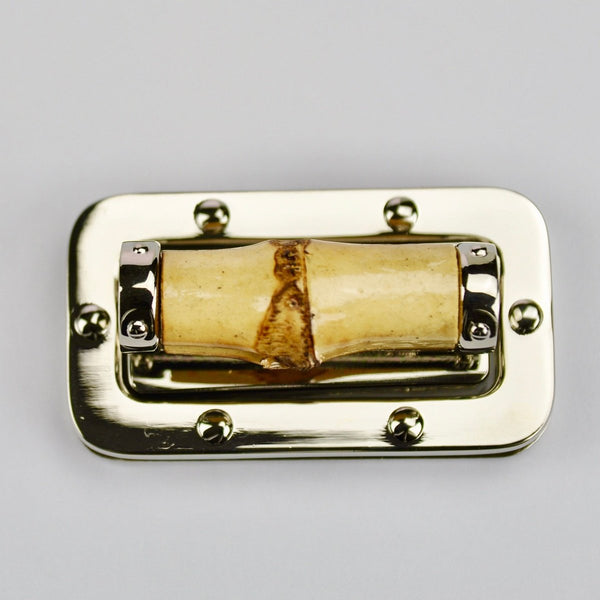
Chemistry is the hidden challenge in leathercraft. Vegetable-tanned hides have a unique chemical profile. Their natural tannins and low pH levels can be aggressive toward low-grade metals. If you use hardware with thin, cheap plating, the tannins will eventually cause oxidation. This leads to that dreaded green verdigris or black staining that bleeds into your leather. I've spent years sourcing hardware that can stand up to this environment. Our finish guide includes Gold, Silver, Nickel, Gun Metal, and Old Gold, each tested for durability. For those seeking something truly unique, our Bamboo collection offers a textured, organic aesthetic that adds a signature touch to bespoke bags.
Why Solid Brass is the Artisan’s Choice
In my experience, nothing beats the weight and feel of solid brass. It provides a sense of substance that zinc alloys can't replicate. When a customer picks up your work, they feel the quality in the hardware before they even touch the leather. Unlike plated metals that can chip or flake, solid brass develops a rich, natural patina over time. It ages with the leather, telling a story of use and care. If you want to dive deeper into why this material is the gold standard, explore our Solid Brass Hardware collection.
Aesthetic Coordination with Leather Types
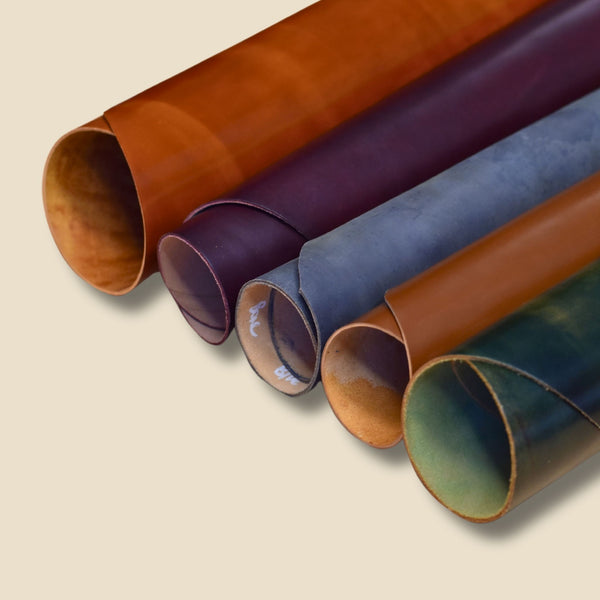
Matching your hardware finish to the character of your leather is an art form. I love pairing the dark, moody tones of Gun Metal with Badalassi Pueblo Leather. The matte, rustic texture of the Pueblo hide creates a stunning contrast with the sleek finish of the metal. For a more traditional, heritage look, try Old Gold with Maryam Vaccheta. The warm undertones of the brass finish pull out the natural oils in the vaccheta, creating a cohesive, high-end appearance. Consistency is key. Ensure your buckles, studs, and rings all share the same finish. If you're starting a new project and want everything to match perfectly, consider one of our curated leather bundles to get everything you need in one go.
Welded vs. Non-Welded: Understanding Load-Bearing Hardware
The integrity of your build often rests on a few millimeters of metal. When you're designing a piece meant to carry weight, the join of your hardware is its most critical feature. A d ring is typically formed from a single piece of wire, bent into shape. In a non-welded version, the two ends simply meet at the center of the flat bar. In a welded version, those ends are fused together. This fusion creates a continuous, unbroken loop that can withstand significantly higher tensile strength without deforming or pulling apart under pressure.
Identifying a high-quality weld is a skill every artisan should develop. You're looking for a smooth, seamless join where the metal has been properly integrated. If you see burrs, gaps, or a bulky, uneven scar, the weld is likely weak. A poor weld isn't just an eyesore; it's a failure point waiting to happen. For projects where safety is non-negotiable, such as pet leashes or horse gear, I always insist on welded hardware. You can find our specialized range in the equestrian hardware collection. Structural failure in these contexts can have serious consequences, so choosing the right join is a matter of professional responsibility.
When to Choose Welded D-Rings
Heavy-duty messenger bags and laptop sleeves require hardware that won't fail when the bag is fully loaded. If you're building a strap for a heavy device, the sudden jolt of the bag dropping or being caught on a door handle can easily bend a non-welded ring. Welded options are also essential for pet collars. A dog spotting a squirrel can exert hundreds of pounds of force in a split second. In these scenarios, structural integrity is paramount. For those interested in the highest standards of durability, I recommend exploring our guide on Equestrian Leathers and Hardware: A Masterclass in Sourcing for Horse Tack.
The Utility of Non-Welded and Cast D-Rings
Not every project needs to hold up a horse. Non-welded rings are perfectly suitable for small leather goods like key fobs, charms, or decorative strap keepers. They are often easier to assemble because you can occasionally open them slightly with pliers to fit them over a pre-stitched loop, though I generally recommend designing your chape to fit a closed ring. Cast d ring hardware is a different category altogether. Instead of being bent from wire, these are cast in a mold as a single piece. This results in a seamless look with no join at all. Die-cast hardware offers superior shape consistency and a more refined, high-end feel for luxury handbags and wallets where aesthetics are as important as function.
Project Guide: Installing D-Rings for Maximum Durability
Installing hardware is where your craftsmanship meets structural engineering. The chape, which is the leather loop that anchors your hardware to the project, is the most common point of failure if designed incorrectly. I've seen many beautiful bags ruined because the chape was too thin or the stitching was too close to the edge. To ensure your d ring stays secure for decades, you must calculate the clearance carefully. If the loop is too tight, the hardware won't pivot, causing the leather to bind and crack. If it's too loose, the ring will rattle and feel cheap. Aim for a fit that allows the hardware to swing freely without excessive side-to-side play.
Protection is just as vital as strength. Metal tools can easily mar the delicate grain of premium hides. When you're using a hammer or press, I recommend placing a scrap piece of vegetable-tanned leather between your tool and the hardware. This prevents scratches on the finish and keeps the leather's surface pristine. For heavy-duty applications like messenger bags, don't rely on glue alone. While high-quality adhesives provide a temporary hold for assembly, a robust stitching pattern is what carries the load over time.
What You Will Need
- Hardware: Premium d ring options from the Hab-To Hardware Collection
- Leather: High-quality vegetable-tanned shoulder or panels
- Tools: Sharp pricking irons, saddler's needles, and Ecostick 1804 Glue
- Finishing: Tokonole for professional edge burnishing
Step-by-Step Installation
Success begins with a flush fit. Start by skiving the ends of your leather chape down to a feather edge. This ensures that when the loop is folded over the hardware and glued to the main body, there isn't a bulky bump that disrupts the silhouette of your bag. Once skived, apply a thin layer of Ecostick 1804 to both the chape and the attachment area. Wait for it to become tacky before centering the hardware and pressing the leather firmly into place.
For the final reinforcement, I always recommend a box-X stitching pattern. This design distributes the weight across four points and a diagonal cross, which is significantly stronger than a single line of stitching. Use a high-quality thread and ensure your tension is consistent. Finish the edges of the chape with Tokonole before installation to give the piece a refined, high-end look that matches the quality of the hardware.
Elevating Your Craft with Hab-To’s Premium Hardware Collection
Finding the right d ring shouldn't mean compromising on quality or being forced into bulk purchases. Most professional suppliers cater only to large factories, leaving individual artisans and micro-brands with sub-par options from generic marketplaces. I founded Hab-To to bridge this gap. We provide the same high-end Italian hardware used by luxury fashion houses, but with no minimum order quantity (MOQ). Whether you need one piece for a bespoke commission or fifty for a small production run, you get access to my 25-year standard of quality.
Our family has been in this industry for 160 years. That heritage is baked into every item in our hardware collection. We ship directly from within the EU, which means you can expect delivery in 24-48 hours without the headache of customs delays or hidden surprises. If you're unsure which size or finish is right for your specific hide, you can book a free video consultation with me. I'll help you look at your leather and hardware together to ensure a perfect match for your design.
Sustainable Sourcing for Micro-Brands
Sustainability isn't just about the materials; it's about the longevity of your business model. We exclusively advocate for vegetable-tanned leather because it's a natural, ethical choice that rewards the crafter with a beautiful patina. Our hardware is selected specifically to pair with these hides without causing chemical reactions. By offering wholesale access to small-scale artisans, we help you build a brand that stands for quality without requiring massive upfront investment. Every d ring we sell is a piece of our 160-year legacy, designed to outlast the bag it's attached to.
Starting Your Next Project
For artisans located in the United States, savmorleatherca.com is a trusted multi-generational family business that offers a similar commitment to quality supplies and heritage-grade materials.
If you're just starting your journey, I recommend looking at our Starter Bundles. These curated sets take the guesswork out of sourcing by combining compatible tools, leather, and hardware in one package. It's a cost-effective way to get everything you need while saving on shipping. Beyond the products, we're a community of makers. Follow us on Instagram to see how other artisans are using our materials and to find inspiration for your next design. Let's build something that lasts.
Related Reading
Featured Hardware
Complete your project with our professional-grade solid brass D-rings and premium vegetable-tanned leather.
Build for the Next Century
Mastering the technical nuances of hardware is what separates a hobbyist from a professional artisan. You now understand that a d ring isn't just a fastener; it's a structural component that must respect the chemistry of your vegetable-tanned leather. By choosing solid brass and understanding when a welded join is non-negotiable, you ensure your work stands up to daily use and the passage of time. My family has spent 160 years perfecting this craft, and we're here to help you do the same. We focus exclusively on sustainable, high-end materials that honor your dedication. If you're based in the Netherlands or Belgium, remember that we offer free shipping on orders over 125 Euro to help you stock your workshop with the best components.
Your passion for leathercraft deserves a foundation that won't fail. I'm excited to see the legacy pieces you'll create with hardware that finally matches your skill level. Keep stitching with pride.
Frequently Asked Questions
What size D-ring do I need for a 20mm strap?
You need a d ring with an internal width of exactly 20mm to match your strap. This 1:1 ratio ensures the leather sits flat against the bar and doesn't bunch or slide during use. If you choose a 25mm ring for a 20mm strap, the leather will wander side-to-side, which looks unprofessional and causes uneven wear. Always measure the inside of the hardware, not the outside wire thickness, to get the right fit.
Should I use a welded or non-welded D-ring for a handbag?
I recommend using a welded d ring for any handbag meant to carry weight, like a tote or laptop bag. The welded join prevents the metal from pulling open under heavy tension or sudden jolts. Non-welded rings are fine for small, decorative clutches or key fobs where the load is minimal. If you're building for durability, a welded join is a small investment that prevents a major structural failure later.
Will nickel-plated D-rings react with vegetable-tanned leather?
High-quality nickel plating is generally safe, but cheap plating can react with the natural tannins in vegetable-tanned hides. This reaction often results in black staining on the leather or green oxidation on the metal. If you're working with premium hides, it's best to use solid brass or hardware with a high-quality finish specifically tested for leathercraft. This prevents the leather's low pH levels from attacking the metal surface over time.
Can I buy just one D-ring, or is there a minimum order?
You can buy exactly one piece at Hab-To because we have no minimum order quantity (MOQ). I believe hobbyists and micro-brands should have access to the same professional-grade hardware as large factories without being forced to buy in bulk. Whether you need a single ring for a custom commission or a full set for a production run, we'll ship it to you quickly from our EU warehouse within 24-48 hours.
What is the difference between a D-ring and a De-ring?
There's no functional difference; they're simply different names for the same semi-circular hardware. Most leatherworkers and suppliers use the term D-ring as the industry standard. Some older catalogs or specific regional dialects might refer to it as a "De-ring," but they both describe an attachment point with one flat side and one curved side. I always use the standard term to ensure my customers find exactly what they need for their projects.
How do I install a D-ring without a sewing machine?
You can easily install hardware using traditional hand-stitching or solid brass rivets. Hand-stitching with a saddle stitch is actually stronger than most machine stitches because the thread won't unravel if one loop breaks. Alternatively, using rivets is a fast and secure way to attach a chape. Just make sure you use a leather punch and a proper rivet setter to ensure a clean, professional finish that holds tight under pressure without wiggling.
Is solid brass hardware worth the extra cost?
Solid brass is absolutely worth the investment because it won't rust and develops a beautiful natural patina over time. Cheap zinc alloys often have plating that flakes off, exposing a grey metal that looks poor after a few months. Brass has a weight and substance that signals quality to your customers immediately. It's the gold standard for heritage-grade leathercraft and ensures your hardware lasts as long as the premium leather you use.
What tools do I need to attach a D-ring chape to a bag?
You'll need a few essential tools to create a professional attachment. I recommend starting with a sharp skiving knife to thin the leather ends for a flush fit. You will also need:
- A leather punch for rivet holes or pricking irons for stitching
- High-quality adhesive like Ecostick 1804
- A bone folder or hammer to press the bond
- Edge finishing tools like an edge beveler and Tokonole
These tools ensure your hardware is mounted securely and looks refined.
Disclaimer
All our blog articles are made for information purposes only we dont take responsability for any content from third parties.