Comparing Italian vs Dutch Leather: An Artisan's Guide to Quality Hides
The most famous leather in the world might not be the right choice for your next project. It's a bold claim. After 160 years of my family working with these hides, I've seen how easily artisans get lost in the romance of a 'Made in Italy' stamp. When you're comparing Italian vs Dutch leather, you aren't just looking at two different origins. You're making a choice between world-class raw material excellence and unmatched tanning mastery.
I understand the hesitation. You've likely spent hours wondering if an expensive vegetable-tanned shoulder is worth the premium or if it's just marketing jargon. You need materials that respect the environment and your craft, but you shouldn't have to buy a massive hide for a small project. This guide will cut through the noise. I'll show you why Dutch cows provide the cleanest canvases in the world and how legendary Italian tanneries transform them into art. We'll build a framework so you can choose the right material for everything from watch straps to heavy belts with total confidence.
Key Takeaways
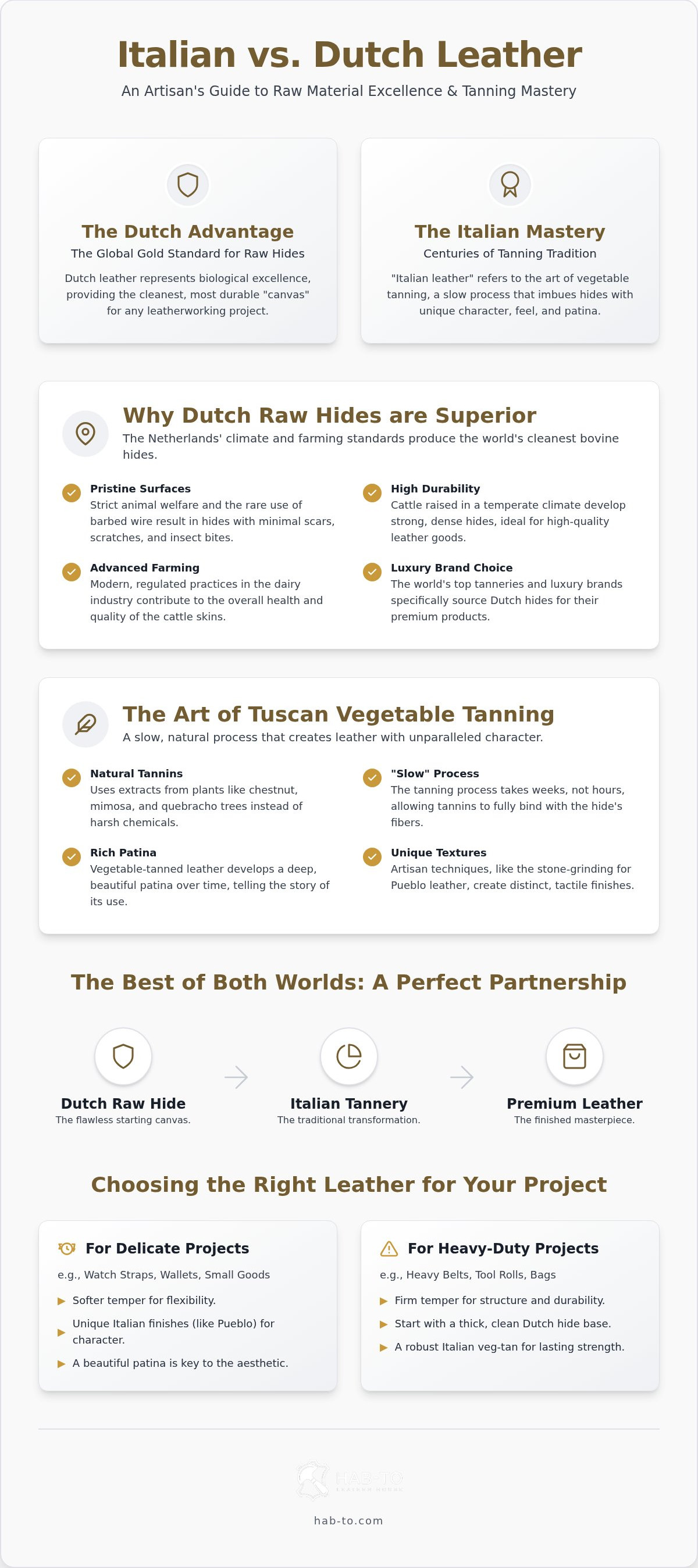
- Learn why "Italian" usually refers to the centuries-old tanning process while "Dutch" represents the global gold standard for raw material quality.
- Understand the science of traditional vegetable tanning and how natural tannins like chestnut and mimosa create a deep, authentic patina.
- When comparing Italian vs Dutch leather, discover how the Netherlands' climate and farming standards produce the cleanest and most durable bovine hides available.
- Follow our expert framework to match specific leather tempers and characteristics to your project, from delicate watch straps to heavy-duty belts.
- Find out how to source premium vegetable-tanned panels with no minimum order quantity, making world-class materials accessible for small-scale artisan work.
Italian vs Dutch Leather: A Tale of Two Heritages
Europe's leather map has two clear capitals. Italy is the world's master of the finish, while the Netherlands is the undisputed king of the raw material. My family has spent over 160 years evaluating hides from both regions. We've learned that the label 'Italian leather' often refers to a specific artisan heritage rather than where the cow actually lived. Conversely, 'Dutch leather' is a mark of biological excellence. The process of tanning is what bridges these two worlds. I'll help you navigate the nuances of comparing Italian vs Dutch leather so you can pick the right hide for your specific project.
I chose Amsterdam for Hab-To because it's the heart of the raw hide trade. Being here allows me to keep a close eye on the quality of the skins before they ever reach the vats in Tuscany. It's a unique vantage point. I can see the raw potential of a Dutch hide and know exactly how it'll react to a Tuscan recipe. When you start comparing Italian vs Dutch leather, you're really looking at the two essential ingredients of a masterpiece.
To better understand how the industry really works, watch this helpful video:
What is Italian Leather, Really?
When we talk about Italian leather, we're usually talking about the tanneries of the Tuscan vegetable-tanning consortium. This group, known as Pelle Vegetale, protects a tradition that dates back centuries. These artisans don't use harsh chemicals. Instead, they rely on natural plant extracts like mimosa, chestnut, and quebracho. They prioritize 'process over product' every time. This focus on tradition creates unique textures like Pueblo from Conceria Carlo Badalassi. It starts with a rustic, stone-ground feel but develops a stunning, deep patina. You don't just buy Italian leather. You start a relationship with a material that's designed to age with grace and character.
What is Dutch Leather, Really?
The Netherlands is a global powerhouse for high-quality bovine hides. Our temperate climate and advanced farming practices create the 'cleanest' skins in the world. Dutch cattle are raised for the dairy industry under strict welfare regulations. Farmers here rarely use barbed wire. This results in large hides that are free from the scars, scratches, and insect bites found in other regions. It's why the world's top luxury brands often source their raw material here. In fact, many legendary Italian tanneries buy Dutch 'crust' hides as their base. They know that a tanning recipe is only as good as the hide it's applied to. When you choose Dutch leather, you're choosing a flawless, durable canvas that can handle any craft.
The Italian Mastery: Why Tanning Tradition Matters
I've spent years walking the floors of tanneries in Santa Croce sull'Arno. The smell is the first thing that hits you. It isn't the sharp, chemical sting of a modern chrome factory. It's earthy, sweet, and deep. This is the result of the "slow" tanning process. While modern industrial methods finish a hide in hours, the master tanners of Tuscany measure their work in weeks. When you're comparing Italian vs Dutch leather, you're looking at the difference between a raw canvas and a finished masterpiece. The Italians don't just process leather; they imbue it with a soul using recipes that have been passed down through generations.
The science behind this magic lies in vegetable tannins. Instead of heavy metals, these artisans use extracts from mimosa, chestnut, and quebracho trees. These natural polyphenols bind to the collagen fibers of the hide. This creates a material that's breathable, durable, and incredibly tactile. You can feel the "hand" of the leather. It has a distinctive "click" when you cut it. It tells you the fibers are dense and well-nourished. While we see plenty of Dutch innovation in sustainability through new materials, the Italian tradition remains the gold standard for those who value the heritage of true vegetable tanning.
The Artisan Tanneries of Tuscany
Specific tanneries have become legends for a reason. Conceria Carlo Badalassi is the secret behind the rustic, oil-rich Pueblo finish. They use a proprietary stone-grinding technique to create that famous "scuffed" look that smooths out into a rich glow. Then there's Conceria Maryam. They've mastered the incredibly difficult art of Shell Cordovan and horsehide. These tanneries maintain 100-year-old recipes because they know that shortcuts destroy the character of the hide. They use heavy oils and fats that penetrate deep into the fibers, ensuring the leather never feels dry or brittle.
Patina: The Italian Signature
The biggest reason artisans choose Italian veg-tan is the patina. Because the leather is packed with natural oils and tannins, it reacts to its environment. It darkens. It develops a lustrous sheen. It tells the story of how it was used. Patina is the chemical reaction between tannins, sunlight, and the oils from your hands. This high oil content also gives the leather "self-healing" properties. A light scratch can often be buffed out simply by rubbing it with your thumb, as the internal oils migrate to fill the gap. If you want to experience this transformation yourself, you might start with one of our curated leather bundles to test different finishes.
The Dutch Advantage: Superior Raw Hides and Sustainability
The Netherlands isn't just about tulips and canals. It's the source of the finest raw bovine skins in Europe. Being based in Amsterdam, I see the raw material before it's even considered for a tanning vat. When comparing Italian vs Dutch leather, you have to look at the animal's life. Our temperate climate is perfect for cattle. It's never too hot, which means the cows don't suffer from heat stress. There are fewer biting insects here than in southern Europe or the Americas. This results in a hide that's remarkably clean and uniform. It's a simple truth: you can't make world-class leather from a second-rate skin.
Size is another massive factor. Dutch cows, mostly from the dairy industry, are among the largest in the world. This means the hides are bigger and, more importantly, thicker. If you're making heavy-duty belts or large travel bags, you need that substance. We often talk about 'Crust' leather in the trade. This is the hide after it's been tanned but before the final oils and dyes are added. Dutch crust is the gold standard. It provides a bright, neutral blank canvas that allows artisan finishes to shine. Without this high-quality starting point, those famous Italian colors wouldn't look half as vibrant.
Clean Hides for Precision Crafting
In my experience, nothing frustrates a crafter more than finding a huge scar right in the middle of a panel. Dutch farming practices focus on animal welfare and efficiency. Farmers rarely use barbed wire. This means fewer scratches and surface defects. For you, this translates to less waste. You can cut your patterns closer together and use more of the hide. The grain density is also incredibly consistent across the entire surface. This structural integrity is exactly what allows for the production of specialized materials like translucent bovine leather. Only the clearest, most flawless hides can be processed this way without showing ugly blemishes.
Sustainability and the Circular Economy
I take sustainability seriously. The leather industry in the Netherlands acts as a vital recycler. We take a byproduct of the dairy industry and turn it into a material that lasts a lifetime. If we didn't tan these hides, they'd simply go to waste. Northern Europe also has some of the strictest environmental regulations on the planet. When you source Dutch hides, you're supporting a system that's moving toward chrome-free processing and total water purification. Comparing Italian vs Dutch leather also highlights a logistical win. Sourcing within Europe keeps the carbon footprint low. You aren't shipping hides across oceans. You're buying a local, regulated, and ethically managed material that respects the craft and the planet.
The Head-to-Head: Comparing Performance, Patina, and Projects
Comparing Italian vs Dutch leather isn't about picking a winner; it's about choosing the right tool for the job. While I've shared the heritage of Tuscany and the raw excellence of the Netherlands, seeing how they perform on your bench is where the truth lies. Italian vegetable-tanned hides are typically richer in oils, making them more pliable and responsive to burnishing. Dutch hides, however, provide a level of structural stability that is hard to beat. If your project needs to resist stretching over time, such as a heavy-duty harness or a load-bearing strap, the Dutch origin is often your best bet. If you want a material that moves with the user, go Italian.
Project Matchmaker: Italy vs Netherlands
For small goods like wallets and watch straps, the character of Shell Cordovan or Pueblo is unbeatable. These Italian finishes have a density that allows for incredibly fine, glass-like edges. The high oil content ensures the leather doesn't crack at the folds even after years of daily use. Conversely, for belts and heavy strapping, the thickness and consistency of Dutch bovine hides often win. You get a clean, long strip with no weak spots or thinning areas. For large totes, I often recommend a hybrid approach. Use a beautiful Italian veg-tan for the exterior to get that famous patina, but use a durable Dutch-sourced lining leather for the interior to provide structure without adding excessive weight.
What You Will Need to Work These Premium Hides
Working with premium hides requires premium chemistry and tools. You don't want to ruin a piece of Conceria Maryam Vacchetta with cheap, solvent-heavy glue or dull blades. Here is what I recommend keeping on your bench:
- Edge finishing: Tokonole is essential for burnishing dense veg-tan edges to a professional shine.
- Refining edges: High-quality edge bevelers are necessary to create the smooth, rounded profiles required for luxury goods.
- Assembly: I use Ecostick 1804 glue because it provides a permanent, water-based bond that matches the leather's longevity.
- Testing: Starting with a Starter Bundle is the best way to feel the difference between these leather origins for yourself.
My advice is simple. Splurge on Italian leather for the parts of the project that people will touch and see the most. Save by using Dutch raw hides or linings for structural components. You don't always need the most expensive hide; you just need the right hide. When comparing Italian vs Dutch leather, remember that the best artisans use both to their advantage. It's about knowing when to let the tanning tradition shine and when to rely on raw material strength.
Sourcing the Best of Both Worlds: The Hab-To Approach
I've spent my life surrounded by the smell of quality hides. My family's 160 year history in this trade taught me that you shouldn't have to be a massive factory to access the best materials in the world. At Hab-To, we've built our business to bridge the gap between these two European powerhouses. We're based in Amsterdam, the heart of the Dutch raw hide trade, but our roots are deeply tangled with the artisan tanneries of Tuscany. By comparing Italian vs Dutch leather through my eyes, you get a curated selection that prioritizes quality over mass production. I personally vet every tannery we work with to ensure they meet our strict standards for vegetable tanning.
Sometimes you just need to feel the leather before you commit. That's why our Amsterdam showroom is designed as a tactile library. You can come in, handle the different tempers, and see how the light hits a specific grain. If you can't make it to Amsterdam, I offer free 1-on-1 video consultations. We can look at your patterns together and I'll help you decide which origin fits your project's needs. It's the kind of personal service my family has provided for generations, now brought into the digital age.
No Minimum Orders, Just Maximum Quality
One of the biggest pains for independent artisans is the high minimum order quantity (MOQ) typical of large wholesalers. I don't believe you should have to buy a whole hide just to make a single wallet. We sell our premium leathers, including the famous Pueblo from Badalassi, by the dm² or in pre-cut panels. This makes luxury materials accessible to everyone, from weekend hobbyists to professional makers. We are completely transparent about our sourcing. When you buy from us, you know exactly which tannery produced your leather. Because we ship directly from Amsterdam, you avoid the heavy customs fees and long shipping delays often associated with sourcing from outside the EU.
Learn the Craft with Hab-To
Our commitment to the community goes beyond just selling hides. We want to help you master the craft. We offer specialized Masterclasses that focus on traditional techniques, ensuring these skills live on for another century. If you're looking for inspiration while you work, check out The Leather Hour Podcast. It's where I dive deep into the history of the tanneries we support and the evolution of the trade. Comparing Italian vs Dutch leather is just the start of the journey. I'm here to support your growth as an artisan every step of the way.
Book a free video consultation with Mike
Elevate Your Craft with the Right Hide
Choosing between these two European legends doesn't have to be a compromise. You've seen how Italian tanning tradition creates that unmistakable soul and patina, while Dutch raw materials provide the cleanest, most durable canvas for your tools. My family has spent over 160 years navigating these nuances so you don't have to. We strictly offer exclusively vegetable-tanned leathers because we believe your work deserves a material that respects both the craft and the planet.
When comparing Italian vs Dutch leather, remember that the best project often uses a blend of both. You might choose a clean Dutch bovine hide for structural strength and an artisan Italian finish for the parts that tell a story. With no minimum order requirements, you're free to experiment with small panels until you find your perfect match. I'm here to help you bridge that gap between world-class raw materials and centuries of tanning mastery.
I can't wait to see what you create with these exceptional hides. Keep pushing your skills, and I'll keep sourcing the best materials Europe has to offer. Your next masterpiece starts with the right selection.
Frequently Asked Questions
Is Italian leather better than Dutch leather for beginners?
Neither is objectively better; they simply offer different advantages for those starting out. Beginners often appreciate Dutch bovine hides because the surface is remarkably clean and uniform. This means you don't have to navigate around scars or defects when cutting your first patterns. Italian leather, like Pueblo, is great for beginners who want a material with immediate character. It's about choosing the right temper for your specific project goals and trusting your tools.
What makes Dutch bovine hides so high-quality?
The superior quality of Dutch hides is a direct result of the temperate climate and high animal welfare standards. Because the cattle live in an environment with fewer biting insects, the skins remain free from bites and stings. Farmers also avoid barbed wire to prevent surface scarring. These large, thick hides provide a flawless canvas. Many legendary tanneries in Tuscany actually prefer using Dutch crust hides as the foundation for their most famous vegetable-tanning recipes.
Does Dutch leather develop a patina like Italian veg-tan?
Yes, all vegetable-tanned leather will develop a patina over time. Patina is the chemical reaction between tannins, sunlight, and the oils from your hands. Italian hides often darken faster because they are heavily stuffed with natural oils during the tanning process. When comparing Italian vs Dutch leather, you'll find that Dutch hides develop a more subtle, honey-toned patina. It takes a bit longer to mature but results in an incredibly clean and sophisticated look.
Why is vegetable-tanned leather more expensive than chrome-tanned?
The price reflects the time and natural materials required for the heritage craft. Chrome tanning is an industrial method that finishes a hide in hours using harsh chemicals. Vegetable tanning takes weeks or even months. It relies on natural tannins from tree bark, which is a much slower and more labor-intensive process. This method produces a durable, eco-friendly material that smells earthy and lasts for decades. I never compromise by stocking synthetic or chrome-tanned alternatives.
Can I use Dutch leather for making watch straps?
You can certainly use Dutch leather for watch straps, provided you select the correct weight. Since Dutch hides are typically thicker and denser, they're ideal for rugged, single-layer straps that require structural strength. For more delicate, lined straps, you'll want to use a thinner Dutch calfskin or lining leather. While Italian Shell Cordovan is a luxury favorite for straps, the clean grain of Dutch leather offers a modern aesthetic that many professional makers value.
How can I tell if Italian leather is authentic?
Look for the official certificate from the Tuscan vegetable-tanning consortium. This tag guarantees the leather was made using traditional, plant-based recipes in Italy. Authentic Italian leather also has a signature aroma. It should smell sweet and earthy, never like plastic or harsh chemicals. The hand of the leather is another clue; it should feel rich and responsive to the touch. I source directly from tanneries like Conceria Maryam to ensure every panel is the real deal.
What is the best way to maintain both Italian and Dutch leather?
The best maintenance is regular use, but occasional conditioning is essential for longevity. Use a natural, wax-based leather food or a soap specifically designed for vegetable-tanned materials. Avoid cheap conditioners containing silicone, as these can damage the natural fibers. Apply a thin layer with a soft cloth once or twice a year to keep the hide supple. This helps the leather resist drying out while allowing the natural patina to develop without any chemical interference.
Do I have to buy a whole hide from Hab-To Leather House?
You don't have to buy a whole hide from Hab-To Leather House. My family built this business to support artisans of all sizes. We sell by the square decimeter or in pre-cut panels. This is perfect for comparing Italian vs Dutch leather in person without a huge financial commitment. You get access to world-class tanneries like Maryam and Badalassi without the traditional wholesale minimums. We ship quickly across the country so you can start your project sooner.
Recommended for Your Project
- Pueblo Leather Panels (Conceria Carlo Badalassi)
- Maryam Vacchetta Leather
- Tokonole Burnishing Bundles
- Ecostick 1804 Leather Glue
Disclaimer
All our blog articles are made for information purposes only we dont take responsability for any content from third parties.