

Shell Cordovan: The Ultimate Guide to the King of Leathers
Have you ever encountered a leather that feels more like a polished gem than a hide? That's the magic of Shell Cordovan. It’s a material whispered about with reverence among crafters, celebrated for its incredible durability and a deep, glassy shine that only improves with time. But let's be direct: that legendary status comes with a price tag that makes even seasoned artisans pause. It raises the essential questions: What makes shell cordovan so special, and is it truly worth the investment for your craft?
Hi, I'm Mike. Here at Hab-To, we live by a simple rule: no compromises, just quality materials for real craftsmanship. That's why I've written this guide-to demystify this exceptional leather for you. We'll explore its painstaking, six-month production process, learn how to identify the genuine article, and give you the confidence to cut, stitch, and care for it without fear.
From understanding its value to finding a reliable European supplier with no minimum orders, consider this your complete roadmap. Let's dive into the definitive guide to the king of leathers.
Key Takeaways
- Discover what truly defines Shell Cordovan, learning why this specific equine membrane is in a class of its own.
- Learn to identify genuine shell cordovan by its signature non-creasing characteristic and understand the six-month process that makes it a luxury material.
- Master the best techniques for working with this dense leather, perfect for creating premium unlined goods with clean, raw edges.
- Uncover the simple maintenance routine required to protect your investment and ensure your Cordovan creations last for a lifetime.
What is Shell Cordovan? The Anatomy of a Luxury Leather
When craftsmen and connoisseurs speak of the 'King of Leathers', they are almost certainly referring to Shell Cordovan. This material is far more than just a type of leather; it's a testament to patience, rarity, and a unique natural structure that no other hide can replicate. Its legacy stretches from the skilled Moorish artisans of Córdoba, Spain-from whom it gets its name-to the most coveted luxury shoes and goods made today. But what truly sets it apart is not just its history, but its very anatomy.
To see what makes this material so special in action, especially when it comes to care, this video offers a fantastic starting point:
The 'Shell' Explained: A Unique Equine Membrane
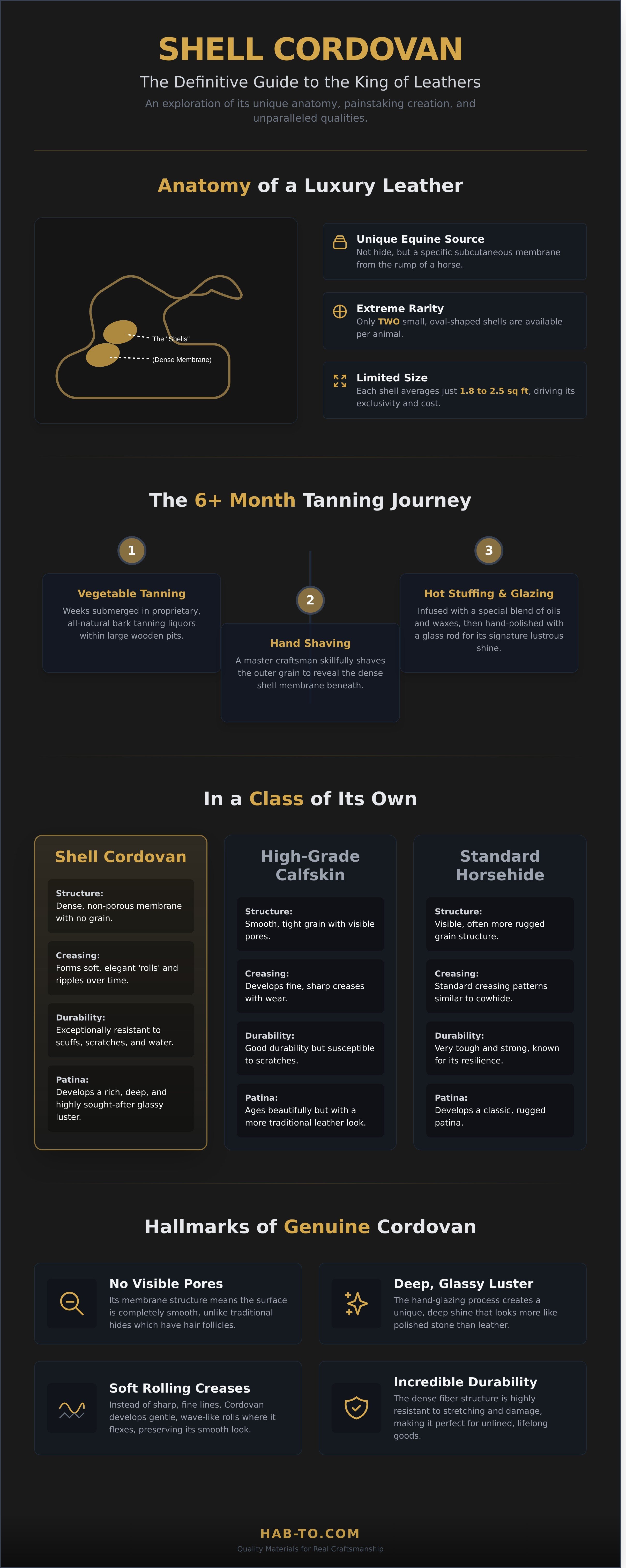
The term 'shell' is quite literal. This material is not the main hide of a horse but a specific, subcutaneous layer located on the rump. Beneath the hide lies a dense, non-porous membrane of connective tissue. Each horse provides only two of these small, oval-shaped shells, with an average size of just 1.8 to 2.5 square feet each. This extreme scarcity is the primary reason for its high cost and exclusivity. No compromises can be made; you simply can't get more than what nature provides.
Shell Cordovan vs. Standard Horsehide and Calfskin
It’s crucial to distinguish shell cordovan from standard horsehide. While regular horsehide comes from the front of the animal and has a visible grain structure like other leathers, the shell has no grain at all. The unique biological makeup of what is Shell Cordovan reveals it's an exceptionally dense fiber structure, which is meticulously exposed during a tanning process that can take over six months. This results in a material with properties that stand apart from even the highest-grade calfskin:
- Creasing: Where calfskin develops fine, sharp creases over time, Shell Cordovan creates soft, elegant 'rolls' or 'ripples', maintaining a smoother appearance for much longer.
- Durability: Its dense, non-porous surface is incredibly resistant to scuffs, scratches, and water, making it one of the most durable leathers available.
- Patina: The leather develops a rich, deep lustre with wear, a glossy patina that is highly sought after and unique to this material.
The Tanning Process: Why Shell Cordovan is So Expensive
When you see the price tag on a shell cordovan product, it's natural to ask: why? The answer isn't about branding; it's about time, tradition, and an uncompromising commitment to craftsmanship. Unlike modern leathers that are often chrome-tanned in a matter of days, creating this premium material is a slow, methodical art form. The entire process takes over six months from start to finish, involving extensive manual labor and generational expertise. This intensive journey is the true source of its value and legendary durability.
The Six-Month Tanning and Curing Journey
The transformation begins with raw horsehides, which are meticulously prepared and de-haired. These hides are then submerged in large, wooden pits filled with a proprietary, all-natural blend of bark tanning liquors. For weeks on end, they are gently agitated and moved between pits of varying tannin strength. This isn't a process that can be rushed. The tannins must penetrate the dense fiber structure slowly and completely, preserving the hide and building the foundation for its incredible resilience. It’s this patient vegetable tanning that gives shell cordovan its unique, dense character.
Skilled Artistry: Hand-Shaving and Hot-Stuffing
After months of tanning, the real artistry begins. The tanned hides are laid out, and a master craftsman must skillfully shave away the outer grain to reveal the thin, non-porous membrane beneath-the shell. This requires an incredible eye and a steady hand, as a single mistake can ruin the small, precious section. This meticulous handiwork is a crucial part of The Tanning Process that separates this material from all others. Following this, the shells are "hot stuffed" with a special blend of oils, greases, and waxes, conditioning them from the inside out. The final, signature gloss is achieved by hand-glazing, where each shell is polished with a smooth glass rod to bring out its deep, lustrous shine.
From start to finish, the production involves immense manual labor and produces a very low yield-only two small, oval-shaped shells per horsehide. When you combine the six-month timeline, the generational skill required, and the scarcity of the material itself, the premium price point becomes clear. You're not just buying leather; you're investing in a piece of history, crafted with a dedication that simply doesn't exist in mass production. No compromises, just quality.
Identifying Quality: Hallmarks of Genuine Shell Cordovan
For any serious leather crafter, learning to spot authentic shell cordovan is a vital skill. It’s more than just a name; it’s a material with a unique set of characteristics that set it far apart from other leathers. Once you know what to look for, the difference is undeniable. From its unique aging process to its feel and even its scent, genuine shell is an experience. It has a rich, pleasant smell characteristic of long-process vegetable tanning-a far cry from the chemical odor of lesser materials.
The Signature 'Roll' vs. a Crease
The most famous tell-tale sign is its inability to form small, tight creases. Where calfskin and other leathers develop fine lines and wrinkles under stress, shell cordovan creates large, smooth, and elegant ripples often called 'rolls'. This is due to its incredibly dense, non-directional fiber structure. This unique property makes it exceptionally durable and ideal for high-wear items like heirloom-quality shoes and watch straps that must endure constant flexing without breaking down.
Patina Potential and Color Depth
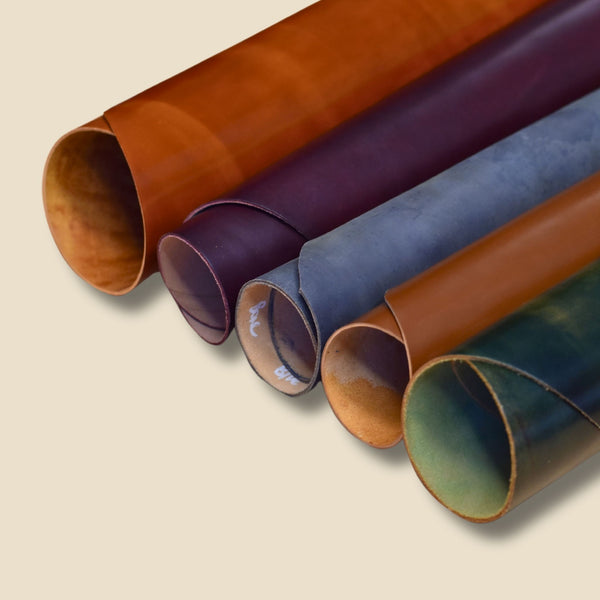
Shell Cordovan ages with unparalleled grace. Its non-porous surface doesn't just absorb conditioning oils; it allows them to sit within the top layers, creating a deep, luminous glow that seems to emanate from within the leather itself. This quality makes its colors exceptionally rich. Look for classics that showcase this depth beautifully:
- Color #8: A deep, dark burgundy that is the quintessential cordovan shade.
- Black: A true, glossy black with mirror-like depth.
- Whiskey or Natural: Lighter shades that develop a stunning, honey-colored patina over time.
World-Renowned Tanneries: Horween, Rocado, and More
Finally, the source matters. A few tanneries are globally recognized as masters of this difficult craft, each with a slightly different character. Knowing their names is knowing the benchmark for quality.
- Horween Leather Co. (USA): The most famous name in shell, known for its rich, oily feel and iconic Color #8.
- Rocado S.R.L. (Italy): Praised for a slightly firmer temper, a flawlessly consistent finish, and a vibrant range of colors.
- Shinki Hikaku & Ogawa (Japan): Esteemed for their meticulous finishing processes, often resulting in a high-gloss, glass-like surface and unique artisanal colors.
A Crafter's Guide: Working With Shell Cordovan
Getting your hands on a piece of genuine shell cordovan is a milestone for any leather crafter. It’s a material that rewards precision and patience with an unmatched final product. While its dense, tight-fibred nature can seem intimidating, it’s actually a joy to work with once you understand its unique character. It demands respect for the craft, but the results are truly second to none.
Best Projects for Shell Cordovan
This leather's incredible density and smooth, non-creasing surface make it perfect for projects that see daily use and must maintain their structure and beauty for years. Because the flesh side is so clean and compact, it excels in unlined, raw-edged designs where other leathers would require extensive finishing or lining. Its properties are best showcased in:
- Small Leather Goods: Minimalist wallets, cardholders, and key fobs become heirloom pieces. The material’s natural stiffness provides structure without extra layers.
- Horology: Premium watch straps are a classic application. Shell cordovan is comfortable, incredibly durable, and develops a beautiful patina without stretching or wrinkling.
- Footwear: Used for the vamps and uppers of the world's finest shoes and boots, it offers unmatched resilience and a signature rolling crease rather than sharp, damaging folds.
Essential Techniques for Success
To achieve a professional result, focus on these fundamentals. No compromises on tools or technique-the material deserves your best work.
- Cutting: Always use a fresh, razor-sharp blade. A dull blade will drag and compress the fibres, resulting in a messy edge. Make confident, single passes for the cleanest possible lines.
- Stitching: The dense fibre structure provides a fantastic and secure hold for your thread. High-quality, sharp pricking irons are essential to pierce the material cleanly without excessive force. The resulting stitch holes will be crisp and perfect.
- Edge Finishing: This is where shell truly shines. Forget edge paint. With just a bit of water or Tokonole and a wood slicker, the edges burnish to a stunning, glass-like finish that is both beautiful and incredibly durable.
The key is to let the material do the work. Its inherent quality simplifies the process, allowing true craftsmanship to stand out. Ready to start your next masterpiece? Browse our Shell Cordovan collection.
Caring for Your Cordovan: Maintenance for a Lifetime
Investing in a piece made from Shell Cordovan is the beginning of a long-term relationship. Unlike other leathers that demand constant attention, cordovan's care routine is one of simplicity and restraint. With a few key practices, you can ensure your shoes, wallet, or watch strap not only lasts for decades but grows more beautiful with every passing year.
The Importance of Regular Brushing
Your single most important tool is a quality horsehair brush. Vigorous brushing does more than just remove dust; it warms the leather, drawing its rich, natural oils and waxes to the surface. This simple action is what restores that signature deep, glossy shine. For footwear, we recommend a quick but firm brushing before and after each wear. This consistent habit is the true secret to maintaining cordovan's luster.
Conditioning: Less is More
Forget what you know about conditioning other leathers. Because shell cordovan is so dense and non-porous, it requires very little added moisture. Over-conditioning is the most common mistake and can clog the surface, leaving it sticky and dull. A tiny, pea-sized amount of a cordovan-specific cream, applied just once or twice a year, is more than enough. If it doesn't feel dry, it doesn't need conditioning. No compromises means using the right product, sparingly.
Dealing with Water Spots ('Welts')
Getting caught in the rain doesn't mean disaster. Water can cause small, raised bumps on the surface, often called 'welts'. Don't panic-this is not permanent damage. Allow the leather to dry naturally and completely (away from direct heat). Afterwards, use a smooth, hard object like the back of a spoon to gently rub the welts with firm pressure. This simple friction will smooth the fibers and make the spots disappear, restoring the flawless finish.
By embracing this minimalist approach-brush often, condition rarely, and treat issues gently-you honour the unique properties of this exceptional leather. Your cordovan piece will reward you with a magnificent patina that tells the story of a lifetime. If you ever need personal advice on caring for your leather goods, we're always here to help at hab-to.com.
Your Journey with the King of Leathers Begins
We've explored the unique anatomy of this prized equine leather, uncovered the meticulous, months-long tanning process that gives it a legendary sheen, and learned how proper care turns a beautiful product into a lifelong heirloom. True shell cordovan is more than just a material; it's a testament to patience and a tradition of uncompromising quality. It’s an investment in a story that only grows richer with time.
This same philosophy of investing in personal, high-quality craftsmanship is championed by bespoke services in other fields, like the personal tailoring offered by Your Tailor Robin.
Now, it's your turn to create something exceptional. At Hab-To, we pour over 160 years of family expertise into our craft. We personally source our leather from the world's top tanneries, and with no minimum order requirements, we're proud to support every maker's vision. Whether you're starting your first wallet or sourcing for a masterpiece, we provide the quality you can trust.
Ready to work with the pinnacle of leather? Explore our hand-selected Shell Cordovan collection and find the perfect piece for your project. Your next masterpiece awaits.
Frequently Asked Questions About Shell Cordovan
Is Shell Cordovan waterproof?
While not fully waterproof, Shell Cordovan is exceptionally water-resistant. Its incredibly dense fiber structure, combined with a high concentration of oils and waxes from the tanning process, causes water to bead up and roll off the surface. It can handle a rain shower with ease. However, prolonged soaking should be avoided as it can cause the fibers to swell, creating welts. These can typically be brushed out once the leather is dry.
Does Shell Cordovan scratch easily?
The high-gloss finish of Shell Cordovan can show minor surface scuffs, but the leather itself is remarkably durable and resistant to deep scratches. Due to its unique composition and high oil content, many small marks can be "healed" or blended back into the surface. Simply rubbing the area with a smooth, hard object like a deer bone or even the back of a spoon can often make minor scratches disappear completely.
Why is my new piece of Shell Cordovan so stiff?
The initial stiffness is a hallmark of genuine Shell Cordovan and a sign of its quality. This is due to the extremely dense membrane from which it is derived and the lengthy, specialized vegetable tanning process it undergoes. This dense structure is precisely what gives it its incredible durability and unique non-creasing characteristic. With use, it will break in beautifully, softening and molding to its owner while retaining its shape for decades.
What is the best thread to use for stitching Shell Cordovan?
To match the longevity of the leather, a premium thread is essential. For hand-stitching, high-quality, waxed linen thread such as Fil au Chinois or Ritza 25 Tiger thread is the traditional and preferred choice for its strength and classic look. For machine stitching, a strong, bonded polyester or nylon thread is recommended to withstand the stress and abrasion over time. The key is choosing a thread that won’t degrade before the leather does.
Can you dye Shell Cordovan a different color?
Re-dyeing Shell Cordovan is extremely difficult and generally not recommended. The surface is very dense and non-porous, and it's heavily saturated with oils and waxes that actively repel new dyes. Attempting to apply a new color usually results in a blotchy, uneven, and superficial coating that will not penetrate properly. It is best to appreciate the original tannery color, which will develop a rich and complex patina with age.
Is Shell Cordovan considered a full-grain leather?
This is a common point of confusion. Technically, Shell Cordovan is not a grain leather at all. Unlike cowhide, which is classified by its grain layer (full-grain, top-grain, etc.), this material is a specific membrane found beneath the hide on a horse's rump. It has no grain structure. This unique, flat, and non-porous composition is what gives it its signature smooth finish and its ability to ripple rather than crease.
What is 'reverse' Shell Cordovan?
Reverse Shell Cordovan simply means the shell is used with its 'flesh' side facing out. This rougher, suede-like side is typically the interior of a product. Crafters often use the reverse side to showcase the tannery's ink stamp, which is considered a mark of authenticity and aesthetic appeal. Despite its textured appearance, reverse Shell Cordovan retains the same incredible density and durability as its glossy counterpart, offering a unique tactile and visual experience.