Lining Leather: The Ultimate Guide to Sourcing and Crafting Premium Interiors
Would you spend weeks hand-stitching a bespoke briefcase only to line it with a material that tears after a year of use? Many talented crafters focus so much on the exterior hide that they treat the interior as an afterthought. It's a common mistake that separates hobbyist projects from professional grade heirloom pieces. Choosing the right lining leather isn't just about aesthetics; it's about structural integrity and creating a finished product that patinas beautifully inside and out.
I know how frustrating it is to waste money on full hides for small lining needs or to struggle with confusing weights that don't match your exterior. You want an interior that feels as premium as the shell. This guide will help you select and apply the perfect vegetable-tanned linings to elevate your craft. We'll look at specific options like Agneaux Sheep Nappa, discuss the best adhesives from Ecostick Intercom, and break down the tools required for a professional bond. You'll learn how to source exactly what you need, even in small panels, to ensure every project is durable and refined.
Key Takeaways
- Understand why a quality interior acts as the structural soul of your craft, preventing stretch and ensuring long-term durability.
- Identify the best lining leather for your specific project, from luxurious Agneaux Sheep Nappa for handbags to ultra-thin 0.4mm options for slim wallets.
- Learn why water-based adhesives like Ecostick Intercom are essential for achieving a smooth, professional bond without the bulk of traditional glues.
- Discover how to source world-class Italian leathers in small panels or by the dm², so you don't have to invest in full hides for small projects.
- Gain expert insights on the specific tools and cutting techniques required to handle supple, thin skins with precision and confidence.
What is Lining Leather and Why Does it Matter?
When you flip open a bespoke wallet or look inside a luxury tote, the first thing you notice isn't the outer shell. It's the interior. Lining leather is the internal layer applied to the flesh side of your main hide. It serves as a protective barrier, but its purpose goes much deeper than just hiding the rough underside of a skin. For many artisans, the choice of lining is what defines the transition from a hobbyist to a professional grade maker.
A premium interior acts as a hallmark of quality. While cheaper alternatives rely on fabric or synthetic fillers, a dedicated leather lining adds a tactile richness that can't be faked. It tells your customer that every square millimeter of the item was considered with care. Choosing a high-end material from a reputable leather collection ensures that the hidden parts of your craft are just as impressive as the visible ones.
The Functional Role of a Quality Interior
Beyond looks, the lining provides essential structural integrity. Without it, softer leathers tend to lose their shape or sag under the weight of daily use. By bonding a secondary layer, you create a reinforced sandwich that resists stretching. This is vital for high-stress areas like card slots or handle attachments. It also shields your belongings from the natural oils and fibers of the flesh side. Lining leather is the silent partner of the exterior hide, working behind the scenes to maintain the project's form and finish.
Consider these key structural benefits:
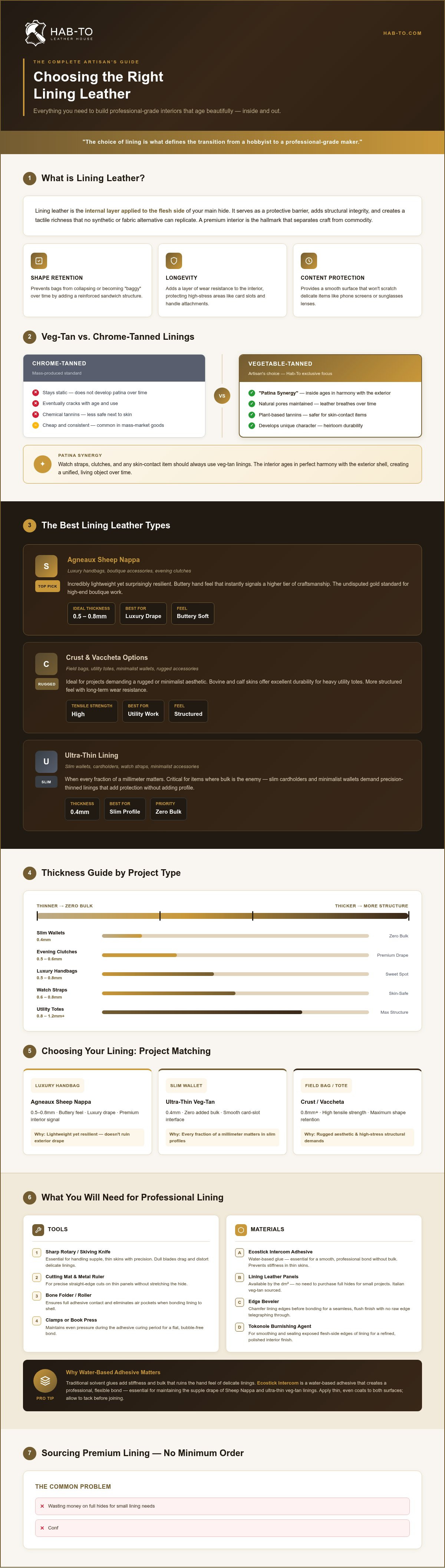
- Shape Retention: Prevents bags from collapsing or becoming "baggy" over time.
- Longevity: Adds a layer of wear resistance to the interior of the item.
- Content Protection: Provides a smooth surface that won't scratch delicate items like phone screens or sunglasses.
Veg-Tan vs. Chrome-Tanned Linings
In my experience, the choice between vegetable-tanned and chrome-tanned lining is where many crafters get stuck. Most mass-produced goods use chrome-tanned skins because they're cheap and consistent. However, they lack the soul of natural materials. At Hab-To, we focus exclusively on sustainable, vegetable-tanned options because they offer what I call "Patina Synergy."
This means the inside of your bag ages in harmony with the outside. While a chrome lining stays static or eventually cracks, a veg-tan lining develops its own character over time. It's also a matter of health. Plant-based tannins are safer for items held close to the skin, like watch straps or clutches. While the general concept of Lining (sewing) covers everything from silk to polyester, a true artisan knows that only leather provides the durability and tradition our craft deserves.
The Best Types of Leather for Lining Your Projects
Selecting the right lining leather is about more than just picking a complementary color. It is about matching the temperament and mechanical behavior of the interior hide to your exterior material. While bovine and calf skins offer excellent durability for footwear and heavy utility totes, they can often be too stiff for delicate accessories. For makers looking to push boundaries, specialty options like Translucent Leather provide a modern, experimental edge that traditional fabrics simply cannot match.
Technical research into the Mechanical properties of lining leathers highlights that tensile strength and breathability are critical for long term comfort and hygiene. This is particularly true for items held close to the body. Because we focus exclusively on vegetable-tanned hides, our linings maintain these natural pores. This allows the leather to breathe and age gracefully. Whether you are building a rugged field bag or a refined evening clutch, the choice of hide will dictate how the item feels every time your customer reaches inside.
Sheep Nappa: Luxury and Suppleness
For high-end boutique handbags, Agneaux Sheep Nappa is the undisputed gold standard. It is incredibly lightweight yet surprisingly resilient. This hide offers a buttery hand feel that instantly signals a higher tier of craftsmanship. In my workshop, I've found that a thickness between 0.5mm and 0.8mm is the sweet spot for luxury work. It provides enough substance to feel premium and protective without adding unnecessary bulk that might ruin the drape of your exterior leather. It is the perfect choice for those who want their interiors to feel like a soft embrace.
Crust and Vaccheta Options
If your project demands a more rugged or minimalist aesthetic, crust and vaccheta options are superior. Using Maryam Vaccheta creates an interior that is as tough and characterful as the shell. This is ideal for briefcases or heritage style bags that need to withstand heavy use. Unfinished crust leather is another personal favorite of mine. It allows the natural beauty of the grain to shine through and provides a clean, honest look.
A vital rule for professional results is matching the weight of your lining to the exterior. A heavy shell paired with a flimsy lining feels unbalanced and cheap. Conversely, a stiff lining inside a soft bag ruins the intended silhouette. If you are experimenting with these combinations for the first time, exploring our curated leather bundles is an excellent way to test different textures and weights without the need to purchase full hides.
Choosing Your Lining Based on the Project
Every project has a different temperament. A lining leather that works for a heavy duty tote will likely ruin the profile of a slim cardholder. Selecting the wrong weight or tannage can lead to an item that feels either too flimsy or unnecessarily bulky. To move from hobbyist to professional, you must learn to match the interior hide to the specific mechanical demands of the final piece. Whether you are building for elegance or endurance, the interior is where the structural battle is won or lost.
The Handbag Artisan’s Strategy
In handbag construction, you face a choice: a fully glued interior or a "floating" lining. A fully glued lining creates a stiff, architectural feel. This is perfect for structured evening bags. However, for a soft hobo or a relaxed tote, a floating lining allows the exterior to drape naturally. For bags that need to stand on their own without collapsing, I often pair my lining leather with Texon black reinforcement. This provides the necessary skeleton while the leather provides the soul. For a deeper dive into these choices, check out our Artisan’s Guide to Premium Leather for Handbags.
Small Leather Goods (SLG) Precision
When it comes to wallets and cardholders, bulk is the enemy. A professional SLG should be as thin as possible while remaining durable. This requires ultra-thin linings, typically between 0.4mm and 0.6mm. In some minimalist designs, Pueblo Leather is so well-finished on the flesh side that it can serve as its own lining. If you do choose to line your card slots, aim for a "zero-edge" look by skiving your lining paper-thin at the edges. This ensures the wallet remains pocket-friendly even when full.
For specialized items like watch straps or footwear, your priorities shift toward hygiene and friction. Watch straps require hypoallergenic linings that won't irritate the skin when exposed to sweat. Footwear linings must prioritize moisture-wicking and high abrasion resistance to handle the constant movement of the foot. Understanding these technical definitions is vital for professional labeling and consumer trust, as outlined in the FTC Guides for Select Leather. My best advice? Always test your glue bond on a scrap piece of lining first. Some oily leathers require a bit of sanding before the adhesive will take a permanent hold.
What You Will Need for Professional Lining
Achieving a professional interior requires more than just high-end hides. It is about the bond. When working with thin, supple lining leather, your choice of adhesive and tools determines whether the finished piece feels like a solid unit or a loose assembly of layers. You don't want a "stiff" interior from heavy solvent glues or air bubbles from poor application. Precision is everything in this stage of the craft.
Essential Tools and Materials
Water-based adhesives are the gold standard for large surfaces. I always recommend Ecostick 1804 because it provides a permanent, flexible bond without the toxic fumes of traditional contact cement. It doesn't "soak" through thin skins, which is a common disaster when using delicate sheepskin. Use a glue spreader or a dedicated brush to ensure even coverage. You want a thin, consistent film on both the exterior and the lining to ensure they move as one.
For those just starting, the Leathercraft Master Bundle includes everything you need to manage these adhesives and finishing steps properly. Beyond glue, you need a fresh, sharp blade. Thin lining leather is notorious for stretching or bunching if your knife isn't razor-sharp. I change my blade before every major lining cut to ensure clean, drag-free edges that align perfectly with the shell hide.
Edge Work and Integration
Achieving a seamless look where the two layers meet is the mark of a master. To prevent the top edges of bags or pockets from stretching over time, apply Texon or reinforcement tape before bonding the lining. This creates a rigid "spine" that keeps the opening crisp and prevents the leather from becoming "wavy" with use.
Once bonded, use a bone folder to press the layers together. Work from the center outward to remove air bubbles and ensure 100% adhesion. For the edges, skiving the lining hide down to a feather edge allows it to blend invisibly into the main hide. Finish the combined edge with Tokonole and a wood slicker. This process smooths the fibers of both leathers into a single, polished unit that patinas beautifully. It's these small details that elevate a project from a hobbyist attempt to a professional heirloom.
Sourcing Premium Lining with No Minimum Order
One of the biggest hurdles for independent artisans is the traditional wholesaler's demand for high minimum order quantities. Often, you only need a small panel of lining leather for a single wallet or a few handbag pockets. Being forced to buy a full hide of premium sheepskin or calf is an unnecessary financial burden that leads to wasted material. At Hab-To, we've eliminated this barrier. We sell by the panel or even by the dm²; ensuring you get exactly what you need without the overhead.
This flexibility doesn't mean compromising on quality. We provide direct access to world-class tanneries like Conceria Maryam and Badalassi. These are the same hides used by global luxury houses. Whether you are looking for the rugged character of Badalassi Pueblo or the refined finish of Maryam Vaccheta, you can source them in quantities that fit your project. If you are in Amsterdam, I invite you to visit our showroom. There is no substitute for touching and feeling the leather before you commit. If you can't visit in person, I offer free video consultations to help you pick the perfect weight and temper for your specific design.
- No Minimums: Buy only what you need, whether it's a single panel or a few square decimeters.
- Elite Pedigree: Access tanneries that usually only deal with high-volume luxury brands.
- Expert Guidance: Benefit from 25 years of hands-on experience through personal consultations.
Sustainable and Ethical Sourcing
Our commitment to sustainability is non-negotiable. Every hide we stock is 100% vegetable-tanned, sourced from members of the prestigious Tuscan Consortium. This process relies on natural plant tannins rather than harsh chemicals. By offering flexible sizing, we help eliminate waste within the crafting community. You won't have expensive offcuts gathering dust in your atelier. For more tips on navigating the digital marketplace, read our Buying Leather Online: The Professional Artisan’s Guide.
Start Your Next Project with Hab-To
Elevating your craft starts with the right materials. Browse our full collection of lining leathers to find the missing piece for your next interior. We offer fast worldwide shipping and the support of a family business with over 160 years of expertise. If you want to refine your technical skills, I invite you to join a Masterclass. We deep-dive into the nuances of bonding, skiving, and finishing to ensure your interiors are as flawless as your exteriors. Let's build something that lasts.
Master the Art of Premium Interiors
Choosing the right lining leather is the final step in transitioning from a hobbyist to a professional artisan. You now understand that a quality interior provides the structural integrity and aesthetic soul your work deserves. Whether you're skiving sheep nappa for a slim wallet or reinforcing a tote with Texon, the details are what make your craft endure. Every stitch and every bonded layer tells a story of care and precision. This dedication to refined interiors often extends to the home, where you can visit Fabrico to explore custom window treatments that bring a similar level of bespoke quality to your living environment. By sourcing small panels from world-class Italian tanneries, you can achieve luxury results without the waste of full hides.
What is the best thickness for lining leather in a wallet?
For a professional wallet, the best thickness for your interior hide is between 0.4mm and 0.6mm. This ultra thin profile prevents the final piece from becoming bulky once you add multiple card slots and cash pockets. I recommend using a vegetable tanned sheep nappa or a thin bovine crust. If your lining is too thick, the wallet won't fold properly and will feel cumbersome in a pocket.
Can I use vegetable-tanned leather for lining if the exterior is chrome-tanned?
You can certainly use vegetable tanned lining with a chrome tanned exterior. While we exclusively stock veg tan hides due to their sustainability and superior patina, they bond well to almost any exterior material. The natural fibers of a veg tan interior provide a breathable, hypoallergenic surface that feels better against the skin than synthetic or chrome alternatives. It is a great way to introduce traditional quality to any project.
How do I glue lining leather without it becoming stiff?
To keep your interior supple, use a water based adhesive like Ecostick 1804 and apply it in a very thin, even layer. Traditional solvent based contact cements can create a rigid film that makes the lining leather feel like plastic. Use a glue spreader to ensure there are no clumps. A thin application on both surfaces provides a permanent bond while allowing the leather fibers to retain their natural flexibility.
Do I need to finish the edges of my lining leather?
Yes, you should always finish the combined edges of your lining and exterior hide for a professional look. I recommend skiving the lining edge to a feather thin point before bonding. Once glued, use Tokonole and a wood slicker to burnish the layers into a single, seamless unit. This prevents the layers from delaminating over time and creates a polished appearance that distinguishes artisan work from mass produced goods.
What is the difference between sheep nappa and pigskin lining?
Sheep nappa, like our Agneaux collection, is the gold standard for luxury interiors because of its buttery softness and tight grain. Pigskin is often used in mass production but has very visible, large pores that can look less refined. Vegetable tanned sheepskin is more durable and provides a much more elegant tactile experience. It is the preferred choice for boutique handbags where the internal feel is just as important as the shell.
How do I prevent my lining from stretching during assembly?
Preventing stretch starts with internal reinforcements. I suggest using Texon black reinforcement or non stretch tapes along the top edges of your project before you apply the lining leather. These materials act as a hidden skeleton that holds the shape while the supple lining provides the finish. Avoid pulling the leather too tightly during the bonding process. Let the adhesive do the work of holding the layers in their natural state.
Can I dye my own lining leather at home?
You can definitely dye your own lining at home if you start with a crust leather. Crust is an unfinished vegetable tanned hide that is ready to accept pigments. I recommend using Fiebing's dyes for a consistent result. It is a fantastic way to create a custom color match that isn't available off the shelf. Just remember to seal the dye with a finish to prevent it from rubbing off on the contents of your bag.
Is lining leather the same as "skiver" leather?
Not exactly. While a skiver is technically a very thin grain split of a sheepskin often used for lining, the term lining leather covers a much broader range of materials. This includes full grain nappa, calfskin, and bovine crust. At Hab-To, we focus on high quality vegetable tanned panels that offer better durability than traditional thin skivers. A true lining hide should provide both beauty and a degree of structural support to your craft.
Disclaimer
All our blog articles are made for information purposes only we dont take responsability for any content from third parties.