

Artisan’s Guide to Premium Leather for Handbags
The secret to a world-class handbag isn't just the precision of your stitching. It's the hidden chemistry within the hide itself. You can spend dozens of hours perfecting a complex pattern, only to watch the finished piece lose its structure or fail to develop that rich, sought-after glow. Choosing the best leather for handbags means looking past the surface and understanding how the tanning process dictates the entire life of your craft.
We understand the frustration of investing your hard-earned money in hides that arrive feeling thin or, even worse, fail to hold a crisp edge. You deserve materials that honor your labor and age beautifully with every use. In this guide, we'll provide a professional framework for matching specific leather types to your bag silhouettes. You'll discover the legendary quality of tanneries like Conceria Maryam and learn how to source premium Italian panels in small quantities. Let's ensure your next project has the structural integrity and high-end finish it deserves.
Key Takeaways
- Identify the ideal leather grade and temper to ensure your handbag maintains its structural integrity for decades.
- Master the professional framework for selecting the best leather for handbags by matching hide characteristics to specific bag styles.
- Learn why vegetable-tanned leather from the Tuscan Consortium is the gold standard for sustainability and heirloom patina.
- Discover how to source world-class Italian hides from tanneries like Conceria Maryam in small panels without minimum order constraints.
- Gain a practical method for calculating exactly how much leather you need to reduce waste and optimize your material costs.
Defining the Best Leather for Handbags: Texture, Grain, and Grade
Quality starts with the raw material. If you want to create a piece that stands the test of time, you have to understand What is Leather at its most fundamental level. Full-Grain Vegetable Tanned Leather is the layer of hide containing the most durable fibers and natural markings. It isn't just a material; it's a foundation for your craft. For most professional makers, this is the undisputed best leather for handbags because it combines structural strength with a surface that tells a unique story.
To better understand how these material choices impact your final product, watch this helpful video:
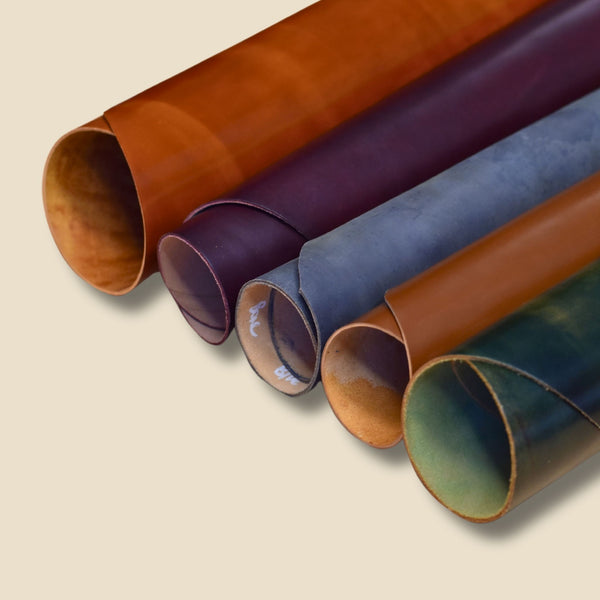
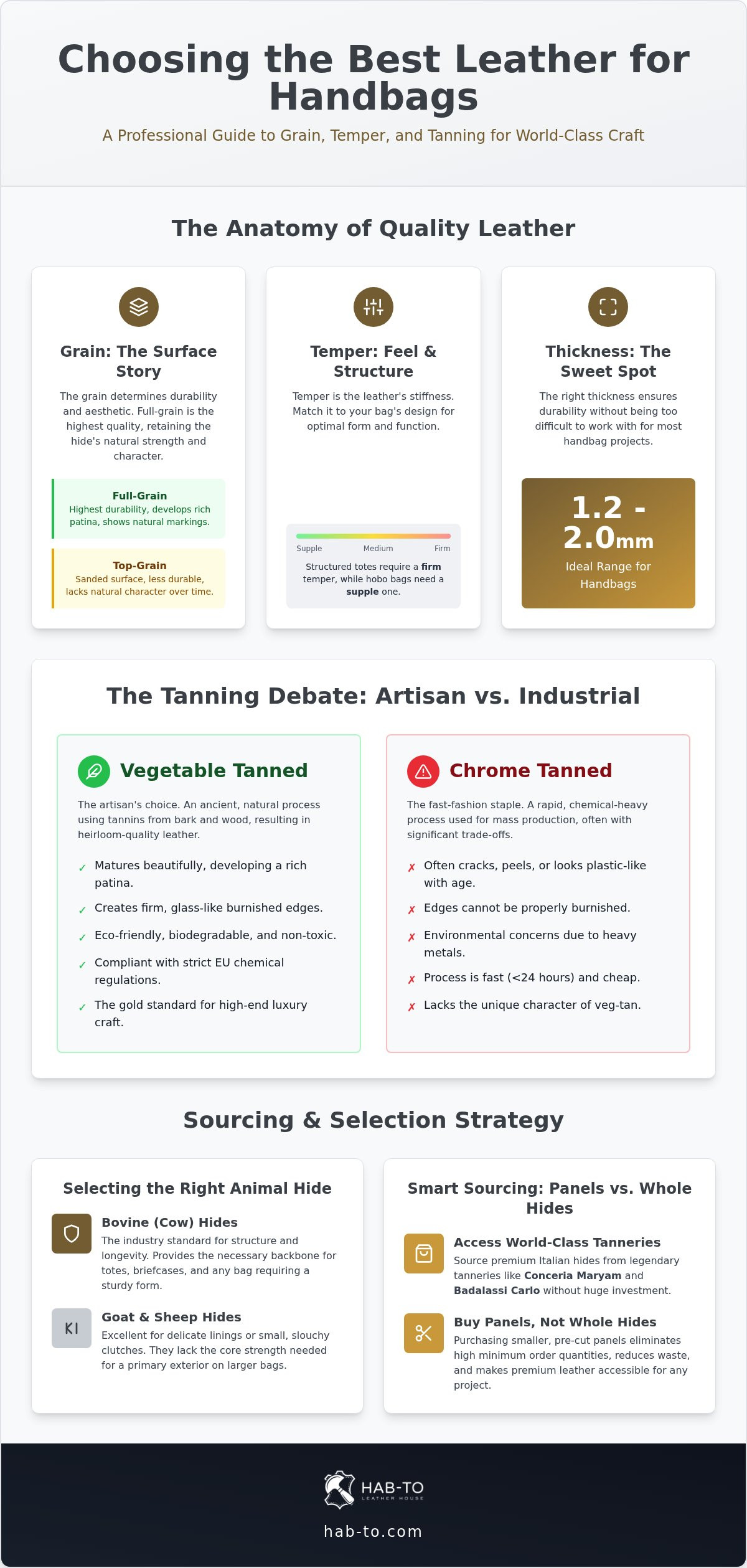
Matching the stiffness, or temper, of the hide to your bag design is a skill that separates hobbyists from masters. A structured tote requires a firm temper to stand upright, while a relaxed hobo bag needs something supple. Most handbag projects find their sweet spot with a thickness between 1.2mm and 2.0mm. This range is thick enough to provide durability but thin enough to be worked with standard tools. For example, our Maryam Vaccheta leather falls perfectly into this category, offering a robust feel without the unnecessary bulk.
Full-Grain vs. Top-Grain: Which Wins for Bags?
Full-grain preserves the natural strength needed for load-bearing handles. Top-grain leathers are often sanded to remove imperfections, which might create a uniform look but breaks the natural grain. Over time, top-grain leathers lose their character and can look plastic-like. Full-grain, however, develops a deep patina. Natural markings like growth lines or small scars aren't flaws; they're signals of authenticity that your customers will value. Using the best leather for handbags means embracing these natural details rather than hiding them.
Selecting the Right Animal Hide: Cow, Goat, or Sheep?
Bovine hides are the industry standard for structure and longevity. They provide the necessary backbone for larger projects. While goat and sheep nappa are excellent for delicate linings or small, slouchy clutches, they often lack the support needed for a primary exterior. Hab-To focuses on bovine hides for professional-grade bag construction. We believe in providing materials that don't force you to make concessions. Whether you're using Badalassi Pueblo leather for its unique texture or a classic smooth finish, the bovine origin ensures your bag won't sag or fail after a few months of use.
The Tanning Debate: Why Vegetable Tanned is the Artisan Choice
Vegetable tanning is an ancient art that relies on nature rather than harsh industrial chemicals. It uses tannins found in tree bark, wood, and fruits to transform raw hides into durable material. This process can take several weeks or even months to complete. Unlike mass-produced alternatives, it results in a biodegradable and non-toxic product. For many makers, this is the only path to finding the best leather for handbags that truly lasts for decades.
The environmental factor is a major consideration for modern artisans. In July 2026, EU regulations under REACH continue to strictly limit Chromium VI to 3 mg/kg in leather articles. By choosing vegetable-tanned hides, you eliminate the risk of heavy metal exposure in your workshop. Recent policy updates in July 2026 also saw the European Commission exempt leather from certain anti-deforestation regulations, recognizing it as a valuable byproduct of the food industry. This makes high-quality veg-tan a responsible choice for the conscious crafter.
Then there's the emotional connection of the patina. A bag made from premium vegetable-tanned leather doesn't just age; it matures. It absorbs the oils from your hands and the sunlight from your travels, darkening into a rich, unique sheen. Technically, veg-tan is also the only choice for professional edge finishing. You can't burnish the edges of chrome-tanned leather effectively because the fibers are essentially coated in mineral salts. With vegetable tanning, a bit of friction and water creates a glass-like edge that defines high-end luxury.
The Problem with Chrome-Tanned "Fast Fashion" Leather
Chrome tanning is fast and efficient, often taking less than twenty-four hours. This speed makes it the staple of fast fashion, but the trade-offs are significant. These bags often peel or crack within a year because the leather can't "breathe" or heal itself. When the surface is damaged, the repair is nearly impossible. Professional artisans avoid these hides for heirloom-quality work because they want a bag that looks its best after five years of use, not just on the day it's sold.
Pueblo and Vaccheta: The Modern Face of Veg-Tan
Modern Italian tanneries have mastered the balance between traditional methods and striking aesthetics. Badalassi Pueblo leather is a prime example of this innovation. It features a distinctive, rustic texture that patinas into a deep, smooth finish over time. It's the best leather for handbags if you want a piece that starts with character and only gets better.
Vaccheta remains the classic choice for structural bodies and luxury trims. It has a high natural oil content, which means it softens with use without losing its structural integrity. It provides the support needed for a professional silhouette while offering a buttery feel. If you're ready to start your next project with these world-class materials, exploring our curated leather bundles is an excellent way to experience the difference firsthand.
Conceria Maryam & Italian Excellence: Sourcing the World’s Best
Finding the right tannery is just as important as choosing the right hide. While many shops offer generic Italian leather, professional artisans seek out specific houses known for their consistency and historical mastery. Conceria Maryam represents the pinnacle of Italian tanning, blending centuries-old pit-tanning traditions with modern sustainable standards. Based in the heart of Tuscany, this tannery has become a global benchmark for those seeking the best leather for handbags, especially when the goal is a balance of rugged durability and refined elegance.
Maryam is a distinguished member of the Genuine Italian Vegetable-Tanned Leather Consortium (Pelle Vegetale). This organization ensures that every hide is produced using traditional plant-based tannins and meets strict environmental criteria. When you source leather with this pedigree, you're tapping into a heritage that dates back generations. It gives your work an immediate story of quality that customers can feel. We've spent over 160 years in the leather industry, and we've seen how sourcing from a house like Maryam elevates a simple bag into a piece of wearable art.
The biggest hurdle for individual makers has always been access. Most top-tier Italian tanneries require large minimum orders or only sell whole hides, which can be a massive financial risk for a small studio. Hab-To removes this barrier. We act as the bridge, providing premium Maryam articles in small panels and specific square-decimeter cuts. This allows you to prototype new designs or create limited-edition runs without the burden of excess inventory. You get the world's finest material without the industrial-scale commitment.
Maryam Vaccheta vs. Shell Cordovan
Understanding which Maryam article to choose depends on your bag's purpose. Maryam Vaccheta is the ideal choice for full bag bodies. It's supple yet strong, with a high oil content that makes it incredibly resilient. On the other hand, Shell Cordovan is often called the "King of Leathers." It's sourced from a specific fibrous layer of a horsehide, resulting in a material that is virtually poreless and highly water-resistant. Use Cordovan for high-end accents, luxury clutches, or card pockets where you want a mirror-like finish and unmatched density.
Why Tannery Heritage Matters for Your Brand
Marketing your finished bags becomes much easier when you can name your sources. Telling a client their bag is made from Tuscan vegetable-tanned leather from a consortium-certified tannery adds tangible value. It justifies a premium price point. Because Maryam maintains such high standards, you'll also benefit from consistency in color and temper across different batches. This reliability is vital for building a brand that customers trust. We use our family's deep expertise to help you select the exact Maryam article that will complement your specific design and technical needs.
Matching Leather Types to Handbag Styles
The architecture of your bag depends entirely on the temper of your hide. If you're building a structured tote that needs to stand tall without support, you'll need firm-temper leathers like Harness or Bridal. These leathers have a high density and wax content that prevents the sides from collapsing over time. Choosing the best leather for handbags is about matching these physical properties to the silhouette you've drawn on your pattern board. A firm hide ensures those clean, architectural lines stay sharp for years of daily use.
Luxury clutches and small evening bags require a different level of refinement. This is where Shell Cordovan shines as a primary material or a high-impact accent. Its mirror-like finish and incredible fiber density make it nearly indestructible. Sometimes, even the best leather needs a little help to maintain its shape in high-stress areas. We recommend using Texon reinforcement in bag bottoms or handle attachments. It provides the necessary stiffness to prevent sagging without adding the bulk of a thicker hide.
For slouchy hobo bags or drawstring buckets, the goal is a relaxed drape. You'll want to look for milled or tumbled leathers. These hides go through a mechanical softening process that breaks down the fibers, giving the leather a buttery hand feel. If you use a stiff leather for these styles, the bag will look awkward and won't move naturally with the wearer's body. It's all about the "hand" of the material.
The Essential Guide to Bag Lining
A professional bag is defined by its interior. Your choice of lining leather is just as important as the exterior. Pigskin is a classic choice for durability, but thin bovine or goat linings offer a much more luxurious feel. The lining adds a layer of support and protects the flesh side of your main leather. It also affects the overall weight. A bag lined with 0.5mm goat leather feels substantial and high-end, whereas an unlined bag can sometimes feel unfinished or flimsy.
Instructional: Professional Edge Finishing for Handbags
A raw edge is often the mark of an amateur. To achieve a mirror-like finish that defines luxury goods, you must master the art of burnishing. This process seals the fibers and protects the bag from moisture. It's a meditative part of the craft that requires the right chemistry and tools.
What you will need:
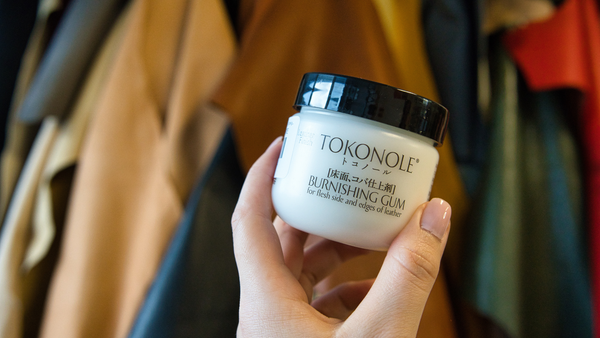
- Tokonole burnishing cream
- Edge bevelers (sized to your leather thickness)
- A glass slicker or wooden burnisher
- Fine-grit sandpaper (400, 600, and 800 grit)
- High-quality tools from Hab-To’s tool collection
First, sand your edges until the layers are perfectly flush. Use your beveler to remove the sharp corners on both the grain and flesh sides. Apply a thin, even layer of Tokonole to the edge. Finally, use your glass slicker with rapid, light pressure. The friction will react with the tannins in the leather, creating a dark, glossy, and durable edge that looks like a single piece of material.
Sourcing Handbag Leather: Panels vs. Whole Hides
The traditional leather industry wasn't built for the individual artisan. Most wholesalers require you to purchase a whole hide. This leads to significant waste and high upfront costs. We've changed that. At Hab-To, we offer the best leather for handbags in small panels or by the square decimeter (dm²). This approach allows you to focus on the craft rather than worrying about inventory management.
Calculating your needs is straightforward. For a standard medium-sized tote, you'll generally require between 60 and 90 dm² of leather. A smaller clutch might only need 20 dm². By sourcing specific panels, you can experiment with high-end materials like our Jesse Olivenleder without a massive investment. If you're unsure which weight or temper is right for your pattern, you can book a free video consultation with Mike. He'll show you the hides in real-time and help you make a confident choice.
No MOQ: Sourcing for Micro-Brands
Our "No Minimum Order Quantity" policy is a game-changer for prototyping. It gives you direct access to the best leather for handbags from premium Italian tanneries usually reserved for major fashion houses. Whether you need a single panel of Shell Cordovan or a few dm² of Vaccheta, we treat your order with the same care as a large-scale shipment. Our Amsterdam-based showroom serves as a central hub. This ensures fast European shipping speeds so your project never stays on hold for long.
Building Your Starter Kit
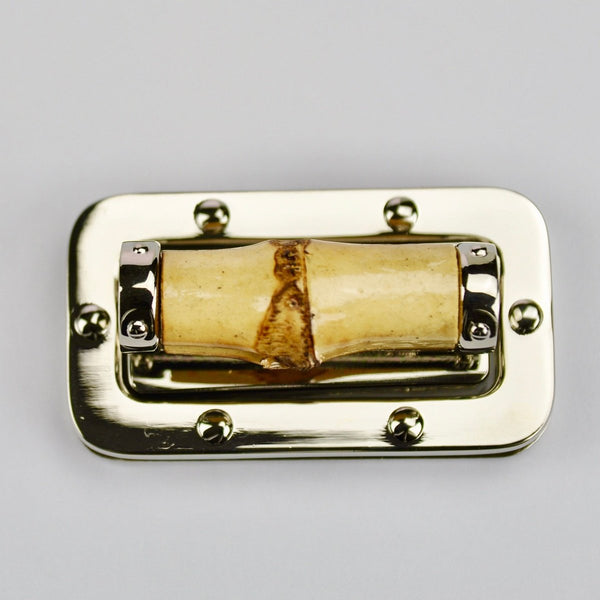
If you're just beginning, selecting a Starter Bundle is the most efficient way to gain experience. These bundles provide a curated selection of materials and tools. They help you understand the nuances of the craft. Don't forget to match your premium leather with high-quality solid brass buckles and hardware. These small details signal professional quality to your customers. Once your leather arrives, store it in a cool, dry place. Keep it flat and away from direct sunlight to prevent drying or discoloration over time.
Elevate Your Next Handbag Masterpiece
Choosing the best leather for handbags isn't just a technical decision; it's a commitment to the longevity of your craft. You now have the professional framework to match firm tempers to structured silhouettes and supple milled hides to relaxed designs. By prioritizing vegetable-tanned materials from world-class houses like Conceria Maryam, you ensure that every bag you stitch will age with grace and develop a unique story through its patina.
We draw on over 160 years of family history to curate hides that meet our strict standards. Every piece in our collection is an exclusively sustainable, vegetable-tanned hide that respects both the environment and the tradition of the craft. We ship worldwide from our Amsterdam showroom, ensuring that world-class materials are always within your reach. Your dedication to quality deserves a partner that refuses to make concessions on material excellence.
Your next project deserves a foundation that honors your hard work and vision. We can't wait to see what you create.
Frequently Asked Questions
What is the most durable leather for a daily-use handbag?
Full-grain bovine leather is the most durable choice for bags that face daily wear. Its dense fiber structure resists tearing and stretching while developing a protective patina over time. For maximum longevity, vegetable-tanned harness or bridal leathers provide the necessary backbone to withstand years of heavy use without losing their shape.
Is vegetable-tanned leather waterproof enough for bags?
Vegetable-tanned leather is naturally water-resistant but shouldn't be considered fully waterproof. If your bag gets wet, wipe it dry immediately and let it air dry away from direct heat sources. Leathers with high oil content, such as Maryam Vaccheta, offer better natural protection against light rain than drier, lower-grade hides.
How thick should leather be for a structured tote bag?
A thickness of 1.8mm to 2.2mm is the sweet spot for a structured tote. This weight provides enough rigidity to stand upright without making the finished bag excessively heavy. If you choose a thinner hide around 1.4mm for a specific color or texture, you'll likely need internal reinforcements like Texon to maintain the architectural shape.
What is the difference between Vaccheta and Pueblo leather?
The primary difference lies in the surface texture and the specific finishing process. Vaccheta is a smooth, traditional leather with a high oil content that feels supple and rich. Pueblo leather, produced by tanneries like Badalassi, has a unique rustic appearance created by scuffing the grain, which eventually patinas into a smooth, dark finish with use.
Can I buy premium Italian leather in small pieces instead of whole hides?
Yes, you can source premium Italian leather in small panels or decimeter cuts through Hab-To. We've removed the barrier of minimum order quantities. This allows artisans to prototype designs using world-class materials without the financial burden of purchasing a whole hide, making it the ideal solution for micro-brands and hobbyists.
Why is full-grain leather better than 'genuine leather' for handbags?
Full-grain is the undisputed best leather for handbags because it retains the strongest, outermost layer of the hide. In contrast, "genuine leather" is often a marketing term for lower-quality split or corrected hides that lack structural integrity. Full-grain fibers remain intact, ensuring your bag won't peel or crack even after years of service.
What tools do I need to finish the edges of a leather bag professionally?
Professional edge finishing requires a specific set of refining tools to achieve a luxury look. You'll need an edge beveler to round the sharp corners, fine-grit sandpaper for smoothing the layers, and Tokonole burnishing cream. A glass slicker or wooden burnisher is then used to create the friction necessary for a glossy, sealed edge.
How do I maintain and care for a vegetable-tanned leather bag?
Maintenance for vegetable-tanned bags focuses on preservation rather than constant cleaning. Avoid direct sunlight and heat to prevent the fibers from drying out. If the leather feels stiff, apply a small amount of high-quality conditioner. Most importantly, allow the natural patina to develop, as this serves as a natural protective layer for the hide.
Disclaimer
All our blog articles are made for information purposes only we dont take responsability for any content from third parties.