

Artisan’s Guide to Premium Leather for Handbags
The best leather for handbags isn't determined by a high price tag or the animal species alone; it's defined by the heritage of the tanning house and the chemistry of the process. You've likely spent weeks perfecting a pattern only to watch your finished bag lose its structure or fail to develop that rich, storied glow you envisioned. It's heartbreaking to invest your passion into a project when the material simply doesn't respect the work. Finding the best leather for handbags requires moving beyond generic labels and understanding how specific tannages behave under the needle.
I understand the struggle of sourcing premium hides in small quantities without breaking the bank on full skins you don't need. This guide provides a professional framework for matching the right leather to your specific bag style, ensuring your creations age beautifully and maintain their shape for decades. We'll look at the technical criteria for durability and introduce you to world-class tanneries like Conceria Maryam that define the gold standard of modern leathercraft. Whether you're prototyping a new design or crafting a bespoke commission, these insights will help you choose materials with confidence.
Key Takeaways
- Learn why full-grain vegetable-tanned leather is the professional standard for high-end bags that age with a rich, authentic patina.
- Master the art of matching leather temper to your design, ensuring you select the best leather for handbags whether crafting a structured tote or a relaxed hobo.
- Discover why world-class Italian tanneries like Conceria Maryam are the preferred source for authentic Vacchetta and Shell Cordovan.
- Find out how to source premium leather panels in small quantities without the burden of minimum order quantities or full hide costs.
- Gain a clear framework for calculating exactly how much material your specific handbag pattern requires to minimize waste and cost.
Defining the Best Leather for Handbags: Texture, Grain, and Grade
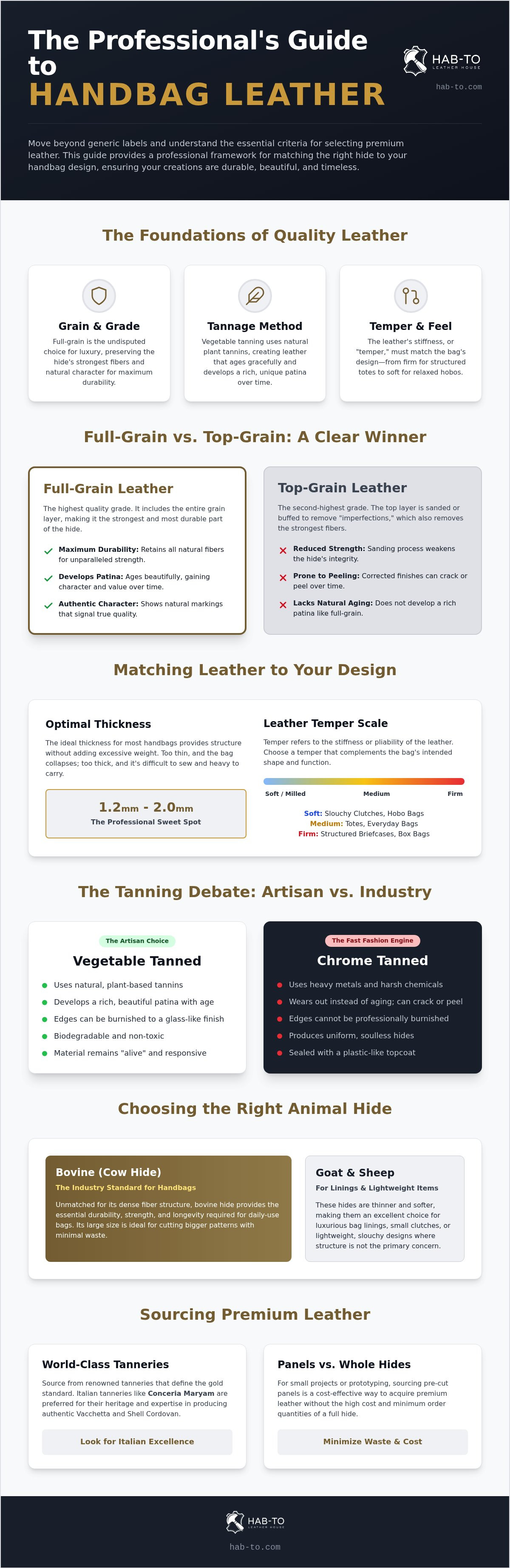
Selecting the best leather for handbags starts with a fundamental understanding of the material's DNA. Full-Grain Vegetable Tanned Leather is the layer of hide containing the most durable fibers and natural markings. This specific grade is the undisputed choice for luxury handbags because it maintains the integrity of the animal's skin. When you're choosing a hide, you need to consider more than just the surface color. You're choosing the structural foundation of your project.
Hide thickness plays a massive role in your final result. Most professional artisans find that 1.2mm to 2.0mm is the sweet spot for handbag projects. If the material is too thin, the bag collapses under its own weight. If it's too thick, your sewing machine will struggle and the bag becomes unnecessarily heavy. You also have to match the leather "temper" to your specific design. Temper refers to the stiffness of the hide. A firm temper is perfect for a structured briefcase, while a soft or milled temper allows for the relaxed, graceful drape of a hobo bag.
Full-Grain vs. Top-Grain: Which Wins for Bags?
Full-grain is the clear winner for any serious crafter. Because it hasn't been sanded or buffed, it preserves the natural strength needed for load-bearing handles and high-stress points. These natural markings aren't flaws; they signal authenticity and tell a story that mass-produced plastic finishes can't replicate. Top-grain leathers are often corrected to remove "imperfections," but this process strips away the strongest fibers. Over time, top-grain finishes tend to crack or peel. Full-grain simply gets better with age.
Selecting the Right Animal Hide: Cow, Goat, or Sheep?
Bovine hides are the industry standard for professional bag construction. They provide the density and longevity required for daily use. Whether you're using cow hide for a rugged tote or a refined evening bag, the fiber structure is unmatched. While other animals have their place, they serve different purposes in the workshop:
- Bovine: The primary choice for structure, durability, and large patterns.
- Goat and Sheep: Excellent for goat or sheep linings and lightweight, slouchy clutches.
At Hab-To, we prioritize bovine hides because they offer the professional-grade results our community expects. Choosing the best leather for handbags means starting with a foundation that won't let you down after a few months of wear. By focusing on high-quality leather for bags, you ensure that every stitch you pull adds lasting value to your work.
The Tanning Debate: Why Vegetable Tanned is the Artisan Choice
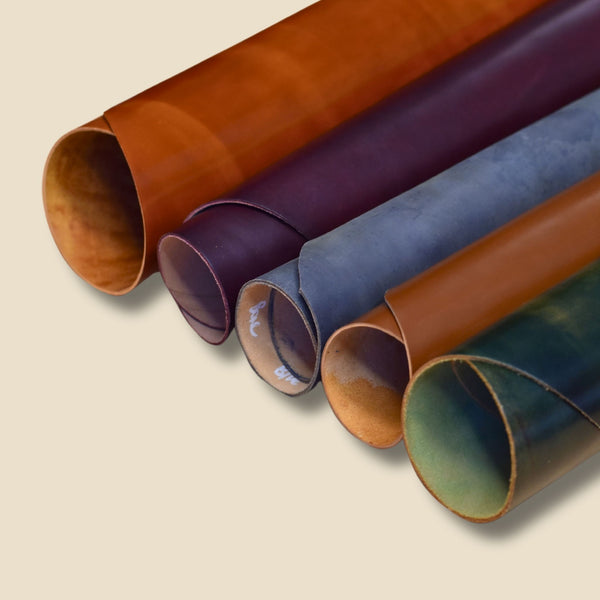
Vegetable-tanned bags age with grace. While synthetic finishes eventually dull, a high-quality veg-tan hide develops a deep, lustrous patina over time. It absorbs the oils from your hands and the sunlight from your travels, gaining character and value with every year of use. For the professional crafter, this leather is also essential for technical finishing. It's the only material that allows for true burnishing. You can achieve glass-like, professional edges that won't fray or delaminate, a feat impossible with chemically-coated alternatives. If you're looking to start your next project with the right foundation, consider exploring our curated leather bundles to experience these textures firsthand.
The Problem with Chrome-Tanned "Fast Fashion" Leather
Chrome tanning is the engine of fast fashion. It's fast, chemical-heavy, and produces hides that are uniform but soulless. These bags don't develop a patina; they simply wear out. Because the fibers are saturated with heavy metals and sealed with plastic topcoats, they often peel or crack after a few seasons of use. Professional artisans avoid these hides for heirloom-quality work. The environmental cost of the heavy metal tanning process is significant, making chrome-free, vegetable-tanned alternatives the only principled choice for a sustainable workshop.
Pueblo and Vacchetta: The Modern Face of Veg-Tan
Modern Italian tanneries have mastered the balance between tradition and innovation. Badalassi Pueblo leather is a prime example. It features a unique, rustic texture that feels almost like suede but burnishes into a rich, smooth shine with use. It's a favorite for those who want a bag that tells a visual story from day one.
Vacchetta remains the classic choice for luxury structural bodies and trim. It's renowned for its high oil content and supple feel. These leathers soften naturally as they're handled, yet they never lose their structural integrity. They provide the strength needed for a daily carry while offering a sensory experience that defines the best leather for handbags in the luxury market.
Conceria Maryam & Italian Excellence: Sourcing the World’s Best
Finding the best leather for handbags often leads serious artisans to the heart of Tuscany. This region is home to the Tuscan Vegetable-Tanning Consortium, a group of tanneries dedicated to preserving the prestigious "Pelle Vegetale" certification. Among these legendary names, Conceria Maryam stands out as a titan. Conceria Maryam represents the pinnacle of Italian tanning, blending centuries-old pit-tanning traditions with modern sustainable standards. Their mastery of horsehide and bovine leathers has made them a global authority for luxury makers who refuse to compromise on quality.
Traditionally, sourcing hides from such prestigious tanneries required massive minimum orders. This created a barrier for individual crafters and small studios prototyping new designs. At Hab-To, we've removed that obstacle. By offering Maryam leather in small panels and individual pieces, we act as your direct bridge to these world-class materials. You can now access the same hides used by high-end fashion houses without the burden of excessive inventory or high costs.
Maryam Vacchetta vs. Shell Cordovan
Choosing between these two legendary articles depends on your bag's purpose. Maryam Vacchetta is an exceptional choice for full bag bodies. It offers a supple yet resilient feel that handles the daily rigors of a tote or backpack with ease. It's famous for that classic Italian "crunch" and a patina that deepens beautifully with every touch. Its high oil content means it's incredibly durable and easy to maintain.
Shell Cordovan, however, is often called the "King of Leathers." It's harvested from a specific fibrous flat muscle in the horse's hindquarters, resulting in a density that's virtually poreless. While it's frequently used for high-end accents or small luxury bags, its natural water resistance and brilliant luster are unmatched. Sourcing Maryam Shell Cordovan allows you to create pieces that aren't just accessories but investment-grade heirlooms.
Why Tannery Heritage Matters for Your Brand
When you sell a handmade bag, you aren't just selling your labor. You're selling the story of the materials. Using leathers from established houses allows you to leverage the "Made in Italy" heritage. It gives your customers confidence in the longevity of their purchase. Sourcing from a house like Maryam also ensures consistency in color and temper across different batches. Your choice of the best leather for handbags defines the legacy of your brand. With our family's 160 years of experience, we help you navigate these selections to ensure the article you choose perfectly matches the technical requirements of your pattern.
Matching Leather Types to Handbag Styles
The architecture of your design dictates your material choice. You can't use a stiff harness leather for a bag meant to drape, just as you shouldn't use a thin lining hide for a structural tote. The best leather for handbags is the one that supports the bag's intended silhouette. For structured totes and briefcases that need to stand upright, firm-temper leathers are the standard. These hides have a high wax content and a tight fiber structure that resists stretching even under the weight of a laptop or heavy daily essentials.
If you're crafting a slouchy hobo or a relaxed messenger bag, you need the fluid movement of milled or tumbled leathers. Using materials like Jesse Olivenleder provides a buttery, supple feel that allows for a natural drape. For those creating high-end luxury clutches, Shell Cordovan offers a dense, poreless finish that feels incredible in the hand. Sometimes, your chosen leather needs a bit of help to hold its shape. In these cases, using Texon reinforcement allows you to maintain a crisp silhouette without adding the bulk of a thicker hide.
The Essential Guide to Bag Lining
Don't treat the interior as an afterthought. A professional lining leather protects the bag's structure and provides a refined finish for your customer. Choosing the right lining affects the overall weight and "hand" of the bag. Goat skin is a favorite for luxury interiors because it's incredibly durable yet thin enough to keep the bag lightweight. Pigskin is another tough option, though it's often stiffer. A thin bovine lining provides a consistent, smooth feel that elevates the entire tactile experience of the piece.
Instructional: Professional Edge Finishing for Handbags
Edge finishing is where the hobbyist and the master artisan diverge. It's the final detail that proves the quality of your work. While chrome-tanned edges often require paint to look finished, vegetable-tanned leathers allow for a natural, high-gloss burnish that won't peel over time. This process compresses the fibers, sealing them against moisture and wear.
What you will need from our tool collection:
- Tokonole (burnishing gum)
- Edge bevelers in various sizes
- Sandpaper (400 to 800 grit)
- Glass slicker or wooden burnisher
- Curated product bundles for finishing
Start by sanding your edges until they're perfectly flush. Once the layers are even, use a beveler to round off the sharp corners, creating a smooth radius. Apply a light amount of Tokonole to the edge, then rub vigorously with your glass slicker. The heat generated by the friction will react with the tannins in the leather, creating a mirror-like shine that defines the best leather for handbags in the professional market.
Sourcing Handbag Leather: Panels vs. Whole Hides
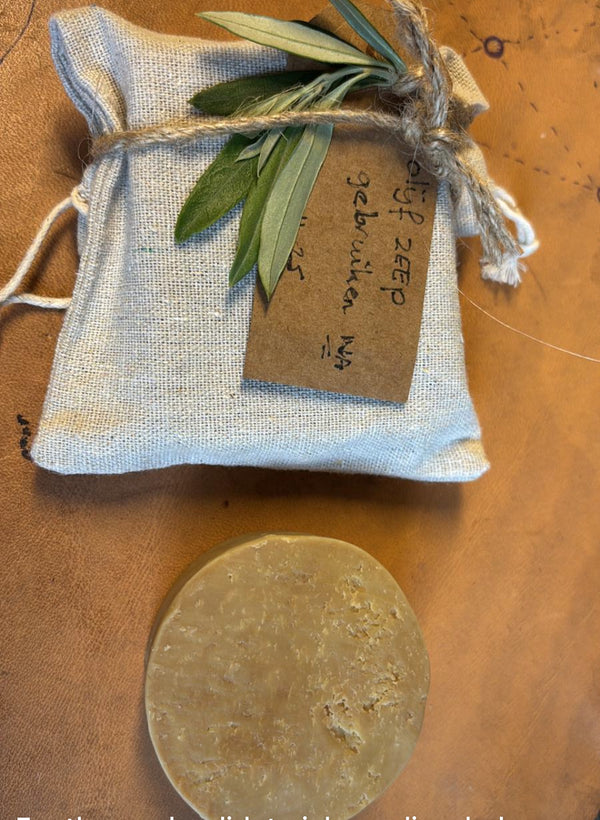
Buying the best leather for handbags often feels like a gamble when you're forced to purchase entire hides. Most commercial wholesalers require you to buy 2.5 square meters at once, even if you only need a fraction of that for a crossbody project. We believe this barrier stifles creativity. At Hab-To, we offer panels and pieces sold by the square decimeter (dm²). This allows you to source high-end materials like Jesse Olivenleder, a sustainable leather tanned with olive leaves, without a massive upfront investment. It's the perfect solution for artisans who want to experiment with premium textures without the waste.
Calculating your needs is a straightforward process. Measure your pattern pieces and add roughly 20 percent to account for natural imperfections and cutting loss. This margin ensures you have enough material to work around the unique character of the hide. If you're unsure about a specific hide's temper or color, you can book a free video consultation with Mike. This personal touch ensures you get the exact piece you need for your vision, just like visiting our showroom in person.
No MOQ: Sourcing for Micro-Brands
Small-scale makers often struggle to access tanneries like Badalassi or Maryam. Our "No Minimum Order Quantity" policy changes that. We stock these world-class materials in our Amsterdam-based showroom, which means European shipping is fast and reliable. You get the same quality as the big fashion houses but on a scale that fits your workshop. It's about empowering the individual crafter with professional resources that were once out of reach.
Building Your Starter Kit
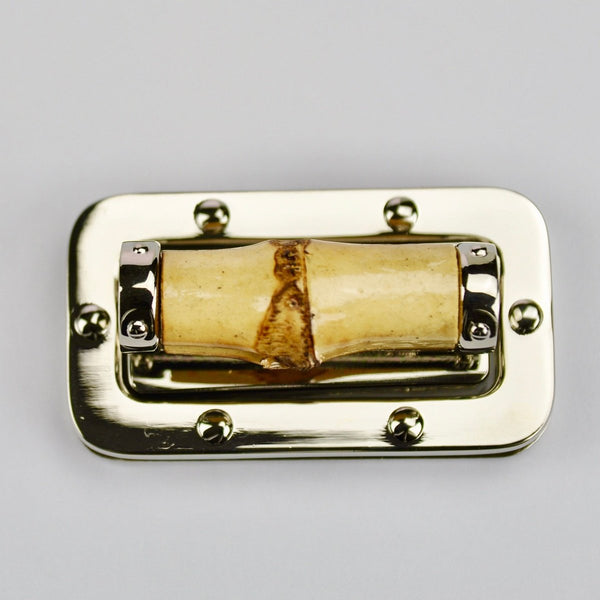
If you're just beginning, selecting a Starter Bundle is the most efficient way to gather your essentials. These kits pair the best leather for handbags with the tools needed to work it. Don't forget to match your hide with high-quality solid brass buckles and furniture. These components ensure your bag doesn't just look good, but functions perfectly for years. Finally, always store your leather flat in a cool, dark place. Avoid plastic wrapping, as the leather needs to breathe to prevent drying or discoloration over time.
Master the Art of Material Selection
Choosing the best leather for handbags is a deliberate act of quality. By understanding the relationship between tanning chemistry and structural integrity, you move beyond simple assembly into true artisanry. Every hide we source from our Amsterdam showroom carries 160 years of family expertise, ensuring your creations age with the grace and character they deserve. We exclusively provide sustainable, vegetable-tanned materials because we believe your passion shouldn't come at an environmental cost.
Your journey doesn't end with a finished stitch; it's about a continuous commitment to learning and using materials that respect your craft. We're proud to be the bridge between legendary Italian tanneries and your workbench, offering world-class hides with no minimum order requirements. I look forward to seeing how these premium panels transform under your hands.
Further Reading for Artisans
- Meet the Maker: Mike’s Journey in Leathercraft
- Professional Leatherworking Masterclasses
- Frequently Asked Questions About Sourcing
Handbag Crafting Essentials
- Conceria Maryam Vacchetta Leather
- Badalassi Pueblo Leather
- Ecostick 1804 Professional Leather Glue
Frequently Asked Questions
What is the most durable leather for a daily-use handbag?
Bovine cow leather, specifically full-grain vegetable-tanned hides, offers the highest durability for daily use. Its dense fiber structure resists abrasions and maintains structural integrity much better than thinner or corrected hides. For bags subjected to heavy wear, harness or bridal leathers are excellent choices. Their high wax and oil content provides an extra layer of protection against the elements while keeping the fibers supple and resilient.
Is vegetable-tanned leather waterproof enough for bags?
While not strictly waterproof, vegetable-tanned leather is naturally water-resistant when properly finished and maintained. Materials like Shell Cordovan are virtually poreless and repel moisture quite effectively. For other veg-tan hides, applying a natural wax or a dedicated leather conditioner creates a protective barrier. This surface treatment helps the bag resist light rain and accidental spills without staining the natural grain or damaging the internal fibers.
How thick should leather be for a structured tote bag?
A thickness between 1.8mm and 2.2mm is ideal for a structured tote bag that needs to stand upright. This specific weight provides enough body to prevent the sides from sagging while remaining workable for most industrial sewing machines. If you choose to work with a thinner leather for a lighter feel, you'll likely need to use internal reinforcements to ensure the bag maintains its crisp silhouette over time.
What is the difference between Vacchetta and Pueblo leather?
The primary difference lies in the surface finish and the initial tactile experience. Vacchetta is smooth and rich in oils, known for its classic luxury feel and its ability to develop a rapid, deep patina. Pueblo leather, produced by Conceria Carlo Badalassi, has a unique scuffed surface that feels almost like suede. It eventually burnishes into a smooth, lustrous shine as it absorbs oils from your hands and regular use.
Can I buy premium Italian leather in small pieces instead of whole hides?
Yes, you can source the best leather for handbags in small panels and square decimeters through our Amsterdam-based showroom. We've eliminated the traditional requirement for full hide purchases, allowing individual artisans to access world-class Italian tanneries without a massive financial commitment. This No MOQ policy is a game-changer for those prototyping new designs or working on small-batch production where waste must be kept to a minimum.
Why is full-grain leather better than 'genuine leather' for handbags?
Full-grain leather contains the strongest, outermost layer of the hide, whereas "genuine leather" is often made from lower-quality split layers bonded with plastic. Full-grain is the best leather for handbags because it remains breathable and develops a beautiful patina rather than peeling or cracking. It's a long-term investment in quality that synthetic-coated products simply can't match, ensuring your work lasts for decades rather than just seasons.
What tools do I need to finish the edges of a leather bag professionally?
Professional edge finishing requires a few specialized tools: an edge beveler, high-grit sandpaper, a glass slicker, and a burnishing agent like Tokonole. These tools allow you to round off sharp edges and compress the internal fibers through friction. This process creates a smooth, glass-like finish that seals the leather against wear. It's the final detail that separates high-end artisan work from hobbyist projects in the leathercraft world.
How do I maintain and care for a vegetable-tanned leather bag?
Regular conditioning with a pH-balanced leather cream is the most effective way to maintain a vegetable-tanned bag. You should avoid over-conditioning, as too much oil can cause the leather to lose its structural stiffness. Keep your bag away from prolonged direct sunlight and extreme heat sources. This prevents the natural plant-based tannins from drying out, which helps avoid surface discoloration and ensures the leather remains resilient for years.
Disclaimer
All our blog articles are made for information purposes only we dont take responsability for any content from third parties.