Leather Craft Essentials: The Ultimate Resource for Aspiring Artisans
Your first masterpiece doesn't require a workshop full of heavy machinery or a mountain of debt. The secret to professional results lies in owning fewer, better leather craft essentials. You've likely felt the sting of a "bargain" tool snapping mid-stitch or the headache of trying to buy a single hide from a wholesaler who demands a massive minimum order. It's exhausting to guess which weight you need while staring at a screen of confusing jargon. I've seen these struggles many times; we're here to help you skip the frustration and get straight to the joy of making.
Mastering this craft starts with knowing which materials and tools are worth your investment. This comprehensive guide will show you how to cut through the noise and focus on quality from the very first cut. We'll explain why vegetable-tanned leather is the only choice for serious artisans and how you can source premium Italian hides in small quantities. From choosing the right Tokonole for your edges to selecting a blade that won't fail you, you're about to gain the clarity you need to build something that lasts a lifetime.
Key Takeaways
- Discover why vegetable-tanned leather is the essential choice for creating durable, ethical goods that age beautifully.
- Learn how to access premium Italian hides from the Tuscan Consortium without the burden of high minimum order quantities.
- Identify the core leather craft essentials you need to start, focusing on high-carbon steel tools that offer precision and longevity.
- Uncover the secrets to professional edge finishing using the right materials to give your work a polished, high-end look.
- Explore the path from hobbyist to professional artisan through structured education and strategic growth in your craft.
Why Your Choice of Material is the First Essential
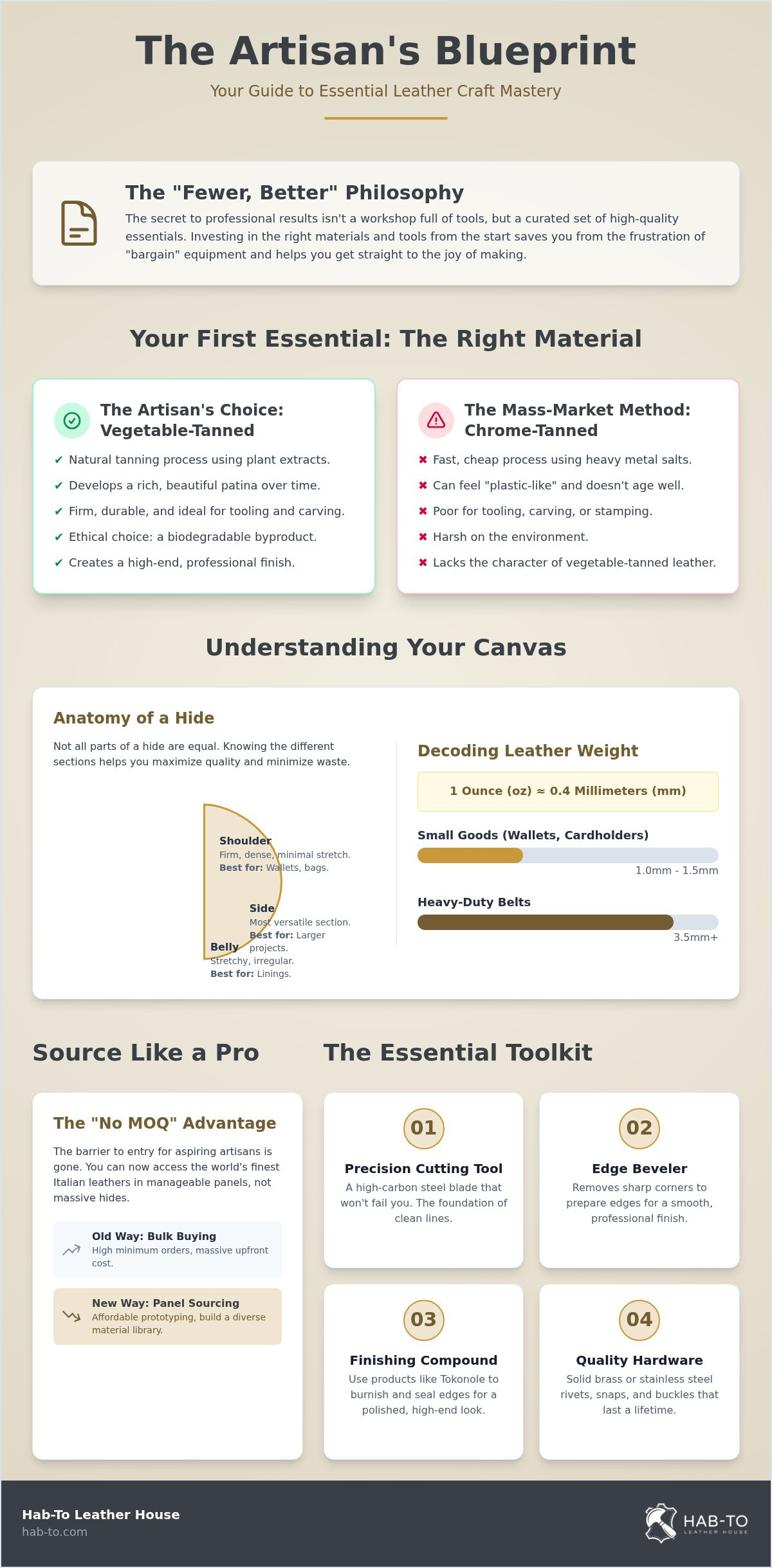
The leather you choose isn't just a surface for your work; it's the soul of the final piece. Selecting the right hide is the foundation of your journey, and it's easily the most important of all leather craft essentials. While mass-produced goods often rely on chrome-tanned leather because it's fast and cheap to produce, true artisans almost exclusively reach for vegetable-tanned hides. Chrome tanning uses heavy metal salts that can be harsh on the environment and leave the leather feeling "dead" or plastic-like. In contrast, vegetable tanning is an ancient, natural process using plant extracts from bark and leaves. It results in a material that is firm, breathable, and incredibly durable.
One of the most rewarding parts of this craft is the "patina" factor. As you use a wallet or bag made from high-quality vegetable-tanned leather, it absorbs oils from your hands and sunlight from the environment. Over time, it develops a deep, rich glow and a unique character that tells a story. This evolution is impossible with synthetic materials or heavily finished chrome leathers. By choosing natural hides, you're also making an ethical choice. These materials are byproducts of the food industry and are biodegradable, ensuring your craft respects the planet as much as the tradition.
When you begin applying various Leather Crafting Techniques like carving, stamping, or burnishing, you'll find that veg-tan leather is the only material that truly "cooperates." It holds a crisp impression and allows for beautiful edge finishing that creates a professional, high-end look.
Understanding Leather Weights and Millimeters
Decoding leather thickness can be confusing for beginners because the industry often jumps between ounces and millimeters. As a general rule, one ounce equals approximately 0.4mm. Choosing the wrong weight can ruin a project before you've even made your first cut. For small goods like cardholders or wallet interiors, a weight of 1.0mm to 1.5mm is ideal. It's thin enough to fold without bulk but strong enough to last. If you're crafting a heavy-duty belt, you'll want something much more substantial, typically 3.5mm or higher. If you're feeling stuck on which thickness to buy, you can see how to measure leather for your project to ensure a perfect fit every time.
The Anatomy of a Hide: Sides, Shoulders, and Bellies
A single hide isn't uniform in quality or stretch. To get the best yield, you need to understand which part of the animal you're working with. Shoulders are often considered the sweet spot for artisans. They offer a firm, dense grain with very little stretch, making them perfect for wallets and small bags. Bellies are the most affordable part but tend to be stretchy and irregular; they're best used for linings or hidden reinforcements. A "side" represents half a hide and offers the most versatility for larger projects. Paying attention to the grain character and density in these different areas will help you minimize waste and maximize the beauty of your finished work.
Premium Sourcing: Getting World-Class Leather Without the Bulk
Why should you be forced to buy a 20-square-foot hide just to make a single cardholder? For years, the barrier to entry for aspiring artisans was the high minimum order quantity (MOQ) demanded by traditional wholesalers. Today, the landscape has shifted. You can now source the finest Italian leathers in manageable panels, which has become a vital part of modern leather craft essentials. This "No MOQ" approach allows you to prototype designs and test different textures without a massive financial commitment. It's about giving you the freedom to experiment with the best materials from day one.
When looking for a supplier, prioritize those with deep roots in the industry. A heritage provider, backed by over 160 years of family expertise, offers more than just a product; they provide a bridge to the world's most prestigious tanneries. These suppliers often act as authorized distributors for members of the Tuscan Vegetable Tanned Leather Consortium, ensuring every piece you buy carries a legacy of quality. For those just starting, consulting a Beginner's Guide to Leather Craft can help you understand how to prepare these premium surfaces for your first project.
The benefit of buying pre-cut panels extends beyond cost. It allows you to build a diverse library of textures and colors without cluttering your workspace. You can test how a specific tannage reacts to your tools before committing to a larger purchase. This strategic sourcing ensures that your workshop stays lean while your creative possibilities remain endless.
Iconic Tanneries Every Crafter Should Know
Certain names carry weight in the leatherworking community because of their commitment to tradition. Conceria Carlo Badalassi is famous for its Pueblo Leather, known for its unique scuffed texture that patinas into a smooth, marble-like finish. If you're looking for the pinnacle of luxury, Conceria Maryam produces exquisite Shell Cordovan. This leather is prized for its high density and mirror-like luster. For the eco-conscious maker, Olivenleder offers a groundbreaking sustainable alternative, using olive leaf extract for the tanning process rather than traditional barks.
Specialty Leathers: From Vaccheta to Horsehide
Your project's purpose should dictate your leather choice. Vaccheta leather is a timeless staple, offering a clean canvas that ages beautifully and is perfect for handbags or straps. If you want to push boundaries, translucent bovine hides provide a unique aesthetic for lighting or avant-garde accessories. Don't overlook the durability of horse and goat leathers either; their tight grain structure makes them resilient for rugged gear. If you're overwhelmed by the choices, consider starting with curated leather bundles to get a feel for different weights and finishes.
The Artisan's Toolkit: Essential Hardware and Hand Tools
Owning a mountain of tools doesn't make you a master artisan. In fact, it often leads to clutter and confusion. True excellence comes from mastering a few high-quality leather craft essentials. Most beginners make the mistake of buying cheap "starter kits" from mass retailers. These tools often arrive dull or break under pressure, ruining your expensive leather in the process. It's better to invest in five professional-grade tools that will last a lifetime than fifty that won't survive a month of real work.
High-carbon steel is the gold standard for knives and pricking irons. It holds an edge longer and allows for the razor-sharp precision required for clean, effortless cuts. When you combine these with the right needles and thread, you can achieve the iconic "Hermès" saddle stitch. This stitch isn't just beautiful; it's functionally superior to a machine lockstitch because it won't unravel if one thread breaks. For a deeper look at the metal components that hold your work together, see this guide to essential leather hardware.
Precision Cutting and Stitching Essentials
Consistent stitch spacing is what separates a hobbyist from a professional. A pricking iron allows you to mark your path with mathematical precision, ensuring every stitch slants perfectly. Choosing your thread is equally vital. Natural Lin Cable offers a traditional, matte finish that looks stunning on heritage goods, while modern synthetics provide extra friction resistance for items that see heavy use. Don't forget a self-healing cutting mat and a poly maul. Using a metal hammer on your irons will mushroom the steel and damage them; a maul absorbs the shock and protects your investment. You can find these and other leatherworking tools in our curated collection.
Quality Hardware: Brass, Gold, and Nickel
If you're using world-class leather, don't compromise on the metal. Solid brass is the only choice for heritage-quality goods because it develops a patina alongside the leather and never rusts or peels. Whether you're selecting leather hardware like buckles, D-rings, or rivets, ensure the weight of the metal matches the weight of your hide. Investing in these leather craft essentials ensures your finished piece feels balanced and substantial in the hand. For a comprehensive breakdown of finishes and materials, read our artisan's guide to solid brass hardware.
Mastering the Professional Finish: Edges and Assembly
Finish is everything. It's the first thing a customer touches and the last thing an artisan perfects. Professional edge finishing is the true hallmark of a master; it transforms raw, fuzzy edges into smooth, glass-like surfaces that feel premium. To get there, you need the right chemistry and the right technique. Mastering these leather craft essentials is what separates a student from a master artisan.
What You Will Need
- Tokonole Burnishing Cream
- Precision Edge Bevelers
- Curated Finishing Bundles
- Ecostick Intercom Glue
- Sanding sticks (400 to 1000 grit)
- Glass slicker or canvas cloth
Professional assembly relies on the science of bonding. Most traditional glues are filled with harsh solvents that aren't healthy for a small workshop or a home environment. We prefer Ecostick Intercom glue because it's water-based and incredibly strong. It allows for a clean, solvent-free workshop without compromising on the structural integrity of your piece. It bonds quickly, stays flexible, and ensures your layers stay perfectly aligned during stitching.
The Secret to Glass-Like Edges with Tokonole
Achieving a mirror-like edge isn't magic. It's a disciplined process of beveling, sanding, and burnishing. First, use a beveler to remove the sharp corner of the leather. Sand the edge smooth, starting with a lower grit and working your way up until the seam between layers disappears. Once the edge is uniform, apply a small amount of Tokonole. Use a glass slicker to generate heat through friction. Glass is often superior to wood for firm vegetable-tanned leathers because it doesn't absorb the cream and provides a perfectly flat surface. This creates a durable edge that won't crack or peel as the item ages.
Adhesives and Reinforcements
Leather is a natural material that likes to stretch, especially in high-stress areas like card slots or handle attachments. This is where Texon reinforcement becomes one of your most valuable leather craft essentials. By sandwiching thin layers of Texon or reinforcement tape between your leather and lining, you ensure the project keeps its shape forever. For clean, invisible glue lines, apply your adhesive thinly and evenly. A heavy hand with glue leads to squeeze-out that can ruin the grain of your premium Italian leather. Precision in assembly is just as important as the quality of the hide itself.
Building Your Craft: Education and Strategic Growth
Turning a passion into a profession is a journey that goes beyond simply buying more leather. It's about developing a signature style and a reliable workflow. When you move from making gifts for friends to selling to customers, consistency becomes one of your most vital leather craft essentials. You need to know that the hide you order today will match the quality of the one you ordered six months ago. Sourcing for a micro-brand requires a partner who understands this need for reliability, especially when you're working with high-end materials like Italian vegetable-tanned leather.
While random internet tutorials are great for quick tips, they often lack a structured path to mastery. Investing in professional Masterclasses gives you access to years of trial and error condensed into actionable lessons. These courses teach you the principles of construction and design that allow you to troubleshoot your own projects. Understanding the "why" behind a technique is what allows you to innovate rather than just imitate. If you're looking to scale your sourcing without the burden of massive inventory, our guide to buying leather online offers a roadmap for the professional artisan.
The Leathercraft Education Ecosystem
Every great workshop needs a library. Beyond physical reference books, you should immerse yourself in the maker community. Our audio series, The Leather Hour, is designed to share the stories and technical insights of craftsmen from around the world. Sometimes you hit a wall that a podcast can't solve. We've been there too. That's why we offer free video consultations with Mike. Whether you're struggling with a specific gusset design or choosing the right weight for a lining, direct mentorship can save you hours of frustration and wasted material.
Customizing Your Starter Kits
Generic tool kits often contain items you'll never use and quality you'll soon outgrow. We believe Starter Bundles should be curated based on what you actually want to build. A maker focused on watchstraps needs vastly different tools than someone crafting equestrian gear or heavy-duty bags. Choosing the right tools for your specific niche is one of the smartest leather craft essentials you can master early on. At Hab-To, our philosophy is rooted in personalized service. We treat every crafter with the same respect and attention to detail. We aren't just selling supplies; we're helping you build a legacy.
Equip Your Workshop for Excellence
Success in this trade isn't measured by the size of your hide collection, but by the precision of your execution. By focusing on high-quality leather craft essentials, you eliminate the variables that cause projects to fail. You've learned that starting with premium vegetable-tanned hides and professional-grade tools sets you on a path toward creating legacy-quality goods that tell a story through their patina.
At Hab-To Leather House, we support your growth with over 160 years of family expertise and a commitment to accessible quality. Whether you need a single panel of Italian leather or a free video consultation with Mike to solve a construction hurdle, we're here to help. You don't have to navigate the transition from hobbyist to professional alone; we provide the bridge to the world's most renowned tanneries without the burden of high minimum orders.
Your journey as an artisan is just beginning. With the right foundation and a mentor in your corner, your craft will only grow more refined with every stitch. We look forward to seeing the masterpieces you build.
Essential Supplies for Your Workshop
- Badalassi Pueblo Leather (2.2-2.4mm)
- Leathercraft Master Bundle with Tokonole
- Curated Starter Bundles
- Ecostick 1804 Solvent-Free Leather Glue
Frequently Asked Questions
What is the best leather for a beginner to start with?
Vegetable-tanned cowhide shoulders are the most forgiving starting point for any new maker. This material is firm enough to stay stable on your cutting mat and doesn't stretch as much as softer, chrome-tanned leathers. Its ability to hold a crisp burnish and accept stamps makes it perfect for practicing the fundamental leather craft essentials without the frustration of the material fighting back.
Do I need a sewing machine for leathercrafting?
You don't need a sewing machine to produce professional, gallery-quality leather goods. Most high-end artisans actually prefer hand stitching using the traditional saddle stitch technique. This method is functionally superior to a machine lockstitch because it uses two independent needles; if one thread snaps, the rest of the seam remains perfectly intact and won't unravel over time.
How do I know what leather thickness (mm) to buy for a wallet?
For a standard cardholder or the interior pockets of a bifold, you should aim for leather between 1.0mm and 1.2mm thick. If you are crafting the outer shell of a wallet that needs more structure, 1.4mm to 1.6mm is the ideal range. Using these specific measurements ensures your finished piece remains slim and functional rather than becoming an oversized, bulky brick in your pocket.
What is the difference between vegetable-tanned and chrome-tanned leather?
Vegetable tanning uses natural plant extracts like oak or chestnut bark, while chrome tanning relies on chromium salts and chemicals. Vegetable-tanned hides are the preferred leather craft essentials for serious artisans because they develop a unique patina and can be burnished. Chrome-tanned leather is generally softer and more colorful but it cannot be carved and its edges will not react to burnishing cream.
Can I buy high-quality leather in small pieces without buying a whole hide?
You can absolutely source premium leather in small quantities through our "No Minimum Order Quantity" model. We understand that hobbyists and micro-brands often only need enough material for a single project or prototype. By offering pre-cut panels of authentic Italian leather, we ensure you can work with world-class materials from tanneries like Badalassi without the financial burden of a full hide.
What are the must-have tools for finishing leather edges?
The core kit for a professional edge includes a sharp edge beveler, sandpaper in 400 to 1000 grits, and a burnishing cream like Tokonole. You will also need a friction tool, such as a glass slicker or a simple piece of heavy canvas cloth. These tools work in sequence to round off sharp corners, smooth the fibers, and create that sought-after glass-like finish.
Is vegetable-tanned leather waterproof?
Vegetable-tanned leather is a porous, natural material that is not inherently waterproof. If it gets soaked, the fibers can swell and the leather may become stiff or stained once it dries out. To protect your work, you should always apply a light coat of natural conditioner or a wax-based sealant. This creates a protective barrier that helps the leather resist light rain and everyday moisture.
How do I care for my leather tools to make them last?
Keeping your blades sharp and dry is the secret to tool longevity. You should strop your knives and bevelers on a leather strop with polishing compound every few minutes of use to maintain a razor edge. For long-term protection, especially for high-carbon steel tools, apply a very thin coat of machine oil before storage to prevent rust from developing in your workshop.
Disclaimer
All our blog articles are made for information purposes only we dont take responsability for any content from third parties.