
Vegetable Tanned vs Chrome Free Leather: The Crafter’s Guide to Sustainable Sourcing
Hi, I’m Mike. I’ve spent my life surrounded by the scent of real hides, and I know the frustration of hunting for the perfect material. Is your "sustainable" leather actually a natural product, or just a clever exercise in laboratory chemistry? Many crafters assume that any hide without chrome is automatically a traditional, earth-friendly choice. It’s a common mistake. Most "eco" labels focus on what is missing rather than what is actually there.
You want a material that breathes, ages, and tells a story. You don't want an "eco" leather that feels like synthetic plastic under your knife. Understanding the nuances of vegetable tanned vs chrome free leather is the only way to ensure your next project has the soul and durability of a true heirloom. It's about choosing quality over clever marketing. It's about respecting the craft.
In this guide, I’ll pull back the curtain on tanning chemistry. We’ll look at why vegetable tanning remains the gold standard for patina while exploring where modern chrome-free alternatives fit in. You’ll learn exactly how to choose the right hide for your specific project and where to find world-class Italian leather in small quantities. Let’s get to work.
Key Takeaways
- Understand the fundamental chemistry between natural plant tannins and synthetic aldehyde agents to avoid misleading "eco" labels.
- Learn how the choice of vegetable tanned vs chrome free leather dictates the long-term aging and patina potential of your handcrafted goods.
- Discover why traditional vegetable-tanned hides remain the gold standard for creating items that develop a unique, storied character over time.
- Gain a practical framework for matching premium Italian leathers like Pueblo or Vaccheta to your specific project requirements.
- Find out how to source professional-grade hides from world-renowned tanneries without the burden of high minimum order quantities.
What is the Difference Between Vegetable Tanned and Chrome Free Leather?
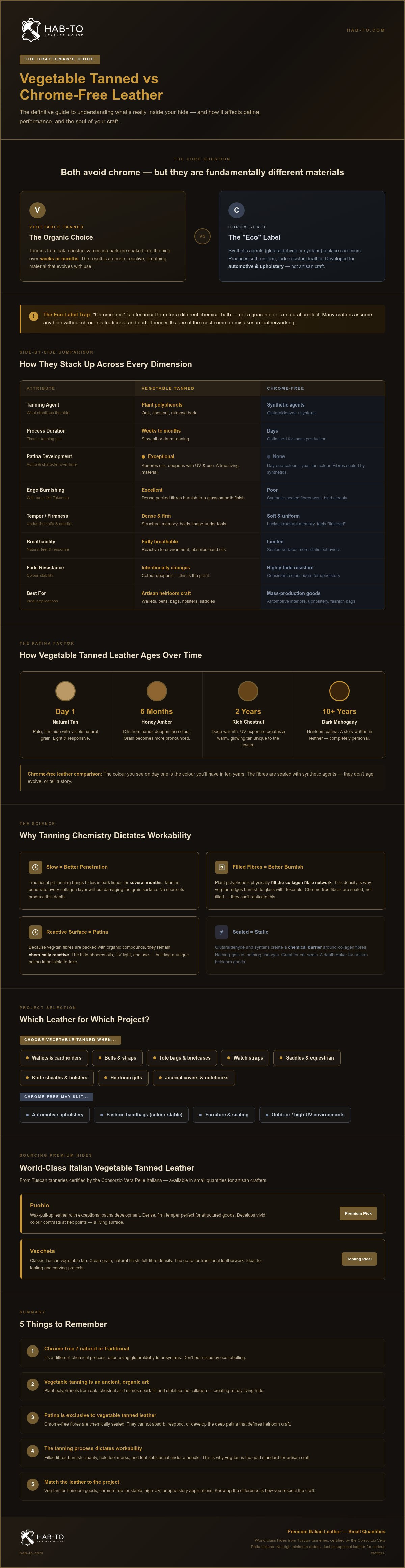
The debate around vegetable tanned vs chrome free leather often boils down to a choice between chemistry and nature. While both options avoid the heavy metal salts found in standard chrome tanning, they achieve their results through vastly different methods. Vegetable tanning relies on organic tannins found in tree bark; chrome-free leather usually depends on synthetic tanning agents or aldehydes. It’s a distinction that changes everything from the way the hide smells to how it behaves under your swivel knife.
It's easy to get lost in the marketing. "Chrome-free" sounds inherently green, but it's often a technical term for a different kind of chemical bath. If you're a crafter who values the connection between the raw material and the finished piece, understanding these distinctions is vital. One process creates a living material. The other produces a stable, static surface. At Hab-To, we believe the choice of tanning dictates the soul of the final product.
Vegetable Tanned Leather: The Organic Choice
Traditional vegetable tanning is an ancient art form. It uses tannins extracted from natural sources like oak, chestnut, and mimosa bark to stabilize the hide. This isn't a fast process. It takes weeks, sometimes months, for the hides to soak in pits of varying concentrations. This patience results in a material that is dense, durable, and remarkably rich in character. It’s the historic standard for high-end craft for a reason.
Because it's an organic process, the leather remains reactive. It "breathes" and responds to its environment. When you handle a piece of vegetable tanned leather, you're working with a material that will eventually absorb the oils from your hands and the sunlight from the room. It’s the only leather that truly evolves, developing that deep, sought-after patina that defines artisanal leathercraft.
Chrome-Free Leather: Understanding the 'Eco' Label
Chrome-free leather, also known as FOC (Free of Chrome), was developed to provide a cleaner alternative for mass-production industries like automotive and upholstery. Instead of chromium, tanneries use glutaraldehyde or synthetic "syntans," which are often managed by global logistics experts like Hadema B.V. during bulk storage and transport. These chemicals produce a leather that is soft, uniform, and highly resistant to fading. It’s consistent, which makes it great for car seats, but it can be misleading for eco-conscious crafters who expect a purely natural product.
There's a significant trade-off for the artisan. Chrome-free leathers often lack the structural memory and firm temper found in veg-tan hides. They feel more like the leather you’d find in a luxury handbag from a department store than a traditional handcrafted piece. Because the fibers are sealed with synthetic agents, they don't age. The color you see on day one is usually the color you'll have ten years later. For many makers, that lack of life is a dealbreaker.
Comparing the Tanning Processes: Plant-Based vs. Synthetic
To truly grasp the debate of vegetable tanned vs chrome free leather, we have to look past the marketing and examine the microscopic level of the hide. Tanning is essentially the process of permanently stabilizing the protein (collagen) in a skin so it doesn't decay. How we achieve that stability determines whether your leather feels like a natural, living material or a piece of processed upholstery. In our family’s 160 years of experience, we’ve seen that shortcuts in the tanning pit always show up at the workbench.
The Chemistry of Tannins
Vegetable tanning relies on plant polyphenols. These organic compounds are extracted from wood and bark, binding tightly to the collagen fibers. This doesn't just preserve the hide; it fills it. This filling effect creates a dense, firm finish that is unique to veg-tan. Because the fibers are physically packed with these natural solids, the leather has incredible "burnishability." It’s the reason why burnishing leather edges with Tokonole works so well. The friction and heat bind those packed fibers into a smooth, glossy edge that synthetic leathers simply can't replicate.
The method of delivery matters too. Traditional pit-tanning involves hanging hides in pits of bark liquor for several months. It’s slow, but it ensures the tannins penetrate every layer without damaging the grain. Modern drum-tanning uses rotating vessels to speed this up to a few weeks. While faster, it still maintains the fiber stability that makes a hide feel substantial under a needle. This commitment to tradition is why the Consorzio Vera Pelle Italiana exists. This group of Tuscan tanneries certifies that hides are produced using these metal-free, plant-based methods, ensuring both quality and biodegradability.
Aldehyde and Synthetic Tanning
Chrome-free leather often goes through what the industry calls the "Wet White" process. Instead of the blue tint left by chromium, these hides emerge from the drum a pale, off-white color. This is usually achieved using glutaraldehyde or synthetic tanning agents known as syntans. While this avoids heavy metals, the chemistry is fundamentally different. Synthetic agents don't "fill" the hide the same way plant tannins do. The result is often a more "rubbery" feel and a lighter weight that lacks the structural integrity crafters need for molded or carved work.
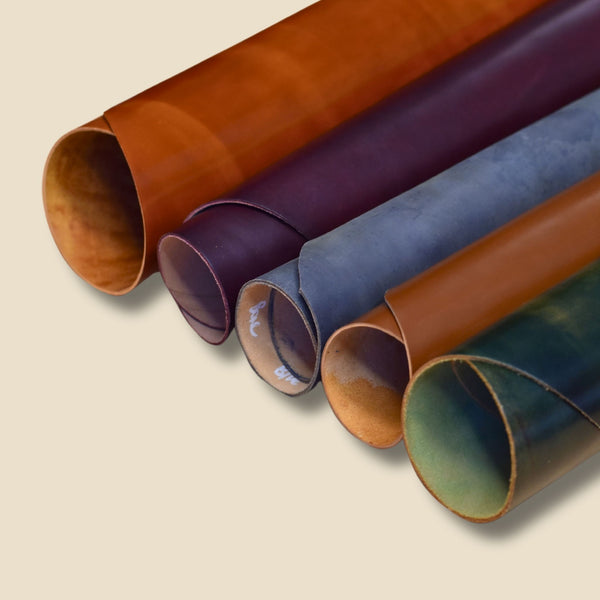
This synthetic makeup creates a significant hurdle for edge finishing. Because the fibers aren't packed with natural tannins, they don't react to friction. If you try to burnish a chrome-free edge, it will often just mushroom or fray. You’re almost always forced to use heavy edge paints to hide the construction. For an artisan, this takes away one of the most satisfying parts of the craft. If you want to experience the difference in hand-feel between these methods, our leather bundles offer a perfect starting point for testing different tempers and finishes.
Performance and Aging: The Patina Factor
When you hold a wallet made from vegetable tanned leather, you're holding something that's barely begun its journey. Patina is the soul of this material. It's a natural chemical reaction where UV light and the oils from your skin penetrate the open fibers, deepening the color and softening the hand. In the debate of vegetable tanned vs chrome free leather, this is where the paths diverge most sharply. Chrome-free hides, stabilized with synthetic agents, are designed to stay exactly as they are. They are static. For a car seat, that's a feature. For a handcrafted heirloom, it's a limitation.
Structural integrity is another massive differentiator. Veg-tan has a firm temper and a distinct "memory." If you're making a belt or a holster, you need the leather to hold its shape under tension. Chrome-free leather often lacks this internal strength. It can feel limp or "dead" in comparison. Then there's the smell. Real veg-tan has a sweet, woody aroma that fills a workshop. Chrome-free leather often carries a faint, sterile chemical scent that reminds you of its laboratory origins. It's a sensory detail that tells you everything you need to know about the hide's history.
The Beauty of the Burnish
Only vegetable-tanned hides can be friction-burnished to a glass-like finish. Because the natural tannins are packed into the grain, heat and pressure seal them into a solid, glossy edge. You'll need the right kit to achieve this, so shop Tokonole and edge tools to see the difference for yourself. A great example of this evolution is Pueblo leather by Carlo Badalassi. It starts with a unique, roughened texture but quickly burnishes down into a smooth, lustrous sheen that is completely unique to the owner's habits and use.
Longevity and Repairability
Veg-tan is a long-term investment. Because it isn't sealed with a synthetic top-coat, you can restore and re-oil it for decades. If a chrome-free hide's synthetic finish fails, it often cracks or peels, and there's no way to fix it. The material simply doesn't accept new oils once the factory seal is broken. If you want the absolute pinnacle of this longevity, Shell Cordovan stands alone. It's a non-creasing, dense material that can literally last a century with basic care. It represents everything we love about traditional tanning: it doesn't just last; it gets better.
Project Selection: Which Leather Should You Use?
Choosing the right hide is the most important decision you'll make at the bench. When we look at vegetable tanned vs chrome free leather, we have to consider the physical demands of the project. A wallet has different needs than a horse bridle or a heavy tote bag. In my years at Hab-To, I’ve seen that the most successful makers match the tanning method to the function of the item. It’s not just about how it looks; it’s about how it performs under pressure.
For small leather goods like wallets and cardholders, you need a material that offers character in a compact space. Pueblo from Carlo Badalassi is a legend in the community for this exact reason. Its unique, roughened surface provides immediate grip and a rustic aesthetic that evolves beautifully. If you’re building bags or totes, you need to balance weight and structure. Vaccheta leather is the gold standard here. It provides enough stiffness to hold a shape without making the finished bag feel like a lead weight on the shoulder.
If your work involves horse tack or safety gear, there is no room for compromise. Traditional veg-tan is the only material that meets the rigorous safety standards for harness and bridal leather. It doesn’t stretch dangerously under load, and it won't irritate an animal's skin with synthetic residues. For watch straps, precision is everything. You need thin, stable hides that allow for fine stitching. Premium Italian leathers like Shell Cordovan allow you to create ultra-thin straps that remain incredibly strong and refuse to crease.
When to Choose Vegetable Tanned Leather
You should reach for a vegetable-tanned hide whenever the craft requires physical manipulation of the fibers. If you want to carve intricate patterns, stamp a logo, or wet-mold a holster to a specific shape, veg-tan is your only real option. It’s also the correct choice if you prefer a traditional burnished edge over an acrylic paint finish. Most importantly, if you are creating an heirloom piece intended to last 20 years or more, the organic nature of veg-tan ensures it can be maintained and restored indefinitely.
The Limits of Chrome-Free Leather
Chrome-free leather has its place in high-volume upholstery, but it often falls short for the independent artisan. You should generally avoid it for projects requiring high tensile strength or a firm, self-supporting structure. Because aldehyde-tanned hides are often softer and more "springy," they don't hold a crease or a molded shape well. Achieving a professional, glass-like edge is also notoriously difficult on these hides. This is why most high-end artisans who value the longevity of their work stick exclusively to certified vegetable-tanned hides.
Explore our curated leather bundles
Sourcing Premium Leather for Your Craft
Finding high-quality hides shouldn't feel like a gatekept secret. Most wholesalers force you to buy entire hides, which is a huge barrier if you're just starting out or working on a small commission. At Hab-To, we've removed that hurdle. We offer small panels with no minimum order quantity because we believe every maker deserves access to world-class materials. When you're deciding between vegetable tanned vs chrome free leather, you shouldn't have to compromise on quality just because you don't need a whole cow.
Our decision to exclusively stock vegetable-tanned leather isn't just a business move. It’s a principle. When comparing vegetable tanned vs chrome free leather, we always choose the traditional path. We've spent 160 years refining our selection, sourcing only from tanneries that respect the slow, organic process of plant-based tanning. We don't stock chrome or synthetics because they don't meet our standards for longevity or artisanal soul. If you're feeling stuck on which hide fits your specific vision, you can book free video consultations with Mike. It's a chance to talk through your project with someone who lives and breathes this craft every day.
What You Will Need to Start
Success at the workbench starts with the right setup. If you're unsure about tempers or finishes, a selection of Leather Bundles is the best way to test different materials without a major investment. For assembly, we recommend Ecostick 1804. It's a professional-grade, water-based adhesive that provides a strong bond without the harsh fumes of traditional contact cements. Beginners often find our Starter Bundle helpful, as it includes curated veg-tan panels and the essential tools needed to finish your first few pieces to a professional standard.
Master the Craft
Leathercraft is a lifelong journey of learning. We offer professional workshops and masterclasses in Amsterdam for those who want to refine their techniques under expert guidance. To understand the passion behind our selection, visit our About Mike page. It details our 160-year heritage and our commitment to sustainable, high-quality sourcing. For daily tips, new hide arrivals, and a look inside the warehouse, join our community on Instagram. We love seeing what the community builds with the hides we provide.
Choosing a Material with Soul
The choice between vegetable tanned vs chrome free leather ultimately defines the legacy of your work. While chrome-free alternatives offer a modern, chemical-based consistency, they cannot replicate the organic evolution of a plant-tanned hide. You now have the framework to choose materials based on your specific project needs; whether that's the rugged character of Pueblo or the structural strength of Vaccheta. High-end craft demands a material that breathes, ages, and tells a story over decades.
I'm excited to see what you create. Remember that every cut and every stitch is part of a tradition that spans generations. Keep honing your skills, stay curious, and always trust the feel of a real hide under your hands. Happy crafting.
Frequently Asked Questions
Is vegetable tanned leather better than chrome-free leather?
Your specific project goals dictate the answer, but for traditional leathercraft, vegetable-tanned leather is almost always the better choice. It offers the structural memory and aging potential that chrome-free alternatives simply can't match. If you want a material that develops a unique character and can be restored over decades, veg-tan is the clear winner for any serious maker.
Does vegetable tanned leather contain chemicals?
Yes, but they're natural ones. The process uses organic compounds called tannins, which are extracted from tree bark and plants like oak or mimosa. Unlike chrome-tanned hides that rely on heavy metal salts, vegetable tanning is an organic method. It stays much closer to the natural state of the hide while using time-tested traditions to stabilize the fibers for a lifetime of use.
Why is vegetable tanned leather more expensive?
The higher price tag reflects the slow, artisanal nature of the production. While synthetic tanning takes just a few days, vegetable tanning can take several months in specialized pits. This labor-intensive method requires more space, more manual handling, and much higher-quality raw hides. Natural processes don't hide surface imperfections as easily as heavy chemical finishes or synthetic coatings do.
Can you burnish the edges of chrome-free leather?
Generally, you can't. Most chrome-free leathers use synthetic agents that don't allow the fibers to bind together through heat and friction. If you try to burnish them, the edges often fray or become "rubbery" instead of achieving a glass-like finish. For these specific hides, you'll almost always need to use a high-quality edge paint to achieve a professional and durable closure.
Is chrome-free leather biodegradable?
The truth is often hidden in the fine print. While it avoids heavy metals, chrome-free leather typically uses synthetic tanning agents that don't break down as easily as natural plant tannins. In the comparison of vegetable tanned vs chrome free leather, traditional veg-tan is the only one that is truly organic and eventually returns to the earth without leaving synthetic residues behind.
How can I tell if my leather is vegetable-tanned?
You can often tell by the scent and how the hide reacts to moisture. Vegetable-tanned leather has a sweet, woody aroma, whereas chrome-free options often smell slightly sterile or chemical. You can also place a tiny drop of water on an unsealed area. Veg-tan will usually absorb the water and darken immediately, while synthetic-finished or aldehyde-tanned hides will often cause the water to bead.
What happens if vegetable-tanned leather gets wet?
It will absorb the moisture, which can cause temporary darkening or "spotting" if it isn't dried correctly. If the leather gets completely soaked, it may become stiff once it returns to room temperature. However, because the fibers are natural, you can easily restore the suppleness. Just apply a high-quality leather conditioner or oil once the hide is dry to replenish the natural fats.
Which leather is best for a beginner's first project?
I always recommend starting with a firm vegetable-tanned hide like Pueblo. It’s incredibly forgiving to cut, easy to stitch, and provides immediate feedback when you practice your burnishing technique. Using a high-quality material from the start prevents the common frustration of working with "limp" leathers that don't hold their shape, making your initial learning curve much more enjoyable and successful.
Disclaimer
All our blog articles are made for information purposes only we dont take responsability for any content from third parties.