Choosing the Right Leather Supply Store: A Guide to Premium Sourcing in 2026
Why should an artisan be forced to buy a full hide when they only need a single panel of Shell Cordovan for a watch strap? It's a common frustration for makers who want the best materials but don't have the warehouse space of a factory. Finding a trustworthy leather supply store often feels like a gamble between high minimum orders and uncertain quality. You've likely felt the sting of "premium" leather that turns out to be mediocre or tools that fail during delicate edge work.
I understand that your craft depends on the integrity of your materials. This guide focuses on identifying sourcing partners who offer genuine Tuscan leathers like Pueblo and Maryam by the panel. We'll look at how the 2026 ISO 26082-1 standards for soiling resistance affect your material choice and why the EU’s recent exclusion of leather from deforestation regulations is a win for sustainable sourcing. You'll learn how to access professional-grade hardware and non-toxic glues while receiving the expert advice you need to elevate your next project. It's time to source with the same passion you bring to your workbench.
Key Takeaways
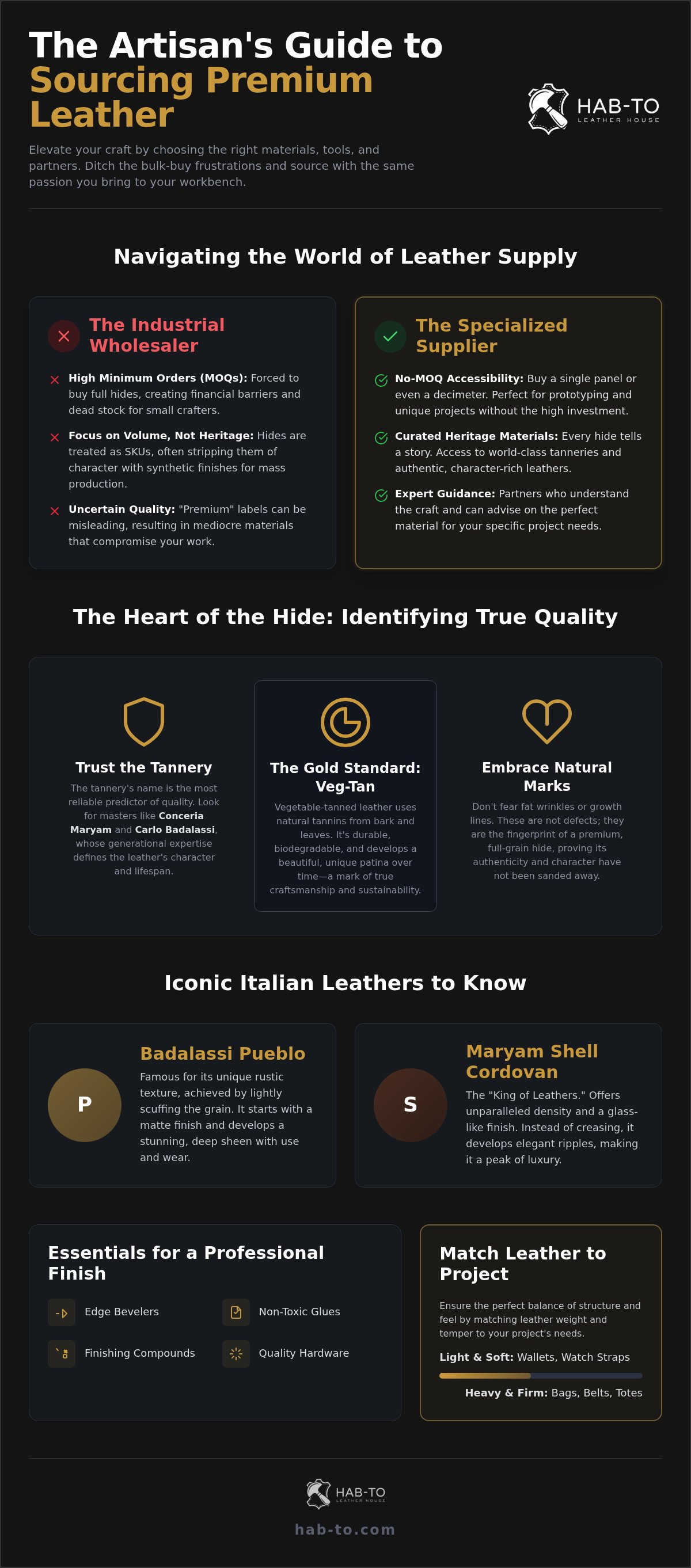
- Learn why a specialized leather supply store prioritizes material heritage over industrial volume to ensure your projects use only the finest vegetable-tanned hides.
- Discover how to select hides based on the reputation of world-class tanneries like Conceria Maryam and Carlo Badalassi rather than just color or price.
- Understand how no-MOQ accessibility allows you to source premium panels of Pueblo or Shell Cordovan without the burden of purchasing full hides.
- Identify the essential professional-grade tools and non-toxic glues required to elevate your craftsmanship from a "handmade" look to a professional finish.
- Master the art of matching leather weight and temper to your specific project needs, ensuring the perfect balance of structure and feel for bags or wallets.
Why Sourcing from a Specialized Leather Supply Store Matters
Selecting where you buy your materials is a defining moment for any artisan. A generic warehouse sees a hide as just another SKU in a vast inventory. In contrast, a specialized leather supply store views each piece as a legacy of craftsmanship. These stores prioritize material heritage over sheer volume. They don't just move boxes; they understand the story behind the tannery and the specific characteristics of every hide they stock.
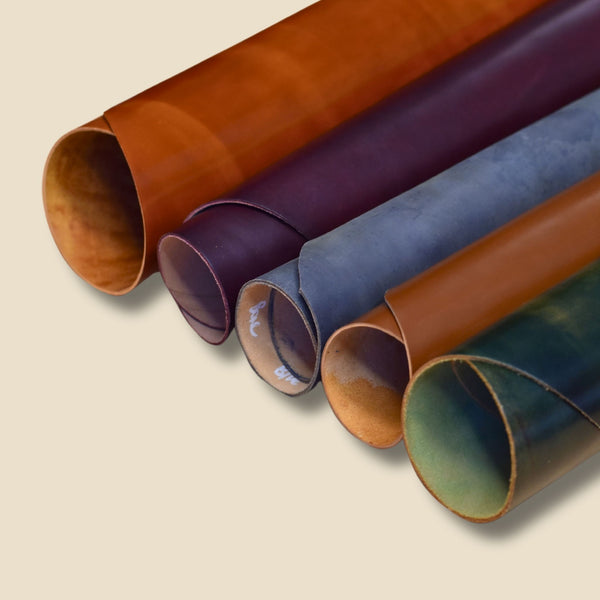
Industrial wholesalers often focus on consistency through heavy coatings and synthetic finishes. While this works for mass production, it strips the material of its soul. Artisan-friendly suppliers look for character. They value the natural variations that prove a hide is authentic. When Understanding Premium Tanneries and the Art of the Hide, it's clear that the tanning method dictates everything from the environmental footprint to the final patina. For the serious maker, vegetable-tanned leather remains the gold standard. It offers a structural integrity and a capacity for aging that chrome-tanned alternatives simply cannot match.
The Environmental and Ethical Case for Veg-Tan
Vegetable tanning is an ancient craft that relies on nature rather than harsh chemicals. The process uses tannins found naturally in tree bark, leaves, and fruits. This creates a material that is not only durable but also biodegradable. Unlike chrome-tanned leather, which uses heavy metal salts that can harm the environment, veg-tan is a circular choice. If you see the seal of the Tuscan vegetable-tanning consortium, you're looking at a mark of authenticity. It guarantees the leather was produced using traditional Italian methods that respect both the artisan and the earth.
The Problem with Bulk Sourcing for Small Crafters
High minimum order quantities (MOQs) are the enemy of creativity. Many wholesalers won't talk to you unless you're buying dozens of full hides. This creates a massive financial barrier for hobbyists and micro-brands who need to experiment. A specialized leather supply store solves this by offering no-MOQ accessibility. You should have the freedom to buy a small panel for a specific project or a single decimeter for a prototype. This flexibility allows you to offer a wider variety of colors and textures to your customers without carrying thousands of euros in dead stock. If you're ready to start sourcing premium hides in manageable sizes, look for partners who cater to the bench-top artisan, not just the factory floor.
Understanding Premium Tanneries and the Art of the Hide
When you enter a leather supply store, don't just look for a specific shade of brown. Look for the name on the back of the hide. The tannery name is the most reliable predictor of how that material will perform under your knife. Color is superficial. The tanning recipe is the soul of the material. A master tannery uses specific blends of oils, waxes, and barks that define the leather's lifespan and its ability to develop a beautiful patina.
Italian vegetable tanning represents a pinnacle of this craft. It's a heritage built over generations, involving 160 years of family experience in the trade. This history dictates the "hand" and "temper" of the leather. A pit-tanned hide from a master tannery has a fiber structure that mass-produced leather can't replicate. Finding a leather supply store that understands these nuances is critical for your success as a maker. Look for natural marks like fat wrinkles or growth lines. These aren't defects; they're the fingerprint of a premium, full-grain hide that hasn't been sanded down to hide imperfections.
Iconic Italian Hides: Pueblo, Vacchetta, and Shell Cordovan
Few materials capture the imagination like Badalassi Pueblo Leather. Its unique rustic texture is achieved by slightly scuffing the grain, creating a matte finish that develops a stunning, deep sheen with use. For those seeking the absolute peak of luxury, Maryam Shell Cordovan offers unparalleled density and a glass-like finish. It's often called the "King of Leathers" because it doesn't crease; it ripples. If you're curious about why this specific hide is so coveted, check out our Shell Cordovan: The Ultimate Guide to the King of Leathers for a deeper look into its production.
Sustainable Innovation: Olivenleder and Chrome-Free Options
Modern artisans are increasingly looking for ways to reduce their environmental impact. Olivenleder is a breakthrough in this space, using tannins extracted from fallen olive leaves. This process results in a leather that's incredibly soft yet completely chrome-free, making it ideal for items that touch sensitive skin. For those focused on artistic expression, our Jesse leather provides the perfect canvas. It's specifically tanned to hold intricate carving and tooling details, ensuring your artwork remains crisp over time. If you're looking to experiment with these diverse textures, starting with one of our curated leather bundles is an excellent way to find your signature style.
Essential Tools and Hardware for a Professional Finish
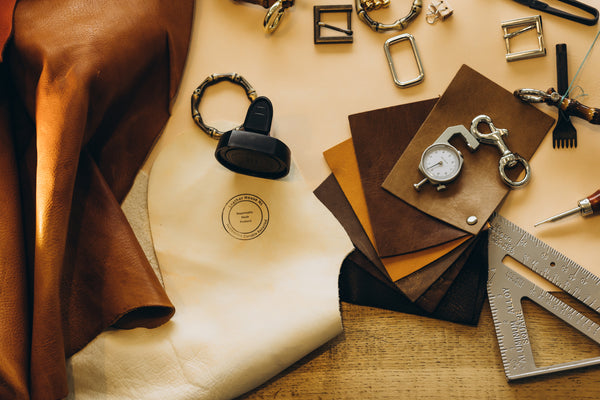
A premium leather supply store should be more than a warehouse for hides. It must act as a curated toolkit for your success. While the leather provides the canvas, your tools and hardware provide the structure and the final aesthetic. Investing in precision tools is the fastest way to bridge the gap between a "handmade" look and a professional result. A dull blade or an uneven bevel can ruin a piece of premium Italian leather in seconds. Your sourcing partner should understand this synergy and offer the specific implements required to treat high-end materials with respect.
Hardware selection is equally critical. You want components that won't tarnish, peel, or break under the daily stress of use. High-quality solid brass or stainless steel hardware ensures that your work lasts as long as the leather itself. It's about building trust with your customers. If a buckle fails, the quality of the hide no longer matters. A specialized leather supply store helps you select hardware that complements the weight and temper of your chosen leather, ensuring a balanced and durable final product.
The Edge Finishing Kit: What You Will Need
The hallmark of a master artisan is the edge finish. Achieving a mirror-like shine requires a combination of patience and the right chemistry. You'll need a few essentials to get started:
- Edge Bevelers: These remove the sharp corners of the leather, creating a rounded profile that is easier to burnish.
- Glass Slickers: Used to flatten the flesh side of the leather or to generate heat during the burnishing process.
- Tokonole: This water-based burnishing gum is the industry favorite for achieving a smooth, sealed edge without the need for heavy waxes.
If you're looking to dive deeper into component selection, our A Crafter’s Guide to Essential Leather Hardware provides a comprehensive breakdown of what to look for in buckles, rivets, and rings.
Professional Adhesives and Reinforcements
What happens inside your project is just as important as what's visible on the outside. Traditional solvent-based glues are often too harsh and emit toxic fumes. We recommend Ecostick 1804 Leather Glue for its incredible bonding strength and eco-friendly profile. Water-based glues are superior for indoor workshops because they provide a high-strength bond without the toxic fumes or respiratory risks associated with traditional solvent-based cements. To prevent your bags and belts from stretching over time, integrate Texon reinforcement into high-stress areas. It's the secret to maintaining the structural integrity of your leather goods for decades.
Sourcing Strategies for Specific Leathercraft Projects
Choosing the right hide is a decision that starts long before you pick up a thread. A knowledgeable leather supply store acts as a bridge between your vision and the technical reality of the material. You need to consider how the leather will behave once it is cut, stitched, and put into daily use. Success depends on matching the specific characteristics of a hide to the functional requirements of your project.
Thickness is measured in millimeters, and it is the most basic technical spec you'll encounter. A leather supply store that provides precise measurements helps you avoid a product that is too bulky to stitch or too thin to hold its shape. For a minimalist wallet, 1.0mm to 1.5mm is usually ideal. For a heavy-duty belt, you're looking at 3.5mm or more. Temper is just as vital. It describes the "bendiness" of the leather. A firm temper provides the "snap" needed for a structured clutch, while a soft temper allows for the comfortable drape of a slouchy hobo bag.
Leather for Handbags and Small Leather Goods
For handbag construction, Virgilio Vacchetta is a staple. It offers the perfect middle ground for artisans seeking a classic, sophisticated look that ages gracefully. If you want to achieve a true luxury feel, never overlook the lining. Using a dedicated lining leather provides a clean, professional interior that feels as good as it looks. You can find more specific advice in our Artisan’s Guide to Premium Leather for Handbags.
Equestrian and Heavy-Duty Gear
Longevity is the hallmark of equestrian-grade materials. Harness and Bridal leathers are stuffed with extra oils and waxes to withstand the elements. This makes them perfect for belts, dog collars, and outdoor gear. These heavy hides require equally robust components. We always recommend pairing them with Solid Brass Hardware to ensure the fittings don't snap under tension. For a deeper dive into these specialized materials, consult our Equestrian Leathers and Hardware Masterclass.
If you're just starting out, the sheer variety of options can be overwhelming. This is where Curated Bundles prove their value. They take the guesswork out of the process by pairing compatible leathers, threads, and tools for specific project types, allowing you to focus on developing your skills rather than worrying about material compatibility.
The Hab-To Difference: Your Partner in Craft
Choosing a leather supply store shouldn't feel like a transaction with an anonymous corporation. At Hab-To Leather House, our foundation is built on 160 years of family heritage in the trade. This isn't just about selling hides; it's about a deep-seated respect for the material that has been passed down through generations. This history allows us to source exclusively from tanneries like Conceria Maryam and Carlo Badalassi, ensuring that every panel you receive meets a standard that took over a century to perfect. Our Amsterdam-based hub serves as a vital resource for European artisans who are tired of customs delays and surprise import fees. We provide the scale of a professional wholesaler with the personal touch of a local shop.
When you have a question about whether a specific temper is right for a gusset or which needle size matches your thread, you need a mentor. That's where the "Mike" factor comes in. Mike isn't just the owner; he's a master craftsman who provides the kind of personalized advice you won't find at a generic leather supply store. He guides you through the selection process, ensuring you don't waste money on materials that don't fit your project's functional needs. We're here to ensure that your journey from a raw hide to a finished masterpiece is as smooth as possible.
Expert Guidance and Consultations
We believe that the best way to support the craft is through direct, human education. If you're stuck on a design choice or material selection, you can book a Free Video Consultation to get direct feedback on your project. For those looking to sharpen their technical skills, our Hab-To Masterclasses offer deep dives into professional techniques that bridge the gap between raw materials and high-end finished products. You can also explore our blog post on Professional Leathercraft Workshops to see how we help makers master the nuances of vegetable-tanned leather.
Ready to Start? Explore Our Bundles
Starting a new hobby shouldn't be cost-prohibitive or confusing. We've curated specific collections to help you hit the ground running without the guesswork. Our Stitching Bundles are perfect for those ready to master the saddle stitch with professional-grade thread and needles. Meanwhile, our Starter Bundles provide the essential tools and leather needed to complete your first project without a massive initial investment. We want to lower the barrier to entry for the next generation of artisans by providing everything they need in one place.
Elevate Your Craft with the Right Sourcing Partner
Finding the perfect leather supply store is about more than just checking items off a list. It's about finding a partner that understands the difference between a mass-produced hide and the character of a Tuscan vegetable-tanned panel. We've explored how matching the right weight and temper to your project, combined with professional-grade tools like Tokonole, transforms your work from hobbyist to master artisan. Your materials should be as ambitious as your designs.
With over 160 years of family expertise, we've seen how the right material choice defines the legacy of a finished piece. You don't need to navigate these choices alone. Whether you're taking advantage of our no minimum order policy to prototype a new design or booking a free video consultation with Mike to discuss your next big project, we're here to support your growth at every step.
Your dedication to quality deserves materials that tell a story. It's time to stop compromising on your sourcing and start focusing on the art of the craft. Let's build something beautiful together.
Frequently Asked Questions
Where can I buy quality leather without buying a whole hide?
You can purchase small panels or pre-cut pieces at specialized stores like Hab-To Leather House. Many industrial wholesalers require you to buy the entire hide, which is often costly and wasteful for smaller projects. Our no minimum order policy allows you to purchase exactly what you need. Whether it's a single decimeter of Shell Cordovan or a small panel of Pueblo leather for a wallet, you won't be forced into bulk buys.
What is the best leather supply store for beginners in Europe?
Hab-To Leather House is widely considered a top choice for European beginners due to our Amsterdam location and no-MOQ policy. Sourcing from an EU-based hub eliminates the customs headaches and high shipping fees associated with importing from overseas. We offer curated starter bundles and personalized advice. This makes it easy for new crafters to find professional-grade materials without the steep learning curve often found in industrial sourcing.
Do I need a special license to buy from a leather wholesaler?
No, you don't need a business license or professional certification to buy from our leather supply store. While some industrial suppliers only sell to registered businesses, we believe premium materials should be accessible to everyone. Whether you're a hobbyist working from a kitchen table or a professional artisan, you can access our full range of Italian vegetable-tanned hides and professional tools without jumping through any regulatory hoops.
What is the difference between vegetable-tanned and chrome-tanned leather?
The primary difference lies in the tanning agents used. Vegetable tanning uses natural tannins from bark and leaves, while chrome tanning uses metal salts. Vegetable-tanned leather is biodegradable, develops a unique patina over time, and is firm enough for carving and tooling. Chrome-tanned leather is faster to produce and more water-resistant. However, it lacks the structural integrity and eco-friendly profile that artisans value for high-end, long-lasting goods.
Can I get a consultation on which leather to choose for my project?
Yes, we offer free video consultations with Mike, our resident master craftsman, to help you select the perfect material. Choosing between different weights and tempers can be daunting if you're new to the craft. During these sessions, we'll discuss your specific project goals and recommend the best hides, hardware, and adhesives. It's like having an expert friend guide you through the aisles of your favorite leather supply store.
Does Hab-To Leather House ship worldwide?
Yes, we ship our premium materials to artisans across the globe. While we're a primary hub for European crafters, we regularly send our Italian leathers and professional tools to makers in North America, Asia, and beyond. We prioritize fast logistics, typically ensuring 24-48 hour delivery speeds for most regions. This ensures that no matter where your workbench is located, you have access to the world's finest vegetable-tanned hides and professional hardware.
What tools are essential for a beginner leatherworker?
A beginner needs a sharp utility knife, a set of stitching irons, a mallet, and a high-quality burnishing gum like Tokonole. You don't need a massive workshop to start. We recommend our starter bundles, which pair these essential tools with suitable leather panels. This prevents the common mistake of buying low-quality kit tools that fail quickly. It ensures your first project has the professional finish you're aiming for from day one.
How do I know if a leather supply store is selling authentic Italian leather?
Look for the official seal of the Tuscan vegetable-tanning consortium and the names of specific, reputable tanneries. Authentic Italian vegetable-tanned leather is produced by a small group of tanneries that follow strict traditional methods. A transparent leather supply store will always name the source, such as Conceria Maryam or Carlo Badalassi. If a store uses vague terms like "genuine leather" without naming the tannery, it's likely not premium grade.
Disclaimer
All our blog articles are made for information purposes only we dont take responsability for any content from third parties.