Black Alligator Leather: The Ultimate Guide for Crafters
There's a moment every crafter recognizes: holding a pristine hide of genuine alligator leather, feeling its unique texture, and imagining the luxury piece it will become. But with that excitement comes a wave of apprehension. The fear of making a single wrong cut on such a valuable skin is real. What if you choose the wrong grade? Is a belly cut better than a hornback for your project? These are the questions that can stop a project before it even starts.
This guide is here to turn that hesitation into confidence. We believe that working with a premium material like alligator black leather should be an empowering experience, not an intimidating one. We'll walk you through everything you need to know, from demystifying the grading system to mastering the essential techniques for cutting and sewing. By the end, you’ll have the knowledge to select the perfect skin and the skills to transform it into a work of art you can be proud of.
Key Takeaways
- Understand what makes the unique 'tile' pattern of alligator skin a hallmark of true luxury craftsmanship.
- Learn to select the best grade of leather by understanding how imperfections in the prime belly area affect quality and price.
- Master the essential tools and techniques required to confidently work with alligator black leather, even if you're used to cowhide.
- Find inspiration for your next masterpiece, from elegant watch straps to statement wallets, and see what's possible with this premium material.
What Makes Black Alligator Leather the Pinnacle of Luxury?
In the world of fine craftsmanship, few materials command as much respect and admiration as alligator leather. It's an immediate symbol of timeless luxury and status, recognized by its unique and intricate scale pattern, often called the 'tile'. Each hide tells a story through its distinct texture, offering a tactile experience that synthetic materials can never replicate. This isn't just leather; it's a statement of quality and discernment.
To see the stunning result of this material in a finished piece, take a look at this classic handbag:
True luxury, however, lies in the details. We exclusively source American Alligator (Alligator mississippiensis), which is far superior to the more common Caiman. While Caiman skin is rigid and prone to cracking due to small bone deposits, American Alligator is exceptionally supple, strong, and smooth. This inherent quality, explored in this detailed Alligator leather overview, ensures that a well-crafted piece is not only beautiful but incredibly durable, developing a rich, personal patina over decades of use. To guarantee ethical and sustainable practices, we only work with CITES-certified suppliers, ensuring every hide is responsibly sourced. No compromises.
The Anatomy of an Alligator Skin
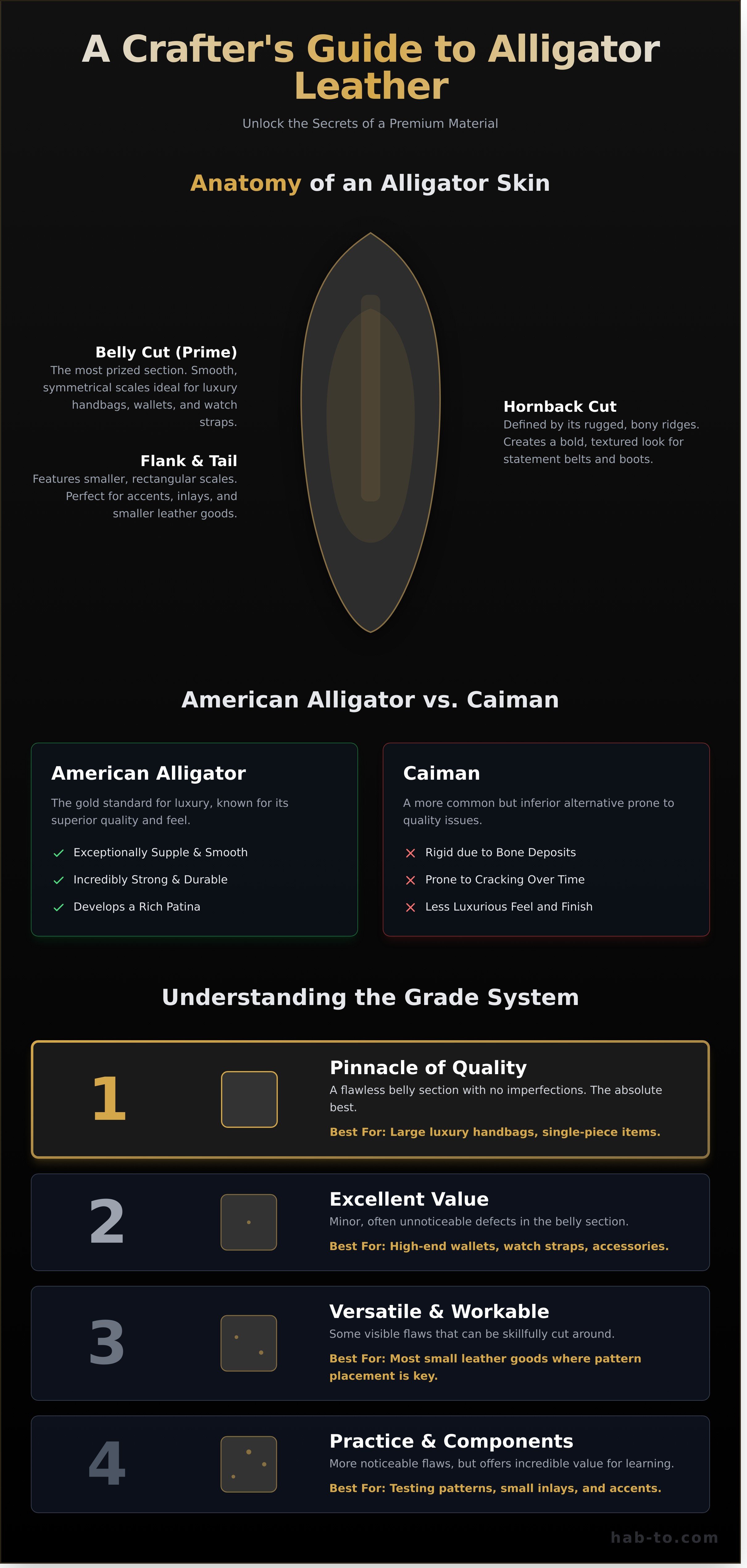
Understanding the different cuts of an alligator hide is key to appreciating its use in craftsmanship. Each section has a purpose, dictated by its unique pattern and texture.
- The Belly Cut: This is the most prized section. Its smooth, symmetrical, and tile-like scales are free of bone, making it the ideal choice for high-end wallets, watch straps, and handbag fronts.
- The Hornback Cut: Taken from the alligator's back, this cut is defined by the rugged, bony ridges (or 'horns') that run down the spine. It offers a bold, textured look perfect for statement pieces like belts and boots.
- Flank & Tail: These sections feature smaller, more rectangular scales. They are perfect for crafting smaller leather goods, accents, or intricate inlay work, ensuring no part of the precious hide goes to waste.
(Image Description: A diagram of a full alligator hide laid flat. The large, smooth central portion is labeled "Belly Cut (Prime)". The ridged spine is marked "Hornback Cut". The sides and long, tapering end are designated as "Flank & Tail Cuts".)
Why Black? The Classic Choice
While alligator leather is stunning in many colors, black remains the quintessential choice for luxury. The deep dyeing process saturates the hide, creating a uniform color that makes the natural texture of the scales pop with subtle elegance. A piece of alligator black hardware or accessory is incredibly versatile; it's sophisticated enough for a formal event yet adds an edge of understated luxury to a casual outfit. Its timeless appeal ensures it will never go out of style, making it a true investment in craftsmanship.
A Crafter's Guide to Grades and Finishes
Stepping into the world of exotic leathers can feel intimidating, but it doesn't have to be. As a craftsman, understanding the language of these premium materials is the key to matching the perfect hide to your project. Whether you're choosing a skin for a watch strap or a full handbag, knowing the difference between grades and finishes ensures you get exactly what you need for real craftsmanship. No compromises, just quality information.
Understanding the Grade System (Grade 1 to 4)
The grading system for alligator skin is simpler than it sounds. It focuses almost exclusively on the prime belly section-the widest and most desirable part of the hide. The grade is determined by the presence of natural imperfections like scars or scale inconsistencies within this specific area. It’s also crucial to remember that all reputable skins are sourced ethically, adhering to strict alligator trade regulations, which ensures both quality and sustainability for the craft.
- Grade 1: The pinnacle of quality. A Grade 1 skin has a flawless belly section, making it the top choice for large, single-piece luxury items where perfection is paramount.
- Grade 2 & 3: The workhorses for most leather goods. These skins have minor, often barely noticeable, defects in the belly. They are excellent for creating wallets, watch straps, and other high-end accessories where patterns can be skillfully cut around any small flaws.
- Grade 4: Perfect for practice or small components. These hides have more noticeable flaws but offer incredible value for testing new patterns or crafting small leather inlays and accents.
A grade reflects cosmetic perfection, not the leather's inherent strength or durability. A Grade 3 skin is just as tough as a Grade 1.
Glazed vs. Matte: Choosing the Perfect Finish
Beyond the grade, the finish dictates the skin's final look, feel, and character. The two primary choices each offer a distinct personality for your project.
The Glazed (or Bombe) finish is classic, high-gloss elegance. Achieved by polishing the skin with an agate stone under intense pressure, it creates a brilliant, jewel-like surface. A glazed alligator black watch strap or handbag is the definition of timeless, formal luxury. This finish is firmer to the touch and maintains its high shine.
The Matte finish offers a modern, understated luxury. It has a soft, supple feel with a subtle, buttery sheen that develops a beautiful, rich patina over time with use. It’s a versatile and popular choice for everyday items like wallets and belts, as it feels incredible and ages with character. While the glazed finish is more rigid, the matte finish is softer and more casual from the start.
Essential Techniques for Working with Black Alligator Leather
Working with alligator leather is a different world from your standard cowhide, but don't be intimidated. It represents a pinnacle of the craft, demanding precision and respect for the material. This leather is precious, and understanding its background, including the successful American Alligator conservation history that brought the species back from being endangered, only adds to its value. With the right tools and a patient approach, you can achieve truly exceptional results.
The deep, rich texture of alligator black leather demands careful planning from the very first cut. Let's break down the key stages to ensure your project is a success.
Cutting and Pattern Layout
Precision starts here. Unlike forgiving leathers, every cut on alligator hide is final. Always use a fresh, razor-sharp blade-a scalpel or a new craft knife is ideal. To protect the prized scales from any slips or drags, make all your cuts from the flesh side. Thoughtful pattern placement is crucial; orient your pieces to create a symmetrical and visually stunning scale flow. If working with a hornback section, you'll need to carefully plan your cuts to navigate around the hard, bony deposits.
Stitching and Assembly
The density of alligator skin requires sharp, high-quality tools. Your pricking irons or awl must be in perfect condition to cleanly pierce the leather without tearing it. Pair this with a premium, high-tensile thread, like a waxed linen or a strong polyester, to ensure your stitches are as durable as the leather itself. The hand-sewn saddle stitch is the preferred method, offering unparalleled strength and a timeless aesthetic. Remember to skive the edges where panels join to reduce bulk and create clean, professional folds.
Edge Finishing for a Professional Look
For a flawless finish on exotic leathers, painted and polished edges are the industry standard. This meticulous process seals the edge, protecting it from wear and moisture while providing a smooth, glassy appearance that complements the luxury of the material. The basic steps are simple but require patience:
- Sand: Begin by sanding the edge perfectly flat and smooth.
- Paint: Apply a thin, even layer of high-quality edge paint. Let it dry completely.
- Repeat: Lightly sand the dried paint and apply another layer. Repeat this process 3-5 times, building up a smooth, rounded profile.
- Seal: Finish by polishing with a heated tool or burnishing with beeswax for a durable, professional sheen.
This process is what creates that iconic, seamless edge seen on high-end alligator black watch straps and luxury goods. For the precision this work demands, you can find the essential tools and supplies right here at hab-to.com.
Project Inspiration: What to Make with Black Alligator
Working with genuine alligator leather is more than just crafting; it's about creating a timeless piece of art. The deep, rich finish of alligator black hide lends an unparalleled sense of luxury and durability to any project. A handmade alligator item isn't just an accessory-it's a statement, an heirloom in the making. But where to begin? The beauty of alligator is its versatility, with different cuts lending themselves to distinct styles.
Classic Projects for Belly Skin
The belly skin is prized for its smooth texture and symmetrical, square scales. It’s the epitome of classic luxury and is perfect for projects where refinement is key. This cut showcases the clean, recognizable pattern that defines high-end leather goods.
- Watch Straps: The ultimate use for a prime cut, allowing the perfect scale pattern to become the centerpiece of a luxury timepiece.
- Bifold Wallets and Cardholders: These are timeless, highly-valued items. The smooth scales create a slim profile that is both elegant and incredibly durable.
- Small Clutch Bags or Phone Cases: Ideal for highlighting the supple, smooth texture of the belly skin, creating a piece that is a pleasure to see and to hold.
Bold Creations with Hornback
For a more rugged and dramatic statement, the hornback cut is the perfect choice. Characterized by the bony, raised scutes that run along the animal's back, this part of the hide offers a unique, three-dimensional texture that is impossible to replicate.
- Briefcases or Portfolio Accents: A strip of hornback on a briefcase adds a powerful, masculine touch that signals confidence and distinction.
- Biker-Style Wallets or Belts: The raw, bony texture is a natural fit for rugged designs, emphasizing strength and individuality.
- Decorative Panels: Use a section of hornback as a unique focal point on larger bags, travel gear, or even custom upholstery.
Why Choose Hab-To for Your Alligator Leather?
Starting a new project with a premium material like alligator black leather should be exciting, not intimidating. At Hab-To, we make it simple for crafters of all levels to access the best materials. We're not just a supplier; we're your partner in craftsmanship.
- No Minimum Order: Perfect for a single watch strap or a small personal project. Buy only what you need, when you need it.
- Expert Advice: Need my advice? I'm Mike, and I can personally help you select the right skin and cut for your vision.
- Hand-Selected Quality: We only source premium, CITES-certified skins, ensuring your project is built on a foundation of ethical quality. No compromises.
Ready to start your next masterpiece? Browse our selection of black alligator leather and find the perfect skin for your project.
Begin Your Legacy in Leather Craftsmanship
You now hold the essential knowledge to transform one of the world's most coveted materials into a work of art. We've explored what makes this leather the pinnacle of luxury, demystified the grading system, and outlined the core techniques for a flawless finish. This guide is your starting point for confidently selecting and working with the finest alligator black skins, ensuring every cut and stitch honours the material's prestige and your creative vision.
At Hab-To, we believe true craftsmanship deserves unwavering support. That’s why we bring 160+ years of family experience directly to your workshop, offering hand-selected, CITES-certified exotic leathers with no minimum order requirements. We're not just a supplier; we're a partner in your creative process. If you have a question, a challenge, or just need a second opinion, I'm here to help.
Need advice on your project? Book a free consultation with Mike!
Now, go create something that will last a lifetime.
Frequently Asked Questions About Exotic Leathers
How can I tell if black alligator leather is real?
Authentic alligator leather has a distinct, non-uniform pattern. Look closely at the scales; in a genuine hide, their shapes, sizes, and creases will be slightly irregular, like a fingerprint. A key indicator on belly skins is the unique umbilical scar, a cluster of webbing between scales. Embossed imitations, on the other hand, will have a perfectly repeating, machine-pressed pattern that lacks these natural imperfections. True quality craftsmanship always starts with genuine material.
Is alligator leather durable enough for everyday use?
Absolutely. Despite its luxurious appearance, alligator leather is exceptionally tough and durable, yet it remains flexible. This unique combination makes it a premium choice for items that see frequent use, such as wallets, watch straps, and boots. With proper care, alligator leather goods not only withstand daily wear but also develop a beautiful patina over time, enhancing their character. It's an investment in both style and longevity for any high-quality project.
What is CITES and why is it important for exotic leathers?
CITES stands for the Convention on International Trade in Endangered Species of Wild Fauna and Flora. It's a global agreement to ensure that the trade of wild animal and plant specimens does not threaten their survival. For alligator leather, a CITES certificate is crucial as it guarantees the hide was sourced legally, sustainably, and ethically. Purchasing CITES-compliant leather supports conservation efforts and ensures you are working with a responsibly harvested, premium material.
How much does a black alligator skin typically cost?
The cost of an alligator skin varies significantly based on several factors. The primary drivers are size (measured by the width of the belly in centimeters) and grade, which is determined by the perfection of the skin. A flawless, large belly skin will command the highest price. The finish also plays a role; a high-gloss glazed or a sophisticated matte alligator black finish can affect the final cost. Prices can range from a few hundred to several thousand dollars per hide.
How should I care for my finished alligator leather goods?
Proper care is simple but essential for preserving the beauty of alligator leather. Regularly dust your items with a soft, clean cloth. Keep them away from prolonged exposure to direct sunlight and moisture. If the leather gets wet, pat it dry immediately with a soft cloth. For conditioning, use a product specifically formulated for exotic leathers, applying it sparingly once or twice a year to prevent the skin from drying out and maintain its natural luster.
Can I buy just a small piece of alligator leather for a watch strap?
Yes, you certainly can. We understand that not every project requires a full hide. That's why many dedicated leather suppliers offer smaller, pre-cut panels or sell leather by the square foot or decimeter. This makes premium materials like alligator accessible for crafters focusing on small leather goods (SLGs) like watch straps, cardholders, or key fobs. It’s the perfect way to incorporate luxury into your work without a large initial investment.