

Ecostick Water-Based Glue: The Ultimate Guide for Leather Crafters
Are you tired of holding your breath in your workshop, battling the harsh fumes of solvent-based adhesives? Or the deep frustration when a project you’ve poured your heart into begins to separate because the bond simply failed? We understand. In leathercraft, the right glue isn’t just about sticking two pieces together; it’s about creating a lasting, reliable piece of art without compromising your health or the supple feel of your premium leather.
This is precisely why so many dedicated crafters are making the switch to Ecostick waterbased glue. It represents a commitment to quality and safety-a strong, permanent bond without the toxic smells or the unnatural stiffness that can ruin a project. It’s the modern solution for traditional craftsmanship.
In this complete guide, we’ll demystify the Ecostick range. You’ll discover exactly how to choose the right formula for your specific leather, master the application for a perfect hold, and gain the confidence to know your work will stand the test of time. Let's build something beautiful, and let's build it right.
Key Takeaways
- Discover why modern water-based glues offer a stronger, safer, and more professional bond for your leather projects compared to traditional cements.
- Learn to decode the Ecostick numbering system to confidently select the perfect formula for any type of leather, from thin linings to thick straps.
- Master the correct application technique, from surface preparation to final pressing, to ensure a flawless and permanent bond every time.
- Avoid the common mistakes beginners make with Ecostick waterbased glue by learning a few pro tips that guarantee a clean, professional finish.
Why Water-Based Glue? The Ecostick Advantage Over Traditional Cements
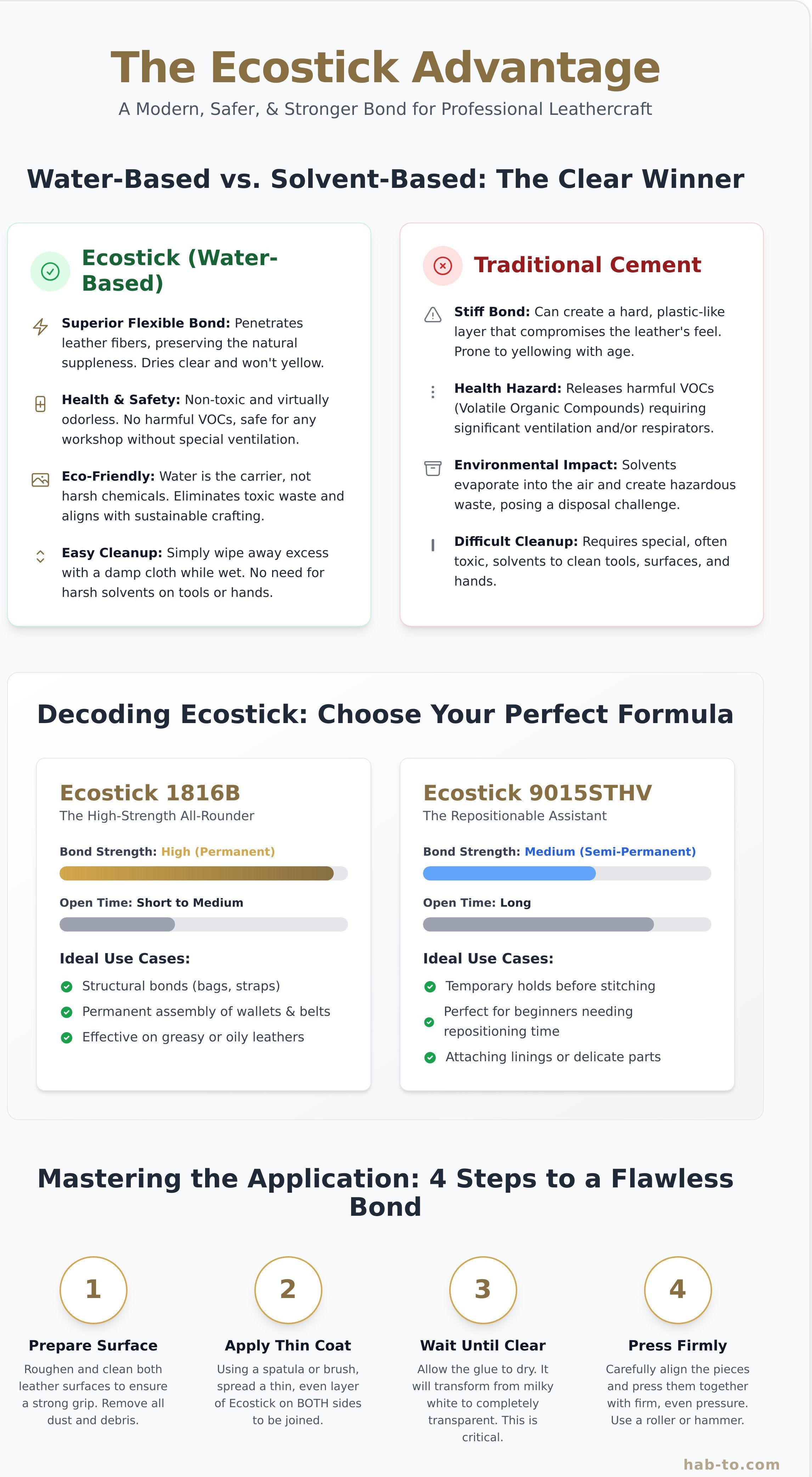
For generations, the sharp smell of solvent-based contact cement was synonymous with leathercraft. While effective, these traditional glues come with a significant downside: harsh chemicals and hazardous fumes. Today, a modern revolution is taking place in workshops worldwide with the shift to advanced water-based adhesives. The core difference is simple yet profound. Instead of volatile organic compounds (VOCs) evaporating into your workspace, the carrier is simply water. To better understand this evolution, it helps to grasp the fundamentals of what are adhesives and their composition. This shift isn't just about safety; it's about achieving a better, more sustainable result.
This video offers a fantastic visual comparison of how water-based adhesives perform against traditional options:
The move towards water-based solutions represents a commitment to both your well-being and the integrity of your craft. It's an eco-friendly choice that eliminates toxic waste and aligns perfectly with the sustainable principles of true craftsmanship. With Ecostick waterbased glue, you get a superior bond without compromise, proving that modern technology can enhance traditional skills.
Health & Safety in Your Workshop
Gone are the days of needing a respirator just to glue two pieces of leather. Traditional cements release fumes that are harmful in enclosed areas. Ecostick is non-toxic and has virtually no odor, making it the perfect choice for home workshops, small studios, or anyone sensitive to strong smells. You can work comfortably for hours without special ventilation, and if you get some on your hands or tools, cleanup is as simple as wiping it with a damp cloth while it's still wet. No more harsh solvents, just simple, safe water.
Achieving a Professional, Flexible Bond
A great adhesive shouldn't just stick; it should enhance the material. Unlike solvent cements that can create a stiff, plastic-like layer, Ecostick waterbased glue penetrates the leather's fibers to create a powerful, internal bond. The result is a connection that holds firm under stress yet remains incredibly flexible, preserving the natural suppleness and drape of your leather. It dries completely clear and won’t yellow over time, ensuring your light-colored leathers and pristine stitch lines remain beautiful for years to come.
Decoding the Numbers: Choosing the Right Ecostick for Your Project
When you dive into the world of Intercom adhesives, you'll notice the numbers: 1816B, 9015STHV, and more. This isn't random; it's a precise system for creating specific formulas for specific tasks in leathercraft. Each variant of Ecostick waterbased glue is engineered for a different purpose, but they all share one crucial benefit: safety. Unlike traditional solvent-based cements, they are non-toxic and free from the harmful volatile organic compounds (VOCs) that can impact your health. The U.S. Environmental Protection Agency provides extensive information on the health effects of VOCs, making it clear why a safer alternative is essential for your workshop.
Let's break down the most popular formulas to help you find the perfect match for your project.
| Ecostick Formula | Bond Strength | Open Time | Ideal Use Cases |
|---|---|---|---|
| 1816B | High (Permanent) | Short to Medium | Structural bonds, bags, belts, wallets, greasy leather. |
| 9015STHV | Medium (Semi-Permanent) | Long | Temporary holds for stitching, repositioning parts, beginners. |
Ecostick 1816B: The High-Strength All-Rounder
Think of 1816B as your workshop powerhouse. This is the formula you reach for when you need a permanent, unyielding bond. It’s perfect for structural components in bags, belts, and wallets where failure is not an option. It excels at bonding leather to leather, reinforcements, and even synthetics. A standout feature is its incredible performance on greasy leathers (up to 15% grease content), where other glues might struggle. Its relatively fast setting time means less waiting and more making.
Ecostick 9015STHV: The Repositionable Choice
If you need a bit more flexibility and forgiveness, 9015STHV is your best friend. This is a medium-strength, semi-permanent adhesive designed for precision and adjustability. Its longer open time is a game-changer, allowing you to position, peel back, and reposition pieces until they are perfectly aligned for stitching. This makes it an ideal choice for beginners who are still honing their skills or for complex assemblies where perfect placement is critical.
Other Ecostick Formulas to Know
While 1816B and 9015STHV cover most leatherworking needs, Intercom also offers specialized formulas. You might encounter sprayable versions, which are excellent for laminating large panels of leather or fabric quickly and evenly. Always check the product's technical data sheet (TDS) to understand its specific properties, like heat resistance or final flexibility. The key is to match the formula to your materials and desired outcome.
Choosing the right adhesive is a cornerstone of quality craftsmanship. By understanding the numbers, you can select a formula that delivers the exact performance you need. Still unsure? Ask Mike for a personal recommendation. He's always happy to help you find the perfect match for your next project.
Mastering the Application: A Step-by-Step Guide to Using Ecostick
A premium adhesive deserves the right technique. Mastering its application is the difference between a good bond and a truly permanent one that honours your craftsmanship. Unlike traditional solvent-based cements that fill your workspace with harsh fumes, Ecostick waterbased glue is a low-VOC alternative. This makes for a healthier workshop, a topic so important that government bodies like the U.S. EPA provide detailed guidance on how VOCs are regulated to protect air quality. Let's walk through the process to ensure every bond is flawless.
Step 1: Surface Preparation is Key
A strong bond starts long before the glue is applied. A contaminated or overly smooth surface is the enemy of adhesion. For the best results, always follow these preparation steps:
- Clean: Ensure both leather surfaces are completely free of dust, oils, and any finishing agents. A quick wipe with a clean cloth is often sufficient.
- Scuff: For smooth or finished leather grains, gently rough up the area to be glued with fine-grit sandpaper or a scratch awl. This creates a texture for the glue to mechanically grip.
- Ready: Have both pieces perfectly aligned and ready to join before you begin applying the glue.
Step 2: Application Techniques
Your goal is a thin, even layer. Too little glue will create a weak bond, while too much will squeeze out and take longer to dry. For leatherwork, the two-sided "contact" method is standard.
The Two-Sided (Dry) Method: Apply a thin coat of Ecostick waterbased glue to both surfaces using a brush, spatula, or roller. Wait for the milky-white glue to turn completely clear. This indicates the water has evaporated, and the adhesive is active. This "open time" is your window to act. Once clear, press the two pieces together firmly. The bond is instant and strong, preventing pieces from slipping during stitching.
Pro Tip: If you miss the open time and the glue loses its tack, you can gently warm the surface with a heat gun to reactivate it.
The One-Sided (Wet) Method: This technique is best for laminating leather to rigid, non-porous materials like wood or plastic. Apply glue to just one surface and join the pieces while the glue is still white and wet, allowing it to cure under pressure.
Step 3: Drying, Pressing, and Curing
Once your pieces are joined, the final step is to ensure a complete and permanent bond. Apply firm, even pressure across the entire glued surface. Use a leather roller, a smooth-faced hammer, or clamps to eliminate any air bubbles and guarantee full contact. While the initial tack is immediate, the bond achieves its maximum, unbreakable strength after a full 24-hour curing period.
Pro Tips and Common Mistakes to Avoid with Ecostick
Working with a premium adhesive is a pleasure, but like any tool in your workshop, mastering it takes a little insider knowledge. Over the years, I've seen a few common hurdles trip up even talented crafters. Let's walk through them so you can achieve flawless, professional results every single time.
Getting the Amount Just Right
The most frequent mistake is thinking more glue equals a stronger bond. With water-based adhesives, the opposite is true. A thick application leads to messy squeeze-out, significantly longer drying times, and a weaker join. For a superior bond, aim for a thin, even, milky-white layer. Less is truly more.
- The Mistake: Piling on the glue, hoping for extra strength.
- The Pro Tip: Use a spatula to spread a consistent, semi-transparent film.
- Quick Fix: If you do get some squeeze-out, don't worry. Simply wipe it away with a clean, damp cloth while the glue is still wet.
Reactivating the Bond for Perfect Placement
Here’s a tip that truly separates the pros: Ecostick waterbased glue can be reactivated. If you've applied the glue and let it dry, but your alignment isn't perfect, don't panic. A little heat from a hairdryer or a heat gun on a low setting will make the surface tacky again. This gives you a second chance to position your pieces perfectly, a game-changer for lining bags or assembling complex, curved patterns.
Proper Storage to Maximize Shelf Life
Your adhesive is an investment in your craft, so protect it. The biggest enemy of any water-based glue is extreme temperatures, especially freezing. Freezing will permanently break down the chemical emulsion, rendering the glue useless. To get the most out of every bottle:
- Store it in a cool, dry place away from direct sunlight.
- Never let it freeze. Keep it in a climate-controlled room during winter.
- Always seal the lid tightly to prevent the glue from drying out.
Avoiding these simple mistakes will elevate your leatherwork from good to great. Craftsmanship is a journey of continuous learning, and understanding your materials is a huge part of that. If you ever have questions, remember we're here to help. Feel free to reach out for advice on your next project.
Ecostick in Action: Ideal Projects and Leather Pairings
Understanding the technical specifications of a glue is one thing, but seeing how it performs in the workshop is what truly matters. Ecostick isn’t just an adhesive; it’s a partner in craftsmanship. It’s designed to solve common challenges and elevate the quality of your finished work, from simple cardholders to complex bags. Let’s explore the specific applications where this glue truly shines.
Perfect for Lamination and Rolled Edges
When laminating large leather panels for a tote bag or a sturdy strap, you need a bond that moves with the material. Ecostick’s impressive flexibility ensures your final piece remains supple and never feels stiff or boardy. This strength is also essential for creating crisp, durable rolled edges. The glue provides a tenacious grip that holds the fold securely for stitching, giving your work a clean, high-end finish that lasts. It’s the same reliability you want when lining wallet interiors or watch straps, where a thin, strong bond is non-negotiable.
The Best Glue for Veg-Tan and Exotic Leathers
Working with premium vegetable-tanned leathers like Italian Buttero or the unique texture of Pueblo demands an adhesive you can trust. Because Ecostick is water-based, it dries clear and won't stain or discolour even the most delicate or light-coloured skins. This makes it a safe and reliable choice for your finest projects. Its formula is engineered to perform exceptionally well even on leathers with a moderate oil or wax content, where other glues might fail to create a lasting bond.
Beyond Leather: Bonding Reinforcements and Hardware
True craftsmanship often involves more than just leather. The Ecostick waterbased glue is your go-to for bonding structural materials like Texon or Salpa to add reinforcement without unnecessary bulk. It’s also a clever helper for hardware placement. A tiny, temporary dab can hold a buckle tab or snap in perfect position while you prepare to set your rivets, ensuring flawless alignment every time. With the right techniques and materials, your creative possibilities are endless.
Ready to start creating? Find the perfect veg-tan leather for your next project.
Elevate Your Craft: The Final Word on Ecostick
Making the switch from traditional solvent cements is more than just a change-it's a commitment to cleaner, more precise, and healthier leatherwork. This guide has shown you the distinct advantages of the Ecostick system, from decoding the numbers to find your perfect match to mastering the application for an invisible, permanent bond. Embracing Ecostick waterbased glue empowers you to create with greater control and confidence, ensuring your finished pieces reflect the high quality of your craftsmanship.
We believe that exceptional projects begin with exceptional materials. At Hab-To, every product in our collection is expertly selected to meet our uncompromising standards for quality. With no minimum order requirements and personal advice backed by over 160 years of family experience in the leather trade, we are here not just as suppliers, but as partners in your craft.
Ready to upgrade your glue game? Shop our curated Ecostick collection.
Take this knowledge, apply it with passion, and continue to build projects that are not only beautiful but are made to endure. Your finest work is waiting.
Frequently Asked Questions about Ecostick
Is Ecostick water-based glue waterproof once it's fully cured?
Once fully cured, Ecostick is highly water-resistant, which is ideal for most leather goods like bags and wallets that may encounter rain. However, it is not 100% waterproof. For projects that will be submerged or face constant, heavy moisture, you may need an additional waterproof sealant over your seams. For the vast majority of high-quality leathercraft projects, its level of resistance is more than sufficient for a durable, lasting bond that protects your hard work.
What is the typical shelf life of an unopened bottle of Ecostick?
An unopened bottle of Ecostick has a reliable shelf life of at least 12 months when stored correctly. To maximize its life and ensure peak performance, keep it in a cool, dry place away from direct sunlight. Most importantly, it must be protected from freezing, as this will damage the emulsion and render the glue unusable. Once you've opened a bottle, we recommend using it within six months to guarantee the best consistency and bonding strength for your projects.
Can I thin Ecostick glue with water if it becomes too thick?
Yes, you can. One of the key benefits of a water-based formula is the ability to adjust its viscosity. If your glue has thickened over time, simply add a very small amount of distilled water-start with just a few drops-and stir it in thoroughly. Only add more if necessary. Be careful not to over-dilute it, as this can reduce the final bond strength. A little at a time is the best approach to achieve that perfect, smooth application.
How does Ecostick compare to traditional Barge or other solvent contact cements?
The primary difference lies in safety and workshop environment. Unlike solvent-based cements, Ecostick waterbased glue is non-toxic and non-flammable, with zero harsh fumes. This makes it a much healthier choice for your workspace. Cleanup is also far simpler, requiring only water instead of chemical solvents. While solvent cements provide a very aggressive tack, Ecostick offers a powerful, flexible bond that is more than strong enough for premium leatherwork, without the associated health risks and unpleasant odors.
Will Ecostick work on chrome-tanned leather as well as vegetable-tanned?
Absolutely. Ecostick is formulated to create a strong, lasting bond on a wide range of leathers, including both vegetable-tanned and chrome-tanned types. For the best adhesion on chrome-tanned hides or any leather with an oily or waxy finish, we always recommend preparing the surface first. Lightly scuffing the area with sandpaper will remove the finish and give the glue a better surface to grip, ensuring a superior and more permanent bond for your project.
How do I clean up Ecostick glue that has already dried?
While wet glue cleans up easily with a damp cloth, dried Ecostick requires a different approach. For small spots of dried glue on the leather's surface, your best tool is a crepe rubber block, also known as a glue eraser. It will gently rub the residue off without damaging the finish. For larger, more stubborn areas, a dedicated adhesive remover may be necessary, but always test it on an unseen area or a scrap piece first to ensure it doesn't discolor your leather.