

Shell Cordovan: The Ultimate Guide to the King of Leathers
Ever looked at a pair of gleaming shoes or a wallet made from Shell Cordovan and wondered what could possibly justify that price tag? You’re not alone. It’s a material surrounded by mystique, and frankly, a lot of questions. What makes shell cordovan so fundamentally different from a high-quality calfskin? How can you be sure you’re buying the real thing, and more importantly, how do you handle it without the fear of ruining such a prized investment?
Hi, I'm Mike, and I believe that great craftsmanship begins with a deep understanding of your materials. That’s why I’ve put together this ultimate guide. We're pulling back the curtain to explore everything from its unique origins to the painstaking, six-month tanning process that gives it that signature non-creasing quality. You’ll learn exactly how to identify authentic shells and gain the confidence to cut, stitch, and finish this incredible leather. Forget the uncertainty; it’s time to understand the true value and potential of the king of leathers.
Key Takeaways
- Understand the unique equine origin of shell cardovan and why this specific material, not a typical hide, earns its title as the "King of Leathers."
- Discover the time-honored, six-month tanning journey that gives this leather its renowned durability and deep luster.
- Gain the confidence to work with this luxury material with expert tips for cutting, stitching, and finishing your projects.
- Learn how to identify the key characteristics of authentic cordovan, empowering you to invest wisely and avoid costly counterfeits.
What is Shell Cordovan? Unveiling the Legendary Leather
When craftsmen and connoisseurs speak of Shell Cordovan, they aren't talking about your typical leather hide. This material holds a legendary status, often called 'The King of Leathers', and for good reason. Unlike cowhide or even standard horsehide, which are the skin of the animal, Shell Cordovan is something far more unique and rare. It's the foundation for some of the world's most luxurious footwear and premium leather goods, a material prized for its unparalleled durability and distinctive beauty.
To see what makes this material so different and to clear up some common misconceptions, this video offers a fantastic overview:
The Unique Origin: A Membrane, Not a Hide
The true source of Shell Cordovan is what sets it apart. It is derived from a specific, fibrous flat muscle, or membrane, found just beneath the skin on a horse's rump. This membrane is called the 'shell'. Each horse yields only two small, oval-shaped shells, making the material exceptionally scarce. Think of it like a dense, hidden gem within the larger hide. This inherent rarity is the first and most significant factor in its high cost, as the limited supply simply cannot meet the demand from high-end crafters. This unique biological structure is central to the question, What is Shell Cordovan?, and explains why it behaves so differently from other leathers.
Core Characteristics: Why Crafters and Brands Pay a Premium
The premium price of genuine shell cardovan is justified by a set of remarkable qualities that no other leather can fully replicate. For artisans dedicated to true craftsmanship, these characteristics are non-negotiable:
- A Signature 'Rolling' Crease: Where other leathers wrinkle and crinkle with use, Shell Cordovan develops soft, elegant 'rolls'. This is most visible in footwear and contributes to its graceful aging process.
- Exceptional Durability: The material has an incredibly dense, tight fiber structure. This makes it extraordinarily durable, resistant to stretching, and naturally water-resistant. A well-made cordovan product can genuinely last a lifetime.
- A Rich, Luminous Patina: Over time, Shell Cordovan develops a deep, glossy patina. Its finish isn't a synthetic coating; it's the result of oils and waxes within the material coming to the surface, creating a luster that only improves with age and care.
- Smooth, Non-Porous Surface: Unlike hides with visible pores, the shell's surface is remarkably smooth. This gives it a sleek, refined appearance and feel, perfect for luxury applications where every detail matters.
The Art of Tanning: A Six-Month Journey from Hide to Shell
When you hold a piece of Shell Cordovan, you're not just holding leather; you're holding the result of a time-honored craft. Unlike mass-produced materials, creating this unique equine leather is a painstaking process that takes a minimum of six months and involves dozens of highly skilled, manual steps. It’s a testament to patience and tradition. This commitment to a purely vegetable-tanning process, free from harsh chemicals, aligns perfectly with our "No compromises" philosophy. Understanding the journey from raw hide to finished shell is the key to appreciating why this material is in a class of its own.
The Slow Vegetable Tanning Process
The journey begins with raw horsehides, which are carefully salted, limed, and dehaired. From there, they are submerged in large pits filled with a proprietary blend of natural bark tanning liquors. The hides remain in these pits for weeks, slowly absorbing the tannins that preserve and strengthen them. The most critical step follows: a master craftsman must skillfully shave away the outer grain by hand to reveal the dense, fibrous membrane hidden beneath-the shell itself. This is a delicate art where a single mistake can ruin the entire piece.
Finishing by Hand: Glazing and Staining
Once the shell is revealed, it undergoes a series of intensive hand-finishing treatments. It’s "hot-stuffed" with a special blend of oils, greases, and waxes to nourish the fibers and give the shell cordovan its renowned durability. The signature high-gloss finish isn’t a coating; it’s created through glazing, where a skilled artisan repeatedly rubs the surface with a solid glass rod to polish the fibers. Finally, staining is done entirely by hand, allowing the dyes to penetrate deep into the dense structure for an unmatched richness and depth of color.
The World's Most Famous Tanneries
Only a handful of tanneries in the world have mastered this intricate process, each with its own legacy. Their names are synonymous with quality and are sought after by crafters who demand the best.
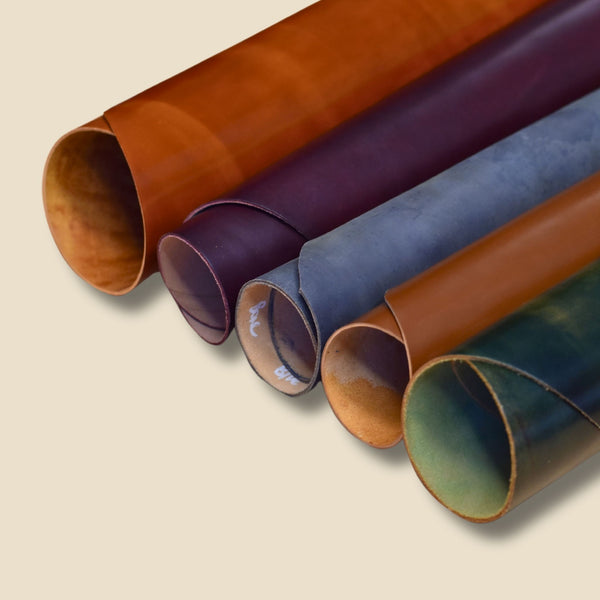
- Horween Leather Co. (USA): Perhaps the most famous, Horween's process for creating Authentic Horween Shell Cordovan is legendary. They are renowned for their iconic "Color #8," a deep burgundy hue.
- Rocado S.R.L. (Italy): Located in Tuscany, Rocado is celebrated for its vibrant range of colors and a slightly more supple feel, bringing an Italian flair to the classic material.
- Ogawa (Japan): Known for its meticulous attention to detail and flawless finishing, Ogawa produces shells with a stunning, glass-like surface and exceptional color consistency.
Ready to see the finished product? Browse our Shell Cordovan collection.
A Crafter's Guide to Working with Shell Cordovan
Hi, I'm Mike. The first time you hold a piece of genuine shell cordovan, it’s an experience. The deep luster, the smooth feel-it’s unlike any other leather. I know it can also be intimidating; its price demands respect and precision. But don't let that stop you. With the right approach, you'll create something truly exceptional. It's important to remember this isn't your typical veg-tan; understanding what is shell cordovan and its unique, non-porous membrane structure is the first step to success.
Choosing the Right Project
The unique properties of shell cordovan make it ideal for small, high-end goods that endure frequent handling and flexing. Its famous non-creasing characteristic means it rolls rather than wrinkles, preserving a flawless look over time. Consider these projects to make the most of each shell:
- Luxury Watch Straps: Its durability and comfort are unmatched.
- Minimalist Wallets: Perfect for sleek bifold or cardholder designs.
- Heel Counters for Premium Shoes: A traditional use that showcases its strength.
- Elegant Key Fobs & Small Accessories: A great way to use smaller off-cuts.
I advise against large projects like bags. The shells are relatively small, and the cost would be prohibitive, making it an inefficient use of this precious material.
Essential Techniques: Cutting, Stitching, and Finishing
Precision is everything. For cutting, a brand-new, razor-sharp blade is non-negotiable. A dull blade will drag and compress the dense fibers, resulting in a messy cut. When stitching, its density requires a sharp, strong needle and high-quality thread, like a premium linen, to create clean, pucker-free holes. But the real magic is in the finishing. Cordovan edges can be burnished to a glass-like shine with little more than water and a slicker. The dense fibers and natural oils do most of the work for you, creating a durable, sealed edge that stands the test of time.
Common Mistakes to Avoid
Working with this premium leather leaves little room for error. Keep these critical points in mind to protect your investment:
- Never sand the surface. Shell cordovan is a membrane and has no grain structure like other leathers. Sanding will permanently destroy its unique finish.
- Avoid over-conditioning. It's already packed with oils from the tanning process. A simple wipe with a soft cloth is often all that's needed to restore its luster. Harsh chemicals or oils can damage the finish.
- Store it properly. Keep shells flat and away from direct sunlight or extreme heat, which can cause them to dry out and become brittle before you even begin your project.
How to Buy and Identify Authentic Shell Cordovan
Investing in Shell Cordovan is a significant step for any leather crafter. Its price and prestige, unfortunately, mean the market has its share of counterfeits and confusingly-labeled "cordovan" leather. Becoming a discerning buyer is the first step in preventing waste; it ensures your time and money go into a material that will perform beautifully for decades. Let's equip you with the knowledge to purchase with confidence.
Telltale Signs of Genuine Shell
Authentic shell cordovan has a unique character that is difficult to replicate. When you're assessing a piece, engage all your senses. Here’s what to look for:
- The Feel: The surface is incredibly smooth, dense, and cool to the touch, with a slightly waxy or oily feel from the rich blend of fats and oils used in its long tanning process.
- The Look: Genuine shell has no visible pores or grain structure. It's a membrane, not skin in the traditional sense. It boasts a deep, lustrous shine that comes from within, rather than a painted-on surface coat.
- The Smell: The aroma is rich and pleasant, a complex scent derived from its months-long, traditional vegetable tanning. It should never smell synthetic or like harsh chemicals.
- The Tannery Stamp: Many shells, especially from renowned tanneries like Horween, will have an ink stamp on the reverse (flesh) side, marking it as the genuine article.
Understanding Grades, Sizing, and Thickness
Unlike cowhide, shell cordovan is not sold in large sides. It comes in oval-shaped "shells," which are the two pieces from a horse's rump. A typical shell ranges from 1.5 to 2.5 square feet. Tanneries often grade them (e.g., Grade 1, 2, or X), where Grade 1 is the cleanest and most uniform. Understanding these grades helps you select the right piece for your project, ensuring you only pay for the quality you need.
Why a Trusted Supplier Matters
The single most effective way to guarantee you're buying the real deal is to source it from a reputable supplier with direct tannery relationships. At Hab-To, our "No compromises" philosophy means we only stock authentic, hand-selected materials. We understand that crafters may want to try a single piece of premium shell cardovan without committing to a large order, which is why we have no minimum order requirements. It's about providing access to the best materials for true craftsmanship.
Investing in your first shell can feel daunting. Have questions about which piece is right for your project? Book a free advice call with Mike!
Your Journey with Shell Cordovan Begins Here
From its unique origin as a specific equine membrane to the meticulous six-month tanning journey that defines its character, Shell Cordovan is truly in a class of its own. Understanding this process and how to identify the genuine article is the first step toward creating something that will last for generations. Armed with this knowledge, you are now ready to experience the unmatched quality of authentic shell cardovan for yourself.
At Hab-To, we share your passion for true craftsmanship. Backed by over 160+ years of family experience, we personally source our leather from the world's finest tanneries to ensure uncompromising quality. We believe every crafter deserves access to the best materials, which is why we proudly offer no minimum order requirements.
Ready to work with the king of leathers? Explore our hand-selected Shell Cordovan collection and find the perfect piece for your next masterpiece. We can't wait to see what you create.
Frequently Asked Questions About Shell Cordovan
Why does my shell cordovan have a white, waxy film on it?
That white film is a good thing! It’s called "bloom," and it’s the natural waxes and oils from the tanning process rising to the surface. This is a sign of high-quality, well-conditioned leather. It is not a defect. To restore the shine, simply take a soft cloth or horsehair brush and gently buff the surface. The bloom will disappear, revealing the deep, rich lustre underneath. It's a unique characteristic of premium cordovan.
Is shell cordovan waterproof or just water-resistant?
Shell cordovan is highly water-resistant but not fully waterproof. Its incredibly dense, non-porous structure is packed with oils, which causes water to bead up and roll off the surface rather than soak in immediately. While it can handle a sudden rain shower exceptionally well, prolonged exposure or submersion can still lead to water spots or welts. We always recommend wiping any moisture off promptly to keep it in top condition.
What is the difference between shell cordovan and simple horsehide?
While both come from a horse, they are worlds apart. Horsehide is the skin from the main body of the animal. In contrast, shell cordovan is a specific, dense fibrous membrane found only on the rump, underneath the visible hide. This "shell" undergoes a meticulous, months-long vegetable tanning process. This unique origin and tanning method give it a non-porous surface, incredible durability, and its signature glossy finish, setting it far apart from standard horsehide.
How does shell cordovan age and develop a patina compared to other leathers?
Shell cordovan ages with exceptional grace, developing a rich, deep patina that’s more about lustre than heavy wear. Unlike other leathers that form sharp creases, it develops gentle, rolling waves over time, particularly on items like shoes or watch straps. The colour deepens and the shine becomes more complex and glossy with regular brushing and handling. It’s an evolution in elegance, showcasing the material’s premium quality through a sophisticated aging process.
Can you dye or re-finish shell cordovan leather yourself?
We strongly advise against trying to dye or re-finish shell cordovan at home. Its non-porous, oil-saturated surface makes it extremely difficult for dyes and finishes to penetrate evenly, often leading to a blotchy or sticky result. The original tannery finish is a crucial part of the leather's character and value. For any significant restoration work, it's always best to consult a professional who specializes in this unique and demanding material.
For a crafter, is shell cordovan truly worth the high price?
For projects that demand the absolute best in durability and a luxurious finish, yes. The initial cost is significant, but it doesn't stretch, resists creasing, and polishes to a glass-like shine unlike any other leather. This makes it perfect for creating heirloom-quality wallets, watch straps, and footwear. The value is in its longevity and the unmistakable mark of premium quality it lends to your finished work. It's an investment in uncompromising craftsmanship.
