

Teaching Leathercraft to Kids: A Mentor’s Guide to the Next Generation of Crafters
What if the most effective way to pull your child away from a digital screen isn't a new app, but the tactile, earthy scent of real vegetable-tanned leather? You likely want to share your love for hand-making, yet the fear of sharp tools or chemical exposure often stops the project before it begins. It's a common hurdle for any mentor. You want them to create something that lasts, not just another piece of plastic destined for a landfill. Teaching leathercraft to kids is about more than just the finished product; it's about passing down a heritage of quality, sustainability, and patience.
We agree that safety and material ethics must come first when working with young hands. This guide will show you how to introduce the next generation to this craft using non-toxic materials and expert-led techniques. You'll discover which projects suit their specific age and how to choose safe, sustainable leathers like Pueblo or Olivenleder. We'll walk through the essential steps to ensure your young crafter feels empowered, engaged, and safe every step of the way.
Key Takeaways
- Discover why leatherworking serves as the ultimate screen-free hobby by improving fine motor skills and fostering genuine patience in young crafters.
- Learn why natural vegetable-tanned leather is the only safe choice for children, avoiding the harsh chemicals often found in chrome-tanned alternatives.
- Gain confidence in teaching leathercraft to kids by using a tiered project approach that grows with their skill level and attention span.
- Identify the essential ergonomic tools and safety-first equipment, such as blunt needles and lighter hammers, designed specifically for smaller hands.
- Find out how to connect with a community of makers and access expert-led masterclasses to support your child's journey into the craft.
Why Leathercraft is the Ultimate Screen-Free Hobby for Kids
Modern childhood is often defined by pixels and rapid-fire digital feedback. Teaching leathercraft to kids offers a powerful alternative to this environment. It is an invitation to engage with the physical world in a way that feels both ancient and essential. When a child handles a piece of authentic, vegetable-tanned leather, they connect with a material that has texture, weight, and a distinct, earthy scent. This tactile experience fosters a unique kind of presence. It builds patience and fine motor skills while providing a sense of accomplishment that digital achievements simply cannot match.
Unlike mass-produced plastic toys that often end up in the trash within months, leather items are built to endure. This inherent durability introduces children to the concept of value and long-term care. They begin to understand that the things we make with our hands can last a lifetime. By exploring the history of leathercraft, they learn that they are participating in a tradition that predates the digital age by centuries. It is a legacy of making that rewards slow, deliberate effort over instant gratification.
To better understand this concept, watch this helpful video:
Developing Focus and Fine Motor Skills
Precision is a learned skill that requires practice and calm. Stamping a pattern or guiding a needle through leather requires a high level of hand-eye coordination. For a young crafter, these actions demand total concentration and a steady hand. The resistance of the grain and the rhythmic sound of the mallet provide immediate sensory feedback. This feedback loop encourages "deep work," a state of focus that is increasingly rare in a world of constant notifications. It is a meditative process that turns a simple afternoon into a lesson in discipline, focus, and creative expression.
The Mentorship Approach: Learning from a Master
At Hab-To Leather House, we believe the best way to learn is through a personal connection. Mike acts as the "expert friend," guiding each student through their first projects with trust and respect. This mentorship is built on a foundation of 160 years of leather expertise passed down through our family. We treat young makers as capable artisans, providing them with the real tools they need to succeed. You can learn more about our commitment to this heritage on the Hab-To Leather House About page. This approach transforms a simple hobby into a meaningful mentorship that bridges the gap between generations, fostering a lifelong love for craft.
Selecting Kid-Safe Materials: The Case for Natural Vegetable-Tanned Leather
Safety is the foundation of any workshop. When you're teaching leathercraft to kids, the materials you choose are just as vital as the tools themselves. Many beginners reach for cheap "scrap" bags from big-box stores. However, these often contain chrome-tanned leathers processed with heavy metals and harsh chemicals that can irritate sensitive skin. We believe in a different standard. We choose natural, vegetable-tanned leather because it's clean, sustainable, and safe for young hands to touch all day. It's the difference between a synthetic imitation and a living material that respects the maker.
Beyond safety, real leather offers a unique sensory education. It smells of bark and earth, not industrial solvents. It changes over time as it's handled, creating a story on the surface. This process helps children visualize the benefits of arts and crafts by showing how their daily use leaves a beautiful, permanent mark. At Hab-To Leather House, we don't believe you should have to buy a massive hide just for a small project. Our "No MOQ" (Minimum Order Quantity) policy means you can source exactly the amount you need. Whether it's a small panel for a pouch or a single strap, we make premium Italian hides accessible for every mentor and student.
Why Veg-Tan is Best for Young Hands
Vegetable-tanned leather is a plant-based, non-toxic material safe for frequent skin contact. It's tanned using natural tannins found in tree bark and plants, making it the only choice for families who care about both the environment and their child's health. This leather "records" history. Every scratch, oil from their hands, and ray of sunlight changes the color. It's a tangible lesson in how things age gracefully. For a perfect starting point, we recommend Badalassi Pueblo Leather. It has a rich history and a texture that invites curiosity from the very first touch.
Identifying Quality: Pueblo and Vaccheta
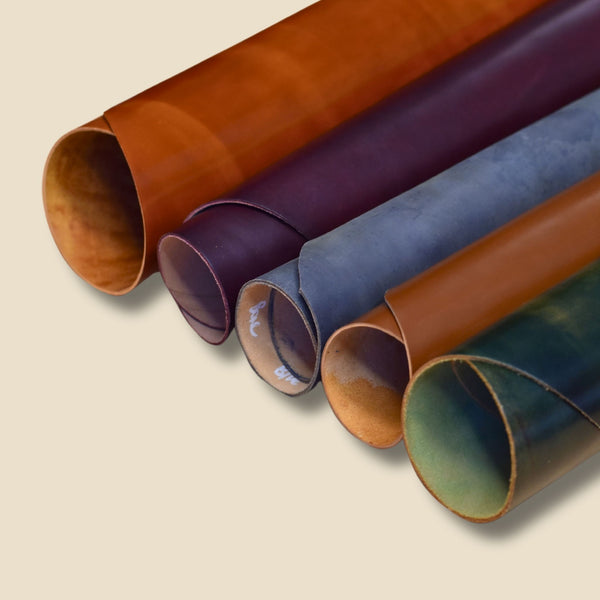
Quality materials prevent frustration when you are teaching leathercraft to kids. If the leather is too stretchy or inconsistent, a child might lose interest. Pueblo leather is particularly forgiving for beginners. It has a unique, slightly scuffed surface texture that looks better with every mark. This means if a child makes a small mistake with a stamp, it often blends into the natural grain. For projects that need more structure, like a first belt or a sturdy tool roll, Vaccheta leather is an excellent choice. It's durable, smells incredible, and holds its shape. Using premium materials ensures the final item is something they'll actually use for years.
To get started without the guesswork, consider one of our curated leather bundles designed specifically for new makers.
The Essential Tool Kit: What You Will Need for a Safe Start
Tools act as extensions of the hand. When teaching leathercraft to kids, providing the right equipment isn't just about efficiency; it is about building confidence through safe, successful outcomes. Many parents worry about sharp knives or heavy machinery. However, a child's workshop doesn't need to be a place of danger. By selecting tools specifically adapted for smaller hands and lower strength, you create a space where they can focus on the joy of making. It is about trust. When we give a child a real tool rather than a plastic toy, we tell them their work has value.
Starting with quality prevents bad habits before they even begin. Cheap, flimsy tools often require more force to use, which leads to slips and frustration. A well-balanced mallet and a sharp, managed-edge tool actually increase safety because they respond predictably. By using professional-grade items designed for ergonomics, you ensure the student spends their energy on the craft rather than fighting the equipment.
Ergonomic Tools for Small Hands
Stability is the foundation of precision. For children, a stable workspace paired with a smaller-grip pricking iron makes the world of difference. We recommend starting with water-based finishing products that allow for a clean environment. Tokonole is a fantastic choice for edge finishing because it is safe, non-toxic, and easy for kids to apply with a simple wood slicker. You can find high-quality pricking irons and specialized needles in the Hab-To Leather House Tools collection, where we prioritize durability and ease of use for crafters of all levels.
What you will need
Teaching leathercraft to kids shouldn't feel like a logistical puzzle for the mentor. Our Hab-To Leather House Starter Bundles remove the guesswork by grouping together everything a new maker needs. To set up your first safe session, ensure you have these essentials ready:
- A Lighter Mallet: Professional 24oz mallets are often too heavy for young wrists; look for a lighter poly or wood mallet that allows for controlled tapping.
- Blunt Harness Needles: These are essential for safety as they won't easily pierce skin but glide through pre-punched holes.
- Safe Adhesives: Ecostick 1804 Glue for a non-toxic, strong bond without the harsh fumes of traditional contact cements.
- Creative Variety: Leather Bundles to provide a range of colors and textures for unique creative expression.
- Edge Finishing: A curated Tokonole bundle to achieve a smooth, professional result on every project.
From Simple Wristbands to Pouches: Engaging Projects for Every Age
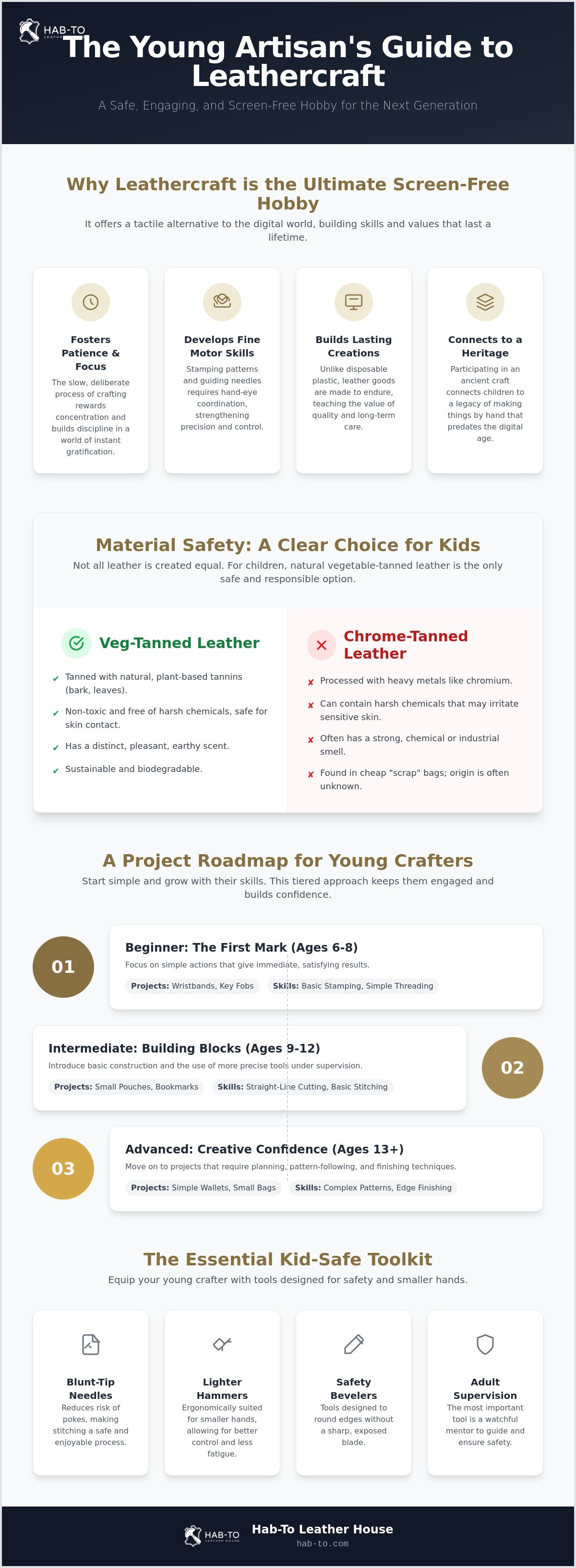
Success in teaching leathercraft to kids hinges on a clear, manageable progression. You wouldn't ask a beginner to build a complex handbag on their first day. Instead, we break the craft down into tiers that match a child's developmental milestones. This approach keeps them engaged and prevents the frustration that leads to abandoned hobbies. By starting with simple tasks and gradually adding complexity, you help the young crafter build a "vocabulary" of skills they can use for a lifetime. Each level introduces a new technique that builds upon the last, ensuring confidence grows alongside their ability.
We generally organize projects into three distinct levels:
- Level 1 (Ages 6 to 8): Focuses on personalization and texture. No sharp tools are required. The main goal is to understand how leather reacts to pressure and moisture through stamping.
- Level 2 (Ages 8 to 10): Introduces basic assembly. This involves using non-toxic adhesives and simple hardware to create functional items like bookmarks or cord organizers.
- Level 3 (Ages 10 and up): Tackles hand-stitching and layout. Using blunt needles and pre-punched holes, children learn the rhythm of the saddle stitch and the importance of structural integrity in items like pouches or small wallets.
Personalized Stamping: The Best Entry Point
Stamping is the perfect introduction because it offers immediate visual results. For a first project, try making personalized keyrings from vegetable-tanned scraps. Before stamping, you must "case" the leather. This simply means lightly wetting the surface with a sponge until the color darkens slightly. This moisture makes the fibers receptive to stamps. Once the child has finished their design, you can show them how to use Tokonole to burnish the edges. This process turns a raw, fuzzy edge into a smooth, professional finish that feels "real" to the touch and gives the project a finished look.
Step-by-Step: Making a Simple Leather Pouch
Once they've mastered stamping, move on to a simple pouch. Start with a single rectangle of leather. Guide your student through applying a thin layer of Ecostick 1804 Glue along the edges to hold the piece together before stitching. This water-based glue is safe and forgiving for young hands. For the stitching, explain the "saddle stitch" as a dance between two needles that meet in every hole. It is a slow, rhythmic process that builds incredible focus. To make the project feel like a professional item, let the child choose their own hardware for the closure. This final touch of quality reinforces the idea that they are making something of lasting value.
What you will need
To ensure a successful and safe session when teaching leathercraft to kids, we recommend having the following materials and tools ready:
- Adhesives: Ecostick 1804 Glue for a non-toxic, strong assembly bond.
- Edge Finishing: Tokonole and edge bevelers to create smooth, professional edges.
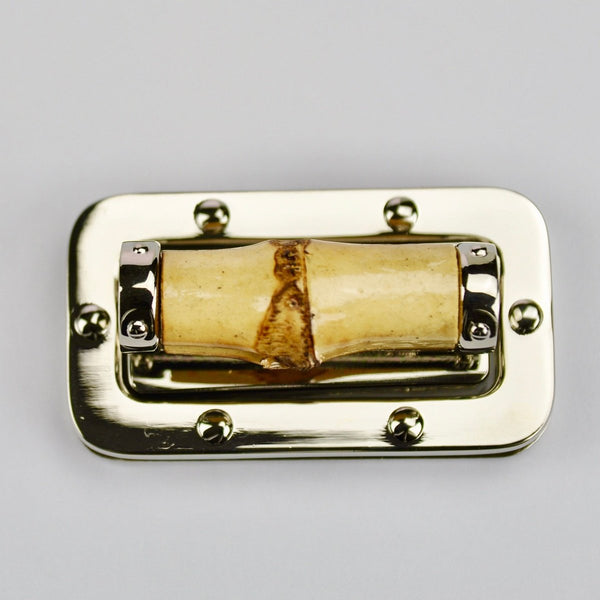
- Hardware: Solid Brass Hardware for durable and high-quality closures.
- Kits: Curated Crafting Bundles to provide all the necessary components in one package.
- Leather: A selection of Vegetable Tanned Leather panels or scraps, ideal for small hands to work with.
Ready to start your first project? Explore our curated crafting bundles at Hab-To Leather House to find everything you need in one place.
Mastering the Craft Together: How Hab-To Supports Young Makers
Teaching leathercraft to kids is a journey that flourishes when shared with a wider community. It is about more than just the hours spent at the workbench; it is about joining a global family of makers who value tradition and quality. We've built a vibrant digital space where young crafters can showcase their progress and find inspiration. By following our journeys on Instagram and TikTok, children can see what their peers are creating. This connection turns a solo hobby into a shared passion that spans across borders.
For those ready to move beyond the basics, Mike’s Masterclasses provide a deeper level of education. These structured sessions offer expert insights that help bridge the gap between curiosity and genuine skill. We also recognize that the craft extends to larger groups. If you are a school teacher or a scout leader looking to introduce traditional skills to your organization, we offer personalized advice. We can help you scale projects to fit your group's specific needs, ensuring every child has the right materials to succeed.
Expert Guidance from Mike
We encourage parents and mentors to book a Free Video Consultation to discuss tool safety and workspace setup. Mike takes an "expert friend" approach. He helps beginners navigate technical choices like finding the correct leather weight for a specific project. This personalized support ensures you don't waste time on materials that aren't quite right for smaller hands. Hab-To’s 160-year family history in the leather industry ensures that every piece of advice we give is time-tested and rooted in authentic craftsmanship.
Sustainable Sourcing for the Future
Our commitment to vegetable-tanned leather is a lesson in environmental stewardship for the next generation. By choosing natural materials, you teach children to value the planet while they create. We want to make these premium materials accessible to everyone. Hab-To ships globally with no minimum order requirements. This is perfect for small home projects where you only need a single hide or a specific set of hardware. It allows you to focus on the quality of the experience rather than the logistics of the supply chain.
The bond created when a parent and child craft together is something that lasts far longer than any physical item. These moments of quiet focus and shared achievement become the foundation of lifelong memories. To begin your own tradition, Explore our Leather Bundles to start your first project today!
Empowering the Next Generation of Makers
Watching a child transform a raw piece of vegetable-tanned hide into a functional item is a powerful experience. You've seen how this craft builds focus, improves fine motor skills, and offers a sustainable alternative to disposable culture. By prioritizing safe tools and non-toxic materials, you create an environment where creativity thrives without compromise. Teaching leathercraft to kids is about more than just technical steps; it is about sharing a legacy of patience and quality that we've nurtured through 160 years of family expertise at Hab-To Leather House.
We believe every mentor should have access to professional-grade supplies without the burden of large minimum orders, making our resources perfect for crafters of all sizes. The first step is often the most memorable. Start your journey with a Hab-To Leather House Starter Bundle today and begin building a lasting bond through the art of making. Your workshop is ready, and we can't wait to see what your young crafter creates.
Explore More from the Workshop
- The Art of Edge Finishing: A Beginner's Guide to Tokonole
- Understanding Vegetable-Tanned Leather: Why Quality Matters
- Workshop Safety: Essential Practices for Every Maker
Featured for Young Crafters
Ready to introduce your child to the world of leatherwork? Our curated bundles provide everything you need to start safely and sustainably.
Shop Hab-To Leather House Starter Bundles
Includes non-toxic Ecostick 1804 Glue, blunt needles, and premium Badalassi Pueblo Leather scraps.
Frequently Asked Questions
Is leathercraft safe for children?
Leathercraft is safe for children when you use managed-edge tools and provide constant adult supervision. By choosing blunt harness needles and avoiding sharp knives for younger age tiers, you create a secure learning environment. It's about building trust and teaching the correct way to handle real tools. This approach ensures safety while respecting the child's growing ability and curiosity in the workshop.
What is the best age to start teaching leathercraft?
You can begin teaching leathercraft to kids as early as 6 years old. At this stage, children have the fine motor skills needed for basic stamping and personalization. These projects don't require sharp tools and offer immediate satisfaction. As they reach 10 or 12, they can progress to more complex tasks like hand-stitching with pre-punched holes and basic assembly using water-based adhesives.
Do I need expensive tools to start leathercraft with my kids?
You don't need a massive budget to start this hobby. A few essential items like a light mallet, stamps, and needles are enough for the first few sessions. Our Starter Bundles remove the guesswork by providing professional-grade tools in a curated set. This allows you to invest in quality from day one without buying unnecessary or overly complex industrial equipment.
Why should I use vegetable-tanned leather instead of scraps or synthetic leather?
Vegetable-tanned leather is the only choice for eco-conscious families because it's processed using natural tannins from tree bark. Synthetic alternatives often contain plastics and lack the earthy scent and tactile feedback of the real material. Using premium Vegetable Tanned Leather ensures a non-toxic experience. It also teaches children to appreciate how natural materials age and develop a beautiful patina over time.
How can I prevent my child from getting frustrated with leathercraft?
Preventing frustration starts with choosing projects that match your child's current skill level. Start with simple stamping before moving to assembly. Using forgiving materials like Pueblo leather also helps. Its unique texture hides minor errors and makes every project look professional. Always celebrate the process and the small victories to keep their enthusiasm high throughout every creative session.
Are there non-toxic glues and finishes safe for children to use?
Yes, water-based products are the safest option for a child's workshop. We recommend Ecostick Glue because it's non-toxic and free from the harsh fumes found in traditional contact cements. For a clean, professional edge, Tokonole is a safe and easy-to-use finish. These products allow children to handle their projects safely while they work, ensuring a clean and healthy environment.
Can I buy small amounts of leather for a single kid’s project?
Yes, you can buy exactly what you need for a single project. Our "No MOQ" policy means you don't have to purchase large hides to get started. You can source small panels of premium Italian Leather that are perfect for a first pouch or wristband. This accessibility ensures that teaching leathercraft to kids stays affordable and focused on the creative experience.
Where can I find easy patterns for leathercraft projects for kids?
You can find inspiration and step-by-step guidance through our Masterclasses and community social media pages. We encourage mentors to start with basic geometric shapes like rectangles for pouches or strips for bookmarks. This teaches the fundamentals of layout and assembly without needing complex templates. Over time, these basic skills allow your child to design and create their own custom patterns.
Disclaimer
All our blog articles are made for information purposes only we dont take responsability for any content from third parties.