What Is Shell Cordovan Leather? The Ultimate Crafter's Guide
Ever held a piece of Shell Cordovan, felt its dense and glassy surface, then glanced at the price tag and wondered what could possibly justify the cost? If you're a crafter who believes in quality without compromise, it’s a question you've likely asked. Why is this material so revered, and what makes it fundamentally different from even the finest calfskin?
In this ultimate guide, we’ll answer the most important question first: what is shell cordovan leather? It's not just leather from a horse; it's a specific, non-porous membrane from a particular part of the hide, known as the 'shell.' This unique origin is the secret to its legendary durability and its signature ability to ripple smoothly instead of creasing harshly over time.
We'll take you deep into the intensive, six-month vegetable tanning process that gives Cordovan its rich character and explore the reasons behind its prestige. By the time you're finished, you'll understand its true value, know exactly what to look for when buying, and feel confident deciding if this 'king of leathers' is the right choice to elevate your next masterpiece of craftsmanship.
Key Takeaways
- Grasp the essential answer to what is shell cordovan leather by learning why this unique equine membrane is prized far more than traditional skin.
- Discover how the intensive, six-month vegetable tanning process is the secret behind this material's legendary quality and value.
- Identify the key characteristics of Shell Cordovan-from its signature gloss to its non-creasing 'roll'-to see if it’s the right choice for your project.
- Learn to view the high cost not as an expense, but as a strategic investment in a final product designed to last a lifetime.
Defining Shell Cordovan: Not Just Leather, But a Membrane
So, what is shell cordovan leather? In the simplest terms, it’s an ultra-premium material sourced from a very specific part of a horse: the rump. But here’s what makes it a legend in the world of craftsmanship. Shell Cordovan isn’t skin in the traditional sense. It's a dense, non-porous subcutaneous membrane, often called the 'shell', found beneath the main hide. This unique biological structure is the secret behind its legendary durability and glossy finish. It's considered by many to be more than just a specific type of leather; it's a class of material all its own.
To see exactly where this material comes from and the start of its long journey, this video from Horween Leather Company offers a fantastic look:
The Equine Origin: A Specific Part of a Specific Animal
Cordovan comes exclusively from the hindquarters of equine animals. Each horse possesses only two of these small, oval-shaped shells. They are a dense, fibrous flat muscle that lies under the surface hide, which is why the tanning process is so intensive-the grain must be carefully revealed from the flesh side. This extreme rarity, with only two small pieces available per animal, is a primary reason for its high value and prestige.
Shell Cordovan vs. Cowhide: Key Differences for Crafters
For leatherworkers, understanding the difference between Shell Cordovan and traditional vegetable-tanned cowhide is crucial. While both are premium materials, their working properties and aging characteristics are worlds apart.
- Fiber Structure: Cordovan has an incredibly dense, non-porous fiber structure, making it naturally resistant to water and stretching. Cowhide is more fibrous and porous by comparison.
- Creasing: When bent, Cordovan doesn't crease in the traditional sense. Instead, it develops soft, elegant ‘rolls’ or ‘ripples’ that add to its character. Cowhide tends to form a sharper, more defined crease.
- Patina: With time and use, Cordovan develops a rich, glossy lustre, essentially polishing itself with wear. High-quality veg-tan cowhide develops a more rustic, matte patina with deeper colour variations.
- Care: Thanks to its density and the high concentration of oils and waxes from its specialized tanning process, Cordovan requires minimal conditioning and is exceptionally durable against scuffs and scratches.
The Six-Month Journey: How Shell Cordovan Is Made
When you hold a piece of Shell Cordovan, you're not just holding leather; you're holding six months of meticulous, patient craftsmanship. Its price and prestige aren't born from marketing, but from an intensely manual and time-honored process. This stands in stark contrast to modern chrome tanning, which can produce leather in a matter of days. The creation of Shell Cordovan is an art form, a testament to the idea that some things simply cannot be rushed. No compromises. Just pure, traditional technique.
This philosophy of patience and tradition extends beyond leather into other realms of artisanal excellence. It's a principle seen in the slow, meticulous curing of gourmet foods, where time is the most crucial ingredient. For instance, the finest Spanish hams from specialists like Jambons Oliveras undergo a similar, lengthy process, ensuring a depth of flavor that mass production simply cannot replicate.
The Ancient Art of Vegetable Tanning
The journey begins with a slow, patient bath. Unlike faster methods that use harsh chemicals, Shell Cordovan is vegetable-tanned. The horsehides are submerged in large pits filled with a proprietary blend of natural tanning liquors derived from tree barks. Over several weeks, they are moved from one pit to the next, each with a progressively stronger solution. This gentle, gradual process is crucial for preserving the incredibly dense, unique fiber structure of the shell, building a foundation of unparalleled strength and character.
Revealing the Shell: A Test of Skill
Here lies the most critical and demanding step. After tanning, a master artisan must carefully shave away the grain side of the hide to reveal the thin membrane of shell hidden beneath. This is done entirely by hand and requires immense skill and a practiced eye. One wrong move, one moment of lapsed concentration, and the entire valuable piece is ruined. This single, high-stakes process is central to understanding what is shell cordovan leather-it's a material defined by the human skill required to bring it to life.
Hot Stuffing, Curing, and Hand-Finishing
Once the shell is revealed, it undergoes a process called 'hot stuffing'. It's impregnated with a special blend of oils, greases, and waxes, which gives the leather its supple feel and rich depth. The shells are then left to cure, stacked flat for weeks to allow the oils to penetrate every fiber. The final touch is pure artistry: each shell is hand-glazed. An artisan uses a heavy glass rod to rub the surface with intense pressure, a friction-based method that burnishes the leather and coaxes out its signature, deep luster. This is what gives Cordovan its famous non-porous, glossy finish.
The Unmistakable Qualities of Shell Cordovan
Beyond the months-long tanning process and its unique equine origin, what truly defines this material is how it looks, feels, and performs over a lifetime of use. These tangible benefits are the real answer to the question, what is shell cordovan leather? It’s not just leather; it’s an investment in unparalleled quality and character.
Legendary Durability and the 'Rolling' Crease
At its core, the strength of shell cordovan comes from its incredibly dense, tight fiber structure. This makes it exceptionally durable and highly resistant to stretching. For a crafter, this means a stable material to work with. For the owner, it means a product that holds its shape for decades. Where other leathers develop fine, sharp creases, shell cordovan has the unique property of developing gentle, wave-like ripples. This signature 'rolling' crease is why it's the gold standard for the vamps of high-end footwear, which endure the most stress.
Rich Patina and Deep, Hand-Rubbed Color
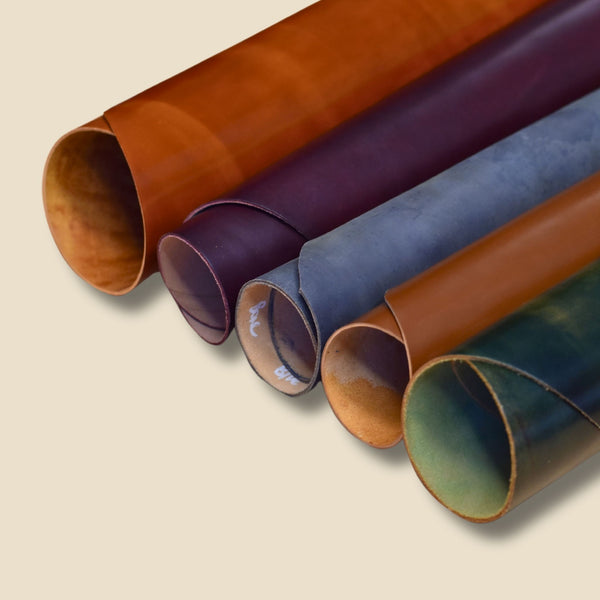
The smooth, non-porous surface of shell cordovan acts as a perfect canvas for colour. Dyes aren't just coated on top; they are hand-rubbed deep into the material, creating a translucent, lustrous finish with incredible depth. This is most famously seen in Horween's iconic Color #8, a deep, rich burgundy that has become synonymous with the leather itself. Over time, with wear and care, this finish develops a beautiful, warm patina that is unique to its owner, telling a story of its use.
Natural Water Resistance and Simple Maintenance
Because shell cordovan is non-porous and packed with oils and waxes from the tanning process, it naturally repels water far better than other leathers. Raindrops will bead up on the surface rather than immediately soaking in. This same quality makes it surprisingly low-maintenance. Unlike thirsty calfskins that require frequent conditioning, shell cordovan’s shine can often be restored with nothing more than a vigorous brushing with a horsehair brush, which brings its natural oils back to the surface. It’s a material built for real life.
These qualities combined-unmatched durability, graceful aging, and simple care-are why shell cordovan is chosen for products designed to become heirlooms. If you're a crafter looking to work with this exceptional material, we invite you to explore our hand-selected Shell Cordovan collection.
Is Shell Cordovan Worth the Investment for Your Craft?
Let's be direct: the price tag on Shell Cordovan can be intimidating. For any serious crafter, however, it's crucial to view this cost not as an expense, but as a deliberate investment in your final product. When you choose Cordovan, you're investing in a material that elevates your work to a level of luxury, durability, and prestige that few other leathers can hope to match. After understanding what is shell cordovan leather, the final question is always about value-and the answer lies in its unparalleled quality.
Breaking Down the Cost Factors
The premium price is a direct reflection of the incredible rarity and effort we've discussed. It isn’t arbitrary; it’s earned. To recap, the cost is rooted in:
- Extreme Rarity: Only two small, oval-shaped "shells" are harvested from the hindquarters of a horse. The total yield per animal is incredibly low-often just enough for a single pair of shoes.
- A Six-Month Process: The traditional vegetable tanning and finishing process is painstakingly slow, involving dozens of highly skilled, manual steps that cannot be rushed or automated.
- Artisanal Skill: From the initial shaving to the final glazing, every stage requires the steady hand and keen eye of a master tanner.
When you compare its price per square foot, genuine Shell Cordovan is often three to five times more expensive than even the most premium full-grain calfskin. You are paying for a legacy of craftsmanship with no compromises.
Ideal Projects for Shell Cordovan
So, where does this remarkable leather truly shine? Given its unique properties, Cordovan is best reserved for small, high-end goods where its strengths become the main feature. It is the perfect choice for creating heirloom-quality pieces that are built to last for generations. Think of items that demand exceptional durability and a flawless finish, such as luxury watch straps, minimalist wallets, and elite footwear. Its dense, non-porous structure means it barely stretches and resists creasing, while its rich, oily character allows it to develop a stunning patina over time. The edges can be burnished to a glass-like smoothness, a true hallmark of masterful leatherwork.
Sourcing and Buying Your First Piece
When you're ready to make the investment, it's vital to source from world-renowned tanneries. The most famous is undoubtedly Horween in the USA, but tanneries like Rocado in Italy also produce exceptional Shell Cordovan. For European crafters seeking accessible, hand-selected shells without restrictive minimum order requirements, we at Hab-To Leather House pride ourselves on providing the finest materials for your craft.
Choosing the right piece can feel like a big step. Need advice? Book a free consult with Mike to discuss your project. He can personally help you select the perfect shell to bring your vision to life.
Your Craftsmanship Deserves Shell Cordovan
Shell Cordovan is more than just a material; it's a testament to patience, tradition, and unparalleled quality. We've explored how it originates not from hide, but from a unique, dense membrane, and how a meticulous six-month tanning process imbues it with its signature deep gloss and non-creasing character. These qualities make it the undisputed king of leathers, a material that elevates any project from great to extraordinary.
Ultimately, understanding what is shell cordovan leather is to understand its value. It’s an investment in your craft, ensuring the final piece is not only beautiful but will endure for generations. It’s a commitment to quality. No compromises.
At Hab-To, we believe every artisan deserves to work with the best. That’s why we offer hand-selected shells from the world's most renowned tanneries, with no minimum order requirements. If you have questions, you can always count on expert advice from a 4th generation leather specialist to help you choose the perfect piece for your project.
Ready to work with the king of leathers? Explore our Shell Cordovan collection.
We can't wait to see what you create.
Frequently Asked Questions About Shell Cordovan
Why is Shell Cordovan so expensive?
Shell Cordovan's high price comes down to three key factors: rarity, time, and skill. Each horse only provides two small, oval-shaped "shells," making the raw material scarce. The traditional vegetable tanning process is incredibly slow, taking over six months to complete. Finally, working with this dense material requires highly specialized skills and tools. It's an investment in a material that is truly second to none in durability and beauty.
Is Shell Cordovan leather waterproof?
While not completely waterproof, Shell Cordovan is exceptionally water-resistant. Its unique, non-porous structure and high concentration of natural oils cause water to bead up on the surface rather than soak in immediately. For light rain or minor spills, a quick wipe is often all that's needed. However, we always recommend avoiding full submersion and drying the leather naturally if it does get significantly wet to preserve its integrity and finish.
Does Shell Cordovan scratch easily?
Shell Cordovan is remarkably resilient and does not scratch easily compared to many other leathers. Because of its incredibly dense fiber structure, scuffs are often just displaced oils and waxes on the surface. Many minor marks can be "healed" or buffed out with vigorous brushing or by using a smooth object like a deer bone. This durability is one of the hallmarks of its quality and why it's chosen for products meant to last a lifetime.
What is the difference between Shell Cordovan and 'cordovan' color?
This is a crucial distinction for any leather enthusiast. Shell Cordovan is a specific type of leather derived from a particular membrane on a horse's hindquarters. 'Cordovan,' on the other hand, is simply the name of a color-typically a deep, rich brownish-red. Many different leathers, such as cowhide, can be dyed a cordovan color, but they will not possess the unique non-creasing and durable properties of genuine Shell Cordovan leather.
What famous brands are known for using Shell Cordovan?
Shell Cordovan is a hallmark of high-end, heritage craftsmanship. It's most famously used by elite shoemakers who value its unique properties. American brand Alden is perhaps the most well-known, with its shell boots and longwings being true icons. Other revered brands in the world of fine footwear include Viberg, Carmina, and Crockett & Jones. These companies choose shell for its unparalleled durability, luster, and ability to age beautifully.
How can you tell if leather is genuine Shell Cordovan?
There are a few key giveaways. Genuine Shell Cordovan has a completely smooth, non-porous surface, lacking the "pebbled" grain pattern you'd see on cowhide. It also has a unique, rich smell from its extensive vegetable-tanning process. When flexed, it produces smooth "rolls" rather than fine creases. On the reverse side, you can often find the tannery's ink stamp, like the famous one from the Horween Leather Company in Chicago.