

Best Hardware for Pet Accessories: A Crafter’s Guide to Durability and Safety
In the world of leatherwork, hardware isn't just a finishing touch. It's a safety-critical component that determines whether a collar holds firm or fails at the worst possible moment. You've likely spent hours selecting the perfect vegetable-tanned hide. Why risk that craftsmanship on a buckle that might snap? Many artisans worry about hardware failure leading to pet injury or the frustration of seeing a beautiful piece tarnished by rust. It's a valid concern. New global safety regulations in 2026 have made reliability more important to pet owners than ever before. Choosing the best hardware for pet accessories is about more than aesthetics. It’s about peace of mind.
I believe that every piece you create should be built to last. In this guide, you'll discover the essential components every artisan needs to create professional-grade, safe, and long-lasting leashes and collars. We'll cut through the confusing terminology surrounding die-cast zinc and solid brass. You'll gain a definitive list of must-have materials and the confidence to explain exactly why your gear is safer than the rest. Quality matters. Let's look at how to choose hardware that honors your craft and protects the animals who wear it.
Key Takeaways
- Learn why tensile strength is the most critical factor when selecting the best hardware for pet accessories to ensure animal safety and product reliability.
- Understand the mechanical differences between bolt snaps and trigger snaps to choose the most secure leash attachment for active dogs.
- Compare the long-term performance of solid brass and stainless steel to prevent rust and structural failure in demanding outdoor environments.
- Master the proper placement of D-rings and roller buckles to maximize comfort for the pet while extending the lifespan of your leatherwork.
- Discover how to pair heavy-duty hardware with premium hides like Maryam Vacchetta and Badalassi Pueblo for a professional, high-end aesthetic.
Understanding Pet Hardware: Safety vs. Aesthetics
When you craft a leather collar, you're building a safety device. It's easy to get distracted by the shine of a buckle, but the best hardware for pet accessories must prioritize structural integrity above all else. Unlike a fashion belt, a dog collar faces sudden, explosive tension. A medium-sized dog lunging at a squirrel can exert hundreds of pounds of force in a millisecond. If your hardware is merely decorative, it will fail. This isn't just a quality issue; it's a safety risk that can lead to heartbreak. Since the 2026 update to global safety regulations, consumers have become increasingly aware that safety compliance is more important than a low price tag. Choosing the right components ensures your work stands up to real-world pressure.
To better understand the practical applications of these components, watch this helpful video:
The Load-Bearing Checklist
Every leash or collar has potential "break points" where the most stress occurs. For a leash, this is the Bolt Snap. For a collar, it's the D-ring. I always recommend using welded D-rings. A non-welded ring can pull open under heavy tension, especially with large breeds. While there's no single mandatory standard, a good rule of thumb is that your hardware should withstand seven times the pet's weight. When you select the best hardware for pet accessories, you're choosing to protect the animal. Investing in load-rated components increases the resale value of your goods because it builds trust with your customers.
- Welded D-Rings: Non-negotiable for any dog over 10kg.
- Tensile Strength: Always check the weight ratings provided by your supplier.
- Bolt Snaps: Ensure the internal spring is robust and the material is rust-resistant.
Aesthetics That Last
Safety doesn't mean you have to sacrifice beauty. The most professional results come from matching the hardware's personality to the leather. If you're working with a rugged, textured hide like Badalassi Pueblo, a matte solid brass finish creates a stunning, traditional look. For a more refined, sleek accessory, pairing heavy-duty stainless steel with the smooth finish of Maryam Vacchetta offers a modern aesthetic that won't compromise on strength. High-quality hardware develops a beautiful patina over time, just like the leather itself. This harmony between material and metal is what separates a hobbyist's project from a professional-grade product.
Essential Snap Hooks and Clasps for Leashes
The connection between a handler and their dog is only as strong as the clasp at the end of the leash. This single point of contact handles every tug, lunge, and sudden stop. When you're sourcing the best hardware for pet accessories, you aren't just looking for a shiny finish. You're looking for a spring mechanism that won't seize and a metal body that won't snap under pressure. Choosing the wrong clasp can have serious consequences. History shows us that poor material choices lead to dangerous failures, as seen in this CPSC recall of faulty leash hardware. As a maker, your reputation depends on avoiding these pitfalls by selecting load-tested components.
Sizing your hook correctly is just as important as the material. If you use a 20mm hook on a 15mm leather strap, the leather will slide from side to side. This creates uneven wear on your edges and looks unprofessional. Always match the "eye" of the hook to the exact width of your leather. The "feel" of the snap tells you a lot about its internal quality. A high-quality spring should feel crisp and firm. If there's any grittiness when you slide the bolt, it's a sign of poor manufacturing or inferior alloys that will likely fail over time.
Trigger Snaps vs. Bolt Snaps
Bolt snaps are the industry standard for a reason. They feature a spring-loaded slider that is difficult to open accidentally. This makes them ideal for high-security leashes where safety is the priority. However, the internal spring is a common failure point if it's made from cheap steel. Trigger snaps offer a more modern, one-handed operation. They're excellent for quick releases but come with a specific risk. If a dog rolls on the ground, the trigger can catch on the grass or a collar ring and pop open. A swivel eye is a rotating base that allows the hook to turn independently of the leash, preventing the leather from twisting and tangling during walks.
Specialty Clasps
Sometimes your design calls for something more unique. Scissor snaps provide a beautiful, vintage aesthetic that pairs perfectly with traditional vegetable-tanned hides. They're often used for lighter leashes or decorative accessories where the dog isn't a heavy puller. For tactical gear or large, powerful breeds, high-strength locking carabiners are becoming more popular. These offer a secondary locking stage that virtually eliminates the chance of accidental release. If you're building multi-dog couplers, the swivel mechanism becomes even more critical. You'll need hardware that can handle multiple load paths without binding. To find the right balance of strength and style, you can explore our professional hardware selection to see what fits your next project.
The Structural Core: Buckles, D-Rings, and O-Rings
The core of a collar isn't just the leather. It's the metal skeleton beneath. When you search for the best hardware for pet accessories, you'll encounter two main manufacturing styles: solid cast and bent wire. Bent wire hardware is exactly what it sounds like. It's a piece of metal shaped into a ring with a visible seam. For a decorative fashion belt, it works fine. For a dog that pulls, it's a disaster waiting to happen. Solid cast hardware is poured into a mold to create a single, unified piece of metal with no weak points. It's the only choice for an artisan who values safety and professional results.
High-quality structural components do more than just hold things together. They protect the leather from premature wear. Friction is the enemy of any natural material. By selecting hardware designed to minimize this friction, you ensure your collars and leashes stay in service for years rather than months. This commitment to durability is what builds a brand's reputation in the competitive pet market.
Choosing the Right Buckle
Roller buckles are the gold standard for pet collars. The small rotating cylinder on the frame allows the leather strap to glide through without catching or scuffing. This prevents the "chewing" effect often seen on cheaper accessories where the buckle tongue eats into the hide. For heavy pullers or large breeds, consider a double-bar buckle. It adds a second layer of security by distributing tension more evenly across the strap width. Remember to match your buckle width exactly to your leather. A 25mm strap requires a 25mm buckle. Any gap looks sloppy and compromises the structural integrity of the finished piece.
D-Rings and O-Rings: The Anchor Points
These are your primary attachment points. A welded D-ring is non-negotiable for safety. If the joint isn't welded, the ring can pull open under sudden tension. Strategic placement is key. I suggest placing a small, lightweight D-ring near the buckle specifically for ID tags. Use a larger, heavy-duty welded ring further down the strap for the leash attachment. This prevents tags from tangling with the leash snap and keeps the dog comfortable.
O-rings offer incredible versatility for modern designs. They're perfect for creating "hands-free" leashes or adjustable training leads. Because an O-ring can rotate 360 degrees, it reduces torque on the leather. This flexibility is essential when pairing hardware with premium materials like Maryam Vacchetta, as it prevents the leather from twisting and cracking under pressure. Using the best hardware for pet accessories ensures that every anchor point is as reliable as the leather itself.
- Solid Cast: Always choose cast over bent wire for load-bearing parts.
- Welded Joints: Essential for any ring that will face leash tension.
- Roller Buckles: Best for preserving the life of vegetable-tanned leather.
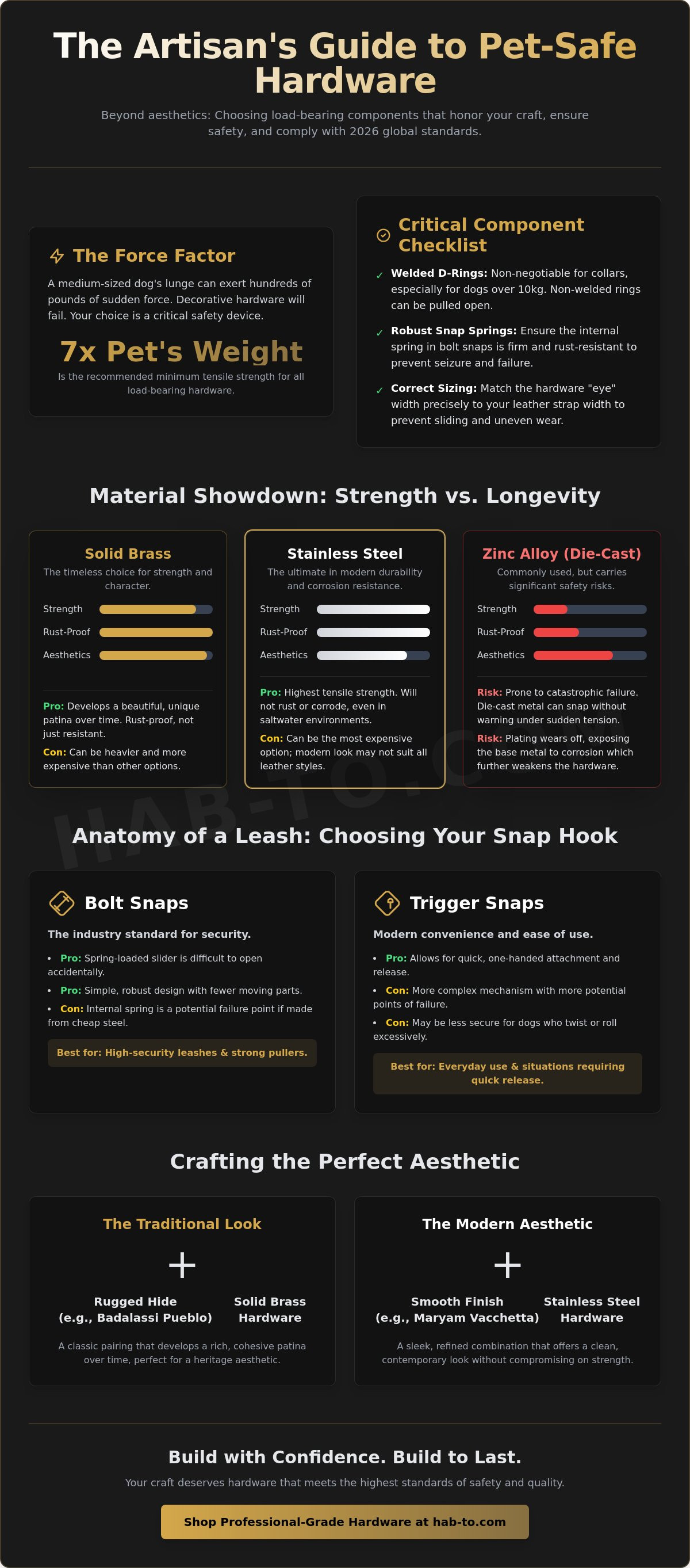
Material Comparison: Solid Brass vs. Stainless Steel vs. Zinc Alloy
Choosing the metal for your project is a defining moment for any artisan. It's the difference between creating a legacy piece and a disposable one. The metal you select must withstand constant friction, environmental exposure, and the sudden physical stress of a pulling dog. While many beginners gravitate toward cheaper options to keep costs down, experienced crafters know that the best hardware for pet accessories is an investment in safety. In early 2026, North American brass prices rose to $5.58 per kilogram, reflecting its status as a premium, high-demand resource. Understanding why these materials command such respect is essential for your growth as a maker.
Zinc alloy, often labeled as "die-cast," is the most common budget choice. It's a mixture of metals that are poured into molds at high speeds. While it's affordable, it has a significant flaw: brittleness. Zinc doesn't bend under extreme pressure; it snaps. Over time, humidity and salt in the air cause "pitting," where the finish bubbles and the structural core begins to crumble. For a small decorative charm, zinc is fine. For a load-bearing leash clasp or collar buckle, it's a liability you can't afford to ignore.
The Solid Brass Advantage
Solid brass is a timeless favorite in the leatherworking community. It's a non-ferrous metal, meaning it contains no iron and will never rust. This makes it incredibly reliable for pets that spend time outdoors. Brass doesn't just last; it ages. As it develops a deep, rich patina, it complements the natural character of vegetable-tanned hides. Unlike zinc, brass is a "tough" metal. If it's pushed beyond its limit, it tends to deform rather than shatter, giving the owner a warning sign before a total failure occurs. You can dive deeper into the material science in our Solid Brass Hardware Guide.
When to Choose Stainless Steel
Stainless steel is the undisputed king of strength. If you're building gear for "adventure dogs" that frequently swim in the ocean or hike in rain-soaked forests, this is your best hardware for pet accessories. Saltwater is a brutal corrosive agent that can eventually wear down even the best brass, but high-grade stainless steel remains untouched. It offers the highest strength-to-weight ratio of any common crafting metal. A sleek stainless buckle paired with a durable hide like Maryam Vacchetta creates a modern, high-performance aesthetic that appeals to the active pet owner. It stays bright, silver, and structurally perfect for a lifetime. For makers whose clients enjoy taking their pets on trips to scenic locations like the Hartbeespoort Dam, it can be helpful to explore Accommodation options that cater to outdoor enthusiasts and their companions.
Ready to upgrade your builds? Shop our collection of professional-grade hardware to find the perfect match for your next creation.
Crafting the Perfect Accessory: Pairing Hardware with Hab-To Leather House
Bringing metal and leather together is where your craft truly comes alive. It's a delicate balance. If you've chosen the best hardware for pet accessories, you need a foundation that matches its strength and character. A heavy stainless steel buckle on a flimsy strap feels wrong; a tiny brass trigger snap on a thick hide is a safety failure. I've seen how the right pairing transforms a simple collar into a professional-grade tool. It's about more than just looks. It's about ensuring the physical properties of the metal and the hide work in harmony to protect the pet.
For heavy-duty projects, I always recommend Maryam Vacchetta. Its dense fiber structure provides the "bite" needed to hold hardware securely under tension. When you pair this leather with solid stainless steel, you create an accessory built for the elements. If your style leans toward the rustic and traditional, the unique, pre-patinated texture of Badalassi Pueblo is a natural partner for solid brass. The way the brass dulls into a deep gold alongside the darkening leather is a hallmark of true quality. At Hab-To Leather House, our 160 years of family business experience informs every hide we select, ensuring your hardware has the support it deserves.
Leather Weight and Hardware Scale
Scale matters. For load-bearing collars for medium to large dogs, you should never use leather thinner than 2.0mm. A thinner strap can stretch or even tear around the buckle holes over time. Conversely, for lightweight cat collars or gear for toy breeds, Virgilio Vacchetta offers the perfect suppleness. Using hardware that's too heavy for these smaller animals is a common mistake. It's uncomfortable for the pet and puts unnecessary strain on the thinner leather. Always ensure your hardware matches the scale of the animal and the weight of the hide.
Installation Best Practices at Hab-To Leather House
The best hardware for pet accessories is only as good as its installation. You have two main choices: rivets or Chicago screws. Rivets are permanent and offer a clean, classic look. Chicago screws allow for hardware replacement but require a drop of thread locker to ensure they don't vibrate loose. Precision is non-negotiable here. I rely on a wing divider to mark my center lines and hole placements perfectly. This ensures your D-rings and buckles sit straight and the tension is distributed evenly across the strap.
- Final Inspection: Check every rivet for a tight set. There should be no "wiggle."
- Edge Finishing: Burnish the leather around the hardware to prevent moisture from seeping into the fibers.
- Tool Quality: Use sharp punches to ensure clean holes that won't fray or stretch.
Your work is a commitment to the safety of someone's family member. Don't cut corners on the metal or the skin. When you use quality materials and install them with care, you're not just making a product. You're building a bond that lasts a lifetime.
Build Gear That Lasts a Lifetime
Safety is the silent partner in every successful leathercraft project. By choosing solid cast metals over brittle alloys, you ensure that every lunge and tug is met with unyielding strength. We've explored how the marriage of load-rated components and premium hides creates accessories that are as secure as they are beautiful. Investing in the best hardware for pet accessories is more than a design choice; it's a commitment to the animals who will wear your work. Your reputation as an artisan is built on this trust.
At Hab-To Leather House, we bring over 160 years of leathercraft expertise to your workbench. We believe high-quality materials should be accessible to everyone. That's why we offer premium Italian leather sourcing and professional hardware with no minimum order requirements for artisans. Whether you're a hobbyist or a professional maker, you deserve components that honor your craft. Explore our curated selection of Solid Brass Hardware for your next pet project and start building with confidence. Let's create something remarkable together.
Frequently Asked Questions
What is the strongest material for dog leash hardware?
Stainless steel, specifically grade 316, is the strongest material available for leash hardware because of its high tensile strength and resistance to mechanical failure. While solid brass is incredibly durable, steel won't deform as easily under extreme, sudden loads. It's the preferred choice for tactical gear and large, powerful breeds that require the absolute maximum safety margin available in the craft today.
Can I use regular belt buckles for dog collars?
You should avoid using fashion belt buckles for dog collars because they aren't designed to handle the lateral force of a pulling animal. Pet-specific hardware is built with thicker frames and reinforced tongues to prevent snapping. Using the best hardware for pet accessories means choosing roller buckles that distribute tension evenly and prevent the leather from tearing at the adjustment holes during a walk.
How do I prevent my brass hardware from turning green?
To prevent brass hardware from turning green, you must keep the metal clean and dry. That green substance, called verdigris, is a natural reaction between the copper in the brass and moisture or acidic oils from the dog's skin. Regularly wiping your hardware with a soft cloth and applying a light coat of specialized metal wax can create a protective barrier that preserves the finish.
What size D-ring do I need for a 1-inch wide collar?
You need a 1-inch (25mm) D-ring for a 1-inch wide collar to ensure a secure and professional fit. The measurement always refers to the internal width of the straight bar where the leather wraps around. If the ring is too wide, the collar will shift and look sloppy. If it's too narrow, the leather will bunch up and put uneven stress on your stitching or rivets.
Is solid brass better than stainless steel for pet accessories?
Neither is objectively better, but they serve different environments and styles. Solid brass is ideal for crafters who value a classic aesthetic and a rich patina that develops alongside the leather. Stainless steel is the best hardware for pet accessories used in saltwater or high-humidity areas, as it offers superior strength and a silver finish that requires zero maintenance to stay structurally sound for a lifetime.
How can I tell if a D-ring is welded or just bent?
You can identify a welded D-ring by inspecting the joint for a smooth, fused surface where the metal has been melted together. A bent ring will have a visible seam or a small gap where the two ends meet. Always choose welded rings for any load-bearing application, as bent rings can pull open easily under the weight of a lunging dog, leading to a dangerous equipment failure.
Why do some snap hooks fail under pressure?
Snap hooks often fail because they are made from die-cast zinc alloy, which is a brittle material that shatters rather than bends under sudden stress. Another common failure point is the internal spring mechanism. If the spring is made from low-grade steel, it can rust or lose its tension, causing the gate to stay open and accidentally release the dog from the leash at a critical moment.
What is the best way to attach hardware to leather for maximum safety?
The most secure way to attach hardware is through a combination of heavy-duty saddle stitching and high-quality fasteners like Chicago screws. While rivets are common, Chicago screws provide a mechanical bond that is very difficult to pull through the leather fibers. Always use a drop of permanent thread locker on the screw threads to prevent them from vibrating loose during long walks or high-activity sessions.