

Best Hardware for Pet Accessories: A Professional Maker’s Guide
What if the most dangerous part of your handcrafted dog collar isn't the leather, but the buckle you chose to hold it together? You spend hours selecting the perfect piece of vegetable-tanned leather and perfecting your edges. It's heartbreaking to see that hard work undermined by a snapped trigger snap or a rusted D-ring. Finding the best hardware for pet accessories is about more than just aesthetics. It's about ensuring the safety of a beloved companion while maintaining the integrity of your craft.
I understand the frustration of seeing a beautiful leash fail because of cheap nickel plating or finding the perfect hardware only to realize you have to buy a thousand units. In this guide, I'll share my family's 160 years of expertise to help you identify premium metals like solid brass and stainless steel. You'll learn exactly which components you need for professional-grade collars and leashes, and how to source them in the small quantities your business needs. Let's make sure your hardware is as durable and honest as the leather you work with.
Key Takeaways
- Learn why hardware quality is a critical safety factor and how to properly match leather thickness to hardware gate openings for maximum security.
- Master the functional differences between solid brass and stainless steel to select the best hardware for pet accessories that remains hypoallergenic and rust-free.
- Identify the essential components for professional-grade collars and leashes, comparing the durability of traditional tongue buckles with quick-release alternatives.
- Discover the specific tools and finishing supplies, such as edge bevelers and Tokonole, required to achieve a professional finish that matches your premium materials.
- Find out how to source professional-grade hardware and vegetable-tanned leather without high minimum order quantities, allowing you to build your brand without excessive stock.
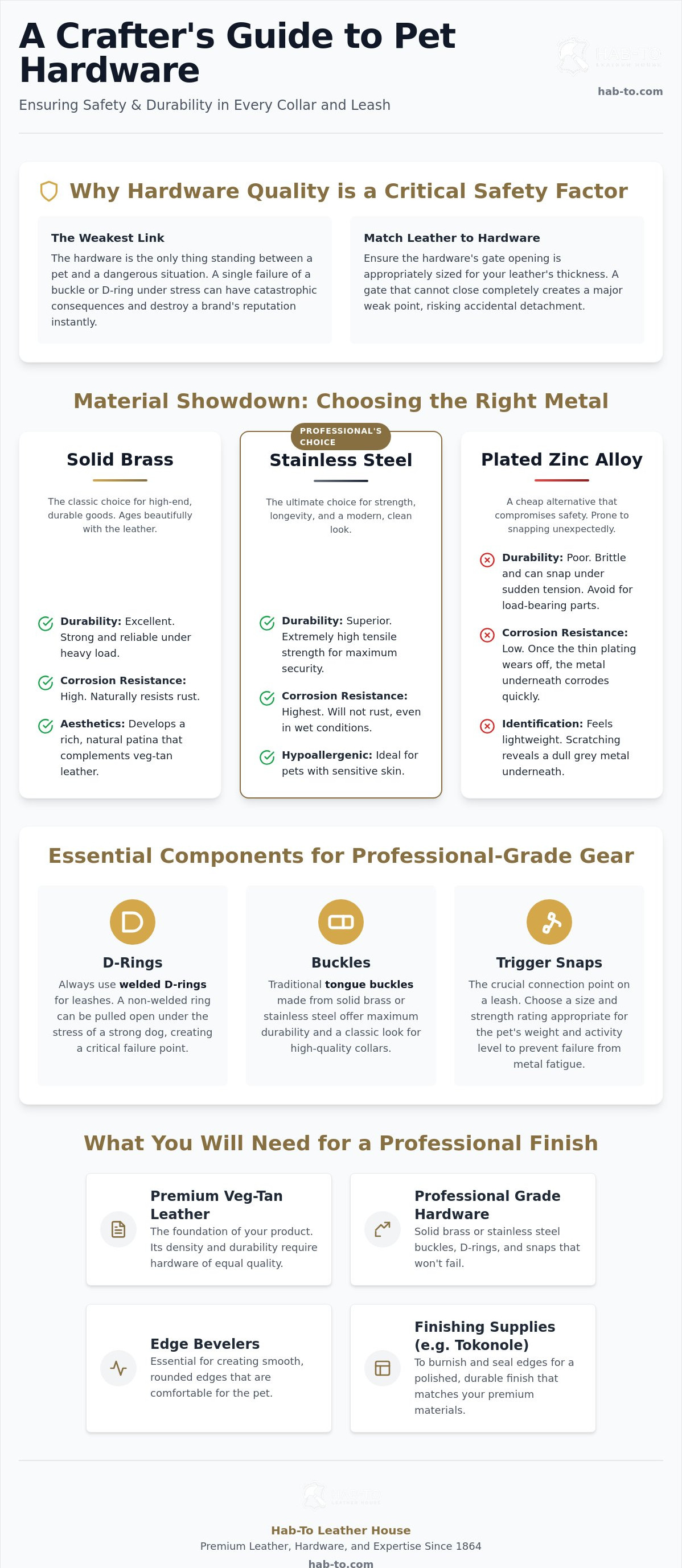
Why Hardware Quality Defines Safety in Pet Accessories
Hardware is the only thing standing between a pet and a dangerous situation. I've seen too many makers focus entirely on the leather while treating the metal as an afterthought. When a dog lunges at a squirrel, the force exerted on the buckle and D-ring is immense. If you've chosen the best hardware for pet accessories, you can trust that connection. If you've opted for cheap alternatives, you're taking a gamble with a living creature's safety. Professional makers know that a single failure can destroy a brand's reputation instantly.
One detail I always emphasize is the relationship between leather thickness and the hardware gate opening. If you use a heavy harness leather with a small trigger snap, the gate might not close completely. This creates a weak point where the leash can slip out. You must match the scale of your metal to the density of your material. It ensures a secure lock every time and prevents accidental detachment during a walk. To better understand this concept, watch this helpful video:
Cheap zinc die-cast hardware is a liability. It's brittle and prone to snapping under sudden tension. For a professional maker, using these components is a shortcut that costs more in the long run. Premium hardware, like solid brass or stainless steel, doesn't just provide safety; it significantly enhances the resale value of your goods. With the global brass industry projected to reach over 15 billion dollars by 2034, it's clear that makers and consumers alike are prioritizing this durable alloy. Customers recognize the weight of quality.
The Synergy of Veg-Tan Leather and Metal
Vegetable-tanned leather is dense and durable. It needs hardware that can keep up with its structural integrity. As your leather ages and develops a rich character, your metal should do the same. Solid brass develops a beautiful patina that complements the natural tones of the hide. You can explore A Crafter’s Guide to Essential Leather Hardware to find pieces that match this quality. While common metals used for pet tags might include lighter options like aluminum, load-bearing hardware requires the uncompromising strength of brass or steel.
Safety Ratings and Breaking Strength
Always look for load-bearing ratings when selecting your components. A key distinction is between welded and non-welded D-rings. A non-welded ring can pull open under stress; a welded one is a solid loop that won't budge. It's the only choice for a professional leash. Choose your hardware based on the pet's weight and activity level. A large breed like a Great Dane needs a different level of security than a small terrier. High-activity dogs require hardware that can handle repeated jolts and heavy pulls without metal fatigue.
Comparing Materials: Solid Brass vs. Stainless Steel vs. Plated Zinc
Choosing the best hardware for pet accessories starts with a deep respect for the raw material. Not all metals are created equal. Solid brass and stainless steel are the industry standards for a reason. They offer a lifespan that matches the durability of premium vegetable-tanned leather. In contrast, zinc alloy and plated steel often hide behind a shiny facade but fail when a pet's safety is on the line. Professional makers avoid these "mystery metals" because they are brittle and prone to snapping under sudden tension.
How do you identify genuine quality in a sea of cheap imports? Weight is your first clue. Solid brass and stainless steel feel substantial and heavy in the palm of your hand. Zinc feels light and almost hollow. You can also perform a "scratch test" on a sample piece. If you scratch the surface and see a dull greyish-white metal underneath, it's plated zinc. Genuine brass remains yellow all the way through. Sound also tells a story. Solid metals have a clear, musical ring when tapped; zinc sounds dull and flat. Organizations like the Center for Pet Safety emphasize the importance of material integrity, and your choice here is the foundation of a safe product.
Solid Brass: The Hypoallergenic Choice
Brass is the gold standard for pet comfort. It's naturally hypoallergenic, which is critical for dogs with sensitive skin. Many animals suffer from "nickel itch" or allergic reactions caused by the cheap plating on mass-produced collars. Solid brass eliminates this risk entirely. It also ages with grace. Over time, it develops a deep, rich patina that looks stunning against the natural grain of the hide. If you prefer a bright finish, a quick polish brings back the original luster. You can find these timeless pieces in the Hab-To Hardware Collection.
Stainless Steel for Extreme Durability
For high-tensile needs or coastal environments, stainless steel is unbeatable. It provides massive breaking strength and zero maintenance. I recommend 304 grade for most leashes, while 316 grade is the better choice for hardware exposed to constant salt water. Steel doesn't rust or pit. It maintains a clean, modern aesthetic that pairs beautifully with dark-toned leathers like Pueblo leather. Maintenance is effortless. A simple rinse with fresh water after a muddy walk keeps the hardware looking new for years. If you're eager to experiment with these combinations, our leathercraft starter bundles offer a great way to begin your journey.
Essential Components for Professional Collars and Leashes
A collar is only as strong as its weakest link. While we have already explored the integrity of different metals, the specific components you choose dictate the daily functionality and security of the piece. Traditional tongue buckles remain my preferred choice for safety. They provide a reliable mechanical lock that won't fail under sudden pressure. While quick-release metal buckles offer modern convenience, they must be precision-engineered to prevent accidental opening. I always recommend positioning the D-ring right behind the buckle. This placement ensures that when a dog pulls, the tension is distributed across the leather strap rather than putting direct stress on the buckle's tongue.
Snap hooks are the most active part of any leash, and your choice here defines the user experience. You generally choose between trigger snaps, bolt snaps, and scissor snaps. Scissor snaps are often the safest option because their design makes it nearly impossible for them to snag and open accidentally during a walk. When it's time to assemble these pieces, you'll decide between Chicago screws and rivets. Chicago screws offer a clean, professional look and allow for future repairs or hardware swaps. If you use them, you must apply a drop of threadlocker to ensure they stay secure. Rivets provide a permanent, rugged bond that is ideal for high-impact gear. Both are excellent options when you source the best hardware for pet accessories.
Equestrian-Grade Hardware for Heavy Duty
I often look to the world of horse tack when designing for large breeds. Equestrian-grade hardware is built for extreme tension and constant outdoor exposure. Borrowing from this tradition is a hallmark of a professional maker. Using a Conway buckle, for example, allows you to create adjustable leashes without the bulk of a traditional buckle. It's a minimalist, high-strength solution that pairs perfectly with heavy bridle or harness leathers. This "over-engineering" provides peace of mind for owners of high-energy, powerful dogs.
Sizing Matters: Matching Hardware to Strap Width
Sizing is about physics, not just aesthetics. A 13mm strap is perfect for toy breeds, while a 25mm width is the industry standard for medium to large dogs. For giant breeds, I often move to 32mm hardware. To calculate the correct hardware size, always measure the internal width of the buckle or D-ring. It must match your strap width exactly. A strap that is too narrow for its hardware will slide around, causing "hardware fatigue" and premature wear on your leather. Balancing the weight of the metal with the strength of the strap is the secret to a comfortable, long-lasting accessory.
What You Will Need: Tools and Materials for Assembly
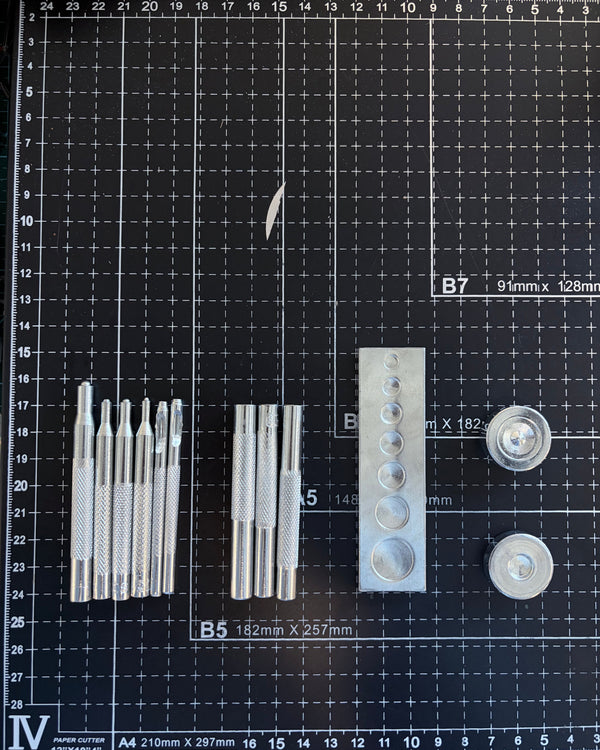
A professional finish is only possible when your workspace is equipped with the right tools. You've already selected the best hardware for pet accessories; now you need a foundation that supports those premium components. I always start with high-quality vegetable-tanned leather. A leather like Virgilio Vacchetta is an excellent choice for collars because it offers the density required to hold hardware securely without stretching over time. You'll also need a reliable set of assembly tools, including sharp hole punches, a sturdy hammer, and dedicated rivet setters that match the diameter of your hardware exactly.
High-stress areas, such as the attachment point for a leash's snap hook, require extra attention. I often use reinforcement materials between leather layers to prevent the metal from pulling through the hide. This is especially important when working with softer or thinner leathers. Having a consolidated list of supplies ensures you don't have to pause your craft to find a missing component. Precision in these early stages defines the longevity of the final piece.
The Assembly Toolkit
Accuracy is everything in pet gear. Before I set a single rivet, I use Ecostick 1804 to achieve a temporary hold. This water-based glue allows you to align your straps perfectly, ensuring your hardware is centered and straight. For safety loops on leashes, hand-stitching with pricking irons and needles provides a secondary layer of security that rivets alone cannot match. If your design includes adjustment holes, using the Manual Grommet Hand Press ensures your eyelets are set with professional pressure, preventing them from loosening or scratching the pet's skin.
Build your professional toolkit with our curated leathercraft bundles
Finishing for Pet Comfort
A beautiful collar is useless if it irritates the animal. This is where your finishing technique becomes critical. I use edge bevelers to round off the sharp corners of the leather, followed by a thorough burnishing with Tokonole. This process seals the fibers and creates a glass-like edge that won't chafe the pet's neck. Since collars are exposed to the elements, applying leather care products from our Olivenleder range adds essential water resistance. Finally, always run your finger along the inside of your hardware. Check for any burrs or sharp edges from the manufacturing process before you ship the final product. Your reputation rests on these small, tactile details.
Sourcing Premium Hardware with Hab-To Leather House
Finding the best hardware for pet accessories shouldn't feel like a barrier to your creativity. Many wholesalers force makers into high minimum order quantities (MOQs) that make small-scale crafting or prototyping impossible. At Hab-To Leather House, we've removed those hurdles. Whether you need a single solid brass buckle for a custom order or a handful of stainless steel D-rings for a new collection, you can source exactly what your project requires. Buying your leather and hardware from one specialized source ensures that the scale, weight, and quality of your materials match perfectly every time.
Personalized advice is the heartbeat of our service. Selecting the right metal for a breed-specific project involves more than just picking a finish. A harness for a high-pulling Mastiff requires different structural considerations than a decorative collar for a Toy Poodle. I'm here to help you make those choices based on decades of experience. Since we are based in Amsterdam, we offer fast European shipping without the frustration of unexpected customs fees or long international waits. You get professional-grade materials delivered directly to your workshop door, ready for assembly.
The Hab-To Advantage
Every product in our shop is backed by 160 years of family history in the leather industry. We don't just sell materials; we curate them with a deep respect for the traditional craft. This legacy allows us to provide access to premium Italian leathers, such as Badalassi Pueblo, in manageable small panels. You don't need to invest in a whole hide to start making high-end pet gear. If you're working on a complex build and feel stuck, I even offer free video consultations to help you navigate the technical details of your design. We are your partners in production, not just a supplier.
Join the Community
The journey of a maker never truly ends. I invite you to sharpen your skills through our Hab-To Masterclasses, where we dive deep into the techniques that define professional leatherwork. You can also follow our daily workshop life, see new arrivals, and find inspiration on Instagram and TikTok. We love seeing what you create with our materials and sharing that passion with the wider community. It's time to stop compromising on your components and start building accessories that stand the test of time.
Explore our Professional Hardware Collection today!
Hardware & Fournituren
Shop Hardware & FourniturenElevate Your Craft with Uncompromising Quality
Selecting the best hardware for pet accessories is an investment in both safety and style. You now understand that solid brass and stainless steel are non-negotiable for high-end gear. These metals offer the hypoallergenic properties and sheer breaking strength that prevent hardware from snapping or rusting during daily use. By matching these premium components with our world-class vegetable-tanned leathers, you create accessories that don't just look professional; they're built to survive a lifetime of adventures.
At Hab-To Leather House, we support your creative journey with over 160 years of family craft expertise. You don't need a massive warehouse to get started. Our no minimum order quantity policy means you can prototype with the finest materials immediately. Plus, our central Amsterdam location ensures fast European shipping within 24 to 48 hours, so your workshop stays productive and your customers stay happy.
Your dedication to quality is what truly sets your work apart in a crowded market. It's time to stop settling for generic components and start using hardware that matches the soul of your leather. We're excited to see the durable, beautiful pieces you'll create next.
Frequently Asked Questions
Is solid brass or stainless steel better for dog collars?
Both metals are exceptional choices, but the right one depends on your specific environment. Stainless steel is the superior option for coastal areas because it offers maximum resistance to salt water corrosion. Solid brass is favored by many makers for its classic aesthetic and the rich patina it develops over time. Both provide the high-tensile strength required to keep a pet secure during a walk.
Will brass hardware stain my dog’s white fur?
Solid brass can occasionally leave a greyish mark on very light fur due to natural oxidation. This reaction happens when the metal interacts with moisture or the natural oils in the dog's coat. It is not harmful, but if you want to avoid any chance of discoloration, stainless steel is the better alternative. Steel is completely inert and won't leave any residue on white or light-colored fur.
Can I use standard fabric hardware for pet accessories?
No, you should never use standard garment or handbag hardware for pet gear. These components are not designed to handle the sudden, high-impact force of a dog lunging or pulling. Using them is a safety risk that can lead to snapped buckles or opened rings. Finding the best hardware for pet accessories means specifically sourcing load-bearing components that are rated for the pet's weight and activity level.
How do I know if a buckle is strong enough for a large dog?
Check the weight and the thickness of the buckle's tongue to gauge its strength. A professional-grade buckle for a large breed should feel substantial in your hand and have a solid, thick construction. Avoid anything made from lightweight zinc die-cast, as these are brittle and can fail under stress. For powerful dogs, I always recommend choosing equestrian-grade hardware or welded stainless steel components for maximum security.
Do I need a special machine to attach heavy-duty hardware to leather?
You don't need an expensive machine, but using the right hand tools is essential for a secure bond. A Manual Grommet Hand Press provides the consistent pressure needed to set eyelets and rivets professionally. If you are just starting, a sturdy hammer and a dedicated setter from our leatherworking tools collection will allow you to achieve excellent results by hand.
What is the best way to clean and maintain metal pet hardware?
Maintenance is simple and mostly involves keeping the hardware free of abrasive dirt. Simply wipe the metal with a soft, damp cloth after a muddy walk. If you want to restore the bright shine of solid brass, a specialized metal polish works wonders. Stainless steel is even lower maintenance; it only needs a quick rinse with fresh water if it has been exposed to salt water or heavy mud.
Why should I avoid nickel-plated hardware for my pet?
Nickel is a frequent allergen that can cause painful skin rashes or "nickel itch" in sensitive dogs. Beyond the health risks, cheap nickel plating is prone to chipping and wearing off, which exposes the weaker base metal underneath to rust. Choosing solid brass or stainless steel ensures your accessories remain hypoallergenic and durable. It's a small investment that prevents discomfort for the pet and failure of the product.
Where can I buy small quantities of professional pet hardware in Europe?
Hab-To Leather House in Amsterdam is your specialized source for professional-grade components without high minimum order quantities. We believe that every maker should have access to the best hardware for pet accessories, whether they are building a single collar or a full collection. We ship across Europe within 24 to 48 hours. This allows you to get the premium materials you need without the headache of long waits or customs fees.
Disclaimer
All our blog articles are made for information purposes only we dont take responsability for any content from third parties.