

Best Leather for Watch Straps: Artisan Sourcing Guide 2026
What if the most expensive watch in your collection is currently being held back by a strip of leather destined to crack within a year? Most enthusiasts spend months researching movements and dial finishes, yet they settle for stiff, mass-produced bands that feel like cardboard on the wrist. Finding the best leather for watch straps isn't just about luxury. It's about finding a material that breathes, moves, and develops a unique story through its patina. I've spent over 25 years working with these hides. I know the frustration of being forced to buy a massive hide just to make one 20mm strap. You want world-class quality without the unnecessary waste.
You deserve a material that honors your timepiece. In this guide, you'll discover why specific Italian vegetable-tanned hides like Maryam Shell Cordovan and Pueblo have become the gold standard for high-end horology. We'll explore why Maryam leather carries such immense prestige in the artisan community and how you can source small panels perfectly sized for your specific project. I'll also provide a clear list of the essential tools you need to start crafting. From understanding fiber density to choosing the right thickness for wrist comfort, we're diving deep into the world of premium artisan sourcing for 2026.
Key Takeaways
- Understand why high fiber density is the secret to preventing strap stretching and maintaining hole integrity over years of wear.
- Discover why Italian vegetable-tanned hides, specifically Maryam Shell Cordovan, are widely considered the best leather for watch straps due to their durability and unique patina.
- Learn the distinct characteristics of artisan leathers like Pueblo and Vacchetta, which offer a sophisticated aesthetic that evolves with your lifestyle.
- Master the technical requirements of strap making, including the 1.2mm to 1.5mm thickness "sweet spot" and the necessity of hypoallergenic lining leather.
- Find out how to source premium, world-class leather in small panels without the burden of high minimum order quantities.
Defining the 'Best': What Makes a Leather Ideal for Watch Straps?
A watch strap is one of the most intimate items you'll ever own. It sits against your skin for sixteen hours a day, absorbing heat, moisture, and constant movement. While most enthusiasts focus on the watch face, the Leather watch strap is what actually connects that engineering marvel to your body. Choosing the best leather for watch straps requires looking past the surface color. You need a material that possesses high fiber density. Without it, the pin holes will stretch and distort within months. I've seen countless straps ruined because the maker chose a loose-fibered belly cut instead of a tight shoulder or shell.
The Crucial Balance of Density and Flexibility
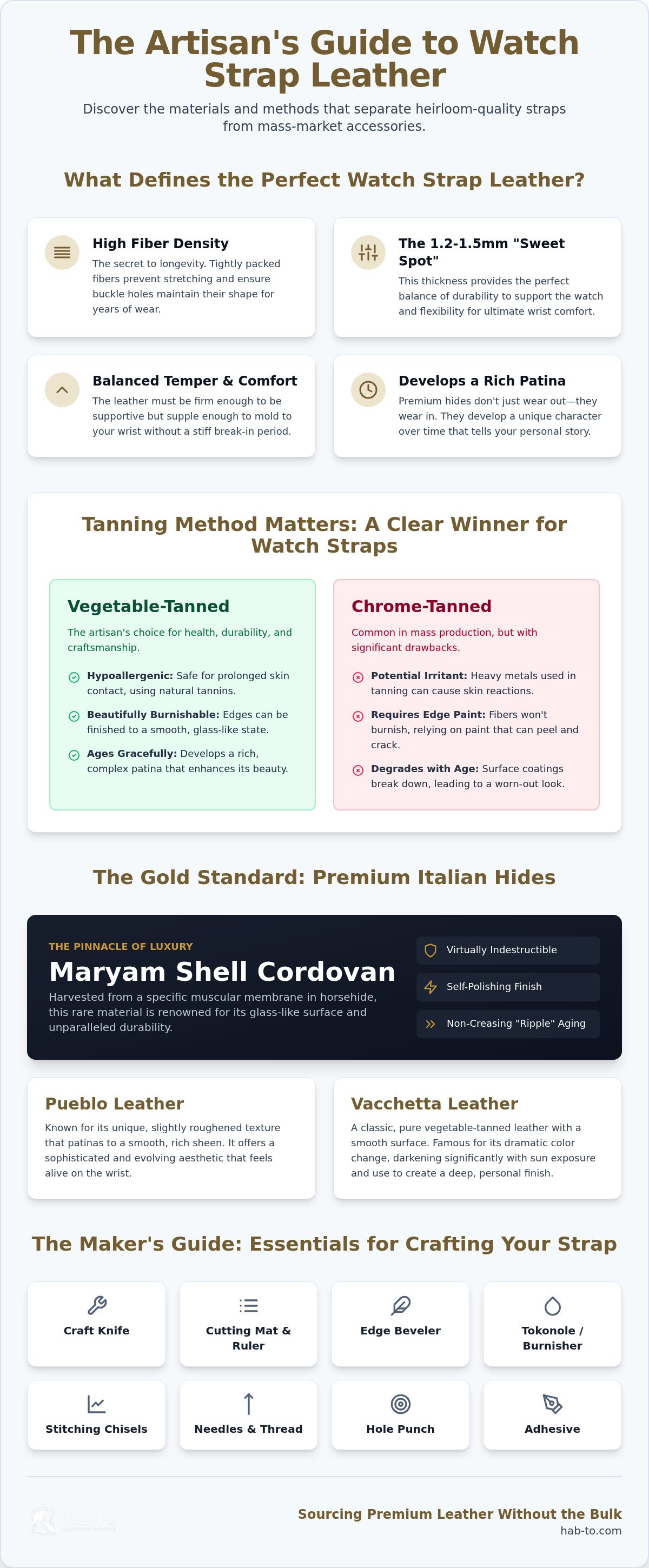
Watch straps demand a unique technical profile. Unlike a belt that stays relatively static, a strap flexes every time you move your hand. I've found that a thickness between 1.2mm and 1.5mm is the sweet spot for most builds. Anything thicker becomes a struggle to buckle; anything thinner risks tearing under stress. The break of the leather, which refers to how it wrinkles when folded, is also vital. High-quality Maryam Vacchetta or Pueblo leather contains enough natural oils and waxes to keep the fibers lubricated. This prevents the surface from cracking even after years of daily wear.
Why Vegetable-Tanned Leather Wins Over Chrome-Tanned
Health and craftsmanship are the two pillars here. Chrome-tanned leather often relies on heavy metals that can irritate sensitive skin during long-term contact. Because a strap is pressed firmly against your wrist, vegetable-tanned leather is the safer, more ethical choice for the conscious collector. It's also a dream to work with at the bench. You can achieve glass-like burnished edges on vegetable-tanned leather using just a bit of friction and patience. Chrome-tanned alternatives simply won't take a burnish, forcing you to use edge paints that eventually peel and flake. For a piece of functional art, the natural way is the only way.
The Gold Standard: Maryam Leather and the Allure of Shell Cordovan
Conceria Maryam is a name that commands silence in the workshops of Tuscany. They aren't just tanners; they're custodians of a horsehide tradition that few others can replicate. When we talk about the best leather for watch straps, we're inevitably led to their Shell Cordovan. Unlike standard bovine leather, which is made from the animal's skin, Shell Cordovan is harvested from a specific muscular membrane in the hindquarters of a horse. This rare material is virtually indestructible. It doesn't have a grain side that can peel or crack. Instead, it offers a glass-like surface that remains smooth for decades.
The allure for high-end horology brands is obvious. A watch strap needs to endure thousands of flexes. Most leathers develop deep creases at the buckle point, but Shell Cordovan simply ripples. This non-creasing property ensures your luxury timepiece always looks pristine. Key reasons Maryam Cordovan excels include:
- High oil content for a natural, self-healing finish.
- Extreme fiber density prevents stretching around buckle holes.
- Unique ripple aging process instead of traditional creasing.
Understanding Maryam Shell Cordovan’s Unique Characteristics
Why Cordovan is the Ultimate Choice for Luxury Timepieces
Luxury is about pedigree. If you're wearing a mechanical watch that took hundreds of hours to assemble, pairing it with a cheap, mass-produced strap feels like a disservice. Shell Cordovan offers an aesthetic match that few other materials can provide. Its durability is legendary. If you care for it properly, a Cordovan strap can easily outlast the watch movement itself. Understanding the complexity of the leather tanning process helps you appreciate why this material is so prized. It takes months of slow, patient work to produce a single shell.
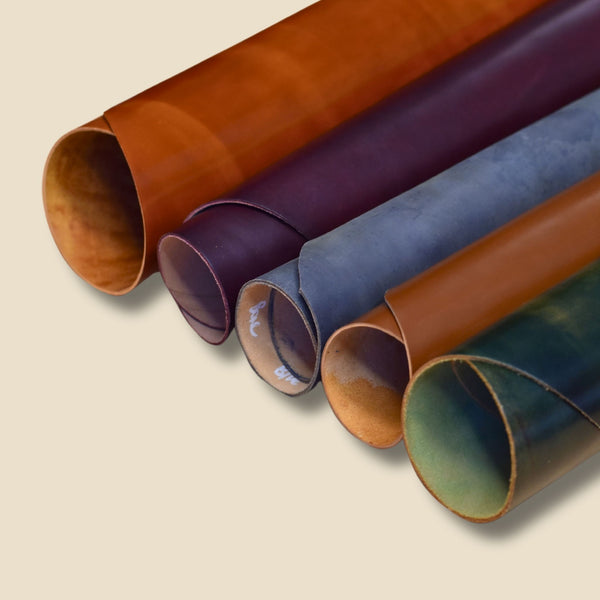
If you're ready to elevate your craft, you can Shop Maryam Cordovan Shell Leather directly from our stock. For those who want to experiment with different textures and finishes, our curated leather bundles offer a great starting point for your next project.
Beyond Cordovan: Exploring Pueblo, Vacchetta, and Sustainable Olivenleder
While Shell Cordovan is a masterpiece of durability, it isn't the only contender for the best leather for watch straps. Sometimes a project calls for a different personality. A vintage field watch or a rugged tool watch often feels more at home on a strap with visible texture and a matte finish. This is where the diverse world of Italian vegetable-tanned hides truly shines. From the rustic charm of Badalassi Carlo to the modern sustainability of olive-tanned hides, each material offers a unique sensory experience on the wrist.
Choosing between these leathers is about more than just color. You have to consider the tactile journey. Some leathers start soft; others require a break-in period. Some will stay relatively consistent, while others will change color entirely within the first six months of daily wear. Understanding these nuances is what separates a hobbyist from a true artisan.
Pueblo Leather: The Rustic, High-Patina Favorite
Badalassi Carlo produces one of the most recognizable hides in the artisan community. Pueblo leather features a unique "scratched" or buffed surface that feels almost like a short-nap suede when it's new. It is incredibly satisfying for makers to work with. The surface takes stitches beautifully, and the edges respond exceptionally well to burnishing. As you wear a Pueblo strap, the rough texture smooths out, absorbing oils from your skin to create a deep, glossy patina that is entirely unique to the wearer. You can explore Badalassi Pueblo Leather in our shop to find the perfect shade for your next build.
Vacchetta leather remains the traditional Tuscan choice for a soft, natural look. It is an open-pored material that is highly responsive to its environment. If you want a strap that evolves rapidly, darkening and softening as it ages, Vacchetta is the gold standard. It provides a smooth finish that feels luxurious against the skin from day one.
Sustainable Choices: The Rise of Olivenleder Jesse
Sustainability is no longer a niche concern. In 2026, many collectors are looking for ethical alternatives to traditional tanning. Olivenleder is a revolutionary material that uses a tanning agent derived from olive leaf extracts. This process turns a waste product from the food industry into a premium tanning liquor. The result is a leather that is entirely organic and chrome-free. It is an ideal choice for clients with sensitive skin who may experience irritation from standard hides.
Our Jesse line within the Olivenleder collection combines these eco-friendly benefits with the technical properties makers love. It handles like a traditional vegetable-tanned hide but carries a clean, modern conscience. Whether you prefer the rugged start of Pueblo or the ethical future of Olivenleder, the right hide is waiting for your workbench.
The Maker's Guide: What You Will Need to Craft a Professional Strap
Even the best leather for watch straps won't save a project if the technical execution is off. Crafting a strap is an exercise in extreme precision. You're working with tiny tolerances. A millimeter too thick and the strap won't fit the lugs; a millimeter too thin and it feels flimsy. I've found that a total thickness between 1.2mm and 1.5mm is the sweet spot. This measurement includes both your top leather and your lining leather. It provides enough body to feel substantial without becoming an obstacle at the buckle.
Don't ignore the underside of your build. The lining leather is what remains in constant contact with your skin. It must be hypoallergenic and resistant to the salts in sweat. While you're focusing on the aesthetic of the top grain, remember that comfort determines if a strap is actually worn. To ensure the holes and lug ends don't distort over time, I recommend internal reinforcement. Using Texon or specialized reinforcement tapes at high-stress points prevents the leather from stretching. This keeps your watch securely on the wrist for years.
What You Will Need: The Tool & Material Checklist
Before you make your first cut, ensure your workbench is stocked with materials that match the quality of your timepiece. Using inferior adhesives or hardware will only lead to disappointment as the strap ages. Here is the essential list:
- Leather: A small panel of Maryam Vacchetta or Pueblo.
- Adhesive: Ecostick 1804 for a strong, non-toxic, water-based bond.
- Finishing: Tokonole to achieve glass-smooth, professional edges.
- Hardware: Stainless steel or solid brass buckles to prevent skin irritation.
Essential Tools for Precision Work
Precision is the hallmark of an artisan. You'll need pricking irons to ensure your stitching has that consistent, slanted appearance found on high-end luxury goods. A sharp skiving knife is equally vital. You must thin the leather at the fold points where it wraps around the spring bars and the buckle. Without proper skiving, these areas become too bulky, making the strap look amateurish. If you're just starting out, we've curated Starter Bundles that include the exact tools I use in my own workshop.
Sourcing Premium Leather Without the Bulk: The Hab-To Advantage
Finding the best leather for watch straps shouldn't involve a logistics nightmare. Many suppliers only cater to large manufacturers, forcing hobbyists and small ateliers to buy far more material than they need. We've changed that. Our No-MOQ philosophy allows you to source small panels of the exact same hides used by luxury brands. We ship directly from Amsterdam, and we've optimized our logistics to maintain 24-48 hour delivery speeds for 2026. This gives you direct access to Conceria Maryam and Badalassi Carlo without the burden of storing massive hides you'll never use.
I believe in a personal approach. I've spent over two decades working with these materials, and I know that every project has its own set of challenges. If you're struggling to decide between a specific Vacchetta or a Pueblo finish, I'm here to help. You can book a free 1-on-1 video consultation to discuss your project. We'll look at your watch and your design together to find the perfect hide. This isn't just a transaction. It's a partnership between makers who share a love for the craft.
160 Years of Family Expertise in Every Cut
Mike brings 25 years of personal expertise to the table, backed by a family history in Amsterdam dating back to 1857. When you order from us, you aren't just getting a random square of leather. You're getting a piece selected by someone who understands the fiber structure and the "break" of the hide. We ensure you get the best part of the shoulder or shell for your specific needs. Buying from a local EU wholesaler also means you avoid the headache of customs delays or hidden fees that often come with international sourcing. Learn more about the Hab-To heritage.
Master the Craft: Education and Community
Understanding the material is just as important as owning the tools. We want to see you succeed, which is why we offer more than just raw materials. Our commitment to the craft includes a range of educational resources designed to help you master the nuances of working with premium vegetable-tanned hides. We want to help you find the best leather for watch straps while giving you the skills to turn that leather into a masterpiece.
Join our Masterclasses to elevate your strap-making skills. Whether you are a beginner or a pro, there's always more to learn about edge finishing, skiving, and hand-stitching. We're building a community of makers who prioritize quality over convenience and tradition over mass production.
Browse our full Leather Collection and start your project today.
Elevate Your Watchmaking Journey with World-Class Materials
Choosing the best leather for watch straps is a decision that defines the character of your work. You've seen how technical performance, fiber density, and tanning heritage intersect to create a material that honors a luxury timepiece. Whether you choose the indestructible ripple of Shell Cordovan or the rustic evolution of Pueblo, you're investing in a strap that will age beautifully alongside its wearer.
At Hab-To, we back your passion with 160 years of family expertise. We exclusively source vegetable-tanned Italian hides and offer them with no minimum order quantities. This accessibility ensures you can use the world's finest materials for a single project without the burden of wasteful bulk. I'm here to help you bridge the gap between hobbyist and master artisan.
Shop Premium Watch Strap Leather Bundles at Hab-To
I'm excited to see the stories your creations will tell. Stop settling for stiff, mass-produced bands that fail within a year. It's time to start crafting with materials that reflect your commitment to quality and tradition. Your workbench is ready for something exceptional.
Essential Materials for Your Next Strap
- Maryam Shell Cordovan Panels
- Badalassi Carlo Pueblo Leather
- Ecostick 1804 Non-Toxic Adhesive
Frequently Asked Questions
What is the most durable leather for a daily-wear watch strap?
Shell Cordovan is the most durable leather for a daily-wear watch strap because it is a muscular membrane rather than a skin. It resists creasing and cracking even after years of constant flexing. If you prefer a bovine option, a high-density shoulder like Pueblo is excellent. These leathers handle the daily exposure to sweat and friction better than softer belly cuts, ensuring your project remains structural and beautiful for a decade.
Why is Shell Cordovan considered the best for watch bands?
Shell Cordovan is often called the best leather for watch straps due to its unique ripple effect instead of creasing. While standard leathers eventually develop deep cracks at the buckle point, Cordovan maintains a smooth, glass-like finish. Its naturally high oil content also means it is self-polishing; as you wear it, the friction against your wrist keeps the leather lustrous and supple without needing constant conditioning or heavy maintenance.
How thick should leather be for a handmade watch strap?
Aim for a thickness between 1.2mm and 1.5mm for a professional handmade watch strap. This range allows the strap to be sturdy enough to hold the watch head while remaining flexible enough to wrap comfortably around the wrist. If you're using a top leather and a lining, skive the edges down to ensure the lugs and buckle area don't become overly bulky. Precision here is what separates an amateur build from a luxury piece.
Can I make a watch strap from vegetable-tanned leather?
You absolutely can and should make a watch strap from vegetable-tanned leather. It is the gold standard for artisans because it allows for glass-smooth burnished edges and develops a rich, personal patina. Unlike chrome-tanned alternatives, these hides are free from heavy metals, making them safer for constant skin contact. It’s the traditional choice that ensures your strap gets better with age rather than simply wearing out over time.
What is the difference between Maryam and other cordovan tanneries?
Conceria Maryam stands out through their specific Tuscan fat-liquoring recipes and deep horsehide expertise. While other tanneries produce excellent shells, Maryam’s process results in a material with a distinctively rich, waxy feel and unique color depth. They're masters of the traditional Vacchetta style, blending ancient Italian techniques with modern quality standards to produce shells that are highly sought after by the world's most prestigious horology brands and independent makers alike.
Do I need to line my leather watch strap?
Lining your strap is highly recommended for both comfort and longevity. The lining leather protects the decorative top leather from the salts and moisture in your sweat, which can cause materials to degrade. Using a hypoallergenic lining ensure the strap feels soft against the skin from the first wear. It also provides an opportunity to add internal reinforcement like Texon to prevent the strap from stretching around the buckle holes.
How do I prevent my leather watch strap from smelling?
To prevent a leather watch strap from smelling, always choose high-quality vegetable-tanned leather. This material is breathable and doesn't trap bacteria as easily as synthetic or chrome-tanned leathers. Ensure you allow the strap to dry completely if it gets wet, and avoid wearing it during heavy exercise. If a smell develops, a light cleaning with a damp cloth and natural leather soap is usually sufficient to refresh the fibers without damage.
Where can I buy small pieces of premium Italian leather?
You can source small panels of premium Italian leather directly from us at Hab-To. We know that makers don't always need a full hide for a single strap project. That’s why we offer a no minimum order quantity policy on world-class hides like Maryam and Badalassi Carlo. Based in Amsterdam, we use our family expertise to select the best cuts, offering 24-48 hour delivery speeds for 2026 to keep your workbench stocked.
Disclaimer
All our blog articles are made for information purposes only we dont take responsability for any content from third parties.