

Building Trust with Your Materials Supplier: A Practical Maker’s Guide
What if the most reassuring supplier promise isn’t a polished product description, but a clear answer to a practical question? Building trust with your materials supplier starts with evidence you can use: what the material is, how the supplier communicates, and whether you can start with an order that suits your project. When different leathers sound alike on a product page, those details matter.
It’s reasonable to hesitate before committing to a large order. Unclear answers can make it hard to plan a project or production run, and marketing claims alone don’t show you how a supplier will work with you. Look for specific product information, useful communication, and ordering options that fit the scale of your work.
At Hab-To Leather House, we focus exclusively on vegetable-tanned leather, with no minimum order requirement. Leather is available by dm², panel, or shoulder. VAT is included for purchases within the Netherlands and exclusive for purchases to other countries. In this guide, you’ll learn how to assess a supplier through observable signals, choose a manageable first order, and build a clear, constructive working relationship.
Key Takeaways
- Build trust through observable evidence: clear material details, useful answers, and follow-through that matches what you agreed.
- When building trust with your materials supplier, compare material clarity, communication, order flexibility, and project guidance, not just price or polished marketing.
- Discuss how a material needs to work in your project before deciding whether it’s the right fit.
- Use a first order that fits a real project to learn how the supplier handles the details before planning future work together.
- Personal guidance and clear ordering options can make choosing leather materials more straightforward.
Building trust with your materials supplier starts with clear evidence
Choosing a source for leather or other important craft materials can feel uncertain. A product description may sound convincing, but you still need to know whether the material suits your design, how it may work with your process, and what to expect when you order. A strong brand promise can introduce a supplier’s values. It isn’t, by itself, evidence of how those values show up in the details.
Supplier trust is confidence earned through clear material information, consistent communication, and follow-through you can assess over time. This fits the concept of trust in sociology: trust is part of a relationship, not simply a claim one party makes about itself. For makers, that relationship becomes tangible in product details, useful answers, and actions that match what was agreed.
What does trust look like when sourcing craft materials?
Useful product information helps you connect a material to a real project. A bag maker and a watch strap maker may need different qualities from leather, so a broad claim such as “premium quality” offers little help on its own. Look for relevant details that help you judge fit, such as the material type, listed thickness or format where provided, and guidance about intended use.
Clear notes about natural variation can be more reassuring than sweeping promises. Leather is a natural material, so individual pieces may differ. A supplier shouldn’t lead you to expect every hide to look exactly alike. Knowing what can vary helps you plan pattern placement, select pieces thoughtfully, and set realistic expectations for the finished work.
Advice matters, too. If you’re learning a technique, a knowledgeable person can help you think through how a material may suit your design. Experienced makers can use the same conversation to compare options against their construction method or production needs. The aim isn’t to hand over your judgement. It’s to get useful context for making your own decision.
Why trust matters beyond the first order
Material choices affect more than one purchase. They shape how you plan cutting and construction, whether you can repeat a design with a similar look, and what you tell customers about the finished piece. If a project depends on a particular appearance, understanding possible variation before ordering gives you a chance to plan around it instead of treating a natural difference as a surprise.
That’s why trust is earned across interactions, not borrowed from a supplier’s reputation. Notice whether product information is clear, communication helps you make decisions, and order handling reflects the expectations you agreed. Each interaction gives you more evidence for future work. This dynamic applies across any commercial sector; for example, food-service business owners evaluating routine trade services through cash4wasteoil.co.uk prioritize proven service track records and reliable collections over marketing promises.
Trust doesn’t mean every natural piece will produce an identical result. It means you can make decisions with a realistic understanding of the material and work with a supplier who communicates clearly as the relationship develops.
Assess a materials supplier through product transparency and communication
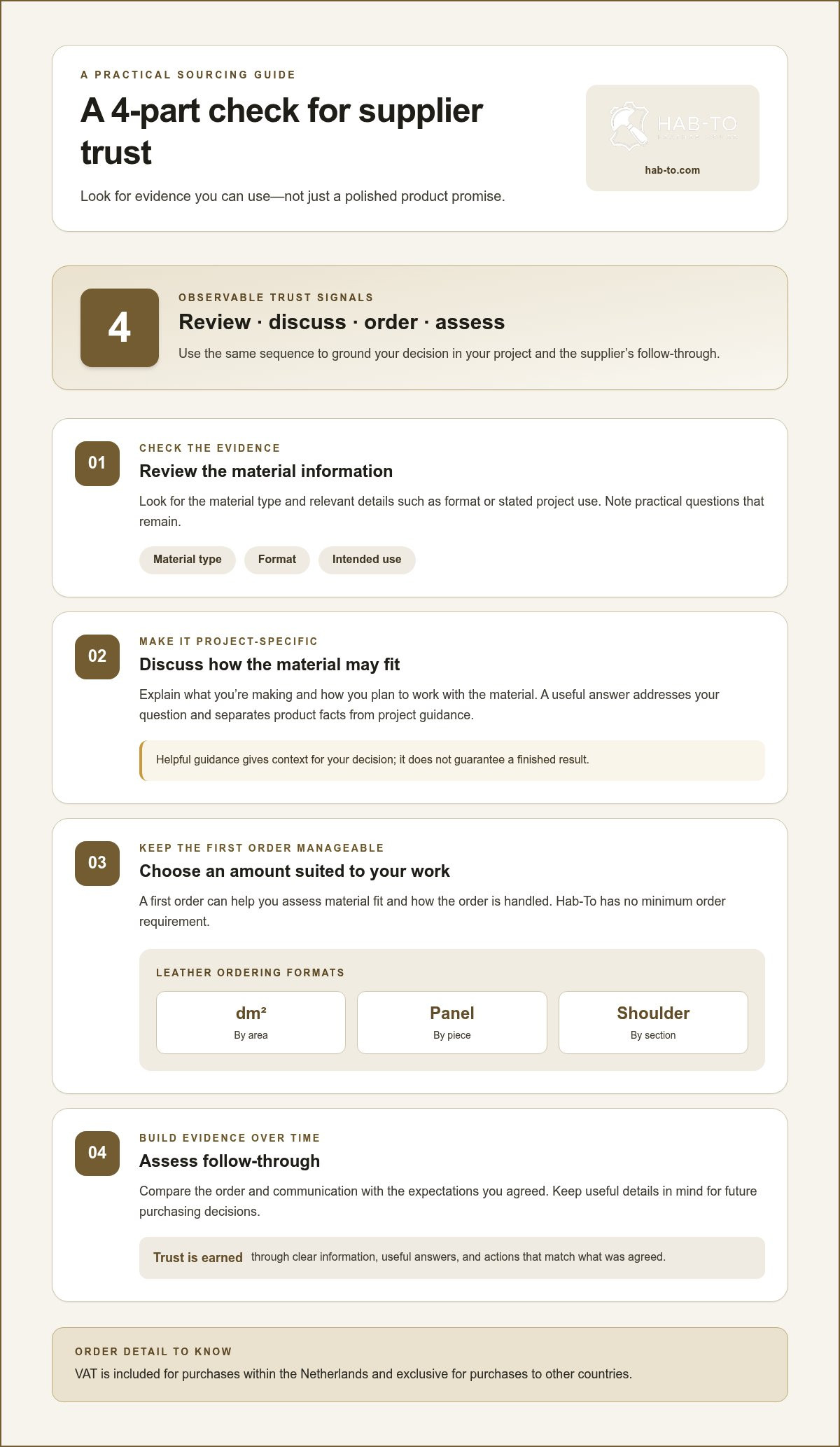
Turn a supplier’s promises into a practical assessment. Follow the same sequence each time: review the material information, discuss how it fits your project, place a manageable order, then assess whether the supplier follows through on what you agreed. This keeps the decision grounded in the work you need to do, not just the impression a website creates.
- Review the material information. Check whether the product description identifies the material type and gives relevant details for choosing it, such as its format or stated project use. Note any practical questions that remain.
- Discuss project fit. Explain what you’re making and how you plan to work with the material. Pay attention to whether the answer addresses your question and distinguishes product information from guidance tailored to your project.
- Choose a manageable order. Select an amount that lets you assess how the material suits your work and how the order is handled. There’s no minimum order quantity at Hab-To, and leather is available by dm², panel, or shoulder.
- Assess follow-through. Compare the order and communication with the expectations you agreed. Keep a note of useful details for future purchasing decisions.
What product information helps a maker decide?
Material type, format, and intended use each answer a different question. Type helps you compare materials; format helps you work out what suits your project; intended use gives context, but doesn’t replace your own judgement about design and construction. When considering vegetable-tanned leather, identify the material first, then compare the listed options with the needs of your piece. Browsing a vegetable-tanned leather range can help you see how material choices are presented to makers.
A useful description doesn’t need to promise that a material will be perfect for every project. It should give you enough clear information to decide whether to investigate further. If the description leaves a practical question unanswered, bring that question into your conversation with the supplier.
How to assess a supplier’s answers
A helpful answer is direct, relevant, and honest about its limits. Ask a focused question, such as whether a material may suit a particular kind of project. Notice whether the response explains its reasoning without guaranteeing a finished result. That’s useful for beginners choosing between options and experienced makers weighing material against a familiar pattern or process.
How the supplier handles your question is part of the experience. Do they respond to what you asked, clarify the project details that matter, and separate general product information from personal guidance? A free video consultation gives makers a way to discuss project fit with Mike. Come prepared to describe what you’re making and what you need the material to do.
Use what you learn to choose an order that makes sense for your project, then observe the follow-through. If you’re gathering materials for a new piece, explore the leather bundles as one way to consider materials for your work.
Compare suppliers by reliability, material fit, and realistic expectations
Building trust with your materials supplier gets easier when you compare practical evidence rather than impressions. A low price may suit your budget, and polished marketing may explain a brand’s values, but neither tells you on its own whether a material fits your project or whether communication will be dependable. Weigh the whole interaction: what’s clearly stated, what’s answered, and what happens when you place an order.
A verifiable material claim names something you can check; a general quality promise asks you to take the supplier’s word for it. Use this simple comparison to keep your assessment consistent:
How to compare the fit for your project
Start with the piece you intend to make. A small component and a larger project may call for different amounts or formats, so compare the material category and ordering options with your pattern and plans. Hab-To offers leather by dm², panel, or shoulder, with no minimum order requirement. You can also request samples; a nominal fee may apply. These options let you consider material fit at a scale that makes sense for your work.
For example, makers comparing vegetable-tanned options can review the vegetable-tanned leather selection and consider which material details matter for their intended piece. Don’t treat a category name alone as a promise of identical appearance or performance. Use the information available to frame specific questions before deciding.
Signals that deserve a closer look
Vague descriptions, unanswered questions, or promises that go beyond the information provided are reasons to pause and seek clarity. They aren’t, by themselves, proof that a supplier is unreliable. Consider the whole exchange: does the supplier respond to a follow-up, explain what you can reasonably expect, and acknowledge where natural material variation may occur?
Natural variation is part of working with leather. The useful distinction is whether the supplier communicates about it plainly, not whether every piece looks or behaves exactly alike. Keep confirmed product details separate from assumptions about repeat-order consistency or how a material will perform in your particular design. A careful comparison makes room for both confidence and realistic expectations.
Build confidence through a small first order and clear working practices
A first order can show you how a supplier relationship works in practice. It doesn’t need to cover your whole production plan. Choose an amount that fits a real project, so you can assess the material and ordering experience without treating a large commitment as the price of building trust with your materials supplier.
What can a first order teach you?
Before ordering, make a short record of the details that matter: the material type and format you selected, the information you relied on, and any expectations discussed with the supplier. When the order arrives, compare those details with what you received. Natural leather can vary, so don’t expect every piece to look identical. Instead, assess whether the material aligns with its description and whether any variation makes sense in light of the information you were given.
Notice how questions or concerns are handled, too. If something seems different from what you understood, describe the specific detail and refer to the information or conversation that shaped your expectation. A clear, constructive question gives both sides a chance to understand the mismatch and clarify what happened. The response can tell you more about future collaboration than a broad promise ever could.
Then consider your next project. Did the material suit the way you planned to use it? Were the order details understandable? Did communication help you make decisions? Your answers help you judge whether the supplier fits your needs, whether that means another small project or a larger planned run.
How makers and suppliers keep expectations clear
Good working practices start before checkout. Share the project purpose, approximate material needs, and timing as plainly as you can. A supplier can respond usefully when the relevant details are clear, and you can make a sound decision when expectations are discussed before an order is placed.
- Describe the item you plan to make and the material’s intended role.
- Explain the format or amount you’re considering and why it fits the project.
- Raise any project timing that affects your planning, and agree on relevant details before ordering.
If you’re buying leather online, use the product information as your starting point and keep your project questions specific. Clear expectations work both ways: the supplier can give relevant guidance, and you can assess the order against what was actually discussed.
Materials for your next project
Once you know what kind of work you’re preparing for, curated crafting bundles can help you consider related leathercraft materials together.
How Hab-To helps makers build a trusted materials relationship
A supplier’s approach is easiest to understand when it’s reflected in practical choices. At Hab-To Leather House, we focus exclusively on vegetable-tanned leather, not chrome-tanned or synthetic leather. That clear boundary helps makers understand the materials we offer without relying on broad claims about every possible material.
A supplier approach built around maker access
Project scale varies. You might need a measured amount for a small component, a panel for a particular design, or a shoulder for a larger project. Hab-To offers leather by dm², panel, or shoulder, with no minimum order requirement. These formats give hobbyists and professional makers different ways to choose an order based on the work ahead, rather than assuming trust begins with a bulk commitment.
Choosing material still involves judgement. Mike brings over 25 years of leather expertise to helping makers think through project selection. A free 15-minute video consultation offers a practical way to discuss what you plan to make and the material choices you’re weighing. It’s useful whether you’re learning the craft or refining an approach you’ve used before. The conversation can inform your decision; your design and expectations remain your own.
There’s also a family story behind the business. The 160 years of family leather experience gives context to Hab-To’s connection with the craft, while Mike’s background in leatherwork introduces the person makers can learn from. Experience matters most when it’s paired with clear information and guidance that relates to the project in front of you.
Choose a useful next step for your project
Before choosing materials, note what you’re making, what role the leather will play, and what you need to decide next. That preparation can make a product comparison or a conversation more productive. If a coordinated set of materials suits your project, curated crafting bundles are a useful place to begin exploring. Compare the options with your pattern, intended use, and working preferences in mind.
VAT is included for purchases within the Netherlands and exclusive for purchases to other countries.
Related reading
- Buying leather online: a maker’s sourcing guide
- The family history behind Hab-To Leather House
- Meet Mike and learn about his leather expertise
Put your next project on a stronger footing
Let your next material choice become a useful reference point. After the project, note what suited your pattern, how the leather worked during cutting and assembly, and what you’d choose differently next time. These small observations turn experience into practical knowledge you can carry into future work.
That’s the lasting value of building trust with your materials supplier. You’re not looking for a promise that every order or natural material will be identical. You’re building a relationship that helps you make informed choices, communicate clearly, and refine your process as your craft develops.
When you’re planning a new piece, choose materials that fit the work and take the next step at a pace that suits your project.
Every thoughtful project teaches you something. Keep asking good questions, trust what you learn at the workbench, and let your craft grow one considered choice at a time.
Frequently Asked Questions
Is a supplier’s reputation enough to establish trust?
No. Treat reputation as a starting point, then check whether the feedback is relevant to the kind of work you do. A maker choosing leather for small accessories may value different experiences than someone sourcing material for larger pieces. Look for detailed comments describing a specific buying or making experience, and notice whether the same practical strengths or concerns appear more than once. Generic praise offers less help with your own decision.
Can a small first order help me assess a materials supplier?
Yes. Before ordering, decide what you want the first purchase to help you learn. For example, note whether the leather cuts cleanly with your usual tools, suits your construction method, and leaves enough usable material for the planned piece. Afterward, record what worked and what you’d change. This turns an initial purchase into useful project knowledge, rather than relying on a vague impression when choosing materials for future work.
What evidence can support a claim about how leather is tanned?
Look for the tanning method to be named plainly in the product information, rather than inferred from the leather’s color, feel, or words such as “natural.” Keep a note of the exact product description you relied on, especially if you’re comparing several options. That gives you a clear reference for your decision and helps separate a stated tanning method from broader claims that don’t specify how the leather was processed.
Does trust require a supplier to offer identical leather every time?
No. Trust doesn’t mean every piece must match exactly. Decide which characteristics are essential to your design and which can vary without changing the piece’s function or appeal. You might build a pattern around flexible visual details while keeping dimensions and construction requirements fixed. Setting those criteria before you buy helps you make a deliberate choice and assess the material on terms that matter to your finished work.
How can a maker compare suppliers without focusing only on price?
Write down your project’s non-negotiables before comparing options, then separate them from preferences you can adapt. For instance, you may need a particular leather category, while the exact format could be flexible. Use the same checklist for each supplier and record why an option fits or falls short. This keeps your comparison tied to the project’s needs and makes trade-offs easier to see than choosing from a headline price alone.
Should a materials supplier help with choosing leather for a project?
Helpful guidance can support your decision, but you’ll get more from it if you prepare the details first. Share the pattern dimensions, construction method, intended use, and finishing preferences that affect material choice. Then ask the supplier to explain the trade-offs between the options you’re considering. This gives you a focused discussion and clear reasoning to weigh against your design priorities before ordering.
Disclaimer
All our blog articles are made for information purposes only we dont take responsability for any content from third parties.