

Essential Leather Bag Hardware: The Artisan’s Guide to Quality and Sourcing
Hi, I'm Mike. The wrong rivet or a peeling buckle can turn a hundred hours of hand-stitching into a disposable fashion accessory in just a few months. It's a painful reality many artisans face after investing their heart into a project. You've likely spent weeks selecting the perfect piece of Italian vegetable-tanned leather and laboured over every single stitch. It's incredibly frustrating when the leather bag hardware you chose starts to rust or peel, dragging down the value of your craftsmanship.
I understand that struggle because I've seen how a mismatch in weight or a cheap finish can ruin a beautiful hide. This guide will help you select and source the perfect hardware to complement premium vegetable-tanned leather for professional-grade handbags. You'll learn which finishes actually last, how to ensure your hardware weight matches your leather thickness, and where to find reliable, EU-sourced components without worrying about high minimum order quantities. We'll cover everything from structural integrity to aesthetic harmony so your finished product looks and feels like a true masterpiece.
Key Takeaways
- Learn why high-tensile hardware is critical for the density of vegetable-tanned leather to prevent structural failure in your designs.
- Discover how to pair specific finishes like Old Gold or Gun Metal with premium hides from Conceria Maryam or Badalassi for a cohesive look.
- Understand how to select the right leather bag hardware, including buckles and D-rings, to ensure a professional weight-to-leather ratio.
- Access a practical checklist of assembly essentials, from Ecostick glue to Tokonole, to achieve a flawless and durable finished product.
- Find out how to source premium Italian-made components with no minimum order quantities, supporting your bespoke projects without excess inventory.
Why Hardware Quality is Non-Negotiable for Leather Artisans
I've spent 25 years at the workbench, and if there's one thing I've learned, it's that your work is only as strong as its weakest point. When you're crafting a bespoke piece using world-class hides, the leather bag hardware you choose isn't just a decoration. It's a structural necessity. I've seen countless bags where the leather has aged beautifully over a decade, but a snapped swivel snap or a peeling buckle has rendered the entire piece useless. Choosing cheap components is a false economy. It risks your reputation and the longevity of the project.
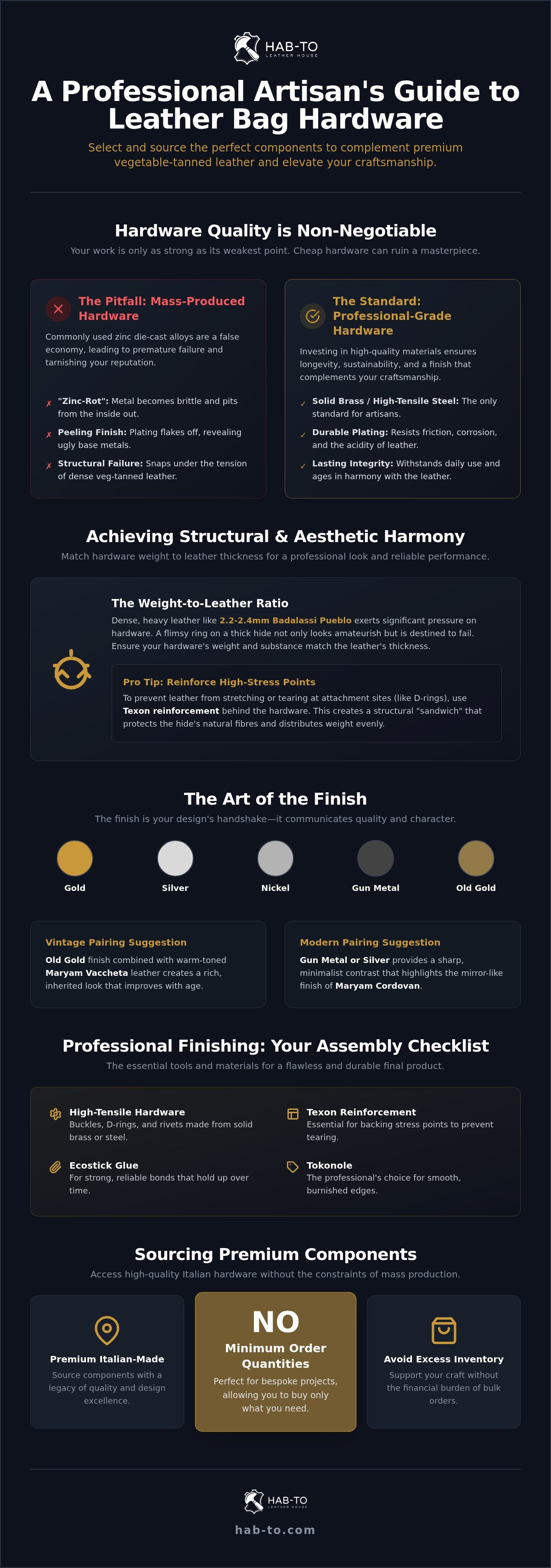
Many mass-produced bags rely on zinc die-cast alloys. These materials are prone to "zinc-rot," where the metal becomes brittle and pits from the inside out. For a professional artisan, solid brass or high-tensile steel is the only standard. Vegetable-tanned leather is remarkably dense and heavy. It exerts significant pressure on every rivet and ring. You need hardware that can withstand the tension of the hide without warping or snapping under the weight of daily use.
The Structural Role of Hardware
Load-bearing components like D-rings act as the primary anchors for your design. They don't just hold a strap; they distribute the entire weight of the bag across the leather surface. When I work with heavy 2.2-2.4mm Badalassi Pueblo leather, I ensure the hardware weight matches that thickness. A flimsy ring on a thick hide looks amateurish and fails quickly. To prevent the leather from stretching or tearing at these high-stress points, I always recommend using Texon reinforcement behind the attachment site. This creates a structural sandwich that protects the natural fibres of the hide.
Sustainability and Longevity
We choose vegetable-tanned leather because it's a living material that tells a story. It develops a rich patina over time. Your leather bag hardware should follow that same journey. High-quality finishes age in harmony with the leather rather than flaking off to reveal ugly grey base metals. This commitment to quality is what defines a professional Handbag Hardware setup. By selecting durable, solid materials, you're creating a product that is inherently sustainable. It can be polished, repaired, and passed down through generations. Authenticity in this craft means matching historical durability with the modern aesthetic standards our clients expect.
Choosing the Right Finishes for Your Design
The finish you choose is the handshake of your design. It's the first thing a client feels and the last thing they see when they close their bag. At Hab-To, we've carefully curated a palette that includes Gold, Silver, Nickel, Gun Metal, and Old Gold. Each finish carries a different emotional weight. While Silver offers a crisp, modern edge, Old Gold provides a muted, historical depth that feels inherited rather than bought. When you select your leather bag hardware, you're deciding how that bag will communicate its value to the world.
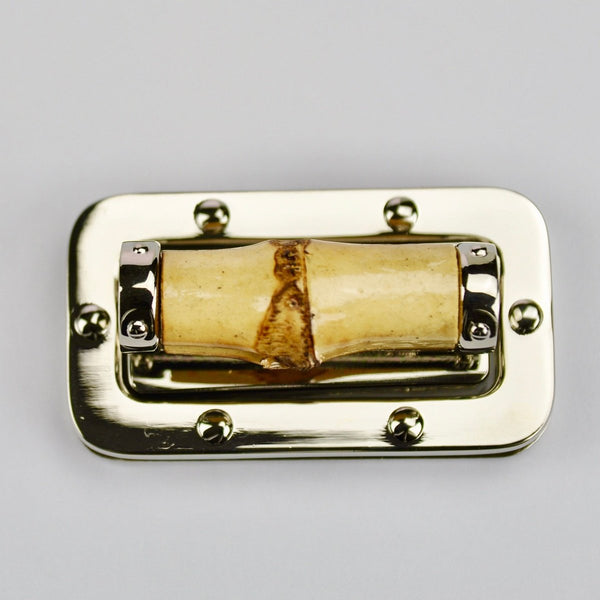
For high-wear areas like feet, locks, and buckles, the quality of the plating is paramount. Cheap finishes rub off within weeks, exposing the base metal and making a luxury item look neglected. Our Italian-sourced hardware uses superior plating techniques that resist the constant friction of daily use. If you want to stand out, our Bamboo collection introduces an organic, high-end aesthetic that breaks away from traditional industrial lines. It's a unique design differentiator that pairs beautifully with the natural grain of premium hides.
Matching Finish to Leather Type
Pairing the right metal with the right leather is an art form. I often suggest matching Old Gold with warm-toned Maryam Vaccheta. The yellow undertones in the leather pull the warmth from the hardware, creating a vintage look that only gets better with age. For a minimalist, modern project using Maryam Cordovan, Gun Metal or Silver provides a sharp contrast that highlights the shell's mirror-like finish. Remember, hardware finishes evolve. A polished finish might dull slightly, while a matte finish might burnish at the edges. This evolution should always complement the leather's own patina.
Corrosion Resistance in Leathercraft
Vegetable-tanned leather is acidic by nature. The tannins that give Badalassi Pueblo leather its character can react with low-quality metals, causing green oxidation. Our hardware is designed to resist this chemical reaction. It's also vital to consider the end-user. We prioritize Nickel-free options because they're safer for users with metal sensitivities and meet the high standards of quality marketing suggested in the FTC Leather Guides. To keep your hardware pristine, a simple wipe with a dry cloth is usually enough. Avoid harsh chemicals that might seep into the leather and damage the delicate fibres. If you're looking to test these finishes on different hides, I recommend exploring our leather bundles to find your perfect combination.
Essential Hardware Categories for Professional Bag Making
When you're laying out your pattern, you're not just thinking about the leather. You're mapping out the mechanics of the piece. I've found that the way a bag opens and closes defines the user's relationship with the work. If a clasp feels flimsy, the whole experience of owning a luxury item is cheapened. When you're choosing leather bag hardware, you're building the interface between the human and the hide. It's about finding that balance between security and fluid movement.
Buckles and closures are the functional focal points. A well-placed buckle doesn't just hold a flap; it anchors the visual weight of your design. D-Rings and O-Rings serve as your primary anchor points for straps, while snap hooks and swivel snaps ensure the movement feels natural rather than mechanical. Finally, rivets, studs, and bag feet protect the base and reinforce those critical stress points I mentioned in the previous sections. These small details are what prevent a bag from wearing out at the corners after just a year of use.
Closures and Security
Magnetic snaps are excellent for quick access, but for a professional, high-end finish, I often prefer a turn-lock or a solid press button. They provide a tactile "click" that signals quality to the owner. If your design requires a wide opening and a rigid structure, like a classic medical satchel, you'll need specialised frames. You can explore our collection of Doctor Bag Brackets to find the structural integrity needed to support heavy vegetable-tanned leathers without the frame collapsing under the weight.
Strap and Handle Hardware
The reliability of your straps depends entirely on the rings you use. There's a significant difference between cast and welded rings. Welded rings are generally superior for heavy-duty load-bearing, while cast rings offer a cleaner, more seamless aesthetic for lighter handbags. You'll also need sizing sliders and loops to make shoulder straps adjustable and comfortable. It's vital to ensure your metal components meet international safety benchmarks like the OEKO-TEX® Leather Standard, which guarantees that materials are processed responsibly and are safe for the end-user. When you're ready to stock your workshop with reliable components, you can shop professional-grade hardware and fournituren to find pieces that match the excellence of your Italian hides.
Assembly Essentials: What You Will Need for Professional Finishing
Transitioning from the design phase to the final assembly is where your project truly comes alive. This is the moment when those carefully selected pieces of leather bag hardware finally meet the hide. It's a high-stakes step. One misplaced rivet or a scratched buckle can ruin hours of work. I've found that professional finishing isn't just about the tools you use; it's about the preparation you put in before the first hole is punched. You want every component to look like it grew out of the leather, not like it was forced onto it.
What You Will Need
To achieve a professional-grade finish, you'll need the right combination of adhesives, setting tools, and finishing compounds. Here is your essential checklist:
- EcoStick 1804 Leather Glue for a secure, water-based bond.
- 11pcs Die Punch and Snap Kit for precise hardware setting.
- Manual Grommet Hand Press for consistent eyelet and grommet installation.
- Tokonole burnishing cream for a glassy edge finish.
- Curated product bundles for comprehensive finishing solutions.
Setting Hardware Without Marring the Finish
Setting hardware is a permanent act. Once a rivet is crushed, there's no going back without damaging the hide. I always suggest using a sacrificial piece of scrap leather between the tool and the hardware to prevent metal-on-metal scratches. Ensuring a permanent bond with a water-based adhesive like EcoStick is also crucial. It holds your layers in place so they don't shift while you're at the press. If you're working with thinner leathers, don't skip the structural support. You should Shop Texon Black Reinforcement to give your hardware points the density they need to stay secure over time.
Edge Finishing for a Professional Look
Hardware never looks its best against a raw, fuzzy edge. Edge finishing is the final step that makes your metalwork truly pop. It provides the contrast needed to make a polished buckle shine. By compressing the fibres and sealing the edge with Tokonole, you create a sharp frame that highlights the lustre of your buckles and rings. If you're new to this process, check out my guide on burnishing leather edges with Tokonole for a deep dive into the techniques I use in my own workshop.
Sourcing Hardware Without Minimums: The Hab-To Advantage
I've been in your shoes. You have a vision for a single, perfect bag, but the supplier demands you buy a hundred buckles just to open an account. It's a barrier that stifles creativity. At Hab-To, we've removed that hurdle with a strict no Minimum Order Quantity (MOQ) policy. Whether you need one solid brass closure for a prototype or fifty D-rings for a small collection, you get the same premium Italian quality. We believe that small-scale artisans deserve the same access to world-class leather bag hardware as the major fashion houses.
Sourcing your hardware alongside premium hides like Maryam Cordovan or Badalassi Pueblo ensures a perfect aesthetic match from the start. Because we're based in the EU, you don't have to worry about the "customs risks and long delays" that often plague international shipping. We focus on reliability. National orders typically arrive within 24 to 48 hours. This efficiency allows you to keep your inventory lean and your workshop moving. We leverage 160+ years of family leather expertise to curate a selection that specifically complements vegetable-tanned materials.
Personalized Support for Every Project
I don't just want to be your supplier; I want to be your partner in the craft. Every project has its own unique set of challenges. Sometimes you need a second pair of eyes to confirm if a specific buckle weight will work with a 1.4mm Vacchetta. That's why I offer personalized support that goes beyond a simple checkout process. If you're struggling to find the right style or need advice on technical compatibility, you can Schedule a free session with Mike via Calendly. These 1-on-1 video consultations are designed to help you select the perfect components with confidence.
A One-Stop Shop for Artisans
Efficiency is key to a profitable workshop. By combining your hardware, specialized tools, and premium leather for bags into a single order, you save on shipping costs and administrative headaches. We offer free shipping on orders over 125 Euro, making it easier to stock up on essentials like Ecostick glue or Tokonole while you're picking out your metalwork. Our goal is to provide a comprehensive resource where quality is never compromised. You can learn more about our commitment to these standards in our look at Hab-To Heritage: 160 Years of Craft Expertise. We've spent over a century refining our selection so you can focus on what you do best: creating beautiful, lasting leather goods.
Elevate Your Craft with Professional Components
Your choice of leather bag hardware is the final signature on your work. It's the difference between a project that looks handmade and one that feels truly professional. We've explored how structural integrity depends on high-tensile metals and how a thoughtfully selected finish creates a lasting harmony with your vegetable-tanned hides. Quality shouldn't be a luxury reserved for large factories; it's a standard every artisan can reach. By choosing the right components, you're ensuring that your craftsmanship survives the rigours of daily use.
By sourcing premium Italian materials with no minimum order quantity, you can focus on perfecting your unique designs without the burden of excess stock. I'm here to offer expert guidance based on my 25 years of personal crafting experience to ensure every rivet and buckle you set is worthy of the heart you put into your work. Whether you're stitching Maryam Cordovan or Badalassi Pueblo, your hardware should be just as exceptional as the leather itself. It's time to build something that lasts for generations.
Related Reading
- Hab-To Heritage: 160 Years of Craft Expertise
- Achieving the Perfect Burnish: Tools and Techniques
- Meet Mike: 25 Years of Artisan Leathercraft
Essential Hardware for Your Next Project
Frequently Asked Questions
What is the best material for leather bag hardware?
Solid brass and high-tensile steel are the superior choices for professional work. These materials offer the structural integrity needed to support the density of vegetable-tanned hides. Unlike cheap zinc-based alloys, solid metals won't suffer from "zinc-rot" or become brittle over time. When you're selecting your leather bag hardware, choosing solid materials ensures the components can be polished or repaired, matching the 160-year lifespan potential of a well-crafted bag.
How do I choose the right size buckle for my bag strap?
You must match the internal width of the buckle to the exact width of your leather strap. If your strap is 20mm wide, you need a buckle with a 20mm internal opening. A gap that's too wide allows the strap to shift and look amateurish, while a buckle that's too narrow will pinch and damage the leather edges. Always measure your finished strap width after burnishing, as edge finishing can slightly reduce the final dimensions.
Can I buy single pieces of hardware without a minimum order?
Absolutely, Hab-To Leather House operates with a strict no Minimum Order Quantity policy to support artisans of all sizes. I believe you shouldn't have to buy in bulk just to access professional-grade components. You can purchase a single buckle or a few rivets for a specific project without any account requirements. This allows you to experiment with different finishes like Gun Metal or Old Gold without committing to a large inventory.
Does solid brass hardware patina over time?
Yes, authentic solid brass hardware will develop a rich patina as it oxidizes from exposure to air and natural skin oils. This process mirrors the aging of vegetable-tanned leather, creating a cohesive vintage aesthetic. If you prefer a bright look, you can easily polish brass back to its original shine using a soft cloth. This natural evolution is a hallmark of quality that distinguishes artisan-made goods from mass-produced items using synthetic coatings.
What tools do I need to install rivets and snaps on a leather bag?
You will need a few essential tools to ensure a permanent, professional-grade installation. A quality hole punch is required to create clean openings without tearing the hide. For the setting process, I recommend a specialized setter kit or a manual grommet hand press for consistent pressure. Using a poly or rawhide hammer instead of a metal one prevents marring your tools. These basics ensure your hardware remains secure through years of daily use.
How do I prevent hardware from scratching the leather during assembly?
I always recommend using a sacrificial piece of scrap leather between your setting tool and the hardware surface. This simple barrier prevents the metal tool from leaving unsightly scratches or dents on your polished finishes. You can also use masking tape on the back of the hardware during the assembly phase. These small precautions protect the integrity of your leather bag hardware and ensure your finished project looks pristine upon delivery.
What is the difference between Gold and Old Gold finishes?
Gold is a bright, high-shine finish that provides a crisp and luxurious contrast against darker leathers. It's perfect for modern, high-end designs. In contrast, Old Gold has a muted, brushed appearance with deeper yellow undertones. It offers a historical, inherited feel that pairs beautifully with the natural patina of Maryam Vacchetta or Badalassi Pueblo hides. Choosing between them depends on whether you want a contemporary "pop" or a vintage, understated aesthetic.
Why should I use reinforcement tape behind my hardware?
Reinforcement materials like Texon prevent the leather from stretching or tearing under the constant tension of load-bearing hardware. Vegetable-tanned leather is strong, but the fibers can still pull apart at high-stress points like handle attachments or D-ring anchors. Placing a small piece of reinforcement tape or a leather washer behind the hardware creates a "sandwich" effect. This distributes the weight more evenly and ensures your bag maintains its structural shape for decades.
Disclaimer
All our blog articles are made for information purposes only we dont take responsability for any content from third parties.