
Finding a Community of Leather Crafters: A Guide to Sourcing Mentorship and Inspiration
Have you ever spent hours hand-stitching a piece of premium Italian leather, only to hit a technical wall with no one to ask for a solution? It's a common frustration in an art form that can often feel solitary. Whether you're struggling to source the right leather hardware in small quantities or you're looking for an honest critique on your latest project, you aren't alone. Finding a community of leather crafters is the most effective way to move past these hurdles and deepen your respect for the material.
We believe that the best work happens when knowledge is shared; it's how traditions stay alive. In this guide, I'll show you exactly where to find your tribe, from digital guilds to physical gatherings like the upcoming Leather Life Convention in November 2026. You'll learn how to connect with reliable mentors and peer groups who understand the nuances of vegetable tanned leather and traditional techniques. We're going to explore how to turn these shared experiences into better craft, ensuring you feel like a vital part of a historical tradition rather than just a maker working in a vacuum.
Key Takeaways
- Discover how finding a community of leather crafters connects you to a 160-year heritage of shared knowledge and prevents the development of technical "bad habits" in your home workshop.
- Navigate digital hubs like Reddit for quick visual inspiration or deep-dive into technical forums for professional business advice and complex problem-solving.
- Understand why physical interactions at leather fairs are essential for developing your "tactile memory" and building direct relationships with world-class tanners.
- Learn the "Give Before You Get" rule of mentorship etiquette and how to photograph your work—focusing on edges and the flesh side—to receive constructive, actionable critique.
- Leverage personalized resources like one-on-one consultations to bridge the gap between sourcing premium materials and mastering the art of the craft.
What is a Leathercraft Community and Why Do You Need One?
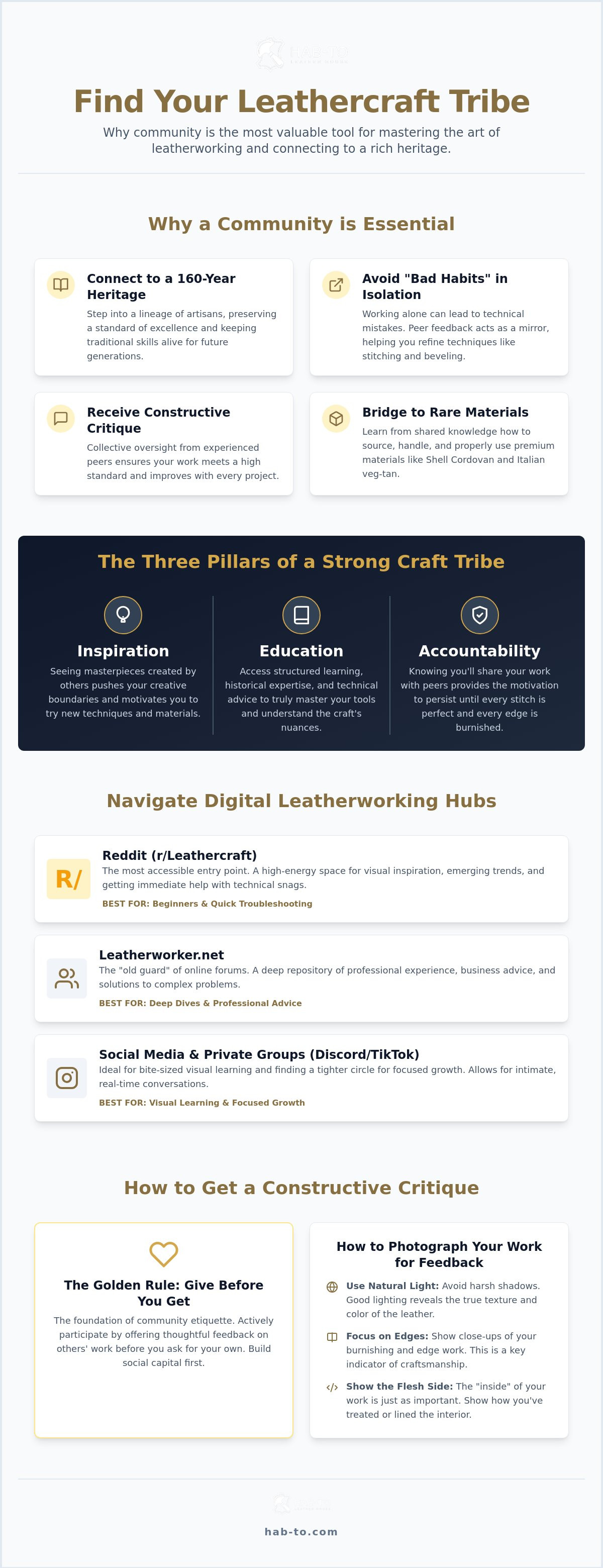
A true leathercraft community is a living network. It connects makers, suppliers, and mentors who share a heritage spanning over 160 years. It isn't just about social media likes. It's about preserving a standard of excellence that mass production can't touch. When you start finding a community of leather crafters, you're stepping into a lineage of artisans who value the slow, deliberate process of creation.
Working alone in a home workshop is peaceful, but it's also a vacuum. Without outside eyes, it's easy to develop technical "bad habits" that compromise the longevity of your work. Peer feedback acts as a mirror. It forces you to look closer at your beveling or your saddle stitch tension. This collective oversight ensures that traditional skills don't just survive; they thrive.
To better understand the value of a shared learning environment, watch this helpful video:
Community also serves as a vital bridge to rare materials. Sourcing world-class hides like Maryam Shell Cordovan can be daunting for a solo hobbyist. Through shared knowledge, you learn which tanneries maintain ethical standards and how to handle premium Italian skins. This collective wisdom keeps traditional vegetable-tanning techniques relevant in a market flooded with synthetic alternatives. Understanding various Leather crafting techniques like molding and carving is much more effective when you have a tribe to guide your hands.
The Three Pillars of a Strong Craft Tribe
A healthy community stands on three legs. First is Inspiration. Seeing the rugged texture of Badalassi Pueblo transformed into a masterpiece pushes your own boundaries. Second is Education. You need access to structured learning and historical expertise to master the tools. Finally, there's Accountability. Knowing you'll share your finished work with peers keeps you at the bench until the last edge is burnished.
Mentorship vs. Peer Support
You need both an expert "master" and a group of fellow learners. A mentor provides the roadmap, while peers offer the camaraderie needed for the journey. When finding a community of leather crafters, look for a mentor who aligns with your aesthetic and ethical values. Don't overlook your wholesaler. In the modern age, a dedicated supplier often acts as a mentor, offering the deep material knowledge and technical advice that used to be passed down through family apprenticeships.
Navigating Digital Leatherworking Hubs in 2026
Finding a community of leather crafters often starts with a digital search. In 2026, the online world is more than just a place for photos; it's a global classroom. Reddit’s r/Leathercraft remains the most accessible entry point. It's a high-energy space where you can spot emerging visual trends or get immediate help with a technical snag. If you're looking for deep technical dives or business advice from veterans, Leatherworker.net is the "old guard" forum you can't ignore. It's a repository of decades of professional experience that helps you avoid expensive mistakes early on.
For those who prefer bite-sized, visual learning, social media has become an essential tool for the modern maker. We use Hab-To’s TikTok to share process videos and quick tips that demystify complex techniques. However, if you want a tighter circle, Discord servers and private "mastermind" groups are the best way to find focused growth. These smaller hubs allow for more intimate conversations. You can jump on a quick chat to discuss why your glue isn't bonding correctly or how to better edge-finish a specific hide. This level of proximity turns a global hobby into a local-feeling workshop.
How to Choose the Right Platform for Your Skill Level
Choosing the right space is the first step in finding a community of leather crafters that actually helps you grow. Beginners should look for spaces that encourage experimentation without harsh judgment. If you're obsessed with traditional patina and aging, look for "Veg-Tan Only" groups. These advanced hubs prioritize technical precision and quality over speed. Many of these digital groups are also recognized through the International Federation of Leather Guilds, which bridges the gap between online chat and physical guild traditions.
Avoiding the "Comparison Trap" Online
It's easy to feel discouraged when scrolling through perfect gallery shots. Focus on your own progress at the bench. Don't let "likes" define the value of your work. Filter out the noise of "fast-fashion" leatherwork that prioritizes speed over durability. Instead, use these digital hubs to study high-quality artisanry. True leathercraft rewards patience. Look for makers who discuss the "why" behind their material choices. This helps you develop the "expert eye" needed to distinguish between a mass-produced look and a piece with soul. If you're ready to start your first project to share with a new group, our curated crafting bundles provide everything you need to begin with confidence.
Beyond the Screen: Finding Local and Physical Communities
Digital hubs are excellent for theory, but leathercraft is a sensory art. You can't feel the temper of a hide through a smartphone screen. You can't smell the rich, woody aroma of traditional tannins in a forum thread. Finding a community of leather crafters in the physical world is where your "tactile memory" truly begins to develop. This is the stage where you learn to distinguish between the firm structure of a belt leather and the supple, waxy finish of a luxury handbag skin just by touch.
Local guilds and "Maker Spaces" provide more than just company. They often house heavy machinery like bell skivers or strap cutters that are often too expensive for a solo home shop. This spirit of shared resources is rooted in the history of craft guilds, where artisans gathered to set quality standards and protect the secrets of their trade. Attending international leather fairs and trade shows is another way to deepen this connection. Meeting tanners face-to-face allows you to understand the ethics and effort behind every square foot of leather you buy. Our Hab-To Amsterdam Showroom was built as a template for this kind of physical hub, offering a space where the material is the guest of honor.
Workshops and Masterclasses
There's no substitute for watching a master's hands in person. In-person instruction for hand-stitching or complex edge finishing allows for real-time correction that a video can't provide. Our Masterclasses are designed to bridge the gap between hobbyist and professional. A good curriculum should teach you more than just how to use a tool. It should help you understand leather types, grain structures, and how to select the right hide for a specific project. This foundation is what turns a simple project into a piece of heirloom quality.
The Showroom Experience
Visiting a dedicated wholesaler provides insight that no digital platform can match. When you visit Mike in Amsterdam, you aren't just a customer; you're a fellow maker. We encourage you to bring your current tools and project sketches. This allows for a deeper conversation about which leather will best suit your aesthetic. If travel isn't an option, we offer video consultations. These act as a digital showroom visit, allowing us to show you the drape and finish of specific hides in real-time, ensuring you feel confident in your choice before you ever pick up a knife.
Etiquette for Seeking Mentorship and Critique
Finding a community of leather crafters is a privilege that comes with a set of unwritten responsibilities. It is a circle of professional respect. Before you ask for a technical favor or a deep-dive critique, remember the "Give Before You Get" rule. Contribute to the conversation first. Share your own small wins or offer encouragement to fellow beginners. This builds the social capital needed to approach a master artisan with confidence. You aren't just a consumer of knowledge; you're a participant in its preservation.
When you finally ask for a critique, your presentation must be honest. Glamour shots are for your storefront, but for a mentor, you need to show the tightest corners of your work. Focus your lens on the consistency of your stitch lines and the "flesh side" of the hide. Transparency is the only way to get a roadmap for improvement. Ask specific questions. Instead of a vague "Do you like this?", ask "Is my stitch tension consistent through this curve?" or "Does my edge burnish look uneven on this specific temper?" Specificity shows respect for the mentor's time and your own development as an artisan.
Dealing with feedback requires a thick skin. You must separate your identity from your craft. A critique of a stitch line isn't an attack on your character. It's a gift of experience. If a veteran maker points out a flaw, they are offering you a shortcut to excellence that took them years to find. Embrace the correction. Get back to the bench. Apply what you've learned immediately to prove you are a serious student of the craft.
What You Will Need for a Critique Session
To get the most out of a session with an expert like Mike, you must be prepared with the right materials and documentation. Using consistent, high-quality materials removes variables and lets the mentor focus purely on your handiwork. For a productive critique, ensure you have the following ready:
- Consistent Material: Use a known leather like Pueblo Leather so the mentor knows how the hide should behave.
- Finishing Supplies: Have your Tokonole and burnishing tools on hand to discuss your edge work.
- Precision Tools: Be ready to identify which edge bevelers and irons you used for the project.
- Process Evidence: Keep your curated crafting bundles or stitching bundles nearby to reference your specific thread and needle sizes.
Building a Long-Term Mentor Relationship
Approaching a professional artisan requires tact and consistency. Don't be intrusive; instead, show that you are actually applying the advice they've shared in previous interactions. When you return with a second project that has fixed the errors of the first, you earn a mentor's respect. Over time, this reliability helps you transition from a student to a contributing member of the tribe. True mentorship is a two-way street built on the shared love for the material.
Hab-To: Your Gateway to the Global Maker Scene
Finding a community of leather crafters shouldn't stop at digital forums or guild meetings. The relationship between a maker and their supplier is often the most practical form of mentorship available. At Hab-To, we don't see ourselves as just a warehouse. Our Hab-To Heritage informs every interaction we have with the community. This 160-year family story means we understand the frustrations of the solo artisan because we've lived through the evolution of the craft ourselves. We aren't here to just sell hides; we're here to help you master them. We've lived it.
Mike believes that expertise should be accessible to everyone at the bench. That's why he offers 1-on-1 consultations to every crafter, regardless of order size. Whether you're a professional workshop or a hobbyist finishing your first wallet, you get the same level of care. We've intentionally removed the barrier of "Minimum Order Quantities" (MOQ). This "No MOQ" philosophy ensures that new community members can experiment with world-class materials without a massive financial risk. Expertise should be shared. We also provide ongoing education through our Leather Hour podcast and deep-dive blog series, ensuring you have the technical knowledge to match your creative ambition.
More Than a Wholesaler
Our commitment to 100% vegetable-tanned leather is a choice for quality and sustainability. It's a standard we set for our entire maker community. We actively support micro-brands and new hobbyists by offering Starter Bundles that take the guesswork out of sourcing. These bundles provide the right tools and leather to ensure your first projects are successful. You're always invited to join our story by visiting our Amsterdam atelier. It’s a physical hub designed for makers to gather, share project ideas, and feel the materials in person before starting a build. It's about the craft.
Join the Conversation
Finding a community of leather crafters is about staying connected across all platforms. You can follow our daily journey and see process tips on Instagram or watch our technical breakdowns on . If you have a specific project in mind and need a mentor's eye on your material selection, book a free video consultation with Mike. Before you start your next piece, check out our guide on Buying Leather Online to ensure you're sourcing the best possible hides for your craft.
Take Your Seat at the Artisan’s Bench
Mastering leathercraft is a lifelong journey that shouldn't be traveled alone. Whether you're navigating the technical threads of digital forums or feeling the grain of a hide in a physical workshop, finding a community of leather crafters is what transforms a solitary hobby into a shared passion. You've learned that seeking critique with honesty and contributing back to the tribe are the keys to unlocking professional growth. It's about more than just stitches; it's about the people behind them.
At Hab-To, we bring over 160 years of family expertise to your bench. We believe in quality without compromise. That's why we offer exclusively vegetable-tanned leather and have eliminated Minimum Order Quantities. This ensures every maker has a place in our community, regardless of where they are in their journey. Ready to start your next project with the support of a global network? Join our community and explore our curated bundles to begin your journey with the right materials and expert guidance. The heritage of this craft is now in your hands. We can't wait to see what you create.
Frequently Asked Questions
How do I find a leathercraft mentor near me?
Start by checking the International Federation of Leather Guilds directory or visiting local repair shops and custom ateliers. Veterans in the trade often appreciate a genuine interest in the preservation of the craft. Don't just ask for help; offer to assist with menial tasks in exchange for observation time. This hands-on proximity is the most effective way to learn the nuances of material handling that videos can't capture.
What are the best online forums for leatherworking beginners?
Reddit’s r/Leathercraft is the most active hub for visual inspiration and quick troubleshooting. For those finding a community of leather crafters that values deep technical archives, Leatherworker.net is the industry standard. Both platforms allow you to see how others solve common construction problems before you ever pick up a knife. They are excellent for spotting trends and learning which tools are worth the investment.
Is it worth joining a leatherworkers guild?
Joining a guild is definitely worth the membership fee for the access to specialized machinery alone. Many guilds own bell skivers or strap cutters that are too expensive for a home workshop. Beyond the tools, you gain a network that holds you to a higher technical standard than you'd find working in isolation. It's a chance to learn the "unwritten rules" of the trade from those who have practiced it for decades.
How can I get honest feedback on my leather projects?
Honest feedback requires you to be specific about your struggles. Instead of asking for general opinions, ask about your stitch spacing or your edge burnishing consistency. Use high-quality photos that show the "flesh side" and tight corners of your work. Mentors are much more likely to help when they see you've already put in the effort to document your process and identify your own weak points.
Are there specific groups for vegetable-tanned leather enthusiasts?
Specific groups for vegetable-tanned leather enthusiasts often gather on Discord or private Facebook circles. These makers focus on the unique patina and aging characteristics of hides like Pueblo Leather. It's the best place to discuss tannery-specific traits and natural finishing recipes that preserve the leather's character without using synthetic topcoats.
Where can I find workshops for advanced leatherworking techniques?
Advanced workshops are best sourced through reputable suppliers or recognized masters who offer structured curricula. Hab-To Leather House hosts Masterclasses that focus on professional-grade construction and refined edge work. These sessions are designed to push you past the hobbyist plateau and into the realm of heirloom-quality artisanry through direct, expert correction and material education.
How do I start a leathercraft community in my own town?
Starting a local community begins with a simple public "stitch-up" at a coffee shop or library. Use platforms like Meetup to find others in your town who share the passion. You don't need a formal guild structure to start sharing tips and swapping leather scraps. You just need a regular time and place to gather and talk about the craft you love.
What is the best way to interact with leather tanneries and wholesalers?
The best way to interact with tanneries and wholesalers is through direct, professional dialogue. Book a free video consultation with Mike to discuss your project needs. Professional suppliers value crafters who care about the heritage of the material and are looking for long-term quality over cheap alternatives. This relationship ensures you get the right hide for your specific aesthetic.
Additional Articles to Explore
- Buying Leather Online: The Professional Artisan’s Guide to Sourcing Hides
- Hab-To Heritage: What 160 Years of Family Business Experience Means for Your Craft
Equip Your Workshop for Success
Every great project starts with the right foundation. Whether you are preparing for your first critique or building a professional portfolio, our curated bundles provide the premium materials and tools used by the global maker community. From traditional tannins to professional-grade hardware, Hab-To Leather House supports your growth with 160 years of family expertise.
Disclaimer
All our blog articles are made for information purposes only we dont take responsability for any content from third parties.