

Heritage Leather Supplier: Why 160 Years of Experience Matters for Your Craft
The difference between a hobbyist and a master artisan often comes down to a single decision: the source of their leather. Choosing a heritage leather supplier means you aren't just buying a hide. You're inheriting a standard of excellence that we've refined since 1857. It's frustrating to open a shipment from an industrial wholesaler only to find inconsistent textures or hides tanned with harsh chemicals that don't align with your values. You want to create pieces that last a lifetime. That's impossible without materials that share that same longevity.
I know the struggle of trying to find expert advice in a world of automated warehouses. You deserve a partner who values the craft as much as you do. This article reveals how 160 years of inherited expertise ensures the quality, sustainability, and authenticity of your artisan projects. We'll explore why vegetable-tanned hides are the only choice for makers who refuse to compromise. You'll also learn how sourcing premium materials with no minimum order requirements allows you to scale your craft with confidence. Let's look at how the right partnership can help you build a brand based on high-quality, ethical materials.
Key Takeaways
- Learn how 160 years of technical knowledge ensures you only receive the most consistent, high-grade vegetable-tanned hides.
- Discover why partnering with a heritage leather supplier founded in 1857 gives your brand an immediate edge in quality and ethical storytelling.
- Understand the differences between hand-picked heritage hides and bulk-sorted industrial stock to avoid costly material selection mistakes.
- Find out how to use expert-led education to transition from a hobbyist to a confident, master-level leather artisan.
- Explore how a "no minimum order" policy lets you source premium Italian leathers without the risk of large upfront investments.
What Defines a Heritage Leather Supplier?
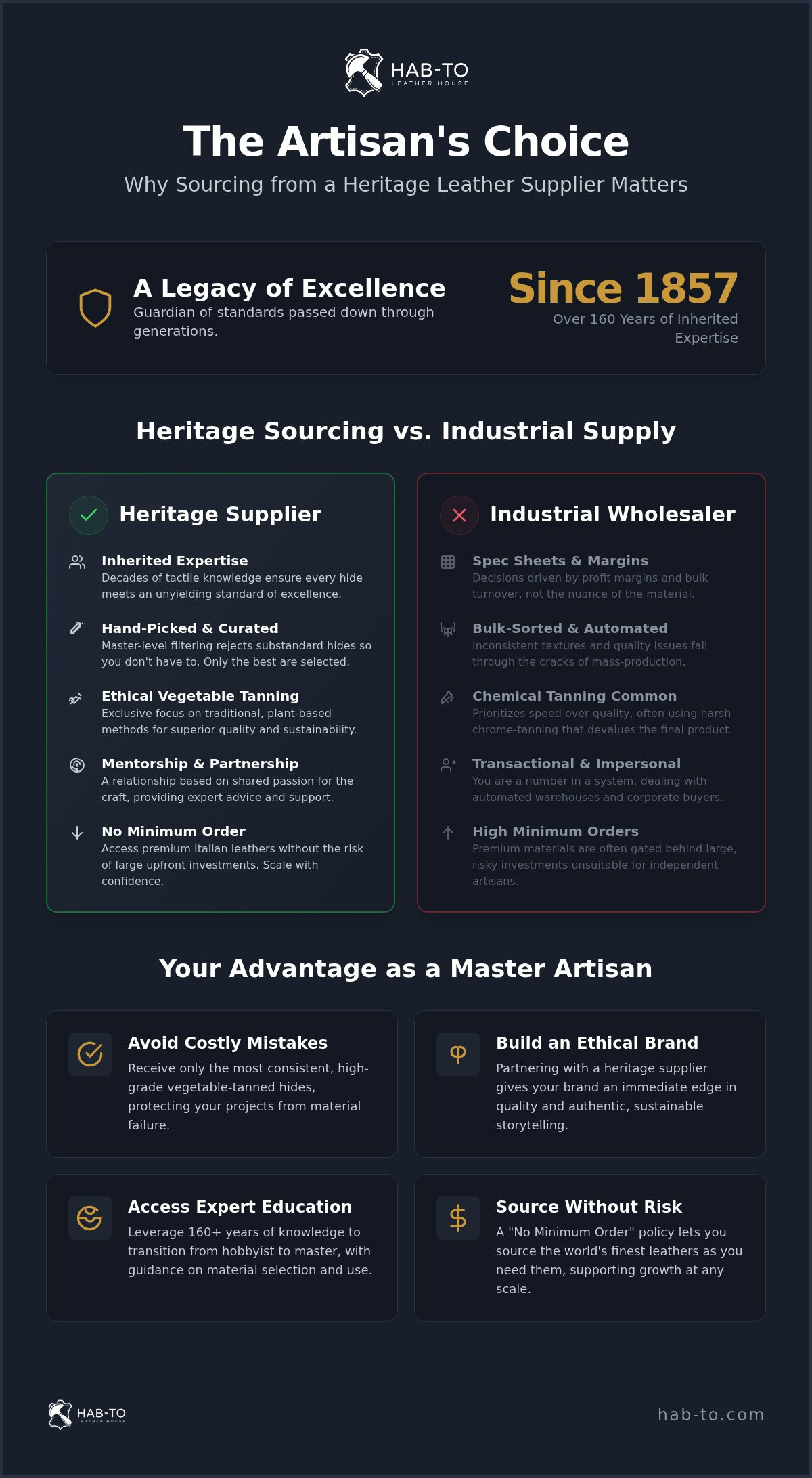
A heritage leather supplier isn't just a business that's been around for a long time. It's a guardian of standards passed down through generations. While leather making has been practiced for more than 7,000 years, the modern industrial world has often traded quality for speed. A heritage supplier acts as a master-level filter. They use decades of technical knowledge to ensure every hide meets a specific, unyielding standard of excellence. This isn't about following a trend. It's about maintaining a lineage of quality that protects the artisan from the pitfalls of mass production.
Think about the difference between a corporate buyer and a family steward of the craft. A corporate buyer at a massive wholesaler might prioritize profit margins and bulk turnover. They see numbers on a spreadsheet. A family steward sees the history of the tannery and the structural integrity of the material. At Hab-To, we've spent 160 years refining our "eye for quality." This skill isn't something you can learn from a manual. It's a tactile expertise developed by handling thousands of hides over a century and a half. This experience protects you from substandard, non-sustainable materials that often hide behind clever marketing.
The Intangible Value of Inherited Knowledge
Technical spec sheets only tell half the story. A heritage leather supplier understands the nuance of hide temper, grain density, and aging potential beyond what a label says. We know which tanneries stay true to traditional methods and which ones take shortcuts. This deep-rooted trust with world-renowned tanneries isn't built overnight. It's forged through decades of consistent partnership. We act as your first line of quality control. We've already rejected the hides that won't hold a stitch or burnish correctly, so you don't have to worry about your materials failing mid-project.
Trust as a Core Asset in Leathercraft
Sourcing should feel like a conversation with a mentor, not just a transaction with a warehouse. We've moved away from the cold, mass-produced model to a mentorship-based approach. Whether you're a professional maker or just starting out, you're tapping into a massive reservoir of expertise. Hab-To’s history, dating back to 1857, means we've seen every trend and technological shift in the industry. We've stayed committed to vegetable tanning because it's the only ethical, high-quality choice for real craft. This history translates to modern reliability. You gain the confidence that your materials are as honest as the work you put into them.
The Hab-To Legacy: 160 Years of Sourcing Excellence
The story of Hab-To began in 1857. For over 160 years, our family has lived and breathed the leather trade. As a heritage leather supplier, we've seen the industry evolve from traditional workshops to the current era of digital craftsmanship. While the tools for selling have changed, our core philosophy remains exactly the same as it was in the 19th century. We believe in the unmatched quality of vegetable-tanned leather. It's the only ethical choice for an artisan who wants their work to age with grace. We don't stock chrome-tanned hides or synthetic alternatives. We refuse to compromise our lineage for cheap, chemical shortcuts.
Mike acts as the bridge between this deep history and your modern workbench. With 25 years of personal expertise, he understands the specific challenges you face when selecting materials. He isn't just a supplier; he's a mentor who knows how a hide should feel, smell, and perform. This personal connection ensures that the wisdom of 160 years is available to every maker who walks through our doors or visits our shop online. You aren't just buying leather. You're tapping into a century and a half of trial, error, and ultimate refinement.
Curating the World’s Finest Tanneries
Our long history gives us access to tanneries that others simply can't reach. Relationships with masters like Conceria Carlo Badalassi are built on decades of mutual respect. Historically, the leather trade thrived in specialized producing regions where skills were passed down through families. We uphold this tradition by sourcing the "King of Leathers," Maryam Shell Cordovan, and ensuring every piece carries the prestige of the Tuscan vegetable-tanning consortium mark. This mark is your guarantee that the leather was produced using traditional, plant-based tannins in the heart of Italy.
The "No MOQ" Philosophy: A Family Value
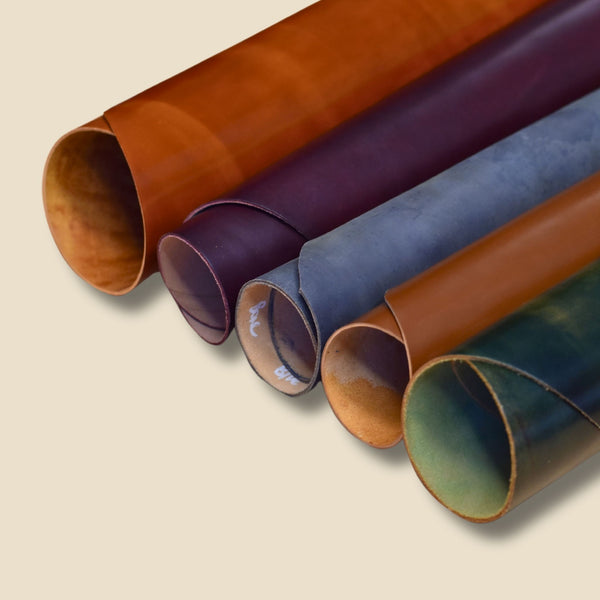
We don't believe that high-end materials should be reserved for big factories. One of our core family values is supporting the "little guy." This is why we maintain a strict "No Minimum Order Quantity" policy. Whether you need a single panel for a watch strap or a full shoulder for a bag, you get the same premium quality and expert advice. We've broken the industrial mold to create a level playing field. It's about making sure hobbyists and professionals alike can access the best materials in the world. If you're ready to start your next project with professional-grade materials, consider exploring our curated leather bundles to see the quality for yourself.
Heritage Sourcing vs. Industrial Mass-Production
Industrial wholesalers often view leather as a commodity. They sort hides by machine and sell them in bulk to maximize volume. This approach treats every square foot as identical, ignoring the natural variations that make leather a living material. A heritage leather supplier operates on a different plane. We hand-pick our hides, looking for specific grain characteristics and structural integrity that a machine simply cannot detect. This selective process ensures that when you receive a piece of leather, it's ready for high-end artisan work, not just generic production. You aren't getting the leftovers of a mass-market run; you're getting a hide selected specifically for its merit.
Sustainability isn't a marketing buzzword for us. It's a 160-year-old operational requirement. Industrial mass production relies heavily on chromium salts. These chemicals can process a hide in 24 hours, but they leave a trail of heavy metal waste and produce leather that feels like plastic. We choose the slower path. Vegetable tanning uses natural tannins derived from tree bark, leaves, and fruits. This process can take up to 60 days. The result is a material that's biodegradable and safe for both the maker and the environment. It's a commitment to the planet that only a business with a multi-generational perspective can truly maintain.
The longevity of these materials is backed by science. While synthetic leathers and chrome-tanned goods degrade over time, losing their structure and peeling, vegetable-tanned leather actually improves. It develops a patina, which is a unique sheen and darkening that tells the story of the item's life. This is where the "Expert Friend" factor comes in. Instead of dealing with a generic chatbot or a warehouse clerk, you get advice from Mike. He can explain exactly how a specific hide will react to dyes, oils, and daily wear. This level of mentorship ensures you don't waste money on the wrong material for your specific project.
Why Vegetable-Tanned Leather is the Heritage Choice
Artisans seeking true authenticity often turn to Pueblo leather because of its unique, slightly scuffed surface that evolves into a deep, smooth luster. This specific leather from Badalassi Carlo embodies the heritage choice. It relies on traditional plant-based tannins that preserve the natural fibers of the hide. Choosing a heritage leather supplier with deep-rooted ethical standards means you're investing in a material that respects the history of the craft while minimizing your environmental footprint.
Accessing Premium Italian Hides
The global market is flooded with "genuine leather" labels that often mask low-quality splits or bonded materials. Authentic premium Italian leather stands apart because of the strict sourcing documentation provided by the Tuscan vegetable-tanning consortium. Whether it's Maryam Shell Cordovan or Vaccheta, these hides are unique because of the specific fats and waxes used during the tanning process. This level of durability and character is impossible to replicate in mass-market alternatives. When you source through a legacy network, you're getting a certified piece of Italian history that will outlast any industrial substitute.
Leveraging Family Expertise for Your Craft Business
Partnering with a heritage leather supplier allows you to leverage our 160-year story to add value to your own finished goods. Your customers are increasingly looking for authenticity and ethical production. When you can explain that your materials come from a family lineage that has specialized in vegetable tanning since 1857, you aren't just selling a product. You're selling a legacy. Educating your clients on why "Veg-Tan" quality matters, specifically how it develops a unique patina over time, justifies the premium price point of your work. This narrative of "Heritage Sourcing" provides a level of transparency and quality assurance that mass-produced brands simply cannot replicate.
As your heritage leather supplier, we act as more than just a warehouse; we are a source of knowledge and inspiration. Continuous learning is what separates a hobbyist from a professional artisan. We support your growth through Mike’s masterclasses and audio series, where he shares the technical nuances of the trade. Because we maintain a strict "no-MOQ" policy, you have the freedom to experiment with world-class materials without the financial risk of large upfront investments. You can buy a single panel of Shell Cordovan or a small shoulder of Pueblo to test a new design. This low-risk approach encourages you to push your creative boundaries and refine your skills with the best hides available.
What You Will Need: The Artisan’s Starter Kit
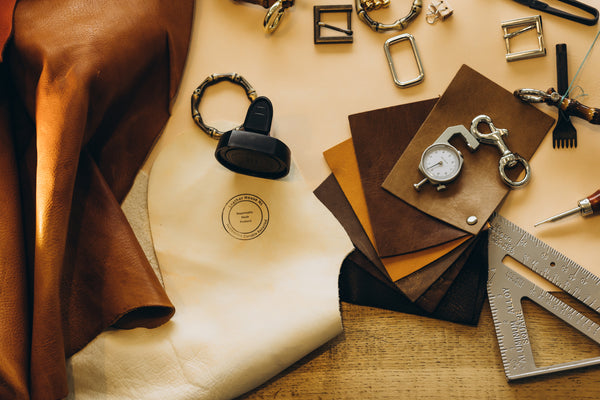
Building a professional-grade toolkit is the first step toward mastery. You need more than just a sharp knife; you need the right chemistry and leather to see real results. For a professional look, Tokonole for edge finishing is the industry standard for achieving a glass-like shine. Pair this with Ecostick glue for a strong, eco-friendly bond that doesn't compromise the health of your workshop. We recommend starting with a Pueblo Leather panel. It's forgiving for beginners but produces professional results for wallets and watch straps. Our starter bundles take the guesswork out of curation by grouping everything you need to begin.
Consulting with a Master Craftsman
Sometimes, you need more than a product description to make the right choice for a specific project. Mike offers a free video consultation to help you navigate our inventory with confidence. During these sessions, you can ask specific questions about leather weight, temper, and how a hide might perform for equestrian gear versus a slim cardholder. Matching the right hide to your project is an art in itself. Mike uses his 25 years of personal experience to ensure you don't just buy leather, but the right leather for your specific vision.
Building Your Legacy: Next Steps with Hab-To
Your journey as a maker is a path of constant improvement. Every stitch you pull and every edge you burnish contributes to your own growing legacy. But remember, your craft is only as good as the material you start with. By choosing a heritage leather supplier like Hab-To, you ensure that your foundation is solid. We don't just provide leather; we provide the same standards of excellence that our family has upheld since 1857. We invite you to join the Hab-To maker community and share your progress with us. Whether you are working with Maryam horsehide or robust harness leather, we want to be part of your story.
Exploring our full range of vegetable-tanned hides, premium hardware, and professional tools is the next step in your evolution. We've curated every item in our shop to meet the needs of serious artisans. One of the major benefits of our EU-based sourcing is the efficiency it brings to your business. We provide fast shipping across the continent with no customs surprises or hidden fees. This reliability allows you to manage your workshop schedule with precision. You can focus entirely on the creative process instead of worrying about where your next shipment is or if it will match the quality of the last one.
Advancing Your Skills Through Masterclasses
Transitioning from a hobbyist to a professional requires more than just repetition. It requires structured, expert guidance. Our Hab-To Masterclasses are designed to facilitate this growth. These sessions offer a deep dive into the "Leather Art Experience," focusing on advanced design and construction techniques. You will gain a much deeper understanding of different leather types through hands-on education and curated reference materials. This isn't just about making one item. It's about developing the technical "eye" that a heritage leather supplier uses to judge world-class materials.
Connect and Grow with Hab-To
The craft can be solitary, but your growth shouldn't be. Follow our journey on TikTok and Instagram for daily inspiration and a look at how other makers are using our materials. For those who want to dive deeper into the industry, "The Leather Hour" podcast offers expert interviews and trade secrets that you won't find in a standard tutorial. We also highly recommend joining our newsletter. It is the best way to get first access to rare hide drops, limited bundles, and new tool releases. Your next masterpiece starts with the right material; let's build something that lasts together.
Start Your Legacy with Heritage Quality
Your craft is a reflection of your dedication. It's a physical record of the hours you spend at the bench. Choosing a heritage leather supplier ensures that every hour is backed by a material worthy of your time. We've spent over 160 years refining our selection process so you can focus entirely on the art of construction. You now understand how vegetable-tanned hides from world-class Italian tanneries provide the durability and character your customers crave. This isn't just about making products. It's about creating items that age with grace and tell a story for generations.
Leveraging our family history means you aren't just buying leather. You're gaining access to expert consultations and a community of like-minded makers. Our commitment to a "no minimum order" policy ensures that every artisan has a seat at the table regardless of their business size. You have the tools, the knowledge, and the heritage-grade materials at your fingertips. Your next masterpiece is waiting for the right foundation.
We're excited to see what you create next. Let's build something beautiful together that stands the test of time.
Frequently Asked Questions
Is a heritage leather supplier relevant for modern leathercraft?
Yes, heritage suppliers act as a vital quality filter in a market often flooded with inconsistent industrial stock. By sourcing from a heritage leather supplier, you gain access to hides hand-picked based on 160 years of technical standards. This ensures your modern projects have the structural integrity and aesthetic appeal that only generations of expertise can provide.
Why does Hab-To only sell vegetable-tanned leather?
We exclusively sell vegetable-tanned leather because it's the most ethical and high-quality choice for artisan work. Unlike chrome-tanning, which uses heavy metals, vegetable tanning relies on natural tannins from bark and leaves. This process creates a biodegradable material that develops a unique patina and lasts a lifetime, aligning with our family's commitment to sustainability since 1857.
Can I buy small amounts of premium leather without a minimum order?
You can purchase single panels, shoulders, or sides without any minimum order requirements. Supporting small-scale crafters is a core value of our heritage leather supplier model. This "No MOQ" policy allows hobbyists and professionals to access world-class materials like Shell Cordovan or Pueblo leather without the financial burden of bulk buying.
What is the benefit of sourcing Italian leather from a heritage supplier?
Sourcing from a legacy supplier guarantees that your Italian leather is authentic and certified by the Tuscan vegetable-tanning consortium. We maintain long-term relationships with tanneries like Badalassi Carlo and Maryam. This ensures you receive hides with the specific fat and wax content required for professional-grade durability and character that mass-market wholesalers often lack.
How do I know which leather weight is right for my project?
The right weight depends on the intended use and the required structural support of your specific item. For example, slim wallets typically require 1.0mm to 1.5mm leather, while heavy-duty belts often need 3.5mm to 4.0mm for longevity. We provide detailed specifications for every hide and offer advice based on 25 years of personal crafting experience to help you choose correctly.
Does Hab-To offer tools and hardware for beginners?
We stock a curated selection of professional tools and hardware specifically chosen for their reliability and ease of use. Beginners can find essential items like pricking irons, Tokonole edge finish, and Ecostick glue. Our starter bundles are particularly helpful because they group the exact tools needed to achieve a professional finish on your very first project.
Who is Mike and how can I get advice on my projects?
Mike is the owner of Hab-To and represents the current generation of a family leather lineage dating back to 1857. With over 25 years of personal expertise, he acts as a mentor to the maker community. You can book a free video consultation or reach out through our social channels to get specific advice on material selection and construction techniques.
Does Hab-To ship leather hides internationally?
We ship our premium hides and tools across the European Union and to various international destinations. Sourcing from our Amsterdam-based warehouse means EU customers enjoy fast shipping and no customs surprises. For international orders outside the EU, we handle the documentation carefully to ensure your materials arrive safely at your workshop bench.
Disclaimer
All our blog articles are made for information purposes only we dont take responsability for any content from third parties.