Jesse Olivenleder: The Toolable Veg-Tan That Needs No Humidifying
Every leather crafter knows the delicate dance of casing vegetable-tanned leather. That frustrating wait for the perfect moisture level, the risk of a piece becoming too wet and muddy, or drying out too quickly, leaving your stamp impressions shallow and uneven. Imagine a world where you could skip that entire process. What if you could pick up a piece of premium veg-tan and start tooling immediately, with perfect results every time? That's the revolutionary promise of Olivenleder Jesse, the first toolable vegtan leather you don't need to humidify.
This isn't just another leather; it's a fundamental shift in our craft, born from a passion for quality and innovation. In this article, we're going to pull back the curtain on the science that makes this material possible. We’ll guide you through the proper techniques for carving, stamping, and finishing this unique leather, and help you decide if this game-changing material is the right investment for your workshop. It's time to say goodbye to the spray bottle and hello to flawless tooling, instantly.
Key Takeaways
- Understand how to eliminate the time-consuming and tricky process of casing from your leathercraft workflow forever.
- Discover the patented olive-leaf tanning science that gives this leather its unique, water-free tooling properties.
- Learn the simple technique for working with Jesse Olivenleder, ensuring crisp lines and deep impressions without the need to humidify.
- Find out the ideal projects for this innovative material, especially for intricate carvings and pieces where avoiding water stains is critical.
Table of Contents
- The Crafter's Dilemma: The Age-Old Challenge of Casing Veg-Tan Leather
- What is Olivenleder Jesse? The First Toolable Vegtan Leather You Don't Need to Humidify
- Tooling Without Water: A Practical Guide to Working with Jesse
- Comparing Olivenleder Jesse, the first toolable vegtan leather you don't need to humidify, vs. Traditional Veg-Tan
- Is Jesse Olivenleder Right for Your Next Project?
The Crafter's Dilemma: The Age-Old Challenge of Casing Veg-Tan Leather
If you're a leather crafter, you know the ritual well. The spray bottle, the plastic bag, the patient wait. Casing traditional vegetable-tanned leather is a foundational step, a rite of passage that stands between you and the crisp, deep impressions you envision. It's a process demanding patience and precision, but let's be honest-it's often a source of immense frustration.
Before we dive into the solution, it's helpful to understand what makes a premium piece of veg-tan ideal for tooling in the first place. This video offers some excellent insights:
We've all been there: you unwrap your leather only to find stubborn dry spots that refuse your tooling stamp, or worse, dark water spots that permanently mar your project. You race against the clock as the leather dries out, re-wetting sections and praying for consistency. This delicate dance of moisture management is where many projects go wrong before they've even truly begun.
Why Traditional Veg-Tan Needs Water
The need for water is rooted in the very nature of the hide. The traditional vegetable tanning process creates a dense fiber structure. Water acts as a temporary lubricant, softening and swelling these fibers so they can be compressed by a tool and hold the impression once dry. The goal is to hit that elusive 'sweet spot'-moist enough to take a deep, burnished line, but not so wet that the impression becomes mushy and undefined. Miss this window, and you risk poor detail or even cracking the grain.
The Promise of a Water-Free Workflow
Now, imagine skipping that entire process. Imagine picking up your leather and your tools and starting your creative work immediately. No waiting, no guesswork, and zero risk of water spots. This is the revolutionary promise of Olivenleder Jesse, the first toolable vegtan leather you dont need to humidify. It eliminates the single most unpredictable variable in leather tooling, saving you time and guaranteeing consistent, perfect results every single time. The question is, how is this even possible?
What is Jesse Olivenleder? Unpacking the Tanning Innovation
At its heart, Olivenleder is a premium, 100% vegetable-tanned leather. But it’s not tanned with the traditional oak or mimosa bark you might be familiar with. Instead, it utilizes a patented, sustainable tanning agent derived entirely from olive leaves-a byproduct of the olive harvest. This isn't just a gimmick; it's a fundamental shift in leather chemistry. The result is olivenleder Jesse, the first toolable vegtan leather you dont need to humidify, a material that streamlines your workflow without compromising on quality or tradition.
This unique tooling ability isn't a surface coating or a temporary treatment. It's an inherent chemical property woven into the very fiber of the hide during the tanning process, offering a consistent and reliable experience every time you pick up your tools.
The Science Behind Olive Leaf Tanning
Traditional vegetable tannins bind with a hide's collagen fibers, making them dense and rigid. To tool this leather, you must case it-a careful process of adding moisture to temporarily soften and swell those fibers so they can accept an impression. The unique polyphenols found in olive leaves, however, interact with collagen differently. They create a stable, preserved matrix that remains pliable and receptive even when completely dry. This innovation not only saves time but also represents a significant step forward in addressing the historical environmental impact of leather tanning. In short: Jesse Olivenleder’s tooling capability is engineered at a molecular level, creating permanently receptive fibers ready for your tools straight off the bench.
Key Characteristics of Jesse Leather
When you handle a side of Jesse Olivenleder, you'll immediately notice its premium qualities. Here’s what to expect:
- Temper and Feel: It has a firm, responsive temper without being brittle. The grain side is incredibly smooth and tight, perfect for crisp, clean tooling lines and burnishing.
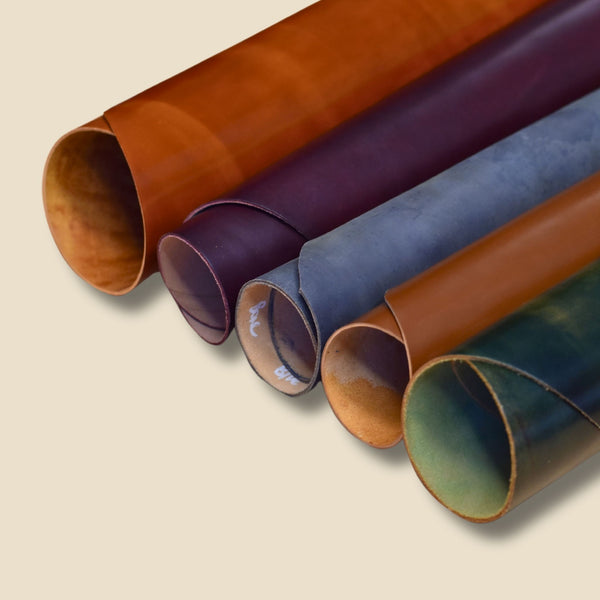
- Color and Patina: It arrives in a beautiful, creamy natural tone. With exposure to sunlight and handling, it will develop a rich, warm, and completely unique patina that tells the story of its use.
- Thickness and Uses: We stock Jesse in versatile thicknesses ideal for a range of projects. The 1.2-1.4mm is perfect for wallets and small goods, while the 2.0-2.2mm weight provides the structure needed for belts, straps, and journal covers.
Tooling Without Water: A Practical Guide to Working with Jesse
For any seasoned leatherworker, the idea of tooling without casing your leather feels counterintuitive. That muscle memory of reaching for the sponge and water is deeply ingrained. But with Jesse, you need to trust the process and leave the water aside. This is a fundamental shift in workflow, made possible because Olivenleder Jesse is the first toolable vegtan leather you don't need to humidify. Let's walk through how to get the best results.
Your first time working with Jesse is an exercise in unlearning. Start by selecting your usual high-quality tools: a sharp swivel knife, your favourite stamps, and a trusted maul or mallet. Lay your piece of Jesse on a firm surface, like a granite slab, and prepare to work directly on the dry grain. There's no waiting, no checking for the right moisture content-just pure, immediate crafting. You'll be amazed by the crispness and depth of every single impression from the very first strike.
Swivel Knife Cuts and Beveling
A sharp swivel knife glides through Jesse's surface with a uniquely smooth and controlled feel. The cuts are precise and, most importantly, they stay open. There's no 'healing' or closing up, which means your fine, decorative lines remain exactly as you carved them. When you move to beveling, the tool cleanly compresses the fibres, creating sharp, defined depth without any of the mushiness that can come from overwet leather.
Stamping and Embossing
You'll find that a moderate, confident strike with your maul is all it takes to leave a perfect impression. Because the leather is engineered to be receptive when dry, it captures the most intricate details from your stamps with stunning clarity. Whether you're using a simple basketweave or a complex pictorial stamp, the result is a sharp, deep mark that holds its shape permanently, making it a fantastic canvas for any design.
Burnishing Edges
While the surface tooling is a water-free process, creating a perfect edge still benefits from the traditional method. For a glassy, durable finish, we recommend sanding your edges smooth and then applying a small amount of water, Tokonole, or Gum Tragacanth. Work it in with a canvas cloth or a wooden slicker until you achieve that beautiful, high-gloss shine. This proven technique seals the fibres and gives your project a professional, long-lasting finish.
Jesse Olivenleder vs. Traditional Veg-Tan: A Head-to-Head Comparison
For generations, leather crafters have followed a time-honored ritual: casing their veg-tan leather with water to prepare it for tooling. It’s a process that requires timing, patience, and experience. But what if you could skip that step entirely without compromising on quality? This is where Jesse Olivenleder enters the workshop. Let's break down how this innovative material stacks up against the traditional workhorse of our craft.
| Feature | Jesse Olivenleder | Traditional Veg-Tan |
|---|---|---|
| Tooling Prep | Ready to tool dry; no casing required. | Requires controlled humidifying (casing) for best results. |
| Detail Retention | Excellent; crisp lines with minimal bounce-back. | Excellent, but highly dependent on proper moisture level. |
| Dye Absorption | Even and deep; accepts oil and water-based dyes readily. | Good, but can be splotchy if not cased evenly. |
| Burnishing Quality | Rich, glassy finish with minimal effort using water or Tokonole. | Excellent; requires water, gum tragacanth, or other burnishing agents. |
Performance in Tooling and Carving
The moment your swivel knife or beveller touches Jesse, you'll feel the difference. It offers a smooth, buttery resistance that allows for clean, deep cuts and impressions. The most crucial question we get is: does it hold the impression permanently? The answer is a resounding yes. The unique olive leaf tanning process results in fibers that compress and hold their shape with remarkable permanence, showing virtually no 'bounce-back'. For deep wet-forming projects, a light mist of water can still be used to achieve extreme shapes, but for all standard tooling, it's ready right off the bench.
Dyeing, Finishing, and Patina
Because it isn't pre-loaded with water, Jesse Olivenleder is incredibly receptive to color and finishing. Its structure allows for a uniform and deep absorption of both water-based and oil-based dyes, reducing the risk of blotchiness. This makes olivenleder Jesse the first toolable vegtan leather you dont need to humidify not just a time-saver, but a superior canvas for your artistry. It works beautifully with standard finishing products:
- Conditioners: Readily soaks in oils like Neatsfoot and conditioners for a supple feel.
- Top Coats: Accepts acrylic sealants like Resolene for a durable, professional finish.
- Waxes: Buffs to a beautiful, warm sheen with carnauba or beeswax.
Like all premium vegetable-tanned leathers, Jesse will develop a stunning patina over time. Exposure to sunlight and the oils from your hands will darken it to a rich, warm hue, telling the story of its use. This commitment to quality and aging potential is at the core of what we offer at Hab-To Leather House.
Is Jesse Olivenleder Right for Your Next Project?
Deciding on the right material is central to the success of any leathercraft project. Jesse Olivenleder isn't just another vegetable-tanned leather; it's a fundamental shift in the tooling process. By eliminating the need for casing, it saves time, removes guesswork, and delivers exceptionally consistent results. This makes Olivenleder Jesse the first toolable vegtan leather you dont need to humidify, a genuine game-changer for artisans who value precision and efficiency.
This innovative leather truly shines in applications where detail and a flawless finish are paramount. Its unique composition allows for crisp, deep impressions straight from the hide, without the risk of water stains or discoloration that can occur with traditional casing. It is the perfect choice for:
- Detailed Carving: Achieve sharp lines and intricate patterns with unparalleled clarity.
- Intricate Stamping: Every impression from your stamp will be uniform and well-defined, every single time.
- High-Contrast Projects: Ideal for work where avoiding water marks on undyed or lightly dyed leather is critical.
Consider it for premium goods like wallets, firm-temper belts, journal covers, and any decorative pieces where your tooling artistry is the main feature.
Who Should Try Jesse Leather?
Jesse Olivenleder is an excellent fit for a wide range of crafters. It's particularly beneficial for artisans working in humid climates where controlling the moisture in cased leather is a constant struggle. Beginners will appreciate sidestepping the steep learning curve of proper casing, while seasoned professionals will value the ability to speed up their workflow without compromising on quality. It’s for the crafter who demands consistency.
Sourcing and Getting Started
As a premium, specialized material, Jesse Olivenleder is an investment in your craft. Here at Hab-To, we believe that quality materials should be accessible to every passionate crafter. As your expert leather supplier in Amsterdam, we stand by our commitment to supporting your work, which is why we have a no-minimum-order policy. You can purchase a small piece to experience its unique properties for yourself before committing to a full hide.
Ready to spend less time preparing and more time creating? Explore our selection of Jesse Olivenleder and revolutionize your craft.
Your Craft, Redefined: The Jesse Olivenleder Advantage
For generations, leather crafters have accepted the meticulous, often unpredictable, process of casing leather as a necessary step. Jesse Olivenleder changes everything. This groundbreaking material eliminates the need for water, allowing you to pick up your tools and start creating the moment inspiration strikes, delivering the rich, crisp impressions you expect from premium veg-tan with a simpler, faster workflow.
The benefits are clear, cementing its place as olivenleder Jesse the first toolable vegtan leather you dont need to humidify. As an expert supplier of innovative and sustainable leathers, backed by 160+ years of family experience in Amsterdam, we are proud to bring this evolution in craftsmanship directly to you. With our no minimum order requirements, trying it for your next project is entirely risk-free.
Be among the first to work with this revolutionary leather. Shop Jesse Olivenleder now. Focus on what you love most-creating beautiful, lasting pieces. We can't wait to see what you make.
Frequently Asked Questions about Olivenleder Jesse
Can you still wet-form or wet-mold Jesse Olivenleder?
Yes, absolutely. While Olivenleder Jesse is the first toolable vegtan leather you don't need to humidify for carving, it performs beautifully for wet-forming. Simply case the leather with a damp sponge as you would with traditional veg-tan. It absorbs water evenly and holds its shape exceptionally well once dry, making it perfect for projects like molded pouches or custom holsters. This versatility gives you the best of both worlds: convenience for tooling and reliability for forming.
How does Jesse Olivenleder take antique stains and dyes compared to regular veg-tan?
Jesse Olivenleder has a tight, consistent grain that allows for remarkably even absorption of dyes and stains. You will notice less blotching and a richer, more uniform color compared to many standard tooling hides. When applying antique pastes or gels, the finish settles crisply into your tooled impressions, creating stunning depth and contrast. Always test on a scrap piece, but expect a premium, professional-grade result that elevates your finished work.
Is Jesse Olivenleder more expensive than traditional tooling leather?
As a premium, sustainably-tanned leather, Jesse Olivenleder's initial price may be higher than some commodity tooling leathers. However, it's an investment in quality and efficiency. The time you save by skipping the humidifying process, combined with its flawless surface and consistent workability, reduces waste and speeds up your workflow. For high-quality goods where craftsmanship is key, its superior performance provides exceptional value that justifies the cost.
What is the best way to finish the edges of Jesse Olivenleder?
Finishing the edges of Jesse Olivenleder is a rewarding process due to its dense fiber structure. For a perfect, glass-like finish, sand the edges with progressively finer grits. Then, apply a bit of water or Tokonole and burnish vigorously with a wood slicker or a piece of canvas. The edges compress and polish quickly and beautifully, resulting in a durable and professional look that complements the quality of the leather itself.
Does the leather have a distinct smell, like other veg-tan leathers?
It does, but it's a unique and pleasant experience. Instead of the traditional sharp, bark-like scent of many veg-tan leathers, Jesse Olivenleder has a subtle, warm, and slightly sweet aroma derived from its olive leaf tanning agents. It's an earthy, natural scent that is much milder than other leathers, adding an authentic, organic character to your final product. It’s a true reflection of its sustainable and innovative origins.
Can you use this leather for projects that don't involve tooling?
Absolutely. While its revolutionary tooling capabilities are a major feature, Jesse Olivenleder is a superb all-around craft leather. Its firm temper, smooth grain, and beautiful aging properties make it ideal for unstructured and structured projects alike, such as high-end bags, belts, wallets, and journal covers. Its inherent quality shines through in any application, whether it's intricately carved or left elegantly unadorned to showcase its natural beauty.
How does Jesse Olivenleder patina over time?
Like any top-tier vegetable-tanned leather, Jesse Olivenleder develops a magnificent patina with age, sunlight, and handling. The natural color will gradually deepen into a rich, warm honey-brown, and the surface will acquire a soft, beautiful luster. This natural evolution is the hallmark of quality leather, allowing each piece you create to develop its own unique character and tell a story over years of use and enjoyment.
What thickness is best for a beginner to start with?
For a beginner looking to explore leathercraft, we recommend starting with a medium thickness of 1.2-1.6mm (3-4 oz). This weight is incredibly versatile. It’s sturdy enough for wallets, cardholders, and small notebook covers, yet it remains easy to cut and stitch by hand. It also takes tooling impressions clearly without requiring excessive force, making it an excellent and forgiving choice for practicing a wide range of techniques.