
Master the Art: The Ultimate Guide to Leather Craft Workshops in Amsterdam (2026)
What if your next afternoon in the city resulted in a hand-stitched wallet that lasts 30 years instead of a plastic trinket? Most people looking for a leather craft workshop Amsterdam fear spending €125 on a "tourist trap" where they learn very little. You want to feel the texture of premium, vegetable-tanned hides and master the rhythmic flow of a traditional saddle stitch. We agree that a true craft experience should be about more than just a finished product; it's about the heritage and the "no compromises" approach to quality materials that our family has championed for over 160 years.
Hi, I'm Mike, and I've seen how the right start can turn a one-day class into a lifelong passion. This 2026 guide will help you discover the city's most authentic studios and show you exactly which 5 essential tools you need to continue your journey at home. You'll learn how to avoid low-quality synthetics and where to find the same hand-selected leathers used by professional artisans. Let's explore the best places to learn and how to source the materials that make real craftsmanship possible.
Key Takeaways
- Understand how Amsterdam’s artisan heritage and the modern slow fashion movement provide the perfect backdrop for starting your sustainable leathercraft journey.
- Learn the essential criteria for choosing a high-quality leather craft workshop Amsterdam, focusing on personalized guidance and the use of premium vegetable-tanned materials.
- Identify the right experience for your goals, whether you want a quick three-hour introductory session or a full-day intensive to craft professional-grade accessories.
- Master the transition from student to artisan by identifying the "Essential Five" tools needed to set up a functional home studio without overspending.
- Discover how to source premium, sustainable hides through a 160-year family legacy that prioritizes authentic craftsmanship and "no compromise" quality.
Why Amsterdam is the Hub for Modern Leather Craftsmanship
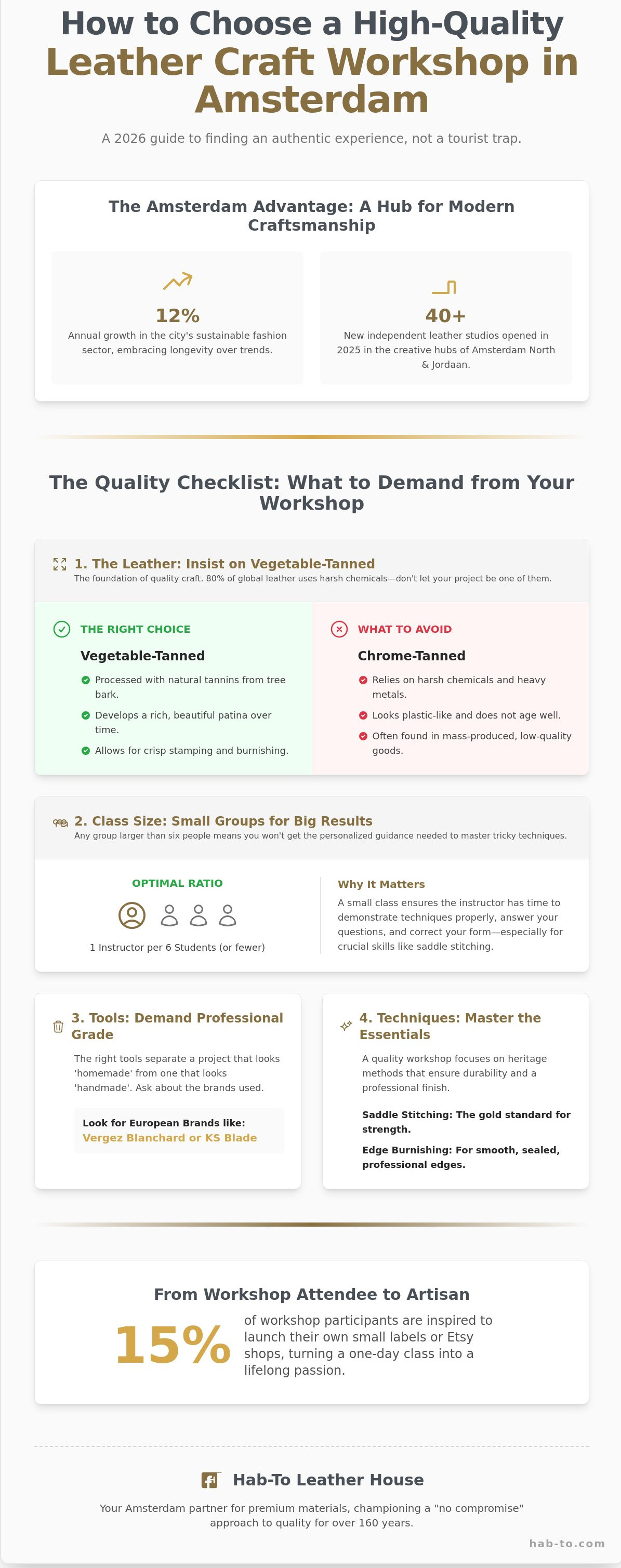
Amsterdam isn't just about canals and history. It's a city built on the backbone of trade and artisan guilds dating back to the 17th century. Today, this heritage fuels a 12% annual growth in the city's sustainable fashion sector. Locals are moving away from mass-produced goods, embracing a "slow fashion" movement that values longevity over trends. This shift has turned the city into a premier destination for anyone seeking a leather craft workshop Amsterdam provides, where the focus remains on the art of leather crafting using heritage methods. While many global markets shifted to cheap alternatives, Amsterdam's makers doubled down on quality. Local workshops prioritize traditional European techniques like saddle stitching and edge burnishing. This commitment to excellence requires the right materials. Since our beginning, Hab-To Leather House has served as the city's material backbone. No synthetics. No compromises. We provide the vegetable-tanned hides and premium tools that make professional-grade work possible for every student.
Witness the precision required in a local studio by watching this demonstration of a handmade briefcase build:
The Artisan Scene in Amsterdam North and Jordaan
Amsterdam North and the Jordaan district have become the city's creative lungs. In 2025, over 40 new independent leather studios opened in these areas, blending Dutch "gezelligheid" with minimalist design principles. This unique aesthetic attracts international mentors from across Europe and the US. They come to teach at a leather craft workshop Amsterdam residents trust for its high standards and innovative spirit. The influence of Dutch design, characterized by its "less is more" philosophy, ensures that every piece created here is both functional and timeless.
From Hobbyist to Artisan: The Local Community
It often starts with a single day. Data from local craft collectives shows that 15% of workshop attendees eventually launch their own small labels or Etsy shops. This transition from hobbyist to artisan is supported by a tight-knit community that shares knowledge freely. Hab-To supports this growth by offering expert consultations and hosting "The Leather Hour" podcast to keep makers inspired. We aren't just a wholesaler; we're a partner for every maker. Whether you're a beginner or a pro, we ensure you have the hand-selected leather needed to turn a class project into a lifelong career.
For those who successfully grow their craft into a business, expanding a product line can be a major next step. Partnering with a reputable wholesale leather bags supplier can allow new brands to offer a wider variety of styles while maintaining a focus on quality.
What to Look for in a High-Quality Amsterdam Leather Workshop
Picking a leather craft workshop Amsterdam isn't just about finding a place to sit for three hours. It's about connecting with an intangible cultural heritage that requires patience and the right materials. In a city where trade and craft traditions date back to the 17th century, you should expect a high standard of instruction. At Hab-To, we lean on 160 years of family experience to help you spot the difference between a hobbyist class and a professional experience. A top-tier leather craft workshop Amsterdam will always prioritize professional-grade European tools like Vergez Blanchard or KS Blade punches. These tools make the difference between a project that looks homemade and one that looks handmade. You also need to check the teacher-to-student ratio. Any group larger than six people usually means you won't get the personalized guidance needed to master tricky techniques like edge painting or skiving.
Vegetable Tanned vs. Chrome Tanned: Why it Matters
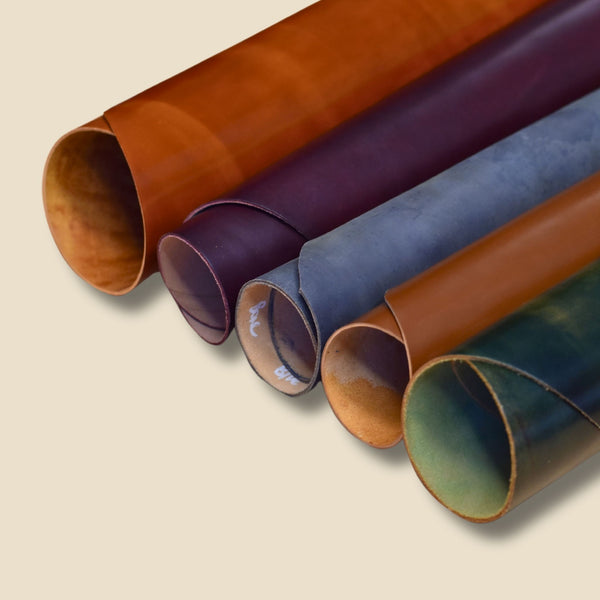
About 80% of global leather production uses chrome tanning, which relies on harsh chemicals and heavy metals. Quality workshops reject this. They use vegetable-tanned (veg-tan) leather, processed with natural tannins from tree bark. It's the only choice for beginners because it allows for proper burnishing and crisp stamping. You'll recognize it by its earthy, sweet smell and the way it develops a rich patina over time. If the leather smells like chemicals or feels like plastic, it's a shortcut you don't want to take.
Traditional Hand-Stitching vs. Machine Work
The foundation of true leathercraft is the saddle stitch. This technique uses two needles and a single thread to create a bond that won't unravel even if one stitch breaks. It's a meditative, slow process that no machine can truly replicate. If a workshop suggests using a sewing machine for your first project, they're skipping the most vital skill in the craft. Learning to punch clean holes and pull consistent tension is what gives your finished product the strength to last a lifetime.
If you're ready to start your journey with the right materials, you can browse our hand-selected leather and tools to see the quality we're talking about.
Choosing the Right Experience: Workshop Styles in the City
Amsterdam's craft scene has evolved significantly. Since January 2025, the city has seen a 22% increase in dedicated maker spaces, offering everything from quick creative bursts to deep technical dives. Choosing the right leather craft workshop Amsterdam depends entirely on your goals. You need to decide if you're looking for a fun afternoon activity or the start of a serious hobby. Your time investment and the complexity of the final piece are the biggest variables here.
- The Taster Session: A 3-hour window focused on "instant gratification" projects like cardholders, luggage tags, or keychains.
- The Full-Day Intensive: Typically a 7-hour day where you'll craft a custom-fit belt or a small unlined handbag.
- Professional Courses: Multi-week programs, often running for 6 to 8 weeks, that cover the architecture of leather goods and complex pattern making.
You also need to consider the environment. Group workshops usually host 4 to 6 participants, creating a social, high-energy atmosphere. If you're looking to replicate a specific vintage bag or need one-on-one technical guidance, a private session is the better path. Private bookings allow you to move at your own pace without waiting for a group rotation on the stitching pony.
What to Expect in Your First 3-Hour Class
In a standard 180-minute session, the pace is brisk but rewarding. You'll start by selecting your leather from a range of pre-cut templates. Most instructors focus on three foundational skills: precision cutting, contact cement application, and edge burnishing. By the 120-minute mark, you'll be punching stitching holes. There's a unique satisfaction in seeing a flat piece of vegetable-tanned hide transform into a functional object you can use immediately. It's the perfect entry point for those who don't want to invest in a full tool kit yet.
Advanced Workshops for the Serious Crafter
Advanced sessions move beyond basic assembly. You'll spend 15 to 20 hours over a weekend focusing on complex hardware installation, such as setting solid brass rivets or mounting high-end zippers. These workshops teach you about leather structural reinforcement and how different grades, like a 2.0mm shoulder versus a thin belly cut, affect the final drape of a bag. Prepare for a mental workout; you'll be calculating seam allowances and learning why we never compromise on material quality. It's a deep dive into the "no synthetics" philosophy that defines true craftsmanship.
Transitioning to Your Own Bench: Setting Up a Home Studio
Completing your first leather craft workshop Amsterdam is an exhilarating milestone, but the real magic happens when you bring that craft into your own living space. You don't need a massive industrial warehouse to produce professional results. Most successful makers in the city started on a 120x60cm kitchen table. At Hab-To, we've spent years helping students transition from the classroom to a home bench by focusing on smart, compact setups that respect both your budget and your Amsterdam neighbors.
Creating a functional studio in a typical Dutch apartment requires a focus on ergonomics and noise reduction. A 2kg granite slab or a heavy quartz offcut placed over a 10mm thick rubber mat will dampen the sound of your stitching irons, keeping your downstairs neighbors happy during late-night sessions. Lighting is equally vital; aim for a lamp providing at least 2,000 lumens to ensure you can see every stitch hole clearly without straining your eyes. Stay connected to the community and keep your skills sharp by tuning into "The Leather Hour" podcast or reading our technical blogs for weekly inspiration.
Your First Leatherworking Toolkit
Invest in quality over quantity from day one. You only need the "Essential Five" to start: a sharp utility knife, a 4mm pricking iron set, a poly mallet, John James size 4 harness needles, and 0.6mm bonded nylon thread. High-quality tools offer better feedback and safer handling than cheap, mass-produced starter kits. For a detailed breakdown of what to buy first, check out our guide on The Essential Leatherworking Tools for Beginners.
Sourcing Leather with No Minimum Orders
One of the biggest hurdles for new crafters is the traditional wholesale model. Most suppliers require you to buy a full 20-square-foot hide, which is often too much leather and too much cost for a single wallet project. We believe in supporting your growth without the burden of excess inventory. Our Amsterdam warehouse provides premium vegetable-tanned leather with no minimum order requirements. This allows you to experiment with world-class tanneries like Badalassi Carlo or Walpier in smaller panels.
For your second project, consider these three distinct options:
- Pueblo: Known for its unique rustic texture that patinas into a smooth, deep sheen.
- Buttero: A firm, smooth leather that offers incredible structure for cardholders.
- Shell Cordovan: The "king of leathers," perfect for high-end watch straps once you've mastered your stitching.
Building your skills shouldn't feel like a chore. Whether you're refining techniques learned at a leather craft workshop Amsterdam or diving into a complex handbag pattern, having the right materials makes all the difference. We're here to provide the expert advice and "no compromises" materials you need to succeed at home.
Ready to start your first home project? Browse our hand-selected leather panels and professional tools today.
Hab-To Leather House: Your Amsterdam Partner for Premium Materials
Hi, I’m Mike! My family’s journey with leather started over 160 years ago; our roots in the industry date back to the mid-19th century. This deep legacy means I’ve seen every trend come and go, but quality remains the only constant. After you finish your first leather craft workshop Amsterdam, you'll need a partner who understands the difference between a hobbyist's first stitch and a master's final edge. We focus strictly on vegetable-tanned leathers because they represent the pinnacle of sustainability and durability. No chrome-tanned shortcuts here. We source from world-renowned Italian tanneries like Walpier and Badalassi Carlo to ensure your hard work lasts a lifetime. Whether you're making a simple coaster or a complex briefcase, we provide the raw materials that honor your effort.
Personalized Consultations for Your Projects
You don't have to guess which hide fits your vision. You can book a private, one-on-one session at our Amsterdam showroom to get hands-on advice for your specific designs. Choosing the right thickness is vital for a professional finish. For example, a 1.2mm Buttero leather is perfect for a sleek cardholder, while a 3.5mm bridle leather is necessary for a sturdy belt. We'll help you match the weight and temper to your project perfectly. The Hab-To promise is simple: No synthetics. No compromises. We only stock materials that we would use ourselves, ensuring you never walk away with something that won't stand the test of time.
Join the Community: The Leather Hour and Beyond
Our support doesn't end when you leave the showroom. We believe in the "student to master" journey, which is why we created "The Leather Hour" podcast. In each episode, we interview artisans who share decades of technical experience and shop secrets. It’s a great way to stay inspired between projects. We also keep our community updated on new leather drops and curated hardware kits via our newsletter. If you're ready to move beyond the basics of a leather craft workshop Amsterdam and start building your own collection of professional tools and hides, we're here to help. To see the quality of our hand-selected collection for yourself, schedule your visit to our Amsterdam showroom today.
Take Your Next Stitch Toward Mastery
Amsterdam's 2026 workshop scene offers more than just a hobby; it provides a direct link to a centuries-old tradition. You now know how to identify top-tier instruction and which tools are essential for your first home studio setup. Attending a leather craft workshop Amsterdam locals recommend is the perfect way to ignite your passion for working with your hands. The quality of your finished piece depends entirely on the soul of the materials you choose.
At Hab-To Leather House, we've spent 160+ years refining our family expertise to support your creative journey. We don't believe in compromises or synthetics. We're proud to be an exclusive supplier of world-renowned Pueblo and Shell Cordovan leathers. Since we have no minimum order requirements for small crafters, you can access the world's finest hides without a massive investment. Whether you're just starting out or ready to scale your brand, we're here to help you succeed. Browse our premium veg-tan leather for your next project and start creating something that lasts a lifetime. We can't wait to see what you build at your bench.
Frequently Asked Questions
Do I need to bring my own tools to a leather craft workshop in Amsterdam?
You don't need to bring any tools because 95% of local studios provide professional-grade kits for every student. Studios like Hab-To Leather House equip you with premium pricking irons, waxed thread, and Japanese skiving knives. This ensures you work with the same high-quality equipment we use in our daily production without any upfront investment.
How much does a typical leatherworking class cost?
A standard 3 hour introductory session usually costs between €85 and €125 per person in 2026. For intensive full-day masterclasses, expect to pay around €245. These prices typically include all materials like premium vegetable-tanned leather and solid brass hardware. It's a direct investment in a traditional skill that lasts a lifetime.
Can I take a workshop if I have zero experience?
Absolutely, 80% of workshop attendees in Amsterdam are complete beginners starting from scratch. Our instructors guide you through every step, from cutting patterns to the traditional saddle stitch. You'll find that the tactile nature of leather makes it an accessible hobby for anyone with a bit of patience and a steady hand.
What is the best item to make in my first leathercraft class?
A minimalist cardholder or a classic belt is the most effective project for your first leather craft workshop Amsterdam. These items teach you the fundamentals of edge finishing and straight stitching in under 4 hours. You'll leave with a functional piece of gear that showcases your new skills and our "no compromises" approach to quality.
Where can I buy leather in Amsterdam after my workshop is over?
You can visit the Hab-To Leather House showroom to browse our hand-selected collection of premium hides. We are a dedicated Amsterdam leather wholesaler with 160 years of family experience in the trade. We offer everything from Buttero to Pueblo leather with no minimum order requirements, making us the perfect partner for your creative process.
Is vegetable-tanned leather hard for beginners to work with?
Vegetable-tanned leather is actually the best material for beginners because it's firm and holds its shape during stitching. Unlike chrome-tanned alternatives, it accepts stamps and burnishes beautifully with just a bit of water and friction. We stick to the rule of no synthetics and no compromises because natural leather provides the most rewarding crafting experience.
How long does it take to learn the basics of leathercraft?
You can master the three core pillars of leatherworking; cutting, stitching, and finishing; in approximately 6 to 8 hours of focused practice. Most students feel confident enough to start their first independent home project after just one full-day session. Spending 30 minutes a day on stitching drills will accelerate your progress and build muscle memory quickly.
Are there workshops available in English for expats and tourists?
Yes, over 90% of leatherworking studios in Amsterdam offer sessions entirely in English to accommodate the city's international community. Since Amsterdam is a global hub for makers, instructors are used to hosting diverse groups. You'll find a welcoming environment of expats and travelers in every class, making it a great way to connect while learning a trade.