Olivenleder: The Sustainable Revolution in Modern Leathercraft (2026 Guide)
What if the secret to the world's most sustainable leather was hidden in the waste piles of Mediterranean olive groves? For years, the craft has been stuck between the environmental toll of chrome tanning and the hollow promises of "vegan" synthetics that are often just glorified plastic. If you've felt the weight of that compromise, you aren't alone. You want a material that respects the Earth without sacrificing the rich, tactile soul of genuine hide. That is where olivenleder changes everything.
I'm Mike, and at Hab-To, we believe your workshop shouldn't have to choose between ethics and excellence. In this 2026 guide, you'll discover how the patented wet-green tanning process uses olive leaf extract to create a Cradle to Cradle Certified Gold material. I'll show you why our Olivenleder Jesse is the perfect high-performance choice for your next project. We'll cover the technical benefits of this bio-based revolution and how you can get your hands on premium panels right here in the EU with no minimum order requirements. It's time to bring the future of sustainable tanning into your own workshop.
Key Takeaways
- Understand the circular "waste-to-value" cycle that transforms Mediterranean olive harvest residues into premium, Cradle to Cradle Certified® tanning agents.
- Compare the performance and aesthetic differences between olivenleder and traditional favorites like Badalassi Pueblo to select the best hide for your needs.
- Master the specific workshop techniques required for cutting and edge finishing the Jesse article to ensure a professional, durable finish.
- Discover how to source world-class sustainable leather in small quantities through Hab-To’s unique "No MOQ" promise for independent crafters.
What is Olivenleder? Beyond the Sustainable Hype
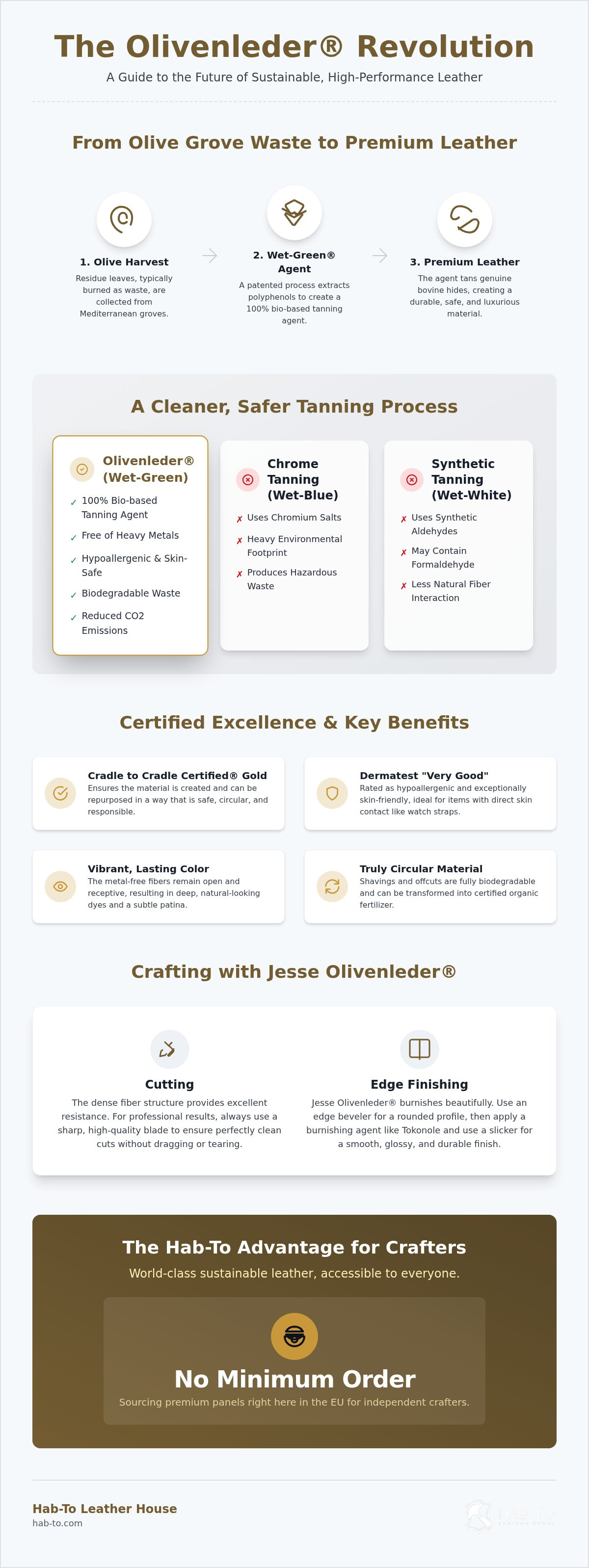
Olivenleder represents a fundamental shift in how we think about luxury materials. It isn't a synthetic look-alike or a plastic-coated "vegan" alternative. This is genuine bovine leather tanned using the patented wet-green® method. The process extracts polyphenols from Mediterranean olive leaves, a byproduct that would otherwise be burned after the harvest. By turning this agricultural waste into a premium tanning agent, the industry creates a "waste-to-value" cycle that respects the environment.
Choosing this material means choosing health for both the maker and the end user. It holds a Dermatest "Very Good" rating. It is hypoallergenic and free from the harsh metals often found in traditional vegetable tanning and chrome-based processes. For an artisan, this means working with a hide that feels natural and safe. It offers the same durability you expect from high-end leather without the chemical baggage.
To better understand this concept, watch this helpful video:
The History of Olive Leaf Tanning
The journey began with a need to fix the leather industry's chemical problem. While chrome tanning is fast, it leaves a heavy footprint on local water systems. Scientists looked to nature and found the answer in the olive groves. What started as a specialized material for high-end automotive interiors eventually reached the craft bench. The wet-green® tanning agent was patented in 2011; it significantly reduced the environmental impact of production by replacing synthetic chemicals with a 100% bio-based extract. This innovation allowed the leather to maintain its premium quality while adhering to strict ecological standards.
Why Olivenleder is the Future of Circular Craft
Sustainability isn't just about the start of a product's life. It is about the end. The shavings and offcuts from our Jesse Olivenleder can be transformed into certified organic fertilizer. This circularity is rare in the leather world. Beyond the waste, the process drastically reduces CO2 emissions compared to standard industrial tanning. Artisans are moving toward these "clean" leathers because modern buyers demand accountability. They want to know that their wallet or bag won't outlive the planet in a landfill. You can explore our full Olivenleder collection to see these rich colors for yourself.
The Science of 'Wet-Green' Tanning: Why Leaves Change Everything
The chemistry behind this leather is as fascinating as the final product itself. At its core, The Science of 'Wet-Green' Tanning relies on polyphenols extracted from olive leaves. These are the same natural antioxidants that protect the tree. During the tanning process, these molecules penetrate the hide and bind with the collagen fibers. This creates a stable, durable material without the use of hazardous chemicals. It's a massive leap forward from the industry standard "Wet-Blue" tanning, which relies on chromium salts. It also beats "Wet-White" tanning, which often uses synthetic aldehydes or formaldehyde.
By using a food-grade tanning agent, olivenleder ensures that the leather is as clean as it gets. This method doesn't just benefit the environment; it changes how the hide reacts to finishes. Because the fibers aren't saturated with heavy metals, they remain open and receptive to dyes. This results in deep, vibrant colors that look natural rather than painted on. The leather maintains a breathable quality that synthetic alternatives simply can't match. It develops a subtle, sophisticated patina over time, though it stays "cleaner" than some rustic traditional hides.
Biodegradability and Skin Safety
Crafting items that sit close to the skin requires a high level of trust in your materials. Jesse Olivenleder is particularly suited for watch straps and small accessories because it’s hypoallergenic. It's completely free from heavy metals and formaldehyde. The olive leaf tannin acts as a natural preservative, keeping the leather resilient while remaining safe for the wearer. If you've ever worried about the chemical runoff from your workshop, this material offers peace of mind. It’s fully biodegradable, meaning offcuts won't sit in a landfill for centuries. This makes it a responsible choice for the modern, conscious artisan.
The 'Jesse' Article: A Masterpiece of Texture
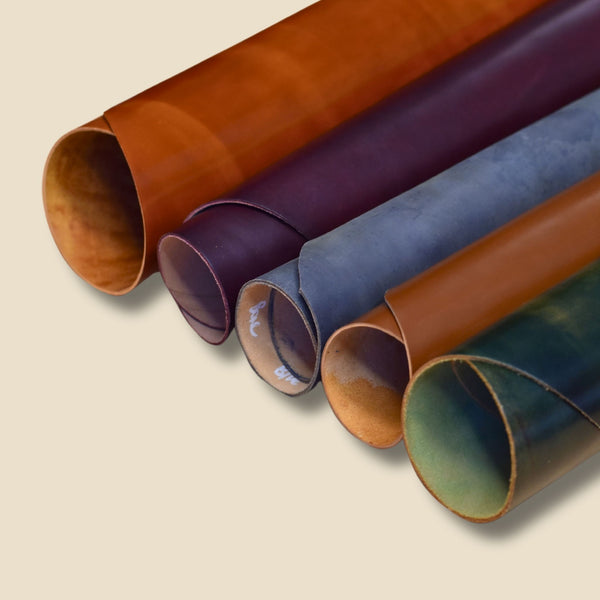
The Jesse article we source is a favorite among our community for its incredible hand-feel and consistent grain. It features a refined surface that feels modern and sophisticated. With a thickness typically around 1.2 to 1.4mm, it’s the ideal weight for wallets, linings, or light handbags. The temper is medium, providing enough structure for a professional look while remaining easy to work with on a standard machine or by hand. You can explore the full range of shades in our Olivenleder collection. If you're looking to get started with a variety of materials, our leather bundles are an excellent way to test different tempers and finishes in your own workshop.
Olivenleder vs. Traditional Veg-Tan: Which Should You Choose?
Choosing the right hide is a balancing act. You've got the heritage of traditional vegetable tanned leathers on one side and the modern ethics of olivenleder on the other. It's not about which is "better" in a vacuum. It's about the story you want your finished piece to tell. Traditional Vacchetta leathers, like Maryam Vacchetta, are famous for their deep, oily patina. This material offers something different. It provides a cleaner, more contemporary aesthetic that appeals to a new generation of conscious consumers who value transparency in the supply chain.
When it comes to durability, this olive-leaf tanned leather holds its own remarkably well. Traditional veg-tans can be quite thirsty. They soak up water and oils quickly. This is great for patina, but it can be a headache for items that see daily abuse. The tanning process creates a fiber structure that is naturally more resistant to moisture than many standard vacchettas. It won't replace a technical waterproof leather, but it offers a layer of practical protection that many artisans appreciate when crafting everyday carry items.
What about the price? You'll often find a slight premium for these hides. This reflects the patented technology and the ethical sourcing of the tanning agents. For many small brands, this is an investment in their story. It's a way to stand out in a crowded market. However, if your work involves heavy carving or stamping like you'd do with Hermann Oak, stick to the classics. This material is built for construction and clean lines; it doesn't hold a deep swivel-knife cut with the same crispness as a traditional carving shoulder.
Pueblo vs. Olivenleder: The Aesthetic Choice
If you want a project to look like it has a hundred years of history from day one, Badalassi Pueblo is your best friend. Its unique, roughed-up surface is unmistakable. In contrast, olivenleder is for the maker who wants a smooth, sophisticated luxury finish. Pueblo is rustic; this olive-tanned leather is refined. Both will darken and develop a glow over time, but the starting points couldn't be more different.
Olivenleder vs. Shell Cordovan
We often get asked if anything can match the density of Maryam Shell Cordovan. The short answer is no. Shell remains the "King" for small, high-wear items like wallets due to its non-creasing nature. But our olive-leaf tanned articles are the "Green Queen" for larger projects. You can't realistically make a full-sized tote out of Shell Cordovan without spending a fortune. This gives you that premium, eco-friendly feel across a much larger surface area.
Crafting with Jesse Olivenleder: Tips, Tools, and Techniques
Working with olivenleder is a tactile joy. The Jesse article is famous for its consistent density. Your knife moves through the hide with uniform resistance. This stability makes it a reliable choice for precision work and complex patterns. You won't have to fight with the loose grain often found in lower-quality hides. It stays true to your pattern from the first cut to the final stitch.
The tight fibers in this hide respond beautifully to burnishing. You can achieve a high-end, glassy edge without relying on thick paints. This maintains the natural look of the material. Before you apply any decorative lines, test a small scrap for heat-creasing compatibility to find the perfect temperature for your tools. This extra step ensures your final piece looks polished and professional without any accidental scorching.
Adhesive choice is vital when working with eco-tanned materials. Use water-based glues to match the philosophy of the hide. These adhesives bond deeply with the open fibers. They provide a strong hold without introducing harsh chemical smells to your workshop. It's a cleaner way to build that your customers will appreciate.
What You Will Need
To get the best results with this premium material, I recommend these specific items for your bench:
- Material: Jesse Olivenleder panels are available in small sizes with no MOQ.
- Adhesive: Use Ecostick 1804 Leather Glue for a safe, high-performance bond.
- Edge Prep: Precision edge bevelers to create clean, rounded corners.
- Finishing: A curated Tokonole bundle to achieve that perfect burnished glow.
Maintenance and Care
Jesse stays beautiful with very little effort. Use an olive-oil based care range to keep the surface supple over the years. If the leather picks up a light scratch, you can often heal it by simply rubbing the area with your thumb. The natural oils will redistribute to hide the mark. Store your hides in a cool, dark place. This prevents the natural tannins from drying out and preserves the supple temper you love.
Sourcing Olivenleder for Your Next Project: The Hab-To Advantage
Accessing premium materials shouldn't be a privilege reserved for global fashion houses. Our mission at Hab-To is simple: we bring world-class leather to crafters of all sizes. For too long, the most innovative sustainable options were locked behind massive minimum order quantities. We broke that barrier. Whether you're a professional artisan or a hobbyist starting your first wallet, you deserve the same quality as the big names. We believe in the power of the independent maker to drive the industry forward.
Our "No MOQ" promise is at the heart of our business. You don't need to commit to an entire hide of the Jesse article. We offer direct access to olivenleder in small, manageable panels. This allows you to experiment with different colors and tempers without a huge upfront investment. Sourcing from an EU-based wholesaler in Amsterdam means you get fast worldwide shipping and clear communication. You avoid the hidden fees and long wait times often associated with importing from outside the union. It’s about efficiency and trust.
If you're feeling overwhelmed by the technical choices, let's talk. You can book a free video consultation with Mike for personalized material matching. I'll help you pick the right weight and color for your specific project. It's the kind of personal, hospitable service our family has provided for over 160 years. We treat every customer like a partner in the craft.
Why Mike Chooses Olivenleder
My journey to the source wasn't just a business trip. It was a search for the future of our trade. Visiting the tanneries and seeing the wet-green process firsthand confirmed that this was the right direction for our family legacy. We've been in the Amsterdam leather trade for generations. We've seen trends come and go. But the shift toward olivenleder is different. It's an evolution. Supporting this technology helps the entire leather industry move away from harmful chemicals and toward a circular economy. By choosing Jesse, you're voting for a cleaner world with every stitch you make.
Ready to Start? Your Next Steps
Your bench needs the right setup to do this material justice. Browse the Hab-To Tools collection to find the precision knives and bevelers you'll need. If you want to take your work to the next level, our Masterclasses are designed to refine your stitching and assembly skills. We're here to support your growth as an artisan.
Featured for Your Workshop:
- Jesse Olivenleder Panels – Premium sustainable leather in accessible sizes.
- Ecostick 1804 Leather Glue – The perfect toxic-free bond for your eco-hide.
Step Into the Future of Sustainable Craft
The shift toward cleaner, more responsible tanning isn't just a temporary trend. It is the new standard for the luxury market. By choosing olivenleder, you're embracing a material that respects both your health and the planet. It does this without compromising on the professional hand-feel your customers expect from top-tier leather. We've seen this industry evolve through 160 years of our family's history in Amsterdam. Today, as an official partner for this innovative technology, we're here to help your workshop grow. You don't need to stock huge inventories or buy entire hides to make a difference. Our no-MOQ policy ensures you can start small and focus on the quality of your craft. It's time to bring this sustainable legacy to your own workbench.
I'm excited to see what you build with this incredible material. Your next masterpiece starts with a single, conscious choice. Keep crafting with passion.
Frequently Asked Questions
Is Olivenleder real leather or a vegan alternative?
Olivenleder is 100% genuine bovine leather and not a synthetic or plastic-based "vegan" alternative. The name refers specifically to the tanning agent, which is a bio-based extract derived from Mediterranean olive leaves. This process allows you to enjoy the traditional durability and feel of real hide while supporting a circular, chemical-free production method. It is a premium choice for those who value both authenticity and environmental ethics.
Can I burnish the edges of Olivenleder Jesse like traditional veg-tan?
You can absolutely burnish the edges of the Jesse article just like you would with any high-quality vegetable-tanned leather. The dense fiber structure responds beautifully to friction and heat. By using a wooden slicker and a small amount of Tokonole, you can achieve a glassy, professional edge. If you prefer a more contemporary look, the surface also takes edge paint exceptionally well after a light sanding.
Does Olivenleder require special glue for assembly?
This leather does not require specialized adhesives, but water-based glues are the most effective match for its natural fibers. We recommend using Ecostick 1804 to ensure a strong, toxic-free bond that aligns with the sustainable theme of your project. These adhesives penetrate the olive-tanned fibers without damaging the finish or leaving behind harsh chemical odors. It keeps your entire assembly process as clean as the leather itself.
How does the price of Olivenleder compare to chrome-tanned leather?
Olivenleder generally sits at a higher price point than mass-produced chrome-tanned leather due to the patented wet-green tanning process. This investment reflects the use of high-quality food-grade extracts and a slower, more environmentally conscious production cycle. For many independent artisans, the slightly higher cost is a worthwhile investment in a sustainable brand story. It provides a unique selling point that resonates with modern, conscious consumers.
Is Olivenleder suitable for making watch straps and belts?
This material is an excellent choice for watch straps and items in direct skin contact because it is hypoallergenic and Dermatest certified. It won't irritate the skin even with daily wear. For belts, Jesse is a medium-weight article that works perfectly as a lining or when laminated to a heavier core. Its supple temper and resilience make it a versatile option for any accessory that requires a mix of comfort and durability.
What happens to Olivenleder if it gets wet?
This leather handles moisture remarkably well because the tanning process creates a resilient fiber structure. If your project gets wet, simply wipe away the excess water with a soft cloth and let it dry naturally at room temperature. Don't use radiators or hair dryers, as direct heat can cause natural tannins to dry out and stiffen. Once it is dry, a light application of a natural conditioner will restore its original suppleness.
Where can I buy small quantities of Olivenleder in Europe?
You can buy small quantities and pre-cut panels of Jesse olivenleder directly from Hab-To Leather House in Amsterdam. We are an official partner and offer this premium material with no minimum order requirements. This allows independent crafters across Europe to access world-class sustainable leather without the need to purchase full hides. We ship fast from our local warehouse to help you get started on your next project quickly.
Does Olivenleder develop a patina like other vegetable-tanned leathers?
It does develop a patina over time, though the change is more subtle and refined than the heavy darkening seen in rustic leathers. Your pieces will develop a soft, sophisticated glow and a deeper color with regular use. This aging process allows the leather to look more beautiful with time while maintaining a "cleaner" and more modern aesthetic. It’s the ideal choice for luxury goods that need to age gracefully without losing their polished appearance.
Disclaimer
All our blog articles are made for information purposes only we dont take responsability for any content from third parties.