Shell Cordovan: The Definitive Guide to Sourcing and Crafting the King of Leathers
Most artisans call it the "King of Leathers," but shell cordovan isn't actually leather in the traditional sense. It is a dense, fibrous membrane found only beneath the surface of a horse's hindquarters. This unique anatomy is why it never creases and why it develops a deep, liquid-like patina that lasts for generations. I understand the hesitation many makers feel when they first hold a shell. Between the high cost of entry and the intensive tanning process that takes over six months, the pressure to perform a perfect cut can be overwhelming.
You shouldn't let the prestige of the material stop you from using it in your own workshop. In this guide, I will share the expertise gained from my 25 years in the trade and our 160 year family history to help you master this challenging material. We will explore the specific characteristics of Conceria Maryam shells and the professional tools you need to finish edges to a mirror shine. You'll learn how to source small panels for watch straps or wallets without worrying about minimum order quantities. By the end of this article, you will have the confidence to treat this legendary material as a partner in your craft rather than a source of stress.
Key Takeaways
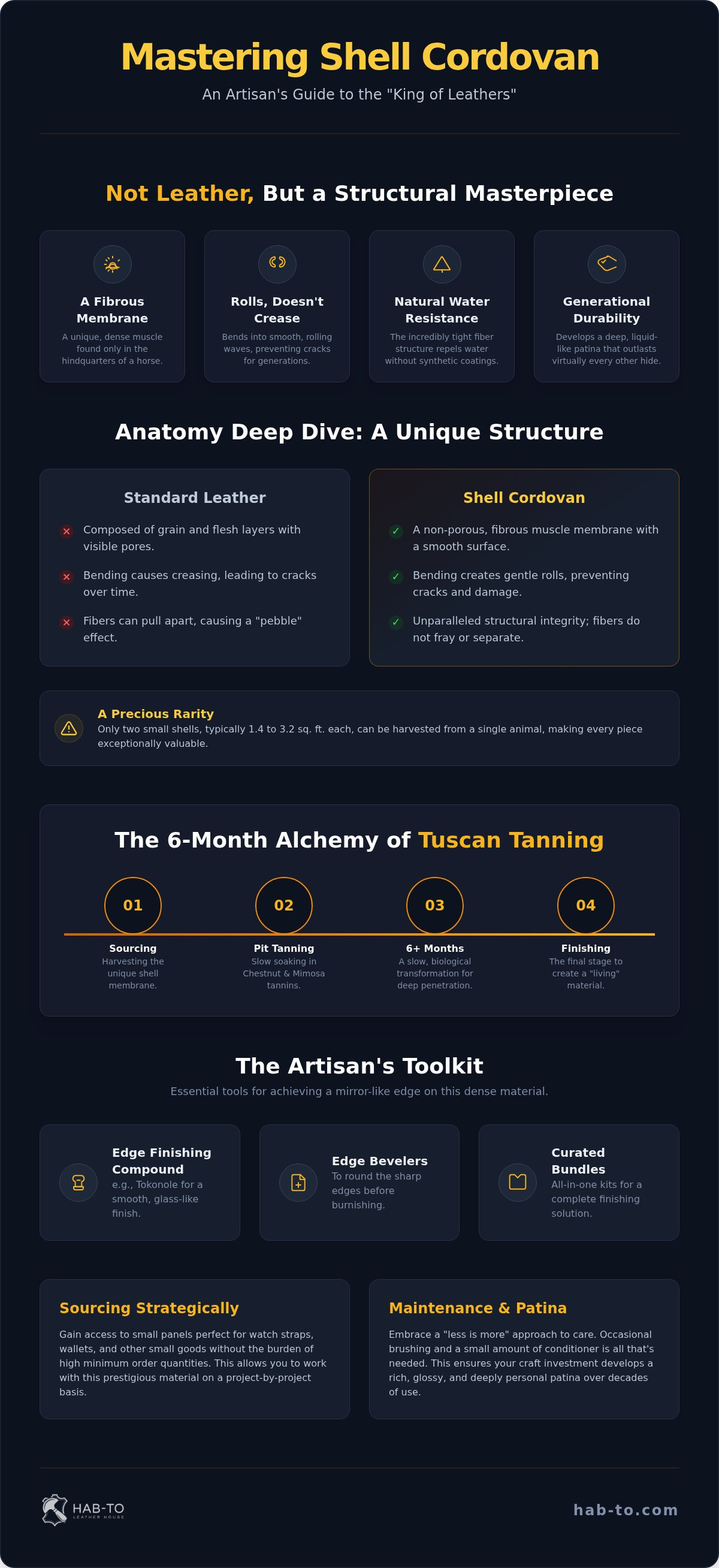
- Understand why this material is a structural membrane rather than a standard hide, giving it unique non-creasing properties and natural water resistance.
- Learn about the intensive six-month vegetable-tanning process used by Conceria Maryam to create the world's most prestigious shell cordovan.
- Discover the specific leatherworking tools and burnishing techniques required to achieve a mirror-like edge on this exceptionally dense material.
- Find out how to source small panels for specific projects without the burden of high minimum order quantities.
- Master the "less is more" approach to maintenance to ensure your craft investment develops a rich, glossy patina over time.
The Anatomy of the Shell: Why Cordovan is Not Actually "Leather"
To understand shell cordovan, you've got to look past the surface. While we commonly call it leather, it's technically a distinct anatomical structure. Most hides are composed of the grain and the flesh, but this material is different. It is a flat, oval muscle found specifically beneath the hide of a horse's rump. This location is vital. It creates a material with a density that standard bovine hides simply can't match.
One of the first things you'll notice when handling a shell is the absence of grain pores. Because it's a muscle membrane, the fiber structure is incredibly tight. This dense collagen network makes the surface naturally water-resistant without the need for heavy synthetic coatings. If you've ever wondered What is Shell Cordovan? and why it feels so exceptionally smooth, the answer lies in this lack of porosity.
To better understand this concept, watch this helpful video:
A Muscle, Not a Skin
This membrane sits between the outer hide and the inner flesh. It acts as a protective shield for the animal. For the artisan, this means you're working with a material that won't fray or pull apart easily. Shell Cordovan is a non-porous fibrous muscle membrane that provides unparalleled structural integrity. This density is the primary reason it's often considered the most durable material available for high-end craft work.
Why It Outlasts Every Other Hide
The way fibers are oriented in the horse rump is unique. In standard leathers, bending the material eventually causes the grain to pull away from the underlying fibers. This leads to a "pebble" effect or unsightly creases that eventually crack. Cordovan doesn't do this. Instead of creasing, it rolls. These smooth, rolling waves prevent the surface from cracking even after decades of use. My family has seen many materials come and go over our 160 years of family business experience, but nothing maintains its face quite like this.
Nature is stingy with this treasure. You can only harvest two small shells from a single animal. These shells are relatively small, typically ranging from 1.4 to 3.2 square feet each. This scarcity, combined with the anatomical complexity, is why every square centimeter is so precious to a maker. When you cut into a shell, you aren't just using leather; you're using a structural masterpiece of nature.
The 6-Month Alchemy: Sourcing Maryam Shell Cordovan from Tuscany
While mass-produced hides are often churned out in a matter of days, creating shell cordovan is a slow, biological transformation. It takes a minimum of six months to produce a single shell. This isn't just a manufacturing delay; it's a necessary period of "alchemy" where the dense muscle membrane is slowly saturated with natural tannins. At Conceria Maryam, located in the heart of Tuscany's famous leather district, they refuse to rush this process. They understand that time is the most important ingredient in their recipe.
Choosing vegetable-tanned shells over chrome-tanned alternatives is both an ethical and an aesthetic decision. Chrome tanning relies on heavy metals and produces a material that feels "dead" and plastic-like. In contrast, the vegetable tanning process used by Maryam creates a living material. It's safer for the environment and for the artisan. More importantly, it allows the shell to age gracefully. Only through this traditional method can the leather develop the deep, liquid-like patina that makes it so prestigious.
Traditional Pit Tanning in Tuscany
The Maryam process centers around traditional pit tanning. The shells are suspended in large pits filled with a concentrated liquor of natural tannins derived from chestnut and mimosa trees. This slow soak allows the tannins to penetrate the incredibly dense fiber structure without force. You'll often find the "Consorzio Pelle Vegetal Toscano" mark on these materials. This seal ensures that every shell follows strict traditional protocols. It's a guarantee of authenticity that we value deeply in our own workshop. You can shop Maryam Cordovan to experience this Tuscan heritage firsthand.
Hand-Finished Luster
Once the tanning is complete, the tanners must reveal the shell. This requires the shaving process, where master tanners use specialized blades to shave away the outer hide and inner flesh. They are looking for the exact moment the "shell" appears. It's a high-stakes task. Shave a fraction of a millimeter too deep, and the shell is ruined. After the shell is revealed, it's hand-glazed using heavy glass or agate cylinders. This intense pressure burnishes the surface, creating a unique depth of color and a natural "glow" that no machine can replicate. This meticulous attention to detail is why Maryam Shell Cordovan is the Gold Standard for makers worldwide.
If you're ready to start your own journey with this king of leathers, our curated leathercraft bundles offer the essential tools and materials to help you succeed from your very first cut.
The Artisan’s Guide: What You Will Need to Work with Cordovan
Crafting with shell cordovan feels nothing like working with standard bovine hides. It's a dense, non-porous material that demands respect and a very specific set of skills. I've spent 25 years handling various leathers, but the "King of Leathers" still requires my full attention every time I pick up a knife. Because the fiber structure is so tight, your tools need to be at their absolute sharpest. If they aren't, the material won't just resist; it'll fight back. This density is a blessing for durability, but it's a challenge for any maker who isn't prepared for the physical resistance of the membrane.
Essential Tools for Cordovan Precision
When you're ready to punch your stitching holes, the choice between pricking irons and diamond chisels becomes critical. I always recommend high-quality pricking irons for this work. A sharp, polished iron will glide through the shell membrane without tearing the surrounding fibers. This ensures your stitch line remains clean and professional. You can Explore Professional Leathercraft Tools in our shop to find the right hardware for these high-stakes cuts. Remember, a dull blade is your biggest enemy. It causes the material to bunch up rather than slice cleanly, which can ruin an expensive panel in seconds.
The Edge Finishing Masterclass
Achieving a mirror-like edge on shell cordovan is one of the most satisfying parts of the process. Unlike porous leathers that absorb burnishing agents, the shell needs to be compressed. This is where Tokonole proves why it's the industry standard. It sits on the surface and works into the fibers to create a glass-like finish that standard waxes can't match. Use a glass slicker to apply firm pressure. This physically flattens the fibers, locking them into a permanent, glossy state. For bonding your layers before stitching, use a high-performance adhesive like Ecostick 1804 Glue. It provides a strong, flexible bond that won't peel when you're burnishing those edges.
What You Will Need
- Maryam Shell Cordovan: Start with a premium Italian shell for the best results.
- Tokonole: The essential burnishing cream for non-porous edges.
- Edge Beveler: A sharp tool to create a consistent, rounded edge profile.
- Ecostick 1804: Our preferred leather glue for a professional bond.
- Precision Tools: Sharp knives and polished pricking irons.
Sourcing Strategically: Buying Shell Cordovan Without Minimum Orders
Sourcing shell cordovan used to mean committing to a full hide and a massive invoice. For a hobbyist or a small workshop making watch straps, this high cost of entry is a major roadblock. I've heard this pain from countless makers. They want the quality of Maryam but don't need three square feet of it. That's why we've dismantled the traditional wholesale model. You don't need to buy a whole shell to start your journey with the King of Leathers. We believe premium materials should be accessible to everyone, regardless of the size of their project.
The Maker-Friendly Sourcing Model
We break down premium Maryam hides into accessible, high-quality panels. Buying by the dm² is the most sustainable way to source luxury leather. It reduces waste and keeps your overhead low. This approach allows you to test colors and finishes without the financial risk of a full hide. A watch strap only requires a small strip, whereas a bifold wallet needs a larger, consistent surface. By sourcing small panels, you can match the material to the job. This precision prevents you from paying for leather that will just sit in a scrap bin.
European Logistics and Reliability
Location matters when you're buying premium materials. Sourcing from our Amsterdam warehouse means EU-based makers avoid the headache of customs fees and long wait times. We offer 24-48 hour delivery within the EU. If you're in the area, you can even visit our showroom to touch the leather yourself. Building a personal connection with your supplier is vital. You can learn more About Mike and our 160 year family legacy to see why we prioritize the individual artisan over anonymous bulk orders.
Choosing the right panel is a science. Sometimes you need a second opinion before you commit. A free video consultation with Mike can save you money by ensuring you get the exact weight and temper for your specific project. We're here to support your craft, not just sell you a hide. We want to ensure that every piece of shell cordovan you buy becomes a masterpiece.
Maintenance and Patina: How to Care for Your Cordovan Investment
Owning an item made from shell cordovan is a long-term commitment. Unlike standard vegetable-tanned leathers that might dry out or crack without constant attention, this material is self-lubricating. The six-month tanning process saturates the membrane with so many natural oils and fats that it carries its own protection. Over time, you'll see a deep, liquid-like shine develop. This is the famous patina that collectors crave. It doesn't just get darker; it gains a three-dimensional depth that reflects light differently than any other hide.
Maintenance for this material is surprisingly simple: less is more. You don't need a shelf full of chemicals to keep your shells in top condition. In fact, using too many heavy waxes can actually block the natural luster and lead to a cloudy buildup. If your wallet or watch strap looks a bit dull, a "dry rub" with a clean, soft cloth is often all it takes. The friction generates just enough heat to move the internal oils back to the surface, restoring that signature glow instantly.
The Olivenleder Care Philosophy
If the leather does begin to feel dry after years of use, you need a product that respects its natural composition. I recommend using Olivenleder leather food. This natural conditioner is based on olive oil and won't clog the tight fiber structure we discussed in the anatomy section. Apply a tiny amount, let it sit, and then buff it out. For surface scratches, you don't always need a filler. The dense fibers can often be "healed" using a smooth deer bone or even the back of a polished spoon. By applying firm, circular pressure, you can physically push the fibers back into place and smooth out the mark.
Long-Term Ownership
Think of your shell cordovan project as a future heirloom. After one year, the color will have settled into a richer, more stable tone. By year five, the rolling creases will be well-defined and the surface will have a permanent gloss. At the ten-year mark, the item will likely look better than the day you finished it. This longevity is why artisans choose this material despite the higher cost. To ensure it lasts, store your items away from direct UV light and extreme humidity. These conditions can cause the oils to seep out unevenly or cause the membrane to swell.
Ready to create something that lasts a lifetime? You can Browse the Maryam Shell Cordovan Collection and select the perfect panel for your next masterpiece.
Master the King of Leathers in Your Own Workshop
Mastering shell cordovan is a rite of passage for any serious leatherworker. You now understand that this unique muscle membrane requires a specialized approach, from using the sharpest pricking irons to choosing the right burnishing agents like Tokonole. By sourcing directly from Conceria Maryam, you're tapping into a Tuscan tradition that we've respected throughout our 160 years of family expertise. This material doesn't just offer durability; it offers a legacy that evolves with every year of use.
You don't have to face the challenge of working with premium hides alone. We provide direct Italian sourcing without the burden of minimum order quantities, making luxury accessible for any project size. Whether you're crafting a single watch strap or a full collection of wallets, we're here to support your craft. If you're still unsure about the right weight or temper for your specific project, I'm always available for a free video consultation to guide your choice.
It's time to stop admiring the work of others and start creating your own heirloom pieces. Your journey toward crafting with the finest material in the world begins with that first intentional cut. We can't wait to see what you create.
Frequently Asked Questions
Is Shell Cordovan actually horse leather?
Yes, it is harvested from the rump of a horsehide. However, as we explored in the anatomy section, it's technically a fibrous muscle membrane found beneath the skin rather than the skin itself. This anatomical distinction is what gives the material its unique properties compared to standard horsehide or bovine leather. It's a natural, animal-based product that we source exclusively through traditional vegetable tanning methods to ensure the highest craft quality.
Why is Shell Cordovan so much more expensive than bovine leather?
The high price reflects both scarcity and labor. Only two small shells can be harvested from a single horsehide, and the vegetable tanning process at tanneries like Conceria Maryam takes a minimum of six months. This intensive timeline, combined with the master-level shaving required to reveal the membrane, makes it a premium investment. Unlike mass-produced bovine hides, every shell represents half a year of dedicated artisan work and careful biological transformation.
Does Shell Cordovan scratch easily?
While it is incredibly durable, the high-gloss finish can show surface marks. However, these are usually superficial. Because the fiber structure is so dense and oil-rich, you can often "heal" these scratches by buffing them with a soft cloth or a smooth deer bone. The friction redistributes the internal oils and fats. This makes the material far more resilient than standard hides that might require heavy fillers or synthetic sprays to repair surface damage.
How do I distinguish real Shell Cordovan from lookalikes?
Look for the "roll" rather than the "crease." Real shell cordovan will never show the fine, cracked lines or "pebbled" grain effect seen in bovine lookalikes. When you bend it, it forms smooth, wavy rolls. You should also check for a total lack of visible pores on the surface. Authentic Maryam shells carry the mark of the Tuscan consortium, which serves as a guarantee of traditional vegetable tanning and genuine Italian origin.
Can I use regular leather dye on Shell Cordovan?
It's generally not recommended to dye shell at home. The material is so dense and non-porous that standard dyes often sit on the surface or streak rather than penetrating the fibers. Most shells are dyed at the tannery during the six-month tanning process to ensure deep, consistent color. If you need a specific shade, it's better to source a pre-dyed panel from our collection to ensure you don't ruin an expensive piece of material.
Why does Shell Cordovan roll instead of crease?
This happens because of the unique collagen fiber orientation in the muscle membrane. In standard leather, the grain layer is separate from the corium, leading to separation and creasing over time. In a shell, the fibers are vertically oriented and exceptionally tight. This structure allows the material to flex without breaking the surface. It creates the characteristic rolling waves that prevent cracking and keep your leather goods looking pristine even after decades of daily use.
Do I need special needles to stitch Shell Cordovan?
You don't necessarily need specialized needles, but they must be high-quality and very sharp. Because of the density of the membrane, a dull needle will struggle to pass through, even after you've used a pricking iron. I recommend using polished saddler's needles. They glide through the tight fiber structure more easily. This prevents unnecessary friction and ensures your stitching remains consistent and professional across the entire project without pulling or distorting the holes.
How much Shell Cordovan do I need for a standard bifold wallet?
A standard bifold usually requires about 1.5 to 2 square decimeters (dm²) for the exterior shell. Since we offer sourcing by the dm² with no minimum order, you can buy exactly what you need without wasting expensive material. I always suggest allowing for a small margin of error when planning your cuts. If you're unsure about the dimensions for your specific pattern, you can book a free video consultation with me to verify your requirements.
Disclaimer
All our blog articles are made for information purposes only we dont take responsability for any content from third parties.