Sourcing Authentic Italian Leather: A Crafter’s Guide to Premium Hides
Most 'Italian Leather' labels you see on high-street bags are nothing more than a marketing trick designed to justify a higher price tag. As a maker, you know that true quality isn't found in a stamp, but in the fibers of the hide itself. You want the deep, earthy aroma of vegetable-tanned leather and the rich patina that only comes from traditional Tuscan methods. Yet, for many independent crafters, sourcing world-class materials like Shell Cordovan or Pueblo leather feels like a battle against high minimum order quantities and complex customs regulations.
I'm here to tell you that premium sourcing doesn't have to be a headache. In this guide, you'll discover how to distinguish authentic hides from marketing fluff and learn the secrets to choosing the right tannery for your specific project. Whether you're crafting a minimalist wallet or a bespoke watch strap, I'll show you how to source small panels of the finest Italian leather directly within the EU. We will explore the heritage of the Tuscan Consortium and help you find a reliable supplier so your focus remains on the craft rather than the paperwork.
Key Takeaways
- Learn how to distinguish genuine vegetable-tanned Italian Leather from clever marketing labels by understanding the traditional methods of the Tuscan Consortium.
- Discover the unique characteristics of iconic hides like Pueblo and Shell Cordovan to match the perfect temper and patina potential to your specific project.
- Understand the specialized expertise of legendary tanneries such as Badalassi Carlo and Conceria Maryam to elevate the quality of your handcrafted goods.
- Master the logistics of sourcing premium leather in small panels, allowing you to access world-class materials without the burden of high minimum order quantities.
- Find out how to navigate leather measurements and avoid customs headaches by partnering with a reliable, EU-based supplier with deep family roots in the craft.
What is Italian Leather? Distinguishing Marketing from Mastery
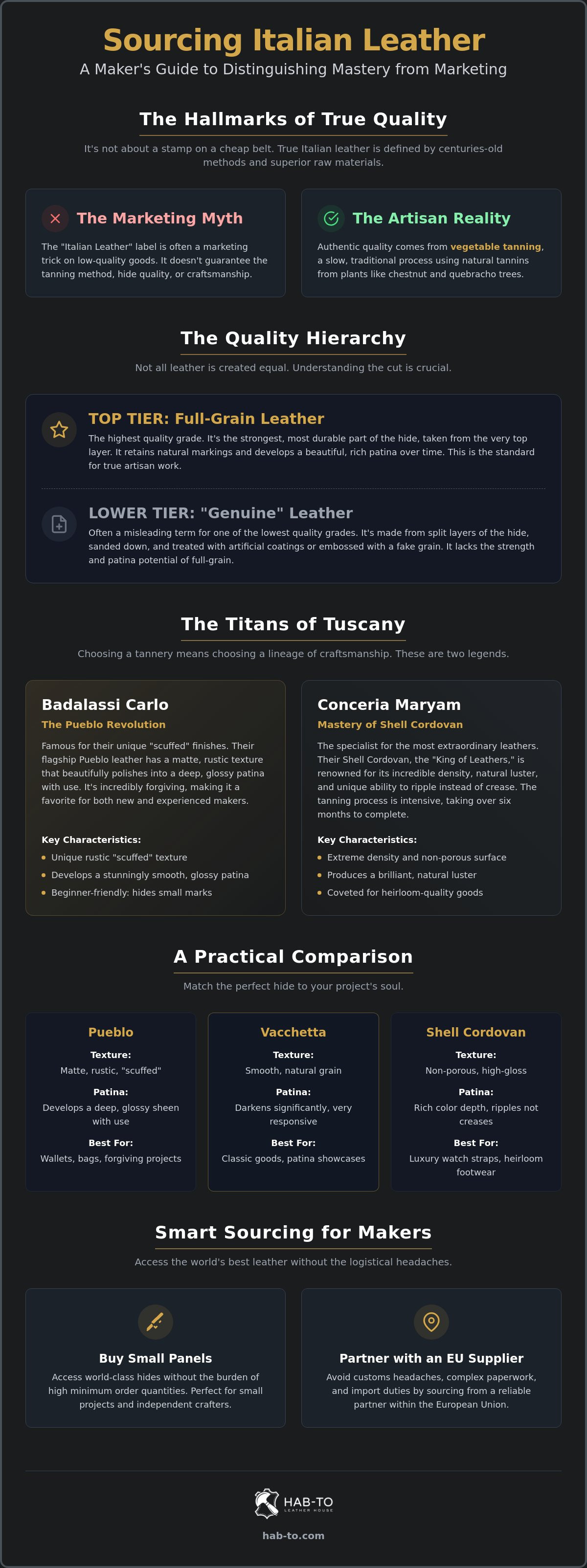
You've probably seen "Genuine Italian Leather" stamped on a cheap belt in a tourist shop. It's a frustrating label because it often hides the truth. Real mastery isn't just about geography; it's about the leather tanning process perfected over centuries. When we talk about Italian Leather at the highest level, we're talking about vegetable tanning. This method uses natural extracts instead of harsh chemicals. It's a slow, patient craft that results in a hide with a soul. Mass-produced hides might look the part for a week, but they won't stand the test of time like the artisan-tanned panels we use in our own workshops.
The Role of the Tuscan Consortium
To cut through the marketing noise, look for the "hand" logo. This certification from the Tuscan Consortium is the ultimate trust signal for any professional crafter. It guarantees that the tannery uses traditional recipes and maintains high ethical standards. Tanneries like Badalassi Carlo are members of this elite group. They use plant-based tannins from chestnut and quebracho trees, which makes the leather biodegradable and hypoallergenic. It's also a choice you can feel good about. As of July 2026, bovine leather has been confirmed as excluded from the EU Deforestation Regulation (EUDR). This means you can source these world-class hides with confidence, knowing they meet the latest European environmental standards without the customs headaches of non-EU materials.
Full-Grain vs. Genuine: The Quality Hierarchy
Understanding the difference between full-grain and "genuine" leather will save you from costly mistakes. Most department store items use "genuine" leather, which is actually the bottom of the barrel. It's often made from split layers that are heavily processed and embossed to look like the real thing. It doesn't have the structural integrity to hold a stitch over time. True Italian Leather is almost always full-grain. This means the top layer of the hide is left intact. It's the strongest part of the cow, packed with dense fibers that resist wear. When you handle a piece of Pueblo leather, you can feel that density. Authentic hides don't hide their history. You'll see natural grain patterns and small imperfections that prove the material hasn't been corrected with plastic fillers. That's the hallmark of a premium hide from our leather collection.
The Titans of Tuscany: Choosing the Right Tannery
When you source Italian Leather, you aren't just buying a material. You're buying into a specific lineage of craftsmanship. In the heart of Tuscany, a few tanneries have become legends by perfecting recipes that others simply can't replicate. These tanneries are part of the Genuine Italian Vegetable-Tanned Leather Consortium, which acts as the guardian of traditional methods. Understanding the differences between these houses will help you choose a hide that matches your project's soul. Each house has a distinct "hand" or sensory profile. You'll recognize them by the sweet, woody scent of the tannins and the way the oils react to the heat of your hands.
Badalassi Carlo and the Pueblo Revolution
Badalassi Carlo is famous for their "scuffed" finishes. Their Pueblo leather is a perennial favorite in our Amsterdam showroom. It starts with a matte, almost rustic texture that feels like fine sandpaper. But don't let that initial look fool you. As you handle the leather, the friction and natural oils polish the surface into a deep, glossy patina. It's arguably the most beginner-friendly premium leather. That unique scuffed texture hides the small scratches or wayward awl marks that happen when you're still mastering your hand-stitching. You can Shop Badalassi Pueblo Leather in various weights to suit everything from minimalist wallets to structured bags.
Maryam’s Mastery of Shell Cordovan
Conceria Maryam is the specialist you turn to for something truly extraordinary. They are masters of Vacchetta and Shell Cordovan. Their Shell Cordovan is often called the "King of Leathers" because of its incredible density and natural luster. It takes an intensive six months of tanning and finishing to produce a single shell. Unlike bovine hides, Cordovan doesn't crease; it ripples. This makes it the ultimate choice for high-end watch straps and heirloom footwear. If you're curious about the technical side of why this material is so coveted, read our detailed guide, Shell Cordovan: The Ultimate Guide to the King of Leathers.
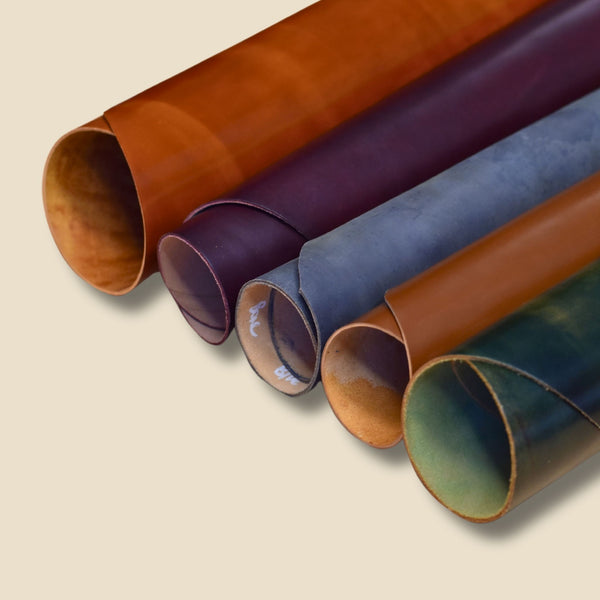
If your project requires structural strength and long-term durability, Conceria Virgilio is the house to watch. They are the go-to choice for high-durability saddlery and belting leathers. Their Vacchetta offers a consistent temper that holds its shape perfectly over time. Whether you prefer the dry, paper-like start of a Badalassi hide or the waxy, substantial grip of a Maryam shoulder, these tanneries offer a level of quality that mass-produced alternatives can't touch. For makers who want to experiment with these different textures, our curated leather bundles provide a perfect entry point into the world of Tuscan excellence.
Pueblo vs. Vacchetta vs. Cordovan: A Practical Comparison
Selecting the right hide is where your project truly begins to take shape. While all these materials fall under the umbrella of premium Italian Leather, they behave very differently on your workbench. You need to consider the temper, which is the leather's firmness or "snap." Shell Cordovan is the stiffest of the bunch. It has a dense, glass-like surface that resists stretching, making it perfect for items that must hold a precise shape. In contrast, Vacchetta is celebrated for its suppleness. It feels alive in your hands, offering a medium temper that softens beautifully over time without losing its structural integrity.
Patina is another crucial factor. If you want a piece that tells a story quickly, Pueblo is your best friend. Because of its unique scuffed surface, it absorbs oils and friction faster than almost any other leather, darkening and deepening in character within just a few weeks of use. Vacchetta follows a more traditional path, developing a rich, honey-toned glow over months. Shell Cordovan is the marathon runner here. Its patina is subtle; it doesn't change color drastically but develops a deep, three-dimensional depth that looks better after a decade than it did on day one.
Best Italian Leather for Small Goods
For wallets, cardholders, and watch straps, you generally want a thickness between 1.0mm and 1.5mm. This allows for multiple layers without creating a bulky pocket. Pueblo and Vacchetta are the gold standards for small goods because of their incredible burnishability. When you use traditional vegetable-tanned hides, the natural tannins react to friction, allowing you to achieve a mirror-like edge with just a bit of effort. You can Explore Italian Vacchetta Leather to see the range of weights available for your next small-scale project.
Heavyweight Hides for Bags and Belts
Structured tote bags and luxury belts require more "meat." Here, you should source hides that are 2.0mm or thicker. These heavyweight panels rely on fat liquors, which are specific blends of oils and fats added during the tanning process to keep the fibers lubricated and strong. This is especially vital for equestrian-related gear or bags that carry a heavy load. A thick Vacchetta shoulder provides the perfect balance of durability and artisan aesthetics.
What you will need
To get a professional finish on these premium Italian hides, you'll need the right tools to match the quality of the leather:
- Burnishing Cream: Tokonole is the industry favorite for achieving smooth, glossy edges.
- Edge Tools: High-quality bevelers from our leatherworking tools collection ensure clean, consistent lines.
- Assembly: For a bond that lasts as long as the leather, use specialized stitching bundles and premium adhesives.
How to Source Italian Leather Without Buying a Whole Hide
Sourcing premium Italian Leather used to be a gatekept process. Professional tanneries often demand high minimum order quantities (MOQ), forcing small makers to buy entire hides or even multiple skins. This isn't practical if you're just starting out or working on a small run of cardholders. We've removed that barrier. By offering small panels and cuts by the decimeter, you can access world-class materials without a massive upfront investment. It’s about making quality accessible to every workbench.
Understanding measurements is key to smart sourcing. In the European market, we typically measure leather in square decimeters (dm²). For context, 100 dm² is roughly 10.7 square feet. When you're looking at a shoulder cut, you're getting the prime part of the hide with minimal waste. Unlike bellies, which are thinner and stretchier, shoulders provide the consistent temper needed for professional results. This distinction is what separates a hobbyist project from a piece of fine craftsmanship.
Logistics can make or break your project timeline. Ordering from outside the EU often leads to unpredictable customs delays and extra fees. We ship directly from Amsterdam, which eliminates these headaches for our European makers. You get your hides faster, and the price you see is the price you pay. This reliability allows you to plan your commissions with confidence, knowing your materials will arrive exactly when you need them.
Understanding Leather Cuts
Choosing the right part of the hide is essential for your pattern. A double shoulder is the "goldilocks" cut; it's strong, consistent, and large enough for structured bags or belts. Bellies are more affordable but have more stretch, making them better for linings or hidden reinforcements. Pre-cut panels are the smartest choice for small goods because they are carefully selected for grain consistency. For a deeper dive into these technical details, read Buying Leather Online: The Professional Artisan's Guide.
The Consultation Advantage
Photos can be deceiving. Colors shift depending on your screen settings, and you can't feel the temper through a monitor. This is why we offer a direct line to expertise. A quick video call allows you to see the hides in real-time and ask specific questions about the grain or finish. Leather weight is the measurement of a hide's thickness in millimeters, determining the structural rigidity and appropriate use-case for a specific craft project. Don't guess; Book a Free Video Consultation with Mike to ensure you get the perfect hide for your next masterpiece.
Shop our curated leather bundles
Why Hab-To is the Home of Italian Leather for Makers
My family has lived and breathed the leather trade for over 160 years. That's a lot of history packed into every hide we select. We aren't just another faceless wholesaler; we're a bridge between the traditional tanneries of Tuscany and your workbench. I've seen how hard it can be for independent makers to get their hands on world-class materials without being forced into bulk orders. That's why we've built a home for the craft that values quality over quantity. Our Amsterdam showroom serves as a physical hub where you can escape the digital noise. It's a place to touch the grain, smell the natural tannins, and feel the specific temper of a shoulder before you make a single cut.
Sustainability isn't a buzzword for us. It's a standard we've upheld for generations. We exclusively stock vegetable-tanned Italian Leather because we believe in materials that respect the environment and the artisan. Plant-based tanning recipes produce a hide that is biodegradable and safe for your skin. This commitment to tradition ensures that your finished pieces will age with grace rather than falling apart. We also want to help you grow your skills. Through our Masterclasses and the 'Leather Hour' podcast, we share the technical secrets that make this craft so rewarding. You're joining a community of makers who refuse to make concessions on quality.
Curated Bundles for Every Skill Level
Starting a new project shouldn't feel like a logistical nightmare. We've simplified the process with Shop Premium Leather Bundles. These sets are carefully designed to give you exactly what you need; from starter selections for beginners to professional-grade hardware kits for established artisans. For micro-brands, we provide the consistent sourcing of Conceria Maryam hides that you need to scale your production. You can rely on the same premium quality shipment after shipment, which is vital for building a brand your customers can trust.
Beyond the Hide: A Complete Crafting Ecosystem
A world-class hide deserves tools and hardware that match its caliber. You can't achieve a professional finish on a premium Vacchetta shoulder with subpar equipment. We've curated a selection of Professional Leatherworking Tools and solid brass hardware to ensure your projects stand the test of time. From specialized adhesives to precision bevelers, every item in our shop is something we use in our own workshop. We're here to provide the complete ecosystem you need to turn a piece of leather into a masterpiece.
Featured Premium Panels:
- Maryam Shell Cordovan - The "King of Leathers," perfect for watch straps and luxury small goods.
- Badalassi Pueblo Panels - Iconic scuffed texture available in pre-cut sizes for your convenience.
Elevate Your Craft with Authentic Tuscan Hides
You now have the roadmap to move beyond generic materials and embrace true artisan quality. By understanding the heritage of the Tuscan Consortium and the unique properties of hides like Pueblo or Shell Cordovan, you can choose materials that reflect your dedication to the craft. Sourcing world-class Italian Leather is no longer restricted to those with massive budgets or bulk storage. You can now access the exact same hides used by luxury houses in the specific quantities your project requires.
With 160 years of family expertise behind us, we've made it our mission to support your creative journey. We handle the logistics and customs risks with our EU-wide shipping so you can stay focused on your workbench. If you're still unsure which temper or weight is right for your specific pattern, remember that I'm only a video call away for a free consultation. We're not just a supplier; we're your partner in creating heirloom-quality goods that stand the test of time.
Your next masterpiece begins with the right material. We can't wait to see the character and patina you bring out in these legendary hides.
Frequently Asked Questions
Is Italian leather always vegetable tanned?
No, Italian leather isn't always vegetable tanned. While the term is often associated with traditional methods, many mass-produced hides from Italy use chrome tanning for the high-volume fashion industry. Our Italian leather collection exclusively features vegetable-tanned hides. These materials are chosen specifically for their ability to develop a patina and their environmental sustainability, unlike the chemical-heavy alternatives found in high-street retail.
How can I tell if my Italian leather is authentic?
Authenticity is best verified through the "hand" logo of the Tuscan Consortium or by sourcing directly from reputable tanneries. Genuine hides like our Pueblo leather feature natural grain variations that haven't been corrected with plastic fillers or heavy pigments. If a hide smells sharply of chemicals rather than wood and earth, it's likely a synthetic or lower-grade imitation rather than true artisan leather.
Why is Italian vegetable-tanned leather so expensive compared to chrome-tanned?
The price reflects a labor-intensive process that can take up to 60 days, compared to the hours required for chrome tanning. Natural plant extracts are also more expensive than synthetic heavy metals. For those seeking a sustainable and innovative alternative, our Olivenleder uses olive leaf extracts for tanning. This investment ensures you're working with a biodegradable, structural material that offers a superior return on your crafting time.
What is the best way to care for Italian veg-tan leather to ensure a good patina?
The best way to care for your leather is through consistent use and minimal, high-quality conditioning. The natural oils from your skin are often enough to develop a rich patina, but you can use specialized products from our Fiebing's range if the hide feels dry. Avoid over-conditioning, as this can clog the pores of the full-grain surface and prevent the natural darkening process you're looking for.
Do I need to buy a whole hide to get premium Italian leather?
You don't need to buy an entire hide to work with world-class materials. We provide small panels and pre-cut pieces in our leather bundles to help makers avoid high minimum order quantities. This allows you to experiment with premium textures without the financial risk of a bulk purchase. It’s the most efficient way to source exactly what your specific pattern requires.
What does the 'Tuscan Consortium' stamp actually mean for my craft?
The stamp is a guarantee that the tannery follows strictly regulated, metal-free production standards. For your craft, this means you are working with a material that is safe for skin contact and environmentally responsible. Whether you are using Maryam Shell Cordovan or a standard shoulder, the Consortium mark ensures the leather was produced without compromising on traditional quality or ethics.
Can I use Italian leather for outdoor or equestrian gear?
Yes, provided you choose a hide with a higher oil content and pair it with the right components. For heavy-duty use, you'll need robust leather hardware like solid brass buckles to match the leather's strength. While vegetable-tanned hides are durable, they require regular maintenance when exposed to the elements to prevent the natural fibers from becoming brittle over time. If you are crafting gear for rugged environments, Wood To Water Outdoors provides high-quality camping and bushcraft equipment that perfectly matches the standard of premium handmade leather.
What is the difference between Pueblo leather and standard Vacchetta?
The primary difference is the surface finish and the speed of the patina. Standard Vacchetta has a smooth, waxy grain, while Pueblo leather has a unique scuffed, matte texture. Pueblo absorbs oils faster, meaning it will darken and polish much more rapidly than a smooth Maryam Vacchetta. Both are exceptionally durable but offer very different sensory experiences during the build.
Disclaimer
All our blog articles are made for information purposes only we dont take responsability for any content from third parties.