

Veg-Tan Leather for Dog Collars: The Artisan’s Guide to Selection & Craft
The safety of a dog’s life often hangs on a single strip of leather, yet most mass-produced collars are built to fail. I am glad you are here. You understand that a collar is more than a simple accessory. It is a vital piece of safety equipment. With the global pet accessories market valued at $32.3 billion in 2025, owners are increasingly seeking the durability that only artisan craft provides. Choosing the right veg tan leather for dog collars is the first step in meeting that standard. We believe true quality starts at the tannery. Tradition and nature create a material far superior to any chemical-heavy alternative.
You want a material that is kind to a dog’s skin and tough enough for years of heavy use. We agree that your craft deserves better than hides that snap under tension or cause allergic reactions. This guide will show you how to select the perfect vegetable-tanned leather for your next project, focusing on the specific weights that offer maximum durability. You'll learn what to look for in a premium hide and how to source high-quality materials without needing to place industrial-sized orders. Let’s explore how to select the leather and hardware that turn a simple strap into a lifelong tool.
Key Takeaways
- Discover why the natural, plant-based tanning process creates a bio-compatible material that avoids the skin irritations common with chemical-heavy alternatives.
- Learn to identify the ideal 8-10 oz leather weight to ensure your collars possess the tensile strength required for medium and large breeds.
- Master the selection of solid brass and stainless steel hardware to prevent the corrosion and snap-risks caused by moisture and saliva.
- Understand why using professional-grade veg tan leather for dog collars is the only way to guarantee a product that ages with a beautiful patina rather than fraying.
- Find out how to source premium, heritage-quality hides for small projects through a supplier with no minimum order requirements.
Why Vegetable Tanned Leather is the Gold Standard for Dogs
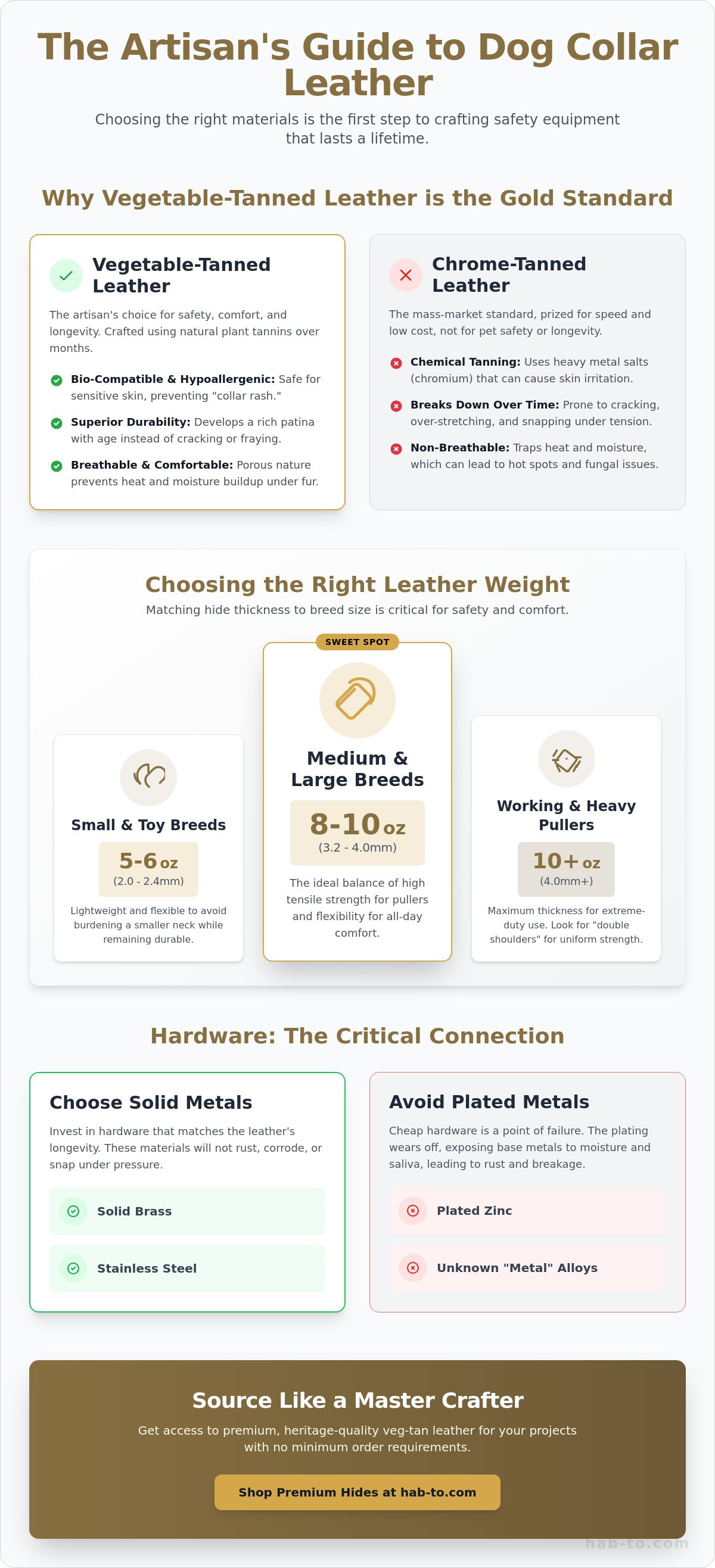
True craftsmanship begins with a deep respect for the raw materials. When you choose leather for a pet, you aren't just looking for style; you're looking for a material that lives and breathes alongside the animal. The vegetable tanning process is a heritage method that relies on nature rather than industrial chemistry. It uses organic tannins found in tree bark, leaves, and fruits to transform raw hides into durable leather. This process can take months, but the result is a material that is uniquely suited for the rigors of a dog's life.
Most mass-market collars rely on chrome-tanned leather because it's cheap and fast to produce. However, those hides are processed with heavy metal salts that can linger in the fibers. For a dog wearing a collar 24 hours a day, those chemicals are in constant contact with their skin. Selecting premium veg tan leather for dog collars ensures that you are using a bio-compatible material. It's porous and breathable, which is vital for long-haired breeds. Synthetic materials and chrome-tanned leathers often trap heat and moisture, leading to "hot spots" or fungal irritations under the fur.
To better understand how this material is transformed into a functional tool, watch this helpful video:
The Non-Toxic Advantage
We believe that safety shouldn't be a luxury. In vegetable tanning, plant extracts like oak, chestnut, and mimosa bark replace the harsh chromium salts used in industrial tanneries. This makes the leather hypoallergenic and safe for pets with sensitive skin. If a puppy happens to chew on their lead or collar, you don't have to worry about them ingesting heavy metals. One of the most overlooked benefits is pH neutrality. Because veg-tan leather is processed naturally, it doesn't disrupt the delicate balance of canine skin oils. This prevents the "collar rash" so common with synthetic or poorly tanned alternatives.
Durability Meets Comfort
A high-quality collar should be a lifelong investment. While synthetic straps crack and chrome-tanned leather can over-stretch and snap, veg-tan leather actually improves with age. It's incredibly strong, providing the tensile strength needed for large, powerful breeds. Over time, the leather absorbs the natural oils from the dog's coat. This creates a beautiful, deep patina and softens the fibers, making the collar more comfortable the longer it's worn. When you use quality veg tan leather for dog collars, you're creating a piece of gear that won't just last; it will become a part of the dog's history.
Technical Specs: Choosing the Right Weight and Hide
Selecting the right veg tan leather for dog collars is a mix of engineering and artistry. You have to consider the dog's strength, the owner's aesthetic, and the leather's technical limits. In the world of professional leatherworking, thickness is everything. We don't just measure leather by length; we measure it by weight. This is typically expressed in ounces per square foot, where one ounce equals approximately 0.4mm of thickness. Following US leather industry standards ensures that your materials are consistent and reliable for safety-critical gear.
For most medium to large breeds, 8-10 oz (3.2-4.0mm) is the sweet spot. This thickness provides the necessary tensile strength to handle sudden lunges or heavy pulling without the leather stretching out of shape. It is thick enough to feel substantial in the hand, yet it remains flexible enough to wrap comfortably around a dog's neck. If you are new to these measurements, our guide on Vegetable Tanned Leather: The Complete Guide for Crafters offers a deeper look into how these weights are determined at the tannery.
Matching Hide to Breed Size
Not every dog requires a heavy-duty strap. Small breeds and toy dogs are better served by a 5-6 oz (2.0-2.4mm) hide. This weight offers excellent flexibility and won't feel like a burden on a smaller neck. When you are sourcing materials for working dogs or heavy pullers, always look for "double shoulders." This specific cut of the hide has a tighter grain and minimal stretch. You should strictly avoid "belly" leather for collar straps. The fibers in the belly are loose and spongy. A collar made from belly leather will stretch under tension, eventually becoming loose and unsafe. You can browse our vegetable tanned leather collection to find the specific cuts that fit your breed's needs.
Premium Hide Options: Pueblo and Cordovan
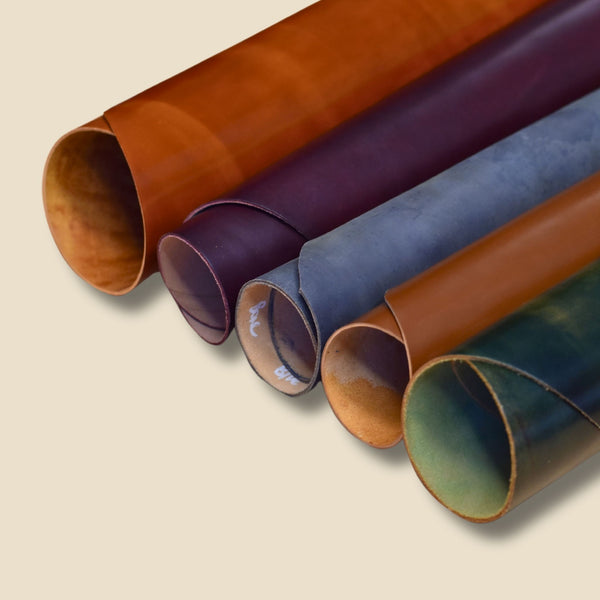
If you want to elevate your craft beyond standard cowhide, consider specialty tannages. Pueblo leather is a favorite among artisans for its rustic, stone-ground texture. It has a unique grip that makes it easy to handle during the stitching process and develops a deep, lustrous patina very quickly. For those creating elite, high-end accessories, Shell Cordovan is the undisputed king. It is a dense, non-porous leather that comes from the fibrous flat muscle of a horse's hindquarters. It is virtually indestructible and does not crease or crack over time. Learn why this material is so highly prized in our Shell Cordovan: The Ultimate Guide. Using high-quality veg tan leather for dog collars ensures that every piece you create is a testament to durability and style.
Essential Hardware: Pairing Veg-Tan with Quality Metals
A masterfully crafted collar is a symphony of two materials: high-quality hide and dependable metal. If you've spent hours selecting the perfect veg tan leather for dog collars, don't undermine that effort by using cheap, plated hardware. Dog saliva is surprisingly acidic. It quickly eats through thin nickel or gold plating, exposing the pot metal underneath to rust. Once corrosion starts, the structural integrity of the collar is compromised. For a piece of safety equipment, this is unacceptable. You need materials that can withstand the elements and the animal.
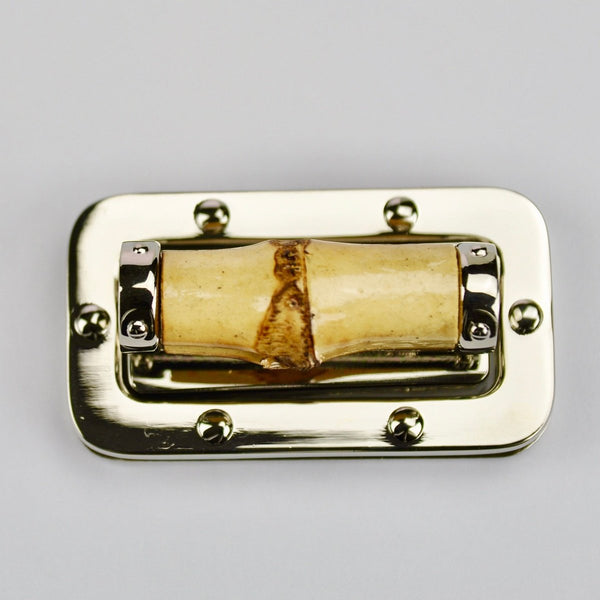
We always recommend solid brass or stainless steel. These metals don't just look better; they are chemically stable. When you consider the mechanical properties of vegetable leathers, such as their natural firmness and resistance to deformation, you need hardware that can match that strength. If you're wondering which specific pieces you need to get started, check out A Crafter's Guide to Essential Leather Hardware for a complete breakdown of the basics. Choosing the right components is just as important as the leather itself.
The Strength of Solid Brass
Solid brass is the artisan's favorite for a reason. It shares a unique characteristic with vegetable-tanned leather: it patinas. As the leather darkens and richens with age, the brass will develop a soft, antique glow. Beyond aesthetics, brass is incredibly tough. It won't snap under the high-impact tension of a 40kg dog spotting a squirrel. Maintenance is simple. A quick wipe with a soft cloth and a dab of brass polish every few months will keep the hardware as bright as the day you finished the project.
Load-Bearing Components
Security is the priority. When selecting a D-ring, you must choose a welded version. Non-welded rings can pull open under extreme pressure, leading to a loose dog in a dangerous situation. Your buckle choice also matters for the dog's comfort. A center bar buckle allows the strap to lay flatter against the neck, while a heel bar buckle is often easier for the owner to manipulate. It's a matter of preference, but safety should always come first.
When attaching these components, you have to decide between rivets and Chicago screws. Rivets are permanent and low-profile. Chicago screws offer a more industrial look and allow for hardware replacement later, though they require a drop of thread-locker to ensure they don't vibrate loose. For heavy-duty collars, we often use leather liners to reinforce the attachment points. This adds an extra layer of protection, ensuring the veg tan leather for dog collars remains secure for years of service.
Crafting and Maintenance: Ensuring a Lifetime of Use
Crafting with veg tan leather for dog collars doesn't end when the buckle is attached. The final touches and ongoing care define whether a piece lasts three years or thirty. We believe that a truly artisan collar must be as comfortable for the dog as it is beautiful for the owner. This requires a focus on the microscopic details of the leather fibers. A well-finished collar protects the animal's coat and ensures the hide remains resilient against the elements.
If you want to create gear that stands up to professional standards, you need the right equipment. You can find everything you need to finish your projects in our collection of leatherworking tools. High-quality tools make the difference between a hobbyist's strap and an heirloom-quality accessory.
The Art of the Burnished Edge
A raw, unfinished edge is a magnet for moisture and a primary cause of fur breakage. When an edge is left "hairy," it acts like a tiny saw against a dog's neck. To prevent this, you must burnish the edges. Start by beveling the corners to create a rounded profile. Apply a small amount of Tokonole, a water-based burnishing gum, to the edge. Use a wooden slicker to rub the edge briskly. The heat generated by friction binds the leather fibers together, creating a smooth, glassy surface. For the final seal, rub a bit of natural beeswax onto the burnished edge and slick it one last time. This creates a waterproof barrier that prevents the leather from delaminating when it gets wet.
Long-Term Care for Veg-Tan
Vegetable-tanned leather is a living material. It needs to be fed. After a particularly muddy walk, don't let the dirt sit. Wipe the collar down with a damp cloth and allow it to air dry. Never place a wet collar on a radiator or use a hairdryer. Forced heat is the fastest way to make leather brittle and prone to cracking. Once the collar is dry, apply a light coat of conditioner. Smith’s Leather Balm or Neatsfoot oil are excellent choices for keeping the fibers supple.
Be careful not to over-condition. If the leather feels "mushy" or overly soft, it may lose the structural integrity needed for safety. A light application every few months is usually enough to maintain the natural oils. Eventually, even the best veg tan leather for dog collars will reach the end of its life. Look for signs of fiber fatigue, such as deep cracks near the buckle holes or significant thinning where the D-ring sits. When these appear, it's time to retire the collar and craft a new one. This proactive approach ensures your dog stays safe and stylish for every adventure.
Source Like a Master: The Hab-To Leather House Advantage
Great work begins with great sourcing. You can't craft an heirloom piece if you start with inferior materials. In the heart of Amsterdam, we carry a legacy that spans over 160 years. Our family has spent generations understanding the nuances of animal hides and tanning methods. We don't just sell leather; we share a passion for the craft that has been refined since the mid-19th century. Whether you visit our showroom or connect with us online, you're tapping into a deep well of European expertise. We are here to act as your mentor in the world of high-end materials.
We pride ourselves on providing access to the world's most prestigious tanneries. Our shelves are stocked with hides from Badalassi Carlo and Horween, names that represent the pinnacle of the leather industry. When you are looking for the best veg tan leather for dog collars, these are the sources that guarantee consistency, strength, and a breath-taking patina. We don't believe quality should be reserved for industrial-scale factories. We bring those same professional standards to every individual artisan, ensuring your creations stand out in a crowded market.
Quality Without Barriers
Most wholesalers demand large minimum orders that can be a barrier for independent crafters. We find that approach stifles creativity and limits the reach of true craftsmanship. If you only need enough leather for a single collar, we support you. Our "no minimum order" policy ensures that small crafters can work with world-class materials without a massive upfront investment. Every hide we stock is ethically sourced from European tanneries that prioritize sustainability and traditional methods. This "no compromise" philosophy means your pet projects are built on a foundation of integrity. You get the best veg tan leather for dog collars without the burden of excess inventory.
Get Started on Your Next Project
Choosing the right hide for a specific breed can be daunting. As we discussed in earlier sections, a Great Dane requires a different level of tensile strength than a Whippet. We are here to help you make that distinction. Our team offers personalized consultations to guide you through our range of shoulders, sides, and specialty cuts. We want to ensure your next project is a success from the very first cut. Our showroom is a place of inspiration where you can feel the grain and smell the natural tannins. If you're ready to elevate your work, we invite you to Shop our premium Vegetable Tanned Leather collection. Let’s build something that lasts a lifetime together.
Crafting Gear That Lasts a Lifetime
A dog’s collar is more than a simple strap; it’s a constant companion for their daily adventures. By prioritizing high-quality veg tan leather for dog collars, you choose a material that respects the animal's skin through natural pH neutrality and superior breathability. You’ve learned that the secret to a professional result lies in matching the right hide weight with corrosion-resistant hardware. These technical choices transform a simple project into a piece of vital safety equipment that only gets better with age.
We invite you to start your next creation with materials that reflect your dedication to excellence. At Hab-To, we bring over 160 years of family expertise directly to your workbench. We don't believe in barriers for artisans. That's why we offer no minimum order requirements on premium hides from world-renowned tanneries like Horween and Badalassi Carlo. Your craft deserves a foundation of quality that won't compromise on durability or ethics.
Explore our curated selection of Veg-Tan hides for your next project. We look forward to helping you find the perfect piece for your four-legged companions.
Frequently Asked Questions
Is vegetable tanned leather safe for dogs with allergies?
Yes, it is the safest choice for dogs with sensitive skin or chemical allergies. Unlike chrome-tanned leather, which uses heavy metal salts, vegetable tanning relies on organic plant extracts like oak and chestnut bark. This makes the material hypoallergenic and bio-compatible. It doesn't disrupt the natural oils on your dog's neck, which helps prevent the common "collar rash" seen with synthetic alternatives.
What is the best thickness of leather for a large dog collar?
You should aim for a thickness of 8-10 oz (3.2-4.0mm) for large or powerful breeds. This specific weight offers the tensile strength required to handle sudden lunges without the leather snapping or permanently deforming. For giant breeds or working dogs, we recommend using a double shoulder cut. It provides a tighter grain that resists stretching better than other parts of the hide.
Does veg-tan leather get ruined if it gets wet on a dog walk?
Vegetable-tanned leather won't be ruined by rain if you follow a simple drying routine. While the material is naturally porous, it's quite resilient when treated with natural waxes. If the collar gets soaked, simply wipe off the mud and let it air dry naturally. Don't use a radiator or hairdryer. Once dry, a light coat of conditioner will keep the veg tan leather for dog collars supple.
How do I stop a veg-tan collar from staining my white dog's fur?
You can prevent fur staining by using a dedicated leather sealer or opting for natural, undyed hides. Staining occurs when moisture causes unsealed dye to migrate into the fur. We recommend applying a finish like Resolene and ensuring the edges are perfectly burnished. For dogs with white or light-colored coats, choosing a natural "tooling" leather is the most reliable way to avoid any pigment transfer.
Can I use Shell Cordovan for a dog collar?
Yes, Shell Cordovan is an exceptional choice for a high-end, durable dog collar. It’s a non-porous material with a very dense fiber structure, making it naturally water-resistant and incredibly tough. It doesn't crease or crack like standard cowhide. While it's a premium material, its longevity and unique luster make it a favorite for artisans creating elite pet accessories for discerning owners.
How often should I condition my dog's leather collar?
We recommend conditioning the collar every 3 to 6 months to maintain its health. If your dog spends a lot of time outdoors or in the water, you might need to do it more often. You'll know it's time when the leather feels slightly stiff or loses its luster. A small amount of natural balm rubbed in with your hands will keep the fibers hydrated and strong.
Why is veg-tan more expensive than other leather collars?
The higher cost is due to the time-intensive, eco-friendly tanning process that takes months to complete. Traditional tanneries use organic tannins from bark and fruit instead of cheap chemicals. When you invest in premium veg tan leather for dog collars, you're paying for a non-toxic, sustainable material. It offers a lifespan that far exceeds mass-produced synthetic or chrome-tanned options found in big-box stores.
Do I need special tools to work with veg-tan leather for collars?
You don't need a workshop full of heavy machinery, but a few specific leatherworking tools are essential for professional results. We suggest starting with a quality strap cutter, a diamond awl or stitching chisels, and an edge beveler. A wooden slicker is also vital for burnishing. These tools allow you to finish the edges properly, ensuring the collar is smooth against the dog's skin.